Category Archives: New In Theaters

Reviews of what’s out now

Terror of the Blank Page

Goosebumps 2: Haunted Halloween

by George Wolf

“Who would write this?”

Any Goosebumps fan knows the answer to that is Bexley native/OSU grad R.L. Stine, but in Goosebumps 2 it’s what Stine didn’t write that unleashes some not-too-scary family fun.

Good buddies Sonny (Jeremy Ray Taylor from IT) and Sam (Caleel Harris) stumble upon a mysterious book while cleaning out a creepy old house. They turn their backs and a ventriloquist’s dummy makes sure he’s found as well.

“Slappy” (voiced by Jack Black) was born from the book they found, the unfinished manuscript of Stine’s first novel, and he has some magical powers which are all fun and games until they’re not.

See, the dummy wants a real family, and he won’t stop until he brings Halloween to life and makes Sonny’s mom (Wendi McLendon-Covey) his own, which doesn’t sit well with Sonny or his sister Sarah (Madison Iseman).

It will take the whole gang, with a little help from Stine himself (Jack Black) to put Slappy and all he conjures back in the book where they belong.

Director Ari Sandel, who helmed the smarter-than-average teen comedy The Duff, and writer Rob Leiber (Alexander and the…Very Bad Day) take over the Goosebumps film franchise and hit a satisfyingly specific ‘tween target that will give adults some smiles as well.

The humor is silly but not stupid, the frights won’t bring nightmares, the town bully isn’t really that mean, and the town does Halloween like no place you’ve ever seen, led by Holiday enthusiast Mr. Chu (Ken Jeong). It makes for an inviting setting, and once all those costumes and decorations come to life, there is plenty of lower-budget visual pop.

Goosebumps 2 has style, a winning cast, and winking nods to horror classics such as IT and Frankenstein. Plus, it makes books and science seem cool, and gets it all done in under 90 minutes.

That adds up to one “fun-size” Halloween treat that doesn’t disappoint.

If You Believed

First Man

by Hope Madden

We’ve seen a lot of movies about astronauts, loads of sometimes great films about the US space race and the fearlessness of those involved. Director Damien Chazelle’s First Man is something different.

Chazelle strips away the glamour and artifice, the bombast and spectacle usually associated with films of this nature. His vision is raw and visceral, often putting you in the moon boots of the lead, but never quite putting you inside his head.

The director’s La La Land lead Ryan Gosling plays Neil Armstrong in this biopic of the first human being to set foot on the lunar surface. It’s another of Gosling’s impressive turns: reserved, with an early vulnerability that hardens over time to a protective stoicism.

A no-frills Claire Foy plays Armstrong’s wife Janet, and the characters the two actors carve share a bristly chemistry that adds to the film’s committed authenticity. It also provides some kind of emotional center for the story.

Chazelle’s observational, unhurried style doesn’t draw attention to the drama. There is nothing showy about this film. That understatement allows the most startling, horrifying and awe-inspiring moments their own power. The approach also quietly reminds you of the escalating pressures shouldered by Armstrong as he and NASA faced tragedy after tragedy in the name of space exploration.

Gosling shares screentime with an enormous and talented ensemble boasting many fine performances and just as many welcome surprises. Though most roles are very small, Shea Wigham, Jason Clarke and Corey Stoll stand out.

Stoll, playing a socially obtuse Buzz Aldrin, offers an enjoyable foil to Gosling’s composed Armstrong, sparking one of the film’s only real grins.

Though Gosling’s distant performance and Chazelle’s near-verite style mirror Armstrong’s increasingly walled-off psyche, it becomes difficult to connect with characters. First Man deposits you inside the action but keeps you at arm’s length from Neil Armstrong.

As gritty and unpolished as the film is, Chazelle never loses his sense of wonder. The jarring quiet, the stillness and vastness are captured with reverence and filmed beautifully.

Those images of silent awe are as stirring as anything you will see, but it’s the visceral, queasying and claustrophobic moments underscoring the death-defying commitment to the cause that will shake you up.

No-tell Motel

Bad Times at the El Royale

by George Wolf

A priest and a vacuum salesman walk into a bar…

Well, one may not be a priest, the other might not be a salesman and the bar is really part of a nearly abandoned motel, but the point is all hell breaks loose in writer/director Drew Goddard’s stylish thriller, Bad Times at the El Royale.

Lake’s Tahoe’s El Royale sits straddling the Nevada/California border in the late 1960s. Before the East side lost its gambling license, the El Royale had been a hot spot and Rat Pack hangout, but lately bellboy/desk clerk and bartender Miles (Lewis Pullman) is pretty lonely.

Then the priest (Jeff Bridges), the salesman (Jon Hamm) and a singer (Cynthia Erivo) check in, followed by a hippie (Dakota Johnson) who’s got an F-you attitude and someone in her trunk (Cailee Spaeney). Their respective reasons for stopping at the El Royale are separate and shady, but as the characters reveal dark pasts and true intentions, the quiet hotel quickly becomes a battleground for survival.

Goddard’s follow-up to 2012’s ingenious The Cabin in the Woods is anchored with the same inventive zest, and built with time-jumping back stories and placards that bring Tarentino to mind. And while El Royale can’t completely deliver on its promise, it offers a gorgeous blast of color, sound and plot twists that are pretty fun to watch unravel.

The entire ensemble is splendid, each digging into their characters with a relish that only elevates the impact when our feelings about them change, and change again. Who’s a villain? Who’s a patsy? Who’s being framed and who’s just looking for redemption? Though Goddard’s pace gets bogged down at times, his visual style and careful placement of 60s pop hits make sure chasing those answers is always a retro hoot.

The film’s biggest disappointment stems from the arrival of the sinister Billy Lee (Chris Hemsworth), a violent charmer who’s come to settle a score with someone in the El Royale’s guestbook. As past histories and current events collide, the film reveals a late-stage moralistic vein as hopes for a type of Cabin in the Woods-style showstopping finale slowly fade away.

Those final fifteen minutes are fine for any typical noir crime thriller, but not quite worthy of El Royale‘s previous deliciously indulgent two hours.

Laugh til It Hurts

All About Nina

by George Wolf

Every once in a while, a movie comes along that lets you see a very funny impression of Werner Herzog ordering a smoothie.

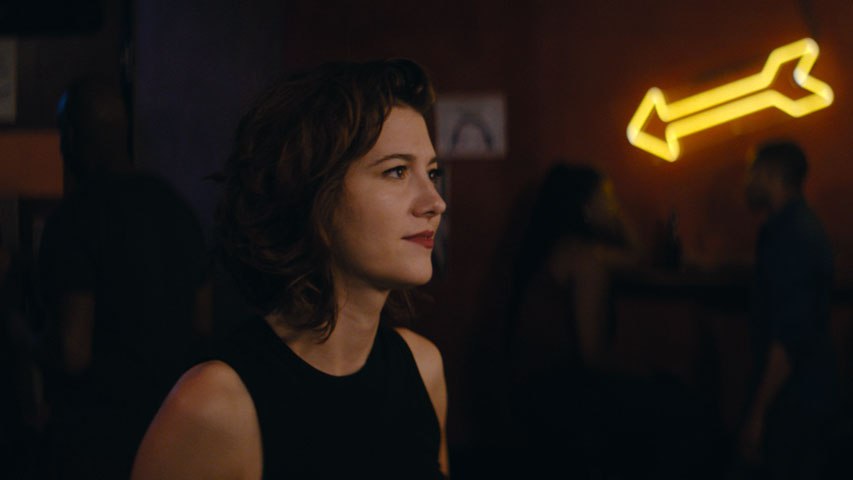
All About Nina is that movie, and a good bit more. A confident, impressive feature debut from writer/director Eva Vives, it rides a sensational lead performance from Mary Elizabeth Winstead for a character study with a timely and tenacious bite.

Winstead is Nina, a standup comic in New York whose edgy routines about dating shed light on her tumultuous personal life. She prefers one night stands over boyfriends, but still can’t totally free herself from a dysfunctional relationship with a married man (Chace Crawford).

Needing a shakeup, Nina moves to L.A. to pursue a spot on Comedy Prime, the late nite brass ring for up and coming comics. As she fine tunes her audition material, a stop/start romance with the easygoing Rafe (Common) pushes Nina to reconsider her aversion to commitment.

Winstead’s fearless performance, one that should be remembered this awards season, hooks you from the start, bringing a sympathetic charm to Nina’s defensive, anxiety-ridden persona. An impressive Common crafts Rafe as Nina’s cool, collected opposite attraction, and the actors’ natural chemistry leads to a fear that the film will be content to chase the type of romantic fantasy Nina rails about onstage.

Vives has more than that on her mind.

The standup comic who uses laughter to mask pain is a well-worn path, but Vives uses the very comfort in that cliche to point out, as we’ve been so clearly reminded of the last few weeks, how casually some trauma is dismissed.

Vives is juggling some important themes, and the few moments where the film’s uncertainty breeds heavy-handedness can’t diminish her exciting potential as a writer and director.

On its surface a look at giving yourself without losing yourself, All About Nina isn’t just about Nina, and that’s what makes it truly resonant. It reminds us of the courage it takes for women to speak up, and the shame that comes with not listening.


Geriatric Horseman

The Old Man & the Gun

by George Wolf

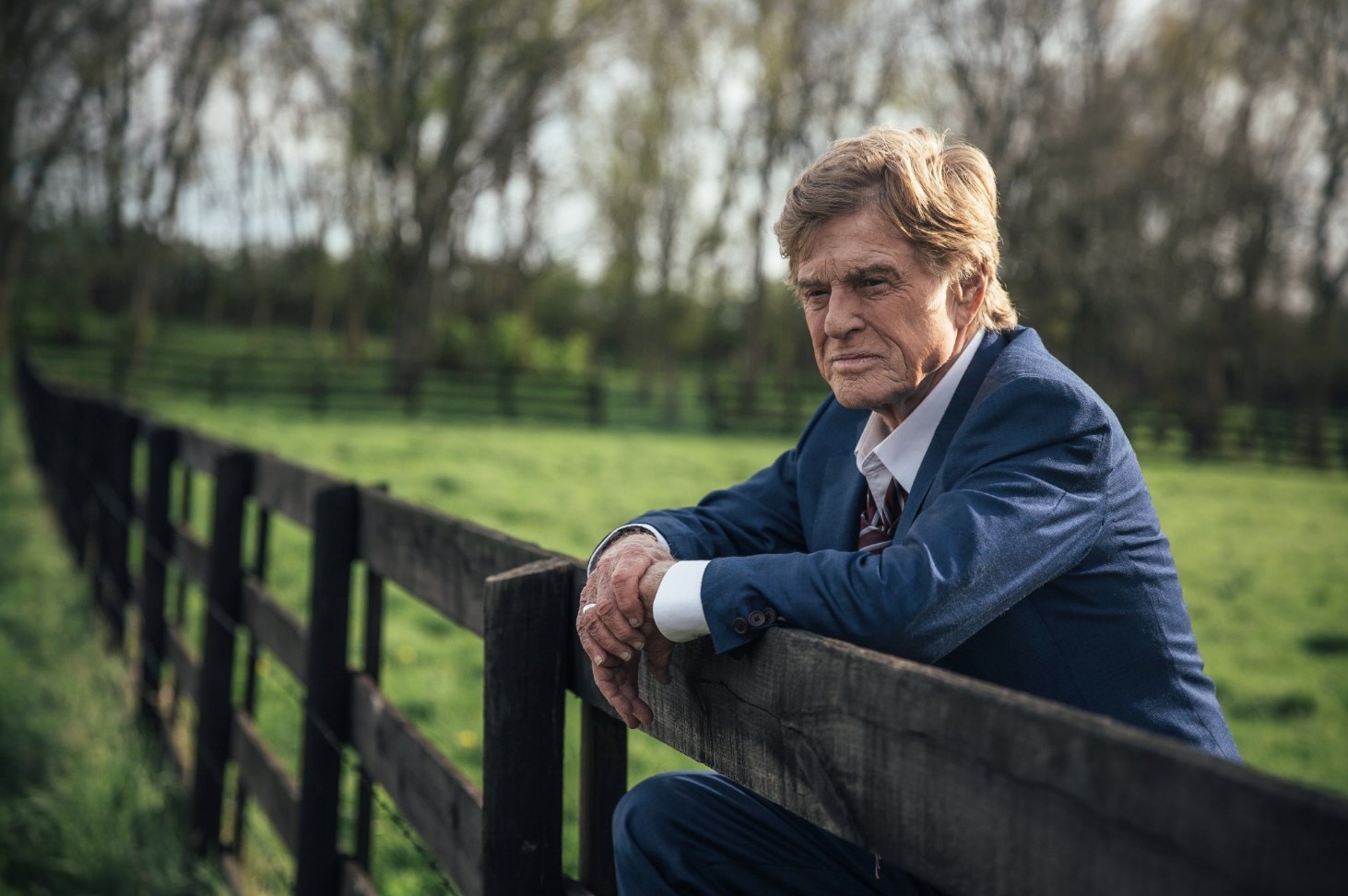
Even if this doesn’t end up being Robert Redford’s final film as an actor, it’s understandable why he’d be tempted to make it his swan song.

Redford’s decades-long status as a screen icon has always leaned more on charm than range, and The Old Man & the Gun wears that strategy like a favorite pair of broken-in boots.

Director/co-writer David Lowery adapts a magazine article on a likable rogue named Forest Tucker, who broke out of San Quentin at the age of 70 and earned his folk hero status with a string of brazen bank robberies.

Tucker (Redford, natch) plots the heists with his grey-haired gang of two (Danny Glover, Tom Waits) and flirts with the farm-living Jewel (Sissy Spacek) while lawman John Hunt (Casey Affleck) is on his tail.

And the old scalawag couldn’t be happier while doing it.

The story is light and whimsical, but thanks to the veteran actors and the slyly understated direction, it’s got a frisky heart that won’t quit. Watching Redford and Spacek together is a joy in itself, as Jewel’s bemused-but-curious reaction to her new suitor only brings more twinkles to his eye. Then there’s Affleck easily filling Hunt with the perfect strain of frustration-laced respect, and Waits delivering some deliciously dry one-liners.

But it’s Lowery who may be the real wonder here. After Ain’t Them Bodies Saints, Pete’s Dragon and A Ghost Story, he again shows unique storytelling instincts no matter what tonal gears he’s shifting. This film is a satisfied mosey, one that serves as a sunset ride for a Hollywood legend while letting the exploits of a charming bandit reinforce the value of just loving what you do.

For Tucker, it was robbing banks. For Redford, it was being an iconic leading man.

Lowery makes sure they both get a proper sendoff.

Hardy Boys

Venom

by Hope Madden

We don’t need another superhero. That’s what the Venom trailers told us, and it’s pretty true.

So, what Venom had to offer—an antihero, a Jekyll/Hyde thing starring a brilliant actor who excels with complex, dark roles—felt like a great change of pace.

Tom Hardy was the ideal choice for the dual role of Eddie Brock, semi-doofus reporter, and Venom, flesh-eating alien symbiote. This should have worked, partly because Hardy knows how to mine villains for their humanity, and watching him wrestle with the good v evil duality never ceases to be impressive.

What Venom suffers from more than anything is the expectations set by a Marvel release. Don’t be mistaken, were this the DC universe it would be the second best comic book film released since Christopher Nolan cast Hardy as a super villain.

But it is, indeed, Marvel. (If you forget, Stan Lee shows up to remind you.) And for that reason, regardless of the fact that Venom boasts superior acting, FX, story arc, action choreography and writing than anything DC has done this century besides Wonder Woman, its regrettably traditional execution makes it feel a bit stale. Because it is Marvel.

A characteristically committed Hardy elevates scenes, indulging a far more humorous tone than what we’ve seen lately from the versatile actor. Riz Ahmed (Nightcrawler, Four Lions) is a solid choice to play Eddie/Venom’s nemesis. Never campy or over-the-top, Ahmed evokes a type of lifelong genius who cannot be persuaded that his ideas are at odds with the ideals he alleges to support.

Michelle Williams is uncharacteristically flat, and the balance of the cast is mainly forgettable, but the real problem with the film rests on uninspired direction.

Ruben Fleischer showed a flair for action, colorful theatrics and humor with his 2009 breakout Zombieland, but the joy of carnage and camaraderie that infected that flick is sadly missing here.

Zombieland was aided immeasurably by writers Rhett Reese and Paul Wernick, whose irrepressible irreverence made the Deadpool films such a riot. It’s a tone sorely lacking in this screenplay, penned by a team of four whose output includes a Fifty Shades film, Kangaroo Jack and Fleischer’s abysmal 2013 mob flick, Gangster Squad.

Venom is not a bad movie. It’s fun, competently made entertainment.

And a disappointment.

Snapped

Colette

by Christie Robb

Emotional, entitled, white men seem omnipresent these days. They’re on the news. They’re on social media. They’re on the big screen. At least with the biopic Colette, they are confined to an historical period safely a century behind us.

Colette gives us the origin story of French novelist Sidonie-Gabrielle Colette (Keira Knightley), a Madonna-like figure of the early 1900s who emerged from a small provincial village to become the toast of Paris, reinventing herself over the years as a novelist, mime, actress and journalist.

She wrote frankly about women’s independence, sexuality and aging. She sparked a riot at the Moulin Rouge in 1907 when she performed a lesbian love scene in a pantomime. She was nominated for the Nobel Prize in Literature in 1948. She wrote the book Gigi, which was adapted for the stage where she personally selected a then-unknown Audrey Hepburn for the leading role in 1951. The book then became an MGM musical that won nine Academy Awards in 1958 (including Best Picture). When she died, Colette was the first woman in France to be given a state funeral.

But before all that, Colette married a bully named Willy (Dominic West). Over a decade her senior, Willy was a popular writer who put out music reviews, stories and novels. Quite a bit were written by other people in a factory system where Willy provided the brand, but others produced the work. He compelled his wife to join the team, asking her to mine her childhood experiences so he could publish them under his name. Once the Claudine books became popular, he would lock Colette in a room until he was satisfied she had written enough.

The movie tells the story of Colette’s time with Willy and traces an arc from her awkward introduction into Paris salon society to an eventual break with the abusive hack and first steps toward an independent life.

Knightly is masterful inhabiting the multifaceted Colette, using her eyes to hint at the hurt she’s experiencing while wielding a bold bravado as a shield in her constant verbal fencing matches with her husband. West presents as a believable blowhard—initially charming, then volatile, narcissistic, abusive, and ultimately self-pitying, sniveling and weak.

Given the breadth of Colette’s life and its many acts, it makes sense that director Wash Westmoreland would focus on a distinct part of it. However, because of his desire to give screen time to so many of the big Personalities of the Belle Époque and to keep the focus squarely on the time period of the Colette/Willy relationship, the movie seems simultaneously thinly-sketched and agonizingly long. With so much of the movie involving Colette being shit on, the movie verges on indignity porn. How much can this woman take, before she snaps?

But when she snaps…it’s so good. Oscar-bait good.

Given this week, I’d have vastly preferred it if more of the movie had focused on the glorious and adventurous life Colette led after she dumped Willy and struck out on her own. But, even so, it’s a story of liberation and the claiming of a woman’s power. Something that’s needed.

I just hope there’s a sequel.

Say Something

A Star is Born

by George Wolf

A few weeks ago, for homework, I revisited the 3 previous versions of A Star Is Born. A friend later asked me which one was best.

I have a different answer now.

Director/co-writer/co-star Bradley Cooper brings a new depth of storytelling to the warhorse, with a greater commitment to character and the blazing star power of Lady Gaga.

Cooper is Jackson Maine, a booze-swilling, pill-popping rock star who wanders into a random bar post-gig and catches Ally (Gaga) belting out “La Vie en Rose.” Jack’s entranced, and begins coaxing Ally to sing her own songs instead of covers. Everyone’s got a talent, he tells her, the real gift is having something to say.

Each previous film version represented its era well, but with the rock music setting and several recognizable homages, it’s clear Cooper has a fondness for the Streisand/Kristofferson take from ’76. His new vision carries a raw authenticity that eclipses them all.

The battered star’s instant infatuation with the young talent has never felt more understandable, the undeniable chemistry between Cooper and Gaga fueling the feeling that in Ally, Jack sees a better version of himself.

Cooper, with a lower-range speaking voice and the musical talent from nearly 2 years of tutelage, is every bit the weathered rocker, on a misplaced search for redemption. Watch him when Jack is not the focus of a scene to see a character become complete.

But then, another outstanding acting performance from Bradley Cooper is not a surprise. His remarkably instinctual directing debut here, though, must now place him among the premier talents in film.

Nearly every scene, from stadium rock concert to intimate conversation, is framed for maximum impact. His camera can be stylish but not showy, with seamless scene transitions fueling a forward momentum that will not let the film drag.

The melodramatic story has been stripped of pretense and buoyed by more layers of humanity, and not just between the two leads. Jack’s brother (Sam Elliot), his boyhood friend (Dave Chappelle) and Ally’s father (Andrew Dice Clay) emerge as important characters despite limited screen time.

And then there’s Gaga.

The voice is, well, it’s a force of nature, and the songs (some co-written with Cooper) are memorable. But if a star already shining can be born, welcome Gaga the movie star. She is electric, taking Ally from wide-eyed stage fright to SNL headliner with both tenderness and ferocity, giving this character the strength and nuance she has never had before.

This film has talent everywhere, but it also has stirring things to say about love and sacrifice, about art and commerce, ambition and fame.

I’ll say this: A Star is Born is among the very best of the year.


The Judgement of Paris

Memoir of War

by Matt Weiner

So a screenwriter, the president of France and a spy walk into a café… have you heard this one? If so, you might have read the book La Douleur (War: A Memoir for the English translation), an autobiography by Marguerite Duras based on diaries she allegedly wrote during World War II.

Duras rose to fame as a writer, garnering a screenplay nomination for the Alain Resnais-directed Hiroshima mon amour. That film’s novel treatment of memory and chronology echoes throughout Memoir of War, adapted from Duras’s book and directed by Emmanuel Finkiel.

Mélanie Thierry plays the film version of Marguerite, whose recollections span the waning days of Vichy France through the Liberation of Paris, the end of the war and the immediate aftermath of Europe reckoning with news of the Holocaust.

If this sounds like a lot of history to cover for one movie, it would be—except Marguerite’s reflections are unconcerned with straightforward chronology. Her diaries and narration compress time and memory into one long, all-consuming reverie for her captured husband, Robert (Emmanuel Bourdieu).

It makes for a deliberately disorienting experience, one that Finkiel pulls out a few tricks to heighten: there’s the nauseatingly atonal strings of the soundtrack, as oppressive as a horror score. But most effective is the way Marguerite’s memories of these monumental years unfold so frequently in claustrophobic interiors.

We get the entire moral arc of world war by way of smoky Parisian rooms. As the war winds down and Robert’s fate seems more and more dire, Marguerite retreats both mentally and physically. And we experience the two most triumphant moments—the Liberation of Paris and what should be another happy occasion after the war—through Marguerite’s furtive glances out the window, like gossamer filters keeping the reality of the world at large a step removed from ever being something she can attain herself.

It’s a demanding role, and it rests almost entirely on Thierry to hold everything together even as her character seems to slip in and out of time. She pulls off resolve with gusto, and even tempers it with a haunted uncertainty that feels completely natural as the enormity of the Holocaust becomes clear.

Memoir of War is a difficult film to get a handle on. The Resistance intrigue is discarded as quickly as it starts to take shape. The historical romance is mostly MacGuffin. And the war barely leaves the cafés, let alone the city.

The slipperiness is apt though. Marguerite’s memories are their own fog of war, and the author’s real-life diaries play coy with authenticity vs. artistic liberty. Finkiel pieces together a fitting adaptation, and if the parts never hold together long enough to say some cohesive whole, at least he can say he makes us feel something Marguerite would recognize.

Not-So-Fun House

Hell Fest

by Hope Madden

Hell Fest is not the first film to point out that it would be really dangerous if any of the masked meanies inside a Halloween haunt were, indeed, a murder-happy maniac. It’s not a bad premise, just not a new one.

In keeping with the not-so-fresh theme, this film is a straight-up, unapologetic slasher. Not a nostalgia-seeped, homage-laden satire or meta-commentary. Nope. Hell Fest is an unironic slasher. Six nubile youths drink some shots and head into a situation that should be fun but does, of course, hold the potential for serious danger. But they’re young, they’re immortal, they’re so hot and horny.

Why so much groping, by the way? They aren’t that drunk, they have homes, none of them just got out of prison. That’s the thing about slashers: we’ve seen so, so, so many of them over the years that the cracks in the formula are gaping holes by this point.

Nevertheless, Hell Fest stays its by-the-numbers course. Director Gregory Plotkin (Paranormal Activity: The Ghost Dimension) manages to keep the energy high, even as the story weaves tediously through an amusement park.

The script, penned by a committee of five, doesn’t burden itself with much in the way of backstory or the need for character arc. Of the six, Natalie (Amy Forsyth) is the smartest and least slutty. She is, therefore, the target of our slow-moving, weirdly strong, masked marauder.

Her friends are mainly over-the-top caricatures of humans, but there’s an almost believable camaraderie among them. Forsyth fares best, clumsily flirting with the equally awkward Gavin (Roby Attal) as their overdressed friends drink from flasks and tell us how very excited they are.

While a couple of the attractions are fun, the main problem with Hell Fest is that it is not scary. Not for a minute. Nor is it gory—for a film with an R rating, there’s almost no blood, absolutely no nudity and very few F-bombs. It’s as if they hoped for a PG13 rating, didn’t get one and now they’re stuck with a movie that can’t entertain the wee ones and won’t entertain adults.

They do have Tony Todd, though. When has that ever been a bad idea?

I know, October is basically here and you just want to find some new scary movies to put you in the mood. Dude, seriously, Halloween comes out in two weeks. Just hold your horses.