Category Archives: New In Theaters

Reviews of what’s out now

Visions of the Past

I’m Not Here

by Brandon Thomas

Loss, regret and redemption permeate people’s lives. We all have those things we wish we could “do over” — a life mulligan, if you will. It’s a universal fantasy that binds us together as human beings. This idea of redemption, or at least the understanding of one’s mistakes, is right at the muddled heart of I’m Not Here.

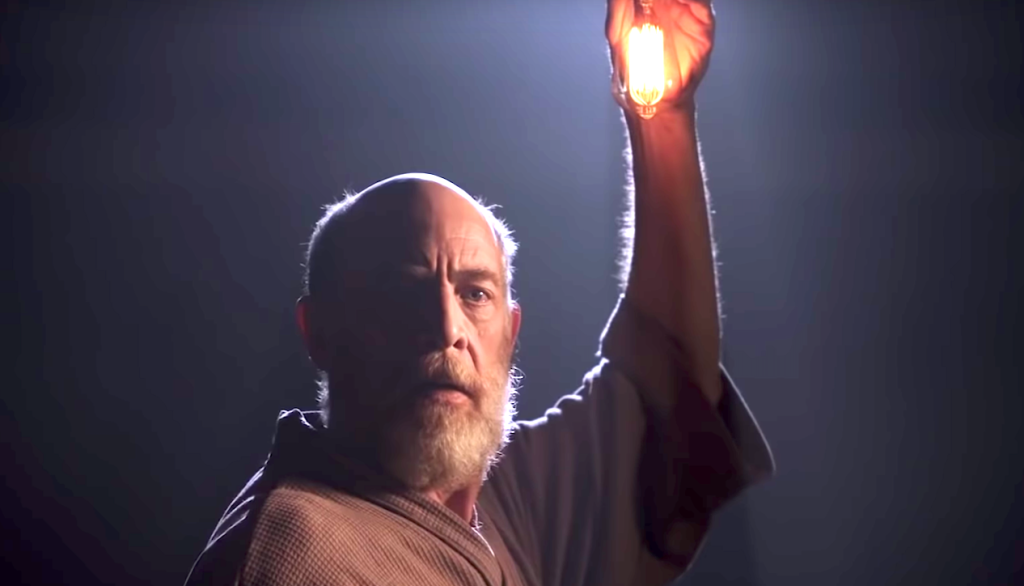
Steven (J.K. Simmons) is a shell of a man. He drinks too much, lives in squalor and has distanced himself from his remaining family. Through a rotating series of flashbacks, we’re introduced to Steven as a boy dealing with the complexities of his parents’ divorce, and also as a young man (Sebastian Stan) who has just started to make his own life-altering missteps. For present-day Steven, a phone call delivering upsetting news brings all of his past trauma to the surface.

I’m Not Here is frustrating. Its cast is more than capable of knocking this kind of material out of the park, but they are hobbled by a poor script and weak direction. Simmons fares best as his segments are solo and allow him to channel the intensity that’s he’s so well known for. The rest of the cast, including Stan, Maika Monroe and Mandy Moore, get bogged down by the cliche-ridden script. The lack of subtlety, especially in the flashback segments, undermines the emotional wallop of grief and loss that director Michelle Schumacher is trying to convey.

Schumacher’s handling of the material is scattershot. The present day scenes involving Simmons show a confidence that isn’t replicated in the flashbacks. The present day material has a more natural flow that lets the audience settle into Steven’s world of loneliness and self-pity. The darkness of his home mirrors the darkness of his life. On the other hand, the flashbacks offer hazy, overlit scenes that wouldn’t be out of place on CBS’s prime time schedule.

Casting Steven as the ultimate Unreliable Narrator is perhaps I’m Not Here’s greatest strength. His unwillingness to come to terms with his choices have clouded his memories with excuses. Steven’s memories cast him as a victim with only slivers of truth peeking through.

I’m Not Here has the foundation for a complex look at how tragedy and grief shape us, but it doesn’t have the follow-through. This one is not worth remembering.

https://youtu.be/sYDwdCdXCOM


Just a Girl

Captain Marvel

by MaddWolf

We had very high expectations for Captain Marvel.

Because showcasing this historic, female Marvel hero offers the chance to see everything from a new lens?

That’s awesome, but no.

Because Oscar-winner Brie Larson is always a kick and we could not wait to see what she could do with such a big movie?

True, but no.

We were pumped because writers/directors Anna Boden and Ryan Fleck are amazing filmmakers and we always, always have high expectations for their work. Who cares that it‘s a superhero movie? True, they’ve made their names with indie standouts (Half Nelson, Sugar), but we were betting they could move the setting to “blockbuster” and keep their character-based storytelling instincts.

After a wobbly start, that bet pays off.

So does Larson. She commands the screen—not to mention earthlings and aliens alike—and is a flat-out gas as Carol Danvers/Captain Marvel. Even better is the way Boden and Fleck address sexism with a character who’s basically just always pissed off.

Agent Fury (Sam Jackson – hilarious) is right: the “grunge thing” suits her.

Grunge is a thing because Captain Marvel wallows gleefully in all things 90s – especially the tunes. A glorious action sequence set to Gwen Stefani’s “Just a Girl” is a high point, and could’ve rivaled Kingsman‘s “Free Bird” segment if given a Skynyrd-level running time (lighters down, please). A needle-on-turntable shot seems a bit out of place, but hey, that Nirvana tune that follows goes down just fine.

The throwback vibe entertains and the clever soundtrack kicks all manner of ass—as does Marvel. The humor feels mostly right, the galactic tensions carry greater weight as the film progresses, and both the mid and end credits stingers are winners.

Boden and Fleck (with co-writer Geneva Robertson-Dworet) streamline Danvers’s comic book history effectively, but as is often the case with these origin stories, act 1 still sputters, betraying a lack of intergalactic vision (or too much of a fondness for cheap-ass Star Trek movies). Once Vers (The Captain’s pre-metamorphosis name) hits earth and some deeper themes are woven into the fun, Captain Marvel finds its groove.

Much of that is thanks to Jackson, whose chemistry with everyone is his trademark in films, and his screen time with Larson is always a sparkling, witty treat. Because of its time stamp, the film can also craft an engaging origin story for Fury, Coulson (Clark Gregg) and the entire Avengers project, aided by continually amazing advancements in digital fountains of youth.

Jude Law, Annette Bening and Lashana Lynch sparkle in a supporting cast buoyed by Ben Mendelsohn’s welcome presence. Playing sometimes with, and sometimes against type, he reminds Big Box Office audiences that he’s so much more than his scenery-chewing villains of late. (Boden and Fleck, who cast him in their amazing poker flick Mississippi Grind, already knew this.)

So, over 20 films and DC’s Wonder Woman success later, the MCU offers its first female lead, a fact certainly not lost on Boden and Fleck. They pull no punches when it comes to the idea of heroism: question authority, don’t let anyone tell you what you can and can’t accomplish, fuck mansplaining. Oh, and heroes rescue refugees, they don’t cause them more suffering.

And as much as Wonder Woman earned its acclaim, Marvel manages to one-up DC yet again. Captain Marvel is anchored by even more unabashed girl power, and stands strong on its own while whetting your appetite for what comes next.


Swallowed Whole

The Hole in the Ground

by Hope Madden

About a month ago the film The Prodigy came out, and promptly disappeared. Lee Cronin’s Irish horror The Hole in the Ground treads similar territory: a mother looks at her young son and wonders with terror who it is she sees.

Where Prodigy took the path most ludicrous, Cronin mines a parent’s disappointment, grief, loneliness and alienation for more poignant results.

Sara (Seána Kerslake), along with her bib overalls and young son Chris (James Quinn Markey), are finding it a little tough to settle into their new home in a very rural town. Chris misses his dad. Sara is having some life-at-the-crossroads anxiety.

Then a creepy neighbor, a massive sink hole (looks a bit like the sarlacc pit) and Ireland’s incredibly creepy folk music get inside her head and things really fall apart.

I grew up listening to nothing but Irish music. If you don’t think it’s creepy, you aren’t listening properly.

In execution, The Hole in the Ground is less The Prodigy and more of a cross between the masterpiece of maternal grief, The Babadook, and another Irish horror of changelings and woodland spirits, The Hallow. (Plus a surprise third act inspiration I won’t mention for fear of spoilers.)

You look at your child one day and don’t recognize him or her. It’s a natural internal tension and a scab horror movies like to pick. Kids go through phases, your anxiety is reflected in their behavior, and suddenly you don’t really like what you see. You miss the cuter, littler version. Or in this case, you fear that inside your beautiful, sweet son lurks the same abusive monster as his father.

Cronin’s subtext never threatens his story, but instead informs the dread and guilt that pervade every scene. Performances are quite solid and the way folklore – in tale and in song – is woven through the story creates a hypnotic effect.

If you’re a horror fan looking to celebrate the season, here’s a more authentic way to do it than watching Leprechaun for the 15th time.

Team Rocket

Apollo 11

by George Wolf

A majestic and inspirational marriage of the historic and the cutting edge, Apollo 11 is a monumental achievement, one full of startling immediacy and stirring heroics.

Just weeks after the debut of Peter Jackson’s time-traveling masterwork They Shall Not Grow Old, director Todd Douglas Miller also makes history live again through similar reliance on restorative genius and respectful restraint.

There is no flowery writing or voiceover narration, just the words and pictures of July 1969, when Americans walked on the moon and returned home safely.

The restored footage is so crisp and detailed (even more so in the IMAX version) that shots of a young Johnny Carson among the launch spectators stand as a bracing reminder this is not the latest big budget Hollywood production.

This is living, breathing history you’re soaking in. And damn is it thrilling.

From the capsule “home movies” of Neil Armstrong and Buzz Aldrin, to the mission control checklists and ticking event countdowns, Apollo 11 immerses you in moments that will elicit breathlessness for the drama, pride for the science, respect for the heroism and awe for the wonder.

And still, Apollo 11 stands even taller for its own humble nature. Even in this grand scale, the film never feels like it is trying to deliver a final word, in fact just the opposite.

It is a salute to the thirst for knowledge and discovery with an invitation, on the near 50th anniversary of the iconic voyage, to reconsider the achievement.

Now if you’ll excuse me, I’m going to check if there’s any theaters still playing First Man….

IMAX version:

Death Bemuses Her

A Madea Family Funeral

by George Wolf

So far, Madea has plowed through a family reunion, a wedding, jail, witness protection, a Christmas and at least two Halloweens. You knew the time would come when she crashed a funeral.

That time is now.

Writer/director/star Tyler Perry is back for round number eight with Madea and her crazy crew, many of whom are also played by Perry. This time, everyone has gathered for a surprise anniversary party, but surprise!, one family member turns up dead, meaning a funeral is now in order.

Who can they all turn to for funeral planning at a moment’s notice?

You can bet the service will carry some surprises of its own, especially with so many secrets just waiting to be spilled. Some family members are carrying on with other significant others (What? In a Tyler Perry movie?), and some people just can’t be trusted to keep quiet.

We’re eight movies into this formula, so don’t expect any big changes. The focus isn’t storytelling, character development, or humor that carries any thread of organic authenticity. What’s important is getting Perry’s different characters into convoluted situations where they can talk smack to each other.

That mission is accomplished early and often.

Expect plenty of “Hush up!”‘s and smacks in the face while the supporting characters stand around like good-looking mannequins that keep repeating “You okay?” to each other.

Perry does manage a genuine laugh or two (mainly from his “Joe” and “Heathrow” characters) among the painful shenanigans, but the best thing about this Madea is that there are so many that have come before.

She clearly has found an audience. If you’re part of it, A Madea Family Funeral will deliver just what you’re expecting.

If you’re not, there’s little reason to join the family now.


A Friend in Need

Greta

by Hope Madden

Greta is a mess, and I don’t just mean the character.

In fact, I’m not sure the character is a mess at all, no matter how she hopes to fool you. Played by the inimitable Isabelle Huppert, the titular friend in need is, in fact, a crackpot. She’s a force to be reckoned with, and poor, wholesome Frances (Chloe Grace Moretz) doesn’t seem up to the reckoning.

A Midwestern transplant still grieving the loss of her mother, Frances lives in an irredeemably perfect New York apartment with her debutante bestie (Maika Monroe), but she feels a little untethered in the big city without her mom to call.

Enter Greta, the lonely older woman whose handbag Frances finds on the subway train and returns.

Director Neil Jordan hasn’t shot a feature since his underappreciated 2012 vampire fantasy, Byzantium. Here he shares writing duties with Ray Wright, who’s made a career of outright reboots and overt reworkings.

Like maybe Fatal Attraction with mommy issues.

There are elements to appreciate about Greta. Huppert is superb, her performance becoming more unhinged and eventually comical in that Nic Cage sort of way. Her time onscreen is creepy fun.

Moretz’s fresh-faced grief convinces for a while, and Monroe excels in an absolutely thankless role.

So what’s the problem? Well, number one, are we really afraid of this tiny, frail old lady?

No. We are not. Jesus, push her down already. I get it, you’re polite, but come on. I’m Midwestern and I’d have knocked her under a NYC taxi by now.

The terror is so unreasonable and yet so earnestly conveyed that scenes meant to be tense are comedic, and once you start laughing it’s hard to stop.

In fact, the sound of your own guffaws might distract you from the film’s truly breathtaking leaps of logic. It often feels as if whole reels were chunked out of this film and replaced with unconnected scenes from a private detective TV drama—one in which Stephen Rea’s dialog is inexplicably and unconvincingly dubbed.

What on earth?!

Well, par for the course with this film. It opens strong, develops well and relies on Huppert’s supernatural presence to create palpable tension before going entirely off the rails.

Sibling Smackdown

Fighting With My Family

by Hope Madden

Rarely, if ever, has WWE PR been as charming as Stephen Merchant’s biopic Fighting with My Family.

A traditional underdog tale, the film is also savvy enough to know how to wield its source material to broaden its audience beyond your traditional WWE fanatic.

Saraya Knight (Florence Pugh) — or Britani or, later, Paige — takes part in her family’s business. Mornings, she hands out flyers to their wrestling events, mainly to passersby who look down their noses at the notion.

Afternoons she helps her brother Zak (Jack Lowden) coach local kids on the arts of grappling. Evenings, she gets in the ring with her brother, mum (Lena Headey) and dad (Nick Frost) to entertain amateur wrestling enthusiasts in Norwich, England.

Then the call comes inviting Saraya and Zak to audition for WWE at an upcoming London Smackdown event.

The set-up is there and, for any sports story, it is golden. Scrappy working class upbringing? Check! Sibling rivalry? Check! Opportunities for montage? Everywhere!

Better still is a madcap supporting cast you can’t help but love. Frost and Headey share a really lovely and incredibly goofy onscreen chemistry as the Mohawk-sporting ex-con patriarch and former homeless drug addict turned devoted mum. Merchant’s sharp direction and even sharper script avoids condescension or sentimentality.

The solid first act dovetails nicely into a less comedic journey for Saraya, the only sibling the WWE actually hires. Additional supporting players cannot live up to the charisma of Saraya’s family, but Dwayne Johnson plays himself and he has enough charisma for an entire cast.

Vince Vaughn, adding one more to a string of solid performances, plays the recruiter/drill sergeant/coach who helps Saraya find her individual strength for the journey to WWE Diva.

Pugh is the spark that makes the engines go, here. Though Saraya’s wigs are not always believable, her inner conflict and fighting spirit are.

While Fighting with My Family manages to sidestep or subvert a lot of genre clichés, it hardly breaks new ground. Instead, Merchant elevates the familiar with a more authentic feeling backstory and a winning cast.

Chaos Reigns

Lords of Chaos

by Hope Madden

“Based on truth and lies and what actually happened.”

One of the founders of Norway’s black metal sound and scene, Mayhem benefited and eventually suffered from a series of very black metal-ish crimes and misdemeanors—mostly crimes, including arson and murder. A cross between punk rock ethos and early metal imagery, Norwegian black metal espoused a love of Satan and a deep and fiery hatred of Christianity and the Christian moral framework. In keeping with those philosophies, Mayhem became known for far edgier behavior than, say, biting the head off a bat.

Director (and former drummer for Swedish black metal band Bathory) Jonas Åkerlund’s image of art and commerce, fanaticism, metal and death follows Mayhem’s ascension to global notoriety.

Rory Culkin anchors the film as band leader and spinmeister Øystein Aarseth, AKA Euronymous. He narrates with some of Åkerlund and co-writer Dennis Magnusson’s least convincing material—not to mention an absurdly American accent—but the performance itself is the perfect blend of bored teen and insecure leader vulnerable to attack. Inside Culkin’s quietly convincing performance, deadpan cynicism battles with genuine tenderness in a way that gives the film an affecting yet appropriately faulty soul.

Did Euronymous take advantage of early tragedy to create a persona, or did he live his message?

In its smarter moments, Lords of Chaos is a film about poseurs. Who is and who isn’t? And what do you do if you find that you have become the poseur in the circle of your own creation?

How much of it was all for show? Maybe a lot, but when you become a magnet for those who embrace your bullshit, hopefully that bullshit does not require a lot of bloodshed.

Enter Varg (Emery Cohen), a novice and admirer who would become a disenchanted disciple. Cohen’s arc from sycophantic insecurity to narcissistic sociopathy impresses, and as Euronymous’s grasp on the position of Alpha weakens, the dynamic between the two actors sparks.

Culkin’s slippery performance in these scenes works well within the true crime context, but Åkerlund has trouble as he shifts back and forth between crime drama and comedy of manners. There is a consistent “kids sure are stupid” theme a la Alpha Dog or River’s Edge that he can’t fit into his larger themes. While most scenes taken on their own work (if you can forgive the unexplained and hard-to-miss cacophony of accents), Åkerlund can’t pull them together for a cohesive whole.

In recreating a series of increasingly more unfortunate events, Åkerlund never manages to shed new light on the crimes at hand. And maybe he can’t—maybe that’s the point. Perhaps it’s impossible to entirely differentiate between philosophy and promotion, but what the filmmaker was trying to accomplish is just as tough to tease out.

Dragon Ball 3

How to Train Your Dragon: The Hidden World

by George Wolf

I usually like to steer clear of spoilers, but I really need to warn you…this film contains gratuitous dragon flirting.

And full-on nuzzling.

It’s cute, but The Hidden World offers so much more than just cute, and more than enough substance to solidify the entire Dragon saga as a top tier film trilogy.

Writer/director Dean DeBlois is back to finish what he started in 2010, and continued in 2014. He picks up the tale one year after the close of HTTYD 2, when our hero Hiccup (voiced by Jay Baruchel) finds that his pal Toothless isn’t the only Night Fury dragon, after all.

This new one is a Light Fury, she’s a charmer, and Toothless is in love.

But all of Hiccup’s dragon friends are in danger, none more than Toothless, thanks to the bloodthirsty Grimmel (F. Murray Abraham) and his batallion of dragon hunters. To continue living in peace, Hiccup and his entire village must find mythical dragon birthplace The Hidden World before Grimmel does.

This franchise has delivered true visual wonder since the original film’s opening frame, and part 3, taking natural advantage of enhanced technology, ups the ante. The aerial gymnastics and high seas swashbuckling are propelled by animation that is deep and rich, while new details in the dragons’ faces bring wonderful nuance and expression.

There is real tension here, along with warm humor, thrilling action pieces and resonant themes backed by genuine emotion.

As you realize Hiccup is leading a group of wartime refugees, the bittersweet coming-of-age tale moves to the forefront. We’ve watched Hiccup move from losing his father (Gerard Buter) to finding his mother (Cate Blanchett) to becoming a father figure for the orphaned Toothless. Now, he may have to let his best friend go and remember that “with love comes loss, it’s part of the deal.”

These themes may not be new, but DeBlois handles them with an understated poignancy that hits the feels, leading to a breathless emotional high point reminiscent of Toy Story 3‘s classic “holding hands” throat-lumper.

Packed with excitement, sincerity and visual amazeballs, The Hidden World ties a can’t-miss ribbon on a wonderful trilogy.


Cold Comfort

Arctic

by George Wolf

Arctic is a survival film that wastes no time getting to the survival.

Director/co-writer Joe Penna drops us somewhere in the Arctic Circle long enough after a place crash that lone survivor Overgård (Mads Mikkelsen) has had time to construct a makeshift camp. We get no backstory, no thrilling crash effects and no time to assess the situation, which is perfect on two fronts.

1) The situation is pretty damn clear, and 2) so are the film’s unflinching parameters. There’ll be no spoon-feeding here, are you in or are you out?

Mikkelsen is all in, with a supremely committed performance full of both strength and vulnerability. In a film that’s nearly dialog-free, Mikkelsen sparks a curiosity about his character that the film is in no hurry to indulge. Overgård is clearly meticulous and intelligent, cautious and resourceful, but it is after an early rescue attempt goes awry that Mikkelsen delivers the layers of humanity that add an ethereal beauty to the sterile, potentially deadly climate.

Suddenly, there is the safety of a badly injured woman (Maria Thelma Smáradóttir) to consider. As Overgård weighs the options of waiting for another rescue or striking out on foot, Mikkelson excels in making the emotional weight authentic, along with some simple joys that come from supplies found in the woman’s downed helicopter.

While it might be tempting to label this a snow-covered Castaway, the experience is closer to Robert Redford’s 2013 vehicle All is Lost. In his feature debut, Penna displays majestic wide-angle vistas without any photographic glamour that might betray what Overgård is up against. In trimming away all excess narrative, he immerses you only in the often gut-wrenching journey.

The result is never less than believable, a no muss, plenty of frigid fuss endurance tale that feels real.

And real cold.