Category Archives: New In Theaters

Reviews of what’s out now

Fruitopia

Strawberry Mansion

by Hope Madden

Smart, whimsical and decidedly analog, Kentucker Audley and Albert Birney’s Strawberry Mansion turns dystopian dreamscape into retro children’s television.

Audley and Birney co-write, co-direct and co-star in this pop-surrealist romance. Audley plays James Preble, mild-mannered government employee. Preble is an auditor for the agency that taxes dreams.

Let’s say there’s a buffalo in your dream. A dream buffalo apparently runs about 5k, which costs around a nickel in taxes. Likewise, a hot air balloon, a flower, a nice view—all of it taxable. But somehow Arabella Isadora (Penny Fuller) managed never to turn in any dream taxes, compelling Prebel to pay her a visit in her titular abode.

Once there, Prebel must work his way through thousands of VHS tapes of Bella’s dreams (rather than the digital downloads that were made legal requirements years ago) to assess back taxes.

Strawberry Mansion tells a story of government overreach, corporate greed and capitalist dystopia. But it spins this yarn of a near-future surveillance state within a weird and charming, vivid dreamscape. It’s Philip K. Dick meets H.R. Pufnstuf. Nostalgia becomes the filmmakers’ escape.

The dream sequences are unpretentious, jubilant nonsense that develop a parallel plotline. Tyler Davis’s cinematography of saturated colors celebrates the childlike tactile quality of the set design and creature design, which are both handcrafted magnificence. Dan Deacon’s evocative score meshes with the directors’ vision to blur the lines between dream and reality, life with death.

There’s a toad waiter, rat sailors, and more buckets of Cap’n Kelly’s Fried Chicken than a person could reasonably consume. Strawberry Mansion’s cynicism butts up against a wholesome romantic nature in one of many ways that the filmmakers’ form perfectly matches their purpose.

Prebel treads in others’ dreams, a voyeur in a nonsense world where nothing makes logical sense, but everything feels weirdly accurate. The same experience waits for the film’s audience.

Dogs of War

Dog

by Hope Madden

Dog—the new Channing Tatum film about a former Army Ranger driving cross country with another former Army Ranger, this one an angry Belgian Malinois named Lulu—is not what you expect.

I wish that was a good thing.

Because what you expect is likely not that good to start with: hunky but irresponsible man learning love and responsibility from an anxious but lovable hound. And you do get that. The emotional trajectory of Dog is no more in question than whether the two bedraggled messes will make it on time to their final destination, the funeral of a fallen comrade.

But if you are expecting to laugh, even once, you are in for a surprise.

The film, co-directed by Tatum (his first effort behind the camera), makes a number of weak attempts at comedy. If you’ve seen the trailer, you’ve seen all of them. Not a single one lands, and each supposed joke is so lazy, so telegraphed and tired.

Dog is a road trip film, which is often an excuse to string together random comedy sketches. Sometimes this works (Vacation, The Mitchells vs. the Machines). Usually, it doesn’t. Certainly, Dog doesn’t take advantage of the opportunities for hilarity inherent in the cross-country trip.

But don’t dismiss Dog as simply a decidedly unfunny comedy. Tatum and co-director Reid Carolin, who co-wrote the script with Brett Rodriguez, use the gags as a sweetener on top of a very dark story about PTSD and living with the emotional and physical damage of war.

What lies just beneath the weakly attempted comedy is an incredibly dark film. Not a dark comedy—not by any stretch. Tatum and gang are not going for laughs at the expense of these two scarred veterans and their collective trauma.

Lulu is every embattled, broken veteran and we don’t want anything bad to happen to Lulu. Why, then, are we so careless with our broken and embattled veterans who are not also beautiful Belgian Malinois?

It’s a worthy message trapped in a sincere, tonally chaotic, humorless, lazily constructed mess of a movie. Dog has merit I did not expect going into it. I wish it was a better movie.

He Sees Dead People

The Long Walk

by George Wolf

Even before the opening credits, The Long Walk (Bor Mi Vanh Chark) is a fascinating film.

The near-future setting that mixes sci-fi, horror and mystery thriller themes is interesting enough. But after a two-year wait for release, it becomes the first Lao film to screen theatrically in the States, as well as the latest project from Mattie Do, Laos’ first and only female director and the only Laotian filmmaker to work in the horror and fantastic genres. 

If Do felt any added pressure from all those firsts and onlys, it doesn’t show. She crafts Christopher Larsen’s script into an emotional, compelling and culturally rich tale of life and death and afterlife.

The Old Man (Yannawoutthi Chanthalungsy) sees ghosts. It started when he was The Boy (Por Silatsa) and first encountered The Girl (Noutnapha Soydara) dying on the side of the road.

The ghost of The Girl became a silent friend to The Boy, and now, some 50 years later, The Old Man finds that his spiritual guide can transport him back in time to when his mother was near death from illness.

Alongside The Old Man’s time-traveling quest to ease his mother’s pain, he’s contacted in the present by Lina (Vilouna Phetmany), a woman whose mother is missing and presumed dead. Lina has heard of The Old Man’s psychic abilities, and seeks his help in locating the body so her mother’s spirit can find peace.

Do is in no hurry here, and not interested in clearly marking when the time or narrative thread is shifting. But stick with it and look closely to find another layer revealed that connects past to present in this Loatian village, along with subtle nods to the poverty and governmental policies that are no friend to lengthy life spans.

Ultimately, The Long Walk is more atmospheric than scary, and more enigmatic than thrilling, with even Do and Larsen (who are married) disagreeing over interpretations during a recent Q&A. But give it your time and attention, and the film will reward you with multiple stories in one, inviting you to consider universal themes from intimate new perspectives.

Going Hungry

A Banquet

by Hope Madden

From its unsettling opening moments, Ruth Paxton’s A Banquet sets a tone that never eases. Holly’s (Sienna Guillory) life is certainly never the same.

The event that kicks off the film puts a generational horror in motion that flirts with the supernatural, bringing allegorical focus to the rippling effects of trauma in a family. As a caregiver, Holly likely blames herself for what happened, which makes it harder for her to focus properly on mothering her two teenage daughters, Isabelle (Ruby Stokes) and Betsey (Jessica Alexander).

At first blush, it seems Betsey has the worst of things. Having witnessed the trauma, she’s been particularly needy of her mother’s affection. Or is she hoping to prove to her mother that, indeed, Mom’s love is the cure she’d hoped it might be? Is Betsey trying to prove that to herself?

Or is there some larger force at play, as Betsey claims when she stops eating?

Justin Bull’s screenplay braids ideas associated with this theme of trauma, from anorexia to neglect to guilt and grief and isolation. Details unfold slowly, uncovering lived-in resentments and traumas that heighten tensions.

Paxon sets these ideas loose among an exquisite cast. A brittle Guillory carries the unforgiving emotional complexity scene to scene with appropriate weariness. Alexander brings an enigmatic quality to the role, while Stokes mixes heartbreak with anger to surprising effect.

The great Lindsay Duncan, whose grandmother character haunts the first act and delivers a bracing presence throughout the second, is magnificent.

Paxon’s camera ogles food, which is a trigger in the film, both a tool for caregiving and for Betsey’s rebellion. There’s so much to like about A Banquet — which is why it’s such a frustrating film to watch.

Paxon can’t decide where to take things. She’s filled the screen with exceptional performances, each character exploring fascinating, dark emotional corners. The filmmaker flirts early with body horror, diverts quickly to something more psychological, dips deeply into family drama and never lands on a tone.

This same lack of clarity or commitment begins with Bull’s script, which builds slowly to an energetic if fizzling climax. For all it has going for it, A Banquet answers none of the questions it asks and leaves you wanting.

Blood Red Tape

Bite Me

by Cat McAlpine

Sarah Woods is a vampire. She doesn’t turn into a bat or shy away from crucifixes. She’s just a normal human being who feels better after she’s had a few drops of blood. Her roommate Chrissy has always been transfixed by other people’s blood. Her other roommate Lily likes to drink blood because it helps her embrace her otherness. Together, the three women make up The House of Twilight. And they’re being audited by the IRS.

Naomi McDougall Jones both wrote the script and stars as Sarah, masterfully embodying a woman who is both proud of who she is and frequently uncomfortable in her own skin. Christian Coulson plays a pleasantly plain foil as James, the IRS agent. While Bite Me keeps a toe in weird at all times, it’s a cut and dry romcom. Boy meets girl, they begin an antagonistic relationship that quickly evolves into something more, boy screws it up… you’ve seen the movies.

A lot of the charm of Bite Me is that Sarah never lets you forget that she drinks blood, and that isn’t going to change. It’s both taboo and harmless, repulsive and beautiful. It’s a young pretty girl with a Mike Tyson face tattoo.

Director Meredith Edwards keeps the camera tight and allows a cast of cooky supporting characters to expand the universe. This is the second venture by the writer/star and director duo after their 2014 Imagine I’m Beautiful.

This creative team has gotten a handle on crafting honest and unique stories, best highlighted here by a surprisingly beautiful moment between Sarah and James. The IRS agent whispers his idiosyncrasies to the vampire as they have sex for the first time, and the doubling down of intimacy was a shining moment.

Edwards and Woods never take the story too seriously. James stumbles home from a vampire ball, cape secured around his neck, to find his middle-aged roommate leading her prayer group in reflection about the blood of Christ. Annie Golden is a consistently fun addition as the patronizing Faith.

In another scene, roommate Chrissy (an enigmatic Naomi Grossman) is very proud of her new fake fangs, but they make it nearly impossible for her to choke down her morning cereal.

The film is a refreshing watch with a great reminder to embrace your weird.

Wedding Bell Blues

Marry Me

by Hope Madden

Just two short years ago we thought Jennifer Lopez had a good shot at an Oscar nomination for her layered turn as stripper entrepreneur Ramona in Lorene Scafaria’s Hustlers. Would she, like Ben Affleck, build on that success with more complex, emotionally satisfying supporting roles? Or would she make Marry Me?

Sigh.

Marry Me is a Jennifer Lopez movie from the word go. Actually, director Kat Coiro’s film is even more of a JLo movie than her other countless rom coms about a wildly beautiful but down-to-earth woman who’s just a romantic at heart.

Marry Me wraps a set of music videos around a peek into the world of a globally successful if under-respected musical diva who gets married a lot. So, it’s about as meta as the latest Scream.

Lopez’s character name is Kat Valdez, and Kat’s new single “Marry Me” is a tribute to her love with fellow musical phenom Bastian (Maluma). They will be wed onstage in front of a sold-out NYC crowd and streamed for tens of millions of people around the globe.

Until she doesn’t. She picks some kid’s dad (Owen Wilson) out of the audience and marries him instead.

Premise Beach!

As idiotic and contrived as that sounds—and as the trailer made it look–Marry Me delivers some charm. That has very little to do with the plot or its obvious trajectory, and it doesn’t really have much to do with the chemistry between Lopez and Wilson (which is lacking, honestly).

Harper Dill and John Rogers’s screenplay, based on Bobby Crosby’s graphic novel, pulls you in by treading on Lopez’s public persona. Well-placed Jimmy Fallon cameos create a sense of what it must be like to live, succeed and fail so very publicly. Compare this to Charlie (Wilson) and his hum-drum life of a math teacher, and the two-different-worlds romance is set.

Lopez’s acting is as superficial as the film requires. Wilson delivers a performance as characteristically quirky and goofy as expected. (Though he never once says wow, and let’s be honest, this character would say wow.)

Supporting turns from Sarah Silverman, Chloe Coleman and John Bradley help overcome a sparsity of laughter.

Is Marry Me an opportunistic music video/hit single/Valentine’s Day date bundle orchestrated by a savvy business mogul? It is. And it’s fine. Plus, if it goes well, maybe she’ll take on another really good character next time.

Break Up to Make Up

I Want You Back

by George Wolf

If we’re gonna start talking about I Want You Back, we can’t start at the start, we have to start at the finish. Because no matter what you think about the film’s first 100 minutes, the last five may seriously turn your head.

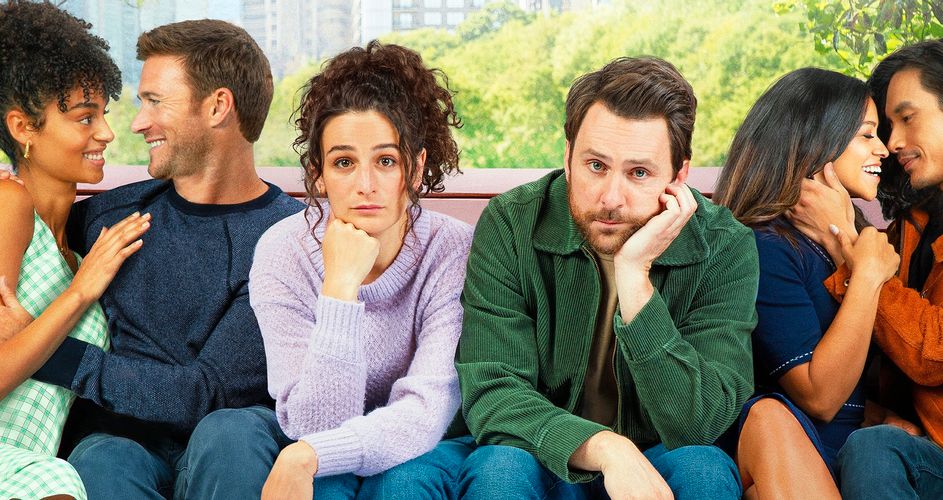
But before that Linda Blair moment, Emma (Jenny Slate) and Peter (Charlie Day) first meet in the stairwell of their office building. Emma works for an Orthodontist, Peter’s with a retirement home company, and they both just got dumped. Noah (Scott Eastwood, finally doing more acting than posing) left her for Ginny (Clark Backo), Anne (Gina Rodriguez) left him for Logan (Manny Jacinto), and the two new “sadness siblings” are all in their feelings.

So they start hanging out, giving each other enough emotional support to eventually devise a plan. Emma will throw herself at Logan, while Peter (admitting he’s not hot enough to go after Ginny) will make friends with Noah so he can steer him back to Emma. And with that, the Break Up So We Can Make Up game is on!

We all know where this is going, right? If we’ve seen a romantic comedy we do, and once again the trick lies in finding some way to make the characters and their journey to love worth rooting for.

Screenwriters Isaac Aptaker and Elizabeth Berger (the writing duo behind the terrific Love, Simon and TV’s This Is Us) pair with director Jason Orley for a solid game plan, but it’s the irresistible chemistry of Slate and Day that keeps this madcap setup consistently engaging.

Slate is such an underrated talent. Once again she’s able to confidently take a character from hi-jinx (like the proposed threesome with Anne and Logan) to humanity (an unexpected friendship with a withdrawn kid) while making us care enough to welcome all of it.

And while Day is basically bringing another variation of his usual schtick, it’s still funny and, when paired with Slate, endearing.

Which brings us back to that ending, one that lands with such a thud I was really hoping it was merely a dream sequence. Any semblance of nuance or modern perspective on romance is suddenly replaced with the easiest, most rushed and shallow wrap up this side of a TV sitcom – with a set design to match.

What happened to that other movie? We had a nice thing going, and then it just ghosted us! Come back, I know it can work!

Hmmm…maybe we should hatch a plan.

Among the Missing

Catch the Fair One

by Brandon Thomas

In 2016, a study by the National Crime Information Center found that out of a reported 5,712 cases of missing American Indian and Alaska Native women, only 116 cases were in the databases of the U.S. Department of Justice. The investigations into these missing women are often impeded by the lack of communication between federal, local and tribal law enforcement.

Filemaker Josef Kubota Wladyka uses this real-life scenario to deliver a thoughtful – but thrilling – tale of guilt, regret and closure. 

Kaylee (Kali Reis) was once a promising amateur boxer. Her life fell apart though when her younger sister, Weeta (Mainaku Borrero), went missing while walking home one night. Years later, a struggling Kaylee is still searching for her sister. Desperation and guilt lead Kaylee down a dark path – one that she hopes will end with her finding Weeta alive. 

Catch the Fair One focuses on the important issue of missing indigenous women but does so through the guise of a revenge flick. This film is brutal. In the world of the movie, the innocent are prey and the villainous predators are always lurking and usually slinking back to the suburbs.

Wladyka makes his feature debut with stunning confidence. The neatness of the storytelling is as precise as it is dark. The tonal control is extraordinary as the film straddles the line between genre and drama without fully embracing either. Catch the Fair One is heavily reminiscent of Jeremy Saulnier’s terrific Blue Ruin.

The ordinary nature of the villains is chilling. Their nonchalant attitude toward dealing in sex slavery is enough to cause the hair on the back of your neck to stand up.

Wladyka gets extra mileage out of casting Kevin Dunn (Transformers) and Daniel Henshall (The Snowtown Murders and The Babadook) as father and son bad guys. Dunn is especially disarming with the baggage he brings in this type of role. He’s one of the more recognizable “Hey, it’s that guy!” actors working today, and those roles aren’t typically this bloodthirsty. 

The real standout is Kali Reis. Being Reis’s first acting role, it would be easy to sit back and nitpick every acting decision she makes along the way. Fortunately, Reis’s vulnerability mixed with sheer intensity never allows for that kind of surface scrutiny to take place. 

She’s more than capable in the physical scenes, but it’s in those softer moments where Reis shows her quiet determination that feels so in sync with the character’s state of mind and her eventual plan. 

With a thrilling story and a knock-out lead performance, Catch the Fair One announces itself as one of the best movies of the year so far.

Murder Was Again the Case

Death on the Nile

by George Wolf

“He accuses everyone of murder!”

“It is a problem, I admit.”

This playful admission by legendary detective Hercule Poirot (Kenneth Branagh) is one of the ways Death on the Nile has some winking fun with the often used, often parodied Agatha Christie formula.

And since Christie’s source novel is one of the works that perfected that formula, it’s smart to acknowledge some inherent campiness while you’re trying to honor the genius of the original construction.

After his successful revival of Murder on the Orient Express in 2017, Branagh is back to again star, direct, and team with screenwriter Michael Green for another star-studded, claustrophobic whodunit.

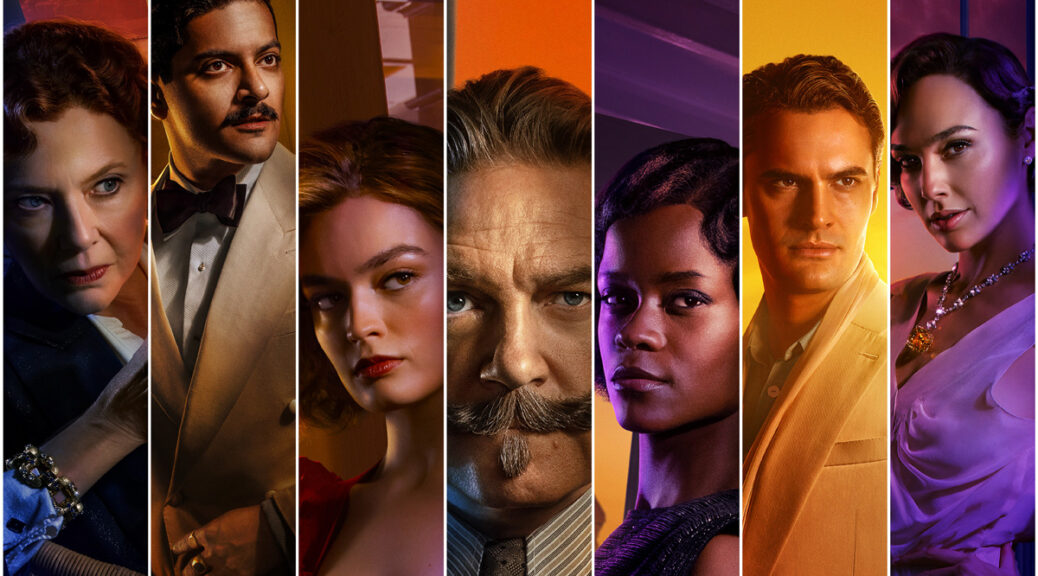
This time we’re aboard a lavish cruise down the Nile in the late 1930s. Wealthy heiress Linnet Ridgeway (Gal Gadot) has just married the dashing Simon Doyle (Armie Hammer), and they’ve invited a group of friends and family (including Annette Bening, Sophie Okonedo, Russell Brand, Jennifer Saunders, Letitia Wright and no-that’s-not-Margot- Robbie-it’s Emma Mackey) to help them celebrate.

Ah, but love and money bring “conflicting lies and jealousies,” and soon Linnet proves wise in putting the world’s greatest detective on the guest list. Murder is again the case!

And when Hercule Poirot is on it – which takes a while – Branagh and Green craft a capable reminder of what makes this formula so sturdy. From the discovery of clues to the requisite red-herring accusations, it’s just fun to feel part of Poirot’s deductive process.

But while Branagh and cinematographer Haris Zambarloukos expertly utilize the confines of the ship to their advantage, the surrounding locales smack of outdated CGI and land as a disappointing stand-in for the eye-popping wonder of Orient Express.

Branagh and Green also try valiantly to weave a layer of love through the mystery. Opening with a prologue that introduces a decades-old pining (along with Poirot’s keen eye for detail and a dubious inspiration for that mustache), the film’s ambitions for this added narrative weight are worthy, but ultimately add more running time than substance.

The epilogue that checks in with Poirot six months after the cruise lets us know Branagh may have more Christie mysteries on his itinerary, and that’s not a bad thing. Death on the Nile proves that a trusty return to glamour and intrigue can still overcome some excess baggage.

Star Crossed

A Grand Romantic Gesture

by Rachel Willis

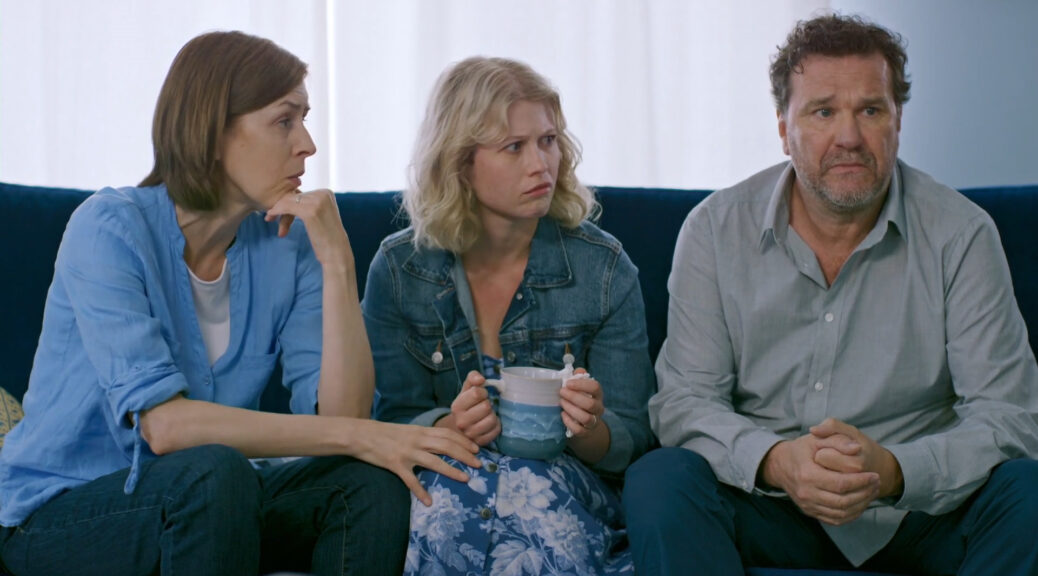
After losing her career, Ava (Gina Mckee) seeks fulfillment from a community drama course in writer/director Joan Carr-Wiggin’s film, A Grand Romantic Gesture.

The film opens with a confession, as we quickly learn Ava has fallen for her classmate, Simon (Douglas Hodge). Though both married, their connection grows as the two discover similar dissatisfaction with where life has brought them.

Mining the desires and dizzying highs of illicit love from Romeo and Juliet, Carr-Wiggin applies the famous love (lust?) story to a man and woman in their 50s.

Though not the first film to explore mature love, A Grand Romantic Gesture might be the first to portray Romeo and Juliet as middle-aged. Though the approach is subtly humorous in how it comments that heady love isn’t just for the young, R&J’s smoldering passion just isn’t there. There’s no doubt these characters care for each other, but when the film tries for something more passionate, even reckless, it doesn’t land. Rather than mirroring the high drama of young, forbidden love, it comes across as silly.

Layered onto the story, are Real World-style confessions. The confession room segments might have worked if they’d stayed with Ava, but the snippets become an unnecessary drag on an otherwise steadily rolling story. The things revealed in the confessionals are more artfully delivered via dialogue and body language.

The movie’s tone never decides where to settle, veering from optimism to cynicism with each changing scene. Is one too old to find love? Or does age bring freedom from the pressure of staying for the sake of children?

There are some funny moments in the story, but the dizzying shifts from rom-com to passionate drama are hard to accept. The film might have benefited from a continued light touch in its references to Shakespeare’s famous tragedy.

Though earnest in their roles, McKee and Hodge never successfully convince us of their fervor for each other. Unfortunate for a film with such an ambitious title.