All posts by maddwolf

Living Dangerously

A Most Violent Year

by Hope Madden

J. C. Chandor knows what he wants to say. He knows the content, the concepts, and the situations, and while you may not, do not expect to be spoon fed. His 2011 debut Margin Call wasted no time getting audiences up to speed on Wall Street’s inner workings, nor did Chandor preface last year’s All Is Lost with a tutorial on yachting. Chandor believes you are wise enough to keep up, which is a daunting but wonderful change of pace.

Like the filmmaker’s previous work, A Most Violent Year drops you in the center of an episode in progress, and while you may know little of the crime in New York City in 1981, and less still about the fuel business, Chandor hopes you’ll push all that aside to take in the kind of period drama we haven’t seen since Sidney Lumet.

Oscar Isaac plays handsome, proud, honorable man Abel Morales, who bought his father-in-law’s heating oil business and is brokering a deal that will allow him to break free from that shadow and control his own fate – if he can complete the payment in 30 days.

Meanwhile, a gunman’s been prowling his property, hijackers are taking his trucks, his terrified drivers want to arm themselves illegally, and the DA promises coming indictments.

A Most Violent Year is a film about the merits versus moral compromise of the American Dream, and Chandor’s slow boil of a film keeps you on edge for a full 125 minutes because there is absolutely no guessing what is coming next.

Isaac and Jessica Chastain, playing his wife Anna, are measured perfection – an impeccable, in-control Abel balanced by a volatile Anna. They become a force, survivors who check and balance each other. Their chemistry is amazing. Co-stars David Oyelowo and Albert Brooks are also excellent.

The film is satisfyingly untidy – a fact that makes it unpredictable and genuinely life-like. No flashbacks remind you of one legacy or explain another character’s behavior because that doesn’t happen in life, either. People are as they are, situations complicate and unravel, marriages take shape and morph in to something else.

It’s also a piece of atmospheric perfection, a provocatively gritty and realistic image of NYC in 1981. As much authenticity as you’ll find in Chandor’s screenplay, his wide shots, subway graffiti, lighting and wardrobe complete the picture. It’s just another reason you feel as if you’re watching an old Sidney Lumet film, and wishing there were more filmmakers willing to make a location and point in time as grand a character as anyone in the ensemble.

Verdict-4-5-Stars

Working for the Weekend

Two Days, One Night

by Hope Madden

A woman wakes from a nap due to a phone call. She’s baking for the kids. It seems like a lovely way to spend your afternoon, really, drowsy and surrounded by the smell of baked goods. So why does Sandra (Oscar-nominated Marion Cotillard) sound defensive about the nap and too enthusiastic about the treats with whoever is on the phone?

Because there are layers and layers to the most ordinary of circumstances, a point Two Days, One Night explores so effectively.

Sandra’s co-workers were faced with a vote: each stands to gain a large bonus in return for eliminating one salary – Sandra’s. She has the weekend to convince them to give up their bonus and save her job.

If it sounds contrived, rest assured that writing/directing brothers Jean-Pierre and Luc Dardenne embrace their characteristically naturalistic style to great effect. The films lacks any hint of melodrama, thanks in part to the brothers’ honest style and in greater part to a lead performance utterly absent of artificiality.

Cotillard is a master, and this film is no exception, it’s a highlight. Her gestures, her gaze, her posture, every syllable of dialogue simply convince you this is a woman fighting for her dignity as well as her job. She’s aided by a large, capable cast and buoyed by the Dardennes’ fly-on-the-wall camera work.

The film has larger goals, looking at ideas as concrete as corporate indifference, as amorphous as depression, and as grand as human nature. Grounding all this examination in the intimate and mundane details of one woman’s struggle keeps the film anchored in the reality so precious to the filmmakers.

Two Days, One Night is not as touching as the Dardennes’ Kid with a Bike or as gripping as L’Enfant – two of their finest efforts. It feels more contrived than those films, its craftsmanship more obvious. But Sandra’s challenge and her personal journey are so beautifully articulated that you won’t care. The film is a small, potent wonder.

Verdict-4-0-Stars

Countdown: Best Military Movies

American Sniper contiues to generate loads of box office cash and social backlash. Director Clint Eastwood – a figure absolutely synonymous with the badass, the gunman – continues to be fascinated with telling that guy’s story. His most powerful films are always stories of the physical and emotional damage the badass accrues over the course of a lifetime of violence, and American Sniper is another in this potent vein. Debate rages over whether it’s a responsible depiction of Chris Kyle as a man, but as a film American Sniper is a brilliantly acted, well executed thriller, ranking as one of the best of its genre.

Military films have often riled audiences and critics alike. Here’s a non-sequential list of ten of our other favorites.


Full Metal Jacket (1987)

This is Stanley Kubrick’s chilly vision of the war in Vietnam and its impact on the American psyche. More intense and  yet more controlled than any of the other Vietnam epics of the ’80s, this film is a punch to the gut from boot camp through the Tet Offensive. It’s brilliant.

https://www.youtube.com/watch?v=x9f6JaaX7Wg


No Man’s Land (2001)

Two soldiers – one Bosnian, one Serb – are trapped in a trench between the Serbian and Bosnian fronts. Their position is symbolic of the fuzzy barrier dividing compassion and hatred, as well as a symbol of the film itself – balancing and blending the bitter comedy of absurdities and the devastating human issues of war. This often comedic, often punishing look at the idiocy of war, in concept and in particulars, took the best screenplay prize at Cannes 2001.


Stripes (1981)

Yes, a change of pace for Army training, sir, but no doubt the most entertaining film on the list. Every list should have a Bill Murray film on it, and if you can pull from the exceptional bank of Harol Ramis-penned comedies, all the better. Plus, it’s a history lesson about all kinds of Eastern European nations that no longer exist.


The Bridge on the River Kwai (1959)

A timeless examination of the madness of war and the bone-deep respectability of the British upper class, The Bridge on the River Kwai hauled in 7 Oscars. Director David Lean knows what he’s doing with a camera. The film looks amazing, and the choices made by every major character continues to surprise and confound almost 60 years later.


The Hurt Locker (2008)

Far and away the best of the Iraq War films, this unflinching and politics-free look at a U.S. bomb squad operating inside Baghdad is a triumph for director Katheryn Bigelow. It won 6 Oscars, including Best Picture and the historic Best Director nod. Four years later Bigelow upped the ante with the even more gripping Zero Dark Thirty (not an outright “military” film for our purposes here but we can have that debate another time). The Hurt Locker gets to you with the quiet intelligence of a film benefitting from years of history and hindsight. The fact it had neither makes the achievement all the more startling.


Das Boot (1981)

Wolfgang Peterson’s study in claustrophobia is the most tense and terrifying look at WWII you are likely to find.


Saving Private Ryan (1998)

Great performances and an excellent story follow what is one of the  most devastating and visceral action sequences in war movie cinema. Steven Spielberg was robbed a best picture Oscar for this one, but he can rest assured that his WWII effort is holding up a little better than some fluffy Shakespeare tale.


Apocalypse Now (1979)

Trippy, violent and hypnotic, Francis Ford Coppola’s iconic take on Conrad’s Heart of Darkness is hard to watch and harder to turn away from. The film stinks of death and insanity thanks to Coppola’s bizarre vision and equally unsettling performances from Marlon Brando, Martin Sheen and Dennis Hopper.


The Dirty Dozen (1967)

Twelve criminals execute a suicide mission in WWII. Here’s a throwback thriller where the guy who has your back in your top secret mission is very likely insane. Never trust a guy named Maggot.

https://www.youtube.com/watch?v=CE-m6zUNKH0


Good Morning, Vietnam (1987)

Robin Williams’s best performance comes in the form of an obnoxious radio DJ sentenced to a station in Vietnam during the war. Funny and tragic, boasting an endlessly quotable screenplay and excellent performances all around, it’s one of the decade’s best films.

Fright Club: Best in French Horror

French horror films are not for the squeamish. In particular, the French languge output in the first decade of this century boasted some of the most extreme and well-crafted horror available anywhere. Films like Sheitan, Trouble Every Day, Frontiers, High Tension and many others mark an era that may never be bettered. In celebration of this week’s live Fright Club, we walk through some of the best in best French language horror films.

Inside (2007)

Holy shit. Sarah lost her husband in a car crash some months back, and now, on the eve of Christmas, she sits, enormous, uncomfortable, and melancholy about the whole business. Were this an American film, the tale may end shortly after Sarah’s Christmas Eve  peril makes the expectant mom realize just how much she loves, wants, and seeks to protect her unborn baby. But French horror films are different. This is study in tension wherein one woman (the incomparable Beatrice Dalle) will do whatever it takes, with whatever utensils are available, to get at the baby still firmly inside another woman’s body.

Them (Ils) (2006)

Brisk, effective and terrifying, Them is among the most impressive horror flicks to rely on the savagery of adolescent boredom as its central conceit. Writers/directors/Frenchmen David Moreau and Xavier Palud offer a lean, unapologetic, tightly conceived thriller that never lets up. Creepy noises, hooded figures, sadistic children and the chaos that entails – Them sets up a fresh and mean cat and mouse game that pulls you in immediately and leaves you unsettled.

https://www.youtube.com/watch?v=z9Djvi1-k0s

Irreversible (2002)

Gaspar Noe is perhaps the most notorious French filmmaker working in the genre, and Irreversible is his most notorious effort. Filmed in reverse chronological order and featuring two famously brutal sequences, Noe succeeds in both punishing his viewers and reminding them of life’s simple beauty. There’s no denying the intelligence of the script, the aptitude of the director, or the absolute brilliance of Monica Bellucci in an incredibly demanding role.

Martyrs (2008)

This import plays like three separate films: orphanage ghost story, suburban revenge fantasy, and medical experimentation horror. The first 2 fit together better than the last, but the whole is a brutal tale that is hard to watch, hard to turn away from, and worth the effort.

https://www.youtube.com/watch?v=Jbct9qWBSME

Calvaire (The Ordeal) (2004)

A paranoid fantasy about the link between progress and emasculation, The Ordeal sees a timid singer stuck in the wilds of Belgium after his van breaks down. With the darkest imaginable humor, the film looks like what might have happened had David Lynch directed Deliverence in French. As Marc (a pitch perfect Laurent Lucas) awaits aid, he begins to recognize the hell he’s stumbled into. Unfortunately for Marc, salvation’s even worse. The whole film boasts an uneasy, “What next?” quality. It also provides a European image of a terror that’s plagued American filmmakers for generations: the more we embrace progress, the further we get from that primal hunter/gatherer who knew how to survive. This film is a profoundly uncomfortable, deeply disturbing, unsettlingly humorous freakshow that must be seen to be believed.

http://www.youtube.com/watch?v=WgB9JTdrXhg

FC 02-Best in French Horror Films

Join us the 4th Saturday of every month for Fright Club Live, as we unspool a horror gem at Drexel Theater. Join the club!

Dangerous Waters

Pioneer

by Hope Madden

Pioneer braids claustrophobia, conspiracy and political intrigue to create a compelling, often uncomfortable thriller. Set in 1980 Norway, the film follows a Norwegian/American collaboration to create an oil pipeline at then-unattempted depths.

Norway is eager to own the project and, by extension, the oil itself, but they need American “know how” to train divers to work at depths of up to 500 meters. Tragedy strikes, and one diver puzzles through layers of deception, cover up, greed and corporate shenanigans to uncover its cause.

Director Erik Skjoldbjaerg crafts a tight but rich thriller, thanks in part to the savvy work of cinematographer Jallo Faber. His camera heightens every sensation: the paranoia of being followed, the thrill of the chase, the lead character’s panic. More effective than anything is the way Skjoldbjaerg and Faber develop tension by exploiting the sinking, oppressive claustrophobic nightmare of the depths.

The look of the film is also spot-on for its time period, but without a compelling story, all the set decoration and camera tricks in the world couldn’t keep you interested. Co-scriptor Skjoldbjaerg – working with a team of writers – keeps you in the head of diver Petter (a wonderful Aksel Hennie). You feel his confusion, empathize with his desperation, and work out the details as he does.

It’s a cagey approach, one that works as well as it does because of Hennie’s keen performance. The solution to the mystery is always just out of reach, which can’t help but compel attention.

The supporting cast is very large, though it boasts a few standout performances. Wes Bentley is fun in a change of pace role as an American thug diver and Ane Dal Torp’s enigmatic performance is weirdly fascinating.

Ensemble mystery/thrillers can be hard to stay on top of, especially if they’re primarily foreign language efforts. While Pioneer is never impossible to follow, it can get slippery here and there. On the whole, though, it’s a suspenseful surprise.

Verdict-3-5-Stars

Magoo Meets Clouseau

Mortdecai

by George Wolf

It’s high time we stopped clutching our pearls and wondering “what happened to Johnny Depp?” The man likes just likes playing eccentric characters, so Mortdecai fits the bill.

Eccentric? Surely.

Droll? Quite right.

Funny? Um, no.

Based on the novel “Don’t Point That Thing at Me,” the film finds Depp as Charlie Mortdecai, English art dealer and all-around bumbling scoundrel. He’s part Magoo, part Bean, and once a famous painting goes missing, a heavy dose of Clouseau.

He and and Mrs. M (Gwyneth Paltrow) are living large but deep in debt, when the British secret service offers a possible way out. Someone in America has been secretly deflating footballs right before the big game, and…oh, wait that’s something else.

Mortdecai must track down a priceless masterpiece before it winds up in the wrong hands, and the convoluted plot involves jet-setting, mustache infatuation and multiple instances of “sympathetic gag reflex.” Director David Koepp tries hard to inject some pizzaz, but Eric Aronson’s script feels more like a rough draft than a finished product.

The film’s saving grace (well, besides the casting of Olivia Munn as a nymphomaniac) is, of course, Depp. He’s a perfect example of great timing in search of some comedy, and he delivers a fully realized performance that manages, against some pretty long odds, to give Mortdecai its few moments of charm.


Verdict-2-0-Stars


Not Too Sweet

Cake

by Hope Madden

Jennifer Aniston has spent the last couple years shedding her golden-girl-next-door image with bawdy comedy roles in the Horrible Bosses franchise and We Are the Millers, as well as a handful of indie flicks. Through the journey she’s successfully mined new area in comedy, but her latest, Cake, shows she has unplumbed depths of talent in drama as well.

Aniston plays Claire. Suffering with chronic pain as well as deep emotional scars, Claire is a self-described raging bitch. Acid tongued and brutally frank, she’s not a favorite with her support group. Or with her physical therapist. Or with much of anybody, really, until she develops an unlikely (and highly contrived) relationship with the widower of another support group member (Sam Worthington).

The film, directed by Daniel Barnz (Beastly), wants to meander through Claire’s unconventional journey, allowing events and details to evolve sloppily, as they do in life. But it doesn’t succeed. Instead, it creates a highly unlikely series of coincidences and relies on Aniston’s formidable performance to make the linkages feel both natural and surprising.

He’s treading similar ground as John Cameron Mitchell’s poignant 2010 effort Rabbit Hole, but Cake suffers a great deal by comparison. Barnz and screenwriter Patrick Tobin are trying too hard. Their scenes feel forced, the relationships inauthentic.

Aniston, on the other hand, is as real as she can be. Her performance is unapologetic, as it should be. Grief isn’t flexible. It doesn’t change shape or appearance just to make the people around it more comfortable. Aniston understands this character, what she’s going through and why she’s behaving as she is, and she doesn’t judge her. More importantly, she doesn’t give a shit if you do.

Her supporting cast is stocked with talent, but only the great Adriana Barraza gets the opportunity to build a real character with a real relationship to Claire. And while even Aniston relies heavily on the words on the page, Barraza can convey everything she needs with a wearied look or a reluctant gesture.

We know Aniston’s cute, but the truth is, she has been proving herself a genuine talent for years. Unfortunately, she made far too many far too safe choices as the adorable romantic lead, and they did not pay off.

Now she’s taking real chances, and though Cake is not an exceptional film, Aniston’s performance is a revelation.

Verdict-3-0-Stars

Sometimes When We Punch

Manny

by George Wolf

So, has Mayweather agreed to fight Pacquiao yet? While we’re waiting, which member of the U.S. Congress do you think would be most likely to get in the ring and/or croon 70s yacht rock ballads?

These are some of the questions brought to mind by Manny, a surprisingly rich and entertaining look at the life of boxing champion Manny Pacquiao.

Pacquiao, the only fighter in history to win titles in eight different weight classes, grew up dirt poor in the Philippines, surrounded by constant violence from the civil war that raged during the 1980s. He ran away while still a young boy, lied about his age and started fighting. Fame, fortune, and national hero status would follow.

Co-director James Gast knows his way around a sports documentary, but while his Oscar-winning When We Were Kings studied one legendary bout (Ali/Foreman 1974), here the focus is one eclectic personality. Charismatic and outgoing, Pacquiao has tried acting, singing, and been elected to Congress in his home nation – all while continuing to rack up victories.

The pace is bright and brisk, keeping you entertained with the many facets of Manny, but leaving little time for sidebars even when they’re warranted. Shady promotional practices are questioned, forgotten, then questioned again and..what are Mark Wahlberg and Jeremy Piven doing here again?

Liam Neeson’s narration leans toward the overly dramatic, which ultimately feels right for a film anchored in the hyperbolic world of boxing. It is Pacquiao himself who proudly proclaims “I came from nowhere and now I am everywhere,” and when you see him in a recording studio cutting a version of “Sometimes When We Touch” with original artist Dan Hill, you can’t help but agree.


Verdict-3-5-Stars


Song Sung Blue

Song One

By George Wolf

Song One is a lot like the indie folk music that permeates it: pleasant, well-intentioned, and a bit bland.

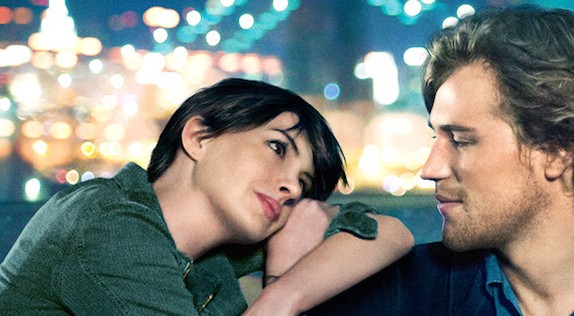
Anne Hathaway stars as Franny, an anthropology student working overseas who must rush back home to New York after a family tragedy. Her brother Henry, an aspiring musician, is struck by a cab while walking in traffic, and Franny returns to find him in a coma, fighting for his life.

Searching Henry’s apartment for familiar items that might help revive him, Franny finds concert tickets to see a folkie named James Forester (Johnny Flynn). She attends the show, and waits in the autograph line to tell Forester about her brother’s admiration for him. The conversation sparks a sweet friendship, and James is soon visiting Henry and hanging out with Franny and her ex-hippie mom (Mary Steenburgen).

Will friendship turn to romance? Will James find inspiration to cure his songwriter’s block? Bet you can guess.

It’s the debut feature for writer/director Kate Barker-Froyland, and predictability is not what ultimately keeps Song One from resonating. Yes, the terrain is plenty familiar, but this love letter to the power of music suffers most from contrivance and precious few powerful moments.

Flynn’s performance is tender but tentative, and though is he obviously a talented musician, the original songs elicit little more than the nod you give that guy at a party who suddenly finds a guitar. He’s in way over his head alongside Hathaway, who dials it down but can’t keep her natural talent from casting a big shadow over her co star.

There is some promise here. The film is well shot and Barker-Froyland often seems to sense how thin the drama is, pumping it up with enough good intentions to keep any eye-rolling at bay. When her storytelling talent catches up with her technical skills, then she may have a hit on her hands.


Verdict-2-5-Stars


Crime Dramas For Your Queue

Butts did not fill seats when Tom Hardy and James Gandolfini’s small time mobster flick The Drop screened theatrically, which is a shame. But the film releases today for home consumption, so eat up, people! The two play cousins running a bar used to launder Chechan mob money, with Hardy adding layers and layers to a fascinating, maybe simple bartender. Shady characters, double crosses, symbolism and meager redemption keep your attention, plus there’s an incredibly cute dog. It’s worth a look.

The Drop writer Dennis Lehane has penned a number of Boston-based crime dramas, including Shutter Island and Mystic River, but the best of the bunch is Gone Baby Gone. The film that shocked us all with the knowledge that Ben Affleck is a genuinely talented director follows two private investigators working a missing kid case. Morally complicated, brilliantly filmed and boasting a career-best turn from Amy Ryan, this is a surprisingly great crime drama.