The effing holidays are upon us. If you have plenty of lounge-about time this week and zero gumption to go out into the cold, here are some lazy day movie suggestions. Here is what’s out this week on VOD, DVD, BluRay and streaming.
Welcome to The Screening Rooom podcast! This week we break down the greatest and the least in theaters: Murder on the Orient Express, Daddy’s Home 2, The Florida Project, Wonderstruck and Mayhem. We also talk through what’s new in home entertainment. Listen in HERE.
To simply label Richard Turner a “blind magician” would be to insult a man whose pursuit of perfection is all the more admirable considering his impairment. Turner, the subject of Dealt, is much more than a spell-binding “card mechanic.” He is also a father, a husband and an all-around legend within the magic community.
The film, directed by Luke Korem, introduces Turner and what he is best known for: his card tricks. Or, rather his card mechanics. Turner specifies that he is a card mechanic which means he can “fix” a card game—something he can without any vision at all.
Korem pulls TV spots featuring Turner dating back to the late 1970s. From these television appearances, we witness how one man has managed to capture our attention over the years with his impeccable abilities.
His jovial attitude is disarming, even as he explains how he will bend the card game. He uses his mechanics to cheat you, yet all the while explaining how he is doing so. You can’t help but smile while he succeeds.
The film really shines, though, when it shifts focus from the mesmerizing card tricks to Turner’s family. We get a glimpse of a man who relies so much on his wife and child to assist him throughout the journey of his life.
Turner also shares a strong bond with his younger sister, who is also visually impaired. She proves to be a point of strength for him, helping him begin to shed the stigma of his blindness.
The film is a brief look into a rather compelling and friendly character. Richard Turner and his family definitely stick around with you once the film is over—a film that will have you buying a deck of cards and trying out some tricks on your friends and family, just like Richard did when he started.
You know that nice lady at work who gets bronchitis every time she flies, then she coughs and hacks and spews DNA all over the office?
Let’s say you have issues with that kind of office contamination. And with office politics. And with your boss, her boss, and the way you’ve basically given up everything that makes you feel alive and happy for this stupid job you hate where germs are everywhere…
Wouldn’t it be cathartic to explode, right there, in the middle of everything, righteously and with no repercussions?
Mayhem, the new film from director Joe Lynch, is just that emotional release.
Steven Yeun (The Walking Dead) plays Derek, mid-level white-collar prick in a law office. Just mid-level, though—there’s some conscience left in him. Still, he got where he is by finding the loophole that got a broad-daylight-surrounded-by-witnesses murderer off the hook.
The murderer had a virus—the Red Eye virus—which disrupts your ability to manage your emotions. You might weep uncontrollably, masturbate during a conference call, or stab your boss in the throat with a pen.
Here’s what’s important: we like Derek, his building is contaminated, his court case set the precedent allowing public murder and mayhem while under the 8-hour-ish influence of the virus.
Let’s just quarantine this building and see what happens.
The film is an exercise in workplace catharsis, and a pretty fun one. It’s far superior to other recent attempts at office-bound carnage The Belko Experiment and Bloodsucking Bastards, partly because Lynch has a crisp sense of pace and knack for comedy.
Matias Caruso’s script doesn’t hurt. Though it never mines deeply enough for the film to resonate beyond the “I hate my job and wouldn’t mind killing my boss” level, it’s clever fun from start to finish.
Yeun makes an excellent everyman and his enjoyable performance is matched by those of many of his evil colleagues. Dallas Roberts (also The Walking Dead) is exceptional as the head of HR, also known as The Reaper.
The film is little more than an id explosion in service of workplace fantasy. It keeps a light heart despite the carnage, doesn’t dig deep and doesn’t really hold up to scrutiny. But it’s fun. Especially if you’ve ever wanted to kill your boss.
The thespian and Shakespearean master often feels ill-suited to film, as if he cannot help but play to the back row. Whether Branagh is in front of or behind the camera, subtlety and subtext don’t appear to come easily.
How about Agatha Christie? Branagh gambles that a 20th-century crime novelist whose prose created the architecture for a genre of books, movies, stage and television will still thrill modern audience.
A stacked ensemble for Murder on the Orient Express makes the same wager.
Branagh plays Christie’s brusque genius, Belgian Inspector Hercule Poirot.
Branagh the director is so preoccupied with Branagh the actor that his talent-laden cast is offered little more to do than to quickly hash out one-dimension. The waste of talent is the real crime afoot.
Those underused? A wide array of A-listers, from immediate hot properties Daisy Ridley (The Last Jedi) and Marwan Kenzari (Aladdin) to cinematic icons (Judi Dench, Willem Dafoe, Derek Jacobi) to true movie stars (Michelle Pfeiffer, Johnny Depp)—and that’s not even half the cast.
Josh Gad appears in his second period-piece of the season (after last month’s Marshall), here playing a shady, drunken lawyer-turned-secretary who just might have killed a man.
Leslie Odom Jr. (Broadway’s Hamilton) plays a problem-solving doctor and former sharpshooter who just might have killed a man.
Penelope Cruz is a missionary nurse who won’t touch a drink, but she just might have…
You get the point. It’s an Agatha Christie story. At its best, campy, stagey fun. At its worst, stale.
The movie is a bit of both.
In keeping with Branagh’s love of spectacle, Murder on the Orient Express is a gorgeous, larger-than-life adventure. He shot on 65mm, and whether 20th Century Fox decides to release a 70mm print or not, the result is a glorious display, particularly in Act 1.
By the second act, we’re trapped in the train with a murderer. At that point, Branagh’s film starts to smell musty, and no quirky fun performances (Pfeiffer is particularly memorable) or delicately framed dining car treats can freshen things up.
When not doting on his star, Branagh’s camera showcases dazzling locations before luxuriating in the sumptuous appointments of the elegant train cars. It’s big. Very big. Grandiose, you might even say.
Which makes no sense at all for Christie’s close-quarters sleuthing of clues, faces, motives and sleight of hand.
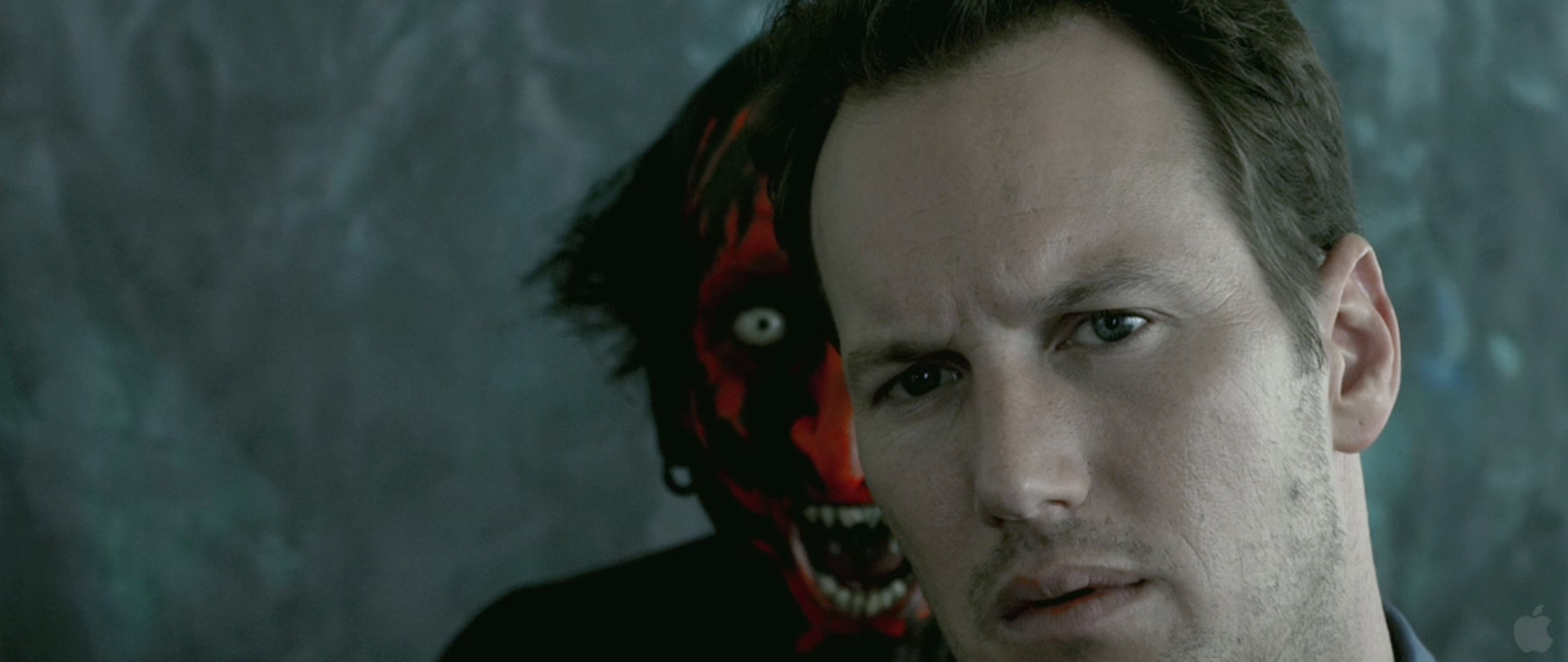
Wow, 2017 was one hell of a year in horror. We had blockbusters, people! Three horror movies broke blockbuster status, earning hundreds of millions of dollars. It—good God did that movie make some cash. What does that mean? It means more big budget, R-rated horror will be coming our way.
It was quite a year for genre-bending films like It Comes at Night, The Killing of a Sacred Deer and mother!—polarizing, amazing gems that really need to be seen.
But we’ll focus on films a little more clearly defined as horror. Thanks to Chris Hamel, President and Programmer of our beloved Gateway Film Center, for joining us to count down the best horror films of 2017.
10. Tragedy Girls
Heathers meets Scream in the savvy horror comedy that mines social media culture to truly entertaining effect, Tragedy Girls.
Tyler MacIntyre directs a screenplay he co-wrote with Chris Lee Hill and Justin Olson. The trio wade into the horror of a social media generation with more success than anything we’ve seen to date. A great deal of their success has to do with casting.
Brianna Hildebrand and Alexandra Shipp nail their characters’ natural narcissism. Is it just the expectedly shallow, self-centeredness of the teenage years, or are they sociopaths?
The film is careful not to go overboard with its commentary, though, and the final product is the better for it. MacIntyre’s affectionate, perhaps even obsessive, horror movie nods receive at least as much of his time and attention.
The result is both mean and funny. Josh Hutcherson’s small, image-lampooning part is an absolute scream proving that MacIntyre and company have pop cultural insights to spare, and proper comedic timing to boot.
9. Girl With all the Gifts
It is the top of the food chain that has the most reason to fear evolution.
Isn’t that the abiding tension in monster and superhero movie alike? The Girl with All the Gifts explores it thoughtfully and elegantly – for a zombie movie.
So, what’s the deal? A horde of “hungries,” each infected with a plant-based virus, has long since overrun the human population. Dr. Caldwell (Glenn Close), her researchers and the military are holed up while trying to derive a cure from the next generation, like Melanie (Sennia Nanua) – the offspring of those infected during pregnancy.
But much of the film’s success sits on Nanua’s narrow shoulders, and she owns it. The role requires a level of emotional nimbleness, naiveté edged with survival instinct, and command. She has that and more.
Cirector Colm McCarthy showcases his bounty of talent in a film that knows its roots but embraces the natural evolution of the genre. It’s not easy to make a zombie film that says something different.
But what Girl has to say is both surprising and inevitable.
And she says it really, really well.
8. Split
A transfixing James McAvoy is Kevin, a deeply troubled man harboring 23 distinct personalities and some increasingly chilling behavior. When he kidnaps the teenaged Casey (The Witch‘s Anya Taylor-Joy) and her two friends (Haley Lu Richardson, Jessica Suva), the girls are faced with constantly changing identities as they desperately seek an escape from their disorienting confines.
Meanwhile, one of Kevin’s personalities is making emergency appointments with his longtime therapist (Betty Buckley, nice to see you), only to show up and assure the Dr. everything is fine. She thinks otherwise, and she is right.
The split personality trope has been used to eye-rolling effect in enough films to be the perfect device for Shyamalan’s clever rope-a-dope. By often splitting the frame with intentional set designs and camera angles, or by letting full face close-ups linger one extra beat, he reinforces the psychological creepiness without any excess bloodshed that would have soiled a PG-13 rating.
Still, it all might have gone for naught without McAvoy, who manages to make Kevin a sympathetic character while deftly dancing between identities, often in the same take. He’s a wonder to watch, and the solid support from Buckley and Taylor-Joy help keep the tension simmering through speedbumps in pacing and questionable flashbacks to Casey’s childhood.
7. The Lure
Sisters Gold (Michalina Olszanska) and Silver (Marta Mazurek) are not your typical movie mermaids, and director Agnieszka Smoczynska’s feature debut The Lure is not your typical – well, anything.
The musical fable offers a vivid mix of fairy tale, socio-political commentary, whimsy and throat tearing. But it’s not as bizarre a combination as you might thing.
The Little Mermaid is actually a heartbreaking story. Not Disney’s crustacean song-stravaganza, but Hans Christian Andersen’s bleak meditation on the catastrophic consequences of sacrificing who you are for someone undeserving. It’s a cautionary tale for young girls, really, and Lure writer Robert Bolesto remains true to that theme.
But that’s really too tidy a description for a film that wriggles in disorienting directions every few minutes. There are slyly feminist observations made about objectification, but that’s never the point. Expect other lurid side turns, fetishistic explorations, dissonant musical numbers and a host of other vaguely defined sea creatures to color the fable.
https://www.youtube.com/watch?v=vxhi_3hDUPE
6. The Transfiguration
Milo likes vampire movies.
Eric Ruffin plays Milo, a friendless teen who believes he is a vampire. What he is really is a lonely child who finds solace in the romantic idea of this cursed, lone predator. But he’s committed to his misguided belief.
All this changes when Milo meets Sophie (Chloe Levine), another outsider and the only white face in Milo’s building. A profound loneliness haunts this film, and the believably awkward behavior of both Ruffin and Levine is as charming as it is heartbreaking.
The Transfiguration is a character study as much as a horror film, and the underwritten lead, slow burn and somewhat tidy resolution undercut both efforts.
Still, there’s an awful lot going for this gritty, soft-spoken new image of a teenage beast.
5. It
Clowns are fun, aren’t they?
The basic premise of It is this: little kids are afraid of everything, and that’s just good thinking.
The Derry, Maine “losers club” finds itself in 1988 in this adaptation, an era that not only brings the possibility of Part 2 much closer to present day, but it gives the pre-teen adventures a nostalgic and familiar quality.
Bill Skarsgård has the unenviable task of following a letter-perfect Tim Curry in the role of Pennywise. Those are some big clown shoes to fill, but Skarsgård is up to the challenge. His Pennywise is more theatrical, more of an exploitation of all that’s inherently macabre and grotesque about clowns.
Is he better than the original? Let’s not get nutty here, but he is great.
He and the kids really make this work. The young cast is led by the always strong Jaeden Lieberher (Midnight Special), and he’s surrounded by very strong support. Sophia Lillis charms as the shiniest gem in the losers’ club, and Finn Wolfhard (that is a name!) is a scream as the foul-mouthed class clown Richie.
The almost inexcusably cute Jackson Robert Scott is little, doomed Georgie, he of the yellow slicker.
Director Andy Muschietti shows great instinct for taking advantage of foreground, background and sound. Yes, It relies heavily on jump scares, but Muschietti’s approach to plumbing your fear has more depth than that and he manages your rising terror expertly.
4. Raw
What you’ll find in writer/director Julia Ducournau’s notorious feature debut is a thoughtful coming of age tale.
And meat.
Justine (Garance Marillier, impressive) is off to join her older sister (Ella Rumpf) at veterinary school – the very same school where their parents met. Justine may be a bit sheltered, a bit prudish to settle in immediately, but surely with her sister’s help, she’ll be fine.
Ducournau has her cagey way with the same themes that populate any coming-of-age story – pressure to conform, peer pressure generally, societal order and sexual hysteria. Here all take on a sly, macabre humor that’s both refreshing and unsettling.
In a very obvious way, Raw is a metaphor for what can and often does happen to a sheltered girl when she leaves home for college. But as Ducournau looks at those excesses committed on the cusp of adulthood, she creates opportunities to explore and comment on so many upsetting realities, and does so with absolute fidelity to her core metaphor.
She immediately joins the ranks of Jennifer Kent (Babadook) and Ana Lily Amirpour (A Girl Walks Home Alone at Night) – all recent, first time horror filmmakers whose premier features predict boundless talent.
3. The Blackcoat’s Daughter
Winter break approaches at a Catholic New England boarding school. Snow piles up outside, the buildings empty, yet Kat (Kiernan Shipka) and Rose (Lucy Boynton) remain. One has tricked her parents for an extra day with her townie boyfriend. One remains under more mysterious circumstances.
Things in writer/director Oz Perkins’s The Blackcoat’s Daughter quietly unravel from there – although quiet is not precisely the word for it. There is a stillness to the chilly, empty halls. But thanks to the filmmaker’s brother Elvis, whose disquieting score fills these empty spaces with buzzing, whispering white noise, a sinister atmosphere is born.
Perkins repays your patience and your attention. You can expect few jump scares, but this is not exactly a slow-burn of a film, either.
It behaves almost in the way a picture book does. In a good picture book, the words tell only half the story. The illustrations don’t simply mirror the text, they tell their own story as well. If there is one particular and specific talent Blackcoat’s Daughter exposes in its director, it is his ability with a visual storyline.
Pay attention when you watch this one. There are loads of sinister little clues to find.
2. Hounds of Love
Driven by a fiercely invested and touchingly deranged performance from Emma Booth, Hounds of Love makes a subtle shift from horrific torture tale to psychological character study. In 108 grueling minutes, writer/director Ben Young’s feature debut marks him as a filmmaker with confident vision and exciting potential.
It is the late 1980s in Perth, Australia, and at least one young girl has already gone missing when the grounded Vicki (Ashleigh Cummings) sneaks out her bedroom window to attend a party. This isn’t nearly as dumb a move as is accepting a ride from Evie White (Booth) and her husband John (Stephen Curry).
As the couple dance seductively and drink to celebrate, Young disturbingly conveys the weight of Vicki’s panicked realization that she is now their captive. It is just one in a series of moments where Young flexes impressive chops for visual storytelling, utilizing slo-motion, freeze frame, patient panning shots and carefully chosen soundtrack music to set the mood and advance the dreadful narrative without a spoken word.
And then, just when you might suspect his film to wallow in the grisly nature of the Whites’ plan for Vicki, Young turns to dialog sharp enough to upend your expectations, and three vivid characters are crafted in the suffocating dread of the White’s neighborhood home.
No doubt, events get brutal, but never without reminders that Young is a craftsman. Subtle additions, such as airplanes flying freely overhead to contrast with Vicki’s captivity, give Hounds of Love a steady dose of smarts, even as it’s shaking your core.
https://www.youtube.com/watch?v=UNEurXzvHqE
1. Get Out
Opening with a brilliant prologue that wraps a nice vibe of homage around the cold realities of “walking while black,” writer/director Jordan Peele uses tension, humor and a few solid frights to call out blatant prejudice, casual racism and cultural appropriation.
When white Rose (Alison Williams) takes her black boyfriend Chris (Daniel Kaluuya) home to meet the fam, she assures him race will not be a problem. How can she be sure? Because her Dad (Bradley Whitford) would have voted for Obama’s third term “if he could.” It’s the first of many B.S. alerts for Peele, and they only get more satisfying.
Rose’s family is overly polite at first, but then mom Missy (Catherine Keener) starts acting evasive and brother Jeremy (Caleb Landry Jones) gets a bit threatening, while the gardener and the maid (both black – whaaat?) appear straight outta Stepford.
Peele is clearly a horror fan, and he gives knowing winks to many genre cliches (the jump scare, the dream) while anchoring his entire film in the upending of the “final girl.” This isn’t a young white coed trying to solve a mystery and save herself, it’s a young man of color, challenging the audience to enjoy the ride but understand why switching these roles in a horror film is a social critique in itself.
Get Out is an audacious first feature for Jordan Peele, a film that never stops entertaining as it consistently pays off the bets it is unafraid to make.
It’s weeks from Thanksgiving, but already the hot toy this season seems to be the onscreen Christmas countdown, marking off time until the big day.
We saw it just last week, to disastrous results, in A Bad Mom’s Christmas, and now Daddy’s Home 2 arrives carrying stockings with slightly better surprises inside.
By now, macho Dusty (Mark Wahlberg) and sensitive Brad (Will Ferrell) have settled into a comfortable “co-Daddy” arrangement with their blended families, so much so that they’re planning one big blendy Christmas this year. The kids won’t have to run from place to place. It’ll be great, right?
Enter Dusty’s mas macho dad (Mel Gibson) and Brad’s uber sensitive pop (John Lithgow), and we’re all headed through the woods to a luxurious mountain cabin for some contrived, snow-covered shenanigans boasting rampant ridiculousness and only scattershot payoffs.
Writer/director Sean Anders returns from the first film with the standard playbook for lazy comedies: a series of zany skits loosely connected with little regard for logic or continuity. We’re prodded to laugh at Brad’s suitcase being left at home, and then again when Brad has to wear a women’s bathrobe since he has no clothes of his own!
Moving on, Brad has an endless supply of wardrobe changes the remainder of the film.
Anders’s resume features solid comedic work (She’s Out of My League, Hot Tub Time Machine, We’re the Millers and Horrible Bosses 2), but also embarrassments (Dumb and Dumber To, That’s My Boy). DH2 can manage only a few sequences that recall his creative peaks.
A fight over the cabin thermostat leads to some inspired laughs, as does Brad’s attempt to prepare a young boy for life in the friend zone, and Ferrell’s natural comedic gifts are able to squeeze a chuckle or two from Brad’s constant attempts to prove his parental worth.
With the additions of Gibson and John Cena (as the ex of Dusty’s girlfriend) the sequel ups the ante on the crises of masculinity that anchored the first film. The female characters are still afterthoughts, and some of Gibson’s antics (considering his rep and the current revelations coming out of Hollywood) seem awkwardly ill-timed.
By the time a completely over-the top-production of “Do They Know It’s Christmas” (“I love that song! I play that song in August!”) is happening, Daddy’s Home 2 seems content to aim no higher than the guilty pleasure aisle.
If Wonderstruck—the latest from indie god Todd Haynes—feels a bit like Scorsese’s 2011 wonder Hugo, there’s a reason for that. Both films are based on juvenile fiction created by Brian Selznick.
Selznick, who adapts his own material here for the screen, is a one-of-a-kind author whose elaborate pencil drawings fill far more pages than actual text. The resulting novels offer near-magical journeys full of sumptuous detail supplied by visuals.
In both cases, the visual majesty of Selznick’s work jumps easily to the screen—in Hugo, to Oscar-winning results by cinematographer Robert Richardson. For Wonderstruck, Haynes works with longtime collaborator Edward Lachman.
But if Selznick’s unabashedly whimsical, sentimental material felt out of character for Scorsese, it’s no more characteristic for Haynes. His films tend to tackle ideas far more subversive, and by lighting those ideas with beauty and humanity, Haynes illustrates universal ideas, often of longing and the desire to belong.
His newest film also explores the human need to belong, although there’s very little to find subversive in Wonderstruck. It’s a family film that’s likely too slow moving for most youngsters and too lightweight for most Haynes fans.
The tale follows two deaf children, each on a similar journey 50 years apart. In 1927, a period lensed in black and white with a near-silent film feel about it, Rose (Millicent Simmonds) escapes her overbearing father to run away to a Broadway theater in search of her favorite starlet (Julianne Moore).
Ben (Oakes Fegley) follows a similar path in a far more garishly colorful 1977. Having recently lost both his mother and his hearing, the boy follows a clue about his father’s whereabouts to a bookstore in Queens.
Wonderstruck is a gorgeous movie. The Seventies period detail is as delightful and the Twenties elegance is lovely. All performances—particularly those of the two young leads—compel attention. Underlying themes of loneliness and the longing for acceptance resonate in the same way they echo through all of Haynes’s work.
Unfortunately, the narrative feels more full of contrivance and convenience than wonder. In the end you’re left thinking, wow, that was really pretty. Too bad it all collapsed on itself at the end.
Full of the raucous rhythm of an unsupervised childhood, The Florida Project finds power in details and tells an unadorned but potent story.
Co-writer/director Sean Baker follows up his ambitious 2015 film Tangerine with another tale set gleefully along the fringes of society. Where Tangerine used weaves, stilettos and spangles to color the Christmas antics of Hollywood hustlers, here Baker fills the screen with bold colors and enormous, cartoonish images to create a grotesquely oversized playground.
The film begins with as perfect a movie opening as you will ever see.
Six-year-old Moonee (an astonishing Brooklynn Prince) wastes her summer days wandering the Orlando strip surrounding her home, a vivid purple bargain motel catering less to Disney World tourists than to tenants who can’t afford the security deposit world of traditional housing.
When she’s not out finding adventures with her besties Jancey (Valeria Cotto) and Scooty (Christopher Rivera), Moonee’s probably hustling wholesale perfumes to tourists with her mom Halley (Bria Vinaite).
The one true grown up in the mix, motel manager Bobby, is played with charm and tenderness by Willem Dafoe.
Baker’s many talents include an ear for authentic dialog, a knack for letting a story breathe and an eye for visual details that enrich a tale. But maybe what’s most striking is his ability to tell fresh but universal stories. We all remember elements of unbridled recklessness in our childhood, although very few of us grew up the way Moonee does.
Baker creates a bridge into Moonee’s life, revels in her freedom and bravado, but keeps us always aware of the dangerous edges when you’re blurring childhood and adulthood.
It’s the concept of childhood and adulthood that preoccupies Baker and his story, set in this absurd, low-rent amusement park of a world. As Mooney’s mother, Vinaite offers a fierce mixture of childishness all her own as well as street-savviness. Halley keeps the ugliness of the world away with her own whimsy, and Vinaite’s onscreen chemistry with Prince is authentic and full of tenderness.
As much as Tinsel Town was the perfect backdrop for the struggling glamour of Tangerine, the shadow of Disney World is almost too perfect a setting for the grinding poverty and perverted innocence of The Florida Project.
Not a half-bad haul in home entertainment this week. One pretty excellent social satire plus a decent ‘toon, not bad horror flick, nice little indie. And also the wildly disappointing The Glass Castle. But otherwise, not bad!