Loads of goodies made for layabouts and slugabeds this week! Comedies, dramas, romance, family films, a really bad one with Jennifer Lawrence—anything you could want, really. Let us help you pick.
Welcome back to The Screening Room Podcast, where H&G disagree a bit on Deadpool 2 but are more in line with their thoughts on Book Club, Disobedience, Ghost Stories and what’s new in home entertainment.
Upon creation, men and women were given the choice of free will, and with that comes the unique “power to disobey.”
An Orthodox Jewish flock in London hears that message from a beloved rabbi, and then lives it in Sebastian Lelio’s quietly compelling Disobedience.
Ronit (Rachel Weisz) was raised in that devoutly religious community, and then shunned for her attraction to childhood friend Esti (Rachel McAdams). After building a life in New York, Ronit is called home for the burial of her father. She’s greeted by a less than warm welcome and the news that Esti has married Dovid (Alessandro Nivola), another longtime friend who is now also a respected rabbi.
Gracefully adapting Naomi Alderman’s novel, Lelio (A Fantastic Woman, Gloria) continues his interest in stories of women struggling to be free and live as their true selves, exerting their power to disobey.
Weisz, McAdams are Nivola are all wonderful, crafting resonant characters as Lelio slowly builds the drama of a conflicting, scandalous triangle. Little backstory is provided early on, giving more weight to pieces that are picked up from characters carefully dancing around old wounds.
The message is love and mercy, and how these basic tenets of religion are often forgotten in the name of enforcing a preferred social order. Lelio and his committed actors make it intensely intimate but never salacious, a parable with a powerful grip.
Machine gun fire gags, self-referential comments, foul language, meta laughs, gore for the sake of comedy and fourth-wall bursting—it appears the sequel to 2016’s surprise blockbuster Deadpool cometh.
Since we left Wade/Deadpool (Ryan Reynolds), the avocado-faced super-anti-hero spends his days dispatching international criminals and his nights snuggling tight with his beloved Vanessa (Morena Baccarin). When tragedy strikes, Wade spirals into suicidal depression and finds himself in the titanium arms of X-Man Colossus (voiced by Stefan Kapicic), by the side of troubled adolescent mutant Russell (Julian Dennison, Hunt for the Wilderpeople), and then in the path of time-traveling mercenary Cable (Josh Brolin, having a good year).
In the midst of all this, Reynolds never stops cracking wise on every comic book or pop cultural reference that can be squeezed into two hours. Bursts of laughter pepper the film’s landscape like mines. It’s fun. Hollow, but fun.
Origin stories are tough, but following a fresh, irreverent surprise of an origin story might be even tougher. Deadpool’s laughs came often at the expense of the gold-hearted, furrow-browed, money-soaked superhero franchises that came before it. Now a cash machine of a franchise itself, riffing on that same bit is a difficult sell. Deadpool 2 has essentially become the butt of that very joke.
Writers Rhett Reese and Paul Wernick return, sharing the pen with Reynolds this go-round. Atomic Blonde director David Leitch takes the helm, promising the inspired action that made his Charlize Theron spy thriller so very thrilling.
But Leitch’s action feels saddled and uninspired, and Reese and Wernick’s screenplay is basically a reimagining of a truly excellent time-travel flick from a few years back (that will remain nameless to avoid spoilers).
Deadpool 2 is very funny, often quite clever, and sometimes wrong-minded in the best way. An Act 2 parachuting adventure feels magical, and the new blood brings fresh instinct to the mix. Dennison straddles humor and angst amazingly well, and Zazie Beetz brings a fun energy to the film as the heroically lucky Domino.
Brolin, for the second time in a month, commands the screen with a performance that has no right to be as nuanced and effecting as it is.
Ryan Reynolds is Ryan Reynolds, but he’s just so good at it.
The film’s cynical, hard-candy shell makes way for a super-gooey inside that Reynolds doesn’t have the capacity to carry off. Worse still, it undermines the biting sensibility that made the first Deadpool such an antidote for the summer blockbuster.
But I guess that’s what happens when you become the thing you mock.
Book Club offers up a boatload of veteran Oscar winners and nominees, but limps to its final chapter as a ninety minute catch-22. So many roles for senior stars: good! What this movie makes of those roles: not so much.
Diane Keaton, Jane Fonda, Candice Bergen and Mary Steenburgen are Diane, Vivian, Sharon, and Carol, lifelong friends who began a monthly book club back in the 70s with the scandalous Fear of Flying.
With all four friends now comfortable in their golden years, the randy Vivian chooses Fifty Shades of Grey as the group’s next assignment. The girls are a bit hesitant at first but right on cue, Christian and Anna’s naughty romps reignite some fires down below.
Laughing at older people being sexual is beyond lazy, it’s ignorant. Thankfully director/co-writer Bill Holderman, in his debut feature, does seem actually interested in laughing more with his stars than at them.
But too many of those laughs are leftovers from every episode of Three’s Company, when Mr. Roper overhears Jack and Chrissy in the bedroom saying something like “It’s not big enough!” while we know they were just trying to hang a curtain rod the whole time! Ribaldry!
While the ladies juggle possible boyfriends (Richard Dreyfuss, Andy Garcia, Don Johnson) and a disinterested husband (Craig T. Nelson), contrived antics and double entendres go straight to the unfunny bone.
If you were checking off boxes, all the rich, white characters and romantic fantasies would seem like Nancy Meyers material. But Book Club can’t dig any more than surface deep, and even with all this talent, it never shows the confidence in character that elevates Meyers’s best (It’s Complicated, Something’s Gotta Give).
And then, a surprisingly subtle metaphor built around the comeback of vinyl albums gives you reason to believe Holderman’s heart is in the right place here, he’s just in over his head.
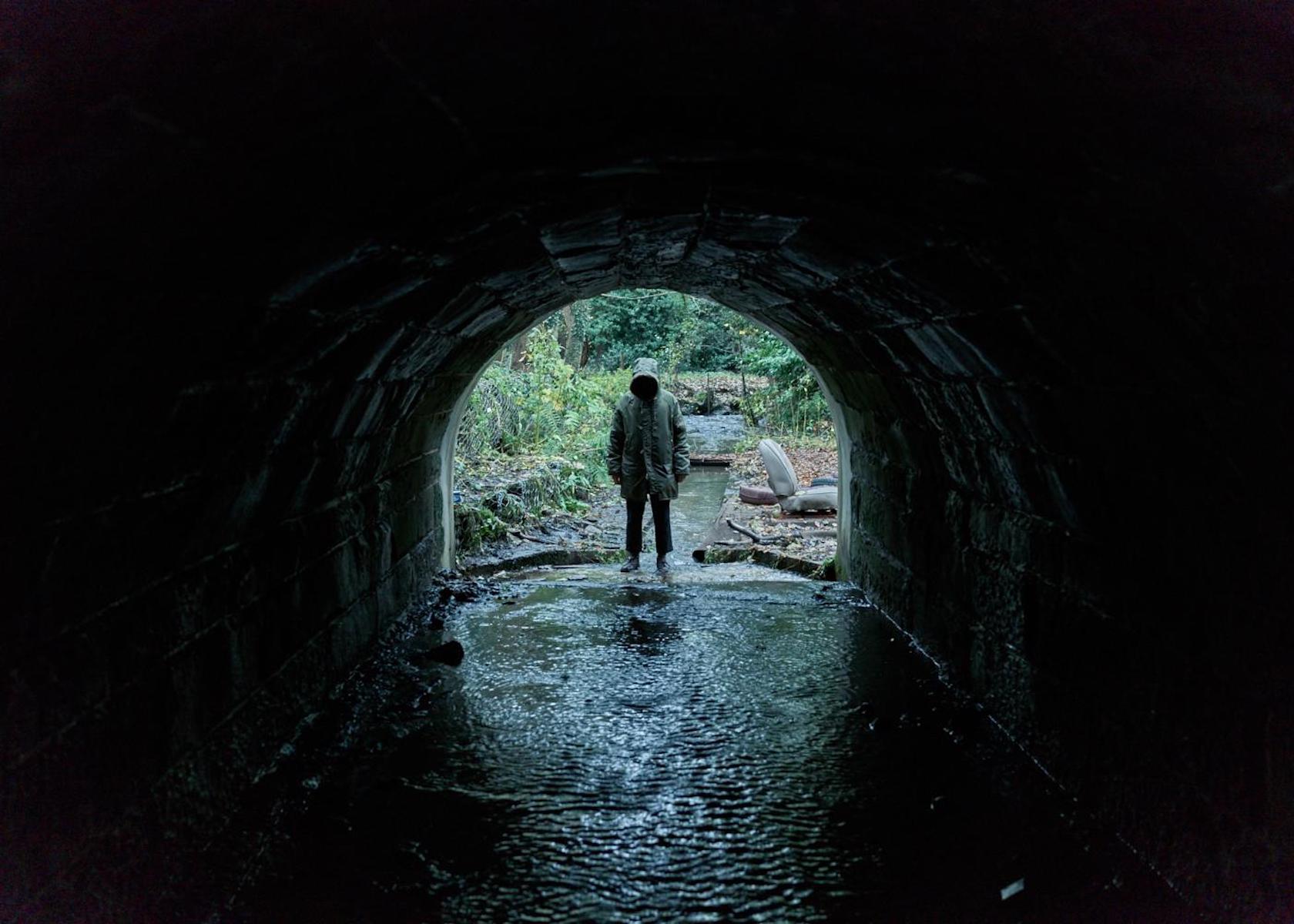
Billed as a return to the old-school British horror anthology, Ghost Stories takes us through three paranormal cases passed from the chief investigator to a colleague he’s hoping can prove them false.
Ghost Stories is based on a popular stage play written by the film’s own co-writers and co-directors, Andy Nyman and Jeremy Dyson. Nyman also stars as Professor Goodman, the paranormalist who agrees to look into the trio of cases that muddled his hero and mentor.
The movie invests far more in this set up than expected, developing a fascinating connecting tale rather than a simple framing device that holds together a handful of otherwise disconnected shorts. Instead, we get a deeper story, one that influences and is influenced by the shorts in ways more organic than the run-of-the-mill anthology.
And though the three individual shorts contain nothing extraordinary in the way of scares, each offers a richly developed world full of detail and shadow. Every short has its own personality and style, although they all contain puzzle pieces that provide a coherence to the overall story, little items that range from the peculiar to the outright spooky.
A great deal of the success lies in the wonderfully human portrayal delivered by Nyman, who conveys humility, pomposity, self-righteousness, pity and terror in turns without ever hitting a false note. Other solid performances pepper the film. Martin Freeman is particularly engaging. Paul Whitehouse and Alex Lawther also bring uniquely high-strung characters to life.
As scares go, the first short packs the biggest wallop. A night guard at a dilapidated old asylum for women sees and hears strange things, leading to horror.
If that sounds like well-worn territory, that’s because it is. In fact, the three short films themselves don’t deliver much in the way of new scares, but that isn’t Nyman and Dyson’s intention. The terror here is far less paranormal than existential, and clever clues combine with crisp writing to create a full picture that’s more satisfying than it should probably be.
Dudes, Kingdom comes. Black Panther is finally available to play on a loop in your very own living room. Is Michael B. Jordan the greatest villain ever? Is Letitia Wright the greatest Disney Princess? Can Danai Gurira kick all of our asses? (The answer to that last one is a resounding yes, btw.)
So watch it! And just ignore the other one you can get. Trust us.
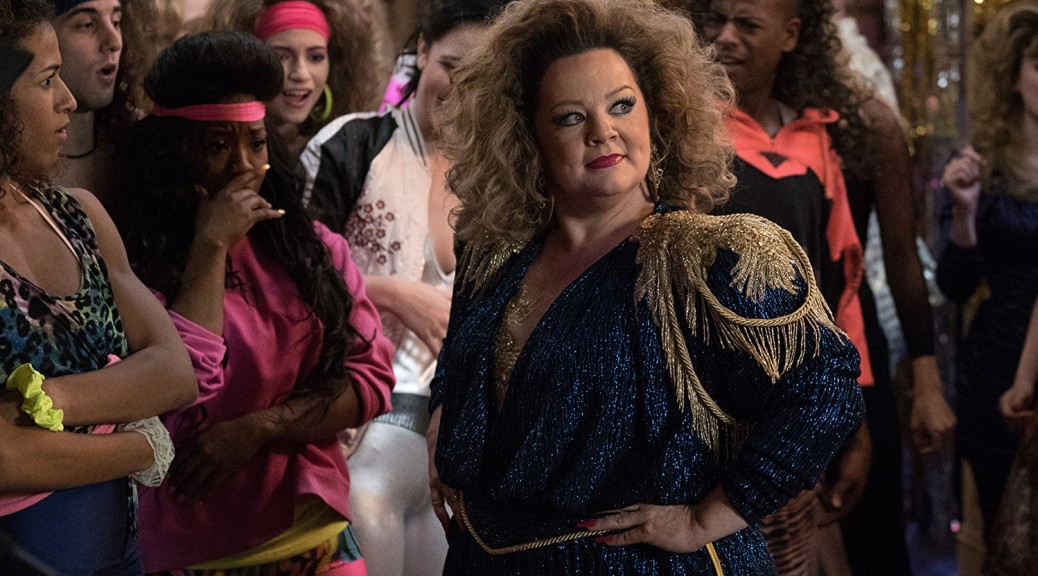
Recorded live at the Columbus Podcast Fest, this week’s Screening Room takes a look at Melissa McCarthy’s latest, Life of the Party, as well as Breaking In, Terminal, Revenge and the latest in home entertainment.
The rape-revenge film is a tough one to pull off. Even in the cases where the victim rips bloody vengeance through the bodies of her betrayers, the films are too often titillating. Almost exclusively written and directed by men for a primarily male audience, the comeuppance angle can be so bent by the male gaze that the film feels more like an additional violation.
Well, friends, writer/director Coralie Fargeat changes all that with Revenge, a breathless, visually fascinating, bloody-as-hell vengeance flick that repays the viewer for her endurance. (His, too.)
Jen (Matilda Lutz—Rings) travels with her wealthy, married boyfriend to a remote desert getaway. She’s very young, bubble-gum sweet and trusting, a sexy charmer who wants far too much to be liked and noticed.
Her lover, Richard (Kevin Janssens) is happy to oblige with that attention. Unfortunately, so are his two sketchy hunting buddies (Vincent Colombe, Guillaume Bouchede), who show up a day early, interrupting the romance and creating an unseemly tension at the house.
Fargeat’s grasp of male entitlement and the elements of a rape culture are as sharp as her instincts for visual storytelling. Wildly off-kilter close-ups sandwich gorgeous vistas to create a dreamlike frame for the utterly brutal mess of a film unfolding.
The filmmaker articulates the gender power struggle throughout the film as sights and sounds reflect and repeat—the echo of the image of a trail of blood from Act 1, for example, wordlessly emphasizes the shifting power.
Symbol-heavy but never pretentious or preachy, the film follows a traditional path—she is betrayed, she is underestimated, she repays her assailants for their toxic masculinity. But between Fargeat’s wild aesthetic, four very solid performances, and thoughtful yet visceral storytelling, the film feels break-neck, terrifying and entirely satisfying.
To give away too much of the plot of Lu Over the Wall would be to steal the joy of experiencing this unique, quirky film. Director Masaaki Yuasa has crafted a sweet fantasy that explores the moving friendship between a boy and a mermaid.
The first half of the film offers an unpredictable journey that follows Kai as he gets to know the buoyant Lu. Along for the ride are Kai’s friends, Yuho and Kunio.
Before Lu, Kai is sullen and morose, having recently moved from Tokyo to a small fishing village with his dad following his parents’ divorce. Yuho and Kunio try their best to engage Kai, even talking him into joining their band. But it isn’t until Lu appears, drawn by Kai’s music, that he begins to open up to the world around him.
Though the first half of the film is unusual, and, at times, downright weird, the second half falls into a more predictable pattern. However, the shift into a more traditional story doesn’t detract from the film. And though the second section is more certain, the quirks and oddities of the story are maintained through the animation. Lu and Kai, along with Yuho and Kunio, face challenges as old prejudices and new curiosities are aroused by the arrival of Lu.
At times, the animation is reminiscent of Hayao Miyazaki’s work, but it also occasionally has the slapstick style of Tex Avery’s old Bugs Bunny cartoons. The blending of styles, along with the film’s own specific elements, merge together to serve the unconventional story well. From the monstrous creatures to the everyday people to the village’s shops and streets, the visuals are the most memorable part of the film.
Music also plays an important role, but the soundtrack is a little stale when paired with the rich animation. Too often, the score and soundtrack fade forgettably into the background when the movie would be better served by sound that enhanced the animation onscreen.
Though often strange and unusual, Lu Over the Wall is a touching tale.