All posts by maddwolf

From the Corners to the Council, Baltimore under a Microscope

Charm City

by Matt Weiner

If the Midwest is often treated as America’s test market for new products, Baltimore makes a good case as America’s stand-in for how our cities have been neglected, in ways both passive and pernicious. With Charm City, Marilyn Ness sketches the big picture by zooming in on one city neighborhood.

Ness centers the documentary around those most affected by the violence and lack of opportunity in the city, spending time on the streets with the irrepressible Clayton “Mr. C” Guyton. Mr. C runs a neighborhood community center, providing a mix of social services, inspirational sermons and a contagious hope that things must get better.

Also represented is the Baltimore Police Department, whose officers are buckling under constant overtime in an attempt to stem the record murder rate. Politicians get their due through the eyes of Brandon Scott, a reform-minded city councilman (and the youngest person elected to the position).

At first it seems like Ness’s framing is nuanced to a fault. She studiously highlights the interactions on all sides as an almost routine drudgery. Or as routine as life can be when you’re in a constant struggle for resources just to survive.

But haunting the periphery is the death of Freddie Gray, which took place just months before the film begins. Ness limits her interviews to the more optimistic and eager officials and officers, but even relatively benign interactions are impossible to separate from the wider conversations happening around criminal justice reform in cities and police departments all over the country.

As frustrating as it can be when Ness sticks to her granular talking head shots, there’s a still a message—even if that message to viewers is often that you’re going to need to do some extra homework on this.

And it’s effective. It’s heartbreaking when the people on Mr. C’s block abruptly suffer the loss of one of their own. It’s bracing to hear them refuse to give up even though they feel like everyone else has abandoned them. It’s useful to see how city officials view doing the right thing, and how quickly that impulse crashes against a public health epidemic that cannot be theirs alone to fix.

There have been plenty of superb recent documentaries about criminal justice in America, including Ava DuVernay’s 13th and Erik Ljung’s The Blood Is at the Doorstep. Charm City probably shouldn’t be the only film to watch if you’re looking to go deeper on the subject, but it’s a fine and no less urgent place to start.

Writers Unblocked

Can You Ever Forgive Me?

by Hope Madden

People forget that Melissa McCarthy was nominate for an Oscar. It’s a stiff year for female leads, but she might just nab another nom for her turn as a misanthropic writer in the true story, Can You Ever Forgive Me?

A one-time best seller, author Lee Israel (McCarthy) is feeling her shelf life. Unwilling to conform to any kind of expectations—particularly those placed on females in the publishing industry—she finds herself facing the reality that no one wants a book on Fanny Brice, and no one wants a book by Lee Israel.

McCarthy’s socially inept and down-on-her-luck biographer sits in a dingy bar midday, drinking away her unemployability, her cat’s illness and her writer’s block when in beams a boozy ray of sunshine disguised as upbeat alcoholic hustler Jack Hock (Richard E. Grant).

It’s here that director Marielle Heller’s film hits its stride. McCarthy’s energy, her dimples and her infectious good nature have buoyed any number of mediocre films. But here, she carves a low key, solitary figure unable and unwilling to open up. It’s a fascinating about-face for McCarthy.

Set Israel’s curmudgeonliness against the unbridled zeal and charm Grant brings to his character, and a compelling odd-couple-on-the-skids is born.

To pay her bills and exercise her talent, Israel begins forging letters from literary icons and selling those forgeries at bookshops across New York. The wondrous respect this film has for writers, for the written and spoken word, and the nostalgia it has for a past when those elements were likewise revered generates a lovely, literary atmosphere.

Co-writer Nicole Holofcener again subverts ideas of entitlement and self-destruction with a screenplay so full of empathy it’s impossible to dislike the deeply unpleasant Israel.

A great deal of that success, of course, comes from McCarthy’s authenticity. The performance is nuanced and understated, as is the entire film, and aching of self-inflicted loneliness. She creates an believable and yet unusual character—one who embarks on a deeply strange yet somehow fitting journey.

The story of Lee Israel offers a weirdly optimistic if cautionary tale for misfit women. It’s also a great reminder that Melissa McCarthy can really act.

Exile in Whyville

The Grinch

by George Wolf

Before we get to the Whos, let’s consider the Whys.

Is it too much of a GOML (Get Off My Lawn) moment to ask why, beyond the obvious cash grab, The Grinch has to be redone? The original, How the Grinch Stole Christmas, is 25 minutes of perfection, an animated TV classic that was already the subject of a charmless live action update for the big screens of nearly 20 years ago.

Now we’re back to animation, and facing the same quandary.

How do you add an hour of narrative that is more than just filler, substantial enough to not dilute what made the original work so simply joyous, so universally touching?

In 2009, Spike Jonze showed it can be done, delivering a wondrous and emotional take on Where the Wild Things Are.

But in this latest re-imagining of The Grinch, what writer Michael LeSieur and Tommy Swerdlow giveth only ends up taking away.

We’re still told the heart of Mr. Grinch (voiced by Benedict Cumberbatch) is two sizes too small, yet we’re given a new backstory for additional explanation as to why he hates Christmas so much.

His heart is two sizes too small, didn’t you hear? That’s the reason! Well, it should be, but then we see the Grinch do little acts of kindness for his dog Max and some other creatures, meaning the whole idea of Mr. Grinch being such an unpleasant misanthrope (and thus the impact of the story’s entire resolution) is compromised early.

The narration (courtesy of Pharrell Williams) includes some of the delightful Dr. Suess wordplay from 1966, plus some fresh attempts to imitate it that, as you might guess, stand out like a ten dollar Rolex. Mr. Grinch’s ultimate change of holiday heart doesn’t fare much better, as he and Cindy Lou Who (The Greatest Showman‘s Cameron Seely) spend ample time hammering home a message that, while still welcome, shouldn’t require that much force.

Directors Yarrow Cheney and Scott Mosier craft a few giddy sequences set among the snowy terrain of Whoville, and SNL’s Kenan Thompson squeezes as much humor as he can from his role as the Mean One’s erstwhile “best friend,” but for anyone hoping to recapture the magic of a holiday standard, The Grinch is nearly as empty as Cindy Lou’s living room on Christmas morn.


I Don’t Want to Go Out—Week of November 5

Have you voted? If yes, then get away from all those reminders about why we need to vote by binging on new movie releases! Spike Lee’s greatest film in eons is available, plus Pixar-style family fun, Pooh-style family fun, Charlie Hunnam—it’s like a buffet of lovely options.

But please vote first.

Click the link for the full review.

BlacKkKlansman

Incredibles 2

Papillon

Disney’s Christopher Robin

https://www.youtube.com/watch?v=0URpDxIjZrQ

The Screening Room: Song and Dance

Remakes! Legendary returns! Song! Dance! Exclamation points! It’s all in the new Screening Room Podcast, where we talk through the pros and cons of Bohemian Rhapsody, Suspiria, The Nutcracker and the Four Realms, The Happy Prince, The Other Side of the Wind and Beautiful Boy, plus a slew of new home releases.


Listen to the full podcast HERE.

Susan and the Snakes

Viper Club

by Rachel Willis

After a freelance journalist is kidnapped in Syria, his mother tries numerous avenues to get him home. With Viper Club, director Maryam Keshavarz seeks to draw attention to the plight of kidnapped journalists and aid workers around the world.

When we’re first introduced to Helen (Susan Sarandon), we learn quickly that her son, Andy (Julian Morris), was kidnapped more than two months prior by a terrorist organization. At the direction of the FBI and US State Department, Helen has had to maintain silence regarding her son’s plight. No one in her life knows the anguish and fear she carries on a daily basis as she waits for someone to rescue her son.

It’s clear that her faith in the US government has waned in the months since her son disappeared. When ransom demands arrive, Helen expects an immediate response. What she gets is the runaround from the FBI.

Susan Sarandon is nearly always impeccable, and her performance here is no exception. She ably conveys the frustration and distress of a mother incapable of saving her son. When the government fails to act, she decides to reach out to a network of people (the titular Viper Club) willing to negotiate her son’s release.

Aside from Sarandon’s convincing performance, the rest of the cast can’t seem to muster the energy to care. It’s not hard to see why. The supporting characters are shallow. The focus is rooted so completely on Helen’s plight that it’s strange the film introduces so many additional characters.

Flashbacks in the film attempt to humanize Andy, but strangely, we only get to see him as an adult or a ten-year-old boy. It’s as if no other period in his life made an impression on his mother, as the memories are filtered to the audience from her perspective. The impact would have been greater if we’d seen more of what led to Andy’s final trip to Syria and been spared the sentimental moments from his childhood.

It’s hard to root out the point of Viper Club. In trying to avoid the murky politics surrounding the negotiation for the release of kidnapped Americans, Keshavarz sends an equally murky message. In not addressing the deeper implications of Helen’s actions, the movie misses an opportunity to address the plight of journalists working in dangerous situations. The film skirts a number of issues, and in the end, doesn’t say much of anything.

Rock You They Will

Bohemian Rhapsody

by George Wolf

After several false stars and a midstream director change, the long-awaited Queen/Freddie Mercury biopic lands as a celebration of one legendary band and one bravura performance.

Rami Malek is a certified powerhouse as Mercury, the former Farrokh Buisara, the uniquely gifted performer and iconic presence who became of rock’s most enduring frontmen.

Mercury’s extravagant persona lent itself to caricature, but Malek has none of it. His is a true characterization, eerily mirroring the singer’s appearance, elegance, movements and, with help from both original Queen music and Mercury soundalike Marc Martel, his incredible voice.

Malek’s performance stands out all the more from the void left by Queen’s surviving band members. As executive producers, they’ve whitewashed themselves into more reaction shots and less actual human beings.

It’s one of several ways the film plays it safe and settles for a crowd-pleasing greatest hits package. Directors Bryan Singer and an uncredited Dexter Fletcher work wonders with the performance pieces (the thrilling recreation of Live Aid is worth paying for IMAX), but soften the sharp edges of rock hedonism enough for a PG-13 rating. And rock and roll ain’t PG-13.

The biggest missed chance comes in the relationship between Mercury and his muse for the song “Love of My Life,” Mary Austin (Lucy Boynton). From their first scenes together, Malek and Boynton fuel the emotional core of the film, creating an absence felt whenever screenwriter Anthony McCarten (Darkest Hours) broadens the focus, which is often.

Factual liberties are taken, timelines are sometimes carelessly misrepresented (“We Will Rock You” was not written in the 80s), and there’s a totally needless gag from Mike Myers, but whenever Bohemian Rhapsody is most unsteady, Queen’s music is there for a bailout.

It’s still great. And so is Malek.


Love Is the Drug

Beautiful Boy

by George Wolf

Those of a certain age hear the title Beautiful Boy and most likely think of the John Lennon song, a sweetly poignant ode from father to son. It’s used to touching effect in the film that shares that title, an utterly heartbreaking but ultimately hopeful adaption of separate memoirs by David and Nicolas Sheff.

David was the proud father, a successful writer who dreamed of great things for his bright, ambitious son. Instead, Nic became an alcoholic and drug addict who offered his family countless  promises of recovery that always fell empty.

Two masterful performances drive this film to its emotional heights, keeping it steady the few times it teeters on slopes of undue manipulation.

Steve Carell makes David an instantly relatable mix of unconditional love and crestfallen confusion. As Nic’s addiction batters David’s homelife with his wife (Maura Tierney) and two young children, flashbacks to sweet memories with a younger Nic outline the bond between father and son that only grew after David’s split with Nic’s mother (Amy Ryan – also stellar). Carell makes it feel real with a thoughtful, often understated turn full of quiet detail.

And people, if last year didn’t hip you to the immense talent of Timothee Chalamet, he’s back to seal the deal with a performance certain to be hailed come Oscar time.

Just when you’re comfortable with the authenticity of Nic’s slide into addiction, Chalamet digs deeper to find the shattering center of a soul at war with dependence and desperation. Though his baby-faced smile stays miles away from meth addict ugliness, Chalamet finds a raw humanity that makes Nic a walking wound, and makes us feel part of the frayed parental bonds. His scenes with Carrell – where Nic tries taking advantage of his father’s love only to turn on him moments later – find two actors in complete sync, revealing a crushing humanity that hits you hard. Bring tissues.

There are two important stories here, and they only falter when it feels some intimacy from each has been shortchanged to make room for the other. Director Felix Van Groeningen (The Broken Circle Breakdown), collaborating on the screenplay with Luke Davies (Lion), merges the dual memoirs for a series of episodes that resonate best when given room to breath, free of any heavy-handed reminders about how quickly children grow up.

Beautiful Boy illustrates a vital, shattering cycle of addiction, rehab and relapse, often beautifully. Through first-hand insight and two towering performances, it finds a thread of hope in the ashes of a family’s nightmare.


Hooray for Hollywood?

The Other Side of the Wind

by Hope Madden

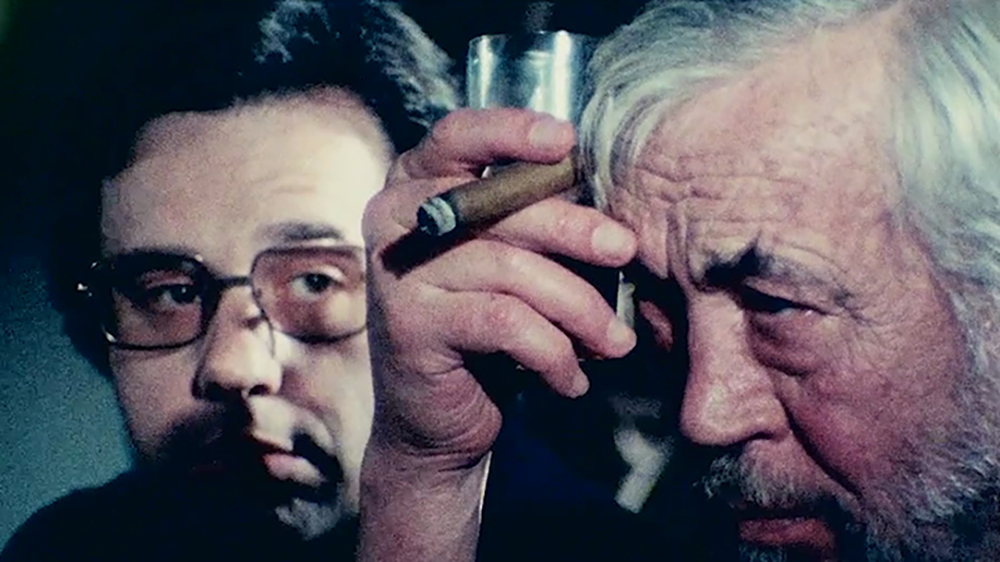
The Other Side of the Wind—how pretentious is that title? It’s supposed to be, of course, because it’s an Orson Welles film and he’s a genius. His latest, released more than 30 years after his death, explores his genius and the changing paradigm of the Seventies film industry.

Retrieved from hundreds of hours of footage filmed over 10 years, The Other Side of the Wind was meant to be a comeback or sorts from an idolized auteur whose funds were drying up in the face of a changing cinematic aesthetic.

It’s about an idolized auteur with dwindling funds who’s trying to launch a comeback in the face of a changing cinematic aesthetic.

Yes, Welles was meta before meta was even a thing.

Esteemed director, Jake Hannaford (John Huston) is to screen his new film at his 70th birthday party to an audience of cinefiles, sycophants, film critics, hangers-on, freaks and industry insiders.

The event becomes an ingenious satire of 70s moviemaking, and watching it more than 30 years after the fact gives the entire spectacle a time capsule appeal. It’s like a trainwreck you cannot turn away from.

Welles pokes fun at the pretentiousness of then-cutting edge filmmakers and their neurotic relationships with self-loathing, arrogance and idol worship—usually using directors from the period, acting as stand-ins for, well, themselves.

He doesn’t seem to have much respect for the films being made at the time, either. As Hannaford’s film unspools, one in-the-know viewer yells: “The reels are out of order!”

To which the projectionist replies, “Does it matter?”

Nope. It does not. Welles’s film-within-a-film is an unendurable, plotless hippie hallucination—a perfect parody of much of the arthouse output of the era. It’s as if Welles, by way of Hannaford, is asking: Is this what I have to do to get a movie made?

As well and as wildly as the movie-making satire plays, at the heart of this film is humiliation on exhibition. Hero worship is hollow, commerce is still king and a man who can’t pay can’t play.

The whole thing is just a big ball of Seventies.

Cracking Nuts and Taking Names

The Nutcracker and the Four Realms

by Hope Madden

Let’s say your birthday falls in December and as a lovely gesture your family took you to The Nutcracker Suite every year to celebrate, and every year you remembered again that you had no idea what the hell the ballet was about. Suppose, then, that Disney decided to make it into a movie and you thought that maybe now, with some narrative, you could figure this shit out.

Well, you would be disappointed. But if you went to see the ballet and thought, damn, there is too much dancing here, The Nutcracker and the Four Realms might be for you.

Mackenzie Foy is Clara, a young lady who dreads enduring the first Christmas without her mother. She doesn’t even want to go to the big party thrown by her godfather, Drosselmeyer (Morgan Freeman in a really bad wig). But her dad (Matthew Macfadyen) drags her, along with her brother and sister.

After that, things begin to feel familiar, although they rarely feel like The Nutcracker. The film becomes an inverted exploration of childhood and adolescence. Like Alice in Wonderland meets The Wizard of Oz meets Hunger Games.

Helen Mirren plays lord of this disused amusement park overrun by rats and clowns, though, and that is hella cool. Meanwhile, Keira Knightly shamelessly steals scenes as Sugarplum. Both are fun in a film that desperately needs a bit more of it.

Joe Johnston (Captain America: The First Avenger) and Lasse Hallstrom co-direct. That checks out. Johnston brings a rather workmanlike attitude for spectacle, while Hallstrom—whose credits range from the Oscar-winning Cider House Rules to the unwatchable A Dog’s Purpose—brings an eye for manicured beauty and an utter lack of whimsy.

Do you remember watching the ballet as a child? The spooky, eye-patched uncle? The 7-headed rat? It is seriously creepy, and at the same time, there is wonder in every dance whether you understand the storyline or you don’t.

There are lovely moments peppered through this visually elegant picture, but there is no passion, no danger and no excitement.

And weirdly enough, very little Tchaikovsky almost no dancing.

https://www.youtube.com/watch?v=BXfxLIuNJvw