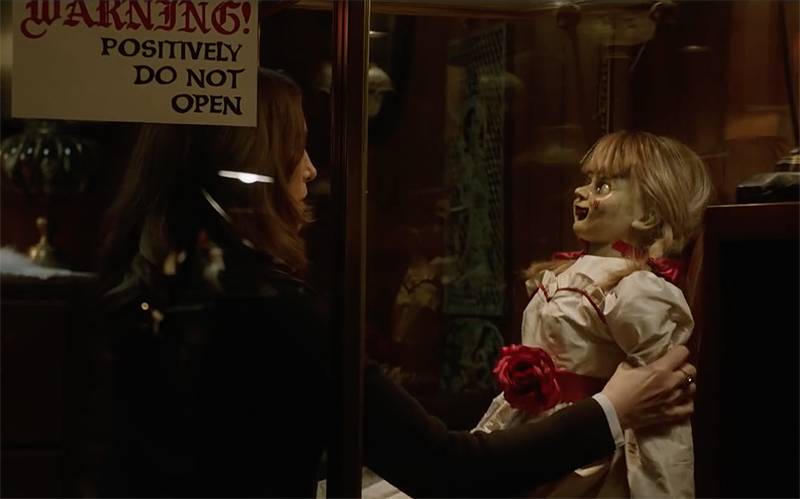
The first conflict, first specter of the Conjuring universe was a hideous, braid-wearing doll haunting hip Seventies roommates. Ever wonder what happened after Lorraine and Ed Warren (Vera Farmiga and Patrick Wilson, respectively) removed the cursed doll Annabelle from the girls’ apartment?
It was a hell of a ride home, I will tell you that.
Truth is, the Annabelle franchise within the larger Conjuring property hasn’t really impressed. John R. Leonetti’s lackluster 2014 “save the baby” horror that gave the doll its own series fell flat. Three years later, David F. Sandberg’s Annabelle: Creation offered an origin story that knew absolutely nothing at all about its own religious setting, yet offered considerably stronger action, scares and gore than its predecessor.
Writer Gary Dauberman, who’s penned every installment (as well as It, which seriously amplifies his credibility), takes on directing duties for the first time with the third film, Annabelle Comes Home.
Again, this one is a little better than the last one.
Dauberman gives us a spooky fun glimpse into the reasons the Warrens kept the doll locked away back in their room of cursed objects. From that first road trip home—which is a blast straight out of Hammer or Michael Jackson’s Thriller—the film is a spooky fun ode to old fashioned horror.
Back at home—the very home where the Warrens illogically keep demonic objects—their daughter Judy (McKenna Grace, really good in this role) is going through some troubles with schoolmates who think her parents are creepy.
Duh.
So, creepy Ed and Lorraine leave town, likely to cast a demon into a Combat Carl they’ll be adding to the back room toybox, leaving little Judy with a cherubic babysitter Mary Ellen (Madison Iseman) and her snoopy bestie, Daniela (Katie Sarife).
What does Daniela touch in the off-limits, demon-filled back room?
“Everything.”
All hell breaks loose, naturally.
Dauberman shows some fun instincts when it comes to isolating characters to make the most of his thrill ride setting. The logic comes and goes with ease, however—once the catalyst kicks in, each scene exists simply to trigger a scare, not to make any narrative sense.
But it is fun, with generous writing that does not ask us to root against any of the kids, and performances that are far superior to the content. Plus a couple of real laughs, mostly thanks to a randomly hilarious pizza delivery guy.
Annabelle Comes Home is no masterpiece and it is definitely a tonal shift from the previous installments, but it’s a mindless PG-13 blast of haunted house summer fun.
It’s true, and it has already been one hell of a year for film—documentary, in particular.
We’ve seen performances sure to be forgotten by awards season, so let us say right now that Elisabeth Moss (Her Smell), Emma Thompson (Late Night), Robert Pattinson (High Life) and Billie Lourd (Booksmart) top the list of must see acting glory in 2019.
What else? Well, DC finally got a real hit with the delightful Shazam! Meanwhile, MCU continued to make all the money with two really solid, fun and rewarding experiences: Avengers: End Game and Captain Marvel.
Which we all saw, statistically speaking. What did too few people see this year? Smart, funny R-rated comedies. Woefully underappreciated this year were Long Shot, Booksmart and Late Night. Please rectify this situation by the time these are available for home enjoyment.
10. Rocketman
Driven by a wonderfully layered performance from Taron Egerton – who also handles his vocal duties just fine – the film eschews the standard biopic playbook for a splendid rock and roll fantasy.
Writer Lee Hall penned Billy Elliot and Dexter Fletcher is fresh off co-directing Bohemian Rhapsody. Their vision draws from both to land somewhere between the enigmatic Dylan biopic I’m Not There and the effervescent ABBA glitter bomb Mamma Mia.
In the world of Rocketman, anything is possible. And even with all the eccentric flights of fancy, the film holds true to an ultimately touching honesty about the life story it’s telling.
9. How To Train Your Dragon: The Hidden World
The Hidden World offers so much more than just cute, and more than enough substance to solidify the entire Dragon saga as a top tier film trilogy.
This franchise has delivered true visual wonder since the original film’s opening frame, and part 3, taking natural advantage of enhanced technology, ups the ante. The aerial gymnastics and high seas swashbuckling are propelled by animation that is deep and rich, while new details in the dragons’ faces bring wonderful nuance and expression.
There is real tension here, along with warm humor, thrilling action pieces and resonant themes backed by genuine emotion. Packed with excitement, sincerity and visual amazeballs, The Hidden World ties a can’t-miss ribbon on a wonderful trilogy.
8. The Souvenir
The Souvenir rests at the hypnotic intersection of art and inspiration, an almost shockingly self-aware narrative from filmmaker Joanna Hogg that dares you to label its high level of artistry as pretense.
In her first major role, Honor Swinton Byrne is tremendously effective (which, given her lineage as Tilda Swinton’s daughter, should not be that surprising). In her hands, Hogg’s personal reflections are at turns predictable, foolish and frustrating, yet always sympathetic and achingly real.
The Souvenir is finely crafted as a different kind of gain from pain, one that benefits both filmmaker and audience. It is artful and cinematic in its love for art and cinema, honest and forgiving in its acceptance, and beautifully appreciative of how life shapes us.
7. Little Woods
Nia DaCosta’s feature directorial debut, which she also wrote, is an independent drama of the most unusual sort—the sort that situates itself unapologetically inside American poverty.
This is less a film about the complicated pull of illegal activity and more a film about the obstacles the American poor face—many of them created by a healthcare system that serves anyone but our own ill and injured.
But politically savvy filmmaking is not the main reason to see Little Woods. See it because Tessa Thompson and Lily James are amazing, or because the story is stirring and unpredictable.
See it because it’s what America actually looks like.
6. Us
Even as writer/director Jordan Peele lulls us with familiar surroundings and visual quotes from The Lost Boys, Jaws, then Funny Games, then The Strangers and Night of the Living Dead and beyond, Us is far more than a riff on some old favorites. A masterful storyteller, Peele weaves together these moments of inspiration not simply to homage greatness but to illustrate a larger, deeper nightmare. It’s as if Alice’s Adventures in Wonderland turned into a plague on humanity.
Do the evil twins in the story represent the darkest parts of ourselves that we fight to keep hidden? The fragile nature of identity? “One nation” bitterly divided?
You could make a case for these and more, but when Peele unveils his coup de grace moment (which would make Rod Serling proud), it ultimately feels like an open-ended invitation to revisit and discuss, much like he undoubtedly did for so many genre classics.
While it’s fun to be scared stiff, scared smart is even better, a fact Jordan Peele has clearly known for years.
Guess who he’s reminding now?
5. Shadow
Yimou Zhang rebounds from The Great Wall with a rapturous wuxia wonder, one nearly bursting with visual amazements and endlessly engrossing storytelling.
Taking us to ancient China’s “Three Kingdoms” era, director/co-writer Zhang (Hero, House of Flying Daggers, Raise the Red Lantern) creates a tale of martial artistry, lethal umbrellas and political intrigue gloriously anchored in the philosophy of yin and yang.
While the tragedies and backstabbings recall Shakespeare, Dickens and Dumas, Zhang rolls out hypnotic tapestries filled with lavish costumes, rich set pieces and thrilling sound design, all perfectly balanced to support the film’s dualistic anchor.
Working mainly in shades of charcoal grey with effectively deliberate splashes of color, Zhang creates visual storytelling of the grandest spectacle and most vivid style. There’s little doubt this film could be enjoyed even without benefit of subtitles, while the intricate writing and emotional performances combine for an experience that entertains and enthralls.
https://youtu.be/ySgN82k20xQ
4. Apollo 11
A majestic and inspirational marriage of the historic and the cutting edge, Apollo 11 is a monumental achievement from director Todd Douglas Miller, one full of startling immediacy and stirring heroics.
There is no flowery writing or voiceover narration, just the words and pictures of July 1969, when Americans walked on the moon and returned home safely.
This is living, breathing history you’re soaking in. And damn is it thrilling.
From the capsule “home movies” of Neil Armstrong and Buzz Aldrin, to the mission control checklists and ticking event countdowns, Apollo 11 immerses you in moments that will elicit breathlessness for the drama, pride for the science, respect for the heroism and awe for the wonder.
3. Amazing Grace
Already a living legend in January of 1972, Aretha Franklin wanted her next album to be a return to her gospel roots. Over two nights at the New Temple Baptist Church in Los Angeles, Aretha recorded live with the Reverend James Cleveland’s Southern California Community Choir as director Sydney Pollack rolled cameras for a possible TV special.
While it resulted in the biggest-selling gospel album in history, problems with syncing the music to the film kept the footage shelved for decades. Armed with the latest tech wizardry, producer/co-director Alan Elliot finally brings Amazing Grace to a glorious finish line.
To see Franklin here is to see her at the absolute apex of her powers. taking that voice-of-a-lifetime wherever she pleases with an ease that simply astounds. Even with the recording session stop/starts that Elliot includes for proper context, Aretha’s hold on the congregation (which include the Stones’ Mick Jagger and Charlie Watts) is a come-to-Jesus revelation.
So is the film. It’s a thrilling, absolute can’t-miss testament to soul personified.
2. They Shall Not Grow Old
Peter Jackson may bring us as close to comprehending war as any director has, not by dramatizing the horror or by reenacting it, but by revisiting it.
The Oscar winning director and noted World War I fanatic sifted through hundreds of hours of decomposing footage, restoring the material with a craftsmanship and integrity almost as unfathomable as war itself.
Over this he layered audio from interviews with WWI veterans into a cohesive whole, taking us from the wide-eyed patriotism that drew teenagers to volunteer, through their training and then—with a Wizard of Oz-esque moment of color, depth and clarity—into battle.
The fact that this immersion pulls you 100 years into the past is beyond impressive, but the real achievement is in the intimacy and human connection it engenders.
The clarity of the faces, the tremor in the voices, the camaraderie and filth and death—all of it vivid as life. It’s as informative as it is enthralling, an equally amazing achievement in filmmaking and in education.
1. Toy Story 4
Josh Cooley (who co-wrote Inside Out) makes his feature directorial debut with this installment. He also contributes, along with a pool of eight, to a story finalized by Pixar veteran Andrew Stanton (his credits include the three previous Toy Story films) and relative newcomer Stephany Folsom.
The talents all gel, combining the history and character so beautifully articulated over a quarter century with some really fresh and very funny ideas. Toy Story 4 offers more bust-a-gut laughs than the last three combined, and while it doesn’t pack the emotional wallop of TS3 (what does?!), it hits more of those notes than you might expect.
Characteristic of this franchise, the voice cast is stellar, the peril is thrilling, the visuals glorious, the sight gags hilarious, and the life lessons far more emotionally compelling than what you’ll find in most films this summer. To its endless credit, TS4 finds new ideas to explore and fresh but organic ways to break our hearts.
Moviegoers in toyland this week as we run down Toy Story 4, Child’s Play, Anna, The Spy Behind Home Plate and all that’s new and exciting in home entertainment.
After films such as La Femme Nikita and Lucy, writer/director Luc Besson is no stranger to the “beautiful killing machine” genre, but it seems the sexual treachery of Red Sparrow and the ass-kickery of Atomic Blonde have inspired him to get back in that familiar saddle.
His Anna is built on the same sexy Russian assassin blueprint, then adds layers of confusing time shifts, obvious fake outs, and misguided feminist ambitions, all wrapped in a constantly leering camera gaze.
Anna (Sasha Luss, back with Besson after Valerian and the City of a Thousand Planets) is plucked from Russian poverty by agent Alex (Luke Evans) and groomed for the spy game by the humorless Olga (Helen Mirren).
Anna’s cover is her job as a high fashion model, and guess what is this season’s hottest accessory?
Big silencers, slowly screwed on big guns that are framed just so against Anna’s lingerie-clad pelvic region. Subtle.
Check that, it really is, next to the roommate (Lera Abova) whose only purpose is to ask Anna for girl on girl action, and the CIA agent (Cillian Murphy) whose code name must be Dog in Heat.
And yet through all the bad writing and contrivance, Anna’s true ambition never wavers. She asks only for a freedom she has never known, freedom from a world that only uses and objectifies her at every turn.
You have to give it to the marketing team saddled with Lars Klevberg’s reboot of Child’s Play.
First came the trailers. You couldn’t see the doll, but you
heard that old TV theme song, “People let me tell you ‘bout my best friend! He’s
a warm boy, cuddly toy, my up, my down, my pride and joy…”
Creepy.
And then the posters. You know, still no Chucky doll in the
frame, but a ripped-to-shreds cowboy doll splayed across the ground.
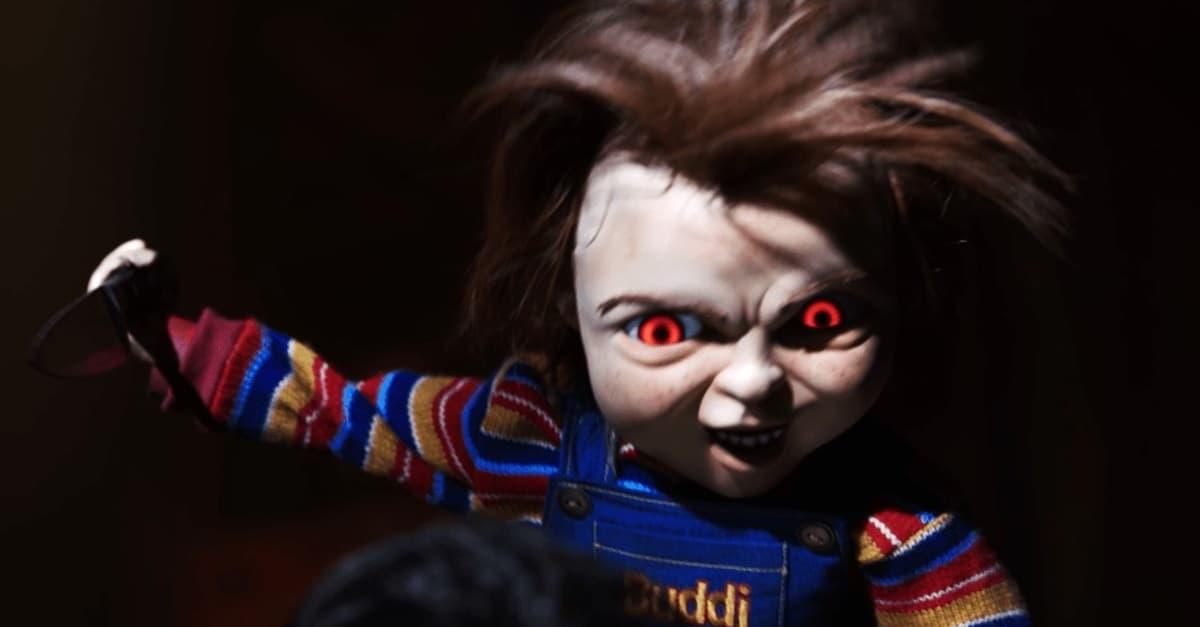
Well, pardner, Sheriff Woody’s got the last laugh because Child’s Play the film is not 1/10th as inspired as its marketing. It’s a tedious time waster uninterested in plumbing any of its possible themes—single parenthood, poverty, loneliness, tech—for terror. Instead it goes for the obvious prey and hopes star power will blind you to its ordinariness.
Discount those straight-to-video installments in the series if you will (and honestly, you probably should), but at least they each tried to do something different. At some point they embraced the ridiculousness of this itty, bitty freckle-faced problem and just ran with it.
Not this time. Nope, what we have here is one deadly serious and wildly unimaginative reboot. Hell, the doll doesn’t even look good!
And yet, Aubrey Plaza, Brian Tyree Henry and Mark Hamill all signed on to star in what amounts to the 8th Chucky film.
Why?
It’s not the concept. The possessed doll conceit has been updated from the soul of a serial killer to modern technology. Imagine if google home required a super creepy doll in bib overalls to work. Admittedly, there are all sorts of Terminator/Maximum Overdrive/Demon Seed possibilities here, all of which are left entirely unmined.
Instead it’s just a defective AI doll (voiced by Hamill
himself), birthday gift from a department store clerk (Plaza) to her lonely but
clearly too old for the toy son, Andy (Gabriel Bateman, quite good, actually).
They’re all good, especially Henry. Too bad the film doesn’t deserve it. Aside from one kill inspired by Texas Chainsaw Massacre 2 (nice!), and performances that are all better than the material, the new Child’s Play is a pretty tedious affair.
Two movies about Moe Berg in the last twelve months? What gives?
And who’s Moe Berg?
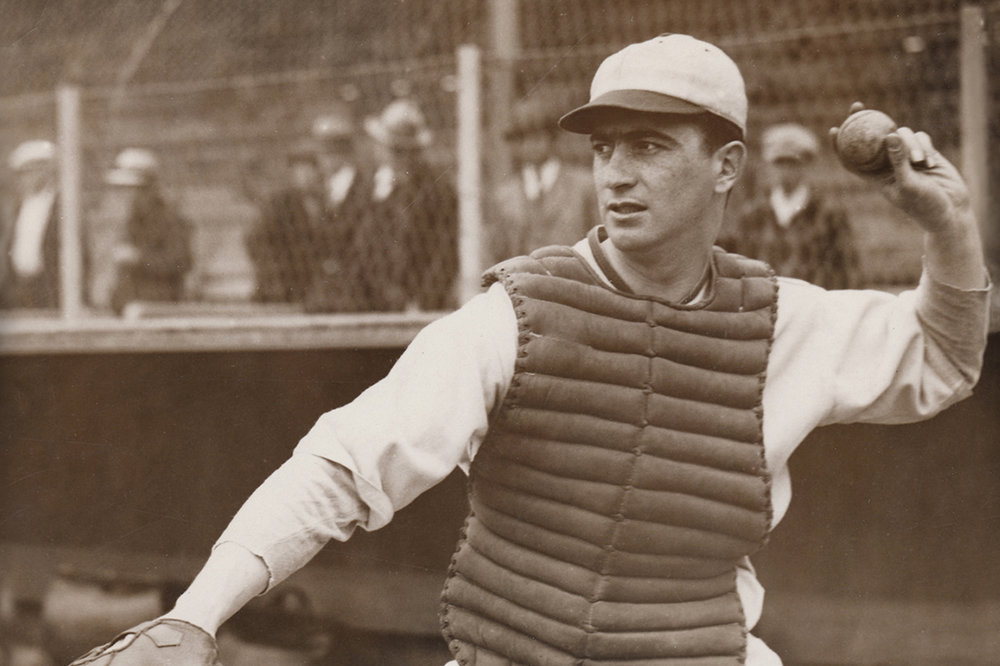
Decades before Austin Powers, Morris “Moe” Berg was an international man of mystery. A 15 year veteran of the Major Leagues, Berg was also a Princeton grad, a voracious reader with a photographic memory who clung to his privacy. He was a lawyer, a quiz show champion and an international spy who was once dispatched on a WWII kamikaze mission to assassinate the head of Germany’s nuclear research program.
Astounding stuff from a guy who, according to baseball legend Casey Stengel, “Could speak seven languages, but couldn’t hit in any of them!”
Just last summer, Paul Rudd played Berg in the enjoyable but underseen The Catcher Was a Spy. Now, documentarian Aviva Kempner brings a no-frills, uber-informative approach to uncovering the real Berg with The Spy Behind Home Plate.
Kempner (Rosenwald, The Life and Times of Hank Grennberg) unveils a succession of talking heads joined by wonderful archival stills and videos. Perhaps to mirror her subject, Aviva’s film is short on style, but it’s substance is extra innings worthy.
As unbelievable as Berg’s story is, the dry presentation doesn’t do much to entice the casually interested. But if you find these undertold slices of history fascinating, you’ll be hooked enough to want to seek out Rudd’s version next.
Almost 25 years ago, Pixar staked its claim as animation god with the buddy picture masterpiece Toy Story, where Tom Hanks and writer/director John Lasseter taught the world how to create a fully developed, nuanced and heartbreaking animated hero.
Woody and Buzz returned twice more over the next fifteen years, developing relationships, adding friends, enjoying adventures and life lessons all the while creating the single best trilogy in cinematic history.
And a lot of us wanted them to stop at 3. Is that partly because Toy Story 3 destroyed us? Yes! But also, it felt like a full story beautifully told and we didn’t want to see that completed arc tarnished for profit.
Toy Story 3 made an actual billion dollars.
Profit calls.
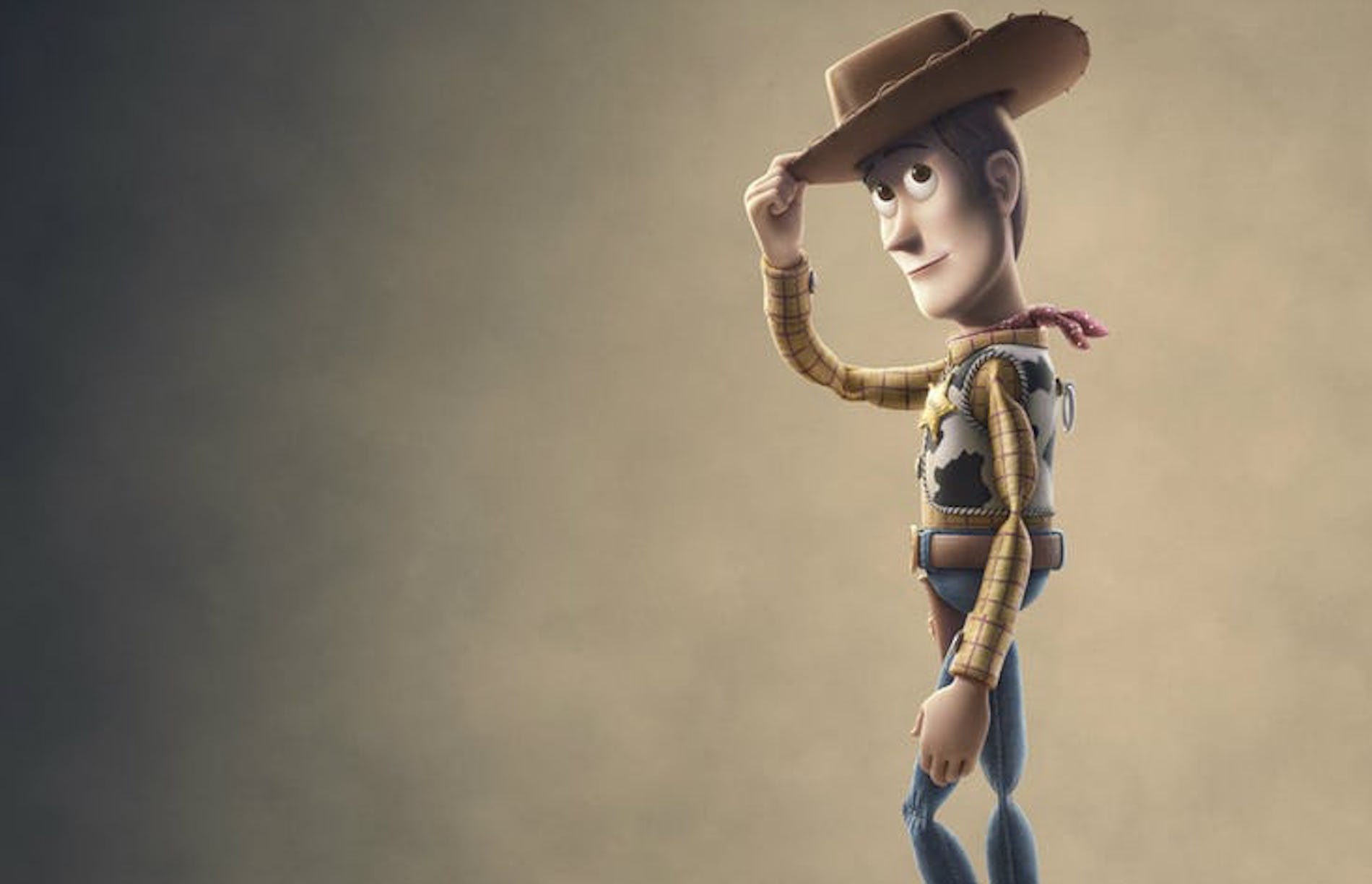
Right, so let’s drop in and see how the gang is doing. Woody (Tom Hanks in the role he was born to play) loves Bonnie, the youngster who inherited the ragtag group of toys when Andy left for college and we left the theater racked with sobs. But the cowboy just doesn’t feel the same sense of purpose.
Enter Forky (Tony Hale, who could not be better), a spork with googly eyes, hand-made and much-beloved friend to Bonnie. Forky longs for the trash, and Woody takes it upon himself to make sure Forky is always there for Bonnie. But when Bonnie’s family rents an RV for an end-of-summer road trip, Woody finds it tough to keep his eyes on the restless refuse—especially when a roadside carnival offers the chance to reconnect with old flame Bo Peep (Annie Potts).
Will Woody cast aside Forky, bestie Buzz (Tim Allen) and gang to rekindle something lost and taste some freedom?
Josh Cooley (who co-wrote Inside Out) makes his feature directorial debut with this installment. He also contributes, along with a pool of eight, to a story finalized by Pixar veteran Andrew Stanton (his credits include the three previous Toy Story films) and relative newcomer Stephany Folsom.
The talents all gel, combining the history and character so beautifully articulated over a quarter century with some really fresh and very funny ideas. Toy Story 4 offers more bust-a-gut laughs than the last three combined, and while it doesn’t pack the emotional wallop of TS3 (what does?!), it hits more of those notes than you might expect.
Between Forky’s confounded sense of self and Woody’s own existential crisis, TS4 swims some heady waters. These themes are brilliantly, quietly addressed in a number of conversations about loyalty, devotion and love.
This somewhat lonesome contemplation is more than balanced by the delightful hilarity of new characters Duke Caboom (Keanu Reeves) and Bunny and Ducky (Jordan Peele and Keegan-Michael Key, respectively).
And the creepy yet tender way villains Gabby Gabby (Christina Hendricks) and her posse of ventriloquist dolls are handled is as moving as it is funny.
Characteristic of this franchise, the peril is thrilling, the visuals glorious, the sight gags hilarious (keep an eye on those Combat Carls), and the life lessons far more emotionally compelling than what you’ll find in most films this summer. To its endless credit, TS4 finds new ideas to explore and fresh but organic ways to break our hearts.
We are beyond delighted to have been allowed to screen Jim Jarmusch’s new zombie classic The Dead Don’t Die two days in advance of its national opening. To honor this remarkable film and its amazing cast, we look at the best other horror movies that star these actors.
5. Zombieland (2009) – Bill Murray
Just when Shaun of the Dead convinced me that those Limey Brits had
created the best-ever zombie romantic comedy, it turns out they’d only created
the most British zom-rom-com. Writers Rhett Reese and Paul Wernick take the
tried-and-true zombiepocalypse premise and sprint with it in totally new and
awesome directions.
And the cameo. I cannot imagine a better one. I mean that. I’m not sure a
walk on by Jesus himself could have brought me more joy.
That’s not true. Plus, in zombie movie?! How awesome would that have been?!
Jesse Eisenberg anchors the film with an inspired narration and an endearing
dork characterization. But Woody Harrelson owns this film. His gun-toting,
Twinkie-loving, Willie Nelson-singing, Dale Earnhart-number-wearing redneck
ranks among the greatest horror heroes ever.
I give you, a trip to a loud and well-lit amusement park is not a recommendation Max Brooks would make during the zombiepocalypse. Still, you’ve got to admit it’s a gloriously filmed piece of action horror cinema.
4. Only Lovers Left Alive (2013) – Tilda Swinton
The Dead Don’t Die is not Jim Jarmusch’s first foray into horror. In 2013, the visionary writer/director concocted a delicious black comedy, oozing with sharp wit and hipster attitude.
Great
lead performances don’t hurt, either, and Jarmusch gets them from Tom
Hilddleston and Tilda Swinton as Adam and Eve (perfect!), a vampire couple
rekindling their centuries-old romance against the picturesque backdrop
of…Detroit.
Not
since the David Bowie/Catherine Deneuve pairing in The Hunger has there
been such perfectly vampiric casting. Swinton and Hiddleston, already two of
the most consistently excellent actors around, deliver cooly detached,
underplayed performances, wearing the world- weariness of their characters in
uniquely contrasting ways.
There is substance to accent all the style. The film moseys toward its perfect finale, casually waxing Goth philosophic about soul mates and finding your joy.
3. Suspiria (2018) – Tilda Swinton
It is 1977 in “a divided Berlin,” when American Susie Bannion
(Dakota Johnson, nicely moving the character from naivete to complexity)
arrives for an audition with a world-renowned dance company run by Madame Blanc
(Tilda Swinton, mesmerizing).
This “cover version” (The Tilda’s phrase, and valid) of Argento’s
original lifts the veil on the academy elders early, via the diaries of
Patricia (Chloe Moretz), a dancer who tells psychotherapist Dr. Josef Kiemperer
(also The Tilda, under impressive makeup) wild tales of witches and their
shocking plans.
Guadagnino continues to be a master film craftsman. Much as he draped Call
Me by Your Name in waves of dreamy romance, here he establishes a
consistent mood of nightmarish goth.
But even when this new Suspiria is tipping its hat to Argento, Guadagnino leaves no doubt he is making his own confident statement. Women move in strong solidarity both onstage and off, dancing with a hypnotic power capable of deadly results. In fact, most of the male characters here are mere playthings under the spell of powerful women, which takes a deliciously ironic swipe at witch lore.
2. American Psycho (2000) – Chloe Sevigny
A giddy hatchet to the head of the abiding culture of the Eighties, American
Psycho represents the sleekest, most confident black comedy – perhaps
ever. Director Mary Harron trimmed Bret Easton Ellis’s novel, giving it
unerring focus. More importantly, the film soars due to Christian Bale’s
utterly astonishing performance as narcissist, psychopath, and Huey Lewis fan
Patrick Bateman.
There’s an elegant exaggeration to the satire afoot. Bateman is a slick,
sleek Wall Street toady, pompous one minute because of his smart business cards
and quick entrance into posh NYC eateries, cowed the next when a colleague
whips out better cards and shorter wait times. For all his quest for status and
perfection, he is a cog indistinguishable from everyone who surrounds him. The
more glamour and flash on the outside, the more pronounced the abyss on the
inside. What else can he do but turn to bloody, merciless slaughter? It’s a cry
for help, really.
Harron’s send up of the soulless Reagan era is breathtakingly handled, from
the set decoration to the soundtrack, but the film works as well as a horror
picture as it does a comedy. Whether it’s Chloe Sevigny’s tenderness as
Bateman’s smitten secretary or Cara Seymour’s world wearied vulnerability, the
cast draws a real sense of empathy and dread that complicate the levity. We do
not want to see these people harmed, and as hammy as it seems, you may almost
call out to them: Look behind you!
As solid as this cast is, and top to bottom it is perfect, every performance is eclipsed by the lunatic genius of Bale’s work. Volatile, soulless, misogynistic and insane, yet somehow he also draws some empathy. It is wild, brilliant work that marked a talent preparing for big things.
1. Get Out (2017) – Caleb Landry Jones
Opening with a brilliant prologue that wraps a nice vibe of homage around
the cold realities of “walking while black,” writer/director Jordan
Peele uses tension, humor and a few solid frights to call out blatant
prejudice, casual racism and cultural appropriation.
When white Rose (Alison Williams) takes her black boyfriend Chris (Daniel
Kaluuya) home to meet the fam, she assures him race will not be a problem. How
can she be sure? Because her Dad (Bradley Whitford) would have voted for
Obama’s third term “if he could.” It’s the first of many B.S. alerts
for Peele, and they only get more satisfying.
Rose’s family is overly polite at first, but then mom Missy (Catherine
Keener) starts acting evasive and brother Jeremy (Caleb Landry Jones) gets a
bit threatening, while the gardener and the maid (both black – whaaat?) appear
straight outta Stepford.
Peele is clearly a horror fan, and he gives knowing winks to many genre
cliches (the jump scare, the dream) while anchoring his entire film in the
upending of the “final girl.” This isn’t a young white coed trying to
solve a mystery and save herself, it’s a young man of color, challenging the
audience to enjoy the ride but understand why switching these roles in a horror
film is a social critique in itself.
Get Out is an audacious first feature for Jordan Peele, a film that never stops entertaining as it consistently pays off the bets it is unafraid to make.