Tag Archives: Willem Dafoe

Art for Art’s Sake

Pasolini

by Brandon Thomas

Abel Ferrera, the filmmaker behind Ms. 45, The Driller Killer, and Bad Lieutenant, was maybe too perfect of a choice to depict the final 24 hours in the life of Italian artist Pier Pasolini. While this love letter to Pasolini never quite succumbs to standard biopic syndrome, it also doesn’t fully rise above being anything more than hero worship.

After Pier Pasolini (Willem Dafoe) puts the finishing touches on his masterpiece, Salò, the provocative writer, critic, activist and filmmaker returns to Rome to visit with his family. During the course of this relatively normal day, Pasolini takes part in an interview, meets with fellow artists, and cruises the evening looking for a lover. While the day’s events seem mundane and boring for someone typically known as a notorious hellraiser, all of this leads to a tragic outcome on a beach outside of Ostia, Italy.

It’s evident early on that this movie is in awe of Pasolini. The film doesn’t depict Pasolini’s last day as much as it observes it. Ferrera treats the banal dealings of this 24-hour period with reverence. Pasolini’s life and work is church. The man himself is Jesus. 

Where the spirit of Pasolini is sincerely felt is when Ferrera brings the artist’s works to life. A segment from a novel he’s currently working on is realized with graphic depiction as Pasolini’s character, based on the author himself, has an intense sexual encounter with a young man. Another segment finds two men looking for the famed Feast of Fertility Festival where gay men and women come together for one night to procreate. Neither segment adds to Pasolini’s plot (or what exists of one), but they are so categorically Pasolini in tone, spirit and theme that the stillness of the movie is finally shaken alive.

While the lack of narrative momentum causes the film to stumble, Dafoe stuns as the titular character. He doesn’t play Pasolini as much as he channels the spirit of the late artist. Pasolini’s cool and equal indifference flows through Dafoe’s body language and speech like second nature. His Pasolini is a man equally at home with who he his, but also incredibly bored with the person he has become.

Ferrera’s biggest mistake with Pasolini is that he cares too much about the man himself. While Dafoe’s equal admiration leads to a strong anchoring performance, Ferrara’s unwillingness to push the narrative leaves the film largely lifeless and inert. 


The Dunce and Future King

Aquaman

by Matt Weiner

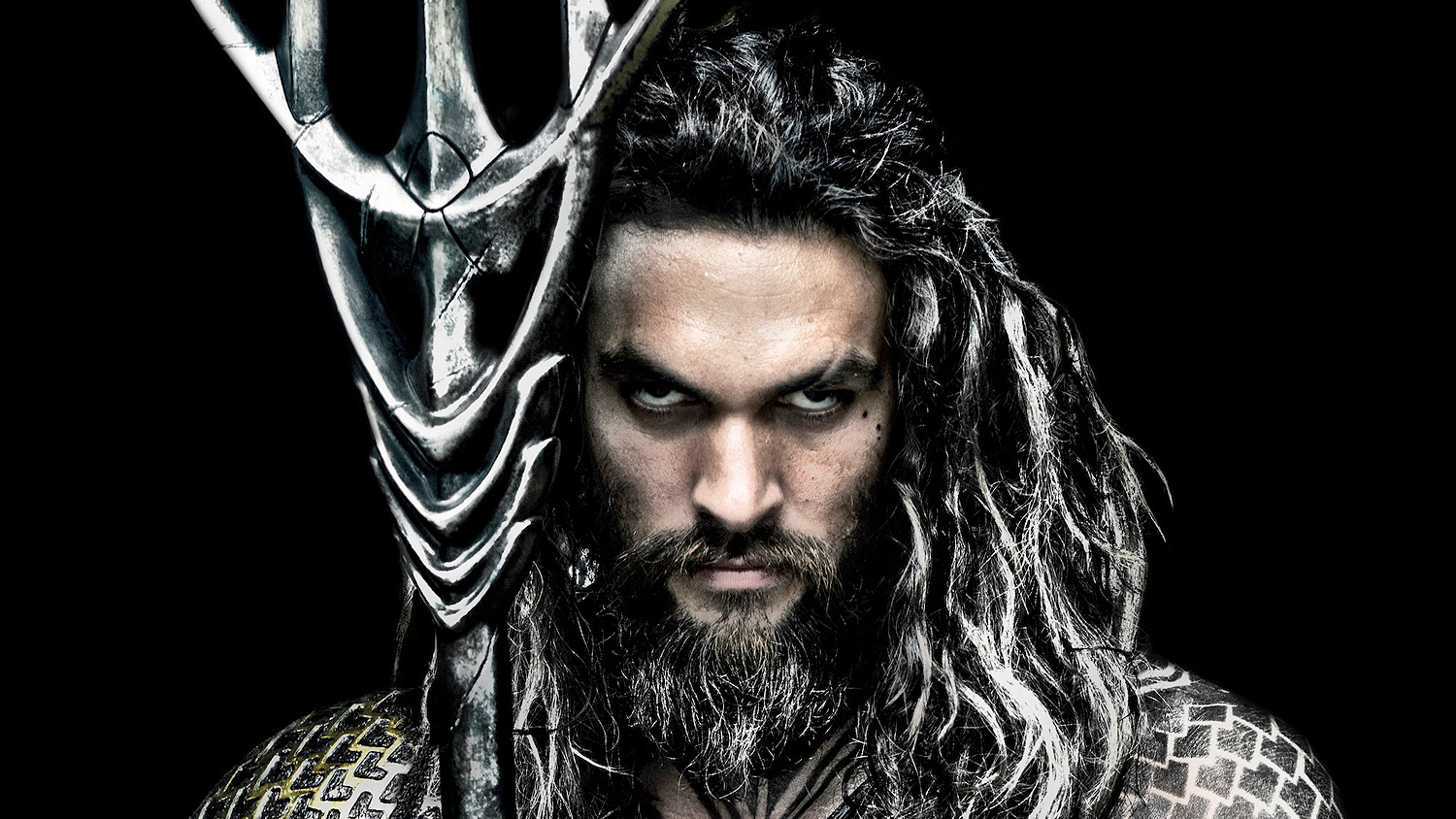
A movie that brings together Willem Dafoe, Nicole Kidman, Julie Andrews and Dolph Lundgren is inevitably going to have a lot going on. That’s certainly the case for James Wan’s Aquaman, a weird mix of origin story, Arthurian myth and anti-racist appeal to coexistence. If that sounds like a lot for the frat bro character from 2017’s Justice League, well… it is. But thankfully it’s also never boring.

The new movie takes place after the events of Justice League, allowing half-man/half-Atlantean Arthur Curry (Jason Momoa) to resume his day job of serving as a one-man Coast Guard and drinking. Flashbacks piece together Curry’s life story: his father (Temuera Morrison) fell in love with the queen (Kidman) of the underwater kingdom Atlantis, who later had to choose between endangering her taboo love child or returning to the kingdom.

A series of tragedies pushes Curry on his hero’s journey, with enough family strife between him and his half-brother Orm (Patrick Wilson) to fill a Greek play. Together with the Atlantean princess Mera (Amber Heard), Curry strikes out in search of a golden MacGuffin along with his destiny, even finding time to pick up an archenemy for good measure (Yahya Abdul-Mateen II as Black Manta).

How much of a comfort it is that Aquaman is one of the better recent superhero movies depends on where you fall on the debate over whether distinctive directors should get picked for more of these big comic book projects (and given a long leash)—or if you wish we lived in a universe where they could pursue these visions without yoking themselves to Disney/Marvel or DC.

It is to the film’s benefit that Wan, veteran of horror franchises Saw, The Conjuring and Insidious, manages to tie Curry’s predictable Arthurian ascent to the most disturbing Lovecraftian horror this side of Hellboy. And it’s almost shocking to see the cotton candy brightness of Atlantis after the pummeling color palettes of Batman v. Superman and Justice League.

With his nonstop pace, steady stream of exotic settings and action that never gets bogged down in its own seriousness, Wan’s entry in the genre hits the mark as his loving homage to vintage Spielberg and Lucas—plus tentacles. Best of all, it’s a refreshing reminder that you shouldn’t need a flowchart and multi-phase corporate synergy to make a good popcorn movie.

Which is good because it doesn’t look like these franchises are going anywhere anytime soon, so if any other directors are looking to wed their creative vision to the corporate motherships then maybe I can learn to be more tolerant of the products they give birth to. It’s a message that sounds oddly familiar.


Stage Mother

Vox Lux

by Hope Madden and George Wolf

No doubt you’re hip to the talent of Natalie Portman.

But if you only know Brady Corbet as an actor (Funny Games, Melancholia, Simon Killer), or maybe don’t know him at all, get to know Corbet the visionary filmmaker.

Corbett writes and directs an astute and unusual pop ballad about celebrity—American celebrity, at that.

Vox Lux opens in 1999 as young Celeste (Raffey Cassidy, The Killing of a Sacred Deer) and her high school class are visited by a disgruntled young white male. Corbet’s camera plays with the horror of the scene as it dawns on those in the classroom as well as the audience what is about to happen.

As Celeste heals from a bullet to the spine, she and her older sister Eleanor (Stacy Martin) work through their collective grief and trauma by writing a song, which Celeste later performs at a memorial vigil.

Thanks to the astute strategy of a no-nonsense manager (Jude Law) and straightforward publicist (Jennifer Ehle), the song becomes a healing anthem and Celeste—her protective sister at her side—is launched into pop stardom.

Corbet’s chaptered “21st Century Portrait” (the proper subtitle to his film) offers infrequent omniscient narration from Willem Dafoe, a glib narrative device that’s part “Behind the Music” and part sociological commentary. Tragedy is commodity in modern America, a fact that can only mean more tragedy.

When the timeline shifts forward and Portman takes over in the lead, we see a new character fully formed from years of living that are only hinted at. Celeste is now a veteran megastar with a daughter of her own (also played by Cassidy) and strained relationships with everyone around her.

Portman’s performance is such an all-in tour de force it effectively divides the film into parts: with and without her. She commands the screen with such totality you’re afraid of what Celeste might do if you dare to shift your focus somewhere else.

Corbet knows better than to do that. With Portman as a mesmerizing guide, he crafts a fascinating fable with two uniquely American pillars – gun violence and celebrity culture. Vox Lux is shocking, funny, sad, and haunting, with plenty of visual flourish and even some new songs by Sia.

It’s a statement, and coming from a relatively unknown writer/director, a pretty audacious one.

Keep ’em coming, Corbet.


https://www.youtube.com/watch?v=dolxUIZzb3w


Real and Spectacular

Mountain

by George Wolf

“How big a screen ya got?”

That’s what you need to be asking for Mountain, a nature documentary that puts the breathtake in breathtaking.

Director and co-writer Jennifer Peedom provides a majestic canvas for the truly stunning cinematography of Renan Ozturk, gracefully pondering the evolution of humankind’s quest to climb upward.

Intermittent narration from Willem Dafoe dots the landscape of footage from the world’s highest peaks, and though the writing seems overly dramatic at first (“the holy or the hostile…nothing in between”) the sheer grandeur of what you’re seeing quickly demands nothing less.

From swooping aerial shots featuring tiny specks of humanity to tight, miraculous skiing sequences a la Warren Miller, Mountain beautifully reminds us how truly small we remain. For those enthralled by such things (my hand is up) it might as well be mountain porn, questioning our fascination even as it’s feeding it.

But again: big screen.


Tragic Kingdom

The Florida Project

by Hope Madden

Full of the raucous rhythm of an unsupervised childhood, The Florida Project finds power in details and tells an unadorned but potent story.

Co-writer/director Sean Baker follows up his ambitious 2015 film Tangerine with another tale set gleefully along the fringes of society. Where Tangerine used weaves, stilettos and spangles to color the Christmas antics of Hollywood hustlers, here Baker fills the screen with bold colors and enormous, cartoonish images to create a grotesquely oversized playground.

The film begins with as perfect a movie opening as you will ever see.

Six-year-old Moonee (an astonishing Brooklynn Prince) wastes her summer days wandering the Orlando strip surrounding her home, a vivid purple bargain motel catering less to Disney World tourists than to tenants who can’t afford the security deposit world of traditional housing.

When she’s not out finding adventures with her besties Jancey (Valeria Cotto) and Scooty (Christopher Rivera), Moonee’s probably hustling wholesale perfumes to tourists with her mom Halley (Bria Vinaite).

The one true grown up in the mix, motel manager Bobby, is played with charm and tenderness by Willem Dafoe.

Baker’s many talents include an ear for authentic dialog, a knack for letting a story breathe and an eye for visual details that enrich a tale. But maybe what’s most striking is his ability to tell fresh but universal stories. We all remember elements of unbridled recklessness in our childhood, although very few of us grew up the way Moonee does.

Baker creates a bridge into Moonee’s life, revels in her freedom and bravado, but keeps us always aware of the dangerous edges when you’re blurring childhood and adulthood.

It’s the concept of childhood and adulthood that preoccupies Baker and his story, set in this absurd, low-rent amusement park of a world. As Mooney’s mother, Vinaite offers a fierce mixture of childishness all her own as well as street-savviness. Halley keeps the ugliness of the world away with her own whimsy, and Vinaite’s onscreen chemistry with Prince is authentic and full of tenderness.

As much as Tinsel Town was the perfect backdrop for the struggling glamour of Tangerine, the shadow of Disney World is almost too perfect a setting for the grinding poverty and perverted innocence of The Florida Project.


Fright Club: Horror’s Best Weirdos

Horror loves it some weirdos – and so do we! Be honest, Carrie would not have done nearly so much damage had she fit in somehow, right?

Oh, Carrie – how we love you and your nutcase of a mom. And the White women are hardly alone. Freaks and misfits litter the horror cinema landscape – and thank God for it! Whether Edwin Neal – the hitchhiker and harbinger of what’s to come in West Texas – or an unseemly Pit Bukowski, white gown and katana bedecked in Der Samurai.

You want to get really weird? How about anybody from Calvaire? Possession’s swinging Heinrich? Let’s not forget our favorite prom non-goer, The Loved Ones’ Lola (Robin McLeavy).

And these aren’t even the best. Who are the five best weirdos in horror cinema?

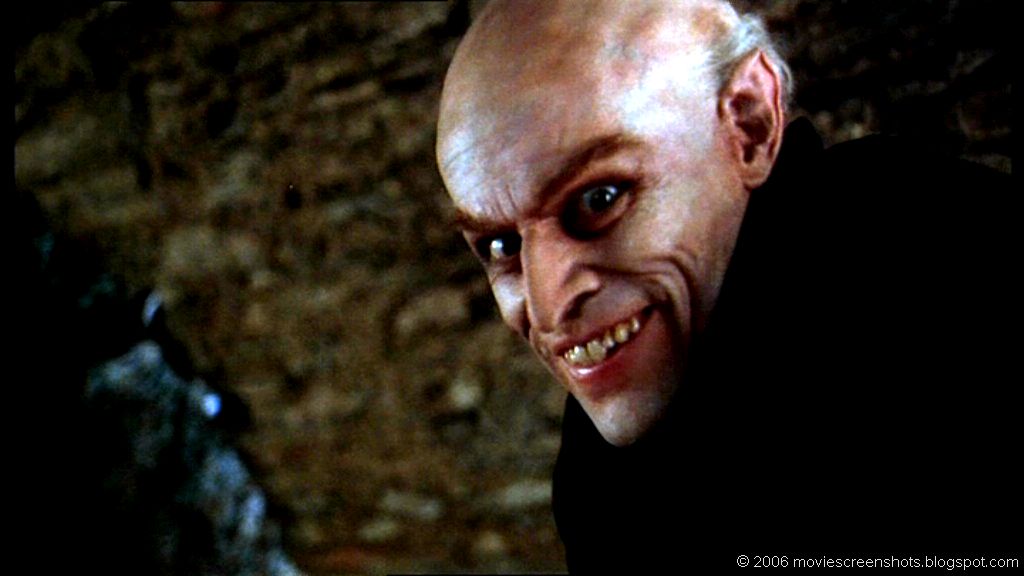
5. Orlok (Willem Dafoe) Shadow of the Vampire (2000)

Veteran actor/effortless weirdo Willem Dafoe picked up an Oscar nomination playing Max Schreck, the “actor” who portrayed vampire Count Orlock in FW Murnau’s groundbreaking 1922 film Nosferatu.

Shadow film pokes good natured but pointed fun at the industry, but it’s based on the rumor at the time that Schreck’s performance was so authentic because he was, indeed, a vampire.

Dafoe is odd as they come, and also heartbreaking, goofy, lovable, wounded and terrifying.

4. Ichi (Nao Ohmori) Ichi the Killer (2001)

Clearly someone from a Takashi Miike film was bound to make this list. Indeed, just about every character in this film would have been in contention. But no one out-weirds Ichi.

A man-child who’s equal parts sympathetic and repellant, Ichi does the bidding of those who care for him. Their moral compass does not always point North, though they try to do the right thing by letting Ichi unleash his very, very wrong behavior in a kind of, sort of heroic way.

Which is why some of his actions are so profoundly, scarringly surprising. Because Ichi does some seriously fucked up shit. And he’s not even the one who skins a guy alive.

3. May (Angela Bettis) May (2002)

Oh, Angela Bettis. No one – not even Sissy Spacek – captured the crushing awkwardness of trying to fit in when you are, deep down, cripplingly odd as well as Bettis.

Her May aches for a friend. She has some heartbreaking trouble finding that in Adam (Jeremy Sisto) and Polly (Anna Faris – brilliant). But if you can’t find a friend, you might just have to make one.

Her performance is all awkward pauses, embarrassing gestures and longing. It’s beautiful, tender, sweet and – eventually – forgivingly bloody. We love May.

2. Bubby (Nicholas Hope) Bad Boy Bubby (1993)

Christ, kid, you’re a weirdo.

Writer/director Rolf de Heer explores something amazing in his Aussie arthouse horror Bad Boy Bubby. Bubby has spent his entire 30 years in a single, windowless room with Mam. She leaves now and again, affixing a gas mask and warning the boy that he’ll die if he sets foot outside.

No, things aren’t that great for Bubby. They’re even worse for Cat. When Bubby eventually has to meander out into the open, his adventure is so authentically pieced together. He assimilates information and behaviors with the perfect sense of childishness.

Nicholas Hope’s performance is a minor miracle in a film that is wild, disturbing and pretty amazing.

1. Big Ronnie (Michael St. Michaels ) Greasy Strangler (2016)

Honestly, just about anybody from this film might have made the list. Big Brayden (Sky Elobar) was an obvious possibility. Those glasses! And he’s shit scared!

But it’s Big Ronnie (or is it Private Eye Jodie?!) who earns the accolade. Yes, he may be a bullshit artist, but that smile, the disco suit, the “big rat,” – let’s not even get started on his diet or hygiene. We’d never have thought of using a carwash quite that way, and yet we will never be able to think of it otherwise again.

Big Ronnie is the Weirdo All Star. Celebrate with some potato chips?


Best Draculas Countdown

There is a new Dracula movie, which begs the question: Do we need a new Dracula movie?

No. There’s nothing new to say, and with so many worthy options already available, why buy new? With that in mind, we have pulled together a list of our favorite cinematic Draculas. (Note, we cheated here and there. Sue us.)

10. Frank Langella

In 1979, Frank Langella recreated the Stoker anti-hero as a virile romantic lead and the ladies swooned. Langella is a consummate actor who brings a wry charm to the screen.

9. Jack Palance

Breathy and weird – as always – Jack Palance makes the vampire into a strange beast in a film that’s campy and ridiculous but worth watching.

8. Udo Kier

Speaking of weird! The effortlessly bizarre and uniquely compelling Udo Kier is the anemic and pathetic monster at the heart of Andy Warhol’s Dracula – a gorgeous piece of vampire trash if every there was such a film.

7. William Marshall

Officially, no, he is not Dracula. He is Blacula – respect him! Fear him! Dig him!! There are few Seventies blaxploitation films that can hold a candle to this one, mostly because of Marshall’s rich baritone and compelling presence.

http://www.youtube.com/watch?v=kXrL_Hm50eU

6. Klaus Kinski

In 1979, Werner Herzog revisited F. W. Murnau’s masterpiece Nosferatu – a film that was originally meant to be a Dracula film, but copyright forbade it. Herzog fixed that, with a mesmerizing Kinski as the bloodthirsty count Hypnotic and creepy, Kinski nails it.

5. Gary Oldman

What I love about most of the vampires on this list is that the actors zero in on the inherent weirdness in the role. Oldman channels the Count’s smolder, but that granny version early on is the one we remember.

4. Willem Dafoe

OK, so this is a bit of a stretch. In Shadow of the Vampire, Dafoe plays Max Schreck, the actor who played Count Orlock in Murnau’s Nosferatu. But Orlock was supposed to be Dracula, and the point is, Dafoe is amazing – hilarious, creepy and terrifying all at once. He is easily one of the best.

http://www.youtube.com/watch?v=uAn5uLNMmjk

3. Bela Lugosi

Sure, #3 may seem low for the actor most linked to the role. He’s the icon, we give him that, and even if there are others we find scarier or more interesting, Bela will always be image of Dracula.

2. Christopher Lee

But Christopher Lee – the six foot five inch baritone – is so much more menacing. This was the Dracula to fear. This was the one we believed could turn into a wolf and tear your throat out, the one that had the strength of ten men, the one who could woo the ladies. Christopher Lee was the one.

1. Max Schreck

Hopefully we’ve made the case by now that Murnau’s Nosferatu counts, and our favorite Count is Orlock because Max Schreck is one sick genius. So sick that an entire brilliant film was created to due him honor. He’s the creepiest, most memorable, all time best Dracula, even if he is a vampire by another name.


Nympho, and Proud of It!


Nymphomaniac:  Vol. II

by George Wolf

When we left Joe’s life story at the close of Lars von Trier’s Nymphomaniac:  Vol. I, she had finally married Jerome (Shia LeBeouf), only to find she had lost the ability for sexual pleasure.

Well, she put it a bit more bluntly than that, but you know Joe!

In case you don’t..Joe (Charlotte Gainsbourg) has been telling her tale to the curious intellectual Seligman (Stellan Skarsgard). After finding Joe lying in the street badly beaten, Seligman took her to his place for recovery, and has been sitting at her bedside as she recounts a life dominated by her insatiable nature. 

While Vol. I was an effective, if uneven, look at a woman unabashedly in control of her sexuality, Vol. II dissolves into the brilliant but misunderstood filmmaker shaking his fist at an unworthy society.

Joe’s story continues, and we see her exploring more extreme sexual experiences (some depicted graphically enough to earn you college biology credits), including regular appointments for physical abuse at the hands of an S&M “counselor” (Jamie Bell, quietly disturbing).

This behavior naturally takes a toll on Joe’s role as a wife and mother, as well as her ability to hold down a job. But, her experience with men is valued by shady character “L” (Willem Dafoe), and she accepts his offer to go to work in his “debt collection” department.

As Joe brings events closer to the point where Seligman found her, von Trier’s script gives Joe long, philosophical speeches while Seligman serves as the vehicle for convenient straw man arguments von Trier is eager for Joe to knock down.

After years of being of accused of misanthropy, von Trier has been silent since his controversial Hitler comments a few years back. When Joe proclaims she cannot say “whether I left society or it left me,” it’s not hard to guess who “me” really is.

Vol. II‘s main advantage over Vol. I is Gainsbourg. While Stacy Martin was indeed impressive as the younger Joe, she can’t match the emotions Gainsbourg explores. Mining her character’s experiences for every bit of depth, Gainsbourg never allows you to feel it’s safe to take your eyes off of Joe. She’s good enough to almost make up for the absence of Uma Thurman’s comically tragic, absolutely show-stopping performance from the first installment.  Almost.

LvT continues to be a filmmaker that should never be ignored, but Nymphomaniac:  Vol. II ultimately feels like a missed opportunity.

What could have been an expanded take on how society views sexually powerful women instead becomes akin to a public stunt, a vehicle for von Trier to proclaim that he is what he is, and he ain’t ashamed.


Verdict-2-5-Stars


When the Going Gets Weird, These Guys Get Going…

Sure, you probably caught Woody Harrelson and his shaggy blond wig in Catching Fire, the number one film in the country today (and for the foreseeable future). But this weekend,Woody sneaks back into theaters as the Appalachian meth dealer/bare knuckle boxing organizer Harlan DeGroat in Out of the Furnace. Though you might not notice it at first blush, the two characters have something in common. They’re weirdos. Is that intentional, or is it difficult for Harrelson to do anything else? He’s a tremendous character actor, a welcome sight in any film, but let’s be honest. The dude’s always and forever playing weirdos.

Well, we love that about him, and today we wish to celebrate all those reliable oddballs, freaks and weird dudes. A tip of the hat to Harrelson and his effortlessly peculiar brethren: cinema’s ten best weirdos.

10. Udo Kier

Who’s Udo Kier, you may be asking? We’re sorry for your loss, because you have apparently missed out on the smorgasbord of oddballs that have made up this man’s nearly 50 year career. Between his overly large eyes, wet lips and impenetrable accent, he brings a pervy air to every role, which he’s used to great effect in hundreds of performances.

http://www.youtube.com/watch?v=Hvpz88YYego

9. Michael Shannon

Shannon’s size, his quietly observant style, his delayed nasal speaking, his judging eyes all give him a creepy quality perfect for weirdo roles. Luckily for everyone, he’s deeply talented, imbuing each of his unique characters with the fragile humanity that spawned the freaky behavior in the first place.

8. Sam Rockwell

Rockwell’s a huge talent, and with his trademark quirky charm he’s basically invented the niche of oddball leading man. There’s a childlike quality to his performances, and a laid back but somewhat scornful humor that reminds us at times of Woody Harrelson and Bill Murray. He brings a magnetic but quirky humanity to every role – drama or comedy, lead or supporting.

7. Tom Waits

That gravely, smoker’s voice, the Eraserhead-esque hairstyle, a face and body that appear to be all angles – Waits cuts an unusual onscreen image. He’s put that to fine use over the years in roles that call for something a little unusual.

6. Mickey Rourke

Back in the day, Rourke brought a uniquely smoldering charisma to roles. He was never a cookie cutter leading man, always a bit off. His current hulking appearance and years of bad decisions have thrust him into the niche of the lumbering nutjob, but you know what? He handles it with aplomb.

http://www.youtube.com/watch?v=2FokjNH7Gw8

5. Dennis Hopper

Dude! It may have been Hopper’s own bad wiring that helped him bring a little mania (sometimes a lot) to scores of roles: the wacked out hippie in Easy Riders, the wacked out zealot in Apocalypse Now, the obsessive investigator in Texas Chainsaw Massacre 2, the Southern madman in Paris Trout, the drunken father in Hoosiers. But he owns it in among the all time great freakshow performances, Frank Booth in Blue Velvet.

4. Willem Dafoe

Dafoe brings a malevolent comic ability to roles – including his supporting turn opposite Harrelson in Out of the Furnace. His performances tend toward fearless, and he contorts his own physical presence to bring out the demonic or the strangely comical – or both – in each role.

http://www.youtube.com/watch?v=mvE-_utxEzc

3. Christopher Walken

The great. Whether he’s requesting cowbell on SNL, adding a peculiar charm to a comedy, or staring down a man about to die in a drama, Walken’s staccato delivery, blank stare and musical timing ensure that every line he delivers feels  profoundly, often unsettlingly weird.

2. Crispin Glover

The thing about Crispin Glover (McFly!) is that you get the feeling this is just how he is. He’s drawn to the characters that most closely resemble his own unique personality. I’m not saying he eats cockroaches, but a romantic lead is probably not in his future, on camera or otherwise.


1. Nic Cage

Cage wins this contest because he appears to have trouble not being a weirdo. Channeling his inner normal guy seems to sometimes be too great a task for the actor. Those ridiculous wigs only hamper any effort to mask his natural freakishness, but we say don’t hide it, Nic! Let that freak flag fly.