Some great stuff—indies and blockbusters—to watch as you digest this week. We’ll make the choices easier for you.
Click the film title to read the full review.
We the Animals
Blindspotting
Crazy Rich Asians
Kin
Some great stuff—indies and blockbusters—to watch as you digest this week. We’ll make the choices easier for you.
Click the film title to read the full review.
Wow, a lot of movies worth passing on available this week. But is The Meg the kind of fun you want to unwind with at home? What about Mile 22—that can’t be all bad, right? And what the hell is Alpha?
Let us walk you through it.
Click the film title for the full review.
by Rachel Willis
What would you do upon receiving the worst news of your life? How would you spend the next 24 hours?
These are the questions that plague Vivienne (Sarah Jessica Parker) upon learning she has a tumor. More tests are required to diagnose the nature of the tumor, but if it’s cancerous, she can expect to live another 14 months with aggressive treatment.
It’s telling that Vivienne is alone when she receives this information. From the beginning, director Fabien Constant creates a sense of loneliness around her. After receiving the devastating news, her next stop is a rehearsal for her upcoming 25th anniversary show. A number of band members have clearly been waiting, but Vivienne mollifies their annoyance with banal pleasantries. She doesn’t mention to any of them, including her manager Ben (Common), that she is sick.
Vivienne spends the next 24 hours wandering from place the place. The New York City backdrop perfectly captures the theme of isolation despite being surrounded by millions. Though Vivienne has friends, a concerned mother, a lover, and a daughter, it’s clear from the dialogue she has always maintained an aloofness around those who care for her.
Writer Laura Eason gives us just enough to understand Vivienne’s relationships without giving away too much. Her relationship with the father of her daughter, Nick (Simon Baker) is cordial, but it’s clear from his tone when speaking about their daughter, Vivienne hasn’t been the most engaged mother. She’s been too busy with her career.
Though the first act of the film manages to convey a lot of information in brief exchanges, and Sarah Jessica Parker aptly conveys the emotional anguish of Vivienne, the second half falls quickly into melodrama. The idea that Vivienne is desperate for a connection is conveyed by a number of trite interactions with a Lyft driver who happens to make repeat appearances in her life. The naturalness of the dialogue in the first half is replaced with brief, forced conversations about profound subjects, mainly the power of music.
It’s unfortunate that Hollywood has adopted the policy of casting actors in singing roles when they can’t sing. Gone are the days of overdubbing actors with quality singers. Instead, we’re forced to listen to Parker muddle her way through a cheesy song. And not once, but twice.
With a title like Here and Now, it’s not a surprise that the film takes a melodramatic turn, but it’s a shame since it had a promising start.
by Rachel Willis
After a freelance journalist is kidnapped in Syria, his mother tries numerous avenues to get him home. With Viper Club, director Maryam Keshavarz seeks to draw attention to the plight of kidnapped journalists and aid workers around the world.
When we’re first introduced to Helen (Susan Sarandon), we learn quickly that her son, Andy (Julian Morris), was kidnapped more than two months prior by a terrorist organization. At the direction of the FBI and US State Department, Helen has had to maintain silence regarding her son’s plight. No one in her life knows the anguish and fear she carries on a daily basis as she waits for someone to rescue her son.
It’s clear that her faith in the US government has waned in the months since her son disappeared. When ransom demands arrive, Helen expects an immediate response. What she gets is the runaround from the FBI.
Susan Sarandon is nearly always impeccable, and her performance here is no exception. She ably conveys the frustration and distress of a mother incapable of saving her son. When the government fails to act, she decides to reach out to a network of people (the titular Viper Club) willing to negotiate her son’s release.
Aside from Sarandon’s convincing performance, the rest of the cast can’t seem to muster the energy to care. It’s not hard to see why. The supporting characters are shallow. The focus is rooted so completely on Helen’s plight that it’s strange the film introduces so many additional characters.
Flashbacks in the film attempt to humanize Andy, but strangely, we only get to see him as an adult or a ten-year-old boy. It’s as if no other period in his life made an impression on his mother, as the memories are filtered to the audience from her perspective. The impact would have been greater if we’d seen more of what led to Andy’s final trip to Syria and been spared the sentimental moments from his childhood.
It’s hard to root out the point of Viper Club. In trying to avoid the murky politics surrounding the negotiation for the release of kidnapped Americans, Keshavarz sends an equally murky message. In not addressing the deeper implications of Helen’s actions, the movie misses an opportunity to address the plight of journalists working in dangerous situations. The film skirts a number of issues, and in the end, doesn’t say much of anything.
by Rachel Willis
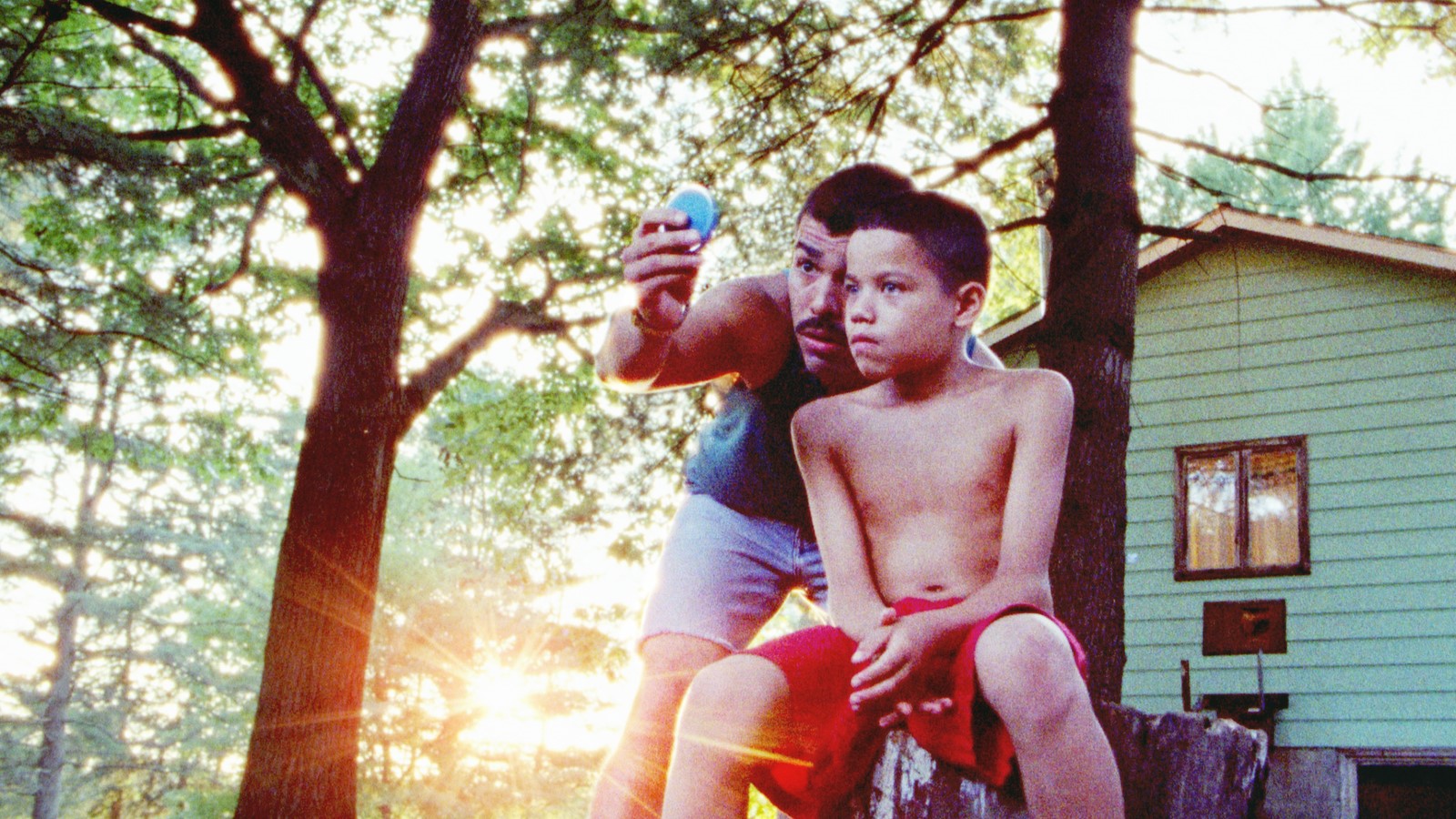
Imaginative Jonah is the focal point of director Jeremiah Zagar’s family drama, We the Animals. Based on Justin Torres’s novel of the same name, Zagar and co-writer Daniel Kitrosser successfully enter the realm of adolescent boys.
The youngest of three brothers, Jonah is the film’s narrator. His quiet observations allow him to remain nearly invisible to the adults around him. He sees things others might miss, and with an artist’s eye, he renders his observations into illustrations that jump off the page.
With his two older brothers, Manny and Joel, Jonah navigates his parents’ volatile relationship. Though there is love between his Paps and Ma, there are also moments of violence.
While the time period of the film is never explicitly stated, based on a few clues it’s likely the mid-1980’s. It’s a time when kids ran wild outdoors without cell phones or tablets in hand. The cinematography captures the sunny summer days when aimless kids roamed far and wide. It perfectly evokes the innocence and curiosity of young children.
As Joel and Manny enter into adolescence and leave childhood behind, Jonah falls further into his own world. The three brothers, at first inseparable, start to drift apart. While Joel and Manny seek to become men just like their father, Jonah tries to carve out his own identity. It puts him at odds not only with his siblings, but his parents as well.
There’s a dream-like quality to the movie reminiscent of films such as Beasts of the Southern Wild and Pan’s Labyrinth. Though Zagar’s approach is slightly less fantastic than either film, there is still a lovable, magnetic child at the center. As Jonah, Evan Rosado joins the ranks of child actors whose talent belies their age.
Zagar proves his mettle as both writer and director. His previous works include a number of solid documentaries (Captivated: The Trials of Pamela Smart, In a Dream), but as his first feature film We the Animals is a marvelous addition to his body of work.
https://www.youtube.com/watch?v=fghaoNoQcRU
by Rachel Willis
One year back in high school, my school decided participation in the science fair would be compulsory. I resented this since the last thing I wanted to do was “science.”
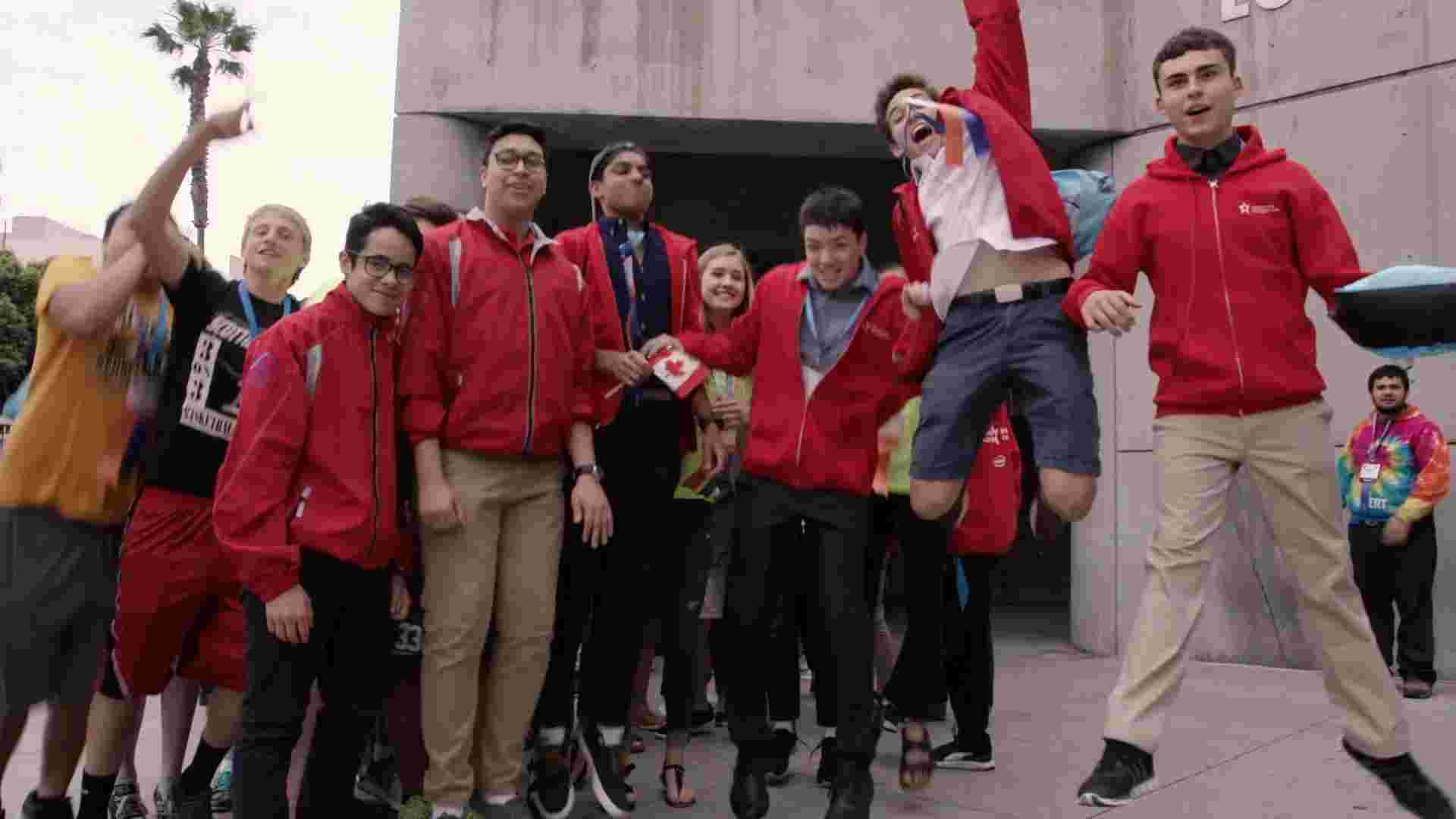
Watching the teenagers profiled in documentarians Cristina Costantini and Darren Foster’s film Science Fair, I start to understand the appeal of sincere participation in regional, national and international science fairs. If I had seen film the year I participated, I might have taken it more seriously.
What these kids invent, build and research makes my greenhouse in a shoe box look prosaic. From research into ways to prevent Zika transmission to monitoring and testing for arsenic in groundwater, these kids are smart, ambitious, and driven.
The crème de la crème of science fairs is the International Science and Engineering Fair (ISEF). To qualify for participation in ISEF, first these students must win their area science fairs, which can be state-wide or regional competitions. However they make it to ISEF, the teenagers who qualify have already faced stiff challenges from their fellow science enthusiasts.
To help the viewer understand the pressure these kids face, former ISEF winner Jack Andraka sheds light on the stress of presenting to judges. Projects that students have worked on for months, even an entire year, must be broken down into ten minute presentations to a handful of judges who will decide if their project is worth the prestigious Gordon E. Moore Award.
It’s hard to pick a favorite. All of the teenagers profiled are charming and their desire to win is infectious. You wish they could all win.
Science Fair follows the familiar structure of other films depicting students engaged in fierce competition – First Position, Spellbound, and Make Believe. We’re given time to get to know the students profiled, to watch them hard at work on their craft, and then we follow them through the competitions as they fight their way to the finish line.
Costantini and Foster make a point to profile students from varied backgrounds. Some of the kids attend private schools especially focused on STEM education. Others attend public schools so focused on athletics that science achievements are completely ignored. The directors want to make a point that science is for everyone and anyone can achieve the level of success that these students find.
In a country that frequently devalues science and scientists, this documentary reminds us that these kids are our future.
That future is very bright.
by Rachel Willis
How does one make a film that’s uniquely South African yet still feels like an American western? Director Michael Matthews and writer Sean Drummond answer that question with the stunning Five Fingers for Marseilles.
From the beginning, Matthews evokes Sergio Leone’s A Fistful of Dollars trilogy. Four boys stand facing each other, hands at the ready, waiting for a sign to fire their slingshots. When it comes, Tau, The Lion, stands victorious. It’s a scene that sets the tone for a film that not only calls up classics like Leone’s, but also Yojimbo.
Tau is described as ruthless and mean, but he’s also filled with an anger that makes him reckless. In apartheid-era South Africa, small enclaves such as Railway – a district within the city of Marseilles – are at the mercy of their oppressors. As Tau and his friends argue about how to resist the police that fleece them, he insists on using more than sticks. His brother, Zulu, demands he exercise caution.
However, when a friend is threatened with brutality, Tau’s anger leads to a careless decision. When he flees the scene of his crime, he not only leaves behind his friends but his responsibility. Those left behind suffer because of “The Lion”‘s heedless anger.
Decades pass before Tau returns to Railway. The town seems the same though apartheid has ended. Police still shake down the citizens, but another sinister element has also descended on the town, a gang led by a fearsome man known as The Ghost. Though Tau seeks to return untroubled, he is inevitably called to his former role as protector.
It’s a familiar story, and the political backdrop of a South Africa trying to find its way after apartheid lends itself well to the retelling. As Tau, Vuyo Dabula is a perfect representation of the man with no name. Though he is The Lion, a man with a past full of brutality, he seeks to start anew as Nobody. It’s the sinister nature of the world around him that draws him back into a world of ferocity and lawlessness.
There are few villains as perfect as Sepoko, also known as The Ghost. Every moment Hamilton Dhlamini is on screen, the tension escalates. The masterful score only magnifies this malevolent figure.
With desolate landscapes, brutal violence and characters with questionable moral compasses, Five Fingers for Marseilles is not only a magnificent Western, but an exquisite film.
Not the strongest week in home entertainment. Not the weakest one, either. Three entertaining if flawed flicks that you, if box office is a good estimate, probably didn’t see in theaters. Here’s the lowdown.
by Rachel Willis
The Bookshop is not what you might imagine. Adapted from the novel of the same name by Penelope Fitzgerald, one might expect a sentimental, feel-good film about the power of books to open up closed minds. That’s not what we get in writer/director Isabel Coixet’s latest film.
At the heart of the story is Florence Green (Emily Mortimer). Having recently purchased a building known colloquially as “the Old House”, she decides to open a bookshop in the space. It’s a way for her to find a level of independence, as well as rekindle a connection with her late, much beloved, husband. However, she is unprepared for the level of opposition she faces in the small seaside town of Hardborough.
The opposition is spearheaded by Mrs. Violet Gamart (Patricia Clarkson), a woman who is used to getting what she wants, and what she wants is to turn the Old House into an arts center. On her side are several Hardborough residents who seem to oppose the bookshop only because she does.
The film starts strong. We watch as Florence overcomes the stall tactics of her solicitor, squashes rumors that she plans to buy another property for her bookshop, and successfully launches the shop of her dreams. However, before the first act concludes, the film begins to meander.
As Florence contends with obstacles she didn’t foresee, she becomes friendly with her first customer, the local eccentric, Edmund Brundish (Bill Nighy), and their relationship blossoms with an exchange of letters. In a scene reminiscent of The Age of Innocence, Brundish reads his first letter into the camera. It’s an unusual technique, but it helps to humanize the reclusive man. Unfortunately, not enough time or importance is given to this correspondence.
Florence’s only other ally in this world is her young assistant, Christine (Honor Kneafsey). It’s touching to watch Florence try to instill a love of books into Christine, but the connection between the two is never earned. There is little chemistry between the actors; their interactions are awkward when they should be affectionate.
For a movie with only a few characters, it still ends up feeling like too many. Minor characters are given more importance than they deserve. Major characters aren’t given time to develop meaningful relationships. Most of the characters are one-dimensional.
The lovely cinematography captures the theme of the film better than any other aspect. Hardborough appears both enchanting and foreboding. If this had been better explored through character dynamics, The Bookshop may have made a lasting impression. As it is, it’s a beautiful, but empty film.
It’s like an end-of-summer fire sale this week. So many movies! All available to watch from the couch in unwashed yoga pants and Alf tee shirts. I mean, that’s how we imagine you watching these, but really, wear whatever you want. The important thing is to let us help you decide where to spend your valuable time.
Click the movie titles for the full review.