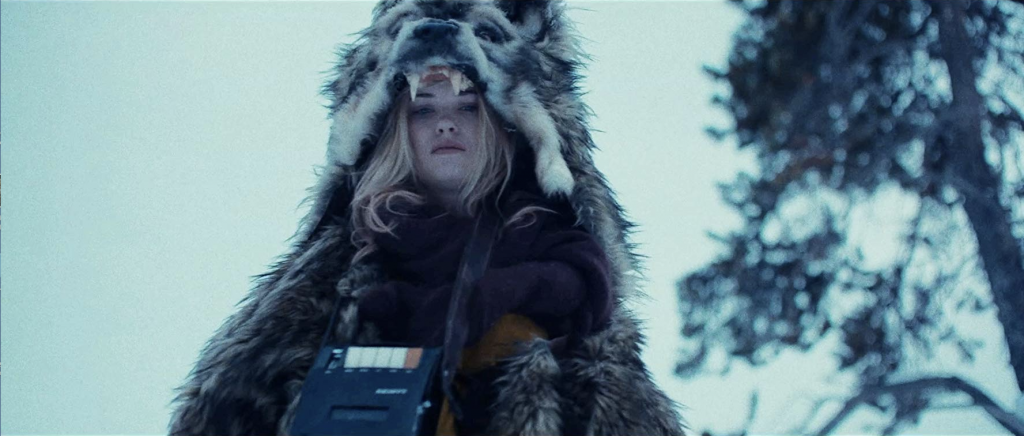
Still reeling from the loss of her friend, Grace, Aubrey (Virginia Gardner) finds herself facing the end of the world in director A.T. White’s film, Starfish.
After breaking into Grace’s apartment in an attempt to connect to her friend, Aubrey hears a walkie-talkie spring to life. The static coming from the device implies someone might be listening, and Aubrey is momentarily compelled to speak to whoever is on the other end. This is our first hint that not all was well in Grace’s life, with more hints coming before the film takes a deep dive into its world-ending scenario.
There’s a mystery involved that’s best not spoiled, and it isn’t always clear what’s real and what’s imagined, but it works well to us engaged, and haunting images feed the increasing unease.
As a metaphor for grief, Starfish is a curious, interesting take. Aubrey moves through the stages of grief while, outside the apartment, the world is falling apart. She spends time in an apathetic cycle, her only companions a box turtle and a couple of jellyfish (who eat desiccated starfish, apparently). Aubrey’s anger manifests in violent ways, and she’s utterly alone with her sorrow.
Gardner does an excellent job conveying the gauntlet of emotions roiling inside her character. Her performance is easily the film’s strongest element.
There are also a number of exciting and tense scares, and the effectively oppressive score amplifies the more terrifying elements. However, where the score is effective at producing tension, the soundtrack doesn’t always fit the mood. Some of the song choices are out of place. While many of them are meant to represent Aubrey and Grace’s friendship, they disrupt the film’s intensity.
The film takes risks. Some of them work, and some of them don’t, but it’s always intriguing to watch something different, something that challenges us to think outside the box on what a movie can be.
The best animated film of 2018 swings into your living room this week, along with (if you’re smart) an instant cult classic. Other biggies of 2018 make their way home this week, so let us help you sort this out.
In 1943, the infamous Joseph Goebbels declared Berlin was “free of Jews.” However, 7000 Jewish residents remained in hiding in Germany’s capital. Director Claus Räfle brings this dark history to life with his docudrama, The Invisibles.
Focusing on the lives of four young Jewish men and women, Räfle showcases their struggles through a combination of dramatic reenactment and interviews.
The dramatic elements of the film play like any well-written, well-acted drama. The actors enliven the words of the survivors, whose interviews are interspersed throughout the film. Newsreel footage from the days of the war also help paint the picture for modern viewers.
It’s an interesting choice to retell the more dramatic elements of history through reenactments, but because of Räfle’s attention to detail and the actors’ commitment to the story, it works fairly well. Räfle understands how to balance the dramatic with the interviews, frequently reminding us we’re watching a story about real people.
The strongest performance comes from Max Mauff, who portrays Cioma Schönhaus. By forging documents, Cioma manages to stay behind in Berlin when his parents are sent to a concentration camp. Because of his skills, soon friends ask for help with their own documents. His work gains the attentions of Dr. Franz Kaufmann, a member of the Third Reich, who assists Jewish men and women in escaping Germany., and he enlists Cioma’s help in creating fake passports and papers. Cioma’s work saves the lives of scores of other Jewish men and women.
Räfle tries to balance Cioma’s story with the stories from his other interviewees, Ruth Ardnt, Hanni Lévy and Eugen Friede, but he never quite manages to bring the same level of detail to their histories. Though Eugen participates in a resistance movement distributing leaflets to citizens, that fact almost feels like an afterthought. Ruth works in the house of a Nazi officer, who knows who she is, but the tension of such a situation is never fully explored.
In addition to the four survivors profiled, there are a number of men and women who assist in hiding Ruth, Hanni, Cioma, and Eugen. It’s hard to keep track of the names of those who risked their lives to do the right thing, which is unfortunate since their actions were critical in keeping people alive.
The Invisibles might have been better served by simply letting the survivors tell their stories in their own words, but even with the choice to dramatize the history, it’s a sensitive, emotional portrayal of one of the darkest times in human history.
Eureka Springs, Arkansas has long been considered a magical place. In the mid-19th century, its springs were known for their “healing” waters. It’s home to Christ of the Ozarks, a two million pound, 65-feet tall statue of Jesus Christ, as well as The Great Passion Play. The play is the largest-attended outdoor drama in the country and depicts the last days of Christ.
There is also a large LGBTQ population at home in Eureka Springs. With The Gospel of Eureka, directors Michael Palmieri and Donal Mosher explore the city of Eureka Springs and the people who live there.
We meet several people in Mosher and Palmieri’s film, but the most endearing are Lee Keating and Walter Burrell, the owners of Eureka Live Underground, a bar that boasts “the largest beer garden in Eureka Springs”. Both Lee and Walter are devoutly Christian, though they differ in opinion on some of the specifics.
We also spend time with some of the performers in The Great Passion Play. They’re open to sharing their devotion with the audience. We see the great deal of preparation that goes into such a elaborate production.
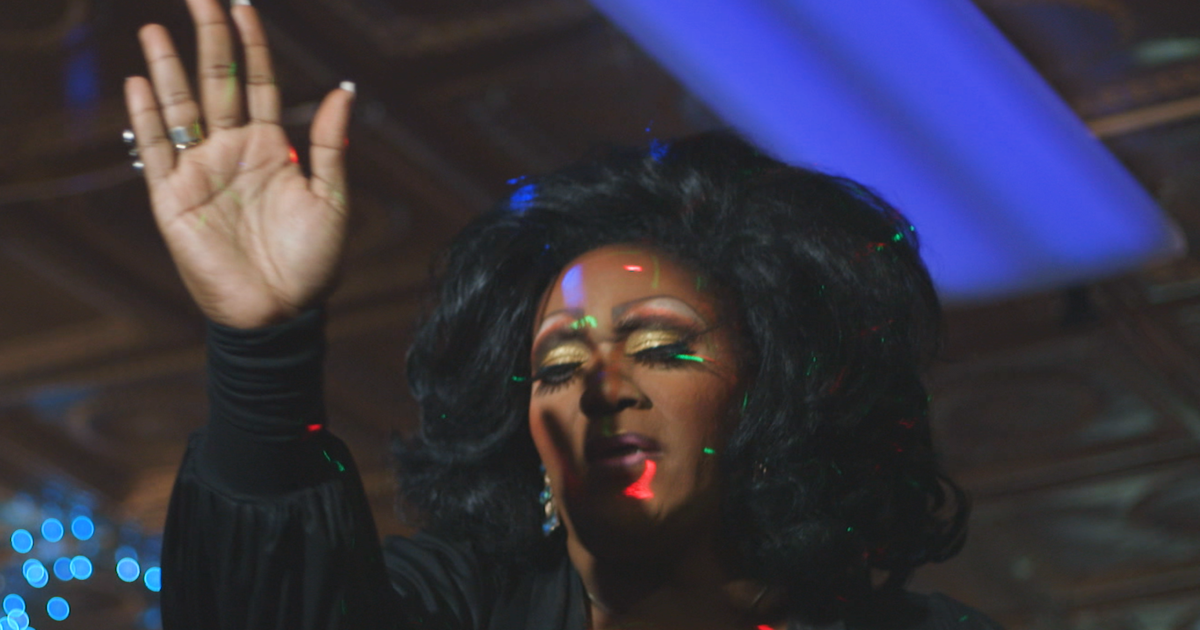
We’re also privy to scenes from The Great Passion Play, but they’re interspersed with moments from a drag show at Eureka Live Underground. Many of the performers incorporate religious songs into their acts. It may seem dichotomous from the outside, but this is what makes Eureka Springs the place it is.
That’s not to say Eureka Springs is a perfect place. The narrator makes sure to include some of the town’s darker history – lynchings, beatings, and murder – but it was also the first city in Arkansas to issue marriage licenses to same-sex couples, and the film itself is anchored around the run up to a vote regarding Non-Discrimination Ordinance 2223. For a city with a deeply ingrained Christian culture, it’s a toss-up as to how the vote will turn out.
With so many aspects to explore, Palmieri and Mosher try to tie it together, but most of the time the film is unmoored. It’s not always clear how pieces fit into the whole story. As a simple portrait of a city, it’s a lovely film. However, if the directors were trying to make a larger point, that goal is wanting.
It’s Halloween all over again! Two above-average spookfests and one longshot Oscar contender ensure that just about everything this week in home entertainment is a tasty treat.
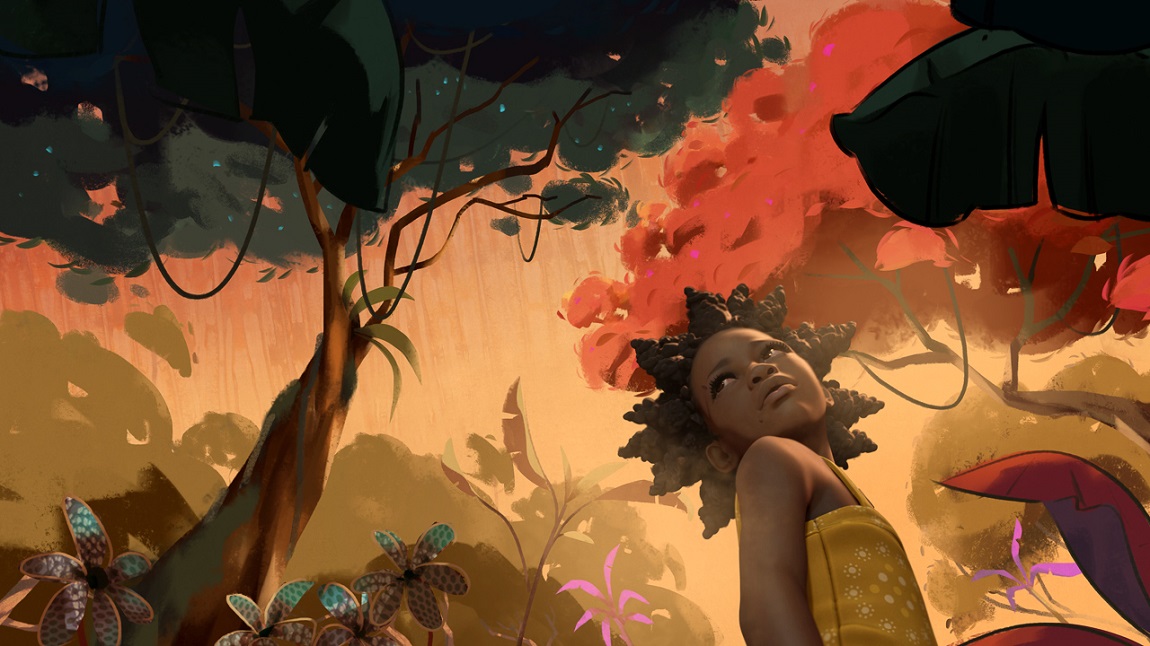
That girl is Liyana, a fictional character brought to life by the children living at Likhaya Lemphilo Lensha, a home for orphans in Swaziland.
During a storytelling workshop at the children’s home, author Gcina Mhlophe guides the boys and girls through exercises that allow them to imagine a collective story. Together, they weave a tale of a young girl facing enormous challenges.
Directors Amanda Kopp and Aaron Kopp focus primarily on five children, Phumlani, Nomcebo, Sibusiso, Mkhuleko and Zweli; their voices are the ones we hear throughout the film. By keeping these five at the center, we’re given a chance to get to know their personalities. Each tells the story in their own way. While the plot is the same, the details are unique to each child.
As the creative narrative unfolds, the audience is given glimpses into the lives of the children at Likhaya Lemphilop Lensha. We learn that many of the details of Liyana’s life reflect the children’s realities. HIV takes both of Liyana’s parents; her twin brothers are kidnapped in the dead of night by three vicious men. But Liyana faces each tragedy with determination; her hope and her fearlessness reflect the inner feeling of the children telling her story.
Liyana’s story is brought to life through a combination of the children’s words and gorgeous illustrations that animate the narrative. The film’s strengths lie in this weaving of the day to day realities of life with the vibrant story the children narrate.
The film’s most moving moments are when we’re allowed to spend time with the children. Watching them work in the garden, herd cattle, dance and play games is when the documentary shines. Though the children’s story is wonderful, it might have been a more powerful film if the directors had struck a better balance between fantasy and reality.
However, the indomitable spirit of children is the heart of the film. All of them have faced adversity, sadness and despair, but each has hope and it shines throughout the documentary. Liyana celebrates that wondrous courage.
George had a best friend in high school whose dad used to ask about homework. If you answered that “we just had a test”, the dad wearing the shocking plaid pants would say, “Then study what you missed!”
In that spirit, here are ten films from 2018 you may have missed but are well worth tracking down in 2019:
All About Nina
Make time for a character study with a timely and tenacious bite, featuring a tremendous lead performance from Mary Elizabeth Winstead. The standup comic who uses laughter to mask pain is a well-worn path, but first time writer/director Eva Vives uses the very comfort in that cliche to point out, as we were so clearly reminded last year, how casually some trauma is dismissed.
On its surface a look at giving yourself without losing yourself, All About Nina isn’t just about Nina, and that’s what makes it truly resonant. It reminds us of the courage it takes for women to speak up, and the shame that comes with not listening.
Blaze
It seems cosmically right that a virtual unknown singer-songwriter, Ben Dickey, plays country outlaw Blaze Foley (and is terrific) in director/co-writer Ethan Hawke’s stirring tribute.
From dreaming of stardom while riding in a truck bed, to antagonizing barroom audiences, to a visit with Blaze’s once-abusive, now senile father (Kris Kristofferson), sequence after sequence rings more organic and true than most found in music biopics.
It’s clear this a passion project for Hawke, who is smart enough not to let that passion interfere with authenticity. Blaze gives Foley the re-birth he clearly earned – as a conflicted, damaged soul longing to be heard.
Blindspotting
The ambitious script is a promising debut for writers Daveed Diggs and Rafael Casal, who also star. Diggs (Tony and Grammy Award-winner for Broadway’s Hamilton) plays Colin and Casal (in his first feature) is Miles, two longtime buddies in Oakland whose lives are upended by a police shooting
First time director Carlos Lopez Estrada sometimes struggles with tone, moving from stoner comedy a la Jay and Silent Bob to heavy drama and back again, and his hand on a few of dramatic moments can get heavy.
But by the time Diggs unveils the film’s soul in a showstopping, rage-filled finale, Blindspotting reaches a memorable height, becoming both an urgent social comment and an exciting filmmaking debut.
Border
Border director/co-writer Ali Abbasi has more in mind than your typical Ugly Duckling tale. He mines this story of outsider love and Nordic folklore for ideas of radicalization, empowerment, gender fluidity and feminine rage. The result is both a sincere crime thriller and a magical fantasy.
First Reformed
Writer/director Paul Schrader delivers a nearly flawless meditation on faith and despair with First Reformed. In what may be his strongest performance, Ethan Hawke delivers a a slow slide from a pleasant façade to destructive rage, perfectly capturing every emotion, every nuance of internal crisis and its external manifestations. Schrader’s film is a masterful character study that asks thoughtful questions about how our choices will be viewed in the eyes of God.
Five Fingers for Marseilles (review by Rachel Willis)
How does one make a film that’s uniquely South African yet still feels like an American western? Director Michael Matthews and writer Sean Drummond answer that question with the stunning Five Fingers for Marseilles.
There are few villains as perfect as Sepoko, also known as The Ghost. Every moment Hamilton Dhlamini is on screen, the tension escalates. The masterful score only magnifies this malevolent figure.
With desolate landscapes, brutal violence and characters with questionable moral compasses, this is not only a magnificent Western, but an exquisite film.
Leave No Trace
In her first feature since 2010’s gripping Winter’s Bone, writer/director Debra Granik is again focused on souls living on the rural fringes and scraping out a hardscrabble, under-the-radar existence.
Driven by two haunting performances from the always underrated Ben Foster and impressive newcomer Thomasin Harcourt McKenzie, Leave No Trace replaces any of Winter’s Bone’s sinister, menacing layers with a tender, sympathetic grace that feels achingly authentic, and often heartbreaking.
The film follows its own titular advice, broaching a variety of relevant social concerns without ever raising its voice, yet cutting so deeply you may not get out of the theater with dry eyes.
Thoroughbreds
Wicked, surprising, unapologetic, cynical and buoyed by flawless performances from Olivia Cooke and Anya Taylor-Joy, writer/director Cory Finley’s Thoroughbreds is a mean little treat. It’s a fascinating look— blackly comedic and biting—at how the other class comes of age.
Thunder Road
Writer/director/star Jim Cummings is responsible for the most criminally underseen film of 2018, Thunder Road.
Cummings explores grief, mental health, small town stagnation and the genius of Mr. Bruce Springsteen in a film that is breathtaking in its tonal shifts. Simultaneously heartbreaking, funny, nuts, unpredictable and alertly honest, Cummings’s film and his performance cement him as among the most exciting cinematic voices of 2018.
Tully
The character Tully doesn’t show up ’til nearly 40 minutes in, but by then the film Tully has its anchor: a sensational Charlize Theron.
After two winners together in Juno and the criminally ignored Young Adult, writer Diablo Cody and director Jason Reitman make their third collaboration a wonderfully natural extension of the first two. This isn’t the heartwarming comedy the TV ads want you to think it is, nor is it the casual dismissal of postpartum depression that others have charged.
It is one woman’s story, with moments of humor, absurdity and truth, a bit of cliche and even some fairy tale optimism. And with all of that, there’s enough brash boundary pushing to make Tully feel like a film we haven’t seen before, and one we’re glad that’s here.
From a technical perspective, everything about director Josie Rourke’s film, Mary Queen of Scots is nearly perfectly realized.
Saoirse Ronan is resplendent as Mary, the rightful queen of Scotland and contested heir to the throne of England. Margot Robbie is equally enlivening as Mary’s cousin, better known as Elizabeth I.
The film begins with Mary’s return to Scotland at the age of 18 following the death of her husband, the Dauphin of France. As she assumes her rightful throne from her half-brother, she is quickly met with opposition. John Knox (David Tennant), a Protestant minister – and also one of the leader’s of Scotland’s Reformation – immediately dismisses her rule as she is both Catholic and a woman.
From Knox’s initial dissent, more threats emerge, primarily from the English queen, Elizabeth I.
Dual narratives tell the story of Mary and Elizabeth’s rivalry. Through letters, the queens express solidarity, but behind the scenes, Elizabeth worries. Her most loyal advisor, William Cecil (Guy Pearce) stokes those fears. But his genuine affection for Elizabeth is a glaring contrast to Mary, who frequently stands alone.
Much history is condensed in the two hour running time. Because of this, the movie flows smoothly, but history is glossed over, changed, or omitted entirely. While this works, it’s also misleading. Mary’s trusted advisor, David Rizzio, is reduced to a minstrel who is more handmaiden than advisor.
It’s not unusual for a fictional film to mold history to fit a story, but the most disappointing aspect is the portrayal of Mary. The film asserts that Mary was a good queen with a good heart who was an innocent victim of the people around her. This begs the question: Was Mary truly an innocent – a pawn at the mercy of scheming men? Or was she a ruler like any other? One who made mistakes, bad choices, and whose ambition was outmatched by another’s power?
The history surrounding Mary has always been controversial – it’s impossible to know exactly what she knew and what she plotted. But by portraying Mary as a victim, the film reduces her to a caricature rather than a woman – a queen – with agency.
It’s a disappointing decision in an otherwise stunning film.
If you’ve never heard of Meow Wolf, an 88-minute documentary about their beginnings may seem pointless, but I promise it’s worth it. By the time the credits roll, you’ll be looking into the price of plane tickets to Santa Fe.
Santa Fe, New Mexico is one of the world’s most vibrant arts centers. Home to hundreds of galleries and dozens of museums, it’s known worldwide for its art markets, events and performances.
And it’s also home to Meow Wolf, an art collective comprising a handful of anarchistic artists who saw too much bourgeois capitalism in the local art scene. Seeking to break away from the idea of art as commodity, these creative individuals banded together to create something new, unique and entirely collaborative.
Using animations, archival footage and interviews with founding members of the collective, directors Jilann Spitzmiller and Morgan Capps create a visually engaging documentary. It would have to be to capture the spirit and brilliance of the art and artists behind Meow Wolf.
The major theme of the film, which is the major dilemma for Meow Wolf, is maintaining artistic integrity while creating a marketable product. From the very beginning of Meow Wolf’s inception, most of the group’s members were opposed to anyone trying to impose too much order into the creation process.
Spitzmiller and Capps document the bitter fights, the fissions within the group, and ultimately, the success when they manage to work together to find common ground. With a collective, each member is involved in the creation process. Each member has a say, and each person contributes to the final product.
Documenting a few of Meow Wolf’s early successes, the film culminates with their most ambitious endeavor: the House of Eternal Return. A 20,000 square feet interactive, immersive art installation, it’s one of the most incomparable and wondrous projects you’ll have the pleasure of viewing from conception to completion onscreen.
That George R.R. Martin of Game of Thrones fame helped fund the project only adds to its charm.
Watching Meow Wolf create ambitious, quirky projects is like watching a great band write game-changing songs. There are tense moments, fights and losses, but when things come together you’ll come as close as one can to true magic.