Tag Archives: movies

Murky and Absent Danger

An Acceptable Loss

by Brandon Thomas

Morality tale.

That phrase kept popping up in my mind while watching An Acceptable Loss. Unfortunately, the subject of morals mixed with politics was something the film was only concerned with on a surface level.

Libby Lamm (Tika Sumpter) has just started a teaching position at a prestigious Chicago area university. Although she’s excited about this fresh start after leaving a position at the White House, many staff and students are less than enthused with her presence on campus. One of Libby’s pupils (Ben Tavassoli), in particular, is fixated on the new professor and begins tracking her every move around campus and her home. Through a series of flashbacks, we learn about the devastating decision that led Libby out of politics, and into being one of the country’s most hated pariahs.

The most frustrating aspect of An Acceptable Loss is how it sets up a central conflict that could have made for a spellbinding thriller. It instead settles for a Cinemax-level B-movie.

One of the earlier scenes between Libby and her student, Martin, is a tense clash between two people who couldn’t be further apart, and it makes you wish for the movie that might’ve been. Instead, character motivations change on a dime, and that early sense of dread is replaced with a sense of “been there, done that.”

The majority of the cast doesn’t make the material any easier to swallow. Sumpter’s wooden delivery of political jargon is more reminiscent of a freshman PoliSci major than a beltway professional. Tavassol spends the first half of the film brooding at every other character (I honestly expected him to start giving extras the Stink Eye), and the second half doing his best (worst?) Shia Labeouf on cough medicine impression.

Jamie Lee Curtis, in her small role as vice president and president, fares somewhat better. Her natural gravitas lends itself well to being the leader of the free world; unfortunately, the dialogue she’s delivering is almost 100 percent clunky exposition.

It’s unclear what director Joe Chappelle’s (Halloween: The Curse of Michael Myers) original intentions were. Did he envision a taught political thriller in the vain of Three Days of the Condor or was a low-rent Pelican Brief always the plan?

Chappelle’s mishandling of the film’s focus and pacing hobbles the An Acceptable Loss early on and it’s never able to recover.

Maybe this movie was never going to be anything other than cheap Tom Clancy. The promise of that first act, however, hangs over the rest of the film, and in the back of this viewer’s brain, like a giant “What If?”

Ouch

Piercing

by Hope Madden

There’s a lot that shouldn’t be said about Piercing, Nicolas Pesce’s follow up to his glorious 2016 horror, Eyes of My Mother.

Because the film’s tension relies on power exchanges, surprises and averted climaxes, the less you know about how the story progresses, the better.

Suffice it to say that new father Reed (Christopher Abbott), fighting a serious urge to stab his infant with an ice pick, concocts a plan. It involves that ice pick, a “business trip” out of town, and a prostitute (Mia Wasikowska).

The amateur murderer works out the perfect crime, practicing conversations and actions (decorated by Pesce’s remarkable knack for unsettling sound effects), only for the cosmos—or the filmmaker—to wreck those plans.

Abbott’s flat yet sympathetic would-be murderer helps Pesce achieve a peculiar, semi-comic tone, but it’s Wasikowska, playing wildly against type, who carries this film. The two share a mad and maddening chemistry, and even during moments of somewhat forced dialog, their commitment and spark keep you enthralled and guessing.

The film is an exercise in thwarted expectations wrapped up in voyeurism and lurid imagery.

The influences here are dizzying. Ryu Murakami’s source material obviously evokes his own Audition (director Takashi Miike’s classic in power shifting and poor romantic choices). The opening act wades through more modern indie sensibilities, but Pesce quickly overwhelms that flat grit with grindhouse thriller flair before simply succumbing to giallo (Goblin tuneage and all).

This drunken meandering through styles fits the narrative that forever questions the reality or unreality of each situation. Like the cityscape miniatures Pesce uses as the adventure’s out-of-town backdrop, Reed’s whole experience could simply be cool -looking but pretend.

Are those flashbacks or nightmares? Does Reed have a haunted past leaking its way into his present, or is he simply a psychotic hoping to overcome his problem by submitting to it just this once?

Pesce toys with our commitment to Reed’s reality, questionable from the moment his infant halts a crying jag to tell his father, in a demonic voice, “You know what you have to do.”

It’s not a film that will satisfy a lot of viewers, it’s more of a fascinating and forgettable sketch. Still, at under 90 minutes, it’s a weirdly fun little indulgence won’t hurt you. Well, not too much.

Aging Gracefully

They Shall Not Grow Old

by Hope Madden

For those of us who haven’t experienced it, war is nearly impossible to fathom: the horror, terror, inhumanity and chaos of it. Filmmakers have been trying to make sense of it for audiences since film began.

Peter Jackson may bring us as close to comprehension as any director has, not by dramatizing war or by reenacting it, but by revisiting it.

The Oscar winning director and noted World War I fanatic sifted through hundreds of hours of decomposing footage, restoring the material with a craftsmanship and integrity almost as unfathomable as war.

He then recreated sound and audio, employing lip readers and researchers to guarantee the quality was a match for the beautiful restoration.

Over this he layered audio, pieces from BBC interviews with WWI veterans conducted in the 1960s and 70s—candid, moving and oh so British.

These he braids together into a cohesive whole, taking us from the wide-eyed patriotism that drew teenagers to volunteer, through their training and then—with a Wizard of Oz-esque moment of color, depth and clarity—into battle.

At about the 10-minute mark of They Shall Not Grow Old, the obsessive maestro differentiates this film from any war doc you’ve ever seen.

Quite unlike the disastrous 48 frame per second gimmick Jackson employed for The Hobbit, the restoration, colorization and even 3D here all serve a singular purpose: to immerse you in these moments, these lives, these battles.

The fact that this immersion pulls you 100 years into the past is beyond impressive, but the real achievement is in the intimacy and human connection it engenders.

The clarity of the faces, the tremor in the voices, the camaraderie and filth and death—all of it vivid as life. It’s as informative as it is enthralling, an equally amazing achievement in filmmaking and in education.

Watching Jackson’s Tolkien films betrays the filmmaker’s perfectionism, vision and—perhaps above all—deep respect and love of the source material. The same shines through the images of these young men. And though, as the storyteller here, his respect borders on awe, he never for a moment stoops to sentimentality or emotional manipulation. He is not trying to make you feel something. He is trying to tell a lost story, and one that has no business being lost.

I Don’t Want to Go Out—Week of January 28

Loads of movies to keep you company during this stupifying cold snap. A lot of them are pretty great. Here are the options, from best to worst:

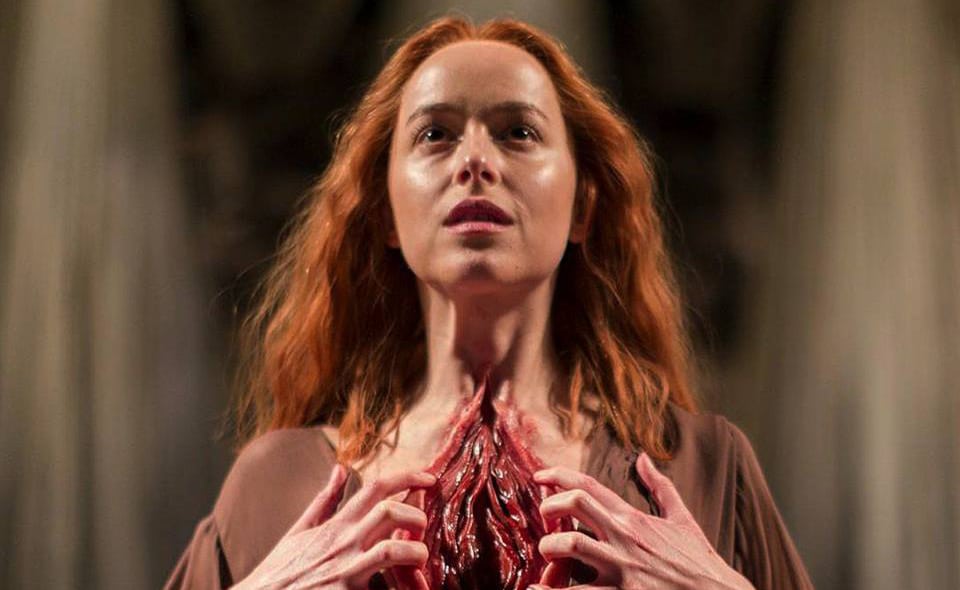
Suspiria

Boy Erased

The Wife

The Nutcracker and the Four Realms

https://www.youtube.com/watch?v=BXfxLIuNJvw

Hunter Killer

Screening Room: Kid Who Would Be King, Stan & Ollie, Serenity and More

Old Hollywood is a theme this week, with head scratchers and surprise gems in the mix. Join us as we talk about Stan & Ollie, The Kid Who Would Be King, Serenity, The Great Buster, Genesis 2.0, Yours in Sisterhood plus new releases in home entertainment.

Listen to the full podcast HERE.

Pen Pals

Yours in Sisterhood

by Hope Madden

A conversation between generations, a glimpse into the changing and yet somehow unchanged reality of feminism—filmmaker Irene Lusztig’s unusual documentary Yours in Sisterhood bridges eras to shed some light.

In Lusztig’s lyrical timeloop, modern readers share letters written to the editors of Ms. Magazine in the Seventies and early Eighties. The magazine, the first mainstream feminist periodical, began publishing in 1972 and amplified the sounds of the second wave of feminism enjoying the spotlight at the time.

The letters read, in every case but one, went unpublished, so this doc is the first opportunity the original writer has had to share those decades-old thoughts with a large audience.

Lusztig’s choice of reader—sometimes the writer herself, but usually a stranger making her or his first meeting with the letter—creates the film’s most poignant moments.

At times, these readers have much in common with the original scribe: age, race, geographic locale or socioeconomic circumstances. One letter, penned by an incarcerated young woman on the verge of release from prison, is read and then commented upon by a woman currently behind bars in the same institution.

In other instances, the reader is in one way or another at odds with the writer. This confluence and conflict creates some fascinating and fascinatingly untidy responses. In many ways, the energy of the film relies on the tension between the few people who feel well-matched and the few people who feel dissonant.

What usually happens is that a wrinkle in the larger fabric of feminism shows itself. In the case of the writer, this often takes the form of a person who does not hear her voice or see her face in the pages of the magazine.

In the case of the modern reader, questions about the movement’s evolution or lack thereof open up conversations and considerations worth examining in this post #MeToo, post 2016 election environment.

Another Fine Mess

Stan & Ollie

by Hope Madden

Wouldn’t it be nutty to peek behind the curtain of one of cinema’s most famous pairs—your Martin and Lewis, Abbott and Costello, Bert and Ernie—only to find that they are exactly as entertaining and likable in person as they are onscreen?

That’s actually part of what makes Stan & Ollie, Jon S. Baird’s loving biopic of the famous comedy duo Laurel and Hardy, so peculiar a film. Go in expecting demons, divas and drama and you will be disappointed. If you’re looking for a tender image of partnership and friendship struggling to overcome a harsh business, you’ll be pleasantly surprised.

The inexhaustible talent of John C. Reilly squeezes into a fat suit of Darkest Hour impressiveness as Oliver “Babe” Hardy. The physical transformation awes, but it’s the way the actor mines Hardy’s gentle good nature that impresses even more.

Coogan’s the real surprise. Not only is his resemblance to Stan Laurel almost eerie, but the performance is easily the best dramatic turn of his career.

Both actors, working from a wistful script by Coogan’s Philomena writing partner Jeff Pope, sidestep drama in favor of a kind of resigned camaraderie. Theirs is that well-worn relationship of both love and necessity that comes with decades of familiarity, unspoken grievances and love.

The actors’ chemistry is a fine match for that of the iconic duo, and through the pairing, Baird explores partnership in a more meaningful and less sentimental way than what you’d normally find in a “stars in their declining years” biopic.

The result is an endearing, if slightly underwhelming dramedy, enlivened by Baird’s charming direction. While the film is at its best when Coogan and Reilly quietly grapple with changes facing them, it is at its most enjoyable when art imitates life imitating art. That is, when Stan and Ollie drag a really big trunk up a big flight of stairs, only to let go of it, watch it slide back to the bottom, and do it again.

Like the comedy of Laurel and Hardy, this film is sweet, clever and entirely of another time.

Fall Down and Geek Out

The Great Buster

by Brandon Thomas

Physical comedy is as important to the history of cinema as the cameras themselves. Charlie Chaplin, The 3 Stooges, Jim Carrey and the cast of Jackass all kept the time-honored tradition of taking a blow for the sake of a laugh. Even everyday folk got into the act by sending their accident-filled home movies to TV’s America’s Funniest Home Videos.

For many fans, historians and critics, Buster Keaton was the best of them all.

Keaton started in the biz by performing alongside his parents in their traveling vaudevillian show. His adept ability to sell a pratfall like no one else made their act enormously popular. A fortuitous meeting with Fatty Arbuckle introduced Buster to the art of filmmaking, and by the time Keaton reached his mid-30s, he’d directed, starred in and produced multiple feature and short films.

With The Great Buster, director Peter Bogdanovich (The Last Picture Show, Paper Moon) delivers an absolute love letter to Keaton and his career. The film not only touches on Keaton’s highs in the 1920s, but also on his low points when he lost all creative and financial control of his projects. Alcoholism, infidelity, divorce and family estrangement all plagued Keaton during the downturn in his career.

Bogdanovich wisely spends most of the time discussing and reveling over Keaton’s work. Bogdanovich himself narrates the film, and his adoration of Keaton is evident in his voice as he touches on everything from Keaton’s masterworks in the 1920s to his commercial work in the 1960s. Filmmakers and actors such as Mel Brooks, James Karen, Quentin Tarantino and Johnny Knoxville also share how their affinity for Keaton helped shape their careers.

The film really takes hold when the more “film geek” elements are at play. Specific scenes and/or gags from Keaton’s work are broken down, analyzed and fawned over by Bogdanovich and fellow filmmakers. The film even backtracks to spend the last third pouring over the classics that Buster created in the 20s, leading right up to the invention of talkies.

Like recent documentaries De Palma and Milius, the love and affection for the subject and their creations is all over The Great Buster. Bogdanovich has crafted a precise and professional movie, but, more importantly, he’s infused the film with respect and admiration.

https://youtu.be/NLiRLN_EKu8

Nom Nom Nom 2019: Let’s Argue Again About the Oscars

Just eight best picture nominations this year and a list of contenders that clarifies what a kickass year 2018 was for female roles. Well done, chicas!

Do we have gripes? Well, honestly, not too many. Here’s the rundown.

SUPPORTING ACTRESS
This is a good list. Strong. Not a lot of bones to pick here. Our heart goes out to anyone trying to narrow this field down to a single winner. Wouldn’t have minded seeing Nicole Kidman (Boy Erased) or Thomasin McKenzie (Leave No Trace) get in, but how to make the room?

Amy Adams (Vice)
Marina de Tavira (Roma)
Regina King (If Beale Street Could Talk)
Emma Stone (The Favourite)
Rachel Weisz (The Favourite)

SUPPORTING ACTOR
We love Sam Elliott. Honestly, who doesn’t? Driver and Rockwell, too, and all were amazing in their respective films. But we would have had to leave them off in favor of Michael B. Jordan (Black Panther) and Lucas Hedges (Boy Erased). But no Timothee Chalamet for Beautiful Boy? That might be the biggest snub this year.

Mahershala Ali (Green Book)
Adam Driver (BlacKkKlansman)
Sam Elliott (A Star is Born)
Richard E. Grant (Can You Ever Forgive Me?)
Sam Rockwell (Vice)

LEAD ACTOR
Another solid list, although how the entire world ignored three insane performances from Joaquin Phoenix this year—You Were Never Really Here, Don’t Worry He Won’t Get Far on Foot, The Sisters Brothers—is beyond us. Please, please do yourself the favor and watch You Were Never Really Here. We’d have given him Mortensen’s slot, but we and the Academy disagree about that one particular film this year.

We would also have made room for Ben Foster (Leave No Trace) with a Malek/Dafoe coin flip.

Christian Bale (Vice)
Bradley Cooper (A Star is Born)
Willem Dafoe (At Eternity’s Gate)
Rami Malek (Bohemian Rhapsody)
Viggo Mortensen (Green Book)

LEAD ACTRESS
We would have applauded nods for Elsie Fisher in Eighth Grade and Toni Collette for Hereditary, but holy cow, people, this is acting. This is the art and the craft, right here. No bones. No complaints. Just awe.

Yalitza Aparicio (Roma)
Glenn Close (The Wife)
Olivia Coleman (The Favourite)
Lady Gaga (A Star is Born)
Melissa McCarthy (Can You Ever Forgive Me?)

ADAPTED SCREENPLAY
Had hoped for Black Panther and Leave No Trace (in a whiplashed swing from “everybody saw” to “nobody saw”). Buster Scruggs was a surprise, but when is it ever a bad idea to nominate the Coens?

The Ballad of Buster Scruggs (Joel and Ethan Coen)
BlacKkKlansman (Charlie Wachtel, David Rabinowitz, Kevin Willmott, Spike Lee)
Can You Ever Forgive Me? (Nicole Holofcener, Jeff Whitty)
If Beale Street Could Talk (Barry Jenkins)
A Star is Born (Eric Roth, Bradley Cooper Will Fetters)

ORIGINAL SCREENPLAY
What we would have given to see Bo Burnham’s Eighth Grade get some love here. Where would we have put it? Honestly, only The Favourite and Roma are better written, but in our book, it certainly deserved the slot designated to the self-congratulatory Green Book.

The Favourite (Deborah Davis, Tony McNamara)
First Reformed (Paul Schrader)
Green Book (Nick Vallelonga, Brian Hayes Currie, Peter Farrelly)
Roma (Alfonso Cuaron)
Vice (Adam McKay)

DOCUMENTARY FEATURE
Don’t mind the overrated Shirkers not making it, but shocked not to see Won’t You Be My Neighbor? here.

Free Solo
Hale County: This Morning, This Evening
Minding the Gap
Of Fathers and Sons
RBG

FOREIGN LANGUAGE FEATURE
Um…Burning? Really, did you just forget?

Capernaum
Cold War
Never Looks Away
Roma
Shoplifters

CINEMATOGRPHY
We’re a little surprised not to see If Beale Street Could Talk or First Man included, but none of these are weak.

Cold War
The Favourite
Never look away
Roma
A Star is Born

ANIMATED
This is just a fight for second place after Spider-Verse.

Incredibles 2
Isle of dogs
Mirai
Ralph Breaks the Internet
Spider-Man: Into the Spider-Verse

DIRECTOR
Would have cheered for Lynne Ramsay (YWNRH), surprised not to see Bradley Cooper (A Star is Born) and disappointed not to see Ryan Coogler (Black Panther), but how great is it to see Pawel Pawlikowski make this list for his groundbreaking love story Cold War? Pretty great. (Also, Oscar likes black and white movies.)

Lee, Lanthimos and Cuaron, though, that is a trifecta we applaud until our hands ache.

Spike Lee (BlacKkKlansman)
Pawel Pawlikowski (Cold War)
Yorgos Lanthimos (The Favourite)
Alfonso Cuaron (Roma)
Adam McKay (Vice)

FILM
Only eight this year, which means we can wish for two without having to bump any. We wish for Eighth Grade and Hereditary. Then we’d bump Bohemian Rhapsody and admitted frontrunner Green Book in favor of Spider-Man: Into the Spider-Verse and You Were Never Really Here. There you go. We’ve dreamed up a nice list.

Black Panther
BlacKkKansman
Bohemian Rhapsody
The Favourite
Green Book
Roma
A Star is Born
Vice

The 91st annual Academy Awards will air Feb. 24th on ABC.