Tag Archives: movie reviews

Change of Direction

Detour

by Hope Madden

Brit filmmaker Christopher Smith has some tricks up his sleeve.

The director/sometimes writer is willing to try most anything in the genre – from medical horror (2004’s Creep) to period horror (2010’s Black Death) to brilliant, blistering and woefully underseen horror comedy (2006’s Severance).

But he takes a harder left than usual with his latest, Detour – a noir-esque road picture with revenge on its mind.

Well-cast and enjoyably pulpy, the film follows Harper (Tye Sheridan) – law student and all around good kid – as he spins a dangerous web. He blames his stepdad (Stephen Moyer) for his mother’s coma, backing himself into a deal with local no-goodnicks Johnny Ray and Cherry (Emory Cohen and Bel Powley, respectively).

Twice the film winks toward the great Paul Newman neo-noir Harper as well as Strangers on a Train, then pulls more blatantly from Edgar Ulmer’s 1945 noir Detour. But Smith’s Detour feels more like style over substance than it does hard boiled or twisty.

Sheridan cuts a believably innocent figure, and Harper’s drunken ramblings are a hoot. Cohen – such a peach in last year’s Brooklyn – finely articulates the hot-headed, coked-out but ultimately wounded Johnny, while Powley manages to bring more than just a rosy pout to her under-developed but intriguing character.

Detour also litters the dusty road trip from Cali to Vegas with some weirdly compelling characters, chief among them Frank (John Lynch – so creepy!).

But Smith just does better when he’s working with another writer.

At a pivotal moment in Harper’s story, Smith brings in the split screen, drawing attention to a conversation – a little anecdote about conscience – Harper and Johnny Ray shared over loads of liquor the evening before.

Here’s where Smith’s directing outshines his writing.

With the split screen comes the mystery and the provocative notion that Smith is building then rebuilding the story. But the story can’t keep up, and in the end the split screen is little more than a gimmick – a great looking one, but a gimmick nonetheless.

Early clues are too tidy, later choices far sloppier, the resolution neither cynical nor satisfying enough to tie things up.

That’s not to say Detour is a total miss, just that it doesn’t live up to its potential.

Verdict-3-0-Stars

Mothers and Son

20th Century Women

by Hope Madden

Has it been six years since Mike Mills explored father/son relationships and the coming of middle age with Beginners? Insightful, emotionally complex and kind, the film marked Mills as not only a director of substance, but a writer with integrity and wit.

Not that it could have predicted 20th Century Women.

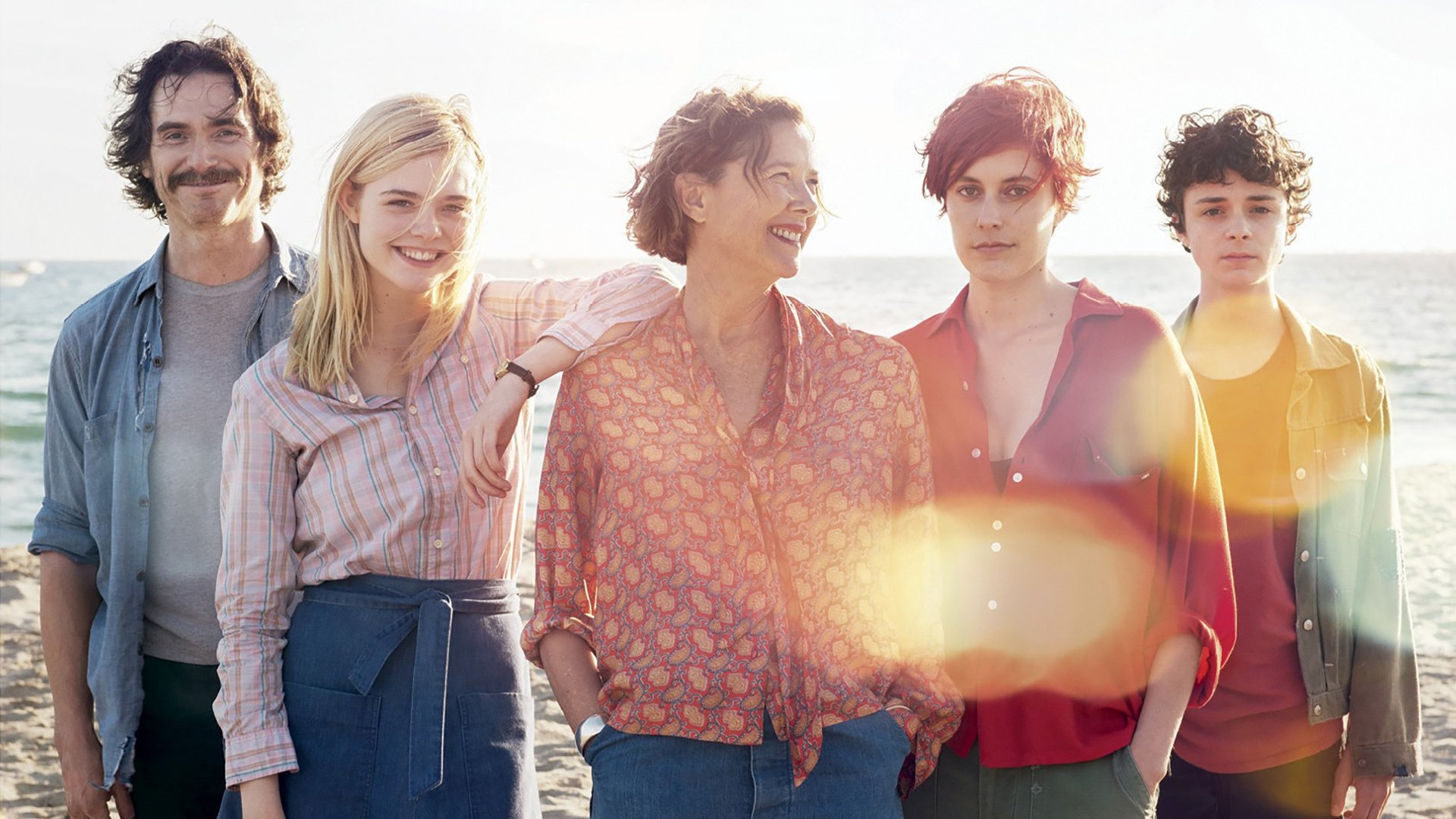
What a joyous conundrum this film is. Set in 1979, the film looks on as Jamie (Lucas Jade Zumann) maneuvers the troubles of adolescence, societal sea change and his loving if enigmatic mother, Dorothea (Annette Bening).

Too practical and pragmatic for the women of 1979, too independent and wise for her own generation, Dorothea is a woman without a timestamp. It gives her a gravitational pull, drawing the fierce and the unusual to her like satellites.

Those in her orbit – besides her pubescent son – are punk artist Abbie (Greta Gerwig), troubled teen Julie (Elle Fanning), and misplaced hippie William (Billy Crudup).

The cast is uniformly terrific, but Bening is a spectacle. A collector of friends, she’s still a solitary figure, one who looks on the relationships and complications in her life with a strange remove – almost like an anthropologist.

Dorothea is, from her son’s point of view, unknowable. Bening more than manages to embody that frustrating reality of a parent whose behavior seems entirely natural and yet almost alien. And she does it with such charm and humor.

Perhaps the biggest surprise in 20th Century Women is the humor – the film, like life, is peppered with laugh out loud moments that help make even the barely endurable pain of adolescence enjoyable.

Mills falls back at times on a punk rock undercurrent that creates a wonderful energy as well as a thoughtful theme for the time in history and in Jamie’s life. As Abbie puts it, the chaos of punk is comforting because it’s about, “When your passion is bigger than the tools you have to deal with it.”

It’s a line that’s almost too perfect, as this cast is almost too perfect. This seems to be the quiet wonder of Mike Mills: he puts his own complicated, insightful and emotionally generous writing into the hands of genuine talent.

Good call.

Verdict-4-0-Stars

The Wheels on the Bus

Paterson

by Hope Madden

Simplicity, tempo, pattern – to some, this alone constitutes poetry.

To Jim Jarmusch, perhaps.

Jarmusch’s second film in a year – after his wonderful Stooges documentary Gimme Danger – is a quieter effort. Paterson marks the days of a New Jersey bus driver, a man named Paterson (Adam Driver) driving in the town of Paterson.

He lives a life of routine: up around 6 to work on a poem while he eats his Cheerios, then a walk to work where he scribbles a bit more before starting his route, then a break for lunch where he returns to his poem, then home for dinner with his wife Laura (Golshifteh Farahani). After dinner he walks his dog to a corner bar where he stops for a beer, then to bed and back at it around 6 the next morning.

Paterson’s wife is more of an explosion of creativity that counters his disciplined artistry.

Paterson loves his wife, finds comfort and beauty in his routine. Above all, he observes, often finding grace in moments so quiet they might be overlooked by someone less still.

Jarmusch’s film is as measured, as calm and composed as its hero.

A languid pace tends to be an earmark of the auteur’s work, but with Paterson Jarnusch has left behind much of his iconic quirkiness in favor of clear-eyed if lyrical normalcy. Ordinariness is celebrated – elevated, even.

Through the character’s eyes we get to notice patterns and repetitions, seeing them as something more than coincidence or design, but a mystery deserving our interest.

Driver delivers a near perfect performance with a tough character. Paterson reveals nearly nothing of himself, preferring to direct attention back at his surroundings. Only through his poems – often scribbled across the screen and read in voiceover – do we get a sense of his inner self. But Driver’s expressions convey an enormous amount of information – about his meals, his relationship with his dog, his joy, fear and heartache.

Through Paterson, Jarmusch seems to memorialize an unplugged life – the kind that allows the mental quietness required for this type of meditative art.

There are elements of the film that feel appropriately unexplained, and others that simply come off as undercooked. And there are always those audience members who will itch for more – more drama, more action, more something. Those people may not be Paterson’s intended audience. Poetry often requires more patience to fully appreciate.

Verdict-3-5-Stars

Hello Darkness, My Old Friend

Silence

by Hope Madden

Yes, the faithful believe Jesus sacrificed himself for us – to clear our sins with God. But would he have sacrificed us for the sake of reverence?

Martin Scorsese’s elegant pondering on faith, Silence, enters the mind of Jesuit priest Fr. Rodrigues (Andrew Garfield) as he and his colleague Fr. Garrpe (Adam Driver) venture into 1640s Japan in search of a mentor priest lost to a violently anti-Catholic government.

Gorgeous, imposing shots paint the image of the vast and dangerous beauty of God’s world and the small if admirable people trying to survive there. Garrpe and Rodrigues first hide with faithful Japanese villagers, losing their primary mission while serving those oppressed Christian Japanese longing for signs of the church.

Garfield and Driver cut nicely opposing images, Garfield the sweet-faced picture of buoyant faith, Driver the more skeptical, impatient believer. While it’s Garfield whose story we hear, Driver’s counterpoint is a required piece of this crisis of faith driving the film and his performance delivers something painful and honest.

Scorsese’s abiding interest – some might say preoccupation – with faulty men and their tenuous grasp on Catholic faith has flavored many a film, though rarely as thoroughly as this one. What is faith? What is it, really? And who’s to say what harm Jesus would have you do to protect him?

The film may take itself too seriously (though, this is hardly light fare). Any possible misstep Scorsese can mostly overcome with meticulous, near-magical craftsmanship, though there are a handful of hang ups that sometimes break the seduction of the project.

These are Portuguese priests in 17th Century Japan speaking English (why?), and mainly with British/Irish accents (Liam Neeson plays lost Fr. Ferreira). (At least Driver gives the Portuguese accent a shot.)

And though Garfield is a genuine talent, this role requires something perhaps uglier than what he has to offer.

Mainly, though the film’s resolution is both nuanced and satisfying, there are certain answers, certain signs that feel more like movie magic than spiritual presence. They are minor flaws in a beautiful if ponderous work, but they keep Silence from joining Scorsese’s true masterpieces.

Verdict-3-5-Stars

Desperately Seeking…

Hunter Gatherer

by Rachel Willis

Writer/director Joshua Locy has crafted a unique, poignant drama with Hunter Gatherer.

The film succeeds in part due to Andre Royo’s stunning portrayal of Ashley, a man recently released from prison who wants to re-establish himself in his former girlfriend’s life. Fully inhabiting his character, Royo has chemistry with everyone he shares the screen with. His chemistry with George Sample III is especially winning – Sample’s Jeremy/“Germs” as the straight man to Royo’s boisterous Ashley.

Sample brings a sweetness to his character – especially apparent in Jeremy’s interactions with Dr. Merton (Jeannetta Arnette), a doctor involved in the medical science research for which Jeremy is a paid volunteer.

The film’s subtle comedy is quirky, but it works well alongside the more dramatic moments. A scene in which Ashley searches for a backpack could be mundane, but is enlivened by the funny interaction with the store clerk. The comedy is necessary, as the film quietly moves toward darker moments.

Though Ashley appears the eternal optimist, it’s clear as the film moves forward he is struggling to find his way – a depression lurks underneath the surface. Ashley jokes to hide the pain he feels as he tries to find connections with the people in his life.

It would be remiss not to mention Kellee Stewart’s noteworthy performance as Nat, the woman with whom Ashley spends most of his time. Her character’s sensitivity is much needed in Ashley’s life, but he takes her for granted as he continues to focus on rekindling his relationship with his ex, Linda (Ashley Wilkerson).

As a directorial debut, Locy’s film is not without problems, but as a moving character study, this is a film that will stick with viewers for its touching take on love and friendship.

Verdict-4-0-Stars

Her

Elle

by Hope Madden

Elle is a flummoxing, aggravating, possibly masterful piece of filmmaking that will leave you reeling.

A misanthropic tale with a complex – even befuddling – moral core, the film explores the aftermath of a brutal rape.

It opens – before we even see an image – on the sounds of the assault. Michele Leblanc (a beyond-magnificent Isabelle Huppert), a prosperous video game developer, is being attacked by a masked figure who’s broken in.

No matter what you expect to happen next, the only thing you can predict is that clichés will be upended.

The storyline offers an almost endless look at complicated gender politics, systemic misogyny and rape culture. As Michele goads the mostly-male team working on the firm’s latest beta game that the tentacle penetration of a medieval maiden is not orgasmic enough, the film further complicates – well – everything.

Another element tangling the viewing experience is the fact that the creative team behind the film is entirely male: director Paul Verhoeven, novelist Philippe Djian, and screenwriter David Burke – who, interestingly, specializes in true-life horror films, often succeeding in humanizing the serial killer (Dahmer, Gacy).

To articulate the film’s frustrating turns would be to give away far more than is appropriate. Suffice it to say, the deeply flawed heroine makes baffling choices in a story chastising a culture that promotes rape while simultaneously encouraging rape fantasy.

Or does it?

Verhoeven’s resume may taint this perception. A provocateur always, his latest effort is his most dialed down and intelligent. And yet, this same director managed to turn a Holocaust interrogation into a scene from Flashdance in his 2016 film Black Book.

There is basically nothing he cannot reframe to objectify women – and yet, there is not one sexual act in this film that is played for titillation.

It is quite possible that Huppert is the entire reason Elle works – and God help me, it does.

Huppert understands this character’s damaging backstory – information allowed the audience in slow bursts – and captures the icy resilience it instilled. Her Michele is a restrained narcissist, a pragmatic survivor at odds with expectations – unlikeable but hard to root against. Above all things, she is unpredictable, but in Huppert’s hands, every decision – no matter how bizarre or offensive – feels utterly natural.

I cannot imagine this film surviving without Huppert in the lead role, but with her as the central conundrum in Verhoeven’s indecipherable set of intentions, Elle leaves a mark.

Verdict-3-5-Stars

A Poignant Beauty

A Monster Calls

by Hope Madden

There is something deeply brave in A Monster Calls, director JA Bayona’s cinematic presentation of Patrick Ness’s understandably praised young adult book.

A boy of 12 – no longer a child, not yet a man, as these tales often go – finds himself trapped in a period of tremendous discomfort. Not adolescence – although that is rarely fun for anyone. Never mind the bullies who routinely beat him, or the balance of his schoolmates who don’t notice him at all.

True, these are real problems that often litter angsty pre-teen dramas. But Bayona and Ness are prepared to more closely examine something far less frequently explored because it is untidy, uncomfortable and hard to look at.

Conor’s mom is going to die, and we spend 108 minutes – brilliant, honest and profoundly sad minutes – with him as he deals with that sad reality.

A monster (Liam Neeson) – in the form of a walking yew tree – visits Conor (Lewis MacDougall) every night and tells him stories. But like everything else about this film – and about life, for that matter – the stories are messy and frustrating. They do not fit the tidy, black-and-white fables Conor wants to hear.

“Your mind will believe comforting lies while also knowing the painful truths that make those lies necessary,” explains the monster.

Simply and beautifully, A Monster Calls articulates so many insights about adolescence and about grief.

What is so startling about A Monster Calls is now true it is to this particular time in life: the baffling behavior of adults, the suffocating aloneness, the disconcerting rage and guilt.

MacDougall steers clear of clichés with a courageous central performance. Though Sigourney Weaver’s accent is noticeably weak, supporting turns are uniformly strong.

Neeson – who narrates one of every three documentaries produced on earth – knows how to employ his voice alone to bring this thrilling beast to life.

But the real stars are Ness, who adapted his novel for the screen, and Bayona.

As he did with his breakout 2007 film The Orphanage, Bayona takes his time and lets his story take its own shape. Of course, part of that shape comes courtesy of a darkly imaginative animation department.

As splendid as the film is, minor faults stand out – the sound is sometimes garbled; sick-bed make up could be stronger; Weaver’s no Brit.

And like Spike Jonze’s underappreciated 2009 masterpiece Where the Wild Things Are, A Monster Calls is in many ways a better fit for adults than for children. It is such a refreshing and intelligent departure from traditional family fare that it’s hard to even see it as part of the same category. This poignant beauty is in a class all its own.

Verdict-4-0-Stars

https://www.youtube.com/watch?v=UvZrnt9b7vU

Cinema Killed the Video Star

Assassin’s Creed

by Hope Madden

What does it take to make a worthwhile movie based on a video game? Because it isn’t just talent – Assassin’s Creed proves that.

Like Warcraft, Creed pits a genuinely gifted director against all that terrible cinematic history – from 1992’s Super Mario Brothers through the Resident Evil series to this year’s Angry Birds Movie – and comes up lacking.

Australian director Justin Kurzel quietly proved his mettle with an astonishing true crime horror film in 2011 called Snowtown. Last year, he teamed up with Michael Fassbender and Marion Cotillard – authentic talents if ever there were – for an imaginative and bloody take on Shakespeare’s Macbeth.

And now the three re-team, along with time-tested craftsmen Jeremy Irons, Brendan Gleeson and Charlotte Rampling, to adapt the popular time traveling video game.

Fassbender is Cal, a death row convict secretly saved by the Abstergo science lab. There, Dr. Sofia Rikkin (Cotillard) will use him to channel his ancestor Aguilar (also Fassbender) – member of a shadowy team battling the Knights Templar for the freedom of humanity.

So, we bounce back and forth in time between a modern day SciFi story and a dusty Inquisition-era adventure. Cal struggles against his newfound captivity and the after-effects of the experiments; Aguilar parkours his way through ancient Spain, trying to keep the Templar from the apple that started all our troubles back in Eden.

If the problem here is not talent, what, then?

As usual, it begins with the writing. Kurzel works with his Macbeth collaborator Michael Lesslie, as well as ne’er do wells Adam Cooper and Bill Collage (Allegiant, Exodus: Gods and Kings). They put together a story that’s as convoluted and bloated as it is superficial.

The cast gets little opportunity to do anything other than deliver dour lines with stone faces, each one developing less of a sense of character than what you would have actually found in the video game itself.

Kurzel’s no help, his mirthless presentation undermining thrills at every turn. When he isn’t bombarding the action with murky visual effects, he’s pulling the audience from the midst of a climactic battle and back into the lab to watch Cotillar and/or Irons look on with clinical interest.

Yawn.

Maybe it’s impossible to capture the visceral thrill of gaming within the comparatively passive experience of cinema. Maybe the rich backstories of modern video games are only rich if you’re used to video game narratives. Hopefully the movies will get it right at some point, or at least they’ll stop wasting such incredible talent on such forgettable nonsense.

Verdict-2-0-Stars

Post By Post

Fences

by Hope Madden

Denzel Washington is an Oscar contender in about one of every three films he makes – Fences is clearly one of those special performances.

As a director, he’s chosen to focus on the African American experience – August Wilson’s Pulitzer and Tony-winning stage play being the strongest effort yet.

Troy Maxson – a 1950s garbage man with a lot to say – is a character that feels custom-made for Washington. Larger than life, full of conflict and bullshit, bravado and stubbornness, Troy is a big presence. He fills up the screen, he fills up a room, but it is Viola Davis as his wife Rose who offers an emotional and gravitational center to the story.

It doesn’t take much effort to pitch Viola Davis a ball she can hit out of the park. Denzel does just that.

As Rose – the force that keeps the family functioning smoothly – Davis quietly astonishes. She delivers every scene – from silly reminiscences to life-altering decisions – with the easy grace of a profound talent.

Together she and Washington boast such chemistry, their glances, smiles and gestures articulating a well-worn, bone-deep love. Their time together on screen – which is a great chunk of the film – is an opportunity to watch two masters riff of each other for the benefit of character and audience alike. The result is in turns heart-warming and devastating.

The two leads benefit from the remarkable support of the ensemble – longtime character actor Stephen Henderson and Russell Hornsby, in particular.

True to the source material, Washington’s direction feels very stage-bound and theatrical. But in most respects, Washington’s delivery – faithful as it is to the idea of the stage from which it leapt – retains what is needed about the sense of confinement allowed by the few sets and locations.

This is a respectful and powerful tribute to the late Wilson, the playwright whose on-stage Fences saw its 2010 revival starring both Washington and Davis. There is no doubting this play’s bonafides, and Washington honors its intimacy and universal themes.

Verdict-4-0-Stars

Lost In Space

Passengers

by Hope Madden and George Wolf

If there’s one thing we’ve learned from romantic comedies, it’s this: as long as two people are attractive enough and have no entanglements – no jobs, no family, no social obligations to speak of – then only the most ludicrously contrived and easily surmountable of obstacles can keep them apart.

What if we applied this concept to SciFi? Well, if you can cast the two most bankable actors in Hollywood, you might be onto something.

That something is Passengers.

Jennifer Lawrence and Chris Pratt are the pair of stupidly good looking actors playing Aurora and Jim, two of the 5,000 some odd hibernating passengers on a flight to Homestead II – a colony planet about 120 years from Earth. One convenience leads to another and they both wake up a lifetime too early.

To writer Jon Spaihts’s credit, his screenplay opens up many a moral conundrum. Between his existential questions and the film’s needed action sequences, Passengers feels like a good fit for director Morten Tyldum (Headhunters, The Imitation Game).

And yet, there is no easy out these two won’t take.

Big fans of Kubrick (clearly), Tyldum and Spaihts borrow not only from the obvious source of 2001, but even more liberally from The Shining – as well as one certain foreign film that will go unnamed for fear of spoiling the early plot twist.

Intriguing? Not for long.

Passengers also nabs bits and pieces from Gravity, Titanic and Alien (none of the good parts from Alien – although since Spaihts wrote Prometheus, maybe some of this should have been expected).

So it looks good. And the characters are likeable – troublingly likeable, which ends up becoming the anchor this film can’t escape. Potentially fascinating questions are raised, then abandoned, as if it’s too dangerous to risk upsetting some focus group who came to see love at light speed.

Pratt has no problem with likability, but he again finds it hard to veer from his comfort zone of Chris Pratt. This is even more evident next to Lawrence, who can always find small ways to craft a new character, even when hamstrung by a less than challenging script such as this.

You’ll get some how-do-you-do’s to sustainability and corporate greed, but by then the course for Passengers has long been set.

Look at these two! Don’t you like them together?

Verdict-2-5-Stars

https://www.youtube.com/watch?v=0968aYSHUXE