Tag Archives: movie reviews

Boy, Oh Boy

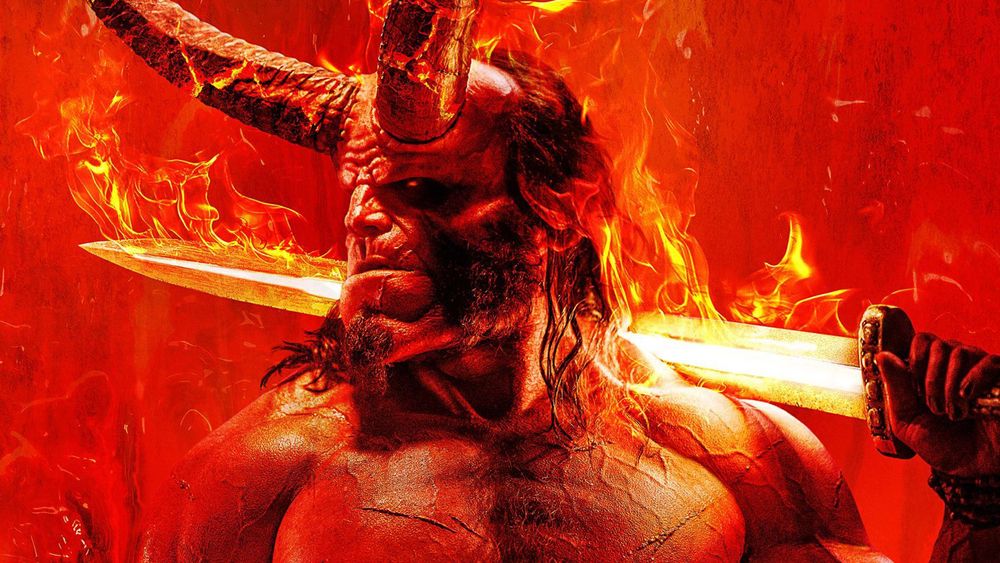
Hellboy

by Hope Madden

It has been 15 years since Guillermo del Toro and Ron Perlman first brought Mike Mignola’s cat loving, iron fisted, soft hearted son of Satan to the big screen. You’ve got to feel for any filmmaker tasked with following in del Toro’s steps, especially when the film in question is a monster movie brimming with innocence and wonder. That is really his wheelhouse.

But Neil Marshall is no slouch. His first film out the gate back in 2002, Dog Soldiers, offered a wickedly funny war movie with werewolves. This gem he followed in 2005 with what may be contemporary horror’s scariest monster movie, The Descent.

Since then? Nothing to write home about. But that means he’s due for a comeback, eh? And Hellboy’s ready for a reboot. Right?

No to both.

The first difference you’ll note, maybe 15 words into the film with the first of many f-bombs, is that Neil Marshall’s Hellboy is rated R.

It’s also a horror movie, make no mistake. Hellboy is lousy with limb severing, blood gushing, intestine spilling action.

Also, it’s just lousy.

Hellboy (Stranger Things’s David Harbour, who does an admirable job) struggles against a prophesy and a lifetime in the shadows to decide his destiny for himself. Milla Jovovich is a witch. There is a boar monster, a scrappy teen medium, a were-cheetah and some seriously sketchy CGI.

Yikes, this movie looks bad.

There are those who will complain about Marshall’s gleeful gorefest, but not me. Demons ripping the flesh from the faces of innocents? Others may be hiding their eyes from the carnage, but what they’re mercifully missing is digital animation on par with Disney’s The Haunted Mansion (the 2003 film or the amusement park ride, take your pick).

Aside from two creepy images—one of Jovovich’s Blood Queen in flowing red robes beneath a shadowy, skeletal tree; the second a quick sideways glance into Baba Yaga’s pantry—Marshall’s vision is weak.

His storytelling is not much stronger. Working from a script by Andrew Cosby, the film opens with exposition, repeats that exact exposition midway through Act 2, and halts at least three additional times for one character to stand still and articulate a big block of story for us.

Often that character is dead and attached to the mouth of a young girl via a long, gurgly, worm-like body, which probably the most laughable element of the film.

Probably.

Part Man, Part Monkey

Missing Link

by George Wolf

Like its titular character, Missing Link is a bit of a mixed breed. An animated family adventure, its humor is more dry than zany, with a stellar voice cast and an often sophisticated air to its snappy dialog that is centered around a lonely Sasquatch.

And it looks freaking gorgeous.

Hugh Jackman brings charming life to Sir Lionel Frost, an ambitious, self-centered 1800s explorer on the trail of any big discovery that can get him admitted to the prestigious adventurer’s club led by the aggressively pompous Lord Piggot-Dunceb (Stephen Fry).

A hot tip leads Frost to a face-to-face with the fabled missing link between man and monkey who, as it turns out, provided that hot tip.

See, “Mr. Link” (an endearing Zach Galifianakis) is lonely, and figures Sir Lionel is just the guide savvy enough to lead him to his people, the equally urban-legendary Yeti tribe of Shangri-La.

So our heroes set off across the globe, enlisting the help of Frost’s old paramour Adelina (Zoe Saldana) while they try to outwit Stenk (a perfectly villainous Timothy Olyphant), the assassin sent to stop them.

This is the latest animation wonder from Laika studios, and the follow-up to 2016’s amazing Kubo and the Two Strings. Even if Mr. Link’s adventure wasn’t as engaging as it is, the film would be worthy on visuals alone, as you’ve barely digested one “wow” moment when another is there to blow your hair back.

From the texture of Frost’s gloves to the ripples in a puddle, from a slow dissolve into a binocular lens to a wide, eye-popping set piece on an ice bridge and beyond, Missing Link serves up a hearty feast of cutting-edge stop motion technology.

And while the pace may leave the youngest viewers a tad restless, writer/director Chris Butler (Laika’s ParaNorman) crafts a heartwarming, witty and intelligent tale anchored in the layered relationship of Frost and Link.

Jackman and Galifianakis make them a wonderfully odd couple, and play off the indelible supporters around them (including a gloriously droll Emma Thompson) to keep all the globe-trotting character driven, leaving just enough room for the messages about inclusion and progress to be subtly effective.

The result is a film that’s confident but unassuming, fun without being silly, and satisfying from nearly every angle.


Let’s Get Small

Little

by Hope Madden

Based on a concept by 14 year-old executive producer and star Marsai Martin (Black-ish), the comeuppance comedy Little flips the script on the Tom Hanks Eighties adventure in manhood, Big.

We open with Martin as Jordan Sanders at 13, a science nerd who takes a chance at the talent show to win over the Windsor Middle School student body. When she fails, she pins her dreams on one day being an adult who bullies everyone else before they can bully her.

Flash forward 25 years. Jordan (now Regina Hall) is a monster boss, terrorizing the developers at her tech firm and making life especially miserable for her assistant, April (Insecure‘s Issa Rae). Can some carbs and a little magic return Jordan to her adolescent form so she can unlearn the lesson that sent her life in the wrong direction?

It’s a slight story, penned from Martin’s idea by director Tina Gordon and co-writer Tracy Oliver (Girls Trip). The two choose not to represent bullying as anything other than a fact of life to be tolerated, but they do layer in some silly fun and spots of surprising humor, mainly thanks to the strength of the two leads.

Rae charms throughout the film. Her smile and energy shine, and she offers natural chemistry with both adult and teen versions of her boss. Rae brings a reluctant but earnest sense of compassion to the role, and her comic timing is spot on.

Martin is the film’s real star. She carries scenes with a clever knack for portraying an adult brain inside a child’s form. The physical performance amuses, but it’s really the way she delivers sly lines with a saucy look or toss of the head that brings a chuckle.

It would be tough for this film to be more predictable, but several side characters—a social services agent (Rachel Dracht) and dreamy 7th grade teacher (Justin Hartley) work wonders with their odd characters and limited screen time.

The plotting is pretty sloppy and at no point does the comedy draw more than a chuckle, but Little is an amusing if forgettable waste of time. Martin is someone to remember, though.

https://www.youtube.com/watch?v=5HdNhpeI1g4

We Don’t Need Another Hero

Master Z: Ip Man Legacy

by Matt Weiner

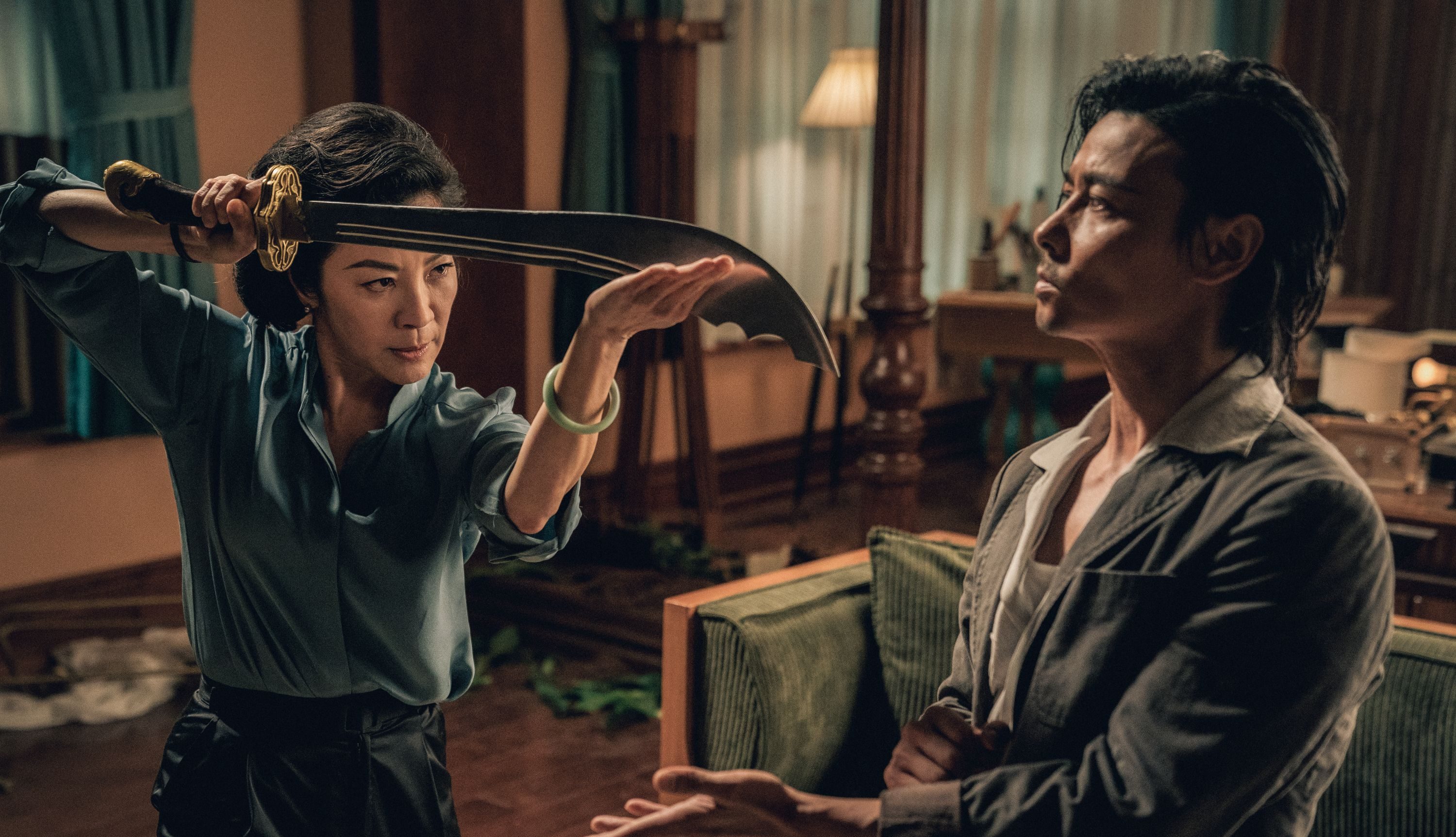
Master Z picks up right where Ip Man 3 left off. Cheung Tin Chi (Max Zhang), still emotionally beaten down after losing his fight to Ip Man, contents himself with living a quiet life with his young son. He has traded in Wing Chun and his martial arts school for a grocery store and what passes for domestic bliss.

This being a martial arts movie, Cheung’s serenity doesn’t last long. He quickly finds himself up against feuding gangsters, local police and their bullying colonial counterparts. When tensions escalate, Cheung’s store goes up in flames, and he and his son move in with sympathetic bar owner Fu (Xing Yu) and his sister Julia (Yan Liu).

For its simple setup, if anything Master Z suffers from too much world-building. The franchise spinoff lacks the compelling history of characters like Ip Man and Bruce Lee, which wouldn’t have to be a problem if the script didn’t insist on so much rote backstory and twists and turns that don’t really go anywhere.

Thankfully, Master Z comes alive during the fight scenes. Director Yuen Woo-ping, who also worked on fight choreography for Ip Man 3, confidently cycles through tense, simmering send-ups to slapstick to death-defying brawls. Each fight has its own emotional character, and taken together they serve as a refreshing reminder that fast-paced action can still be intelligible. It’s amazing what directors can do with choreography when they don’t need to compensate for poor fighting skills or excessive CGI.

Another highlight is Dave Bautista as Owen Davidson, a foreign businessman whose dealings are less savory than the restaurant fronting them. Despite his hero status in the Marvel Cinematic Universe, Bautista has managed to keep an air of unpolished menace to his characters. (That’s not a dig against certain other comically large wrestlers-turned-actors, but it does allow Bautista to carve out an interesting corner for himself even if he continues down a path of big-budget stardom.)

Action royalty Michelle Yeoh and Tony Jaa round out the cast—Yeoh impeccably so as a sharp crime boss, and Jaa all too briefly as one of her hired guns. But for all its machinations, Master Z at least continues the franchise’s deftness at homing in on a message and beating it into you. Master Z is about as family-centric of an action movie as you can get when the subject matter includes limb removals, drug overdoses and the legacy of colonial corruption.

Cheung finds the redemption that eluded him as he goes from everyman to superman for the sake of his son. His story might no longer be the stuff of legends, but Master Z suggests that such a life is equally worthy of celebration. Or, at the very least, a worthy spinoff.

I Don’t Want to Go Out—Week of April 8

Movie and more movies out this week in home entertainment. A couple are great, a couple are near misses, at least one is a real head-scratcher. No worries, though, we’ll sort through it with you.

Click the film title for the full review.

Mirai

The Wind

On the Basis of Sex

A Dog’s Way Home

Welcome to Marwen

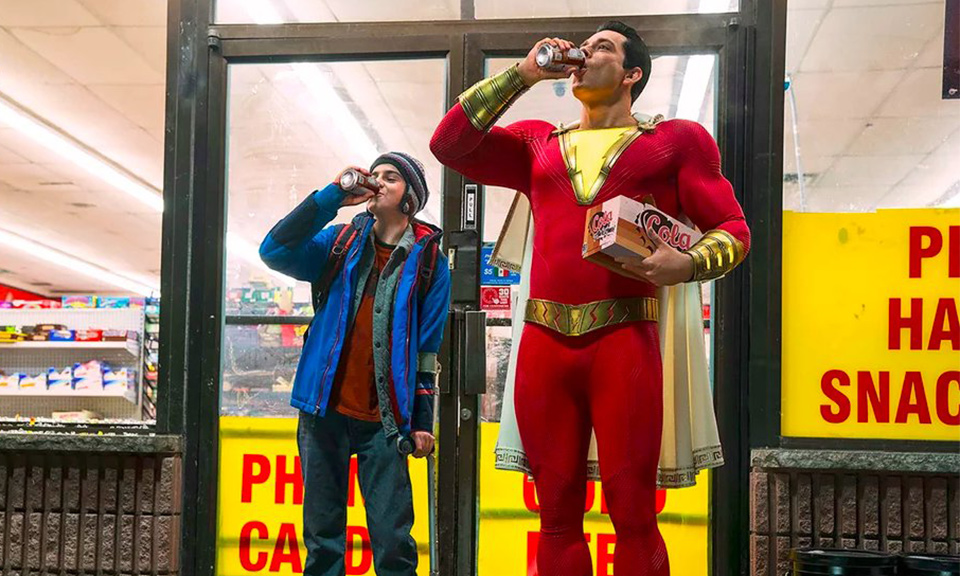
Screening Room: Shazam!, Pet Sematary, Best of Enemies, The Public, The Wind, The Aftermath, Diane

Whew! That is a lot of movies. We will talk you through all of them: Shazam!, Pet Sematary, The Best of Enemies, The Public, The Wind, The Aftermath and Diane—plus all that’s fit to watch in new home entertainment.

Listen to the full podcast HERE.

Portrait of an Empty Cup

Diane

by Christie Robb

There’s a meme, “You can’t pour from an empty cup. Take care of yourself first.” Writer/director Kent Jones’s Diane is a character study of a woman in need of self-care. Her cup has gone bone dry.

The 70-ish widowed and retired Diane (played by the phenomenal Mary Kay Place) spends her days in service to others. She plays cards at the bedside of a cousin dying of cervical cancer. She brings casseroles to friends recovering from illnesses. She serves macaroni and cheese at a soup kitchen. And she returns again and again to the disheveled apartment of her drug addict son, incurring his abuse as she begs him to return to the clinic for treatment.

But when asked how she is doing, Diane responds with a pat response of, “I’m fine,” deflecting the conversation away from herself.

Over time the distractions disappear, giving Diane a lonely space to focus on herself. But that space exposes a shameful memory from her past that she’s kept busy trying to avoid by performing penance.

Place’s performance is raw and layered. The cracks she reveals in Diane’s polite self-sacrificing façade are natural, relatable and quietly devastating. And most of this is delivered by way of a slight change of facial expression or a shift in body language.

She anchors the film, and it emerges as an effective study of the everyday failures and secret shame that most of us carry with us as we drive about in our lives trying to do better this time.

Screening Room: Dumbo, Hotel Mumbai, Beach Bum, Hummingbird Project, Woman at War

Join us as we divvy up the good and the bad this week in theaters: Dumbo, Hotel Mumbai, The Beach Bum, The Hummingbird Project and Woman at War. We also run through what’s new in home entertainment.

Listen to the full podcast HERE.

Survival Instinct

Hotel Mumbai

by Brandon Thomas

On November 26, 2008, 10 Pakistani terrorists launched a coordinated attack in the Indian city of Mumbai. At least 174 people were killed, with thirty-one dying inside of the Taj Hotel where the initial attack turned into a four-day siege.

In the modern era, terrorism has become an ever-present part of our lives. Cinema’s response has been to turn these perpetrators into moustache-twirling villains with a penchant for money more than ideology. Only in the wake of 9/11 did filmmakers routinely start to tackle terrorism with gravitas. Paul Greengrass’s United 93 and Steven Spielberg’s Munich were two of the first films in this wave to treat terrorism in film as something more than an excuse to blow something up. Hotel Mumbai’s terrifying journey into the 2008 attacks places it firmly alongside these latter day efforts.

Hotel Mumbai follows a handful of guests (Armie Hammer, Jason Isaacs and Nazanin Boniadi) and hotel staff (Dev Patel and Anupam Kher) as they struggle to survive the armed assault by four gunmen. As the ordeal continues and family and friends are separated from one another, the surviving hotel employees band together to help keep the guests as safe as humanly possible.

The tension flowing through every second of Hotel Mumbai is palpable. When the violence begins, it’s shocking and matter-of-fact in its ferocity. Director Anthony Maras wisely keeps the action grounded, using a lot of hand-held camerawork to create a chaotic feel. There’s an eerie sense of normalcy to what’s happening that gets under your skin.

Speaking of normalcy, making the heroes of Hotel Mumbai the hotel guests, waiters and kitchen staff only adds to that sense of realism. We’ve already seen the version of this movie where the star is a cop or an elite team of commandos. Watching the hotel staff work together to usher the remaining guests to safety adds an emotional element that would be missing if this was simply an “action movie.”

Patel leads the pack with a riveting performance that isn’t showy or recycled. His character of Arjun is in complete contrast to the men terrorizing the hotel, his sense of honor and purpose driven by saving people.

Hotel Mumbai offers an unflinching look at the horror of terrorism. Thankfully, it also shows us that true heroism can exist even in the darkest of moments.