Tag Archives: movie reviews

Writers Unblocked

Can You Ever Forgive Me?

by Hope Madden

People forget that Melissa McCarthy was nominate for an Oscar. It’s a stiff year for female leads, but she might just nab another nom for her turn as a misanthropic writer in the true story, Can You Ever Forgive Me?

A one-time best seller, author Lee Israel (McCarthy) is feeling her shelf life. Unwilling to conform to any kind of expectations—particularly those placed on females in the publishing industry—she finds herself facing the reality that no one wants a book on Fanny Brice, and no one wants a book by Lee Israel.

McCarthy’s socially inept and down-on-her-luck biographer sits in a dingy bar midday, drinking away her unemployability, her cat’s illness and her writer’s block when in beams a boozy ray of sunshine disguised as upbeat alcoholic hustler Jack Hock (Richard E. Grant).

It’s here that director Marielle Heller’s film hits its stride. McCarthy’s energy, her dimples and her infectious good nature have buoyed any number of mediocre films. But here, she carves a low key, solitary figure unable and unwilling to open up. It’s a fascinating about-face for McCarthy.

Set Israel’s curmudgeonliness against the unbridled zeal and charm Grant brings to his character, and a compelling odd-couple-on-the-skids is born.

To pay her bills and exercise her talent, Israel begins forging letters from literary icons and selling those forgeries at bookshops across New York. The wondrous respect this film has for writers, for the written and spoken word, and the nostalgia it has for a past when those elements were likewise revered generates a lovely, literary atmosphere.

Co-writer Nicole Holofcener again subverts ideas of entitlement and self-destruction with a screenplay so full of empathy it’s impossible to dislike the deeply unpleasant Israel.

A great deal of that success, of course, comes from McCarthy’s authenticity. The performance is nuanced and understated, as is the entire film, and aching of self-inflicted loneliness. She creates an believable and yet unusual character—one who embarks on a deeply strange yet somehow fitting journey.

The story of Lee Israel offers a weirdly optimistic if cautionary tale for misfit women. It’s also a great reminder that Melissa McCarthy can really act.

I Don’t Want to Go Out—Week of November 5

Have you voted? If yes, then get away from all those reminders about why we need to vote by binging on new movie releases! Spike Lee’s greatest film in eons is available, plus Pixar-style family fun, Pooh-style family fun, Charlie Hunnam—it’s like a buffet of lovely options.

But please vote first.

Click the link for the full review.

BlacKkKlansman

Incredibles 2

Papillon

Disney’s Christopher Robin

https://www.youtube.com/watch?v=0URpDxIjZrQ

The Screening Room: Song and Dance

Remakes! Legendary returns! Song! Dance! Exclamation points! It’s all in the new Screening Room Podcast, where we talk through the pros and cons of Bohemian Rhapsody, Suspiria, The Nutcracker and the Four Realms, The Happy Prince, The Other Side of the Wind and Beautiful Boy, plus a slew of new home releases.


Listen to the full podcast HERE.

Susan and the Snakes

Viper Club

by Rachel Willis

After a freelance journalist is kidnapped in Syria, his mother tries numerous avenues to get him home. With Viper Club, director Maryam Keshavarz seeks to draw attention to the plight of kidnapped journalists and aid workers around the world.

When we’re first introduced to Helen (Susan Sarandon), we learn quickly that her son, Andy (Julian Morris), was kidnapped more than two months prior by a terrorist organization. At the direction of the FBI and US State Department, Helen has had to maintain silence regarding her son’s plight. No one in her life knows the anguish and fear she carries on a daily basis as she waits for someone to rescue her son.

It’s clear that her faith in the US government has waned in the months since her son disappeared. When ransom demands arrive, Helen expects an immediate response. What she gets is the runaround from the FBI.

Susan Sarandon is nearly always impeccable, and her performance here is no exception. She ably conveys the frustration and distress of a mother incapable of saving her son. When the government fails to act, she decides to reach out to a network of people (the titular Viper Club) willing to negotiate her son’s release.

Aside from Sarandon’s convincing performance, the rest of the cast can’t seem to muster the energy to care. It’s not hard to see why. The supporting characters are shallow. The focus is rooted so completely on Helen’s plight that it’s strange the film introduces so many additional characters.

Flashbacks in the film attempt to humanize Andy, but strangely, we only get to see him as an adult or a ten-year-old boy. It’s as if no other period in his life made an impression on his mother, as the memories are filtered to the audience from her perspective. The impact would have been greater if we’d seen more of what led to Andy’s final trip to Syria and been spared the sentimental moments from his childhood.

It’s hard to root out the point of Viper Club. In trying to avoid the murky politics surrounding the negotiation for the release of kidnapped Americans, Keshavarz sends an equally murky message. In not addressing the deeper implications of Helen’s actions, the movie misses an opportunity to address the plight of journalists working in dangerous situations. The film skirts a number of issues, and in the end, doesn’t say much of anything.

Everything Except Temptation

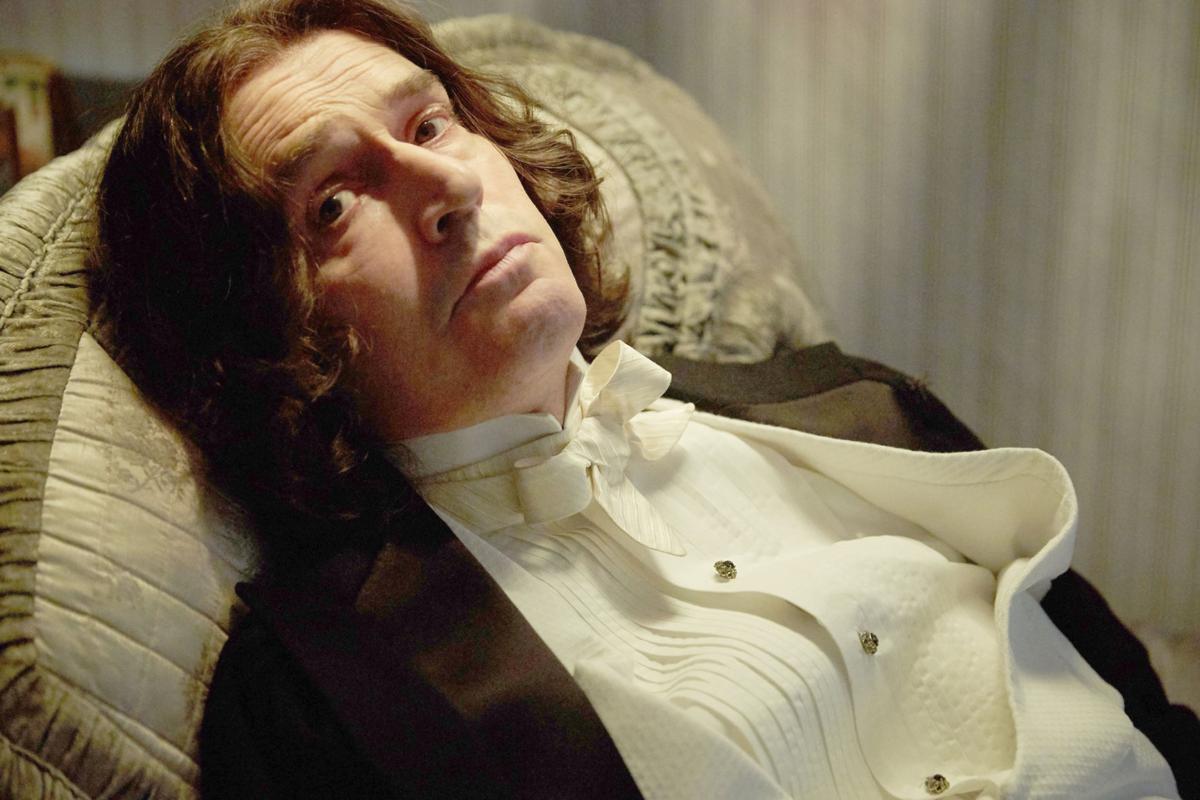
The Happy Prince

by Hope Madden

“Why does one run toward ruin? Why does it hold such fascination?”

Oscar Wilde, by way of writer/star Rupert Everett, wonders these potent lines partway through The Happy Prince, director Everett’s biopic of the infamous decadent/undeniable genius.

Everett’s tale flashes backward and forward but mainly focuses on the period between Wilde’s 1897 release from prison and his death in 1900. A rather bleak time in a very rich and colorful life, but Everett’s execution never forgets the heights, and his performance is haunted with the fall.

Upon his release, Wilde finds support with sometime lover and literary agent Robert Ross (Edwin Thomas) and writer/friend Reginald Turner (Colin Firth – delightful, especially when his character is not the focus of a scene). But Wilde cannot or will not deny his desire for Alfred “Bosie” Douglas (Colin Morgan).

It is a perfect vehicle for a film that lays bare this particular genius and that rumination on running toward ruin. Only a few years earlier, Wilde’s ego required recompense from his lover’s father, who’d libeled him. Wilde’s suit, however, only uncovered his own then-illegal dalliances and instead of recompense he found himself facing hard labor.

And yet, even with emotional support from his friends and financial support from his wife jeopardized by the decision, Wilde joyously takes Bosie back and the two travel to Naples to misbehave.

Everett’s film more than forgives Wilde’s wildness, though it doesn’t go so far as to fully admire it. His lead performance is colored by an understanding of the difference between living lustily when you have everything, and when all that you once had is forever out of reach.

As a writer and director, Everett tries too hard to use Wilde’s short story The Happy Prince to create a running metaphor, perhaps suggesting that Wilde’s end, like the story’s, reaches transcendence. It’s a tough sell, passing off the short’s image of voluntary self-sacrifice as analogous to Wilde’s fall from grace.

Otherwise, though, the first-time filmmaker delivers a vision edged with the melancholy of a brilliant mind never again able to see the world as bountiful and beautiful. It’s as touching as it is resonant, and nothing in The Happy Prince articulates this tragedy as beautifully as Everett’s performance.

It’s a performance simultaneously full of life and of death. You see the enormous loss, but more than that, the deflating ugliness of this world etched on Everett’s face, echoing in his every gesture.

Everett’s instincts behind the camera come as a nice surprise. With more than 70 acting credits to judge by—many of them quite fine, some even awards contenders—the real surprise is that he had this performance in him.

I Don’t Want to Go Out—Week of October 30

Look at all these movies! What do you want, cartoons? Drama? Indie rom com? Horror? Unhinged Nic Cage? You know you want unhinged Nic Cage, and lucky for you, he’s here! We’ll shed some insight on what else is worth a look.

Click the film title to read the full review.

Mandy (DVD)

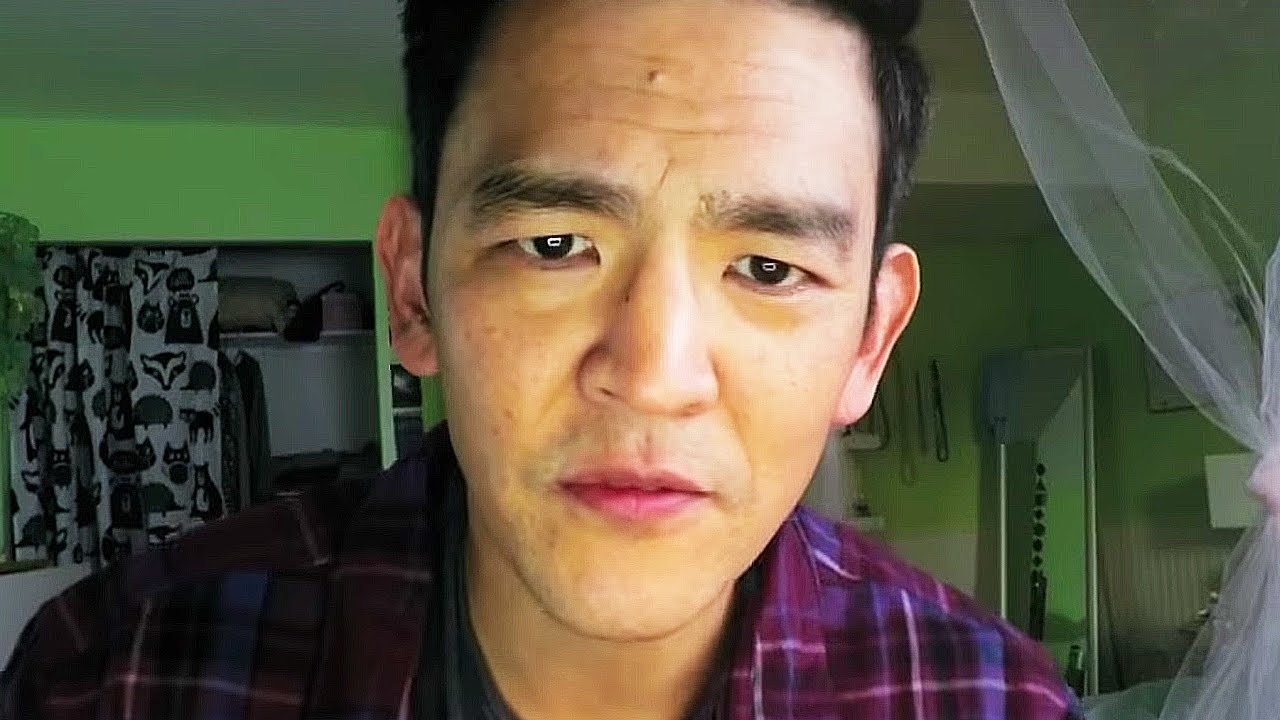
Searching

The Dark

The Spy Who Dumped Me

Juliet, Naked

The Darkest Minds

Slender Man

Teen Titans Go! To the Movies

Screening Room Podcast: Big Air, Deep Water

We talk through Gerard Butler’s place in cinematic history, Jonah Hill’s place as a filmmaker, and Alex Honnold’s place as a crazy person as we break down Hunter Killer, Mid90s and Free Solo. We also run through the best and worst in new home entertainment.

Listen to the full podcast HERE.

Gerard Has the Con

Hunter Killer

by Hope Madden

On a scale from Gerard Butler to 10, how bad is Hunter Killer?

It’s not London Has Fallen bad. Or Gods of Egypt bad. It’s not Geostorm bad, but what is, really?

But is it any good?

Well, no. Don’t get loony. I’m just saying, it could be worse. You know, because Gerard Butler stars.

That doesn’t make him the worst actor in history. It’s just that he’s not especially talented and he makes impressively awful films. And yet, the king of January inexplicably gets a prime October release with this one, playing Captain Joe Glass.

He’s not an Annapolis guy, but that doesn’t mean he can’t successfully lead his first crew through Arctic waters to save the President of Russia from a botched coups attempt.

If you’re worried about subtitles—well, you’re clearly not familiar with the work of Mr. Butler. No, fortunately the Russians only speak Russian when it doesn’t matter if we understand what they say. The moment the dialog is important they switch (sometimes mid-scene) to English. How lucky is that?

I’m sure we’d never be able to follow this plot otherwise. It’s not like every scene is telegraphed in advanced.

Director Donovan Marsh’s film is not unwatchable. It’s shallowly packaged derivative entertainment, boasting passable water scenes and hand-to-hand action choreography that’s entirely adequate. It’s the drama that will make you wince.

There are three primary focal points. Firstly, the drama back in DC, where level heads try to outmaneuver war mongers. Gary Oldman plays a monger.

Everybody follows up their Oscar with garbage. Don’t fret for Gary.

Common plays one of those level heads. This is literally Common’s third film in three weeks. The prior two—The Hate U Give and All About Nina—were both very good. Nobody bats 1000.

The second dramatic focus takes place on the ground—thank God, because honestly, without the small military unit landing covertly on Russian soil with their drones, swagger and witty banter, this movie would never leave a confined area and you would feel even more trapped by it.

The highest drama is, of course, hundreds of feet underwater with noble everyman Cap. Glass. You know what he has? A level head.

Just not, you know, a ton of talent.

Screening Room: Old Tricks, New Treats

The Screening Room breaks down the new Halloween, talks through The Oath and the new YA The Hate U Give. Plus, we’ll run through what’s worth watching in new home entertainment releases.

Listen to the full podcast HERE.

No Weapon, No Weakness

The Hate U Give

by George Wolf

The Hate U Give becomes one of the year’s better films not because it elevates an oft-maligned genre (though that fresh air blast certainly doesn’t hurt), but instead for how it wraps troubling, vital societal issues around an absorbing family drama.

Adapted from the best selling Young Adult novel by Angie Thomas, the film slaps you with reality right from the opening, when a commanding father (Russell Hornsby) is giving his young children “the talk” – not about sex, but about how to survive when they are pulled over by the police. You may see this as either familiar or eyebrow-raising, and that is precisely the point.

Like so many YA dramas, THUG is anchored by a special young girl. Here, she’s Starr Carter (Amandla Stenberg), but Starr’s specialness isn’t a device that panders, it’s one that is intelligently used to illustrate two very different Americas.

She lives in a Georgia “hood” with her family, but attends a private Catholic school in the ‘burbs, and not, as her mother (Regina Hall) says, “because she needs to learn how to pray.”

On the ride home after a weekend party in her neighborhood, Starr becomes the only witness to the fatal police shooting of her childhood friend Khalil (Detroit‘s Algee Smith). She’s reluctant to come forward for a variety of reasons (all logical), and as the pressure builds from different sides, reactions to the killing bring the contrasts between Starr’s two worlds into clear, illuminating focus.

Director George Tillman, Jr. (Notorious) and screenwriter Audrey Wells (who sadly passed away just weeks ago) craft a thoughtful balance as the narrative progresses, cutting deeper via an impressive restraint that holds until the final few minutes hit a more tidy, didactic vein.

But when this film works, which is most of the time, it works wonderfully. Through Starr’s eyes (and yes, narration) we navigate heady terrain: white privilege, systemic oppression, Black Lives Matter, all lives matter, victim blaming, mass incarceration, cultural appropriation and liberal guilt. And Stenberg, leading a strong ensemble which also includes Anthony Mackie, Issa Rae and Common, rises to the material after some cookie-cutter YA fare (The Darkest Minds, Everything, Everything) with her best performance to date, moving Starr believably through grief, confusion, anger, defiance and hard decisions.

It’s character development that respects both the character and the audience. And in trusting that YA audience with some bitter pills, The Hate U Give becomes a required dose for the rest of us.