Tag Archives: movie reviews

Father/Daughter Dance

On the Rocks

by Hope Madden

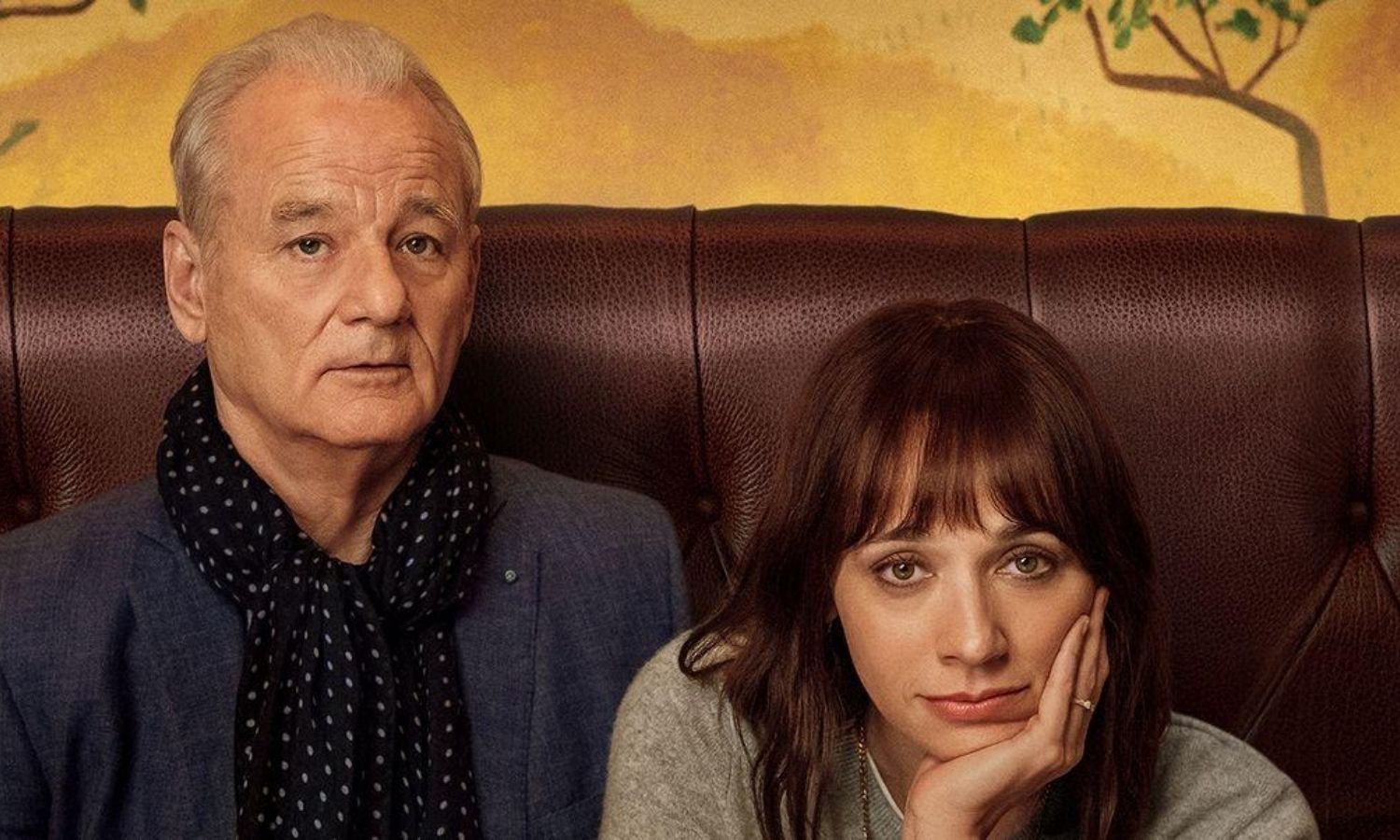
At its surface, On the Rocks offers a wryly fun adventure film. It’s a flashy, superficial good time with Bill Murray, and who does not want that?! It’s a father/daughter romp and a heist film of sorts, full of high-end cocktails, cool cars, and hijinks.

But that’s not really the film at all. Writer/director Sofia Coppola’s latest is a candy-coated rumination on legacies left by loving but problematic fathers.

Rashida Jones is Laura, a writer devoting most of her attention and time to her two little girls, with little left for creativity or chemistry. Her husband (Marlon Wayans) is putting in extra hours at work, traveling a lot, and spending a lot of time with his leggy colleague Fiona (Jessica Henwick).

Maybe he’s just busy and maybe Laura’s just in a rut.

Dad doesn’t think so.

Laura’s unrepentant playboy dad Felix (Murray) orchestrates a sleuthing adventure, tailing hubby’s taxis and offering sage advice from a man who knows a little something about infidelity.

Murray is all charm, his charisma at fever pitch. There’s also a lonesome, tender quality to the performance that gives it real depth, and enough self-absorption to grant it some authenticity.

Jones, as his reluctant accomplice, suggests the reality of midlife doldrums with grace. She also transmits the tragic enthusiasm of a daughter still pleased to be the focus of her father’s attention.

It’s almost impossible to avoid comparing Coppola’s latest dramedy with her Oscar-winning 2003 Murray vehicle, Lost in Translation. There are certainly similar themes: a woman unsure about her marriage finds herself drawn into a paternal relationship (with Bill Murray). On the Rocks is too tidy and too slick to entirely stand up to that comparison, but like Lost in Translation, there’s an autobiographical quality to the film that gives it a soul.

Squeaky Clean

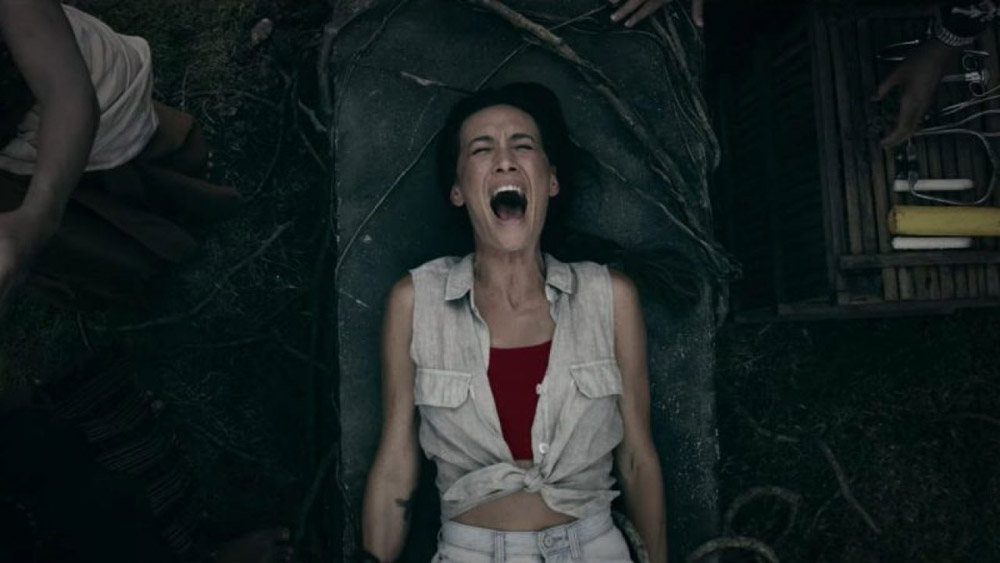
The Cleansing Hour

by Hope Madden

Almost a decade ago, Colin Minihan and Stuart Ortiz locked a couple of fraudulent online “ghost hunters” inside an abandoned hospital in the entertaining flick Grave Encounters. It wasn’t the best “supernatural huckster faces honest demonic peril” film of that year—that award goes to Daniel Stamm’s impeccably cast The Last Exorcism.

So, fast forward about a decade and writer/director Damien LeVeck (that is a horror name, my friends) gives us a mash up of both of those movies.

The Cleansing Hour is actually a full-length version of his 2016 short of the same name. In the feature, boyhood friends Max (Ryan Guzman) and Drew (Kyle Gallner) use what they remember of their Catholic school days to fake weekly online exorcisms.

Star of the show Max is a hottie and a bit of a d-bag. Dressed like a priest, he’s in it for the fame and groupies, or as he likes to call them, disciples. Drew is the brains behind the operation. But they’ve hit a plateau. Their viewership isn’t growing as fast as they’d like. Maybe Max is looking at other opportunities. Maybe Drew should just marry longtime girlfriend Lane (Alix Angelis) and get an honest job.

Or maybe a real demon will show up for their next episode.

LeVeck and crew mine that oh-so-Catholic nightmare of shame and confession well. Performances are fine, Guzman’s pretty, but there’s so little new being said here that the film grows tedious long before its 95 minute run is up.

The Cleansing Hour plays too much like a film made by someone who’s seen a lot of horror movies but lacks an original voice. Storylines fall back, not on primal scares or universal areas of dread, but on ideas from other movies.

LeVeck’s film offers a few speeches concerning the evils of the Catholic church (nothing inspired or vital, mainly obvious and hollow), points to our unholy dependence on technology, and shows anxiety about how tech both connects us and brings out the worst in us. Also, an ugly voice comes out of a pretty face.

Familiar stuff, that.

Most problematic (but least surprising) is the twist ending that’s so tired by this point, the idea was just mocked in another horror movie that opened last week.

There’s nothing awful about The Cleansing Hour. It is perfectly serviceable low budget horror. You could watch it. Or you could find any one of the movies it steals from instead.

Memory Motel

Black Box

by George Wolf

Nolan (Mamoudou Athie) needs Post-It Notes to get through the day. A car crash took his wife and his memory, and the colorful little squares give Nolan useful info while his young daughter Ava (Amanda Christine) is often forced to assume a parental role.

But there is some hope…of the experimental kind.

Dr. Lillian Brooks (Phylicia Rashad) thinks she can help Nolan regain his memory and reclaim his life through her “black box” therapy. Worn like a high-tech VR headset, it allows the patient to wander through their own subconscious, re-living past experiences until they manifest in the conscious world.

Wow, that’s amazing! What could go wrong?

Director and co-writer Emmanuel Osei-Kuffour anchors his feature debut with some recognizable inspirations, crafting another sci-fi ode to identity that flirts with horror tropes while struggling to find a unique voice.

Athie (The Get Down, Underwater) carries the load here with admirable range. The Nolan we come to know early on is not one found in his own subconscious. And as Nolan comes to fear that he is not the man he thought he was, Athie deftly balances the dual roles fighting for control.

And memories aren’t the only area full of mystery. Nolan’s friend Gary (Tosin Morohunfola), a Dr. himself, follows some suspicions to uncover disturbing information about the night of his buddy’s tragic car accident.

The note-posting and body-writing may totally recall Memento, but Black Box also swims in waters populated by iconic J-horror visuals and a touch of Get Out‘s “sunken place.”

The wonders of technology can hide a dark, malevolent side, and we can lose ourselves believing we are always in control.

It’s not a new idea, and Black Box doesn’t blaze any new trails revisiting it. But it is committed to the viability of the journey, and finds its greatest success in engagement rather than surprise.

Liar, Liar

The Lie

by Hope Madden

Kids are stupid.

There may be no more universally accurate sentence. But parents? Dumb and dumber.

Writer/director Veena Sud retools the 2015 German film Wir Monster with a great cast, compelling complications, and that same awful truth.

Kayla (Joey King) is not very popular, not very happy about her parents’ separation, and not at all excited for this weekend-long ballet retreat. When she sees her bestie Brittany (Devery Jacobs) at the bus stop and convinces Dad (Peter Sarsgaard) to pick her up, things turn ugly.

There are any number of “how far would you go to protect your potentially evil kid?” movies—some great (Luce), some less so (Prodigy). What sets this one apart is mainly the cast, plus a somewhat sly delivery.

Sarsgaard is wonderful, as always. He’s one of the most reliable actors working today, and he finds a way to humanize every character, add a bit of depth and some curious moral complexity. He certainly does that here, and with Mireille Enos (playing Kayla’s mom) as sparring partner, a great deal of backstory is communicated without being overtly detailed.

King, a veteran weepy horror protagonist, delivers a clever performance as someone you’re honestly never certain about. Unlike trainwrecks such as Brahms: The Boy II, The Lie knows why the character should be so hard to pin down, and that reason is not a gimmick. It’s integral to the story.

That story is sharply told, even if there are moments that leave you scratching your head. The police presence is something out of a TV drama, and not a very good one. But when all eyes are on this family dynamic, The Lie is often riveting stuff.

The film is far more family drama/thriller than horror, but Blumhouse could do worse than introduce its Welcome to Blumhouse program on Amazon with this solidly crafted, impressively acted film.

I Spy…

A Call to Spy

by Brandon Thomas

Finding a new way to tell a story set during World War II can’t be easy. Men on a mission? Loads of those. Pulpy action adventures? Some of the biggest movies of all time. Dramas exploring the depths of the human condition? We’ve all cried during these. 

What about the true story of female spies sent to France as secret agents? Yeah, that sounds fresh, and thankfully A Call to Spy is just that. 

Great Britain had its back firmly against the wall in the early days of WW II. The Blitz had nearly brought the country to its knees, and Germany’s occupation of France made the threat of invasion seem imminent. In desperation, Winston Churchill formed the Special Operations Executive (SOE), a new spy agency with one purpose: recruit and train women as spies.

A Call to Spy focuses on three women: Vera Atkins (Stana Katic), a Bavarian-born Jew, Virginia Hall (Sarah Megan Thomas), an American, and Noor Khan (Radhika Apte), an Indian Muslim. As the top recruiter, Atkins makes unusual choices in the other two. Hall is a wannabe diplomat with a wooden leg, while Noor is a pacifist. Within the grid of a taught spy thriller, A Call to Spy is mostly interested in how these three pushed back against multiple systems that found them to be less-than. 

Writer and star Sarah Megan Thomas, along with director Lydia Dean Pilcher, weave this true story in such a way that each woman’s tale is given weight and purpose. Unlike many female- driven spy films, our protagonists aren’t scantily clad vixens. Their strength lies in their brains, their cunning and their resolve.

Thomas and Katic channel equal parts determination and vulnerability in their performances. They are leaders who know they have more eyes on them than their male counterparts. Apte’s Noor has the less flashy role that’s at times regulated to the sidelines for huge swaths of the movie. Her final few scenes are intense and devastating, though. 

A Call to Spy jumps around so much that at times it does seem like large chunks of story are being left by the wayside. The character work is subtle and nuanced, but the narrative feels as if it’s tripping over its own feet. Those clunkier moments at times make the movie more resemble a trailer than a fully cohesive story. 

With an interesting look at a true World War II story and captivating performances, A Call to Spy is able to overcome some narrative shortcomings to land as a tense spy thriller. 

A Wicker Man Vacation

Death of Me

by Seth Troyer

From director Darren Lynn Bousman (Saw II-IV, Repo: The Genetic Opera) comes a vacation horror romp that will bring you some thrills and chills. Nothing more, nothing less.

The highlight here is certainly the gorgeous island setting, which is a welcome departure from haunted houses and summer camps with bad reputations.

The panic begins when a vacationing couple (Maggie Q, Luke Hemsworth) on a remote island realizes they remember nothing from the previous night. The rather chilling race to get answers showcases some intense visuals and surreal editing techniques that help add excitement to the predictable—if surprisingly brutal—twists.

If you are a full on horror fanatic, you will probably have at least a decent time here. The film breaks no new ground but it hits its marks rather decently. The whole, “everybody knows whats going on except you” set up owes a lot to classics such as Rosemary’s Baby and The Wicker Man

It’s also not hard to imagine that the success of Midsommar was a factor in greenlighting this film. It similarly attempts to incorporate a modern theme or two, including a very light commentary on consent and free will, which if fleshed out a bit more could have added some potency and depth.

Also sorry to be that guy, but in 2020, do we really need another film where island natives are portrayed as little more than villains who delight in the torture of the “civilized” Americans? It’s a hypothetical question, the answer is: no, probably not.

What Death of Me lacks in originality it sometimes makes up for with intense visual flourishes and dream sequences, but by the third or fourth “was it a dream or did it really happen?” moment, the horrific scenes begin to lose their sense of danger and traumatic permanence. Because of this, the film starts to flounder a bit in the middle section, just before we reach the rather satisfying, bloody climax.

It’s way off course from being a masterpiece, but for fans of the genre stuck inside during these COVID-19 days, you could do worse than this film that teleports you to a beautiful island for a few bloody thrills.

Raise A Voice

Resisterhood

by Rachel Willis

It’s been a hell of a year.

Not only will 2020 live in infamy as the year we grappled with a worldwide pandemic, it is also the year Trump faces a reckoning in the United States. Will he be voted out of office? Or will he secure a second term?

As unlikely as a second term might sound to some, director Cheryl Jacobs Crim doesn’t want her audience (likely those opposed to Trump and his agenda) to become complacent. With her film, Resisterhood, she reminds us why people, particularly women, are fighting the Trump agenda.

On Day 1 of Trump’s presidency, as many as 500,000 women, and men, descended on the nation’s capital for the Women’s March – a gathering that let the new president know he was on watch.

And as the days of Trump’s presidency progressed, he was indeed being watched. As every devastating and harmful decision was passed down, protestors lined the streets around the country to declare this was not their America. From the People’s Climate March on Day 100 to the United We Dream protest on Day 231, Crim documents it all.

Crim captures the feelings surrounding these moments by interviewing women and men who are part of the resistance. From psychologist Jean Graber, who is following in the footsteps of her grandmother – suffragette Edith Hooker – to Egyptian immigrant, Mimi Hassanein, who ran for office in her community, to Illinois Representative Luis Gutiérrez, Crim intersperses these interviews with scenes of protests, primarily in the nation’s capital.

The movie runs pell-mell through the actions and reactions of Trump’s presidency. At times, when reminded of everything Trump has realized as president, it’s hard not to feel dejected. However, many of the women Crim interviews are still hopeful. More and more women, minorities and young people are participating in the democratic process – either in the streets, at the ballot box, or as political candidates. 

But there is a reminder that complacency is the enemy. It would be easy, worryingly easy, to topple our democracy, and while Resisterhood is steeped in the culture surrounding our current political climate, it has a timeless message. 

If you want to effect change, you must participate. If you need a reminder that your vote, your voice matters, start with Resisterhood.  

https://www.youtube.com/watch?v=RcPWit7cjEY

Unexpected Turns

The Swerve

by Hope Madden

Life takes unexpected turns, no matter how tirelessly you prepare.

Writer/director Dean Kapsalis explores a horrific side of this notion in his confident feature debut, The Swerve.

The film nestles into suburbia where Holly (a phenomenal Azura Skye) lays awake, waiting for the alarm. Her face is a mask of resignation and obligation. As the morning rituals rush themselves toward a day at work and school for Holly, her two teenage boys and her husband, Rob (Bryce Pinkham), it’s clear that Holly lives inside herself. In her home she observes and facilitates but is almost never regarded, reached out to. She’s barely even there.

The film takes us through one week in Holly’s life. Her sister (Ashley Bell) returns home, stirring resentment and jealousy. Her husband works late. There’s a prescription bottle. There’s a mouse. There’s a boy at school, another boy on the highway. Some of this is likely imagined. All of it is leading somewhere, and as inevitable as that destination is, it will still hit you right in the gut.

The Swerve busies itself with too many catalysts. The film could have benefitted from slightly less. But there is no escaping Skye’s performance. As a woman on the verge, her delicate state, the way she fights against her own tendency to submit to misery, is devastating.

Skye is not alone. Pinkham is excellent in a role that too often is a throwaway, one dimensional bastard. The likeable authenticity he brings to the performance makes the character and the situations so much more frustrating. Likewise, Bell and Zach Rand (The Woman) bring life and complexity to their roles as well as Holly’s dilemma.

In its most authentic moments, the tension the film generates is almost unbearable. As small mistreatments build, Skye’s posture and dead-eyed stare say everything you need to know about Holly’s whole life. Skye delivers half of her stunning performance without a single word.

Kapsalis’s understatement as a director capitalizes on Skye’s still, unnerving descent. Together they deliver a climax that will haunt you.

https://www.youtube.com/watch?v=rmEYyYu3JC8

Screening Room: Antebellum, The Nest, The Secrets We Keep & More