It’s been more than a decade since Vincent Chase hit LA, buddies in tow, to make it big and reap the benefits of stardom. Writer/director Doug Ellin checks back in on Vincent, Turtle, Drama, E and Ari with the unnecessary Entourage feature.
Now a full-fledged movie star, Vincent (Adrian Grenier) wants something more. Because Ari (Jeremy Piven – still the reason to watch) is no longer an agent but a major studio head, he’s in the position to offer Vincent the opportunity he craves – to direct.
Meanwhile, a Texas oilman’s son (Haley Joel Osment) wants the movie shut down, E’s (Kevin Connolly) sex life is spiraling out of control, newly rich and thin Turtle (Jerry Ferrara) has a crush on Ronda Rousey, Vince’s movie might suck, and Drama (Kevin Dillon) may become Hollywood’s biggest joke.
The fellas’ arrested adolescence feels less forgivable ten plus years on. There’s something sad about 35-year-old skirt chasers. What could once be chalked up to youth and ignorance now looks like stagnation and misogyny.
Returning to the role of a lifetime, though, Piven crushes it. He’s hilarious, horrible, and yet somehow likeable, and his bombast alone carries 90% of the film. Ellin pads that with dozens of cameos, hundreds of bare breasts, countless insider jokes and plenty of camaraderie – giving you basically the TV show on steroids.
A lot of films look at Hollywood from the inside out, only to find something repellant. Entourage isn’t so cynical. The boys from the neighborhood are still geeked to be able to take advantage of every opportunity. Their routine feels pretty stale as they mosey toward middle age, but fans of the series might enjoy this brisk and relatively painless check in.
Aloha slips quietly into theaters this weekend. How is it that a Cameron Crowe film starring Bradley Cooper, Emma Stone, Rachel McAdams, and Bill Murray could fly under the radar with no critic screenings and barely a blip of an ad campaign?
Not a good sign.
No, on that cast alone this movie should have worldwide buzz. It should be the movie grown-ups see this weekend instead of San Andreas. Instead it’s an unwieldy, herky-jerky romantic comedy that leaves the romance and comedy behind in favor of goofy mush.
And what a waste of a cast! Hell, the sheer talent wattage nearly salvages the effort. Cooper is reliably compelling as military contractor Brian Gilcrest, a piece of seriously damaged goods with a chance to get back in with the big boys on this trip to Hawaii. McAdams shines as his former flame, and Murray is great as the charming, eccentric, billionaire villain.
Stone, however, drew the short straw with a wholly unrealistic character who’s equal parts Navy hutzpah and dreamy eyed innocent. Her hyperactive Captain Allison Ng, the Naval airman assigned to keep tabs on Gilcrest while he’s in town, rarely breaks beyond caricature and when she does it feels all the more inauthentic because of the broadly drawn comical foil we first meet.
Crowe’s writing is as likeable as ever, leaving cynicism behind and populating his islands with odd but lovable characters. He’s just not making any choices. Is this a romance? Because there’s a love triangle happening here that actually keeps your attention, under-developed as it is. Or is that cast aside in favor of one man’s dramatic attempt at redemption? Because that doesn’t work, either, as Crowe introduces a dark, political storyline that he tidies up with almost laughable convenience.
Crowe’s best work ranks among the better films you’ll ever see, but his last worthwhile film was 2000’s AlmostFamous. Since then, his unchecked sense of wonder in the face of a cynical society has overtaken every film, none more so than Aloha.
Although, let’s be honest, it’s better than San Andreas.
If current events haven’t satisfied your appetite for stories of cops behaving badly, take a trip back to the 1980s with The Seven Five. It’s a sobering look at the man dubbed “the dirtiest cop in history,” as well as the law enforcement code of silence that still appears shockingly prevalent.
Officer Michael Dowd joined New York’s 75th precinct in the early 80s, when the growing crack epidemic sent the crime rate skyrocketing and turned the Seven Five’s territory into what Dowd called “a war zone.” Starting out with the good intentions of a rookie cop, it wasn’t long before Dowd felt underpaid and under appreciated, and had a hard time finding reasons to think his work made any real difference.
The anxiety he felt after taking that first bribe didn’t last, and in the years that followed Dowd became head of the Seven Five’s very own crime family, brazenly involved in burglary, drug dealing, kidnapping and murder.
Dowd was eventually brought down, and director Tiller Russell uses footage from Dowd’s 1993 hearing testimony as an effective bookend to current interviews with Dowd and several of his cohorts. The chill that comes from a younger Dowd testifying that a good cop means “being 100 percent behind anything another cop does” only intensifies when you hear one of his old partners recalling the prevailing attitude of their criminal heyday.
“Prove it. You got me on video? It’s your word against mine, and I’m a cop.”
Obviously, the story crackles with urgency and timeliness, but Russell sometimes get carried away with the Goodfellas nature of it all. Dowd’s trail of lawlessness left countless victims behind, yet Tiller sometimes allows an air of perverse hero worship to creep into the film. No doubt this tale could be worthy of a Hollywood adaptation, but The Seven Five falters only when it gets too caught up in being the trailer for that non-existent film.
The Poltergeist reboot has us talking about the great haunted house movies over the years and how much they’ve changed. From the creaky old mansions to suburban horror to the curse that will stay with you even after you leave, ghosts have always been able to scare moviegoers and us. Here are our 5 favorite ghost stories:
5. Poltergeist (1982)
This aggressive take on the haunted house tale wraps director Tobe Hooper’s potent horrors inside producer Steven Spielberg’s brightly lit suburbia.
Part of the original’s success emerged from pairing universal childhood fears – clowns, thunderstorms, that creepy tree – with the adult terror of helplessness in the face of your own child’s peril. JoBeth Williams’s performance of vulnerable optimism gives the film a heartbeat, and the unreasonably adorable Heather O’Rourke creeps us out while tugging our heartstrings.
Splashy effects, excellent casting, Spielberg’s heart and Hooper’s gut combine to create a flick that holds up. Solid performances and the pacing of a blockbuster provide the film a respectable thrill, but Hooper’s disturbing imagination guarantees some lingering jitters.
4. The Conjuring (2013)
James Wan built an old fashioned ghost story from the ground up to push buttons of childhood terror. But don’t expect a long, slow burn. Wan expertly balances suspense with quick, satisfying bursts of visual terror.
Ghost stories are hard to pull off, though, especially in the age of instant gratification. Few modern moviegoers have the patience for atmospheric dread, so filmmakers now turn to CGI to ramp up thrills. But Wan understands the power of a flesh and blood villain in a way that other directors don’t seem to.
Claustrophobic when it needs to be and full of fun house moments, The Conjuring will scare you while you’re in the theater and stick with you after. At the very least, you’ll keep your feet tucked safely under the covers.
http://www.youtube.com/watch?v=Vjk2So3KvSQ
3. The Orphanage (2007)
Laura (Belén Rueda) and her husband reopen the orphanage where she grew up, with the goal of running a house for children with special needs – children like her adopted son Simón, who is HIV positive. But Simón’s new imaginary friends worry Laura, and when he disappears it looks like she may be imagining things herself.
A scary movie can be elevated beyond measure by a masterful score and an artful camera. Because director Antonio Bayona keeps the score and all ambient noise to a minimum, allowing the quiet to fill the scenes, he develops a truly haunting atmosphere. His camera captures the eerie beauty of the stately orphanage, but does it in a way that always suggests someone is watching. The effect is never heavy handed, but effortlessly eerie.
One of the film’s great successes is its ability to take seriously both the logical, real world story line, and the supernatural one. Rueda carries the film with a restrained urgency – hysterical only when necessary, focused at all times, and absolutely committed to this character, who may or may not be seeing ghosts.
2. The Innocents (1961)
Quietly desperate and delicately high strung, Deborah Kerr’s performance is the perfect central image in The Innocents, the best of many screen adaptations of Henry James’s The Turn of the Screw. Is Kerr’s hypersensitive governess turning delusional as she spirals toward spinsterhood, or are her angelic charges in danger of becoming possessed by the spectral lovers who seem to haunt the property?
Thanks to Kerr, the wickedly cherubic turn by Martin Stephens as young Miles, and Freddie Francis’s gorgeous black and white photography, this eerie ghost story is a glorious study in the shadowy line between reality and imagination. Countless films – good ones, like The Orphanage and The Others – have walked similar, spooky hallways, but The Innocents will always be the standard bearer.
1. The Shining (1980)
A study in atmospheric tension, Kubrick’s vision of the Torrance family collapse at the Overlook Hotel is both visually and aurally meticulous. It opens with that stunning helicopter shot, following Jack Torrence’s little yellow Beetle up the mountainside, the ominous score announcing a foreboding that the film never shakes.
Let’s not forget Jack. Nicholson outdoes himself. His veiled contempt early on blossoms into homicidal mania, and there’s something so wonderful about watching Nicholson slowly lose his mind. Between writer’s block, isolation, ghosts, alcohol withdrawal, midlife crisis, and “a momentary loss of muscular coordination,” the playfully sadistic creature lurking inside this husband and father emerges.
What image stays with you most? The two creepy little girls? The blood pouring out of the elevator? The impressive afro in the velvet painting above Scatman Crothers’s bed? That guy in the bear suit – what was going on there? Whatever the answer, thanks be to Kubrick’s deviant yet tidy imagination.
Listen to the whole conversation on our FRIGHT CLUB podcat.
Thirty three years ago, Steven Spielberg unleashed two tales of supernatural contact in anonymous, suburban neighborhoods. Things went better for Elliott.
Between producer Spielberg’s sense of awe and director Tobe Hooper’s capacity for imaginative terror, the original Poltergeist far exceeded expectations, and though several sequences have not aged well, it remains a potent horror show.
A generation later, we return to Glen Echo Circle, now the victim of a downturned economy, as are the Bowens. Sam Rockwell and Rosemary DeWitt play the parents unwillingly relocating their three kids to the neighborhood to accommodate their now-more-modest means. Their son Griffin (Kyle Catlett) doesn’t like his room because of the creepy tree outside, but little Maddie (adorable Kennedi Clements) is already making friends.
This is a tough film to remake. The original combined superficial thrills with primal fears and offered the giddy mix of Spielberg’s wonder and Hooper’s twisted vision. Wisely, director Gil Kenan started with a solid cast.
Rockwell is always a good bet and DeWitt is fast becoming the go-to for authenticity in the suburban mom role. Jared Hess offers a little panache as the medium who cleans houses, and the supporting performers turn in respectable work.
Kenan can’t seem to decide whether or not to embrace the original’s more iconic moments, and his revisions feel more like obligation than inspiration. What his version lacks is a big punch. He’s hampered by audience expectation – we kind of know what’s coming, after all – but that doesn’t excuse his lack of imagination.
The director proved a savvy storyteller with his Oscar-nominated animated nightmare Monster House, a film that was surprisingly terrifying for a kids’ movie. That kind of exuberance could have infected this production, but the sequel lacks energy.
Poltergeist is not a bad movie, just disappointing. A lot of reboots are, but there are some that feel like one filmmaker’s love letter to a movie. Films like The Ring, The Crazies, Dawn of the Dead, and more recently, Evil Dead work as reboots because they inhabited an old story but found a new voice. Kenan doesn’t find his. The result is entertaining and forgettable.
It’s 1992 in what had recently been the Soviet Union. The Abkhazians of western Georgia have declared independence and Civil War has broken out. The battle is almost at Ivo’s door, but even as natives kill for the land under his feet, the Estonian immigrant tends the Tangerines. He and a neighbor – also Estonian by birth – hope to harvest the crop before it is lost to the war.
It’s a lovely central image: two elderly men with no dog in the fight working against the clock tending to the region’s natural bounty. Unfortunately, the fight comes knocking. Gunplay between three Georgians and two Chechen mercenaries leaves two wounded men – one from either side of the battle – in Ivo’s care.
Writer/director Zaza Urushadze’s elegant film garnered nominations for best foreign language film from the Academy, Golden Globes and others, and rightly so. His succinct screenplay relies on understatement and the power in silence and in action to convey its pacifist message. The timeless ideas embedded in this intimate setting become potent. While the theme is never in doubt, Urushadze’s unadorned film never feels preachy.
A great deal of that success lies in Lambit Ulfsak’s powerful performance as Ivo. He has an amazing presence, inhabiting this character with weary wisdom. Resolute and morally level-headed, Ivo is impossible not to respect. He’s the film’s conscience and through him we quietly witness a powerful humanity – one that the film would like to see infect us all.
There are three other principals – Giorgi Nakashidze as the Chechen, and Misha Meskhi as the Georgian, and Elmo Nuganen as neighbor Margus. Each brings something muscular but tender to their role. Their work benefits from the dry humor and melancholy tone of Urushadze’s screenplay. The quiet evolution beneath their boisterous clashing feels more inevitable than predictable, which allows Urushadze’s point more poignancy.
We don’t get to see a lot of Estonian filmmaking over here, and that appears to be a shame. Ulfsak was recently named the country’s male performer of the century. It’s not hard to see why.
In 2013, Jeremy Scahill opened our eyes to the darker side of drone wars with his documentary Dirty Wars. Writer/director Andrew Niccol uses a more understated and intimate road to the same destination with his latest effort, Good Kill.
The film follows Tom Egan (Ethan Hawke), a man who flew 6 tours of duty in Iraq and Afghanistan and is now on his third tour in a Vegas cubical piloting drones. From 7000 miles away he watches, then eliminates Taliban threats. Then he goes home to barbeque.
As a writer, Niccol has a long history of mining similar ideas – the alienating power of surveillance as well as the business of war (The Truman Show, Lord of War). He’s on his game here, depositing points and counterpoints in the mouths of the right characters and watching each character evolve as their duties begin to look more like war crimes.
Niccol made some fine decisions as the director as well, keeping the tone understated and the tensions on low boil. He also slyly parallels the aerial images of the Middle East – dry, brown and dusty with neat rows of damaged houses – with aerials of Vegas. Once you get past the glitz and bombast of the strip, the landscape is eerily similar. Not only does this humanize the targets, but it exposes our own vulnerability.
Hawke, hot off a career-best performance in Boyhood, does a stellar job animating a mostly internal character. His struggle feels honest, and on the rare occasion that Tom articulates an issue, his thoughts are enlightening. “We got no skin in the game. I feel like a coward every day.”
Bruce Greenwood, reliable as always, carries a great deal of the weight in the film without ever taking the spotlight. Meanwhile, the great character actor Peter Coyote lends a smarmy, soulless voice as “Langley,” the CIA contact given control over Egan’s unit.
This is a meticulously written script, one that weighs issues without truly taking sides, and Niccol develops a hushed tension that builds to something powerful.
It’s a finely crafted and engrossing film that looks at the effects of a risk-free war from the eyes of one of the warriors being saved from combat. Without beating you about the head with its message, it’s about a lot more than that, too.
Today we celebrate the ladies – the really, super scary ones. We are counting down our favorite female villains from horror. Now, we’re not talking about the great supporting villains – the ones who had villainy help – like Julia (Claire Higgins) from Hellraiser or Mrs. White (Piper Laurie) from Carrie. They are outstanding and terrifying, but they’re not the main antagonist in the film. Nor are we including the terrifying protagonists – not Carrie White (Sissy Spacek) or Ginger (Katharine Isabelle) from Ginger Snaps, or May (Angela Bettis). No, our goal is to find the Freddy Krueger, the Hannibal Lecter—or maybe even better.
That sweet little face, those plump cheeks, those dark locks, those shadowy circles under her eyes, that disappointed frown, that penetrating stare…young Daveigh Chase commanded attention as the vulnerable/terrifying girl in the well. Her ability to be both the lost child you want to save and the horror that must not be unleashed unnerves. Yes, that bewigged man who crawls out of the TV wearing her waterlogged dress helps with the overall effect, but the wee Chase is haunting.
4. Annie Wilkes (Kathy Bates) Misery (1990)
An Oscar winning turn from the magnificent Kathy Bates brings this character to life in the most terrifyingly realistic way. Her sadistic nurturer Annie Wilkes – rabid romance novel fan, part time nurse, full time wacko – ranks among the most memorable crazy ladies of modern cinema. She nails the bumpkin who oscillates between humble fan, terrifying master, and put-upon martyr. Plus she’s handy with a mallot.
3. Lola (Robin McLeavy) The Loved Ones (2009)
Whatever Lola wants, Lola gets. What an absolutely bizarre character and what a brilliantly wrong-headed performance by McLeavy as Daddy’s little prom princess. She’s funny, malicious, utterly insane with some daddy issues we just don’t need to get into here. Just keep her away from the power tools.
2. Asami (Eihi Shiina) Audition (1999)
Eihi Shiina’s elegant beauty is such a perfect match for the brittle psychology of Asami, a delicate sociopath with real betrayal issues. Director Takashi Miike is no stranger to dismemberment and disemboweling (Ichi the Killer, anyone?), but because of Audition‘s serious tone and Shiina’s meticulous approach to the insanity, she leaves you shaken.
1. La Femme (Beatrice Dalle) Inside (2007)
Beatrice Dalle’s predatory performances, colored by sadistic humor and an explosive temper, is astonishing. Relentless, pitiless, and inventive, she stalks the enormously pregnant Sarah (Alysson Paradis) like a tiger – one who really knows how to do damage with a pair of scissors. This woman can take punishment, but what she can dish out is positively inspired. Her unpredictable mastery of bloody havoc wreaking puts her at the top of our list of female villans we seriously, truly hope never to run into ourselves.
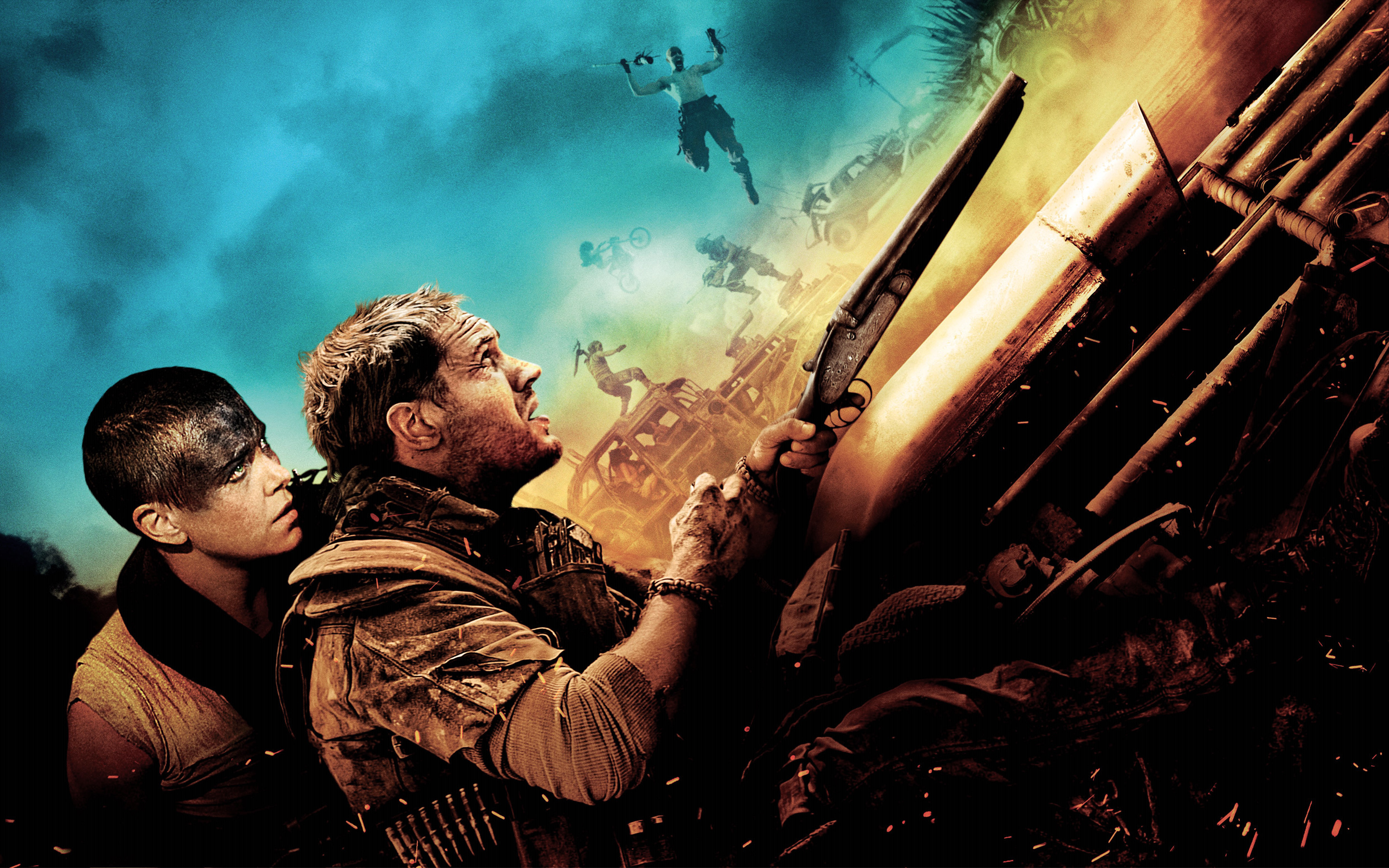
To say that George Miller has stepped up his game since he left us at Thunderdome would be far too mild a statement to open with. Mad Max: Fury Road is not just superior to everything in this franchise, as well as everything else Miller has ever directed. It’s among the most exhausting, thrilling, visceral action films ever made.
Powerful, villainous white guys have ruined the planet by way of their greed for oil and their warmongering, and now they are sustaining their power by taking control of women’s reproductive systems. So, you know, pretty far-fetched.
But Max doesn’t belong to any of these festering wounds called societies. He’s feral. Again. No telling how long it’s been since Max saved the kids from Aunty Entity, but he’s lost himself again, wandering the desert hunted by man and haunted by those he couldn’t save.
Again Miller puts Max in a position to redeem himself by helping the vulnerable and pure survive this apocalyptic future. Mercifully, there are no children and no mullets this go-round.
Unsurprisingly, the great Tom Hardy delivers a perfect, guttural performance as the road warrior. As his reluctant partner in survival, Charlize Theron is the perfect mix of compassion and badassedness. Hardy’s a fascinating, mysterious presence, but Theron owns this film.
Like the first two films in this series, Fury Road wastes little time on dialogue or plotting. Rather, it is basically one long, magnificent car chase. Miller adorns every scene with the most astonishing, peculiar imagery and the vehicular action is like nothing you’ve ever seen.
Dudes on poles!
Miller’s magnificent action sequences keep the film from ever hitting the dragging monotony of his first two efforts in the series. While the characters remain as paper thin as they have been in every episode, the vast superiority of this cast from top to bottom guarantees that the marauding band’s excess and abandon are handled with genuine skill.
Fury Road amounts to a film about survival, redemption and the power of the universal blood donor. Clever, spare scripting makes room for indulgent set pieces that astonish and amaze. There’s real craftsmanship involved here – in the practical effects, the pacing, the disturbing imagery, and the performances that hold it all together – that marks not just a creative force at the top of his game, but a high water mark for summer blockbusters.
In 2012, Elizabeth Banks produced a film that was “an inspiration to girls all over the country too ugly to be cheerleaders.” And now it’s time to return to Barton University to get our accompaniment-free groove on in Pitch Perfect 2.
That’s right, pitches.
The Barton Bellas, having survived power struggles, forbidden romance and intimacy issues, have been the reigning collegiate a cappella champs for 3 years. However, an a cappella-tastrophe during a command performance at the Lincoln Center stripped the group of their title, and their only way to get it back is to become the first Americans to win the World Competition.
To do it, they’ll have to beat the Germans. Just like Rocky, but with singing … and comedy that’s intentional.
Banks returns in her role as one half of a bedecked competition commentator duo, opposite the endlessly hilarious John Michael Higgins. While their hysterical banter punctuates the proceedings, Banks also directs this time around. She shows as strong a sense of comic timing behind the camera as she has always shown in front of it, but really impresses when staging the musical numbers.
The game cast returns for seconds, with a dry, self-deprecating Anna Kendrick leading up the singing sisterhood. Rebel Wilson and Adam DeVine are back, ensuring plenty of uncomfortable lunacy, while a stable of fun cameos including David Cross, Jason Jones and Keegan-Michael Key keeps scenes fresh and funny.
I’m no Green Bay Packers fan, but it’s a lot of fun watching Clay Matthews and most of their offensive line sing Bootilicious.
Plenty of bits feel stale, too. As with any sequel, the novelty is gone and certain jokes have more than run their course by now. The storyline is a bit too predictable and tidy, the new characters are not compelling, and now and again Banks returns to a gag once too often.
Still, Kendrick is a solid foundation. She’s a talented comic performer who sings remarkably well, so a good place to build your movie. Kay Cannon’s script balances silliness, raunch and heart quite well, and those folks looking for lots of exceptionally choreographed numbers won’t be disappointed.