Tag Archives: MaddWolf

Meat is Meat

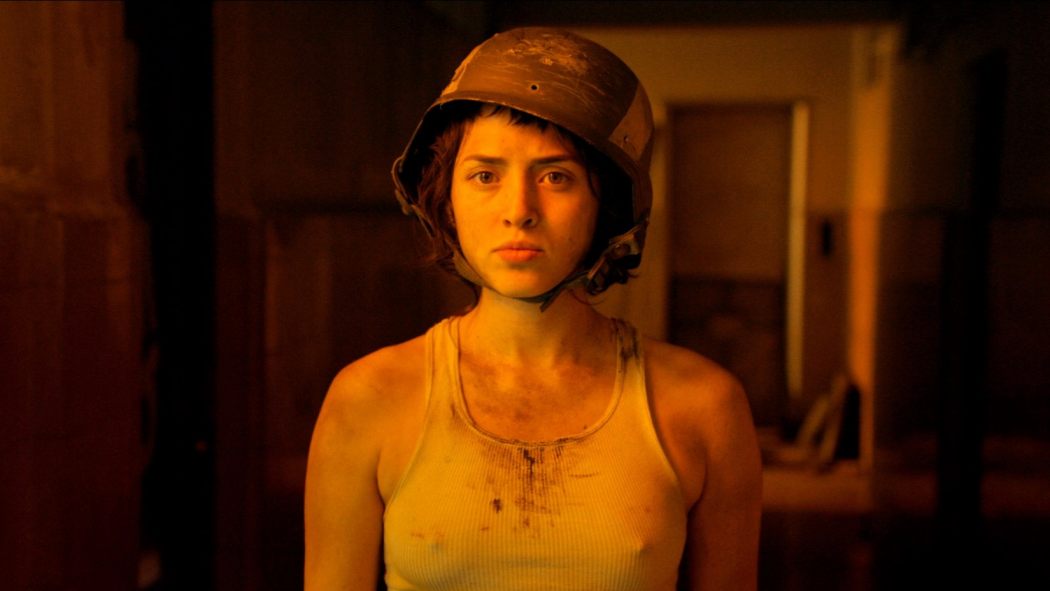
We Are the Flesh

by Hope Madden

Are you squeamish?

This is actually the first question my friend was asked in an interview for an internship with a meat packing plant, but it’s also a good piece of self-reflection before you sit down to We Are the Flesh.

First time feature writer/director Emiliano Rocha Minter announces his presence with authority – and a lot of body fluids – in this carnal horror show.

A hellish vision if ever there was one, the film opens on a filthy man with a lot of packing tape. He’s taking different types of nastiness, taping it inside a plastic drum to ferment, and eventually turning it into a drink or a drug. Hard to tell – loud drum banging follows, as well as hallucinations and really, really deep sleep.

During that sleep we meet two siblings, a teenaged brother and sister who’ve stumbled into the abandoned building where the hermit lives.

What happens next? What doesn’t?! Incest, cannibalism, a lot of shared body fluids of every manner, rape, maybe some necrophilia – depending on your perspective – a lot of stuff, none of it pleasant.

Minter has created a fever dream as close to hell as anything we’ve seen since last year’s Turkish nightmare Baskin.

Had Minter not found an anchor for the overwhelmingly lurid imagery, his movie would have felt like little more than self-indulgent horror porn (like literally horror and porn).

Noé Hernández conjures a goblin-like image, his unblinking eyes and demonic grin permanent fixtures as he mentors his teenage charges in his repellant ways. The boy he’s dubbed Skeletor (Diego Gamaleil) resists, though his consistently surprising sister (María Evoli) is less inhibited.

There’s little chance you’ll watch this film in its entirety without diverting your eyes – whether your concern is the problematic sexuality or just the onslaught of viscous secretions, the screen is a slurry of shit you don’t really want to see.

What opens as a post-apocalyptic hellscape eventually morphs into a social comment on Mexico City’s disposable population, which is both the film’s strength and its weakness.

Unfortunately, though Minter’s movie boasts deeply unnerving ideas and compelling performances, in light of other Mexican filmmakers making social commentaries – Jorge Michel Grau’s brilliant 2010 We Are What We Are, in particular – We Are the Flesh comes up slightly lacking.

Verdict-3-0-Stars


https://www.youtube.com/watch?v=BnTY6q7bt78

Let’s Talk Oscar Nominations…

By Hope Madden and George Wolf

2016 was a fairly weak, fairly bland year at the movies, but it still has surprises in store for us. Look at this…Suicide Squad is nominated for an Oscar! Okay, it’s for makeup and hairstyling – who knew that rolling around Hot Topic could translate to an Oscar nomination?

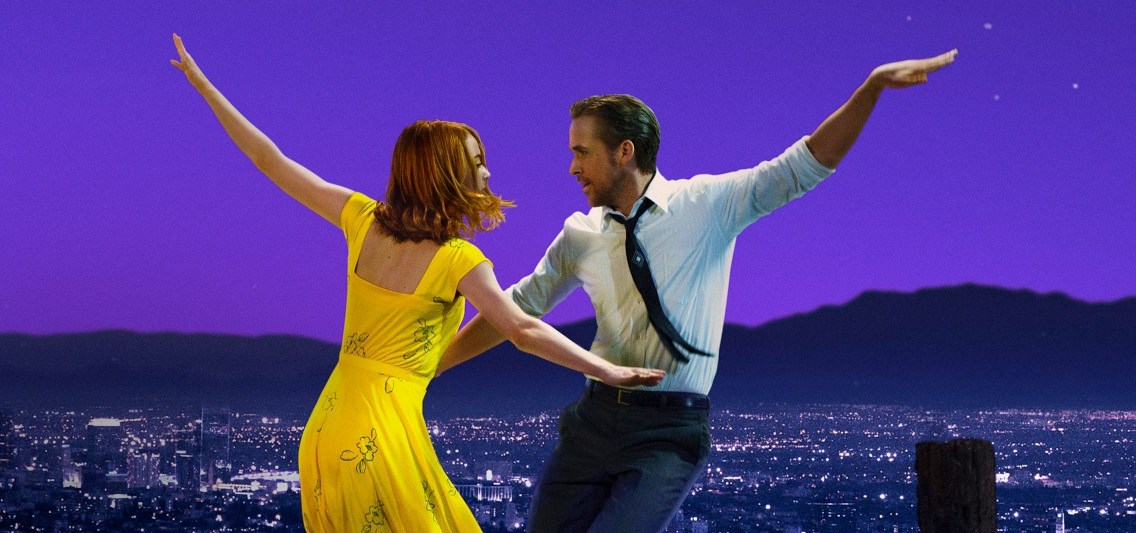
The official Academy Award nominations had few other surprises in store. La La Land racked up quite a haul of noms, most of which are likely to translate to statuettes. What’s the lowdown? Who should have made the list? Who shouldn’t have? Let us walk you through it.


Best Film

Arrival

Fences

Hacksaw Ridge

Hell or High Water

Hidden Figures

La La Land

Lion

Manchester by the Sea

Moonlight

Snubs: Zootopia, Jungle Book, The Witch, The Lobster, Jackie, Loving – there’s a bunch we’d have included instead of Lion, Hidden Figures or Hacksaw Ridge. Not that those are bad films – they are quite good. Just not as deserving.


Best Director

Denis Villeneuve, Arrival

Mel Gibson, Hacksaw Ridge

Damien Chazelle, La La Land

Kenneth Lonergan, Manchester by the Sea

Barry Jenkins, Moonlight

Snubs: No question Mel Gibson is out of his league here. While Hacksaw Ridge was a fine piece of filmmaking, it almost works in spite of Gibson’s direction. He begins with a Hallmark card then descends into carnage few other filmmakers care to capture. But the performances and the genuine merit of the story keep the film interesting. It’s not the direction, which is why we’d have honored David Mackenzie and his glorious direction for Hell or High Water instead.


Best Actress

Isabelle Huppert, Elle

Ruth Negga, Loving

Natalie Portman, Jackie

Emma Stone, La La Land

Meryl Streep, Florence Foster Jenkins

Snubs: It’s hard to even form this sentence, but Meryl Streep should not be on this list. We know! Blasphemy! But the pool for Best Actress is rarely this deep, and Annette Bening (20th Century Women) Rebecca Hall (Christine), or Amy Adams (Arrival) would have been better choices.


Best Actor

Casey Affleck, Manchester by the Sea

Andrew Garfield, Hacksaw Ridge

Ryan Gosling, La La Land

Viggo Mortensen,  Captain Fantastic

Denzel Washington, Fences

Snubs: Not much to complain about here. The race is basically Affleck V Washington, with Affleck coming out on top, but we could have accepted Tom Hanks (Sully) or Nate Parker (The Birth of a Nation) in Garfield’s spot.


Best Supporting Actress

Viola Davis, Fences

Naomie Harris, Moonlight

Nicole Kidman,  Lion

Octavia Spencer, Hidden Figures

Michelle Williams,  Manchester by the Sea

Snubs: Here’s a weird yet valid complaint: the smart money’s on Viola Davis to win, but how in the hell is this a supporting role? Not only is Davis the only female on the screen for 9/10 of Fences, she has more screen time than Denzel. It’s her story. She’s not just the lead actress, she’s the lead. And her performance is more than strong enough to take home the best actress Oscar.


Best Supporting Actor

Mahershala Ali,  Moonlight

Jeff Bridges,  Hell or High Water

Lucas Hedges, Manchester by the Sea

Dev Patel, Lion

Michael Shannon, Nocturnal Animals

Snubs: First of all, amen to Michael Shannon. We could not be more pleased to see him hit this list. And halleluiah to Mahershala Ali – the likely front runner in the category.

We’d have given Dev Patel’s slot to Shannon’s Nocturnal Animals co-star Aaron Taylor-Johnson, and Ben Foster outshined his full slate of talented co-stars in Hell or High Water. He deserves Jeff Bridges’s spot.


Original Screenplay

Taylor Sheridan, Hell or High Water

Damien Chazelle, La La Land

Yorgos Lanthimos and Efthimis Filippou, The Lobster

Kenneth Lonergan, Manchester by the Sea

Mike Mills, 20th Century Women

Snub: This is a very solid and admirable list. Mike Mills’s 20th Century Women is brilliantly written and performed. We might swap him out, though, and give his spot to Robert Eggers’s The Witch.


Adapted Screenplay

Eric Heisserer, Arrival

August Wilson, Fences

Allison Schroeder, Theodore Melfi, Hidden Figures

Luke Davies, Lion

Barry Jenkins, Moonlight

Snubs: Hidden Figures and Lion were well put-together, lovely films. But in this year of searing, searching, brilliant writing, they have no place in this list. In their stead? Whit Stillman’s wicked and wonderful Love & Friendship and Tom Ford’s story within a story Nocturnal Animals.


Cinematography

Arrival

La La Land

Lion

Moonlight

Silence

Snubs: Chan-wook Park’s gloriously wrong The Handmaiden looked better than anything else that came out this year. It shouldn’t just be nominated, it should win. But it certainly should be perched in this category in Lion’s spot.


Foreign Language

Land of Mine

A Man Called Ove

The Salesman

Tanna

Toni Erdmann

Snubs: Again, where is the love for The Handmaiden? And the bigger surprise may be Elle, which nabbed a Best Actress nomination.


Documentary Feature

Fire at Sea

I Am Not Your Negro

Life, Animated

OJ: Made in America

13th

Snubs: Nope. Not a one. Every single one of these is required viewing. We’re hoping for some ties.


Animated Feature

Kubo and the Two Strings

Moana

The Red Turtle

Zootopia

My Life as a Zucchini

Snubs: No Finding Dory? We’re not sure that’s a snub, but it means no Pixar in this category, and we’ll call that a surprise.

We’ll have our official predictions a little closer to the Feb. 26th Oscar ceremony.
Behind the Bun

The Founder

by George Wolf

Two brothers, innovators in the food service industry, look on in despair as the sign is removed from above their beloved business. They no longer own their last name because, in Dick McDonald’s words, they “let a fox in the henhouse.”

That fox was Ray Kroc, and The Founder is director John Lee Hancock’s faithful dissection of how Kroc turned the McDonald brothers’ California burger stand into the worldwide behemoth that now feeds one percent of the global population every single day.

Michael Keaton is fantastic as Kroc, as he crafts an intensely driven man who listens to positive-thinking albums and becomes a living testament to the mantra of “persistence.” Dick and Mac McDonald (Nick Offerman and John Carroll Lynch, respectively – both terrific) had the business insight that was years ahead of its time, but Kroc had the vision, along with the fortitude and dog-eat-dog mentality to see that vision through. Keaton makes him a pathetically fascinating hero, possessed with winning at any cost.

So, an egocentric businessman with questionable ethics stops at nothing to attain a position of incredible wealth and power? Timely.

It is, and Hancock skips the opportunities in Robert Siegel’s script to give his film more teeth. Siegel also wrote Big Fan and The Wrestler, so he knows his way around finding the dark edges of the American dream. Though the rise of McDonalds is layered with very relevant threads (crass commercialism, innovation displacing employment, etc.), Hancock, per his resume (The Blind Side, Saving Mr. Banks) isn’t interested in exploring anything on that menu.

The Founder tells the story, and tells it in fine clinical fashion, but misses the chance to go big time.

Those McDonald boys can relate.

Verdict-3-0-Stars


https://www.youtube.com/watch?v=KH3b6bs8llA


Not the Boss of Me

Trespass Against Us

by George Wolf

Two great actors going toe to toe. Trespass Against Us may be a strangely unfocused crime drama/comedy, but it does bring Michael Fassbender and Brendan Gleeson together, and that’s far from criminal.

Gleeson is Colby “Cole” Cutler, who heads a family band of tramps and thieves camped in the British countryside and committed to a life of robbing the wealthy while taunting the police. Fassbender is Chad Cutler, the eldest son looking for a way out. Like everyone else, Chad is scared to confront his old man, but as his own son is becoming a young man, Chad begins secretly plotting a path that might give his boy the chance at a different life.

In this narrative feature debut for both director Adam Smith and screenwriter Alastair Siddons, familiar themes are brought to the surface without giving the fine ensemble cast enough ammunition to make any meaningful statement. In fact, it’s hard to pin down the purpose for any particular course the film takes, other than generating a respectful shoulder shrug.

Chad’s wife Kelly (a terrific Lyndsey Marshall) is tired of waiting for her husband to make his move, and though we see both tension and affection throughout the extended family, the film never really breaks from a bystander’s point of view. These are clearly complicated relationships with loyalties that have shifted over the years, but they’re all kept at arm’s length, rendering Trespass Against Us a well-performed curiosity.

Verdict-3-0-Stars


https://www.youtube.com/watch?v=u4CUb6hwQv4


The Beast in Me

Split

by George Wolf

Yes, Split is the latest from writer/director M. Night Shyamalan, and no, you’ll never see it coming.

You know what I mean. And Shyamalan knows you know what I mean. So, while you’re trying to guess what surprise twist he’s got in store for you, a nifty psychological thriller plays out, elevated by a transfixing performance from James McAvoy.

After years of misfires, Shyamalan got his groove back by scaling back two years ago with The Visit, an enjoyable bit of lightly scary fun that amounted to one giant misdirection. With Split, the director himself is the main misdirection, as his reputation pushes you to chase something that may not be there at all.

McAvoy is Kevin, a deeply troubled man harboring 23 distinct personalities and some increasingly chilling behavior. When he kidnaps the teenaged Casey (The Witch‘s Anya Taylor-Joy) and her two friends (Haley Lu Richardson, Jessica Suva), the girls are faced with constantly changing identities as they desperately seek an escape from their disorienting confines.

Meanwhile, one of Kevin’s personalities is making emergency appointments with his longtime therapist (Betty Buckley, nice to see you), only to show up and assure the Dr. everything is fine. She thinks otherwise, and she is right.

The split personality trope has been used to eye-rolling effect in enough films to be the perfect device for Shyamalan’s clever rope-a-dope. By often splitting the frame with intentional set designs and camera angles, or by letting full face closeups linger one extra beat, he reinforces the psychological creepiness without any excess bloodshed that would have soiled a PG-13 rating.

Still, it all might have gone for naught without McAvoy, who manages to make Kevin a sympathetic character while deftly dancing between identities, often in the same take. He’s a wonder to watch, and the solid support from Buckley and Taylor-Joy help keep the tension simmering through speedbumps in pacing and questionable flashbacks to Casey’s childhood.

Maybe the best case for this new Shyamalan surprise is the fact that even without the kicker, Split would hold up as a competent, emotionally disquieting thriller. But when you add that final reveal?

I see happy people.

Verdict-3-5-Stars


The Wheels on the Bus

Paterson

by Hope Madden

Simplicity, tempo, pattern – to some, this alone constitutes poetry.

To Jim Jarmusch, perhaps.

Jarmusch’s second film in a year – after his wonderful Stooges documentary Gimme Danger – is a quieter effort. Paterson marks the days of a New Jersey bus driver, a man named Paterson (Adam Driver) driving in the town of Paterson.

He lives a life of routine: up around 6 to work on a poem while he eats his Cheerios, then a walk to work where he scribbles a bit more before starting his route, then a break for lunch where he returns to his poem, then home for dinner with his wife Laura (Golshifteh Farahani). After dinner he walks his dog to a corner bar where he stops for a beer, then to bed and back at it around 6 the next morning.

Paterson’s wife is more of an explosion of creativity that counters his disciplined artistry.

Paterson loves his wife, finds comfort and beauty in his routine. Above all, he observes, often finding grace in moments so quiet they might be overlooked by someone less still.

Jarmusch’s film is as measured, as calm and composed as its hero.

A languid pace tends to be an earmark of the auteur’s work, but with Paterson Jarnusch has left behind much of his iconic quirkiness in favor of clear-eyed if lyrical normalcy. Ordinariness is celebrated – elevated, even.

Through the character’s eyes we get to notice patterns and repetitions, seeing them as something more than coincidence or design, but a mystery deserving our interest.

Driver delivers a near perfect performance with a tough character. Paterson reveals nearly nothing of himself, preferring to direct attention back at his surroundings. Only through his poems – often scribbled across the screen and read in voiceover – do we get a sense of his inner self. But Driver’s expressions convey an enormous amount of information – about his meals, his relationship with his dog, his joy, fear and heartache.

Through Paterson, Jarmusch seems to memorialize an unplugged life – the kind that allows the mental quietness required for this type of meditative art.

There are elements of the film that feel appropriately unexplained, and others that simply come off as undercooked. And there are always those audience members who will itch for more – more drama, more action, more something. Those people may not be Paterson’s intended audience. Poetry often requires more patience to fully appreciate.

Verdict-3-5-Stars

Fright Club: Best Surreal Horror

Everybody’s first experience with horror is a nightmare – their own bad dreams. Surreal horror manages to recreate the anxiety, confusion and dreamlike quality of those nightmares.

In fact, it’s such fertile ground for horror that there are dozens of excellent possible films to celebrate – beginning with Bunuel and Dali’s 1929 head trip Un Chien Andelou to Bergman’s 1968 film Hour of the Wolf, Shin’ya Tsukamoto’s fantastical 1989 fantasy Tetsuo, the Iron Man to Turkey’s latest foray into the genre, Can Evrenol’s 2015 head trip Baskin. All of these films are required viewing for horror fans, but something had to be set aside.

So, here you have it: our pick of the five best surreal horror films.

5. Vampyr (1932)

The well-groomed Allen Grey (Julian West) is an aimless dreamer preoccupied by tales of the supernatural. He wanders thusly, with what appears to be a fish net, to a secluded little inn. But trouble’s afoot.

And dig those crazy shadows!

Early in Vampyr, Grey receives a package from a weary looking man. The package says, “To be opened upon my death.” It appears that Grey has stumbled into a deadly mystery with nothing to help him puzzle out the details except that needless fish net.

The great Carl Theodor Dreyer co-wrote and directed this gorgeous black and white fantasy. The painterly quality of Dreyer’s frames and the bizarre character behavior give the film a surreal atmosphere you can’t shake. His decision to limit dialog to a minimum and craft the film with traditional silent film gimmicks benefitted the dreamscape atmosphere.

As Grey wanders through this picturesque nightmare realm, the film becomes almost drunk with weirdness. Dreyer captures the gorgeous terror of a dream more perfectly than any other filmmaker, in a movie that is never predictable, always a bit surreal and spooky.

https://www.youtube.com/watch?v=5xEWT23yA3o

4. Possession (1981)

Speaking of sex and monsters – wait, were we? – have you seen Possession? WTF is going on there?

Andrzej Zulawski – writer/director/Czech – created this wild ride with doppelgangers, private investigators, ominous government (or are they?) agencies, and curious sexual appetites. It’s more precisely fantasy than horror, but it strikes me as David Cronenberg meets David Lynch, which is a pairing we can get behind.

Mark (Sam Neill) and Anna’s (a fearless Isabelle Adjani) relationship boasts an intentional artificiality – a queasying sexuality – that makes it hard to root for either of them as their marriage deteriorates. Anna, it seems, is in love with someone else. Is it the sexually open – really, really open – Heinrich? Is it a bloody, mollusk-like monster? Is Mark boning Anna’s mean friend with a cast on her leg? Does Bob’s kindergarten teacher bear an unreasonable resemblance to Anna? Is anyone caring properly for Bob?

These questions and more go basically unanswered in a deviant, summary-defying, fantastical bit of filmmaking that mocks the idiocy, even insanity of obsession and boasts a handful of weirdly excellent performances. And sex with a bloody mollusk-like monster.

3. Repulsion (1965)

The first of Polanski’s brilliant “apartment trilogy,” Repulsion takes on its protagonist’s point of view. As Carol (an utterly amazing Catherine Deneuve) spirals into a hallucinogenic stupor of violence and paranoia, Polanski wisely decided to occupy that same headspace, rather than observing it as an outsider.

It gives the film its surreal feel, developed partly by the wonderful camera work of Gilbert Taylor, who uses the black and white necessitated by the budget to wondrous, shadowy, menacing effect.

Though the marketing for the film promoted a virgin’s hysteria, close attention to the film suggests something far more sinister beneath Catherine’s breakdown. Is it ironic that Roman Polanski of all people is able to articulate the mental and emotional chasm left by a likely sexual assault? Why yes, yes it is, but God help me, he does it well.

2. Gozu (2003)

If you are looking for genuine lunacy in film, your search should begin and quite possibly end with filmmaker Takashi Miike. His shit is nuts. Truth be told, there are scads of Miike films that could have populated this list because even his tamest, most logical, no-puppetry films are wild rides. So when he starts coloring way outside the lines, expect to be surprised.

This one starts off as a yakuza film – one guy on a mob-style assignment – then descends into absolute madness.

Minami (Yuta Sone) has been ordered to assassinate his feeble-minded yakuza boss Ozaki (Sho Aikawa), but he’s conflicted. Then he loses Ozaki and wanders, in search, into – you might say it was the Twilight Zone, except this place is considerably weirder. There’s a minotaur. An electrified anal soup ladle death scene. Some seriously, seriously weird shit.

Like a walk through somebody’s subconscious, the film is awash in repressed sexual desires of the very most insane and unspeakable. There’s a comical element that’s almost equally unsettling. Gozu is not as violent as many Miike films – it’s violent, don’t be mistaken, but the horror here is more in unseemly behavior and wildly inappropriate imagery. It’s just stuff you can’t unsee.

https://www.youtube.com/watch?v=penZT2N2xDw

1. Eraserhead (1977)

There truly is no film quite like David Lynch’s first feature, eh?

Eraserhead defies simple summarization. Easily the most surreal of all Lynch’s films – which is a huge statement – the film follows sad-sack Henry Spencer (Jack Nance) dealing poorly with fatherhood.

The film becomes a nightmare of paternal angst and existential crisis – indeed, it may be impossible to name a film or filmmaker more able to bring a nightmare to life.

It’s also among the finest examples of corporeal horror you will find. The shadowy, grimy b/w photography – partially handled by Lynch’s longtime cinematographer Frederick Elmes – amplifies the dismal stagnation facing Henry.

At the same time, it gives a weird, nostalgic camp factor to the Lady in the Radiator and adds a particularly lurid element to that whole bleeding “chicken” thing.

Plus, the baby. Yikes. Alive with the most disturbing imagery, Eraserhead is impossible to forget.

Strong

Patriot’s Day

by George Wolf

If director Peter Berg and star Mark Wahlberg are on a mission to salute America’s unsung heroes, they’re doing a damn fine job. After Lone Survivor and Deepwater Horizon, they bring a similar formula to Patriot’s Day and achieve even more satisfying results.

A chronicle of the 2013 Boston Marathon bombing and the frenzied search for terrorist bombers that followed it, the film employs a breathless timeline and confident pacing to triumphantly salute the courage, compassion and dedication of a city under siege.

As he did so well in Deepwater Horizon last year, Berg opens with quick snapshots of the many lives involved (terrorists included), efficiently creating a layer of humanity and emotional depth. The explosions are sudden and jarring, presented with a compelling mixture of chaos and carnage, as bloody limbs and shell shock bring us uncomfortably close to the suffering.

The ensuing manhunt is nothing less than thrilling, with the rock-solid ensemble cast (including Kevin Bacon, John Goodman, J.K. Simmons, Michelle Monaghan and a fully committed Wahlberg) illustrating the harried teamwork of first responders and government agencies.

Strong and sturdy with undeniable spirit, Patriot’s Day stands as a fitting tribute to both individual heroes and an entire city itself.

Verdict-4-0-Stars


Hello Darkness, My Old Friend

Silence

by Hope Madden

Yes, the faithful believe Jesus sacrificed himself for us – to clear our sins with God. But would he have sacrificed us for the sake of reverence?

Martin Scorsese’s elegant pondering on faith, Silence, enters the mind of Jesuit priest Fr. Rodrigues (Andrew Garfield) as he and his colleague Fr. Garrpe (Adam Driver) venture into 1640s Japan in search of a mentor priest lost to a violently anti-Catholic government.

Gorgeous, imposing shots paint the image of the vast and dangerous beauty of God’s world and the small if admirable people trying to survive there. Garrpe and Rodrigues first hide with faithful Japanese villagers, losing their primary mission while serving those oppressed Christian Japanese longing for signs of the church.

Garfield and Driver cut nicely opposing images, Garfield the sweet-faced picture of buoyant faith, Driver the more skeptical, impatient believer. While it’s Garfield whose story we hear, Driver’s counterpoint is a required piece of this crisis of faith driving the film and his performance delivers something painful and honest.

Scorsese’s abiding interest – some might say preoccupation – with faulty men and their tenuous grasp on Catholic faith has flavored many a film, though rarely as thoroughly as this one. What is faith? What is it, really? And who’s to say what harm Jesus would have you do to protect him?

The film may take itself too seriously (though, this is hardly light fare). Any possible misstep Scorsese can mostly overcome with meticulous, near-magical craftsmanship, though there are a handful of hang ups that sometimes break the seduction of the project.

These are Portuguese priests in 17th Century Japan speaking English (why?), and mainly with British/Irish accents (Liam Neeson plays lost Fr. Ferreira). (At least Driver gives the Portuguese accent a shot.)

And though Garfield is a genuine talent, this role requires something perhaps uglier than what he has to offer.

Mainly, though the film’s resolution is both nuanced and satisfying, there are certain answers, certain signs that feel more like movie magic than spiritual presence. They are minor flaws in a beautiful if ponderous work, but they keep Silence from joining Scorsese’s true masterpieces.

Verdict-3-5-Stars

Desperately Seeking…

Hunter Gatherer

by Rachel Willis

Writer/director Joshua Locy has crafted a unique, poignant drama with Hunter Gatherer.

The film succeeds in part due to Andre Royo’s stunning portrayal of Ashley, a man recently released from prison who wants to re-establish himself in his former girlfriend’s life. Fully inhabiting his character, Royo has chemistry with everyone he shares the screen with. His chemistry with George Sample III is especially winning – Sample’s Jeremy/“Germs” as the straight man to Royo’s boisterous Ashley.

Sample brings a sweetness to his character – especially apparent in Jeremy’s interactions with Dr. Merton (Jeannetta Arnette), a doctor involved in the medical science research for which Jeremy is a paid volunteer.

The film’s subtle comedy is quirky, but it works well alongside the more dramatic moments. A scene in which Ashley searches for a backpack could be mundane, but is enlivened by the funny interaction with the store clerk. The comedy is necessary, as the film quietly moves toward darker moments.

Though Ashley appears the eternal optimist, it’s clear as the film moves forward he is struggling to find his way – a depression lurks underneath the surface. Ashley jokes to hide the pain he feels as he tries to find connections with the people in his life.

It would be remiss not to mention Kellee Stewart’s noteworthy performance as Nat, the woman with whom Ashley spends most of his time. Her character’s sensitivity is much needed in Ashley’s life, but he takes her for granted as he continues to focus on rekindling his relationship with his ex, Linda (Ashley Wilkerson).

As a directorial debut, Locy’s film is not without problems, but as a moving character study, this is a film that will stick with viewers for its touching take on love and friendship.

Verdict-4-0-Stars