Welcome back to The Screening Room! This week we tackle the true-life tale Adrift, the surprising Tom-Hardy-&-David-Cronenberg-esque Upgrade, plus Let the Sunshine In, The Rider and what’s new in home entertainment.
Listen to the full podcast HERE.
Welcome back to The Screening Room! This week we tackle the true-life tale Adrift, the surprising Tom-Hardy-&-David-Cronenberg-esque Upgrade, plus Let the Sunshine In, The Rider and what’s new in home entertainment.
Listen to the full podcast HERE.
by George Wolf
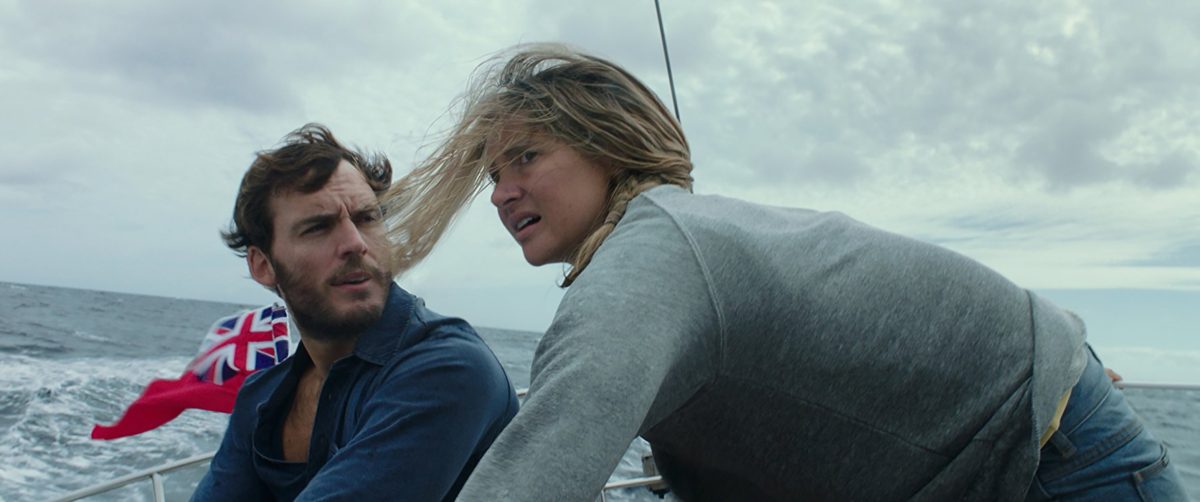
Opening with an extended take that efficiently moves us from confusion to desperation, director Baltasar Kormakur sets the gripping stakes of Adrift with scant dialog. His closing is equally effective, showcasing a touching humanity with nuance, and hardly a spoken word.
The journey in between is literally harrowing but cinematically uneven, a sometimes gritty testament to survival that is too often satisfied with the path more traveled.
Adapted from a memoir by Tami Oldham (Ashcraft), the film recounts her incredible ordeal surviving over month at sea in the aftermath of 1983’s Hurricane Raymond.
Oldham was traveling the world through odd jobs in exotic locales when she met fiancee Richard Sharp during a stay in Tahiti. Englishman Sharp, an experienced sailor, docked his own vessel and accepted a lucrative offer to sail a friend’s 44-foot yacht back to San Diego.
Oldham, a San Diego native with limited sailing knowledge, came aboard.
Shailene Woodley, also earning a producer credit on the film, stars as Oldham, instantly establishing an important and authentic chemistry with Sam Clafin as Sharp. The nautical metaphors (with Oldham drifting though life until Sharp becomes her anchor) may be hard to miss, but they go down easy through the talents of the lead actors.
A true life adventure such as this brings some inherent challenges to the big screen, and Kormakur meets them with understandably familiar narrative choices.
The time alone at sea is layered with flashbacks to how Tami and Richard’s bond was formed, both deepening our connection to them and breaking up the lonely stretches at sea through crowd-pleasing fun and romance.
As the situation grows more desperate, pleasing flirts with pandering, and Kormakur weakens the emotional impact with some unnecessary spoon-feeding.
When the couple sails into the teeth of the hurricane, it bites hard, giving Kormakur (Everest, 2 Guns, Contraband) the chance to flash his action flair via a breathtaking storm sequence.
The film’s tale is truly compelling, and it does deliver satisfying stretches while staying cautious of any narrative risks that might seem disrespectful.
Even at its most dangerous, Adrift feels ironically safe.

Claire Denis + Juliet Binoche = yes, please.
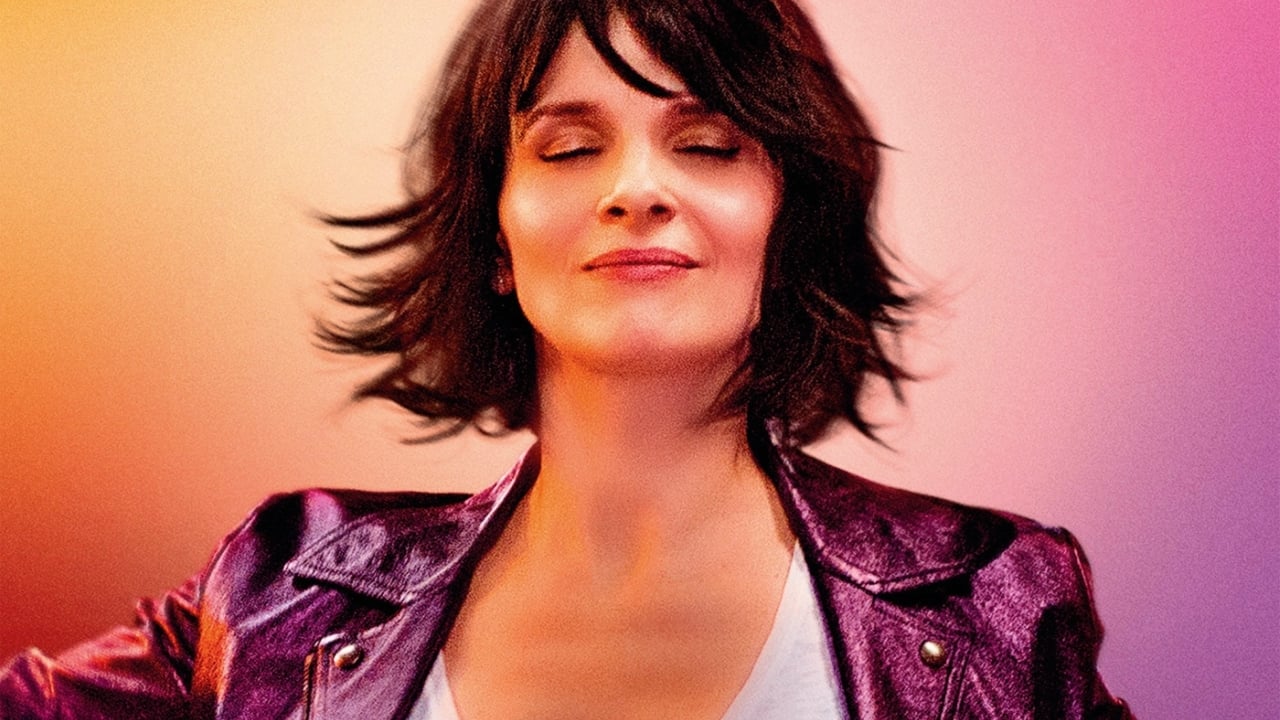
For her latest, Let the Sunshine In, the unerringly insightful French filmmaker takes on middle aged dating, following behind an exasperated Isabelle (Binoche) as she rotates through a series of relationships in Paris.
Isabelle is an artist, though her work—and her 10-year-old daughter, for that matter—are trivialities here. The point is the journey toward that last, real companion for the rest of the journey.
Could it be the boorish, married banker (Xavier Beauvois, flawlessly intolerable)? The boozy but oh-so-dreamy stage actor (Nicolas Duvauchelle)? Sensitive artist (Denis regular Alex Descas)? Brooding guy with the smooth dance moves (Paul Blain)? Ex-husband (Laurent Grevill)?
Whew! Who needs a rest?
Don’t look for any additional plot here. Denis’s focus, through a circuitous story of relationships crumbling, rekindling and sparking for the first time, simply illuminates the passionate daily trivialities of mid-life dating. She strips away nearly everything besides the ups and downs of Isabelle’s romantic life, sometimes skipping weeks at a time to pinpoint not the relationship itself, but each beginning and end.
And, of course, that intoxicating moment of promise —of love? Sex? Rejection? Few filmmakers capture that one moment, breathless and nervous, as authentically as Denis does.
It’s dizzying. No wonder Isabelle’s always so tired.
Binoche’s generous performance as the self-sabotaging Isabelle embraces the insecurities, optimism and neediness that color the character’s quest. Though never laugh-out-loud funny, the film is a comedy of sorts. There is something absurd about the assault of highs and lows, the desperate lurches toward love and the inevitably disappointing consequences.
And then a big cry and she’s off again.
Though Isabelle is a frustrating, often unlikeable character, the film never judges her. It’s too late to settle, which is a dangerous, selfish, vulnerable decision to make.
Good for her.

by Hope Madden
Oh, the fish out of water tale. What if X found itself in Y: a mermaid in New York City, an American werewolf in London, an alien in Croyden? What hijinks could arise!
Elle Fanning is that alien, Zan, and Croyden is a suburb of London that was, in 1977, thrashing about to the strains of the burgeoning and decaying punk rock scene.
When Enn (Alex Sharp) and his fanzine-writing mates stumble into an alien house party, believing it to be a punk show after party, Zan abandons the strict duties of her visit to experience life on Earth.
Who better to bring Neil Gaiman’s short story to the big screen than Hedwig himself, John Cameron Mitchell (Hedwig and the Angry Inch, Shortbus, Rabbit Hole)? Directing, as well as co-writing the adaptation with Philippa Goslett, Mitchell strives to complete Gaiman’s 18 pages with punk attitude, coming of age angst, romance, political asides and style.
He’s only marginally successful on any of those counts.
Punk rock seems a perfect vehicle for the central themes of conformity versus individuality. What the film needs is a little punk rock. Instead, it offers knowing lip service (and next to no music) in service of an all-too-earnest love story.
The brightest light glimmers from Nicole Kidman as grand master on the scene, Queen Boadicea. Patroness of the dingiest club, bondage artist and the dying spirit of an era not meant to age well, she relishes every ridiculous line and delivers perhaps the film’s only truly honest dialogue.
Fanning captivates, as is her way. All the joy, curiosity and misunderstanding she can muster create a character who becomes far more than simply the first hot girl to pay attention to Enn.
Sharp performs solidly as the wallflower everyman, although that is part of the problem. Scribblings, safety pins and zines aside, Enn is just a middle-of-the-road sweetheart. The film is not about the outsider at all, though it pretends to be.
It pretends a lot of things, sometimes very colorfully and often entertainingly, but without a raucous atonal tune to push it forward and with a fairly lukewarm crisis to overcome, it fails entirely at embodying the punk rock themes it proposes.
Oh my God, this movie is a poseur.
What would Hedwig think?
by Hope Madden
The classic western, the cowboy story, sings a song of bruised manliness. Chasing destiny, sacrificing family and love for a solitary life, building a relationship with land and beast—there may be no cinematic genre more full of romance.
This is the hardscrabble poetry that fills writer/director Chloe Zhao’s latest, The Rider.
Set on the Pine Ridge Reservation in South Dakota, the film shadows talented rodeo rider and horse trainer Brady (Brady Jandreau), who’s suffered a near-fatal head injury with lingering seizures and must now grapple with his future and his identity.
It’s a classic cowboy tale, really: will he give up cowboying because it will surely kill him, or will he get back up on that horse?
But what Zhao’s film avoids is sentimentality and sheen. With a hyper-realistic style showcasing performances by non-actors who lived a very similar story, she simultaneously celebrates and inverts the romance that traditionally fuels this kind of film.
Elegant and cinematic, but at the same time a spontaneous work of verite, The Rider breaks its own cinematic ground.
Images of real poverty butt up against lonesome vistas, a sole horse breaking up the line of the sunset. There’s no glossing over the realities Brady is facing when picking through what kind of future is left for him if he’s not a cowboy. The story is even clearer about what’s ahead of him if he is.
The Rider’s subject matter authenticity gives it the feel of a documentary. But because of the way Zhao plays with light, uses music, and fills the screen with the desolate beauty of the American plains, the film qualifies as a sleepy epic.
Zhao’s work is unmistakably indie, not a born crowd-pleaser, but beautifully lifelike. She has given new life to a genre, creating a film about the loss of purpose and, in that manly world of the cowboy, masculinity.

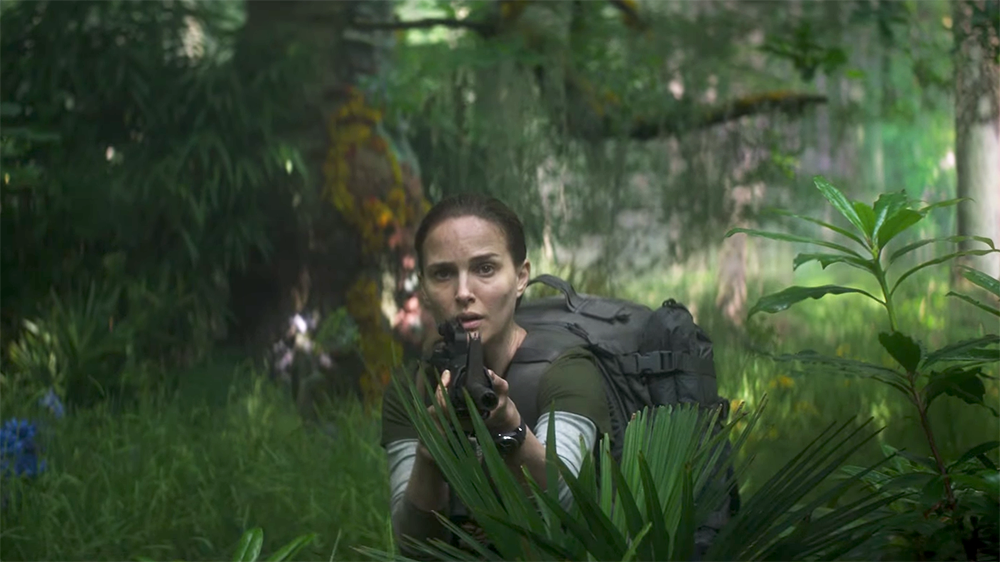
One big and underseen film for you to grab with both hands this week. Annihilation is brilliant, terrifying and entirely satisfying. Watch it!
Click the film title for the full review.
This week we tackle the hotly anticipated Solo: A Star Wars Story and work through the best and worst of what’s available this week in home entertainment.
Listen to the full podcast HERE.
by Hope Madden and George Wolf
Are Han and Chewie your favorite characters from the Star Wars franchise? And if not, why not?
They were the cool kids in a galaxy of nerds, and if any single Star Wars offshoot deserves the edgy, thought-provoking, dare-we-even-say dangerous treatment, it’s the origin story of this duo.
And nothing spells danger more than director Ron Howard.
Actually, most everything does, but Howard does manage to steer Solo in satisfactory, though not quite thrilling, directions.
The film catches the scent of a young street rat, in love and in need of a ticket out of his home planet. Complications arise, friends are lost, found and lost again, there’s gambling, smuggling and risk-taking and a future legend finally getting his wings – plus a big, furry co-pilot.
Aldren Ehrenreich makes for a fine young Han. He mixes enough of Harrison Ford’s mannerisms (and the scar on his chin – nice touch) with an unvarnished naivete that suits the effort. He’s more than matched by Donald Glover, whose Lando is a smooooth amalgamation of Billy Dee Williams, youthful swagger and some sweet capes.
Fun new characters, including a rebellious droid who steals the show, round out a rag-tag group of misfits to root for. Woody Harrelson cuts exactly the right figure to be the mentor Han needs, while Paul Bettany’s brand of slippery villain (Josh Brolin busy?) offers an excellent foil.
Howard famously picked up the Solo mantle after executive producers canned Phil Lord and Christopher Miller, the charming rogues behind The LEGO Movie, 21 Jump Street and Cloudy with a Chance of Meatballs.
He’s working from a script by the father and son team of Jonathan and Lawrence Kasdan. Kasdan the Elder, of course, penned Force Awakens, Empire Strikes Back and Return of the Jedi.
All of which sounds perfectly calculated and terribly risk-free. And it is, but it’s also a lot of fun. The imagery (speeders, desolate planets, weapons, casinos) looks simultaneously retro and futuristic, beat up but cutting edge. And there are plenty of warm nods to Han and Chewie’s future that will bring a knowing smile while honoring our long investment in these characters.
So what’s missing? The rogue spirit that let Han steal scenes in A New Hope so easily.
It’s a film that takes no chances, which feels ill-at-ease with who Han is as a character. After a couple of installments in the Star Wars saga that were unafraid to make dangerous decisions, chart new courses and stir up the fanboys, this one just feels too safe.
Solo‘s got plenty of space, just not enough balls.
by George Wolf
For her feature debut, writer/director Atsuko Hirayanagi expands her captivating short from three years ago, which left “Lucy” at a crossroads of self-discovery.
Hirayanagi also fulfills all the promise from that earlier work, taking a cross-cultural comedic premise and layering it with heartbreak, desperation, silliness and hope.
“Lucy” is actually Setsuko (Shinobu Terajima), an unmarried office worker in Tokyo barely on speaking terms with her sister Ayako (Kaho Minami). But Setsuko is friendly with Ayako’s daughter Mika (Shioli Kutsuna), and agrees to help her out with some cash by buying Mika’s unused English lessons.
The class is taught by John (Josh Harnett), who’s a bit of a hugger and big on new identities to pair with the new language his students are learning. Setsuko gets “Lucy” and a blonde wig.
She’s intrigued, and then confused, as John suddenly quits the class and heads back to the states – with Mika.
Hirayanagi’s writing, pace and camerawork are steady and assured, as she confidently fleshes out the story her short film hinted at so smartly. There’s plenty of humor in the film, but never at the expense of a uniquely human core that’s driven by Terajima’s marvelous lead performance.
There is pain in Lucy’s past, and she’s become a soul that’s merely existing, always longing for connection. Learning a new way to communicate awakens something within her, where a race toward the unknown offers the chance of a new life beyond fake names and wigs.
Part character study, part social commentary, and part absurdist comedy, Oh, Lucy! is sneaky in the ways it touches you. Light and breezy on the outside, it’s a film with a joyful heart that can’t be denied.
https://www.youtube.com/watch?v=U_fuaIMeJTI
Loads of goodies made for layabouts and slugabeds this week! Comedies, dramas, romance, family films, a really bad one with Jennifer Lawrence—anything you could want, really. Let us help you pick.
Click the film title to link to the full review.