This has been a fascinating year for movies. While we had some great sequels and superhero adventures, 2019 has offered a beautiful abundance of original films and this may have been the single best year for documentaries since ever. Favorites returned to form while new voices pushed the artform in gorgeously necessary directions.
Here are our 25 favorite films of 2019.
1. Parasite
Every time you think you’ve pinned this film down—who’s doing what to whom, who is or is not a parasite—you learn writer/director/master craftsman Joon-ho Bong has perpetrated an impeccably executed sleight of hand. Just when you think Bong’s metaphoric title is merely surface deep, a succession of delicious power shifts begins to emerge.
As the Kims insinuate themselves into the daily lives of the very wealthy Parks, Bong expands and deepens a story full of surprising tenderness, consistent laughter and wise commentary on not only the capitalist economy, but the infecting nature of money.
2. Toy Story 4
Talents new and veteran gel to combine the history and character so beautifully articulated over a quarter century with some really fresh and very funny ideas. Toy Story 4 offers more bust-a-gut laughs than the last three combined, and while it doesn’t pack the emotional wallop of TS3 (what does?!), it hits more of those notes than you might expect.
Between Forky’s confounded sense of self and Woody’s own existential crisis, TS4 swims some heady waters. These themes are brilliantly, quietly addressed in a number of conversations about loyalty, devotion and love. To its endless credit, TS4 finds new ideas to explore and fresh but organic ways to break our hearts.
3. Apollo 11
A majestic and inspirational marriage of the historic and the cutting edge, Apollo 11 is a monumental achievement from director Todd Douglas Miller, one full of startling immediacy and stirring heroics.
There is no flowery writing or voiceover narration, just the words and pictures of July 1969, when Americans walked on the moon and returned home safely. This is living, breathing history you’re soaking in. And damn is it thrilling.
4. Jojo Rabbit
Brazen, hilarious, heartbreaking, historical and alarmingly timely—Taika Waititi’s Nazi satire is a unique piece of cinema. As we follow the coming of age tale, would-be Nazi youth Jojo (Roman Griffin Davis, amazing) uses his imaginary friend, Hitler (Waititi, hilarious) to bolster his flagging self-confidence.
Waititi uses the story of Jojo, his imaginary friend, his deeply loving and supportive mother (Scarlett Johansson, perfect) and the Jewish girl hiding in the closet (Thomasin McKenzie, a star in the making) to ask how we can undo all the hate and fear society feeds us. The answer is tender, funny, clever and one of easily the best films of 2019.
5. The Irishman
The 3 ½ hour running time opens patiently enough as Rodrigo Prieto’s camera winds its way through the halls of a nursing home, establishing a pattern. We will be meandering likewise through the life and memories of Frank Sheeran (Robert De Niro), “house painter.”
Martin Scorsese’s sly delivery suggests that he’s interested in what might have happened to Hoffa, sure, but he’s more intrigued by memory, regret and revisionism in the cold glare of time. The result is sometimes surprisingly funny, with a wistful, lived-in humor that more than suits the film’s greying perspective. De Niro’s longtime partnership with Scorsese makes it even easier to view Sheeran as an extension of the director himself, taking stock of his legacy in film.
6. Marriage Story
For years, Noah Baumbach’s films have probed characters struggling to live up to an image of themselves. It’s what he does, and now Baumbach has written and directed his masterpiece, a bravely personal and beautifully heartbreaking deconstruction of a marriage falling apart.
Tremendous performances from Scarlett Johansson and Adam Driver cement our immersion into the lives of two people valiantly trying to retain some control over the process of splitting up. Will you need tissues? Oh yes. The story of Nicole and Charlie’s marriage will put you through the wringer. And every frame is absolutely worth it.
7. Amazing Grace
Already a living legend in January of 1972, Aretha Franklin wanted her next album to be a return to her gospel roots. Over two nights at the New Temple Baptist Church in Los Angeles, Aretha recorded live with the Reverend James Cleveland’s Southern California Community Choir as director Sydney Pollack rolled cameras for a possible TV special.
To see Franklin here is to see her at the absolute apex of her powers. taking that voice-of-a-lifetime wherever she pleases with an ease that simply astounds. Even with the recording session stop/starts that Elliot includes for proper context, Aretha’s hold on the congregation (which include the Stones’ Mick Jagger and Charlie Watts) is a come-to-Jesus revelation.
8. The Souvenir
The Souvenir rests at the hypnotic intersection of art and inspiration, an almost shockingly self-aware narrative from filmmaker Joanna Hogg that dares you to label its high level of artistry as pretense.
The Souvenir is finely crafted as a different kind of gain from pain, one that benefits both filmmaker and audience. It is artful and cinematic in its love for art and cinema, honest and forgiving in its acceptance, and beautifully appreciative of how life shapes us.
9. 1917
The danger in crafting a film with one extended take – or the illusion of it – lies in the final cut existing as little more than a gimmick, spurring a ‘spot the edit’ challenge that eclipses the narrative. With 1917, Sam Mendes jumps that hurdle in the first five minutes.
It is WWI, and two young corporals (Dean Charles-Chapman and George MacKay) are tasked with traveling deep into enemy territory to deliver a message that will keep thousands of soldiers, including one messenger’s brother, from certain death. Mendes’s effort is absolutely thrilling and completely immersive, with ballet-worthy camerawork and pristine cinematography (Roger Deakins, natch) that never seems to blink. You won’t want to either, it’s unforgettable.
10. Joker
Todd Phillips offers an origin story that sees mental illness, childhood trauma, adult alienation and societal disregard as the ingredients that form a singular villain—a man who cannot come into his own until he embraces his inner sinister clown.
Joaquin Phoenix is a god among actors. His scenes of transformation, his scenes alone, his mesmerizing command of physicality, and in particular his unerringly unnerving chemistry with other actors are haunting. Remember when we thought Nicholson could never be topped? Then Ledger did it. And now Phoenix makes this the darkest, most in-the-moment Joker we’ve seen.
11. The Farewell
Writer/director Lulu Wang finds poignant truths in an elaborate lie, speaking the universal language of “family crazy” while crafting an engaging cultural prism. As our window into this push and pull of tradition in the modern world, Awkwafina makes her “Billi” a nuanced, relatable soul.
While Wang’s script is sharp and insightful, her assured tone is even more beneficial. Even as the film feels effortlessly lived in, it never quite goes in directions you think it might. Wang doesn’t stoop to going maudlin among all the whiffs of death, infusing The Farewell with an endless charm that’s both revealing and familiar.
Funny, too. No lie.
12. Uncut Gems
In what amounts to a two+ hour panic attack, Benny and Josh Safdie do more than clarify Adam Sandler’s acting prowess. Uncut Gems articulates the dizzying, exhausting, terrifying and exhilarating cycle of addiction in a way few films have ever been able to.
It’s also an incredibly potent character study. Sandler’s NYC jeweler and gambler is a live wire, and Sandler’s particular gift is not only to articulate that quest for the thrill, but to underscore it with a tenderness that feels achingly sincere. If you’ve seen Punch Drunk Love, Spanglish or Funny People, you are among the few who realized Sandler could act. But did any of us know he had this in him?
13. Little Women
Just when you think, “They’re making this movie again?” Greta Gerwig steps in and gives this beloved story a fresh, frustrated perspective. Self-discovery, camaraderie and empathy still drive the piece, but Jo’s fiery independence has more meaning, Marmie’s self-sacrifice contains welcome bitterness, Aunt March’s disappointment feels more seeped in wisdom, and spoiled Amy is an outright revelation.
Gerwig’s writing, respectfully confident, brings conflicts more sharply to the surface in ways that reflect the characters’ bristling against unfair constraints with a clear eye. But her real strength seems to be in casting. Lady Bird’s Saoirse Ronan is impeccable as ever, as are Timothee Chalamet, Tracy Lett and Meryl Streep (naturally). But it’s Florence Pugh, having a banner year with Fighting with my Family and Midsommar in her rear view, who entirely reimagines bratty Amy, turning her into the character we can most understand. In all, this remarkable filmmaker and her enviable cast make this retelling maybe the most necessary version yet.
14. Us
Us is far more than a riff on some old favorites. A masterful storyteller, writer/director Jordan Peele weaves together moments of inspiration not simply to homage greatness but to illustrate a larger, deeper nightmare. It’s as if Alice’s Adventures in Wonderland turned into a plague on humanity.
Do the evil twins in the story represent the darkest parts of ourselves that we fight to keep hidden? The fragile nature of identity? “One nation” bitterly divided? You could make a case for these and more, but when Peele unveils his coup de grace moment (which would make Rod Serling proud), it ultimately feels like an open-ended invitation to revisit and discuss, much like he undoubtedly did for so many genre classics.
While it’s fun to be scared stiff, scared smart is even better, a fact Jordan Peele has clearly known for years.
15. The Lighthouse
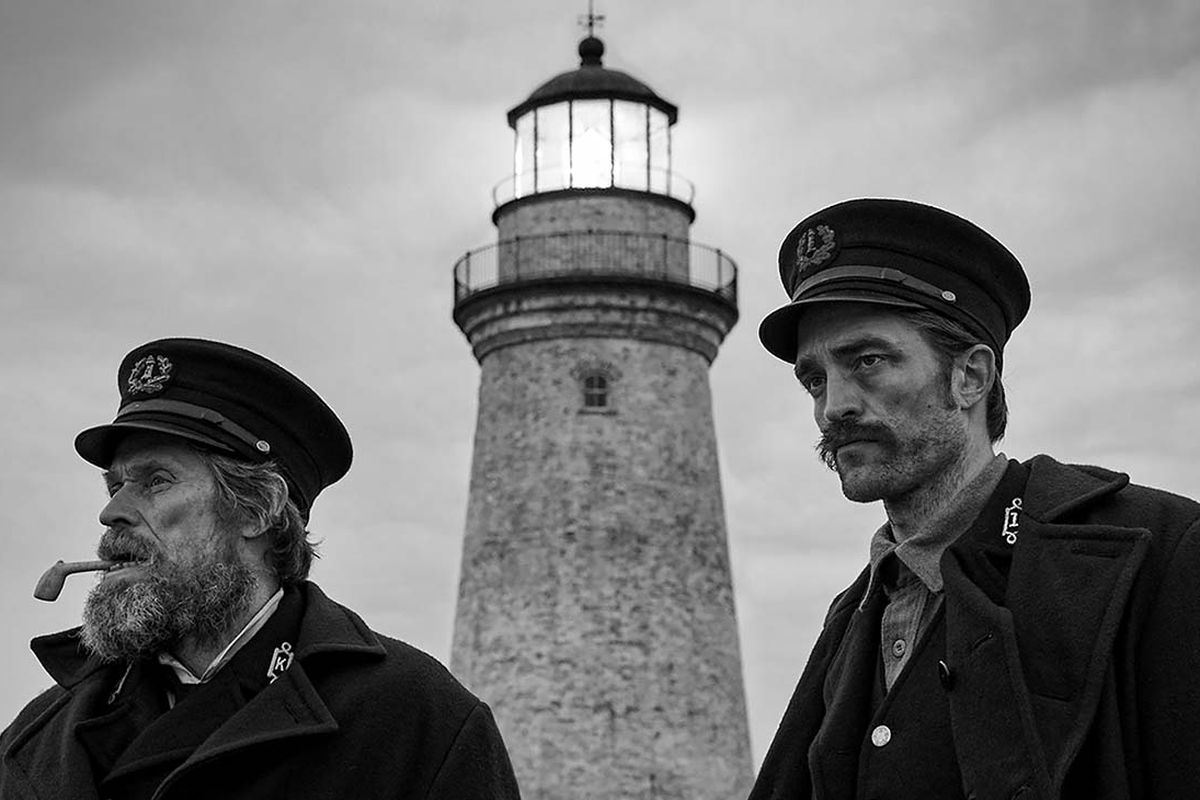
Director/co-writer Robert Eggers follows The Witch, his incandescent 2015 feature debut, with another painstakingly crafted, moody period piece. The Lighthouse strands you, along with two wickies (Robert Pattinson and Willem Dafoe, both mad geniuses at work), on the unforgiving island home of one lonely 1890s New England lighthouse.
This is thrilling cinema. Let it in, and it will consume you to the point of nearly missing the deft gothic storytelling at work. The film is other-worldly, surreal, meticulous and consistently creepy. And we’ll tell you what The Lighthouse is not. It is not a film ye will soon forget.
16. The Last Black Man in San Francisco
More than just a story of gentrification, The Last Black Man in San Francisco is a multi-layered visionary feature debut for director/co-writer Joe Talbot. Set against the changing face of a city and the nature of male friendship, we follow along with lifelong friends Mont (Montgomery Allen) and Jimmie (Jimmie Fails, Talbot’s longtime collaborator whose story is the basis for the film) as they stake a claim for the majestic home where Jimmie was raised.
Funny and touching with a knack for keenly unique observations, TLBMISF seems to exist in its very own time and space, intent to lay bare a melancholy but endlessly loving soul.
17. Midsommar
Just two features into filmmaker Ari Aster’s genre takeover and already you can detect a pattern. First, he introduces a near-unfathomable amount of grief. Then, he drags you so far inside it you won’t fully emerge for days.
In Midsommar, we are as desperate to claw our way out of this soul-crushing grief as Dani (Florence Pugh). Mainly to avoid being alone, Dani insinuates herself into her anthropology student boyfriend Christian’s (Jack Reynor) trip to rural Sweden with his buds. Little does she know they are all headed straight for a modern riff on The Wicker Man.
Like a Bergman inspired homage to bad breakups, this terror is deeply-rooted in the psyche, always taking less care to scare you than to keep you unsettled and on edge.
18. Monos
On a mountaintop that rests among the clouds, eight child soldiers guard an American hostage and a conscripted milk cow. Yes, you’ll find parallels to Lord of the Flies, even Apocalypse Now, but filmmaker Alejandro Landes continually upends your assumptions by tossing aside any common rulebooks on storytelling.
Landes never gives us the chance to feel confident about anything we think we know, as the powerful score from Mica Levi (Under the Skin, Jackie) and an impeccable sound design totally immerse us in an atmosphere of often breathless tension and wanton violence. In just his second narrative feature, Landes crafts a primal experience of alienation and survival, with a strange and savage beauty that may shake you.
19. Knives Out
Knives Out is writer/director Rian Johnson’s Agatha Christie-style take on the general uselessness of the 1%. And it is a riot. As it is a whodunnit, little should be spilled about the film except these names: Daniel Craig, Jamie Lee Curtis, Chris Evans, Don Johnson, Michael Shannon, Ana de Armas, Toni Collegge, Jaeden Martel and Don Johnson. Wow!
Johnson proves that you can poke fun without abandoning compassion. More than that, he reminds us that, as a writer, he’s shooting on all cylinders: wry, clever, meticulously crafted, socially aware and tons of fun.
20. Little Woods
Nia DaCosta’s feature directorial debut, which she also wrote, is an independent drama of the most unusual sort—the sort that situates itself unapologetically inside American poverty. This is less a film about the complicated pull of illegal activity and more a film about the obstacles the American poor face—many of them created by a healthcare system that serves anyone but our own ill and injured.
But politically savvy filmmaking is not the main reason to see Little Woods. See it because Tessa Thompson and Lily James are amazing, or because the story is stirring and unpredictable.
See it because it’s what America actually looks like.
21. Once Upon a Time… in Hollywood
It’s Once Upon a Time…In Hollywood, Quentin Tarantino’s clearest love letter to cinema both great and trashy. Spilling with nostalgia and packing more sentiment than his previous 8 films combined, Hollywood is the auteur’s most heartfelt film.
Not that it isn’t bloody. Once it hits its stride the film packs Reservoir Dogs-level brutality into a climax that’s as nervy as anything Tarantino’s ever filmed. But leading up to that, as the filmmaker asks us to look with a mixture of fondness and sadness at two lives twisting toward the inevitable, he’s actually almost sweet. In strokes stylish and self-indulgent, Tarantino is bidding adieu to halcyon days of both flower power innocence and the Hollywood studio machine.
22. Portrait of a Lady on Fire
Celine Sciamma follows up the vitally of-the-moment indie Girlhood with this breathy, painterly period romance only to clarify that she is a filmmaker with no identifiable bounds. In the 1790s on a forbidding island in Brittany, Marianne (Noemie Merlant) arrives to paint the wedding portrait of Heloise (Adele Haenel), but since Heloise is not marrying voluntarily, she will not sit for a painter. So, a ruse is developed: Marianne pretends to be simply a companion as she steals glances then sketches from memory into the night.
What develops along with the startlingly beautiful intimacy between the women is a thoughtful rumination on memory and on art, on the melancholic but no less romantic notion that the memory, though lonesome, is permanent and perfect.
23. Rocketman
Driven by a wonderfully layered performance from Taron Egerton – who also handles his vocal duties just fine – the film eschews the standard biopic playbook for a splendid rock and roll fantasy.
Writer Lee Hall penned Billy Elliot and Dexter Fletcher is fresh off co-directing Bohemian Rhapsody. Their vision draws from both to land somewhere between the enigmatic Dylan biopic I’m Not There and the effervescent ABBA glitter bomb Mamma Mia. In the world of Rocketman, anything is possible. And even with all the eccentric flights of fancy, the film holds true to an ultimately touching honesty about the life story it’s telling.
24. Ad Astra
Daddy issues in zero gravity? There’s that, but there’s plenty more, as a never-better Brad Pitt and bold strokes from writer/director James Gray deliver an emotional and often breathless spectacle of sound and vision.
The film’s mainly meditative nature is punctured by bursts of suspense, excitement and even outright terror. Gray commands a complete mastery of tone and teams with acclaimed cinematographer Hoyte Van Hoytema for immersive, IMAX-worthy visuals that astound with subtlety, never seeming overly showy.
25. Dolemite Is My Name
“Dolemite” was the brainchild of Rudy Ray Moore, who created the character for his standup comedy act in the early 70s, where cheering crowds led to the urge to take Dolemite to the big screen.
Leading a terrific ensemble that includes Craig Robinson, Keegan-Michael Key, Kodi Smit-McPhee and a priceless Wesley Snipes as the “real” actor among these amateurs, Eddie Murphy owns every frame. This film wouldn’t work unless we see a separation between Moore and his character. Murphy toes this line with electric charisma, setting up the feels when Moore’s dogged belief in himself is finally rewarded.
Dolemite Is My Name tells a personal and often hilarious story, but it’s one that’s universal to dreamers everywhere.
Honorable mentions: High Life, Pain & Glory, Waves, Hustlers, Honeyland, Ford v Ferrari
Okay, what’d we miss?