Tag Archives: MaddWolf

A Time to Act Up

HomoSayWhat: Who’s Pushing Hate?

by Matt Weiner

For a documentary with the subtitle “Who’s Pushing Hate?,” you would think that HomoSayWhat, Craig Bettendorf’s brief survey of homophobia in America from the mid-20th century up to the nationwide legalization of same-sex marriage, would be a long list of people to choose from.

Bettendorf’s sprint through half a century of history is a helpful primer on major events in the gay rights movement. And while the film is heavy on narration and light on interviews that might contextualize the history—the longest interview segment is a casual chat with Bettendorf’s colleagues—they make the most of contemporary news footage and interviews to produce plenty of jaw-dropping moments.

Far too often, though, the film serves as just that: a whirlwind introduction to the top hits and the reminder that “this sure was bad, but things are getting better.” And to be fair, Bettendorf and his crew couldn’t have known that Pride Month this year would coincide with some of the largest protests against injustice in this country’s history.

But it’s hard to reckon with the film’s contention that progress is a clockwork inevitability even within the relatively rapid success of the gay rights movement. So while gay marriage gets its due, the Stonewall Riots that birthed modern Pride events are conspicuously absent. As is the very current and not at all settled fight for transgender equality. (Trans activists are almost entirely absent from the film’s history, which could be a decision to let them tell their own story. But it’s a puzzling omission for a movie that paints history in such broad strokes. And finds the time for an entire cable news monologue from Keith Olbermann.)

The most generous way to think of the film’s version of events is like a high school textbook: the chronology opens up windows to so many deeper stories you can look up if you’re interested. But given how profound and moving the subject is, the documentary’s point of view seems to go out of its way to avoid sounding too radical. And that leads to some very weird territory, like spending more time on C. Everett Koop than Larry Kramer.

As superficial as the historical treatment is, Bettendorf’s earnestness goes a long way to keeping the narration sprightly. But the choices are so idiosyncratic and linger on so much near history that it’s hard to figure out exactly who the audience for this retelling even is. For a film that sets out to dig into the history of homophobia and how it shaped American society, there’s an awful lot of time on the 2000s-era culture war with very little interrogation of what mission accomplished looks like today.

In a way it’s quaint to look back on a time when hatred felt like it had to keep a veneer of civility and logic when arguing among the political class. Those days are gone though, and those backslapping opponents have been replaced with a new group that doesn’t have much use for masks. It’s ironic that there are plenty of events and figures to look back on who raised hell to see justice done, wielding righteous certainty along with bricks, rocks, and whatever it took. That might offer some comfort at this moment. But you won’t learn about it here.

Watch and Learn

Good documentaries transcend art and commerce by helping us understand who we are, where we came from and where (hopefully) we may be going. These five films prove the necessity and urgency of the #blacklivesmatter movement and help to contextualize our current situation and the need for dramatic change.

Whose Streets? 

Available on Amazon Prime, YouTube, GooglePlay, Vudu, Hulu.

Moving like a living, breathing monument to revolution, Whose Streets? captures a flashpoint in history with gripping vibrancy, as it bursts with an outrage both righteous and palpable. Activists Sabaah Folayan and Damon Davis share directing duties on their film debut, bringing precise, insightful storytelling instincts to the birth of the Black Lives Matter movement. Together, they provide a new and sharp focus to the events surrounding the 2014 killing of 18-year-old Michael Brown by Ferguson, Missouri police officer Darren Wilson.

Cincinnati Goddamn

Available to stream for free from wexarts.org.

Wexner Center’s Paul Hill and filmmaker April Martin’s documentary exposes the similarities between 2014 events in Ferguson, MO surrounding the murder of Michael Brown and events in Cincinnati beginning in 1995 and culminating in riots following the suspicious, police-involved deaths of Roger Owensby in November, 2000 and Timothy Thomas in April, 2001.

The final product delivers an incisive look at the roots and ramifications of systemic racism. The filmmakers speak candidly with bereaved family members and witnesses, weave in crime scene footage and the news coverage of the day, and speak to historians, activists, police and political leaders to paint a picture that becomes jarringly prescient.

13th

Available on Netflix.

Director Ava DuVernay followed her triumphant Selma with an urgent dissection of mass incarceration in the United States. Packed with testimony from those who know, propelled by the force and vision of a director who knows how to tell a story, this is as gripping and necessary a film as you will find. Informative, stirring, and heartbreaking, 13th delivers a lesson that is essential to understanding both the ugly roots of America, and how shamefully deep they remain.

https://www.youtube.com/watch?v=45jBRPjImuw

The Seven Five

Available on Amazon Prime, YouTube, GooglePlay.

If current events haven’t satisfied your appetite for stories of cops behaving badly, take a trip back to the 1980s with The Seven Five. It’s a sobering look at Mike Dowd, the man dubbed “the dirtiest cop in history,” as well as the law enforcement code of silence that still appears shockingly prevalent.

Director Tiller Russell uses footage from Dowd’s 1993 hearing testimony as an effective bookend to current interviews with Dowd and several of his cohorts. The chill that comes from a younger Dowd testifying that a good cop means “being 100 percent behind anything another cop does” only intensifies when you hear one of his old partners recalling the prevailing attitude of their criminal heyday.

Peace Officer

Available on Tubi, Sling TV, Amazon Prime, YouTube, Google Play, Vudu.

How, and why, did we get the point where tactics and weapons of the military are standard issue for police forces across the country?

This film’s strength lies in its nuance, and in its refusal to provide snap judgements. Rather than looking to vilify police officers, the goal here is to understand how the system itself has become untenable, all but guaranteeing continued tragedies.

It’s not a fun conversation, but it’s one that’s long overdue. Peace Officer may speak softly, but it’s hard to imagine an American film that is more urgent.

Want to help?

ACLU OHIO

COLUMBUS FREEDOM FUND

#blacklivesmatter

Fright Club: Best College Horror

We’d like to thank Gordon Maples—blogger, horror fan and all around smarty pants—for joining us to count down the best college-themed horror movies. (We might talk about some of the worst, too.)

5. Night of the Creeps (1986)

B-movie heaven, writer/director Fred Dekker’s Night of the Creeps embraces—nay, bear hugs—what has come before. With the help of Tom Atkins (at the top of his game), this alien invasion/zombie/frat movie is a hoot.

This film about alien slugs that enter the human body, nest in the brain, and reanimate the corpse looks like a lot we’ve seen before (mainly Cronenberg’s Shivers) and a lot we’d see later (mainly James Gunn’s Slither). The fact that it can be so genre-referential and still become a touchstone for other filmmakers speaks volumes about Dekker’s grasp of the genre.

4. Pledge (2018)

On its surface, Pledge may appear to be little more than a competently made fraternity horror in the tradition of Skulls. It is a cautionary tale about hazing taken to its sadistic (if likely logical) extreme.

But director Daniel Robbins’s latest horror show, from a tight script by co-star Zack Weiner, digs into issues bigger than tribe mentality. Pledge is not just about how far you’d go to belong. It asks about compliance, cowardice, and the cost and definition of success.

Where Weiner’s savvy script and Robbins’s sly direction really excel is in digging into this predictable plot to find an ugly picture of American privilege.

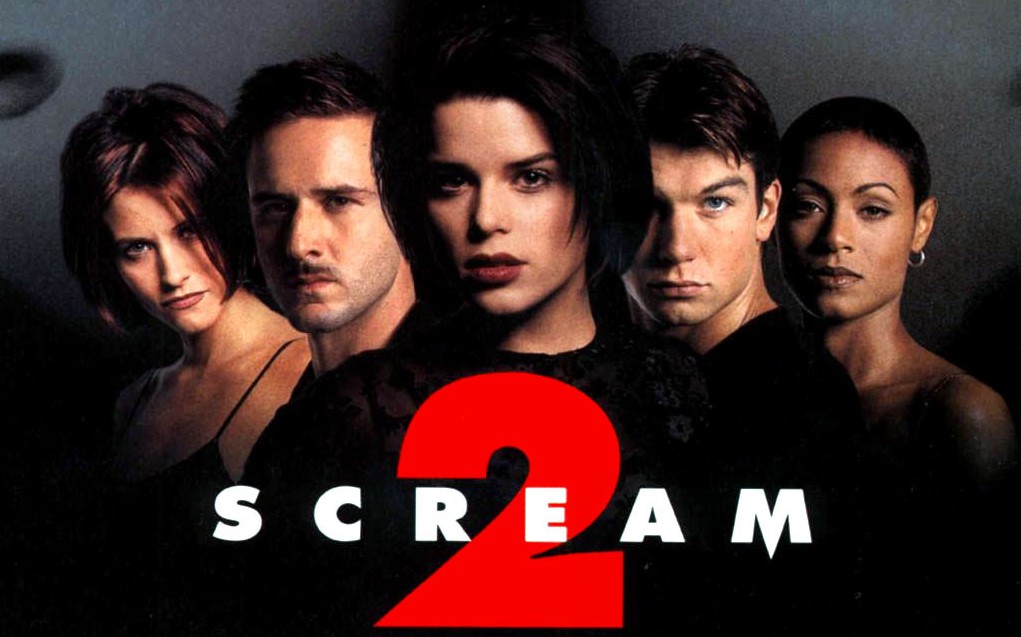
3. Scream 2 (1997)

Just one year after director Wes Craven and writer Kevin Williamson struck gold with their meta-horror Scream, the survivors are off to college. Too bad the horror—and the rules—follow Sidney to campus.

The film picks up on its predecessor’s infatuation with genre tropes, this time trying to apply the rules of the sequel to what’s happening, giving characters the chance to figure their own plot out in an attempt to survive this sequel.

Fun return performances and excellent newcomers (Hello Laurie Metcalf! Good to see you Liev Schreiber and Timothy Olyphant!) keep this one fresh and fun.

2. Black Christmas (1974)

Sure, it’s another case of mysterious phone calls leading to grisly murders; sure it’s another one-by-one pick off of sorority stereotypes; sure, there’s a damaged child backstory; naturally John Saxon co-stars. Wait, what was different? Oh yeah, it did it first.

Released in 1974, the film predates most slashers by at least a half dozen years. It created the architecture. More importantly, the phone calls are actually quite unsettling.

Why the girls remain in the sorority house (if only they’d had an Official Red Ryder Carbine-Action Two-Hundred-Shot Range Model Air Rifle!), or why campus police are so baffled remains a mystery, but director Bob Clark was onto something with the phone calls, as evidenced by the number of films that ripped off this original convention.

1.Raw (2016)

A college freshman and vegetarian from a meat-free family, Justine (Garance Marillier) objects to the hazing ritual of eating a piece of raw meat. But once she submits to peer pressure and tastes that taboo, her appetite is awakened and it will take more and more dangerous, self-destructive acts to indulge her blood lust.

The film often feels like a cross between Trouble Every Day and Anatomy. The latter, a German film from 2000, follows a prudish med student dealing with carnage and peer pressure. In the former, France’s Claire Denis directs a troubling parable combining sexual desire and cannibalism.

Writer/director Julia Ducournau has her cagey way with the same themes that populate any coming-of-age story – pressure to conform, societal order and sexual hysteria. Here all take on a sly, macabre humor that’s both refreshing and unsettling.

The Mutineer

The Ghost of Peter Sellers

by Hope Madden

You can’t go home again. You can go to Cyprus again, though, which is what director Peter Medak does in an attempt to come to terms with the project that nearly derailed his blossoming career.

Objectivity be damned!

Medak’s documentary The Ghost of Peter Sellers deconstructs the disaster that was his unreleased 1973 pirate comedy Ghost in the Noonday Sun. Medak believes he may be the first director to make such a documentary.

He’s not entirely wrong. Richard Rush directed a doc about the making of his own The Stunt Man – but that was an Oscar-nominated success. And though Terry Gilliam was involved in Lost in La Mancha—a doc outlining the endless disasters that doomed his first attempt to film The Man Who Killed Don Quixote— he was not the director.

Rather, this time the documentary is the filmmaker himself documenting not his successes but his massive, almost career-ending failure. That failure was partly due to incessant weather troubles and other catastrophes—hell, his pirate ship sank the day it arrived in Cyprus.

But according to Medak, those involved in the shoot and those who knew the actor best, the main problem was Peter Sellers.

“It’s not as if any of us didn’t know that Peter was nuts,” remarks the incredibly sage producer John Hayman, nearly 50 years after the fact. “But none of us knew how nuts.”

Medak’s clearly been haunted by the production—and, to a degree, by Sellers—since the shoot wrapped. Riding high at the time on two critical and box office successes (Negatives, The Ruling Class), the in-demand director jumped at the chance to direct the brilliant Sellers, then considered the greatest comedic actor in the world.

But Sellers—possibly, as friends suggest in the film, a man suffering from an undiagnosed mental health condition who was exploited by money hungry moviemakers—would not be the artist Medak hoped he’d be.

Lunatic behavior combined with an outright desire to sink the film turned an already underwhelming script, underfunded production and nightmarish environment into something crippling.

The stories from the set are fascinating, as are moments of commiseration between Medak and directors who’d dealt with Sellers on other films (Casino Royale and the Fiendish Plot of Dr. Fu Manchu). Equally interesting are the sympathetic but knowing, even giggling responses Medak’s tales of woe elicited from Sellers’s family and friends.

“Oh, yes. He definitely did that.”

But too much time spent with director who is also subject turns many scenes into a self-indulgence.

That doesn’t topple The Ghost of Peter Sellers. Medak’s confessional pity party delivers a compelling look at the wrong side of filmmaking as it offers yet another take on Sellers—his genius as well as his demons.

Fa La La Land

The High Note

by George Wolf

Since rising to fame on Black-ish, Tracee Ellis Ross has apparently been biding her time, patiently waiting for the right vehicle to showcase her talents as a singer. It isn’t hard to understand the apprehension.

Oh, look, another TV star trying to sing. And this one just wants to ride her mother’s (Diana, FYI) iconic coattails!

Ross chooses wisely with the endearing The High Note, absolutely killing it as Grace Davis, a modern brand of pop diva.

Davis still basks in the glow of worldwide fame, but it’s been a minute since she scored a big hit. Grace’s longtime manager Jack (Ice Cube, with more proof of his maturation as an actor) wants her to ink a long-term residency in Vegas, but Grace isn’t sure she’s ready to be pushed onto the “greatest hits” circuit. And there’s a small but potentially mighty voice in Grace’s corner.

It belongs to her personal assistant Maggie (Dakota Johnson, flashing a winning mix of naïveté and ambition). She’s been lobbying for new Grace Davis music, which would carry some weight if everyone only knew how great a producer Maggie could be if they’d just give her the chance!

If this sounds like something for the Hallmark Channel, did I mention Maggie has stumbled across David (the impressive Kelvin Harrison, Jr., with his own vocal chops), a talented musician who could use an L.A. music producer and maybe even a girlfriend?

Sure, you can guess where most (but not all) of this goes, and in other hands it might have been a tone deaf stiff. But director Nisha Ganatra (the underseen gem Late Night) runs Flora Greeson’s debut screenplay through the filter of an endlessly charming cast to craft an extended mix of finger-snapping smiles.

Look beneath those layers of what may feel like fluff, and you’ll even find a sometimes awkward but still refreshing look at two women gracefully navigating the path to controlling their own destinies. Nice.

Don’t discount those finger snaps, either. In a music business movie the music should mean business, and the tunes in The High Note sound like something a producer might actually get excited about, especially when Ross lets it rip.

She makes Grace a determined diva that’s spoiled but still worth rooting for, infusing her big numbers with the expressive vocal power of an actor and a character who are both seizing their moment.

The first single from the soundtrack, Ross’s “Love Myself,” is already looking like a hit. The High Note sounds like one, too.

Supa Fly

Supa Modo

by George Wolf

At the risk of limb outing, I’m guessing a little film that might restore your faith in human decency would not be unwelcome right now.

Supa Modo may center on a young girl with a terminal illness, but it will warm your heart in the sweetest way, spinning its tale of escapist fantasy, cold reality and the simple joy of the movies.

Nine year-old Jo (Stycie Waweru, wonderful) spends most of her days under the care of a Kenyan hospital, dreaming of flying like her favorite film superheroes. But after a distressing visit with the medical staff, Jo’s mother Kathryn (Marrianne Nungo) decides her dying child should spend her remaining days in the comfort of home.

Jo’s sister Mwix (Nyawara Ndambia) encourages Jo’s superhero fantasies, and her neighbors unite to create situations where Jo can flash super powers and right wrongs in the village.

It’s a lovely “Make a Wish” scenario that is not uncommon, but director Likarion Wainaina and a team of writers deepen the humanity through simple contrast.

Kathryn does not support the indulgence of Jo’s imagination, clashing with Mwix and the villagers over what is best for her child. This push and pull keeps the film grounded when overt sentimentality offers a road more easily traveled.

And, naturally, good conflict makes a more satisfying resolution. Wainaina plays his hand skillfully, turning what could have been a lazy and cliched final shot into a moment full of the happiest tears.

Greece Is the Word

The Trip to Greece

by George Wolf

“Exhausting? Me? You should meet you!”

Yes, the boys are at it for the fourth time on the big screen, enjoying exotic locales, savoring sumptuous cuisine, and critiquing the finer points of each other’s celebrity impressions.

Since taking The Trip around England ten years ago, Steve Coogan and Rob Brydon have also toured Italy (2014) and Spain (2017), reviewing restaurants and juggling their slightly fictionalized lives while director Michael Winterbottom documents it all.

This time out, they’ve also adopted more of an interest in history. They journey from Troy to Ithaca, following in the footsteps of the Odysseus, checking the tour book when they aren’t quizzing each other on historical timelines or Bee Gees tunes (Brydon’s bit with “Stayin Alive” is a scream).

The sarcasm is thick and the barbs sharp per usual, but while the overall hilarity level may be down a notch, this film boasts the most impressive vistas and enticing recipes of the entire series. Sure, it might be the quarantine talking, but less than an hour in I was ready to call either a travel agent or a Greek restaurant. Maybe both.

And in what might be a nod to the end of the franchise, the whiff of mortality pierces the air. Steve calls home often for updates on the health of his dad, and the levity of the “at our age” references carries an added layer of wistful resignation. You get the feeling these guys are finally giving up chasing youthful ghosts and embracing the time they have now.

These trips have always been about appreciating old friends, great food and often uproarious conversation. But while this isn’t the franchise high point, there’s a poignancy here in Greece, underneath Aristotle’s ashes and all the painful falsetto harmonies, that would make it the most satisfying finale.

Owing Largely to Sod’s Law

Villain

by Rachel Willis

With a tense opening scene, Villain starts off strong. Unfortunately, it’s downhill from there.

When Eddie Frank (Craig Fairbrass) is released from prison after a long stay, he is determined to live life on the straight and narrow. It’s too bad “life won’t let” him. When Eddie discovers his brother, Sean, has run afoul of some of London’s most dangerous men, the brothers are left with few options.

There isn’t anything new in Villain, and “generic” is the word it brings to mind often. These are characters that you’ve seen before in situations you’ve seen before in a movie you’ve seen before. Writers Greg Hall and George Russo (who also portrays Sean) expect your preconceived notions about films like this to carry you through the movie. It doesn’t work.

That’s not to say there aren’t things to like about director Philip Barantini first feature length film. Barantini certainly knows how to create tension, and there are a few scenes that are difficult to watch.

The relationship between Eddie and Sean is winning because the chemistry between Fairbrass and Russo is evident. They play off each other like real brothers. Their bond, their fights, and their love for each other rings true.  

Other characters don’t fare as well. When Franks tries to reunite with his daughter, Chloe (Izuka Hoyle), there are many head-scratching moments over her reactions. Her initial resentment of him too quickly gives way to feelings he hasn’t earned. Sean’s girlfriend, Rickie, could just as easily be a table from which he snorts coke. That’s not to say the actors aren’t doing their best, they’re just not blessed with particularly good material.

The tone of the film is all over the place, creating an overall messy feel. The family drama between the Franks and Chloe borders on the melodramatic, and the montage of the brothers remodeling their pub is odd and out-of-place. There’s a lot going on in the film, but there isn’t enough time devoted to each piece of the puzzle.

If you dig British thug dramas, there’s enough that works to make this enjoyable. But if you’re looking for a fresh take on the genre, you won’t find it here.

https://www.youtube.com/watch?v=0HgmrKkAehI

Fight Song

Military Wives

by Rachel Willis

When the men and women living on a military base in England ship off on their latest tour, the wives left at home need to find a way to pass the time until the tour of duty is completed.

Enter Kate (Kristin Scott Thomas). Struggling with her own recent tragedy, Kate decides to take on a bigger role in the choir activities that are primarily organized by Lisa (Sharon Horgan).

As a colonel’s wife, Kate’s participation is unusual, but it’s not important for us to understand these intricacies of life on the base. What writers Rachel Tunnard and Roselyn Flynn are interested in is the conflict between uptight Kate and laid-back Lisa.

The movie proceeds as you would expect. Though inspired by real events, director Peter Cattaneo doesn’t inject any originality into the formulaic script. I couldn’t help but think of A League of Their Own while watching the events of Military Wives unfold. It’s almost a beat for beat remake with choir substituted for baseball. However, where A League of Their Own managed to subvert expectations and round out its cast, Military Wives can’t compete.

It’s hard to keep track of everyone in the sizable cast. Not every character is given depth, most are one-dimensional. The story, however, isn’t concerned with fleshing out these women—they serve to add depth to the conflicts faced by the main characters and to enhance the setting. We see these women preparing to send their spouses off to war, little moments of goodbyes, of children and mothers trying to connect to their loved ones overseas, of women trying to pass the time until they’re reunited.

Still, it seems Kristen Scott Thomas will always be remarkable no matter how little she’s given to work with. The few emotional moments the film manages to mine are delivered through Thomas’s strong performance. Horgan doesn’t quite match up to Thomas, but Lisa is also the less interesting character.

Formulas are often reused because they work, and if you’re looking for a feel-good film you won’t go wrong here. However, this is the kind of forgettable film that will fly under most people’s radar.