Screening Room: Respect, Free Guy, Don’t Breathe 2, CODA, Beckett & More
by Hope Madden
Even a man who is pure in heart
And says his prayers by night
May become a wolf when the wolfbane blooms
And the autumn moon is bright
Teddy (an exceptional Anthony Bajon) may not be all that pure in heart, but he’s not such a bad kid. What he is, is a loser. He knows it. “We’re the village idiots,” he tells the uncle he lives with.
Teddy’s an outsider in his very small French hamlet, a ne’er-do-well who seems harmless enough. He has a job —one he hates. And he has a girlfriend, Rebecca (Christine Gautier) — but how long can that last? Her family can’t stand him, and she’ll graduate at the end of the term. Then what?
Before we can find out, Teddy’s bitten by something in the woods. Suddenly, by the light of the moon (which seems to forever coincide with some kind of angry humiliation Teddy faces), he loses consciousness and then wakes up naked and covered in blood.
Writers/directors/brothers Ludovic and Zoran Boukhera tap into classic monster movie mythology (and sometimes score, with fun results) to mine lycanthrope lore for metaphorical purposes.
Which is usually what werewolves are used for in movies, including the 1941 classic that spawned that poem. Anyone can be cursed, it seems, and under the right circumstances, anyone can become a monster.
In this case, Teddy represents the marginalized, angry white male. The havoc he wreaks? Well, it’s not hard to figure out what that represents. Truth be told, Teddy is almost off-putting in its empathy for the aggrieved male so disillusioned by disappointments and limitations that he becomes monstrous.
I suppose that makes Teddy feel a bit transgressive, but the reason it works is Bajon’s amiably brutish performance. A horror film is rarely worth its weight in carnage if it can’t engender some empathy, provoke some tragedy. Thanks to Bajon and a strong ensemble around him, the film makes you feel something for an enemy you might rather just hate.
It’s not often you get an official Cannes selection on Shudder. I guess that’s one more reason to watch Teddy.

An ode to cautionary tales, this episode points out all the great reasons to just skip the gym. Those muscles aren’t going to do you any good if you are dead—seriously, hideously broken, bloody and dead. We enlist the aid of Rewatch Podcast’s Cory Metcalfe to help us work through the best in workout horror.
Director James Wong returned after missing Episode 2 and picked up right where he left off: fun and horrifying Rube Goldbergs of Death.
A young Mary Elizabeth Winstead stars ad Wendy Christensen, she of the premonition about shoddy workmanship on that roller coaster. Naturally, those she saves are on Death’s list now. These films are not rocket science. A group of people cheats death. One by one, Death comes a callin’.
The fun is seeing how each demise works itself out. And Lewis (played by Texas Battle – that is a name!) gets it good.
Director J. Lee Thompson had seen better days (Cape Fear, Guns of Navarone), but this switcheroo slasher boasts a weird vibe that makes it compelling.
It also contains a very early workout death scene. We all knew Greg had to go, and how fitting that this vane elitist got his on a workout bench. If he’d thought for one second just to drop the weights on the ground over his head…but Greg wasn’t exactly known for smarts.
DirectorTyler MacIntyre’s whole approach in this film is pitch-perfect. Stars Brianna Hildebrand and Alexandra Shipp bring these bestie characters to vibrant life and the story around them is whip-smart and funny.
Speaking of funny, Craig Robinson has little more than a cameo, but he brings that Craig Robinson vibe, making this particular workout scene an uncomfortable comedic gem.
Melvin Junko’s whole life was a workout horror. Put upon and picked on, this little janitor only wanted to get his work done.
The Troma classic—awaiting an unbelievably well cast reboot from director Macon Blair—clearly had to be part of this list. Seeing Toxie finally get revenge on those Tromaville health club bullies.
Director Steven Quale’s prequel may be the best of the Final Destination bunch. The 3D horror takes full advantage of the intricate death sequences—especially the opening bridge set piece. Nice!
It helps that writer Eric Heisserer (Arrival, Birdbox, Lights Out, The Thing remake) knows how to write. The 5th installment feels less like a return to the well and more like an interesting riff on destiny. It also has some great support work from Tony Todd, Courtney B. Vance and David Koechner.
But we’re here to watch Candace die.
by Hope Madden
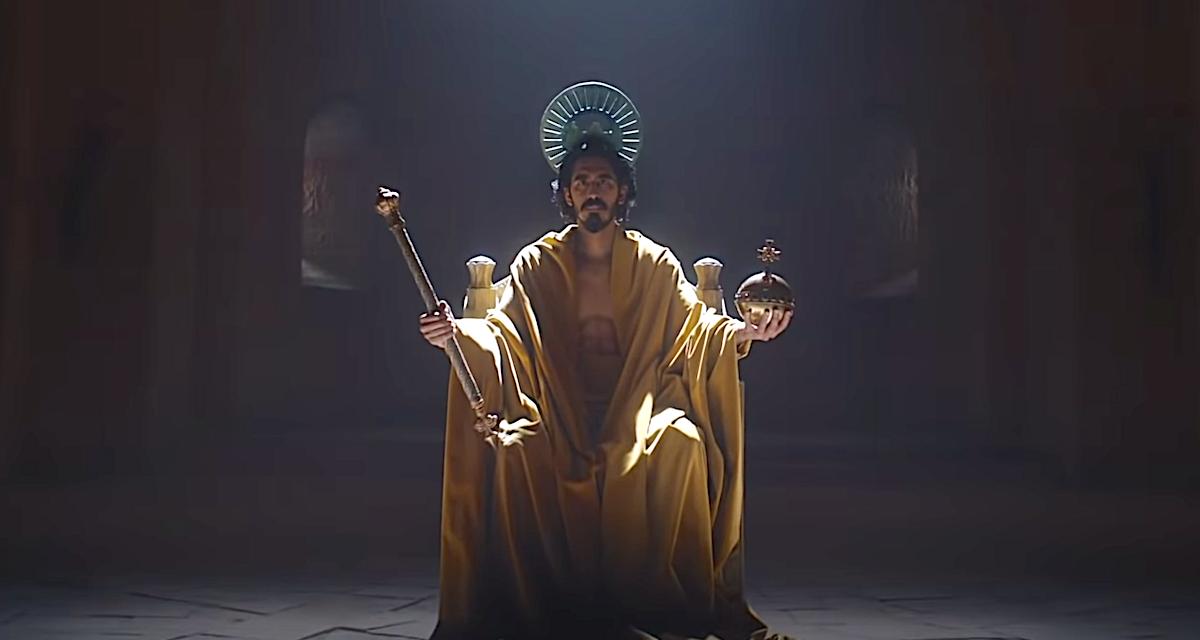
Lutes and mead, chainmail and sorcery—director David Lowery’s Camelot is just as rockin’ as ever in his trippy coming-of-age style The Green Knight.
Dev Patel stars as King Arthur’s nephew, Gawain. He’s a bit of a ne’er-do- well and it looks like he’s ne’er going to actually be knighted. But Christmas warms old Arthur’s heart and he asks the boy to take a seat of honor at the round table. When this menacing giant (think Groot, but sinister) drops in for a beheading game, Gawain offers to play so he can keep his uncle’s respect.
The story itself is more than 700 years old. Credit Lowery, who adapted the old ballad for the screen, with finding fresh intrigue in the old bones. He’s slippery with symbolism and draws wonderful performances from the ensemble.
Joel Edgerton is especially fun as The Lord, just one of many helpers and hindrances Gawain finds on his journey. Barry Keoghan is likewise wonderful playing a brash, angry scavenger. But Edgerton and Keoghan are always good. The real surprise here is Patel.
That’s not to say he’s unproven, just that his performances until now tend to rely heavily and falsely on an earnest streak. Gawain does not. Patel doesn’t shy away from or judge the character’s weakness or cowardice. Instead, he uses those very characteristics to make Gawain human.
It’s the kind of compassionate portrayal rarely depicted in an Arthurian fable, and it ensures that you care enough for the character to puzzle through his adventures with him. There’s sorcery afoot, and also psychedelic mushrooms, so who knows what’s really going on?
Here’s where Lowery really excels, though. His visual storytelling has always been his greatest strength as a director and this tale encourages his most fanciful and hypnotic visual style to date. The Green Knight is gorgeous. The color and framing are pure visual poetry. Together with this exceptional ensemble, Lowery’s created a magical realm where you believe anything could happen.

by Hope Madden
Filmmakers David Charbonier and Justin Powell know how to do a lot with a little.
Earlier this year Shudder premiered their tightly packaged little horror story, The Djinn—very nearly a one-man, one-set show. Their latest to hit Shudder, The Boy Behind the Door, is slightly more expansive. A cast of about five knocks around one big, old farmhouse in the middle of an isolated, wooded area.
Two of those five are Bobby (Lonnie Chavis) and Kevin (Ezra Dewey, The Djinn), best friends who were kidnapped on their way to a little league game. Bobby wakes up in the trunk of a car without Kevin. He breaks free and makes his way clear of the house, but he can hear Kevin’s terrified cries and he circles back to try and save him.
The filmmakers leave it to Bobby’s sleuthing—and yours–to figure out what’s going on and how to end it. They make tremendous use of the hallways, floors and doors throughout their set, plus a well-placed wristwatch unnervingly ups the ante in a way the audience understands but Bobby does not.
There are times when the writing here hits too hard. I’m not sure the boys have to say they’ll always stick together quite so often; their actions speak to that. But the conundrums the filmmakers throw at Bobby as he tries to figure out what’s going on and how to get to his friend are believable.
More importantly, Chavis handles them with honest, childlike panic and courage. His performance would be enough to carry the film, but the adults around him offer supremely creepy turns.
Dewey’s less effective in this than he was in The Djinn, but it’s not enough to sink the film. The movie’s solid structure, paired with Charbonier and Powell’s gift for dropping clues and following up on threads make for a satisfying but never lurid horror show.
by Hope Madden
Stay with me. Remember how bad Mortal Kombat was? Like, bad, but kind of so stick-to-your-guns bad, so full of head-bursting ridiculousness and terrible acting that it somehow felt right?
Take that, neuter it completely so you don’t even see any blood regardless of the wall-to-wall swordplay, invest in great-looking scenery and one A-list actor, and you essentially have the new G.I. Joe movie, Snake Eyes.
Henry Golding is that A-lister, an American with a questionable accent and some barely hidden rage issues. A dice game gone bad left him emotionally scarred (thought it did lend him that cool moniker) and now he fistfights his way from one town to the next.
That is, until a shady Yakuza man offers him a chance at vengeance in return for some labor. The next thing you know, Snake Eyes is mixed up in ninja training, clan warfare and global domination, or some such nonsense.
Director Robert Schwentke is pretty hamstrung with the PG-13 rating. His film is based on a children’s cartoon, after all. Sure, that cartoon promotes armed conflict in every single episode—as does this film—but you can’t show the result of any of that violence.
How cool would this movie be if Takashi Miike directed it? And how NC-17?
A girl can dream. But the reality is that Schwentke does about as well as he can within the limitations. The clanging swords are shiny, the motorcycles zip around like the ninjas they carry, and the hand-to-hand bouts stand out.
The acting, well, you know. And writing. Yeesh. Indeed, the writing is weak enough that both Golding and the proven Samara Weaving nearly choke on it. Andrew Koki as clan heir apparent Tommy struggles mightily, his character at war with what is expected of him. It calls for a lot of inner conflict.
It calls for a better script.
Haruka Abe likewise wrestles to find a character within this loyal security chief who’s unemotional and yet so very emotional. And wearing really high heels for someone called on to run this often.
Weaving at least seems to recognize that she is playing a cartoon character, and her performance is therefore reasonably cartoonish. Koki mopes, Abe whines. And Golding, well, he is very handsome.
The sets look great—from a super cool-looking Tokyo to the secret Arashikage compound to the cement pits for bare-knuckle brawling. That’s not really reason enough to watch it, though.

by Hope Madden
The great thing about filmmaker Quentin Dupieux is that you always know what you’re in for and you definitely never know what you’re in for.
The point of Mandibles, essentially, is that you can never rely on anyone to do a single, simple thing correctly. Manu (Grégoire Ludig, Keep an Eye Out) — homeless at the moment — promises to deliver a suitcase in the trunk of his car from Michel-Michel to Point B. He needs to get it there by noon. Can he be trusted to do that one thing?
Of course he can!
He cannot.
There are the extenuating circumstances of the giant housefly that’s already in the trunk. We could get into what happens with the fly, but it’s not going to make any real sense, so why ruin it? Dupieux films work best when you just go with it.
That’s what Manu does. He and best friend Jean-Gab (David Marsais) take opportunities as they come, remain open to possibilities, and just enjoy their friendship. And their new, giant housefly.
The relatively streamlined plot delivers a fresh change of pace for the filmmaker—not that you could call any Dupieux film stale. But in pairing back the complications and convolutions, the writer/director has crafted maybe his most audience-friendly film to date. Mandibles certainly delivers the filmmaker’s most audience-friendly characters.
Ludig frustrates and charms in equal measure as the doofus Manu, and he and Marsais share an easy chemistry that suggests a lot of miles on this friendship. Here is the filmmaker’s most delightful surprise—a lack of cynicism or existential dread that leaves just an airy, almost sweet, wildly ridiculous comedy.
None of this has anything to do with a jawbone, but the title will become clear if you pay close attention.
Or maybe it won’t.
Quentin Dupieux, amiright?
by Hope Madden
In April of 2013, Joe Bell explained his walking trek from Le Grand, Oregon to New York City. He was doing something. Those who watch bullying and do nothing about it are as guilty as the bullies themselves.
It makes sense, then, that Reinaldo Marcus Green’s film Joe Bell is more interested in what Joe did and did not do when confronted with his son’s bullying than it is in the bullying and victimization themselves. Because the truth is, this walk is as much a penance as anything.
Mark Wahlberg plays Joe, volatile but loving husband and father just trying to fly under the radar and still accept, as best he can, his oldest son Jadin’s (Reid Miller) sexual orientation. Joe’s a blue-collar guy in a blue-collar town, and neither Wahlberg nor writers Diana Ossana and Larry McMurtry (both of Brokeback Mountain) let him completely off the hook for the misery Jadin faces.
Wahlberg performs admirably as a man who’s trying and failing, but the breakout here is Miller. Warm, bright and brimming with life, Miller’s work the highlight of the film, although Green puts together a solid ensemble including a heartbreakingly understated Connie Britton.
Though an early film contrivance threatens to sink things before they can even really swim, the film eventually finds its lonesome way, more or less. The examination here is culpability, and it’s uncomfortable, messy terrain.
Wahlberg’s performance is raw and emotional. He lets the character struggle, sometimes sinking under the weight of loss and culpability, sometimes accepting the easy balm of celebrity in lieu of real change. His interactions with Britton offer the most complex and satisfying suggestions that Green and team recognize the wide and shattering reach of this kind of trauma.
The film Green builds around Wahlberg never stoops toward easy epiphanies or patronizing catharsis. There is a simmering anger and barely checked pain beneath the surface of this narrative, and no cliched structure or manipulative storytelling gimmicks can entirely cage that.
In the end, Joe Bell does break through the contrivance of familiar storytelling because this story doesn’t fit neatly or cheerily into that package.

by Hope Madden
Raise your hand if you’ve ever had a crush on Val Kilmer.
I can’t be the only one.
Eighties heartthrob turned Hollywood prick turned reliable character actor turned working actor turned Mark Twain, Kilmer has seen his ups and downs. The thing is, he recorded all of them, too. And now directors Ting Poo and Leo Scott—both primarily known as editors—piece together material from the thousands of hours of video Kilmer has compiled in his 40-odd years in the industry.
The result oscillates between self-indulgence and raw nerve, but it’s never less than intriguing.
Yes, there are behind-the-scenes moments from Top Gun, pieces from the contentious Island of Dr. Moreau set, Batman Forever clips and bits of Doors footage. But the film is most relevant when Kilmer interacts with his son Jack, who also narrates from pages written by his dad.
Kilmer can’t do his own voiceover because of his fight with throat cancer, which left him with a tracheostomy that makes speech difficult. The battle has taken a lot out of him physically in much the way different battles throughout his career has taken a lot out of him financially. Poo, Scott and Kilmer never hide those battle scars, and yet their film never feels exploitative or reality TV-esque.
Much of that has to do with Kilmer’s indominable spirit and generous nature. Though a costly divorce and what amounts to fraud perpetrated by his own father left Kilmer strapped for cash, his outlook on both his ex-wife and his dad are entirely positive. And what he has to say about selling autographs to pay his bills becomes perhaps the most moving moment in a fairly emotional film.
At just under two hours the film seems a tad long. There are times when Val feels self-indulgent, but how could it not? We’re here to watch the actor come back then come back again then, dressed as Mark Twain for his shockingly successful one-man show Citizen Twain, make yet another comeback.
In Val, Jack Kilmer quotes his father quoting Twain: Don’t part with your illusions. When they are gone you may still exist, but you have ceased to live. It’s an apt metaphor for a documentary about life and acting, and a springboard for another surprising comeback.