Screening Room: Meg 2, TMNT: Mutant Mayhem, Shortcomings, Final Cut, Night of the 12th & More
by Hope Madden
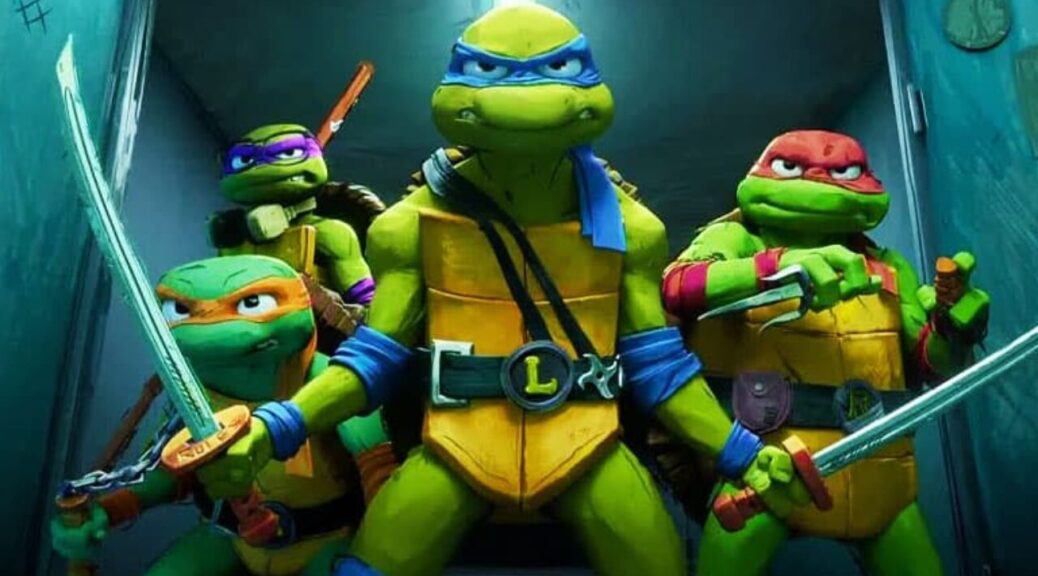
The Teenage Mutant Ninja Turtles have been done. A lot. There have been comics, the cartoon series, video games, movies, another animated series, two more movies, another animated series, that Michael Bay movie and its sequel, a fourth cartoon series, another movie and countless toys, plastic digital watches (the coolest!), lunchboxes, tee shirts and assorted whatnot.
So, why bother with Teenage Mutant Ninja Turtles: Mutant Mayhem?
Dude, it’s good.
Seth Rogan and Even Goldberg (together responsible for Superbad, Pineapple Express, This Is the End and Sausage Party) co-write with Jeff Rowe (The Mitchells vs. the Machines – a great movie, and also the only one of these appropriate for children). Their script delights in the silly, childish charm of the 80s series, updated to reflect a modern teenage mutant’s reality.
It’s a fun vibe that’s pulled through the animation and performances, thanks in part to Rowe, who co-directed Mitchells v Machines, again co-directing, this time with Kyler Spears.
A messy, anarchic animation style delivers on the promise of the outsider theme and especially impresses in 3D. Somehow simultaneously creepy, jubilant and cool, the look is like no other piece of animation to be seen on the big screen.
The voice talent delivers as well. Veterans include Jackie Chan as lonesome, overprotective Splinter and Ice Cube, pitch perfect as badass super villain Superfly. His posse boasts a star-studded voice cast: Rose Byrne, John Cena, Rogan, Paul Rudd, Maya Rudolph. All bring the goods, but Rudd and Byrne are the most fun.
The core four – Nicolas Cantu as Leonardo, Micah Abbey as Donatello, Shamon Brown Jr. as Michelangelo and Brady Noon as Raphael – provide infectious charm and mayhem. Ayo Edebiri, so funny in this summer’s Theater Camp, gives April a natural humor and awkward grace.
The best way to reinvent a beloved, nostalgic brand is to hire people who loved it in the first place. If they know comedy and animation, all the better. Rogan and Goldberg bring the sophomoric but undeniable wit they always do, and Lowe channels that into something inventive, giddy and family-friendly.

by Hope Madden
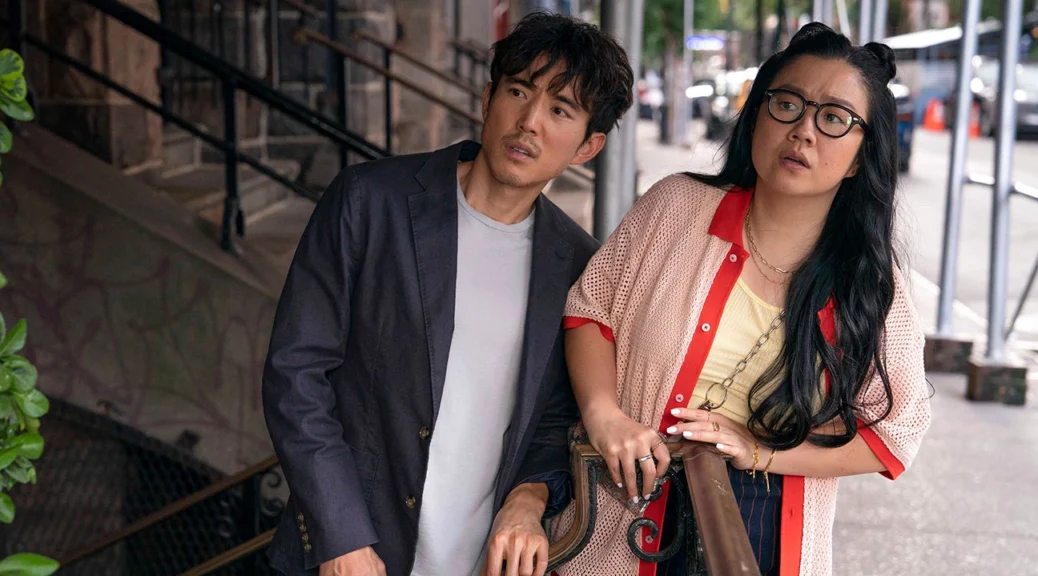
Shortcomings, the feature directorial debut from Randall Park, wants to know what you thought about Crazy Rich Asians.
Did you celebrate it as a massive commercial and critical success that centered in every respect on Asians? Did you see it as a much-needed splash of representation? Or were you unable to see past its mediocre, formulaic fairy tale “money actually does fix everything” themes?
Or could you just be happy that, although it was not a very good film, its massive success opened up opportunities that did not exist before for Asian artists?
Ben (Justin H. Min, After Yang) is the second (hated it). No surprise, Ben hates everything because Ben is an asshole. He offers withering opinions of everyone and everything, so his girlfriend Miko (Ally Maki) isn’t surprised when he decides not to accompany her to New York for her internship.
Actually, she didn’t invite him.
Park’s film, based on Adrian Tomine’s insightful adaptation of his own graphic novel, does the extraordinary – thanks in large part to Min’s spectacular lead performance. They center 90 minutes of our lives around a thoroughly unlikeable protagonist and make us enjoy it.
Min haunted the liltingly lovely After Yang with a devastatingly tender performance. Ben is not Yang, and Min proves nimble with a character who has so little to offer and yet manages to compel interest throughout the tale, though he extends little energy to do it.
A spot-on ensemble helps him out, perhaps because Min reveals Ben so thoughtfully through his interactions with these characters, and partly because the minor characters are so intriguing.
Sherry Cola, hot off her hilarious turn in Joy Ride, is Alice, Ben’s equally acerbic best friend. Tavi Gevinson is inspired as the starving artist pixie Autumn adored by Ben and all the employees at the crumbling movie theater he manages. Sonoya Mizuno (Ex-Machina) and Debby Ryan also pop in for a few scenes of excellent work, while Jacob Batalon (Pete’s best friend in the new Spider–Man movies) gets to make a funny line about Spider-Man while Timothy Simons is a stitch as Miko’s new beau.
It’s smart humor, one that recognizes the defensiveness and fear at the heart of Ben’s disdain for anything that swings for the fences, and for anyone who puts themselves in the vulnerable position to try and fail.
And without succumbing to schmaltz in any measure, Shortcomings asks whether Ben – whether any of us cynics – can just move from Crazy Rich Asians viewer #2 to #3. Not because it was good, but because it opened the door for Shortcomings.
by Hope Madden
My favorite thing to read when I was a child was Disney’s Haunted Mansion. I had the book with the 45 record and fold out, suitcase-looking record player. I listened to it relentlessly, and could recite it still today.
The Disney theme park ride is still my favorite ever.
But The Mouse has had a time trying to figure out how to turn that ride into anything worth watching. Rob Minkoff’s 2003 film stunk up the place, and even 2021’s Muppet version was only mildly entertaining. And it starred Muppets!
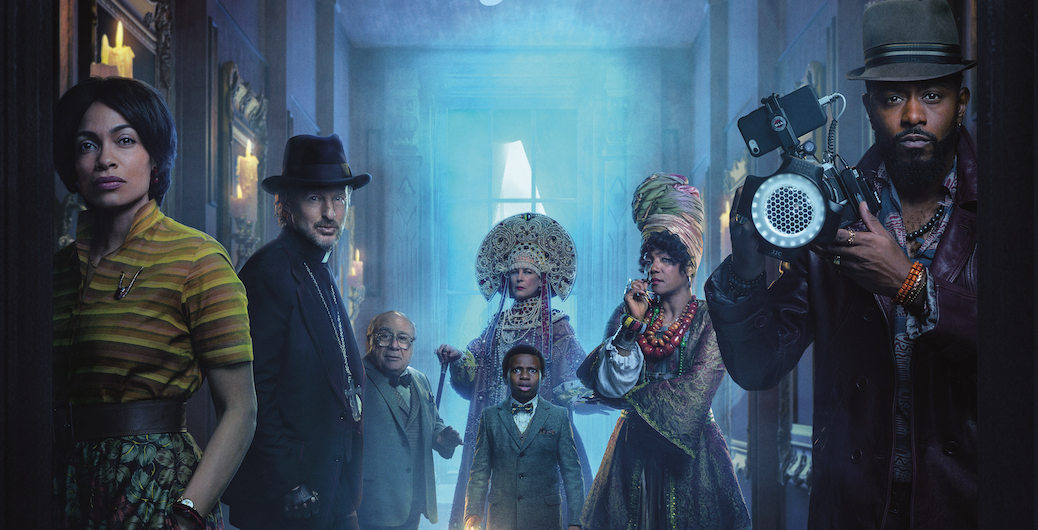
Still, I held out hope for the latest adaptation for a number of reasons, starting with the cast. LaKeith Stanfield is a remarkable actor. Tiffany Haddish is funny as hell. Rosario Dawson, Owen Wilson, Jamie Lee Curtis and Danny DeVito – while often in bad movies – never let you down themselves.
But mainly it was director Justin Simien I trusted. The director behind 2014’s Dear White People and 2020’s Bad Hair has yet to let me down.
Had yet to.
Stanfield plays Ben Matthias, a nonbelieving scientist convinced by Father Kent (Wilson) to bring his equipment and help a mom (Dawson) and her young son (Chase Dillon) clear their new mansion of ghosts. Out of their depth, the pair eventually enlist the aid of a medium (Haddish) and haunted house expert (DeVito).
Katie Dippold’s screenplay picks up on some of the most memorable elements of the ride – ghosts that follow you home, for instance – but most of the spooky fun gets little more than glimpsed. Worse still, the filmmakers miss what makes a haunted house movie compelling – namely that you can’t leave. Everybody keeps leaving. They come back, but this traveling breaks any spell the film begins to cast and leads to a disjointed, sprawling storyline. Unimpressive ghost FX don’t help the film regain its sense of spooky wonder.
Stanfield gives his all, delivering a tender hearted, emotional performance that honestly feels out of place surrounded by such superficial camp. Curtis lacks the comedic timing her character requires – especially disappointing in scenes with Haddish (funny as ever).
Owen Wilson is Owen Wilson, but watching him give a pep talk to a bunch of poorly designed but nonetheless impressionable ghosts is one of the film’s high points. The other is a surprise cameo from Winona Ryder. But it’s not enough.
I cannot figure out why it’s so hard to mine the dozens of ghosts mentioned in this ride and book for a decent haunted house story, but I’ve definitely learned to stop getting my hopes up. If Justin Simien can’t do it and the Muppets can’t do it, it’s probably time to give up.

by Hope Madden
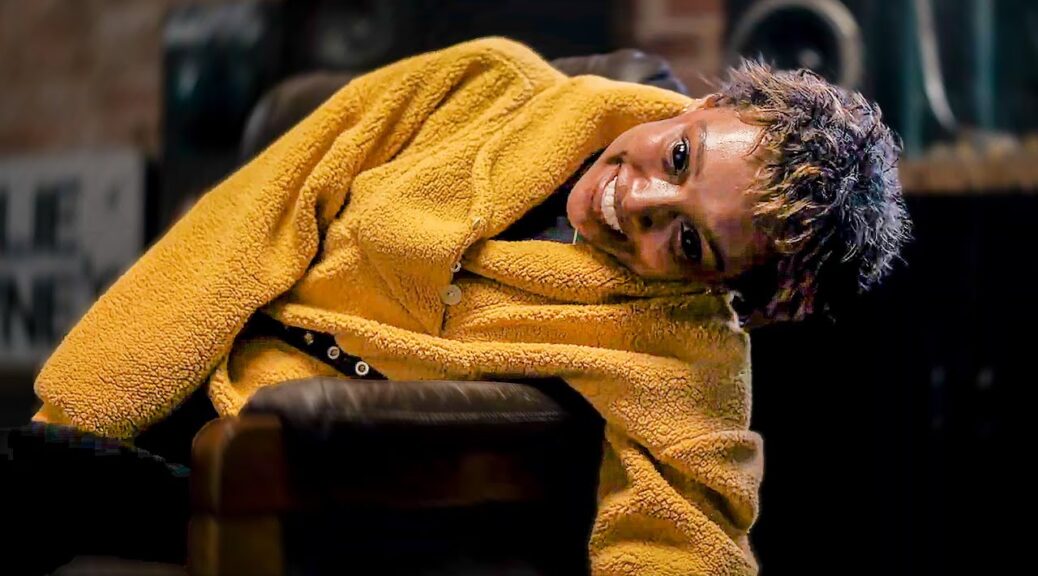
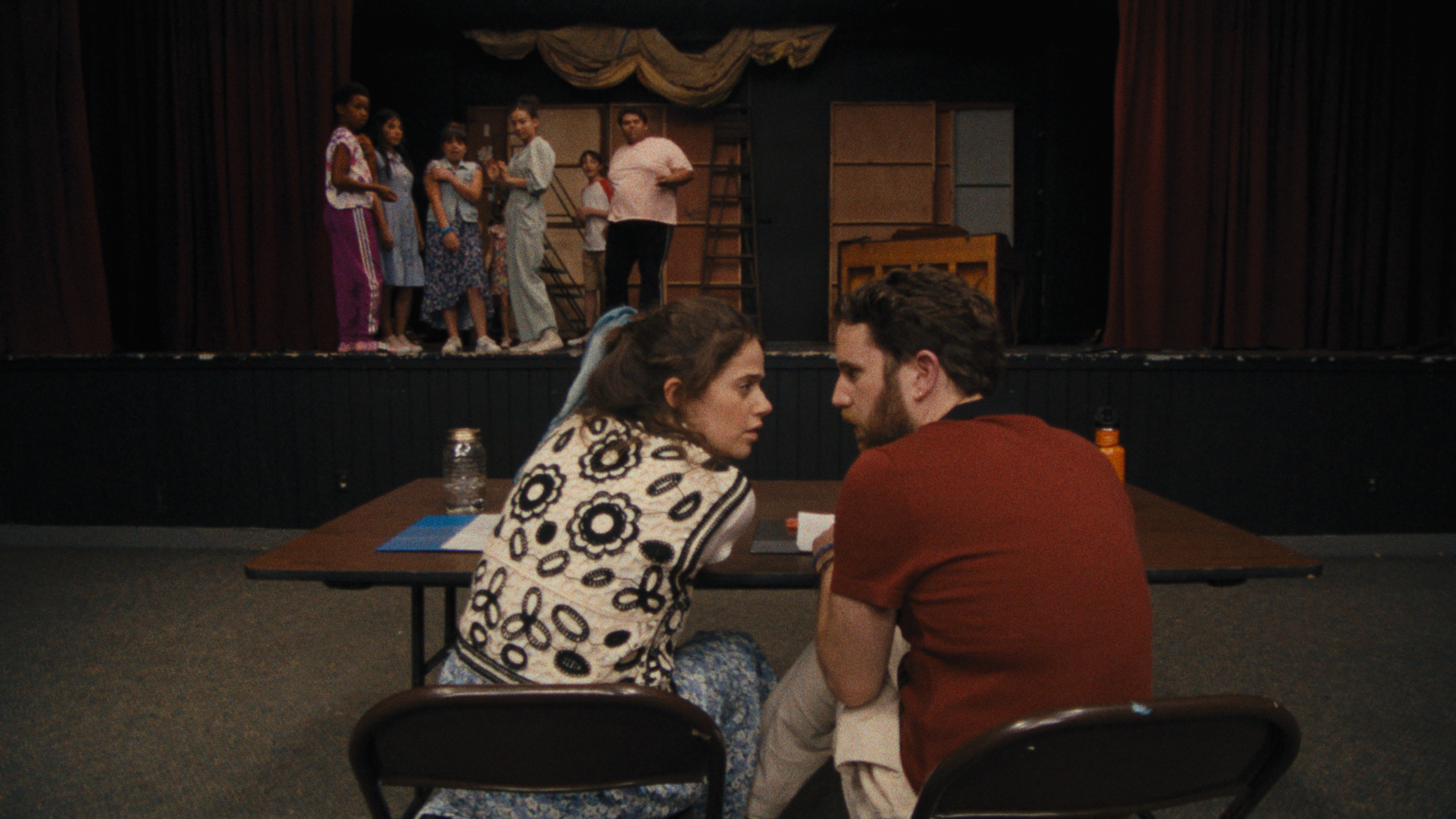
There are certain comedies that feel lovingly, mockingly plucked from experience. The School of Rock. Wet Hot American Summer. Theater Camp.
The premise of the latter is relatively familiar: a summerlong theater camp will be foreclosed on or snapped up by a spendier competitor unless somehow, some way, a little inspiration and a little fairy dust help the lights and the show go on.
At the center of the crisis: Amos (Ben Platt) and Rebecca-Diane (Molly Gordon, who also co-writes and co-directs). Amos instructs in drama, Rebecca-Diane reads auras, conducts seances, and teaches musical theory. The pair has been inseparable since childhood – a conceit made all the more believable with the actual archival footage of wee Gordon and Platt, both 4-years-old, dancing together onstage.
Touches like this help to develop the feeling that this is a lived-in love, a mash note to the awkward, petty, ridiculous, glorious, accepting, embracing, creative community that forms artists.
Both Platt and Gordon deliver touching, flawed, funny performances. The balance of the ensemble shines as well.
Jimmy Tatro nails the earnest dumbass bro pegged to run the camp while his mother (Amy Sedaris – genius as always) is in a coma. Co-writer Noah Galvin offers a sneaky comic presence from his opening moments and eventually steals the show (and the show within the show).
I would have loved to see the Janet (Ayo Edebiri) side story developed. Edebiri’s every moment of screentime is an understated riot. Likewise Sedaris, with little more than a cameo, was missed when she was off screen. But the large cast, most with limited screen time, manages to craft memorably eccentric characters who come together to create a community.
This is the film’s real magic, something the cast and filmmakers – including Gordon’s co-writer and co-director, Nick Lieberman – convey with mockery borne of familiarity and love.
Theater kids are bound to see themselves here, and the loose structure and inside jokes may weaken the experience for everyone else. But underneath the affectionate mockery lurks a moving testament to the nurturing effect of belonging.

by Hope Madden
Like some sort of bourgeoise, European Napoleon Dynamite, the diabolically deadpan Amanda (Benedetta Porcaroli) is a weird, mesmerizing mess (the character, not the film). Writer/director Carolina Cavalli’s feature debut delivers on the weird and mesmerizing, but the vision is intentional and its delivery confident.
The titular character, a 25-year-old with no friends or job who rails against nonexistent oppressors while sponging off her parents, is as off-putting as any narcissist would be. At the same time, thanks to Cavalli’s witty script and Porcaroli’s surprising wealth of vulnerability, you can’t help but root for Amanda.
Her only friend is the family’s middle-aged maid who doesn’t mind so much, but she’d rather spend time with her own kids than get dragged to another rave. Afraid she’s a loser, will always be a loser, Amanda decides to become besties with Rebecca (Galatéa Bellugi), the daughter of a family friend. This is not something Rebecca will accept voluntarily.
Cavalli’s fills dining rooms, bedrooms, gravel paths and cinemas with a dark whimsy that’s hard to pull off. Her film borders on the absurd but never fully crosses over – kind of a Yorgos Lanthimos (particularly Dogtooth), but with more heart and less devastating cynicism.
Amanda is the embodiment of a generation of lonely people unable to form human connection, but her charm is her sincere desire to find that one person who connects with her – regardless of her profound selfishness, interest in nothing, and desire to do nothing except save up enough supermarket store points to win an electric fan.
Cavalli populates Amanda’s world with a few equally odd characters. Rebecca’s self-imposed isolation becomes a fascinating counterpoint to Amanda’s involuntary version. Giovanna Mezzogiorno, playing Rebecca’s mother, offers a liltingly bizarre turn.
Margherita Missoni is a delight playing Amanda’s pharmacist sister, a woman so weary of Amanda’s irresponsible divadom that she appears to melt.
It’s a perversely lovely, lonely world. Cavalli lenses an environment simultaneously elegant and bucolic, a kind of fairy tale where nobody’s feeling very optimistic of a happy ending but are unready to embrace reality quite yet. It leaves a little room for hope.
by Hope Madden
The world today is split. On the one hand there is a rabid sect donning their finest sparkles in anticipation of Margot Robbie’s Barbie. On the other hand, there are those who cannot believe people are this unreasonably geeked over a movie about Barbie.
And then there are the Greta Gerwig fans, who perhaps have a complicated but mostly contemptuous relationship with the doll but will nonetheless stride through the pink boas and tiara glare to soak up whatever glorious wonder the filmmaker has to give us.
That was me, that last one. I’ve come to witness Gerwig’s hat trick.
Barbie, which director Gerwig co-wrote with Noah Baumbach (that slouch), delivers smart, biting, riotous comedy with more whimsy than anything this politically savvy has any right to wield.
It’s a role Robbie was clearly born to play. Barbie’s endless run of perfect days actually ends, and she has to seek the advice of Weird Barbie (Kate McKinnon, perfection). You’ve seen the ads – she has to go to the real world to solve her problem. But there’s one hiccup. (That’s not true, there are plenty of them, but it all starts with this first one.) Ken stows away in the back of the Barbie Dream Car.
Ryan Gosling, the man behind the tan, plays Existential Crisis Ken and it’s possible he’s never been better. That’s a big statement because he was nearly perfect in Drive. Also, The Nice Guys. Also, Half Nelson. Plus, Blue Valentine.
He’s good. This is my point. But his Ken delivers all the self-effacing humor of The Nice Guys with sincere pathos and a vacuous tenderness it’s hard to describe.
And my god, that dance number!
Simu Liu, Michael Cera, Issa Rae and Alexandra Shipp also get to carve out some funny screentime, but the whole cast shines. Barbie does not work without a tightrope of a tone, and everyone walks it with their heels off the ground.
Gerwig’s lack of cynicism may be the thing that shines brightest in all three of her films. Lady Bird was the most open and forgiving coming of age film I’ve ever seen, and also probably the best. Who on earth thought we needed another Little Women until Gerwig mined it for the gorgeous feminism that always drove it?
Barbie is a brilliantly executed, incredibly fun, brightly colored, completely logical feminist statement that should be remembered come awards season.

Sure, the Losers Club leaps to mind. But the truth is that horror films are littered with lovable losers – often their corpses. Why? It’s easy to root for an underdog, and nothing packs an emotional wallop like watching that bumbling, vulnerable sweetheart meet a grim end.
We love them all: Sean & Ed, Viago & Vladislav, Melvin Juno and 100 Bloody Acres‘s Reg & Angus Sampson. But these are our favorites.
In 2008, Sweden’s Let the Right One In emerged as an original, stylish thriller – and the best vampire flicks in years. A spooky coming-of-age tale populated by outcasts in the bleakest, coldest imaginable environment, the film breaks hearts and bleeds victims in equal measure.
Kare Hedebrant‘s Oskar with a blond Prince Valiant cut needs a friend. He finds one in the odd new girl (an outstanding Lina Leandersson) in his shabby apartment complex. She, as it turns out, needs him even more.
This is a coming-of-age film full of life lessons and adult choices, told with a tremendous atmosphere of melancholy, tainted innocence, and isolation. Plus the best swimming pool carnage scene ever.
The unsettling scene is so uniquely handled, not just for horrifying effect (which it certainly achieves), but to reinforce the two main characters, their bond, and their roles. It’s beautiful, like the strangely lovely film itself.
Rated R for “an abundance of outrageous gore,” Dead Alive is everything the early Peter Jackson did well. It’s a bright, silly, outrageously gory bloodbath.
Lionel Cosgrove (Timothy Balme) secretly loves shopkeeper Paquita Maria Sanchez (Diana Penalver), but she has eyes for someone less milquetoast. Until, that is, she’s convinced by psychic forces that Lionel is her destiny. Unfortunately, Lionel’s milquetoast-iness comes by way of decades of oppression via his overbearing sadist of a mother, who does not take well to her son’s new outside-the-home interests. Mum follows the lovebirds to a date at the zoo, where she’s bitten (pretty hilariously) by a Sumatran rat-monkey (do not mistake this dangerous creature for a rabid Muppet or misshapen lump of clay).
Braindead is so gloriously over-the-top that nearly anything can be forgiven it. Jackson includes truly memorable images, takes zombies in fresh directions, and crafts characters you can root for. But more than anything, he knows where to point his hoseful of gore, and he has a keen imagination when it comes to just how much damage a lawnmower can do.
Takashi Miike is an extremely prolific director. He makes a lot of musical films, a lot of kids’ movies, a lot of horror movies, and then this – a mashup of all of those things. Like Sound of Music with a tremendous body count.
The Katakuris just want to run a rustic mountain inn. They’re not murderers. They’re lovely – well, they’re losers, but they’re not bad people. Buying this piece of property did nothing to correct their luck, either because, my God, their guests do die.
You might call this a dark comedy if it weren’t so very brightly lit. It’s absurd, farcical, gruesome but sweet. There’s a lot of singing, some animation, a volcano, a bit of mystery, more singing, one death by sumo smothering, and love. It sounds weird, truly, but when it comes to weird, Miike is just getting started.
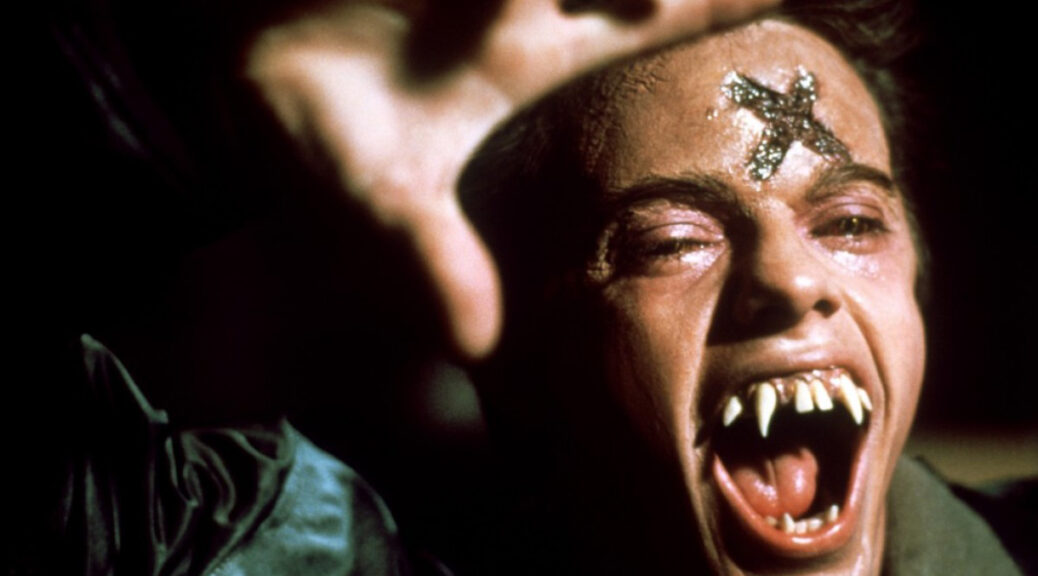
Fright Night takes that Eighties, Goonies-style adventure (kids on an adult-free quest of life and death) and uses the conceit to create something tense and scary, and a bit giddy as well. The feature debut as both writer and director for Tom Holland, the film has some sly fun with the vampire legend.
Roddy McDowall got much deserved love at the time for his turn as a washed-up actor from horror’s nostalgic past, and Chris Sarandon put his rich baritone to campy, sinister use.
Still, everyone’s favorite character was Evil Ed, the manic, pitiful loser turned bloodsucking minion. Credit Stephen Geoffreys for an electric and, at least in one scene, heartbreaking performance.
Horror cinema’s most common and terrifying villain may not be the vampire or even the zombie, but the hillbilly. The generous, giddy Tucker and Dale vs. Evil lampoons that dread with good-natured humor and a couple of rubes you can root for.
In the tradition of Shaun of the Dead, T&DVE lovingly sends up a familiar subgenre with insightful, self-referential humor, upending expectations by taking the point of view of the presumably villainous hicks. And it happens to be hilarious.
Two backwoods best buds (an endearing Tyler Labine and Alan Tudyk) head to their mountain cabin for a weekend of fishing. En route, they meet some college kids on their own camping adventure. A comedy of errors, misunderstandings and subsequent, escalating violence follows as the kids misinterpret every move Tucker and Dale make.
T&DVE offers enough spirit and charm to overcome most weaknesses. Inspired performances and sharp writing make it certainly the most fun participant in the You Got a Purty Mouth class of film.