Screening Room: Mission: Impossible – Dead Reckoning Part One, Obstacle Corpse, Black Ice, The Miracle Club, Quicksand, Once Upon a Time in Uganda
by Hope Madden
Back in 2017, Shin’ichirô Ueda made a truly clever zombie comedy with no zombies or horror in it. It was a film within a film that delightfully hacked away at the undignified and thrilling process of moviemaking.
Between 2017 and 2023, two things have happened worth noting. 1) French filmmaker Michel Hazanavicius has remade Ueda’s movie. 2) I made an independent film. The first point will be the focus, but the second is worth bringing up because Hazanavicius’s Final Cut is an entirely different experience for me now. It made my stomach hurt. Not in a bad way – I mean, that’s never pleasant, but Hazanavicius mines Ueda’s material to create the same compelling, queasying anxiety that likely all filmmakers know.
How charmingly insane is it that the writer/director behind the 2011 surprise Oscar winner The Artist has remade Ueda’s shoestring zombie insanity One Cut of the Dead? He seems such an odd match, with his very fluid, very French comic sensibilities. And his Oscar. But maybe this story compelled him because it’s every filmmaker’s living nightmare.
The screenplay, which he adapted, is almost exactly the same except for a handful of jokes that explain how very Japanese the content is. (The zombies, for instance, are the undead result of Japanese military experiments. “Japanese? Here?” asks one actress. “Improbable, but not impossible,” answers her co-star.)
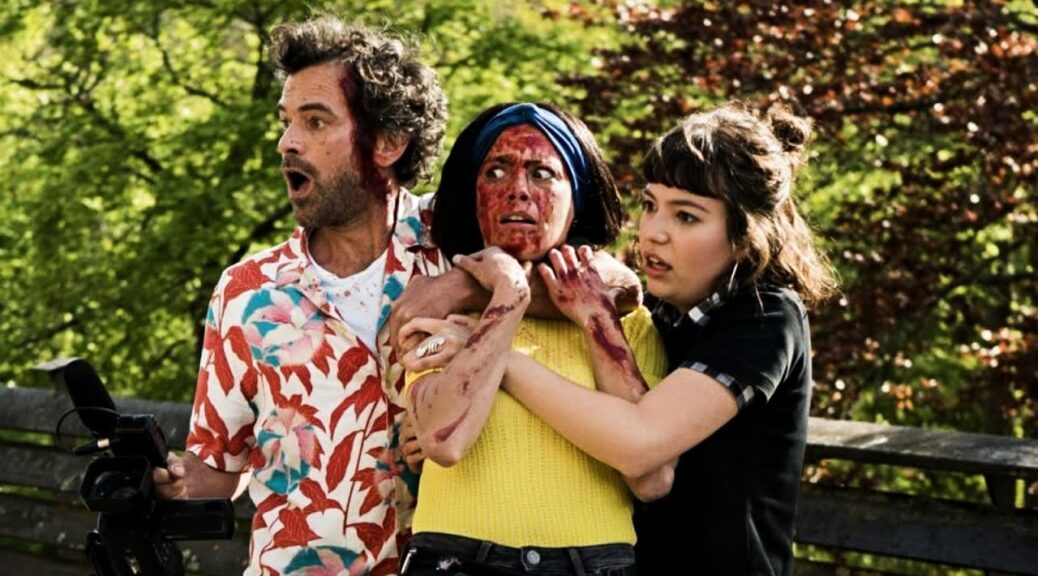
Like Ueda’s original, Final Cut is split basically into two movies. In the first, the cast and crew of a low-budget zombie flick find their set under attack from real zombies. The zealot auteur (Romain Duris) films on, gleeful at the authenticity his movie has finally achieved.
It’s a clever way to deconstruct filmmaking, but it’s only the beginning. And even though Final Cut is a remake, the likelihood that you missed the original requires that I forego additional plot details. I’d hate to spoil the silly ingenuity to come.
Duris is wonderful in a lead performance that requires a lot. Finnegan Oldfield brings wonderful layers to his pretentious young actor character and the whole ensemble seems to have a blast.
Final Cut is missing the manic, raw authenticity of Ueda’s original, though. It feels too well constructed, its jokes too perfectly timed and placed. And yet it is otherwise so similar to One Cut of the Dead that it’s tough not to wonder over the point of remaking it.
If you have not seen One Cut of the Dead, this is a fun film but you should do yourself the favor of finding the original. If you have seen it, Final Cut a good time. If you’re a filmmaker, bring the Pepto.

by Hope Madden
How do Christopher McQuarrie and Tom Cruise outdo Mission Impossible: Fallout? Because even the most impressive of the previous MI films couldn’t hold a candle to that one. I mean, the public restroom fisticuffs alone!
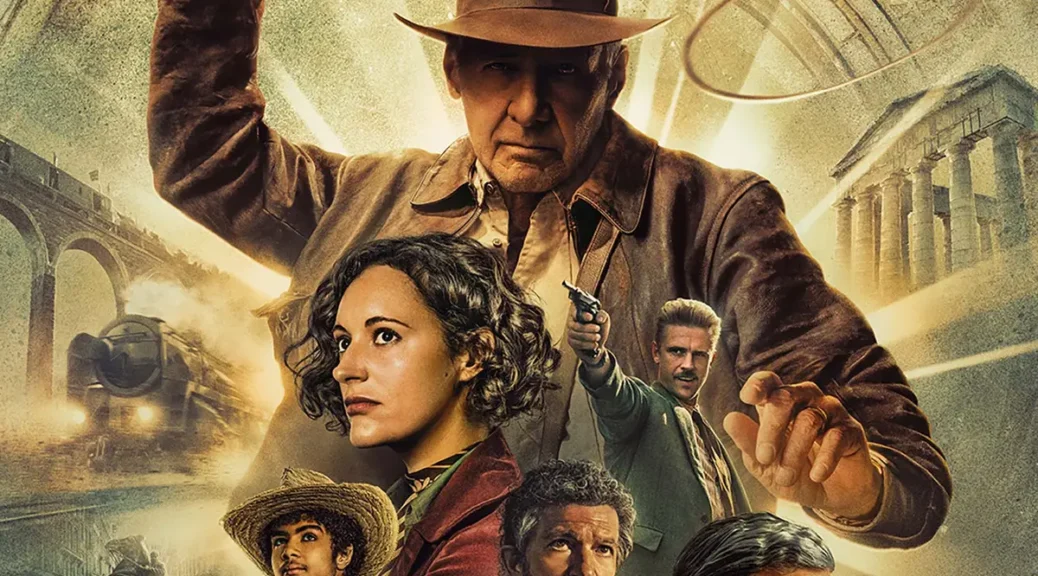
Mission Impossible: Dead Reckoning Part I has big shoes to fill and bridges to blow up and buildings to scale and masks to wear and trains to stop and whatnot. Does it succeed?
Of course, it does.
Ethan Hunt (Cruise) accepts a mission from his sketchy government contact (Henry Czerny). But Ethan and his team will do what they do best: go rogue. Because this key is too powerful for any one man, any one nation.
We know Ethan will do the right thing because he’s a beautiful soul. Come on, have you not been paying attention? But this villain – sentient AI “the Entity” – constantly calculates odds and probabilities. It knows Ethan’s weakness and will use it against him.
It’s a clever script by Bruce Geller, Erik Jendresen and McQuarrie. By weaponizing AI and falling back on the old rubber mask disguises, MI: DR1 mines contemporary anxiety with old school solutions.
But McQuarrie et al know what’s made the best of these films stand out. It’s not the plot – although there’s nothing at all wrong with this plot. It’s not really the villains (that’s Bond’s territory). The MI franchise lives and dies on two things: Ethan Hunt’s humanity and Tom Cruise’s willingness to risk his own life for thrilling stunts.
Expect both – aplenty! – in Episode 7.
Incredibly fun and impressive car chases follow some nifty rooftop running before turning to a magnificent series of train-related set pieces. Plus, of course, that motorcycle/mountain thing they tease in the trailer. Lunacy!
The core team – Cruise plus Simon Pegg, Ving Rhames and Rebecca Ferguson – continue to share entertaining camaraderie. Franchise newcomers Esai Morales, Hayley Atwell and Pom Klementeiff bring varying degrees and styles of badassedness. But, let’s be honest, all eyes are on Cruise.
He sells it. There is something old timey about a runaway train, and yet, in Cruise and McQuarrie’s hands, it’s never looked more fun or more thrilling. It’s a long film – just a hair under 3 hours – and it tells only half the story. Part 2 is due out in 2024. Still, Cruise and company manage to exceed expectations yet again.

by Hope Madden
Back in 2023, Chris Kentis crafted one of the most nerve-wracking explorations in tension ever filmed. Open Water dropped you in the middle of the ocean with a married couple and, eventually, as day turns to night and their scuba boat never comes back for them, a lot of sharks.
Few survival tales have stripped away so much and still left you so frazzled. Andres Beltran follows the minimalist tourism of doom path with his Colombian hiking misadventure, Quicksand.
Although Sofia (Carolina Gaitan) and Nick (Allan Hawco) are separated and heading toward divorce, they accept friend Marcos’s invitation to speak at his medical convention. During some down time, they go for a hike, run into trouble, and flee for their lives in the wrong direction – into a part of the rainforest known for quicksand.
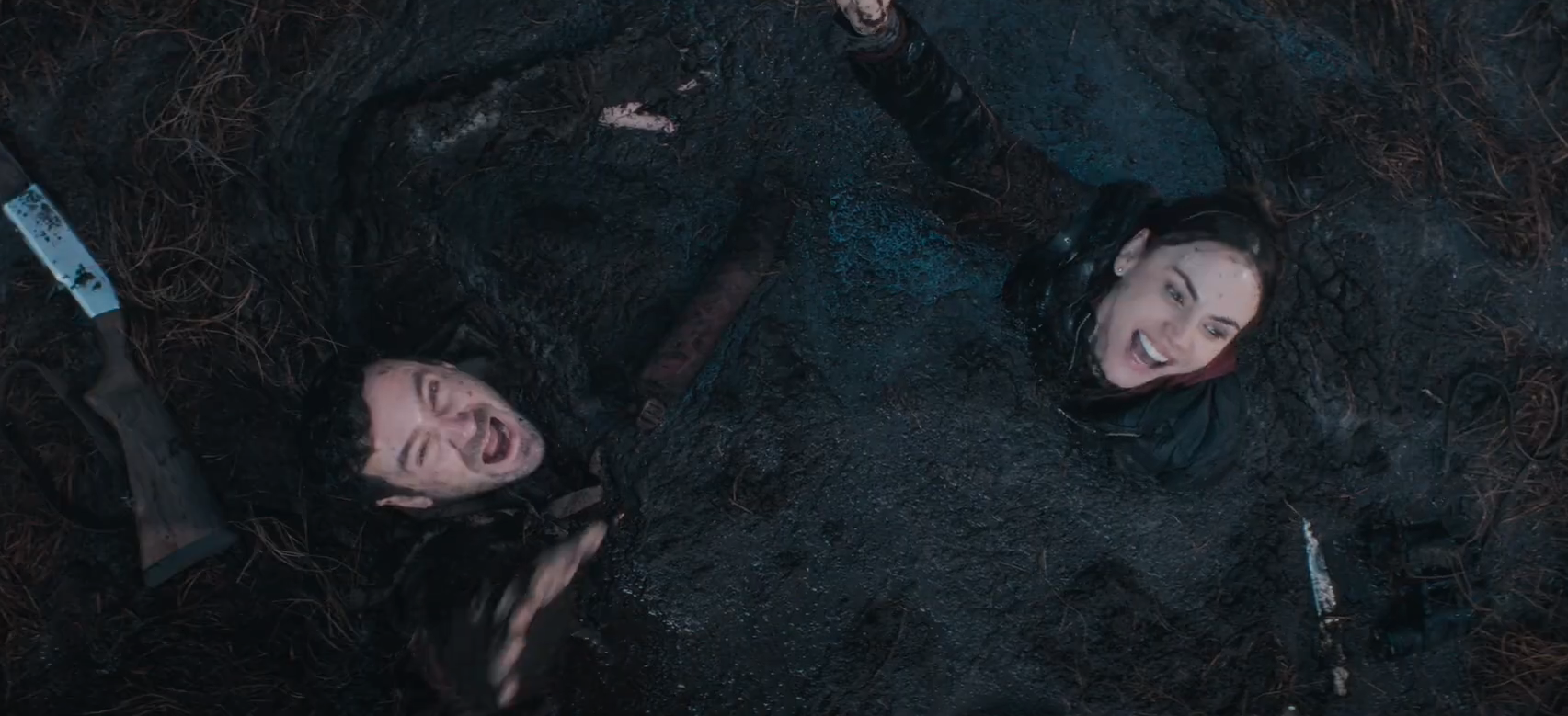
Here is where we spend most of the film: stuck chest deep in Colombian mud with an unhappy married couple. No one will realize they’re missing for at least a day, and even then, they’re miles away from where anyone might look for them.
The quicksand isn’t their only problem, naturally. Trapped as they are, they’re vulnerable to predators – fire ants, snakes – but they’ll still have time to hash out their own issues.
A film this limited, done well, can keep you in the moment, your head on a swivel, your mind working along with the characters’ to find a solution. Adam Green’s 2010 skiing horror Frozen succeeded, as, to a degree, did the 2010 Ryan Reynolds date with claustrophobia, Buried.
Given the extremely limited cast, action and locations, a film like this lives and dies on performances since there’s almost nothing else to look at. Hawco delivers layered, vulnerable work that surprises.
Gaitan is less convincing, partly because the performance is superficial and partly because Sofia’s internal journey feels inauthentic and manipulative.
Beltran’s direction, though competent, lacks inspiration. He never manages to mine tension, and his actors rarely feel truly stuck. Uncomfortable, sure. Dirty and wet, definitely. Trapped and panicked, nope.
The fact that the film’s blandly obvious, wildly outdated message is all we get from our efforts doesn’t do Quicksand any favors, either.

by Hope Madden
Wasting an exceptional if oddly miscast ensemble, Thaddeus O’Sullivan’s The Miracle Club has something important on its mind. It just can’t quite articulate it.
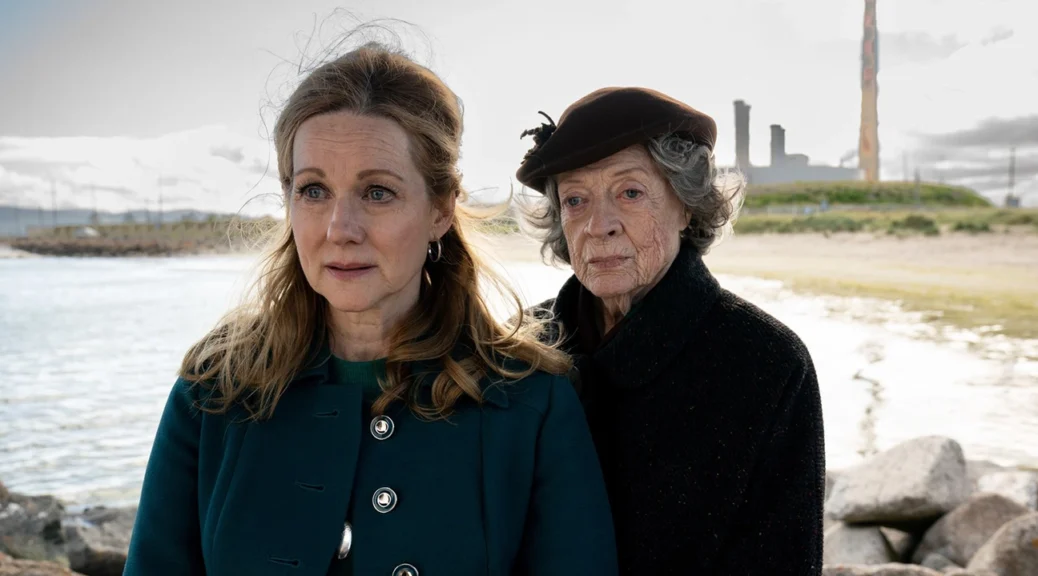
Two Americans and a Brit lead the cast as scrappy Irish folk. Chrissie (Laura Linney) is the prodigal daughter returned for her mother’s funeral. Eileen (Kathy Bates) is her childhood friend who cannot believe Chrissie had the gall to return after what she did. The deceased’s best friend Lily (Maggie Smith) is disappointed the girl didn’t come sooner to comfort her mother during her time of need.
Chrissie’s timing is actually amazing. The whole parish is taking part in a talent show in honor of her mother. The winners get a trip to Lourdes to ask for a miracle. One contrivance follows another and next thing you know, Chrissie, Eileen and Lily are all en route to the holy city in France, begrudgingly together.
The Miracle Club is frustratingly evasive when it comes to Chrissie’s backstory. We get a sense but no real clarity, but it seemed to have been something quite dire. And yet, all is forgiven without much a do.
What O’Sullivan – working from a script by Joshua D. Maurer, Timothy Prager and Jimmy Smallhorne – tries to bring to the surface is an image of systemic oppression relieved only when women support each other.
There is one moment – a climactic confession – where the film’s themes resonate, thanks mostly to Linney’s quietly desperate performance. Dolly (Agnes O’Casey) is hoping that, with the help of the Blessed Virgin, her son will finally speak. But she has a secret, and she believes she’s to blame for whatever ails little Daniel (Eric D. Smith, adorable).
In this moment, O’Sullivan’s film seems to find its miracle, as four women recognize the burden their faith and the patriarchy have put on them. But we must rely on the weighty stares from one talented actor to the next because the film has no intention of pinpointing its deeper concerns.
Worse still, O’Sullivan’s film is so entirely forgiving of both the church and the patriarchy that these themes feel as artificial as the leads’ accents.
O’Sullivan’s tone is forever uplifting, sometimes comically so, but the underlying peril these women have faced and forced is anything but light. He and his writers (men, all) honor these put-upon women who manage. God bless them for managing. God forbid they revolt.

by Hope Madden
Adele Lim’s Joy Ride puts the R in raunchy comedy, but beneath a by-the-numbers R-rated roadtrip is a smart, irreverent, confident tale about owning your identity.
The film opens on Day 1 of the friendship between Audrey & Lolo in the funniest comeuppance scene since the 1993 Thanksgiving pageant at Wednesday Addams’s summer camp. The two are fast friends, even though Audrey (Ashley Park) is ambitious, applied, and constantly proving herself while Lolo (Sherry Cola) makes sex positive art instead of working in her parents’ Chinese restaurant.
But Audrey is about to make partner and move to LA, while Lolo is still living in Audrey’s garage, getting high, making art and enjoying dick.
It’s a phrase you should definitely get used to.
Though Lolo is not the film’s centerpiece, the way the character upends stereotypes about women generally and about Asian women specifically is part of the film’s success. Lim and co-writers Cherry Chevapravatdumrong and Teresa Hsiao use the beats of a familiar story to undermine its relatively misogynistic history. Joy Ride is more than just smart, racially savvy, sexually open and foul mouthed.
It’s funny.
Park is an excellent vehicle for both the core idea of claiming your identity and the necessary schmaltz at the heart of any raunchy comedy. But she is not carrying the comedic burden. Leave that to Cola and Audrey’s other two travel companions, Deadeye (Sabrina Wu, hilarious) and Kat (Stephanie Hsu, hello glorious!).
The commentary on microaggressions, aggressive aggression, all manner of racism, and glass ceilings feels honest, sometimes brave, often borderline (and joyously) lewd.
Don’t be confused. The plot itself is dumb as hell. It’s a roadtrip (well, it’s more of a globe trot) as the four pals travel through China to support Audrey as she lands the big client that will mean a big promotion. Hijinks do what they do best, they ensue.
Not every wild situation lands. Each emotional climax feels destined, obvious. But somehow, even well-worn tropes feel revolutionary when claimed by a filmmaking team (director, all writers, all leads) of nothing but Asian women.
by Hope Madden
There is something elegantly old school about the slow burn literary mystery afoot in Alice Troughton’s feature directorial debut, The Lesson. Its overt, unyielding structure suggests a familiar, even predictable thriller.
However zealously screenwriter Alex MacKeith subscribes to the traditional three act story, theme stated on page 5 and all that, Troughton and a superb cast still manage to mesmerize you. You’re given every piece of evidence you will need, and yet you’ll wonder ceaselessly where it will all lead.
Troughton’s direction evokes a tense thriller, even though the story itself never feels as if danger’s around the corner. Still, the camera angles and shot choices – gorgeous though they are – leave you on edge. With her creeping camera and gorgeous location Troughton blurs the line between intellectual drama and mystery thriller.
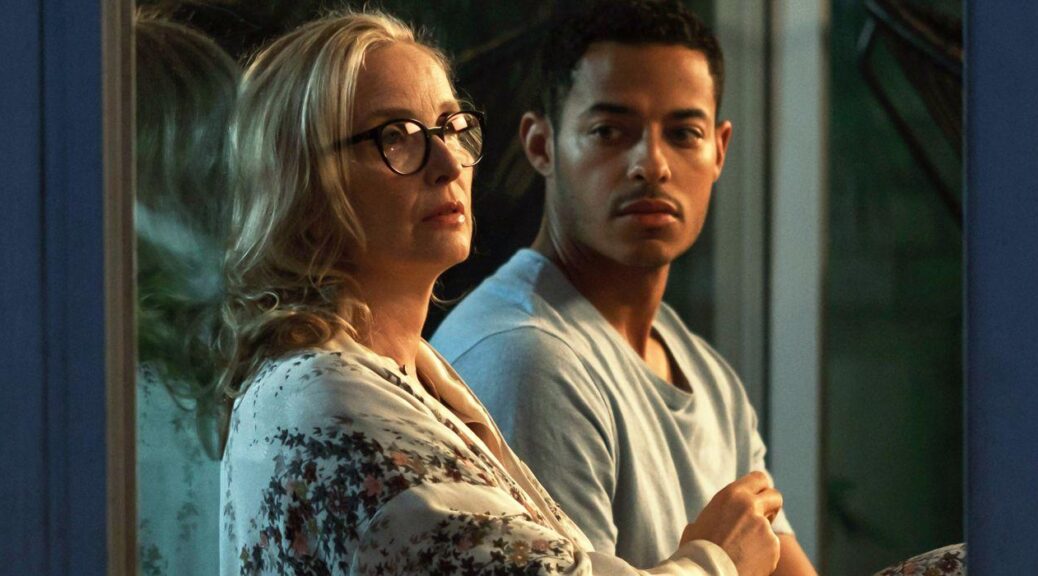
Her stellar cast helps. Richard E. Grant plays renowned writer J.M. Sinclair, whose son Bertie (Stephen McMillan) is in the market for a tutor to help prepare him for Oxford’s entrance exams. Aspiring writer and massive Sinclair fan Liam (Daryl McCormack, Good Luck to You, Leo Grande) gets the job.
Julie Delpy also stars as family matriarch Hélène, whose aloof demeanor strikes the perfect chord against Grant’s vibrance. It would be wrong to say Grant chews scenery, but you certainly can’t look away from him. A charming narcissist, viciously insecure and competitive, his Sinclair is a big presence, which allows the balance of characters to quietly observe, connive even.
McCormack, who was so impressive in the two-person revelation of Leo Grande, delivers another introspective and surprising performance. At times Liam seems to mirror Sinclair’s insecurity and artist’s fragility, but this is not that story.
The conclusion feels a little tidy, but the intricate ballet of character study and mystery that precedes it is so tight you’ll forgive the minor misstep.
by Hope Madden
The past and present look a little too similar in writer/director Georgia Oakley’s quietly profound drama, Blue Jean.
This is true, regardless of the spot-on period detail. Jean (Rosey McEwen) teaches high school PE in Thatcher-era London. Protests over the conservative party’s push to enshrine anti-LGBTQ+ laws echo from radio stations and TV sets in the faculty lounge, greeted with reactions from colleagues that confirm Jean’s instinct to stay closeted.
McEwen’s riveting performance is almost entirely internal. A gesture, a breath, a blink holds meaning. And tears – forget it. Jean is too tightly wound, trying so hard to disappear, to draw no attention to herself so she can slip through her days unnoticed. But why did she get into teaching in the first place?
Without a hint of a heavy hand, Oakley brings us around to that question. She didn’t do it because she didn’t want to leave an impression. No one chooses to spend their days surrounded by adolescents, of all things, if they don’t want to offer some kind of value, provide some kind of guidance toward adulthood.
Jean doesn’t want to be a hero, but there comes a moment when she has to reckon with whether or not she’s willing to be a villain.
McEwen’s isn’t the only impressive performance. A vibrant and endlessly lovable Kerry Hayes makes love interest Viv a buoyant but levelheaded surprise. Young Lucy Halliday is raw vulnerability as Lois, balanced beautifully by the layered, roiling emotion of Lydia Page’s Siobhan.
It’s stunning that this is Oakley’s feature debut. The patient pacing pays off with a fully earned climax and not one note rings false. Every moment aches of heartbreak, but that only makes the pure joy of the final act that much more beautiful. Like the best queer cinema, Blue Jean makes the political personal. But even in the most oppressive climate, it is freedom.