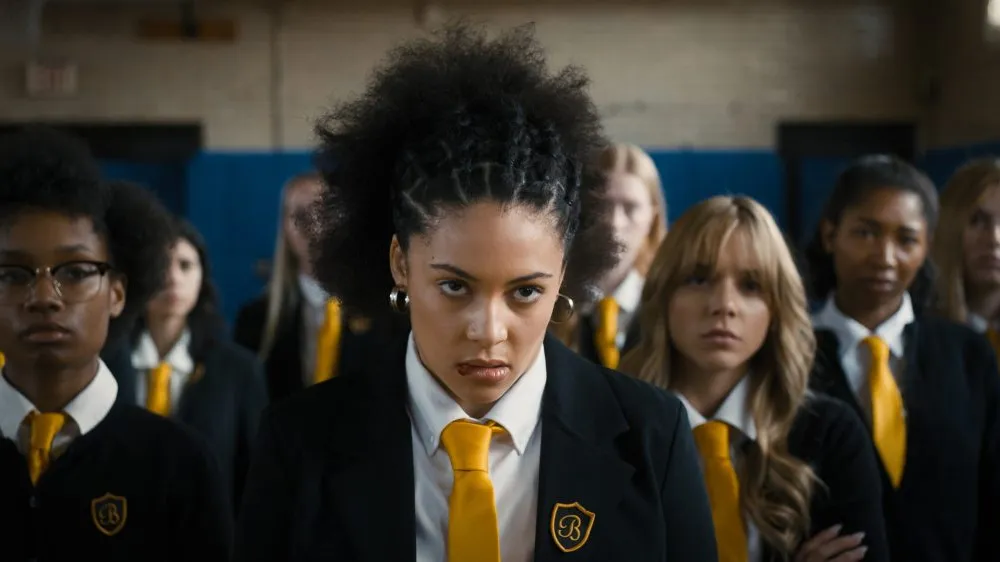
Jennifer Reeder is preoccupied with missing girls. Her 2019 gem Knives and Skin watched a town fall to pieces around one such absence. Where that film was full of melancholy absurdities, Reeder’s latest, Perpetrator, is a little bolder, a little angrier.
As Jonny (Kiah McKirnan) approaches her 18th birthday she goes a tad out of control. Her dad (also in some kind of crisis) doesn’t know what to do with her, but an out-of-town aunt (Alicia Silverstone, a sinister delight) offers to take her in. So, Jonny goes from a fairly anonymous, if reckless, urban life to something far more noticeable in her aunt’s small town.
And there is something deeply amiss in Jonny’s new hometown. Girls just go missing. All the time.
McKirnan’s fish out of water performance is so much fun here because Reeder forces the audience to identify with this feral creature. The rest of the town is so odd, almost willing victims after a lifetime of systemic herding. Jonny’s humor, cynicism and enjoyable streak of opportunism give the film a constant sense of forward momentum, though the just-this-side-of-surreal atmosphere has a dreamlike quality.
Silverstone’s prickly, unpredictable performance is nothing but twisted fun, and all the supporting turns contribute something simultaneously authentic and bizarre to the recipe. (That’s a cooking metaphor because of Aunt Hildie’s birthday cake, an ingenious and foul plot kink worth acknowledging.)
Reeder’s work routinely circles back to peculiar notions of coming of age, but John Hughes she ain’t. Goofiness and seriousness, the eerie and the grim, the surreal and familiar all swim the same bloody hallways, practice the same open shooter drills, and speak up at the same assemblies honoring the latest missing girl.
Reeder’s interested in the way women are raised to disregard one another, to compete with each other, to be adored and consumed, sexualized, victimized and vilified. Her reaction to this environment amounts to a reclamation of blood. Perpetrator swims in blood and gore and humor and terror and feminism galore.
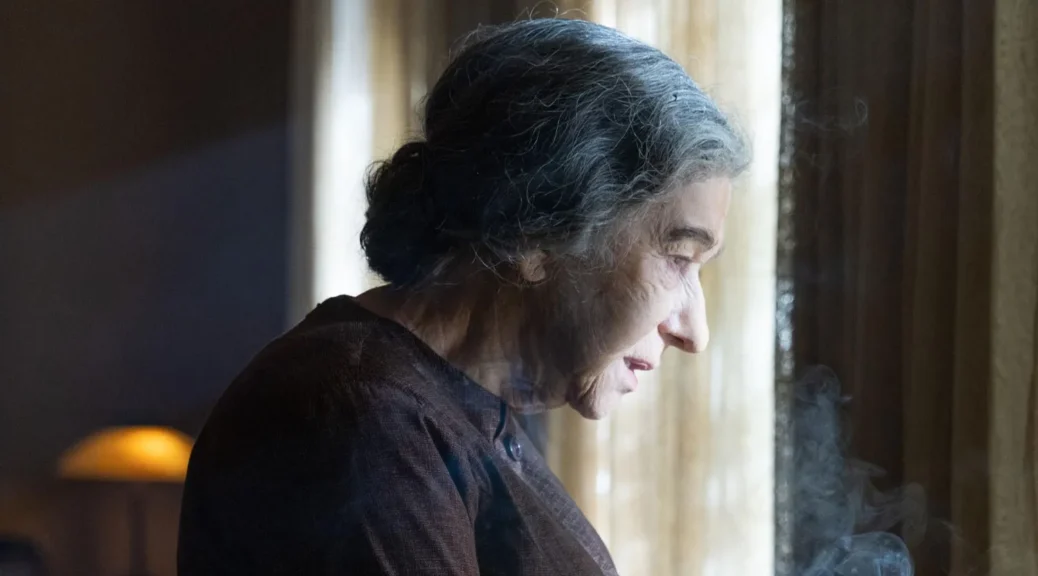
The Agranat Commission, a 1974 panel investigating the intelligence mishap that left Israel unprepared for the 1973 Yom Kippur War, creates the framing device for Guy Nattiv’s latest, Golda.
The venerable Helen Mirren dons sensible shoes, knits heavy brows and chain smokes her way through a terrific performance inside a superficial, if perfectly time stamped, historical drama. As Prime Minister Golda Meir, Mirren stands out, not only because the film delivers constant opportunities for the Oscar winner to showcase her skills. Mirren is a movie star and Nattiv films her as one – lengthy close ups, moments of vulnerability, moments of breathtaking savvy, crushing failure and overwhelming grief.
Her performance is never showy. But the direction is.
Much has been made of the fact that the English actor was perhaps an inappropriate choice to play Israel’s first woman Prime Minister. Mirren is capable, of course – she is an amazing talent. But she is hard to miss as Helen Mirren in the war room surrounded by Israeli actors including Lior Ashkenazi (as Chief of Staff David Elazar), Rami Heuberger (as Minister of Defense Moshe Dayan) and Dvir Benedek (as disgraced General Eli Zeira).
But Mirren’s appropriateness is not the problem with this film. Her performance certainly isn’t. The problem with Golda is how inexplicably bland it is. Writer Nicholas Martin penned the delightful Florence Foster Jenkins after a career in TV, but neither suggest a knack for nail-biting suspense, which is what this film both required and deserved.
Golda is no biopic. Indeed, the decision to include archival news footage of Meir only demonstrates how poorly this film captured the spirit of the Prime Minister.
It’s not a war movie by any stretch – there’s no action to speak of – and as a political thriller, it’s a bit too plodding to keep your attention. Frustrating is what it is.
Sweden has been making freaky, introspective, gorgeous, nightmarish horror for fully 100 years. Why has it taken us so long to celebrate that? Here are our favorite Swedish horror movies.
5. Haxan (1922)
Part power point presentation, part reenactment, Benjamin Christensen’s semi-documentary about the hysteria of witchcraft from early times through 1922 is a remarkable piece of cinema.
His thoroughness and fascinating point of view – particularly logical and liberal for 1922 – help the film keep your attention. But what makes this 100+ year old effort remain a fixture for movie buffs is its gorgeous filming. Yes, the use of camera tricks are impressive for the time, but dramatic segments often take on the look of a Renaissance painting.
Christensen’s use of light and framing sometimes surpass even contemporaries Murnau and Dreyer, and his playful depictions of Satanic orgies – That butter churn! That tongue! – never lose their charm.
4. Koko-di Koko-da (2019)
What about Groundhog Day, but with unrelenting psychological dread? That’s the premise of Johannes Nyholm’s horror fable Koko-di, Koko-da, and it’s a testament to writer/director Nyholm that the film’s excruciating time loop manages to go from torturous to therapeutic.
One grieving couple’s unresolved trauma starts to literally stalk them in the shape of three carnivalesque figures, with each nightmare encounter ending the same way: some gruesome death, and then Tobias wakes up to repeat the loop all over again.
Koko-di Koko-da is not a pleasant film to watch, but it is often a beautiful one. And it lays bare the truth that there’s no escaping misery in life—that the only way to break the cycle is to confront it, pain and all.
3. Border (2018)
Sometimes knowing yourself means embracing the beast within. Sometimes it means making peace with the beast without. For Tina—well, let’s just say Tina’s got a lot going on right now.
Border director/co-writer Ali Abbasi has more in mind than your typical Ugly Duckling tale, though. He mines John Ajvide Lindqvist’s (Let the Right One In) short story of outsider love and Nordic folklore for ideas of radicalization, empowerment, gender fluidity and feminine rage.
The result is a film quite unlike anything else, one offering layer upon provocative, messy layer and Abbasi feels no compulsion to tidy up. Instead, he leaves you with a lot to think through thanks to one unyieldingly original film.
2. Let the Right One In (2008)
In 2008, Sweden’s Let the Right One In emerged as an original, stylish thriller – and the best vampire flick in years. A spooky coming of age tale populated by outcasts in the bleakest environment, the film breaks hearts and bleeds victims in equal measure. Kare Hedebrant‘s Oskar, with his blond Prince Valiant haircut, falls innocently for the odd new girl (an outstanding Lina Leandersson) in his shabby apartment complex. Reluctantly, she returns his admiration, and a sweet and bloody romance buds.
As sudden acts of violence mar the snowy landscape, Oskar and Ali grow closer, providing each other a comfort no one else can. The film offers an ominous sense of dread, bleak isolation and brazen androgyny – as well as the best swimming pool scene perhaps ever. Intriguingly, though both children tend toward violence – murder, even – you never feel anything but empathy for them. The film is moving, bloody, lovely and terrifying in equal measure.
1. Hour of the Wolf (1968)
An atmospheric masterpiece, Ingmar Bergman’s meditation on artistic conflict and regret is a haunting experience.
Bergman favorites Max von Sydow and Liv Ullman are a married couple spending time on an isolated, windswept island. Ullman’s Alma is pregnant, and her relationship with her husband becomes strained as his time and attention become more and more consumed by visions, or demons – or maybe they’re just party people.
Von Sydow’s character is tempted with the decadence missing from the wholesome life that may be dissatisfying to him. But it’s Ullman, whose performance spills over with longing, that amplifies the heartbreak and mourning that color the entire film.
Shot in incandescent black and white, with Bergman’s characteristic eye for light and shadow, Hour of the Wolf is a glorious, hypnotic nightmare.
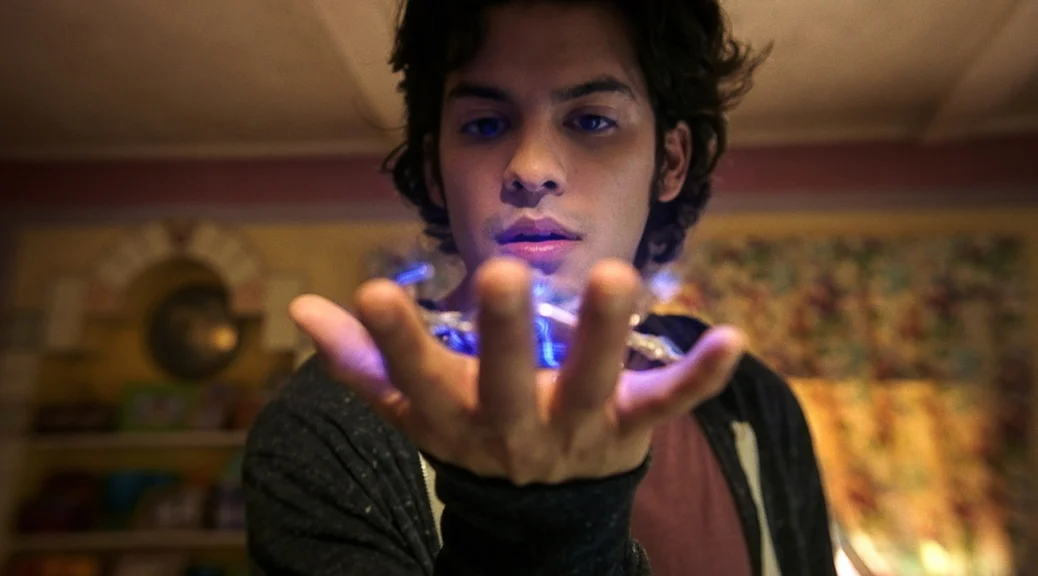
There’s something in the bones of the new DC movie Blue Beetle that’s very familiar. Very Spider-Man. Very Captain Marvel. Very Green Lantern, The Flash and Shazam.
Mainly Shazam.
And director Angel Manuel Soto capably builds a recognizable plot from those bones. An unlikely protagonist (Xolo Maridueña) takes on superpowers without really wanting to, goes through an awkward phase of figuring out how to use them, then stumbles into danger and crime, and must eventually accept his fate and save humanity.
Blue Beetle delivers solidly on each of those plot points. Where it really makes its presence known, though, is in the way it fleshes out those bones.
Blue Beetle is unapologetically, vibrantly Latinx. It is stunning how a change of perspective revives a story.
Writer Gareth Dunnet-Alcocer (Miss Bala) writes rich, funny, fully developed characters and a winning cast takes advantage. Maridueña charms in the lead role while Belissa Escobedo’s sarcastic sister keeps him in check. George Lopez steals scenes as the looney, tech savvy, conspiracy theorist uncle and Nana (the great Adriana Barraza) kills it.
Plus, Susan Sarandon hams it up as villainous billionaire (is there any other kind?) Victoria Kord. It’s fun. But it’s not the film’s differentiator. This Mexican American superhero isn’t separated from his family, his neighborhood, his backstory or culture. Indeed, those roots not only strengthen the hero himself, but the entire film.
The story of underdogs facing down corporate greed, of the terrors of the global military industrial complex, the blight of gentrification, the joy of a good telenovela and every joke springs naturally and lands better because of the cultural context the filmmakers use to ground their story.
The plot may not break new ground, but the film itself feels revolutionary. Like Nana.
Have you seen the trailer for Strays, the live action dog movie about a sweet mutt (voice by Will Farrell) abandoned by his terrible owner, Doug (Will Forte)? He’s taken in by other dogs off the leash who join him on a journey to return home and bite Doug’s dick off.
If that trailer did not make you laugh, you will not laugh during Strays.
If that trailer made you laugh, savor it, because it represents all the laughs to be found in the entirety of Strays. Unless you’re a huge, huge fan of couch humping and feces. If so, then by all means, nab a ticket.
Farrell’s Reggie is in a toxic relationship, and new friends Bug (Jamie Foxx), Maggie (Isla Fisher) and Hunter (Randall Park) want him to see that he deserves better than Doug. And he deserves to bite the man’s dick off. So, it all becomes a sort of homicidal Homeward Bound, if you will, and that’s a funny idea.
The film is very definitely R-rated, taking unexpected detours that sometimes go where you just don’t want them to go. Other times, they go to a carnival so they can make fun of “narrator dogs” (voiced by A Dog’s Journey’s Josh Gad, which is honestly ingenious).
But these sparks of fun are few and far between and the meanspirited humor overwhelms the odd bits of inspired comedy. And then there’s all that dog shit.
Director Josh Greenbaum was mainly successful in finding a balance for the zaniness of his 2021 effort, Bar and Star Go to Vista Del Mar. Mainly. But the bright points were brighter and the rest of it was just weird.
Strays, written by Dan Perrault, is the laziest kind of “road picture” – a series of unrelated sketches. There’s a Point A (the scary city block where Doug abandoned his dog) and Point B (Doug’s penis), but those steps in between are random skits about red rockets and chew toys. And those moments are just not funny enough to merit a full feature.
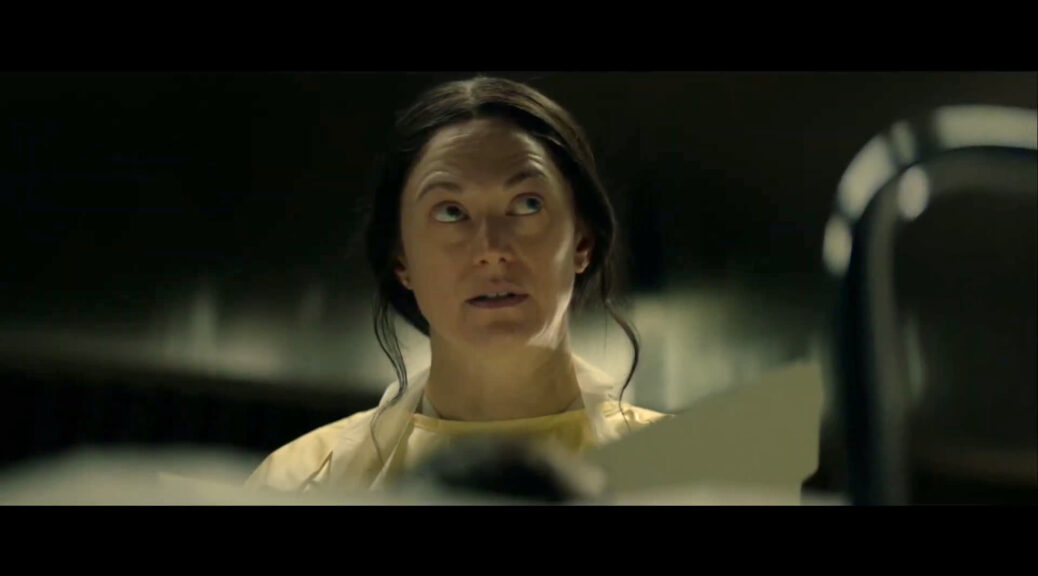
Birth/Rebirth opens on two different women performing two different tasks in a hospital. Their paths will cross, but at the moment, Celie (Judy Reyes, Smile) and Rose (Marin Ireland, The Dark and Wicked) are revealing something of themselves to us.
Celie’s environment: chaotic, human. A prenatal nurse used to comforting and nurturing patients in need while navigating an emergency, Celie is a tight balance of empathy and control.
Rose – alone with a cadaver in a pathology lab in the bowels of the hospital – is a fastidious loner, cold, logical. She is pure science.
Their story, like Barbie’s, is about how impossible it is to be a woman. Director Laura Moss moves seamlessly from short to feature with this modern take on Frankenstein and motherhood.
Tragedy strikes early in Moss’s film. Overworked and under rested, Celie blames herself for her daughter Lila’s death. And now the hospital can’t even find the girl’s body.
But Rose can.
Little by little, with motives simultaneously opposed and identical, Celie and Rose become a duo. An odd couple, if you will, each with her own responsibilities, both with the same goal: bring Lila back.
Ireland’s Rose is an exceptional ghoul because her every behavior feels rooted in reality, which makes her both repugnant and sympathetic. However cold her behavior seems, there’s logic behind it. Her joy, those rare flashes, hit harder. She’s like a macabre Spock.
Reyes is her equal and opposite, compassionate but hard-headed. And as their relationship thickens, you see each woman changing thanks to exposure to the other. Rose slowly warms and becomes more human. Celie inches closer and closer to ghoul.
The film amounts to a profound parenting nightmare, and each actor takes on the role of parent to create an unnerving dynamic again guided by authenticity. All of it pulls the psychological scabs of exhausted parenting.
Moss can’t quite stick the landing, but their shoestring Frankenstein fable feels closer to the truth than most of them.
I give people credit for finding new ways to tell the Dracula story. And I’m always up for whatever director André Øvredal (Trollhunter, The Autopsy of Jane Doe, Scary Stories to Tell in the Dark) wants to show me. So, I was in for The Last Voyage of the Demeter, even though the trailer didn’t do that much for me.
If you’re familiar with the Dracula story, the Demeter was the derelict ship bound from Varna found outside London, nothing left but a dead captain who’d lashed himself to the wheel, and his fateful captain’s log.
Øvredal’s film, written by Bragi F. Schut (Escape Room, Samaritan) and Zak Olkewicz (Bullet Train, Lights Out) from a handful of Bram Stoker’s pages, confines itself almost exclusively to that watery passage. So, the writers have their work cut out for them, since we know the shape the ship’s in when it hits England.
First things first. Let’s get acquainted with the crew. Can’t connect to a scary story unless you’re invested in those trapped on the high seas with a bloodthirsty monster. Corey Hawkins (The Tragedy of Macbeth) is Clemens. He’s a man of science, so has no patience with the inevitable “devil on board” nonsense.
David Dastmalchian (The Suicide Squad) plays against type as the one guy who is not weird, the second in command after Captain Eliot (Liam Cunningham, elegantly authoritative as ever). His grandson Toby (Woody Norman, C’mon C’mon and Cobweb) brightens and tenderizes the crew.
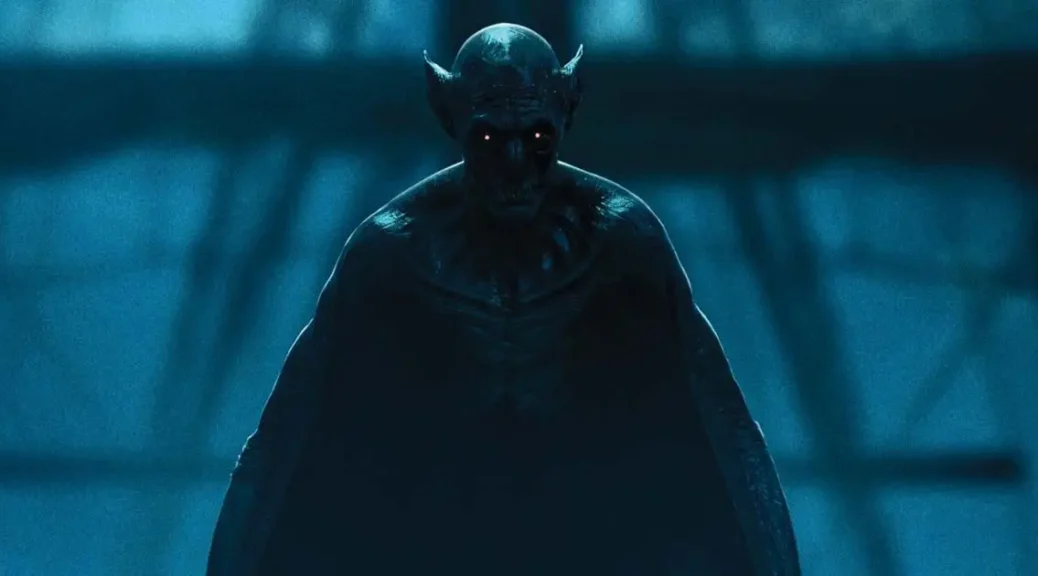
Most importantly, Javier Botet plays Dracula. The 6’7” actor (and he can act – please see Amigo for proof of that) brings tremendous presence to the beastly creature rationing crew until he can get to the smorgasbord that is London. The monster looks pretty good, too – kind of a cross between Neil Marshall’s crawlers (The Descent) and Tobe Hooper’s Mr. Barlow (Salem’s Lot).
Øvredal’s camera lurks and leers around corners, from above, through rigging, creating a constant unease while offering great visual variety, given the limited location options. Performances are strong, FX are solid, and there’s a mean streak to the carnage you may not see coming.
But the writing is not The Demeter’s strength. The plot does nothing intriguing, the story offers nothing new nor does it do anything to deepen or enrich the Dracula legend. The inevitability of the story doesn’t help, nor does the full 2-hour run time.
Turns out there may be a reason no one’s told this part of the story before. There’s just not that much to say.
Milton (Ben Kingsley) walks to every town council meeting to recommend, when the time comes for citizen suggestions, that the town change its motto from “a good place to call home” to “a good place to refer to as home” in case it confuses people looking for somewhere to phone home.
He’d also like to see a crosswalk on Trent Avenue between Frost and Allegheny.
Oh, and an alien spaceship crash landed in his backyard and took out most of his azaleas, so if anyone knows what to do about that…
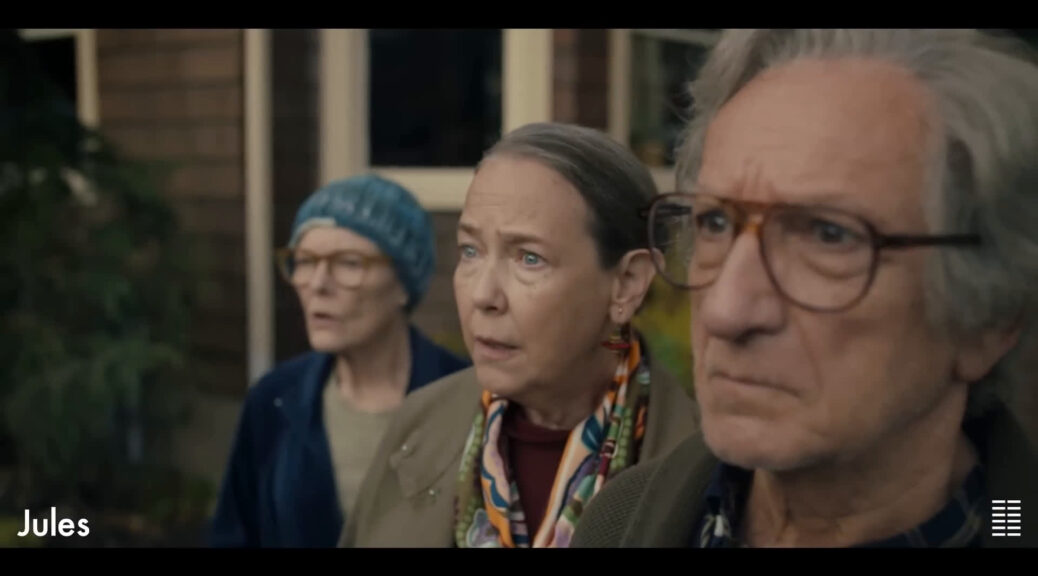
Director Marc Turtletaub, working from a script by Gavin Steckler, reimagines E.T. with his charming suburban sci-fi, Jules. Rather than a group of kids determined to hide their alien friend from grownups, its Milton, Sandy (Harriet Sansom Harris) and Joyce (Jane Curtin) – three elderly singles – doing the same.
Because the truth is, it would be hard for kids to pull something like this off nowadays. In the Eighties, sure – nobody was watching us then. But today? No, the innocents who go unnoticed these days are in their eighties.
The cleverness of the concept is bittersweet, as are the performances. Curtin’s a hoot and Kingsley’s characteristically spot-on, but it’s Harris’s open, joyful performance that holds the story together.
The veteran actors immediately gel as three lonesome individuals who come together over the shared fascination and protectiveness brought out by their new friend, Jules. Or Gary. Joyce thinks he looks more like a Gary.
A line running through the film parallels the wild circumstances with aging, and in particular, with dementia. Naturally, Milton’s behavior is not taken seriously and rather considered proof that he may need to be looked after. The fact that there is some truth to that worry haunts the film and adds texture to the otherwise lighthearted antics.
Turtletaub can’t quite pull those threads together, though. While Jules is a lovely film, its big-hearted take on mental health and science fiction made me just want to watch Colin West’s somewhat similar but vastly superior Linoleumagain.
Still, Jules is a dear, gentle film that gets in some decent laughs.
Who had the genius idea of counting down the best siege movies in horror? Why, it was our friend Dustin Meadows – filmmaker, actor, composer, comic and all around awesome dude. So awesome that he brought filmmaker Alison Locke (The Apology) to the club and we ranked the best bloody sieges in horror.
5. 30 Days of Night (2007)
A horde of very nasty vampires descend upon an arctic town cut off from civilization and facing 30 solid days of night. A pod of survivors hides in an attic, careful not to make any noise or draw any attention to themselves. One old man has dementia, which generates a lot of tension in the group, since he’s hard to contain and keep quiet.
There’s no knowing whether the town has any other survivors, and some of these guys are getting itchy. Then they hear a small voice outside.
Walking and sobbing down the main drag is a little girl, crying for help. It’s as pathetic a scene as any in such a film, and it may be the first moment in the picture where you identify with the trapped, who must do the unthinkable. Because, what would you do?
As the would-be heroes in the attic begin to understand this ploy, the camera on the street pulls back to show Danny Huston and crew perched atop the nearby buildings. The sobbing tot amounts to the worm on their reel.
Creepy business!
4. From Dusk till Dawn (1996)
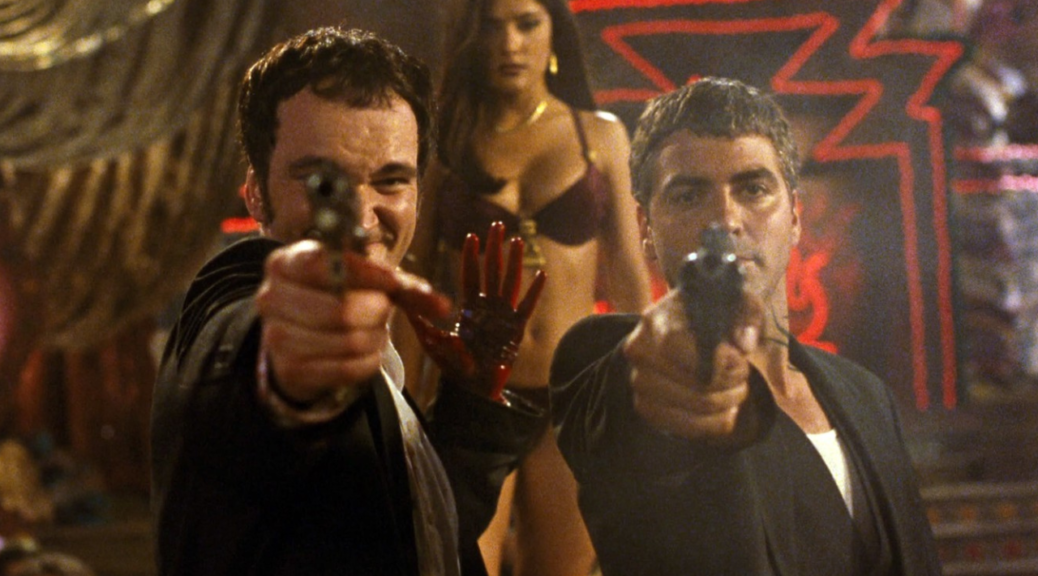
This one represents a kind of backwards siege. Our heroes (though most of them are hardly heroic) are trapped inside the villain’s lair already and have to fight them off from there. But they only have to keep these vampires at bay until dawn.
You have everything you need for a good siege movie. A horde of baddies, a trapped group of characters whose true character will be revealed, scrappy weapons making, traitors in the midst, and the desperate hope to make it til morning.
Robert Rodiguez impresses with Tarantino’s south of the border tale with an outrageous and thoroughly entertaining mixture of sex, blood and bad intentions.
3. Dog Soldiers (2002)
Wry humor, impenetrable accents, a true sense of isolation and blood by the gallon help separate Neil Marshall’s (The Descent) Dog Soldiers from legions of other wolfmen tales.
Marshall creates a familiarly tense feeling, brilliantly straddling monster movie and war movie. A platoon is dropped into an enormous forest for a military exercise. There’s a surprise attack. The remaining soldiers hunker down in an isolated cabin to mend, figure out WTF, and strategize for survival.
This is like any good genre pic where a battalion is trapped behind enemy lines – just as vivid, bloody and intense. Who’s gone soft? Who will risk what to save a buddy? How to outsmart the enemy?
But the enemies this time are giant, hairy, hungry monsters. Woo hoo!
2. Green Room (2015)
Young punk band the Ain’t Rights is in desperate need of a paying gig, even if it is at a rough private club for the “boots and braces” crowd (i.e. white power skinheads). Bass guitarist Pat (Anton Yelchin) eschews social media promotion for the “time and aggression” of live shows, and when he accidentally witnesses a murder in the club’s makeshift green room, Pat and his band find plenty of both.
As he did with Blue Ruin, Saulnier plunges unprepared characters into a world of casual savagery, finding out just what they have to offer in a nasty backwoods standoff. It’s a path worn by Straw Dogs, Deliverance, and plenty more, but Saulnier again shows a knack for establishing his own thoughtful thumbprint.
1. Aliens (1986)
“Game over, man! Game over!”
That was the moment. The Marines believed they were in for a bug hunt. Ripley knew better. And now they were trapped. Surrounded.
The scene where the Marines and company see that they are outnumbered and out maneuvered by their xenomorph opponents is a jumping off moment for James Cameron. More action film than horror, Aliens still terrifies with sound design, production design, and the realization that these beasties are organized.