Hard core, low budget genre films tend to seem cheesy: women in prison, boobs, torture, splatter, training montages, katanas. Filmmakers Johannes Hartmann and Sandro Klopfstein embrace the budget constraints, embrace the genre, and absolutely celebrate the cheese with their opus, Mad Heidi.
Their genre sendup returns to Heidi, that cheery Swiss Alps legend, along with her grandfather and Peter the goat herder. But not all is well in Switzerland. The country’s Very Swiss Leader (played with relish by Casper Van Dien) is something out of a bad 1970s exploitation film. Swissploitation, if you will.
So, Heidi (Alice Lucy) must suffer, find her strength, and reclaim her country for the Swiss and the lactose intolerant.
One of the benefits of making a spoof is that no one can hold your ludicrous plot against you. Indeed, the more ludicrous, the spoofier. The plot – what there is of one – exists to move Heidi and her story from one recognizable genre beat to the next. The filmmakers clearly possess a sincere fondness for grindhouse action. Their film never feels mean-spirited, and more importantly, it never feels lazy. Instead, Mad Heidi delivers sometimes inspired set pieces, gags and jokes that land harder if you’re in on them.
It’s also sometimes shockingly beautifully shot.
While the filmmakers are obviously having fun with genre sensibilities, they also showcase genuine cinematic craftsmanship with a clearly low budget. The movie looks great. Gore effects strike the ideal over-the-top practical vibe. Hartman and Klopfstein make their chosen genre’s ludicrous nature, plot holes and unnatural pauses, cartoonish characters, and bloodlust work for them.
Van Dien – so good earlier this year in Daughter and mainly known for maybe the world’s greatest action spoof, Starship Troopers – delivers fun, exaggerated comic timing. In fact, the whole cast bad-acts quite well. Still, even at just 92 minutes, the film feels more than a little bloated around the midsection.
It can’t hurt to watch it, though, assuming you’re in the mood for an awful lot of goopy, sloppy, sticky – dare I say cheesy – action and you’re able to fully unplug your brain.
There’s never a bad time for an Irish horror movie. I guess it’s lucky that Grabbers director Jon Wright is back with the new tale of bloodthirsty little people, Unwelcome. Wright’s yarn follows Londoners Maya (Hannah John-Kamen, Ant-Man and the Wasp) and Jamie (Douglas Booth, Pride and Prejudice and Zombies). We meet as the two 1) confirm they are pregnant, and 2) barely survive a brutal break in.
Act 1 is grim, humorless and traumatizing, capitalizing on the very Brit-horror anxiety around roving young thugs and the pointless violence they will do. Act 2 ushers us into the lush, quaint Irish countryside where Jamie and Maya relocate, thanks to a timely inheritance. Jamie’s aunt passed on more than a cottage, though. There are rules.
But Maya doesn’t take the rules very seriously. And besides, she’s due any minute, there’s a hole in her roof, the clan of handymen they hired to fix it is somewhat terrifying, and she and Jamie are still suffering from the trauma of the break in back in London. So, yes, she forgot to leave the raw meat out on the back fence for the “red caps” roaming the forest beyond.
What could go wrong?
Let’s start with what goes right. Wright’s pivot to very Irish horror, with its humor, color and creatures of old creates a fascinating shift from the gritty British tone. The Whelan family (Colm Meaney, Kristian Nairn, Chris Walley and Jamie-Lee O’Donnell), hired to patch and repair the cottage, deliver uncomfortable tension from their introduction. Set design is gorgeous and the creatures are pretty cool.
Unfortunately, that’s not enough. Maya and Jamie make ridiculous decisions, many of them running counter to the characters’ own (sometimes verbalized) natures. The film doesn’t lean into humor nearly enough, and the conclusion leaves much to be desired.
Irish horror so often incorporates folktales of malevolent tricksters. You Are Not My Mother(2021), The Hallow(2015), andThe Hole in the Ground(2019) all tread similarly magical ground and all do a better job of it. Unwelcome can’t begin to stand up to comparisons to Wright’s creature feature Grabbers –the best Irish horror film you could hope for.
It’s not without its charm. Meaney and his crew turn in excellent performances and generate some honest laughs. But the film itself is a mess.
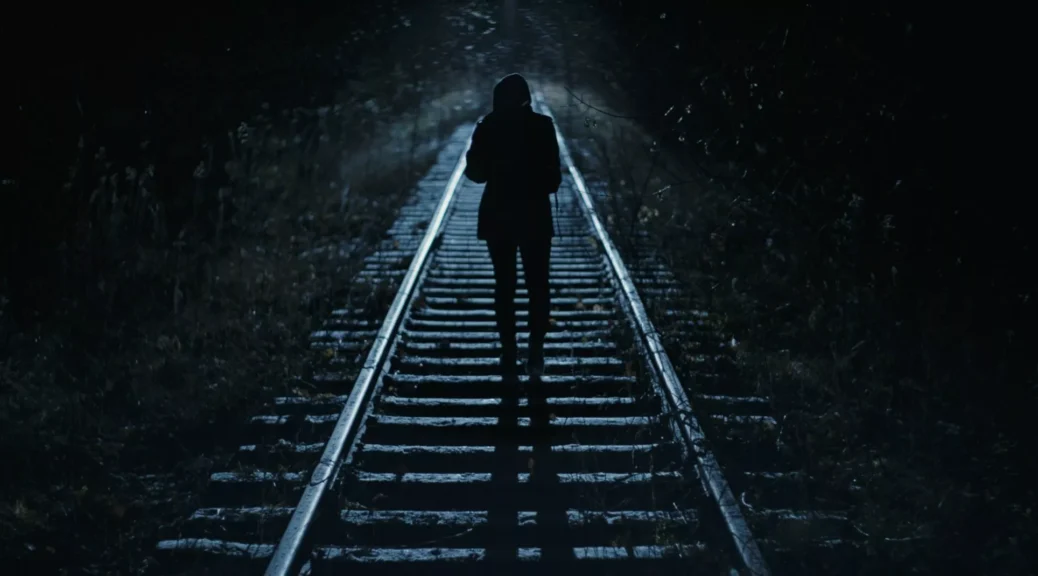
The pandemic was tough on everybody. Eula (Chantelle Han) lost her grandpa, made a bad decision with her bartender friend (Charles Boyland), and may lose her restaurant if things don’t turn around.
So, at the height of lockdown, these two restauranteurs takeoff into the night with a mysterious letter sent just after Grandpa died by a recluse he saved during the war. They decide to drive that letter 20 hours to the recluse’s acreage where they hope to find him and some truffles.
Really, really valuable truffles.
In the hands of co-directors Han and Steven Garbas, Peppergrass is, on the surface, a kind of backwoods culinary heist movie – which is more than intriguing enough. But the film, which Garbas co-wrote with Philip Irwin, delivers more than that.
The film is beautifully shot, from the somber color and framing of the urban opening act to the purposeful camera and sound work throughout the balance of the forest-heavy second and third acts.
Han’s Eula – in charge, no nonsense, desperate – anchors the film beautifully. The perfect counterbalance, Boyland plays at being the harmless dumbass. Thanks to a lived-in chemistry between the two actors and Boyland’s committed performance, you never root against his Morris no matter how much you want to smack him.
The script is clever, sometimes roughly funny, often surprising. Tonal shifts can be a problem, but generally Garbas and Han move smoothly, their framing and pace matching the swiftly shifting genre. Peppergrass swings from heist to horror to survival tale and back again, losing its footing only rarely.
Fear of contagion timestamps the film, but it also generates a kind of paranoia that heightens tension – the kind of tensions suited to backwoods survival tales. But Peppergrass’s greatest strength is how deftly it tells its real story – the one motivating the heist, which is never discussed outright, though it haunts the film.
Tense, surprising and delightfully unusual, Peppergrass is a gem of a thriller worth seeking out.
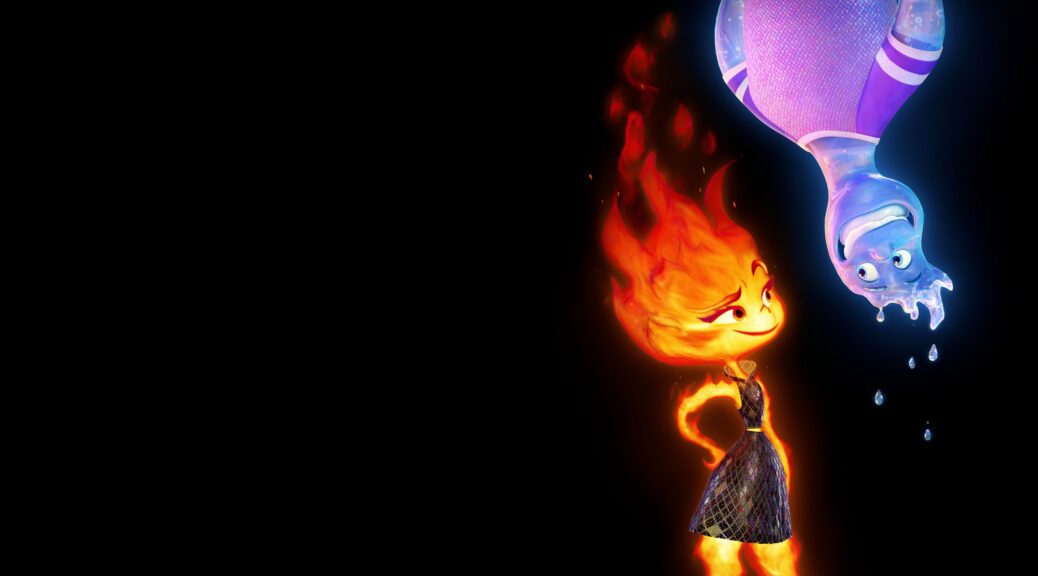
As soon as Ember earns her dad’s trust, he can retire and she’ll run his shop in Fire Town. Unless her hot temper ruins everything. Or she falls for that sweet guy from Water Town. Or both.
Daddy issues. Romance. Coming of Age. There’s a lot about Pixar’s latest, Elemental, that feels familiar. Common, even. And if there’s one thing the animation giant’s managed to avoid for most of its almost 30 years in the business, it’s being predictable.
It doesn’t help that the characters immediately put you in mind of Pixar’s wildly imaginative Inside Out. But there’s little about the film that will strike you as wildly imaginative, although the animation is sometimes breathtaking, beauty spilling off all four sides of the screen. Animators explore and exploit all opportunities to find wonder in the glow and fluidity of characters and the magnificent 3D experience is well worth annoyance of the glasses.
The magic in this story’s telling lies less in an inspired, imaginative plot and more in the nuances of the execution. Ember, a child of immigrants, is seen as a danger to most of the rest of the city. And yet, as she traverses a landscape of people made of water, she’s the one who’s actually in danger.
John Hoberg, Kat Likkel and Brenda Hsueh’s crisp writing deftly navigates microaggressions, misunderstandings, and the anger associated with helpfully advising someone to “water down” their culture.
Back in 2015, Elemental director Peter Sohn made the unduly overlooked The Good Dinosaur. It was a beautiful piece of visual storytelling, charming and well-acted, although, like this one, the plot itself lacked imagination. I hope more people give Elemental a chance. It lacks the uniqueness of Pixar’s greatest or most enduring efforts, but it’s a touching, gorgeous, emotional and forgiving tale.
Don’t be late or you’ll miss perhaps the best reason to see Pixar films, the shorts that precede the feature. In Carl’s Date (which will also appear as episode 1, season 2 of the Disney+ show Dug Days), our beloved Carl (Edward Asner) from Up! needs a little courage to go through with his first date since Ellie. Crushingly lovely.
If you are looking for a wondrously macabre fairy tale, a nightmare that’s both fanciful and terrifying, writer/director Ryan Stevens Harris has a tale to tell.
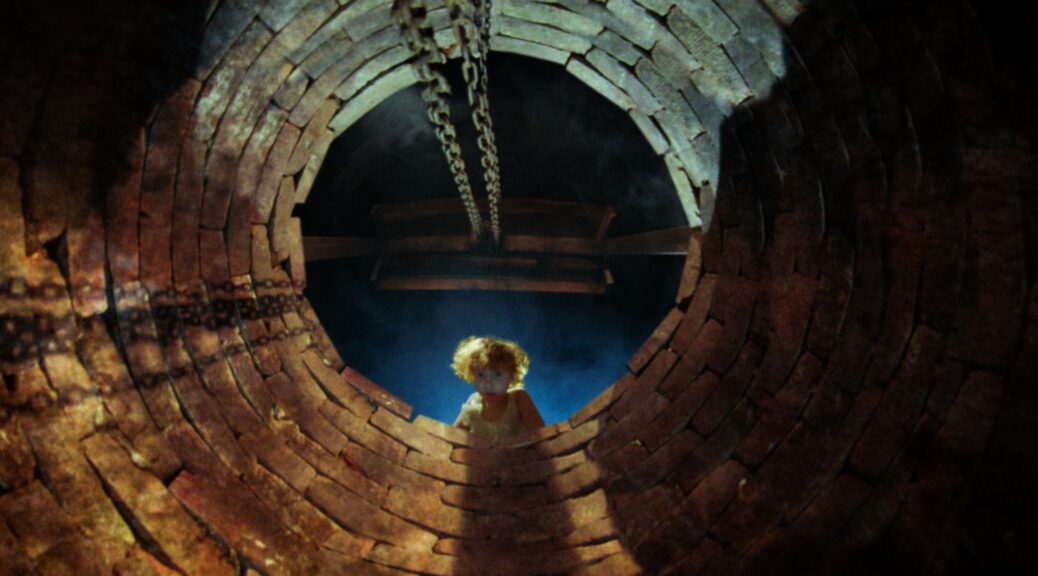
Moon Garden delivers a journey through the fertile imagination of 5-year-old Emma (Haven Lee Harris). We know from Act 1 that she funnels what she picks up from the world around her into delightfully odd, even spooky fantasies for her toys to act out. So, when trouble that’s been brewing at home (and spilling into Emma’s playtime fantasies) unexpectedly puts the tot in a coma, that fantasy world drowns out reality and Emma finds herself on a very big journey indeed.
Of its many successes Moon Garden can boast set design, creature design and stop motion work at the top. All are very solid, and all collaborate to evoke a big, dark, scary world where logic bends but wonder never dies.
Creature design – particularly the first creature – lives up to the expectations set early when we see Emma’s toys. And the film benefits immeasurably from a charming and believable central performance by young Harris. Excellent editing helps to make her physical journey seem more plausible, but her laughter and tears never feel less than genuine.
Augie Duke, playing Emma’s distraught mother, and Brionne Davis as Dad Alex are less impressive, although it may be that the artistic vision is so much stronger in the fantastical storyline that the real-world of the parents received short shrift.
Other characters glimpsed briefly within the otherworldly realm are more compelling, aided by stagey old school costuming. Wisely, the filmmaker blurs lines between good and evil, giving the story itself a kind of fluidity that feels appropriate to a dreamscape and also keeps you constantly surprised.
The story, and to a degree the entire film, is hokey but Moon Garden generates more than enough of the macabre in old school fairy tales to evoke a wondrous nightmare energy.
When a human being just doesn’t have enough meaningful ways to invest their time, they can go a little nuts. Here’s to the horror of life as the underappreciated, boxed-in, cast off and/or misused housewife. May they all draw blood.
5. Jakob’s Wife (2021)
Director/co-writer Travis Stevens (Girl on the Third Floor) wraps this bloodlusty tale of the pastor’s wife (Barbara Crampton) and the vampire in a fun, retro vibe of ’80s low-budget, practical, blood-spurting gore.
To see a female character of this age experiencing a spiritual, philosophical and sexual awakening is alone refreshing, and Crampton (looking fantastic, by the way) makes the character’s cautious embrace of her new ageless wonder an empowering – and even touching – journey.
With Crampton so completely in her element, Jakob’s Wife is an irresistibly fun take on the bite of eternity. Here, it’s not about taking souls, it’s about empowering them. And once this lady is a vamp, we’re the lucky ones.
4. The Stepford Wives (1975)
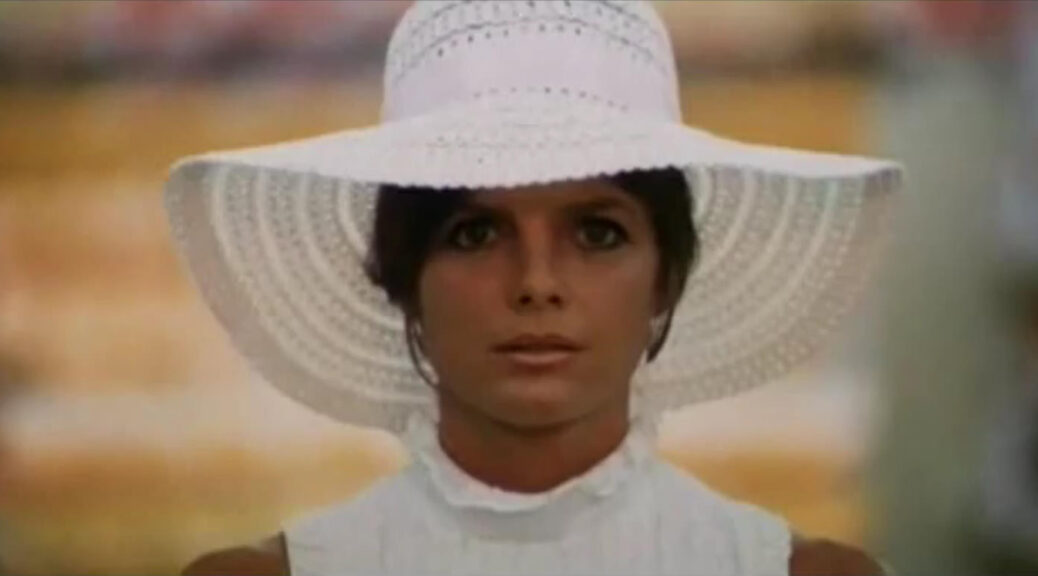
Ira Levin’s novel left a scar and filmmaker Bryan Forbes and star Katherine Ross pick that scab to deliver a satirical thriller that is still surprisingly unsettling. What both the novel and the film understand is a genuine fear that the person you love, whose faults you accept and who you plan to age and die with, has no interest in what’s inside you at all. You – the actual you – mean nothing at all.
It’s the idea of trophy wife taken to a diabolical extreme (as even the outright trophy wife isn’t long to last, what with the inevitability of aging and all). The term Stepford Wife worked its way into the lexicon, and there’s a clear pot boiler, B-movie feel to this film, but it still leaves a mark.
3. Dumplings (2004)
Fruit Chan’s Dumplings satirizes the global obsession with youth and beauty in taboo-shattering ways.
Gorgeous if off-putting Aunt Mei (Bai Ling) balances her time between performing black market medical functions and selling youth-rejuvenating dumplings. She’s found a customer for the dumplings in Mrs. Li (Miriam Yeung ChinWah), the discarded wife of a wealthy man.
With darkest humor and sharp insight, Chan situates the horror in a specifically Chinese history but skewers a youth-obsessed culture that circles the globe.
The secret ingredient is Bai Ling, whose performance is a sly work of genius. There are layers to this character that are only slowly revealed, but Ling clearly knows them inside and out, hinting at them all the while and flatly surprised at everything Mrs. Li (and you and everyone else) hasn’t guessed.
Gross and intimate, uncomfortable and wise, mean, well-acted and really nicely photographed, Dumplings will likely not be for everyone. But it’s certainly a change of pace from your day-to-day horror diet.
2. Swallow (2019)
Putting a relevant twist on the classic “horrific mother” trope, writer/director Carlo Mirabella-Davis uses the rare eating disorder pica to anchor his exploration of gender dynamics and, in particular, control.
Where Mirabella-Davis’s talent for building tension and framing scenes drive the narrative, it’s Bennett’s performance that elevates the film. Serving as executive producer as well as star, Haley Bennett transforms over the course of the film.
When things finally burst, director and star shake off the traditional storytelling, the Yellow Wallpaper or Awakening or even Safe. The filmmaker’s vision and imagery come full circle with a bold conclusion worthy of Bennett’s performance.
1. Watcher (2022)
If you’re a fan at all of genre films, chances are good Watcher will look plenty familiar. But in her feature debut, writer/director Chloe Okuno wields that familiarity with a cunning that leaves you feeling unnerved in urgent and important ways.
Maika Monroe is sensational as Julia, an actress who has left New York behind to follow husband Francis (Karl Glusman) and begin a new life in Bucharest.
Monroe emits an effectively fragile resolve. The absence of subtitles helps us relate to Julia immediately, and Monroe never squanders that sympathy, grounding the film at even the most questionably formulaic moments.
Mounting indignities create a subtle yet unmistakable nod to a culture that expects women to ignore their better judgment for the sake of being polite. Okuno envelopes Julia in male gazes that carry threats of varying degrees, all building to a bloody and damn satisfying crescendo.
A timely deconstruction of patriotism as convenient excuse for violence – xenophobia, homophobia, you name it – filmmaker Ted Geoghegan’s latest genre film costumes a contemporary message in WWII army greens.
Brooklyn 45 spends a single, specific evening with a handful of war buddies. It is Christmas Eve. The war has just ended. Lt. Col. Clive “Hock” Hockstatter (Larry Fessenden) probably shouldn’t be alone for Christmas. He’s been lost in grief since his wife Suzy took her own life on Thanksgiving, raving about Nazi spies in the building. So, pals Mjr. Archibald Stanton (Jeremy Holm, The Ranger), Mjr. Paul DiFranco (Ezra Buzzington), master interrogator Marla Sheridan (Anne Ramsay) and her husband, Pentagon pencil pusher Bob (Ron E. Rains) head to Hock’s Brooklyn apartment to make merry.
What they don’t expect is a séance, but to their surprise, that’s what they get. It doesn’t go well. Lights flicker, candles light themselves, there’s ectoplasm, phantasmic voices – and an unsettling knocking in the closet.
Geoghegan’s crafted a highly theatrical, even stagey, production. Almost exclusively set on a single space, as the full cast is trapped in Hock’s dining room for nearly the film’s full 92-minute run time, the movie could easily have taken shape as a stage play. Or, given the spot-on era the filmmaker creates, it could have succeeded as a radio play. The theatricality works, even when the dialog is occasionally overwritten or expected to deliver too much exposition.
The success comes in equal parts from fine performances and Goeghegan’s nimble thematic work. By pressing these people – war heroes of the “greatest generation” – hard enough, he not only depicts an all-too-familiar slippery slope to self-justified violence, but chips away at a whitewashed American history.
Ramsay is particularly impressive, her performance layered and authentic despite the movie’s theatricality. Kristina Klebe – a surprise guest – is a bit hamstrung with the film’s most stilted dialog, but she and Ramsay share an unsettling chemistry that heightens tension.
Goeghegan delivers some jump scares and some gore, but what his film finds scariest is what lies in a beating human heart.
An awful lot of people have reimagined Mary Shelley’s Frankenstein in an awful lot of ways. What makes writer/director Bomani J. Story’s take, The Angry Black Girl and Her Monster, so effective is that it tackles a lot in very little time and handles all of it heartbreakingly well.
Laya DeLeon Hayes is Vicaria, a gifted student whose heart and brains overtake her wisdom when she decides that death itself is the disease that must be cured, and that she’s the one to cure it. It was Dr. Frankenstein’s vanity that pushed him to discover the secret to life itself. For Vicaria, the reason is far more tragic, but the result is the same.
To say that Story situates Shelley’s tale in the context of drug violence would be to sell his film short. He’s moved the story from European castles and laboratories to the projects, where Vicaria’s mother fell victim to a drive-by shooting, her brother was shot to death on a drug deal gone wrong, and her father deals with his grief by using. But drugs are just part of the larger problem, the almost escapable, systemic and cyclical nature of violence and poverty.
One of the reasons the Frankenstein monster is so effective so often is that he is tragically monstrous. He is violent through no real fault of his own but as a reaction to an environment that hates him, treats him with cruelty, fear and malice. We simultaneously root for and against this monster.
The trick is to make us root for the creator, and DeLeon Hayes delivers a layered, touching performance that accomplishes this. Vicaria is so young, so hopeful, and so full of fight that we forgive her short sightedness and her immediate (and understandable) fear. Vicaria’s missteps are understandable because she’s a kid, and her heart’s in the right place, which is why she keeps making the worst decisions. It’s a powerfully compelling performance.
Story’s chosen genre may feel slight, even campy, but the tropes belie some densely packed ideas, and there’s a current of empathy running through the film that not only separates this from other Frankenstein tales, but deepens the film’s genuine sense of tragedy.
Not every performance is as strong as DeLeon Hayes’s, and sometimes Story’s dialog is asked to carry too much historical significance. But there’s no denying the power he wrung from the source material.