Big week! So many movies! Some of them are even great. This week we break down Men in Black: International, Shaft, Late Night, The Dead Don’t Die, Halston plus everything worth your time in home entertainment.
Listen to the full podcast HERE.
Big week! So many movies! Some of them are even great. This week we break down Men in Black: International, Shaft, Late Night, The Dead Don’t Die, Halston plus everything worth your time in home entertainment.
Listen to the full podcast HERE.
by Hope Madden
Indie god and native Ohioan Jim Jarmusch made a zombie movie.
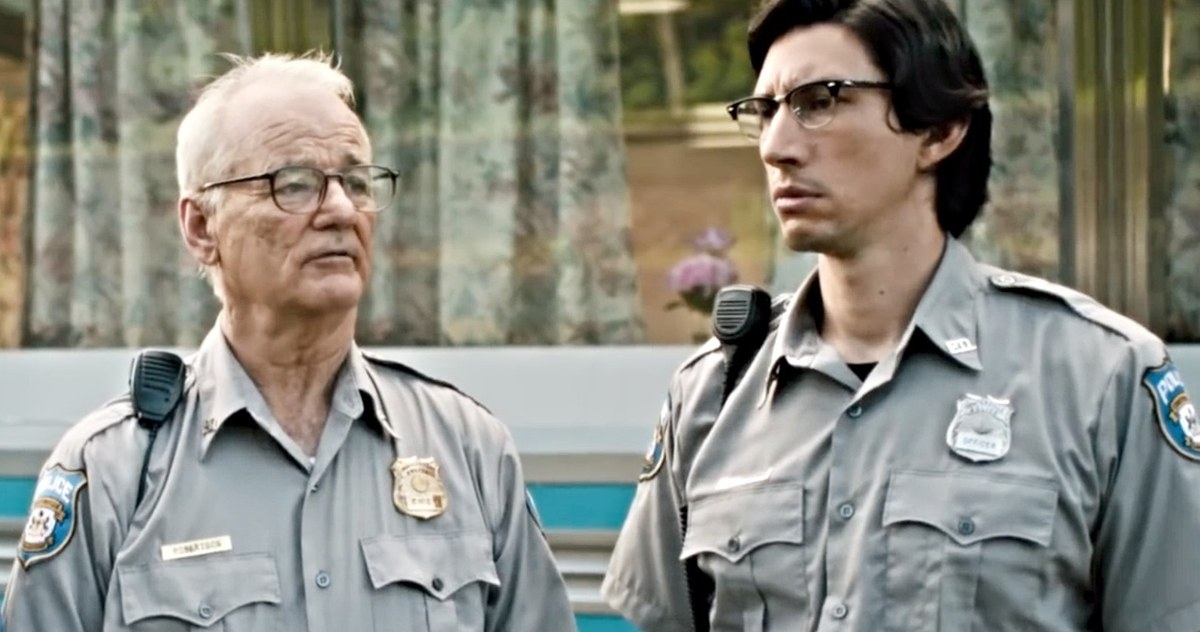
If you don’t know the filmmaker (Down by Law, Ghost Dog, Only Lovers Left Alive, Paterson and so many more jewels), you might only have noticed this cast and wondered what would have drawn Bill Murray, Adam Driver, Tilda Swinton, Chloe Sevigny, Steve Buscemi, Rosie Perez, RZA, Caleb Landry Jones, Danny Glover, Tom Waits, Iggy Pop and Selena Gomez to a zombie movie.
It’s because Jim Jarmusch made it.
Jarmusch is an auteur of peculiar vision, and his latest, The Dead Don’t Die, with its insanely magnificent cast and its remarkably marketable concept, is the first ever in his nearly 30 years behind the camera to receive a national release.
Not everybody is going to love it, but it will attain cult status faster than any other Jarmusch film, and that’s saying something.
He sets his zombie epidemic in Centerville, Pennsylvania (Romero territory). It’s a small town with just a trio of local police, a gas station/comic book store, one motel (run by Larry Fassenden, first-time Jarmusch actor, longtime horror staple), one diner, and one funeral home, the Ever After.
Newscaster Posie Juarez (Rosie Perez – nice!) informs of the unusual animal behavior, discusses the “polar fracking” issue that’s sent the earth off its rotation, and notes that the recent deaths appear to be caused by a wild animal. Maybe multiple wild animals.
The film never loses its deadpan humor or its sleepy, small town pace, which is one of its greatest charms. Another is the string of in-jokes that horror fans will revisit with countless re-viewings.
But let’s be honest, the cast is the thing. Murray and Driver’s onscreen chemistry is a joy. In fact, Murray’s onscreen chemistry with everyone—Sevigny, Swinton, Glover, even Carol Kane, who’s dead the entire film—delivers the tender heart of the movie.
Driver out-deadpans everyone in the film with comedic delivery I honestly did not know he could muster. Landry Jones also shines, as does The Tilda. (Why can’t she be in every movie?)
And as the film moseys toward its finale, which Driver’s Officer Ronnie Paterson believes won’t end well, you realize this is probably not the hardest Jim Jarmusch and crew have ever worked. Not that the revelation diminishes the fun one iota.
Though it’s tempting to see this narrative as some kind of metaphor for our current global political dystopia, in fairness, it’s more of a mildly cynical love letter to horror and populist entertainment.
Mainly, it’s a low-key laugh riot, an in-joke that feels inclusive and the most quotable movie of the year.

by Hope Madden
Someone somewhere at some recent point in history must have said, “What we need is another Men in Black movie.”
Someone else surely disagreed, suggesting that they’d beaten that dead alien long enough.
“We’ll change it up,” this imaginary and somehow sad conversation continued. “Hire a new director, new writers, new actors, take it international. It’ll be—”
“Great?!”
“—mediocre.”
And there you have it. F. Gary Gray (Straight Outta Compton) directs an entirely new batch of humans in black as they don sunglasses, erase memories and suss out an alien conspiracy in their ranks, this time on European soil.
Tessa Thompson shines, as is her way, starring as Molly, a tenacious nerd who’s tracked down this mystery organization in hopes of a shot at joining. Head of the US division, Agent O (Emma Thompson—no relation that we know of, but how cool would that be?!) reluctantly gives her a shot.
As expected, all scenes between the Thompsons spark. And, as T. Thom has proven twice already, she shares solid onscreen chemistry with Chris Hemsworth, here portraying her new partner, H.
Gizmo-riffic adventures follow, although it’s pretty soft. There are a couple of fun sight gags, especially one with a hammer. Kumail Nanjiani pops off a few drolly comical lines as this go-round’s cute little alien sidekick, Pawnie.
Then the three are off to Marrakesh, then a fortress island, back to London, a desert, and London again all in pursuit of answers about a tiny little device and the evil twins looking for it. But the storyline was never really the MIB selling point, it was the relationship between the partners.
Thompson and Hemsworth seem like fine choices, having shown both chemistry and comedic spark in Thor: Ragnarok. But Thompson’s early, geeky charm is given little opportunity to show itself once she dons the black suit, and Hemsworth—fun enough as he, once again, basically mocks his own persona—has even less opportunity.
Writers Matt Holloway and Art Marcum don’t articulate enough in the way of plot or character arc and Gray’s listless direction leaves us with a Summer popcorn muncher that coasts rather than thrills.

One of the biggest and baddest hits DVD this week, plus two other middling efforts that were better than they should have been. Here’s the skinny.
Click the film title for the full review.


by Hope Madden
Illumination, the animation giant behind all things Minion, returns to their blandly entertaining dog franchise for the blandly entertaining sequel The Secret Life of Pets 2.
In the 2016 original, Louis C.K. voiced a neurotic terrier named Max who needed to loosen up a little once his beloved owner brought home a huge, lovable Newfie mix (in a NYC apartment?!). And while life lessons were the name of the game, the real gimmick was to take the Toy Story approach to house pets, giving us a glimpse into what they’re up to when we’re not around.
Because we really don’t want to associate him with children anymore, C.K.’s been replaced by Patton Oswalt, whose Max has all new reasons for anxiety. There’s a new baby, whose presence suddenly reinforces all those fears about the big, scary world.
In a move that’s as disjointed as it is interesting, returning writer Brian Lynch sends Max, Newfie Duke (Eric Stonestreet) and family on a trip to the country, creating one of three separate episodes that will eventually intersect. Well, crash into each other, anyway.
The main story deals with trying to alpha Max up a bit with some problematically “masculine” training by way of farm dog Rooster (Harrison Ford), who, among other things, disregards therapy as weakness.
Basically, Lynch and director Chris Renaud think we’re all a little too precious (the clear message of the original) and what they’d like to do with their sequel is beat us about the head and neck with that idea.
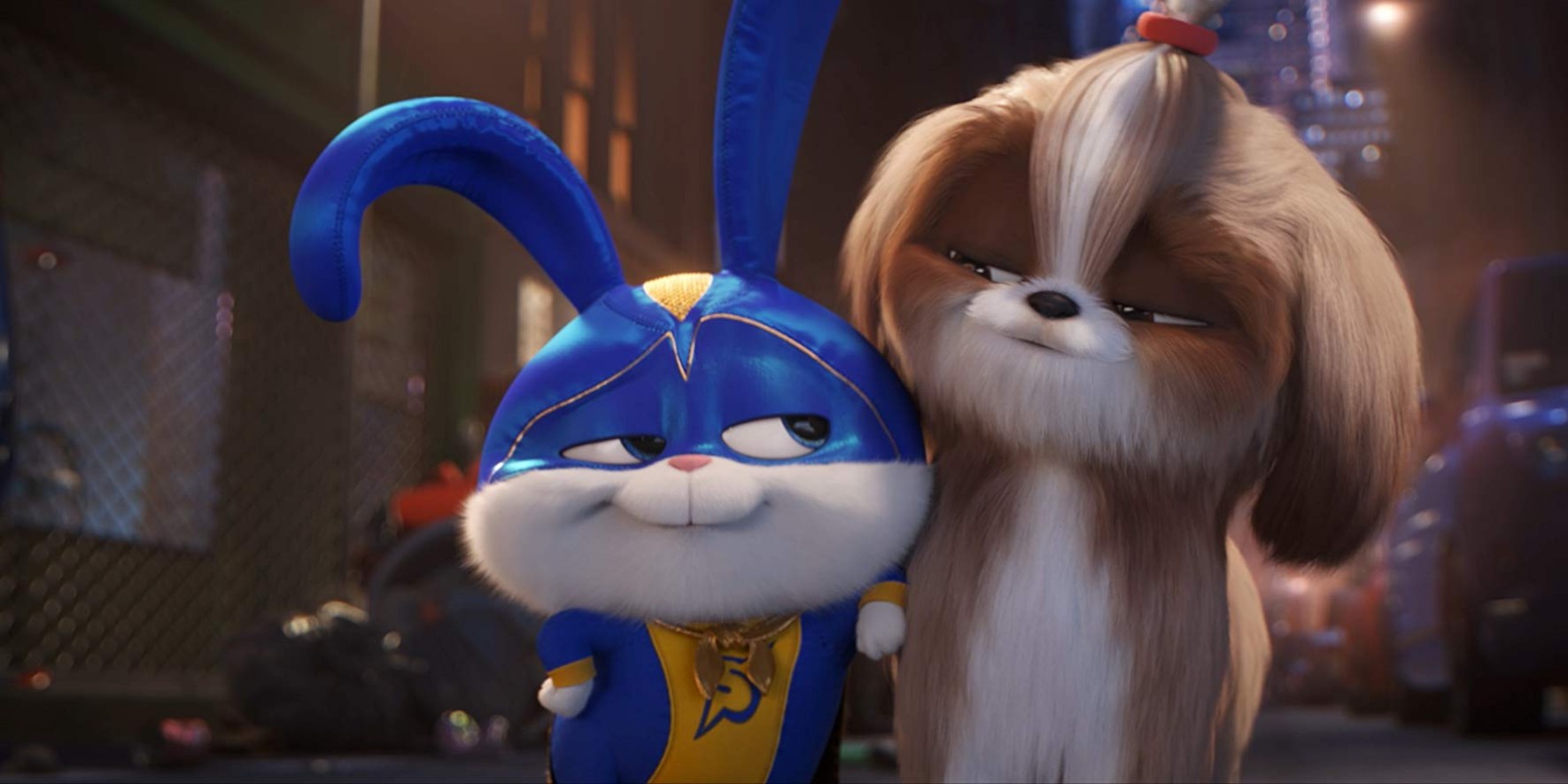
Meanwhile, back in NYC, Pomeranian Gidget (Jenny Slate) and Chloe the cat (Lake Bell – the film’s deadpan bright spot) train to retrieve a chew toy from a crazy cat lady’s feline-overrun apartment. And separately, Snowball the bunny (Kevin Hart), believing himself to be a super hero, befriends Shih Tzu Daisy (Tiffany Haddish), and together they save a baby tiger from an evil Russian circus.
For real.
That last bit gets seriously weird, I have no idea what they feed this baby tiger the whole time, and on average, the actual lessons learned are troublingly old school (read: conservative).
Teaching boys that pretending they’re not afraid so they can take charge of every situation = literally every single problem on earth right now. So let’s stop doing that.
Otherwise, though, Illumination offers yet another blandly entertaining, cute time waster.
From sublime to interesting to tired and predictable, this week’s home entertainment offerings certainly vary. Here is our take on each one.
Click the film title for the full review.
Our friend is looking to buy her first home and our only advice was probably the same advice she got from everyone: check the basement for the gateway to hell. That always causes trouble for new homebuyers, doesn’t it?
Indeed, these netherworld exits and entrances don’t exist only in suburban basements. Nope, you can find them anywhere. In fact, you can even create your own. No idea why you would want to do that, but (assuming horror films are how-tos), it can be done. Which are the best gateway to hell horror movies, you ask? Luckily, we’ve done the math.
A bunch of films nearly had this fifth slot: Amityville 3D (mainly so we could make fun of Laurie Laughlin), The Gate and its Harryhausen influences, Event Horizon’s blackhole to hell. But we landed on The Ninth Gate because we love Frank Langella and Lena Olin.
Johnny Depp plays a sleazy rare books dealer in Roman Polanski’s adaptation of Arturo Perez-Reverte’s novel. Depp’s Dean Corso falls into a mysterious adventure of finding and appraising three volumes allegedly co-authored by Satan himself (or herself?).
Maybe the element of this film that makes it more interesting than it might be is that, while the humans longing for the knowledge in these volumes are terrible people, the film doesn’t seem to find Satanism (the real worship of an actual Satan, not today’s activism branch) a potentially worthwhile activity. Satan (Emmanuelle Seigner, Polanski’s wife) is also an interesting character—in concept, anyway.
Plus, black masses! Love those!
Lucio Fulci was really preoccupied with the gateway to hell. He produced an entirely worthwhile trilogy on the topic. And while City of the Living Dead and House by the Cemetery have their charms (well, for one of us), The Beyond is by far the most entertaining of the three.
As is always the case in Fulci films, the dubbing is half the fun, here unintentionally aiding in the overall surreal quality of the picture. Liza Merrill (Catriona MacColl, who stars as different characters in each of the three Gateway films) has inherited an old Louisiana hotel from her dead uncle.
Guess what’s in the basement?!
Silly, gory as hell, hypnotic and oh-so-Fulci, The Beyond is a dreamy peek into hell. The clashing accents and lack of logic only strengthen the vibe.
Yes, technically this one takes place in “The Further” – but we don’t buy that this creepy red guy plays organ in limbo or purgatory. We’re going with hell.
Director James Wan and writer (and co-star) Leigh Whannell launched a second franchise with this clever, creepy, star-studded flick about a haunted family.
Patrick Wilson (who would become a Wan/Whannell staple) and Rose Byrne anchor the film as a married couple dealing with the peculiar coma-like state affecting their son, not to mention the weird noises affecting their house.
But what makes this particular film so effective is that we get to go into The Further to reclaim the lost soul. It’s a risky move, but these filmmakers do what few are able to: they show us what we are afraid of.
Journeyman writer/director Michael Winner helmed this weird little gem about a damaged young woman and her journey toward the only destiny that can save her.
It starts, as these things so often to, with the search for a new place to live. New York model Alison (Cristina Raines) is offered an incredibly great rate for a gorgeous NY brownstone apartment.
Is it the gateway to hell? Yes, but NY real estate being what it is, she takes it.
Look at this cast: Burgess Meredith, John Carradine, Christopher Walken, Ava Gardner, Jerry Orbach, Jose Ferrer, Beverly D’Angelo and Chris Sarandon, mainly playing the various and fascinating demons hoping to throw poor, fragile Alison off her path.
Meredith in particular is a magnificent Satan.
Welcome to hell! Turkish filmmaker Can Evrenol invites you to follow a 5-man police squad into the netherworld, where eye patches are all the rage, pregnancy lasts well under the traditional 40 weeks, and you don’t want to displease Daddy.
The serpentine sequencing of events evokes a dream logic that gives the film an inescapable atmosphere of dread, creepily underscored by its urgent synth score. Evrenol’s imagery is morbidly amazing. Much of it only glimpsed, most of it left unarticulated, but all of it becomes that much more disturbing for its lack of clarity.
As is always the case, the real kicker is the Satan character. Here, central figure Mehmet Cerrahoglu’s remarkable presence authenticates the hellscape. Evrenol’s imaginative set design and wise lighting choices envelope Cerrahoglu, his writhing followers, and his victims in a bloody horror like little else in cinema.
Big, bold, oversized weekend in movies. We talk through Godzilla: King of the Monsters, Rocketman and Ma and hit on all that’s worth a look in new home entertainment.
Listen to the full podcast HERE.
by Hope Madden
Oh my God, you guys. Did you know Tate Taylor directed the new Octavia Spencer horror flick, Ma?
You know, Tate Taylor. Girl on a Train. Get On Up. The effing Help – that Tate Taylor.
No wonder Octavia Spencer is in it, and God bless her for it because she commits to a role that, in other hands, could have been utterly, laughably predictable.
In fact, were it not for a breathtakingly better-than-this-material cast, Ma would have devolved quickly into every other “get back at the popular kids – oh, wait, maybe let’s vilify and re-victimize the unpopular instead” horror.
Spencer’s Sue Ann, or Ma, as the kids call her, is just an easy mark for teens wanting alcohol. Yes, she’ll buy it as long as you drink it at her house where she knows you’re safe.
Does she have nefarious motives?
She does.
For her part, the Oscar-winner (for Taylor’s The Help) convinces, drawing both sympathy and fear. She’s joined in small roles by another Oscar winner (an almost jarringly funny Allison Janney) and an Oscar nominee (Juliette Lewis) as well as Luke Evans and a set of talented young actors led by Booksmart’s Diana Silvers.
How on earth did this by-the-numbers outsider/don’t trust the lonely older lady horror flick draw this cast?!
I do not know, because Ma has nothing really new to say, so it relies in its entirety on this cast to entertain. But there are two reasons that this story and this particular cast are actually Ma’s problems.
One is something that still surprises me about horror. On the whole, horror appeals to outcasts. And yet, from Carrie White to the coven in The Craft to Sue Ann in Ma, horror films reestablish the status quo by putting outcasts in their place. Sure, they get that grand few moments of terrorizing the beautiful, popular kids, but things end badly in horror movies for the outcast.
Here’s what troubles me even more about Tate Taylor, and to a degree, Octavia Spencer films. (Note that Spencer executive produced the racially problematic and utterly mediocre Green Book.)
Ma is racially tone deaf. I have no idea why this wealthy Southern white man insists on telling stories exclusively about African Americans, but he truly should not. A story that vilifies the lonely middle aged woman, seeing her as a broken psychotic based on her generally pathetic nature, is misogynistic. When this villain is also the only African American woman in the film, that problem is heightened dramatically.
Don’t get me wrong—I am a fanatical horror fan, and when an Oscar -winner (and multiple nominee) chooses to star, let alone star as the villain (the most important character) in a horror film, I am all in.
But this was the wrong movie.

A handful of decent and underseen flicks coming home this week. Which to watch? We’re here to make the choosing easy.
Click the film title for the full review.