Tag Archives: Madd at the Movies

Her Story

Be Natural: The Untold Story of Alice Guy-Blaché

by Hope Madden

Do you know Alice Guy-Blaché? Documentarian Pamela B. Green thinks you should.

She is clearly right.

Guy-Blaché’s groundbreaking career has not been celebrated in the same way as her historical counterparts. She was not only the first female filmmaker, she was among the first four filmmakers, period. She boasts an output of around 1000 films, among them the first narrative film, the first color tinted, and one of the first two films with synchronized sound.

And yet, of the dozen or so filmmakers and actors Green interviews in the opening montage, including Geena Davis, Peter Farrelly, Catherine Hardwicke, Peter Bogdanovich and Ava DuVernay, only DuVernay recognizes the name.

Says Bogdanovich, “I’ve spent my life making films and have written for years about film and I’ve never even heard of her.”

Well, clearly Peter Bogdanovich never took a Women in Film class at Ohio State.

Whether you have or have not heard of Alice Guy-Blaché, Green’s film is bound to be informative, showcasing a figure with remarkable aptitude not only in business (she ran her own studio and produced her own films) but amazing artistic vision, pioneering much of the comedic and dramatic form we now take for granted.

Jodi Foster lends respectful narration (and spot-on French pronunciation!) to an earnest and loving—if sometimes tedious—exploration.

Green’s film is at its best during rare interview footage of the filmmaker, at the time nearing the end of her life and taking a wistful, reflective posture. Between that, footage from Guy-Blaché’s canon, and responses from modern filmmakers on that footage, Green pieces together some engaging and illustrative moments.

Her film gets sidetracked too easily, though, answering questions from those very filmmakers who did not recognize Guy-Blaché’s name, “I would like to see inside her studio,” “I’d love to hear how she managed to be a filmmaker and a mother during that time period…”

These offshoot moments feel disjointed, lessening the intimacy with the subject the more successful moments nearly reach.

Green’s biggest misstep as a filmmaker is her preoccupation with her own sleuthing, some of which feels endearing in its enthusiastic amateurishness, but too often comes off as needlessly self-congratulatory.

Though Green herself struggles to create a film artistically worthy of the pioneering filmmaker, her heart is in the right place and her quest to help Guy-Blaché reclaim her own place in cinematic history is laudable.

Woman’s Woman

Darlin’

by Hope Madden

In  2011, filmmaker Lucky McKee unleashed the subversive, feminist horror jewel The Woman to a lot of boos at Sundance. It’s tough viewing, no doubt—the screener we were sent to review prior to its release arrived wrapped in a vomit bag—but it amounted to an envelope-pushing miracle of modern horror.

The film itself was a sequel to the underwhelming 2009 cannibal horror penned by Jack Ketchum, Offspring. The point of both films was that only a doomed moron underestimates Pollyanna McIntosh.

McIntosh (The Walking Dead) returns to the feral, nameless role that’s caused such a ruckus over the years, this time taking charge of the woman’s trajectory by writing and directing the latest installment, Darlin’.

Darlin’ picks up some years after the end of The Woman. McIntosh’s alpha and Darlin’ (Lauryn Canny), the adolescent whose grown in her care since the events of McKee’s flick, approach a hospital. Filthy, communicating with grunts and probably smelling pretty foul, the two split up as the girl enters the hospital.

To the dismay of the unrealizing Woman, the system’s not about to let her back out.

What follows is a sloppy, superficial finger-wagging at Catholicism, which is unfortunate. Not because the church deserves more respect than that—it doesn’t, really—but because there may be no lazier strawman in horror right now than the Roman Catholic Church, and McIntosh doesn’t even bother to get a single dogmatic or ritualistic point accurate.

Let me pause. Pollyanna McIntosh is a sort of hero of mine and The Woman is an all-time favorite. You have no idea how much I wanted to like this film or how much slack I was likely to give. The raw truth is that very little about the film merits praise.

McIntosh still cuts a mighty impressive figure as the nameless beast running the show. Canny, however, struggles with her Tarzan-style dialog.

The always capable Nora-Jane Noone, playing the church’s one good nun, serves mainly as a painful reminder. Those of us who saw her breakout film The Magdalene Sisters remember how cinematically powerful the horrors of Catholicism really can be.

There’s an underfed side plot about a loving nurse and an ill-fitting storyline about a group of homeless women, all of which coalesce with the evil priest core story in a bat-shit climax that almost makes the ride worthwhile.

It’s unfortunate, because there are three or four moments in this film of unique, subversive horror. They flash across the screen and then are gone, drown out by lazily written, listlessly directed cliché.

Dearly Beloved

Toni Morrison: The Pieces I Am

by Hope Madden

Before Toni Morrison was old enough to understand the F-word her mother had her washing off the sidewalk, she understood the confrontational nature and the power of words.

Timothy Greenfield-Sanders’s documentary Toni Morrison: The Pieces I Am benefits from the Octogenarian Nobel and Pulitzer prize winner’s characteristically mesmerizing ruminations on her life. As she sits and recounts memories, moments and, most fascinating, glimpses of her writing inspirations, the documentary blossoms.

Compared to the composed and thoughtful interview footage with the likes of Dick Cavett and others from across her career, Morrison’s interaction for Greenfield-Sanders’s camera has a playful quality.

She charms when recounting her personal history: “When I got to Howard, I was loose,” she recalls happily. “I probably overdid it. I don’t regret it.”

Her confidence when considering her life in publishing is awesome. “Navigating a white male world was not threatening. It wasn’t even interesting.”

And when she speaks about her writing—just, wow: “My sovereignty and my authority as a racialized person had to be struck immediately with the very first book. The white world was peripheral if it existed at all.”

It comes as no surprise that someone with such breathtaking mastery of the language would be as beguiling when speaking as she is in writing, and the veteran documentarian knows when to just turn the camera toward his subject and let it roll.

Sure, some context has to be provided. We get biographical information. We see snippets of news shows, hear from famous fans (Oprah, Angela Davis, Sonia Sanchez, Walter Moseley—Toni Morrison has impressive fans). But honestly, this is when Greenfield-Sanders’s documentary gets away from him.

Allowing the audience some background they may not have concerning Morrison’s struggle to be appreciated in her own time, or the bold and culturally imperative choices she made as an editor, or the global reaction to her novels feels necessary. It also feels superficial.

Worse still, it feels like a cheat—like these were moments that could have been spent listening to Toni Morrison tell us something. Anything. This is particularly stinging when we’re finally allowed a sentence or two about how Beloved was inspired. Morrison tells of a vision that suggests there is something genuinely magical, something otherworldly, about her process.

It’s a hint, but it’s impossible not to want more, not to feel as though we could have chucked all that gushing from fans, all those archival interviews, all those photos from Howard and just listen to Toni Morrison tell us a story.

Teen Titan

Spider-Man: Far From Home

by Hope Madden and George Wolf

Spider-Man: Far From Home has more than a webshooter up its sleeve.

One part reflection on the state of MCU, one part statement on our cartoonishly ridiculous world today, one part charming coming-of-age tale, the latest Spidey episode almost takes on more than it can carry. But return writers Chris McKenna and Erik Sommers embrace franchise strengths while betting director Jon Watts, also back from Homecoming, can maneuver slick surprises.

The wager pays off, and Far From Home winds up being a film that feels a bit campy for a while, but in retrospect succeeds precisely because of those early over-the-top moments.

Peter Parker (the immeasurably charming Tom Holland), having returned from oblivion (Infinity War), then universal salvation and personal loss (Endgame), would like a vacation. The poor kid just wants to take a trip abroad with his class and get a little closer to his crush MJ (Zendaya).

But that is not to be, is it?

Not with Nick Fury (Samuel L. Jackson) following him across the globe, or the surprise appearance of Quentin Beck aka Mysterio (Jake Gyllenhaal), a new monster-slayer from another Earthly dimension.

“You mean there really is a multi-verse?”

That’s a nice nod to the stellar animated Spidey adventure from last year, and a big clue about how self-aware this chapter is determined to be. The front and center ponderings about what Peter (and by extension, Marvel) is going to do now threaten to collapse the film from self-absorption.

To the rescue: a jarring and unexpected pivot, and that wonderfully youthful vibe that now has one eye on growing up.

Interestingly, Tony Stark fills in for the guilt-inducing father figure that’s always been missing from this iteration of Peter Parker’s tale. Without Uncle Ben, Stark becomes that hallowed hero whose shadow threatens to obliterate the fledgling Avenger.

Peter’s still a teenager, after all, and Homecoming soared from embracing that fact, and from Holland’s ability to sell it in all its wide-eyed and awkward glory.

He still does, but now our hero’s naiveté is shaken by some mighty timely lessons. Number one: “It’s easy to fool people when they’re already fooling themselves.”

Not exactly subtle, but fitting for the world of a distracted teen. And for kids of all ages, there’s no denying how cathartic it is to see world leaders, their media lapdogs and widespread buffoonery on blast and blasted across the largest screens, where good will inevitably conquer.

As fun and funny as this keep-you-guessing Eurotrip is, its core is driven by a simple search for truth. And don’t leave early, because that search doesn’t stop until Far From Home plays its second post-credits hand, and you walk out re-thinking everything you just saw.

Tangled webs, indeed.

Fright Club: Best First Half of 2019

Is it really that time already? Yes, 2019 is half over and that means taking a gander backward to appreciate the horror we’ve witnessed thus far. Two first film filmmakers leave a mark while three of the greats remind us why they have that ranking.

5. Climax

Hey, club kids, it’s a Gaspar Noe dance party! And you know what that means: a balls-out psychedelic bacchanal soaked in body fluids, drugs and EDM.

Noe’s usual reliance on extended takes, stationary cameras and overhead shots makes the dance sequences utterly intoxicating, the performers’ energy creating exciting visual beauty and a palpable exuberance for their art. These seductive odes to dance are interspersed with sometimes graphically sexual conversations between the dancers, sharpening character edges and laying down an interpersonal framework that will soon be turned on its head.

In what seems like an instant, suspicion, mob rule and primal desire overtakes the company. The dancers’ movements become monstrosities bathed in pulsating rhythms, visual disorientation, wanton violence and illicit sex.

What spurred this sea change, and who is to blame? Noe turns that mystery into a greater conversation about the opportunity of birth, the impossibility of life and the extraordinary experience of death, and as is his wont, batters your senses while doing it.

4. The Wind

Lizzy and Isaac Macklin (Caitlin Gerard and Ashley Zukerman, respectively) are relieved to see smoke coming from a distant chimney. The only other cabin for miles has been empty a long while, and the prairie does get lonesome.

But companionship and burden go hand in hand for Lizzy, and company won’t chase away all the demons plaguing this harsh land.

Working from a spare script by Teresa Sutherland, Tammi develops a wonderfully spooky descent into madness. Throughout Lizzy’s isolation, Tammi swaps images onscreen from present moment reality to weeks earlier, to months earlier, to a present-day hallucination or specter and back again. The looping time frame and repetitive imagery turn in on themselves to create a dizzying effect that echoes Lizzy’s headspace.

3. Hagazussa

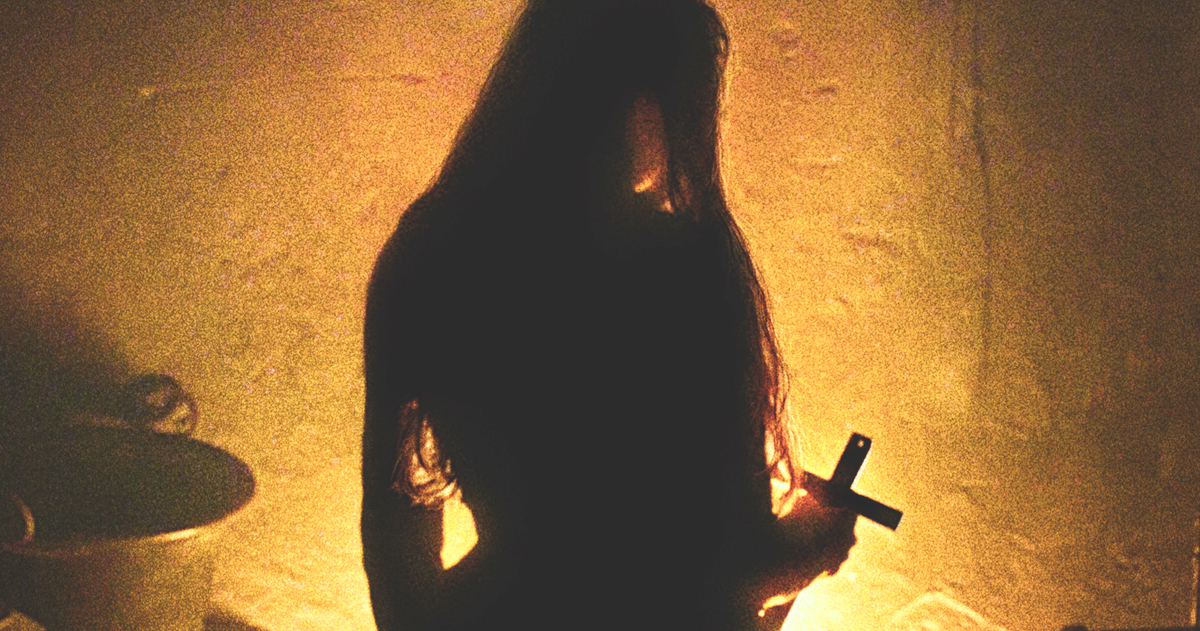
Making a remarkably assured feature debut as director, Lukas Feigelfeld mesmerizes with his German Gothic poetry, Hagazussa: A Heathen’s Curse.

Settled somewhere in the 15th Century Alps, the film shadows lonely, ostracized women struggling against a period where plague, paranoia and superstition reigned.

It would be easy to mistake the story Feigelfeld (who also writes) develops as a take on horror’s common “is she crazy or is there malevolence afoot?” theme. But the filmmaker’s hallucinatory tone and Aleksandra Cwen’s grounded performance allow Hagazussa to straddle that line and perhaps introduce a third option—maybe both are true.

The film lends itself to a reading more lyrical than literal. Feigelfeld’s influences from Murnau to Lynch show themselves in his deliberate pacing and the sheer beauty of his delusional segments. He’s captured this moment in time, this draining and ugly paranoia that caused women such misery, with imagery that is perplexingly beautiful.

2. The Dead Don’t Die

Jim Jarmusch’s zombie film never loses its deadpan humor or its sleepy, small town pace, which is one of The Dead Don’t Die‘s greatest charms. Another is the string of in-jokes that horror fans will revisit with countless re-viewings.

But let’s be honest, the cast is the thing. Murray and Driver’s onscreen chemistry is a joy. In fact, Murray’s onscreen chemistry with everyone—Sevigny, Swinton, Glover, even Carol Kane, who’s dead the entire film—delivers the tender heart of the movie.

Driver out-deadpans everyone in the film with comedic delivery I honestly did not know he could muster. Landry Jones also shines, as does The Tilda. (Why can’t she be in every movie?)

Though it’s tempting to see this narrative as some kind of metaphor for our current global political dystopia, in fairness, it’s more of a mildly cynical love letter to horror and populist entertainment.

Mainly, it’s a low-key laugh riot, an in-joke that feels inclusive and the most quotable movie of the year.

1. Us

From a Santa Cruz carnival to a hall of mirrors to a wall of rabbits in cages—setting each to its own insidious sound, whether the whistle of Itsy Bitsy Spider or Gregorian chanting— writer/director Jordan Peele draws on moods and images from horror’s collective unconscious and blends them into something hypnotic and almost primal.

Even as Peele lulls us with familiar surroundings and visual quotes from The Lost Boys,  Jaws, then Funny Games, then The Strangers and Night of the Living Dead and beyond, Us is far more than a riff on some old favorites. A masterful storyteller, Peele weaves together these moments of inspiration not simply to homage greatness but to illustrate a larger, deeper nightmare. It’s as if Alice’s Adventures in Wonderland turned into a plague on humanity.

Do these evil twins represent the darkest parts of ourselves that we fight to keep hidden? The fragile nature of identity? “One nation” bitterly divided?

You could make a case for these and more, but when Peele unveils his coup de grace moment (which would make Rod Serling proud), it ultimately feels like an open-ended invitation to revisit and discuss, much like he undoubtedly did for so many genre classics.

While it’s fun to be scared stiff, scared smart is even better, a fact Jordan Peele has clearly known for years.

Field of Nightmares

Midsommar

by Hope Madden and George Wolf

Just two features into filmmaker Ari Aster’s genre takeover and already you can detect a pattern. First, he introduces a near-unfathomable amount of grief.

Then, he drags you so far inside it you won’t fully emerge for days.

In Midsommar, we are as desperate to claw our way out of this soul-crushing grief as Dani (Florence Pugh). Mainly to avoid being alone, Dani insinuates herself into her anthropology student boyfriend Christian’s (Jack Reynor) trip to rural Sweden with his buds.

Little does she know they are all headed straight for a modern riff on The Wicker Man.

From the trip planning onward, Dani and the crew don’t make a lot of natural decisions. The abundance of drugs and the isolation of their Swedish destination make their choices more believable than they might otherwise be, but in the end, individual characters are not carved deeply or clearly enough to make their arcs resonate as terrifyingly as they might.

There are definite strengths, though—chief among them, Florence Pugh. The way she articulates Dani’s neediness and strength creates a glue that holds the story in place, allowing Aster to add spectacular visual and mythological flourishes.

Will Poulter, as Christian’s friend Mark, is another standout. Equal parts funny and loathsome, Poulter (The Revenant, Detroit) breaks tensions with needed levity but never stoops to becoming the film’s outright comic relief.

Like Hereditary, Midsommar will be polarizing among horror fans -perhaps even more so- for Aster’s confidence in his own long game. Like a Bergman inspired homage to bad breakups, this terror is deeply-rooted in the psyche, always taking less care to scare you than to keep you unsettled and on edge.

Slow, unbroken pans and gruesome detail add bleak depth to the film’s tragic prologue, leaving you open for the constant barrage of unease and disorientation to come. Carefully placed pictures and artwork leave trails of foreshadowing while the casual nature of more overt nods (“there’s a bear”) only add to the mind-fuckery.

And while Aster is hardly shy about this motives – multiple shots through open windows and doors reinforce that – it doesn’t mean they’re any less effective.

The contrast of nurturing sunlight with the darkest of intentions recalls not only Wicker Man but Texas Chainsaw Massacre for its subliminal takeover of the sacred by the profane. Pair this with the way Aster manipulates depth of field, both visual and aural, and scene after scene boasts hallucinatory masterstrokes.

Midsommar is a bold vision and wholly unnerving experience (emphasis on experience)—the kind of filmmaking the genre is lucky to have in its arsenal.

Screening Room: Yesterday, Annabelle Comes Home, Ophelia, Echo in the Canyon

In today’s podcast, George considers doing the whole show with a fake British accent and Hope says no. Also, we cover Yesterday, Annabelle Comes Home, Ophelia and Echo in the Canyon, plus all that’s new in home entertainment.

Listen to the full podcast HERE.

A Different Kind of Toy Story

Annabelle Comes Home

by Hope Madden

The first conflict, first specter of the Conjuring universe was a hideous, braid-wearing doll haunting hip Seventies roommates. Ever wonder what happened after Lorraine and Ed Warren (Vera Farmiga and Patrick Wilson, respectively) removed the cursed doll Annabelle from the girls’ apartment?

It was a hell of a ride home, I will tell you that.

Truth is, the Annabelle franchise within the larger Conjuring property hasn’t really impressed. John R. Leonetti’s lackluster 2014 “save the baby” horror that gave the doll its own series fell flat. Three years later, David F. Sandberg’s Annabelle: Creation offered an origin story that knew absolutely nothing at all about its own religious setting, yet offered considerably stronger action, scares and gore than its predecessor.

Writer Gary Dauberman, who’s penned every installment (as well as It, which seriously amplifies his credibility), takes on directing duties for the first time with the third film, Annabelle Comes Home.

Again, this one is a little better than the last one.

Dauberman gives us a spooky fun glimpse into the reasons the Warrens kept the doll locked away back in their room of cursed objects. From that first road trip home—which is a blast straight out of Hammer or Michael Jackson’s Thriller—the film is a spooky fun ode to old fashioned horror.

Back at home—the very home where the Warrens illogically keep demonic objects—their daughter Judy (McKenna Grace, really good in this role) is going through some troubles with schoolmates who think her parents are creepy.

Duh.

So, creepy Ed and Lorraine leave town, likely to cast a demon into a Combat Carl they’ll be adding to the back room toybox, leaving little Judy with a cherubic babysitter Mary Ellen (Madison Iseman) and her snoopy bestie, Daniela (Katie Sarife).

What does Daniela touch in the off-limits, demon-filled back room?

“Everything.”

All hell breaks loose, naturally.

Dauberman shows some fun instincts when it comes to isolating characters to make the most of his thrill ride setting. The logic comes and goes with ease, however—once the catalyst kicks in, each scene exists simply to trigger a scare, not to make any narrative sense.

But it is fun, with generous writing that does not ask us to root against any of the kids, and performances that are far superior to the content. Plus a couple of real laughs, mostly thanks to a randomly hilarious pizza delivery guy.

Annabelle Comes Home is no masterpiece and it is definitely a tonal shift from the previous installments, but it’s a mindless PG-13 blast of haunted house summer fun.