Comparing most films to Pan’s Labyrinth would be setting a bar too high. Guillermo del Toro’s macabre fable of war and childhood delivers more magic, humanity and tragedy than any one film should be allowed.
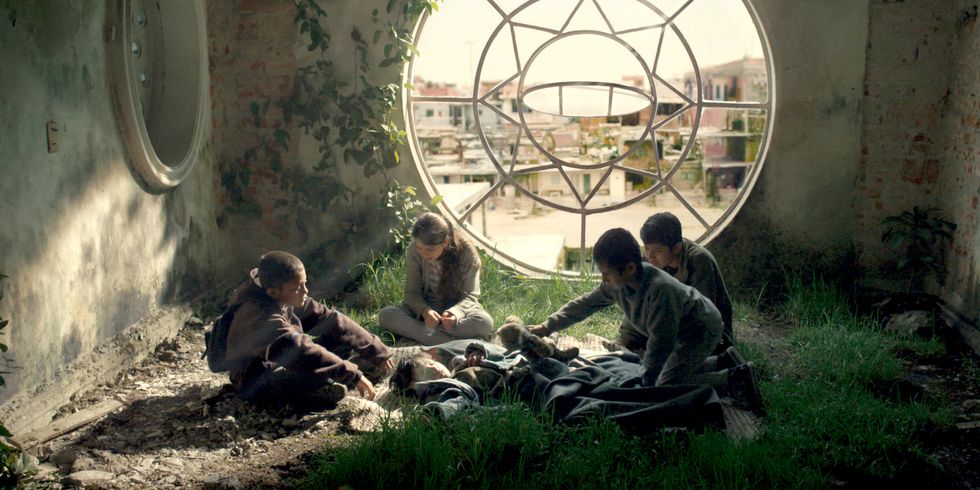
And yet, it’s hard to watch Issa Lopez’s Tigers Are Not Afraid without thinking about little Ofelia, the fairies and the Pale Man.
Lopez’s fable of children and war brandishes the same themes
as del Toro’s masterpiece, but grounds the magic with a rugged street style.
Tigers follows Estrella, a child studying fairy tales—or, she was until her school is temporarily closed due to the stray bullets that make it unsafe for students. As Estrella and her classmates hide beneath desks to avoid gunfire, her teacher hands her three broken pieces of chalk and tells her these are her three wishes.
But wishes never turn out the way you want them to.
There is an echo through Latin American horror that speaks to the idea of a disposable population. You find it in Jorge Michel Grau’s brilliant 2010 cannibal horror We Are What We Are and again in Emiliano Rocha Minter’s 2016 taboo-buster, We Are the Flesh.
Lopez amplifies that voice with a film that feels horrifying
in its currency and devastating in the way it travels with the most vulnerable
of those discarded people.
Estrella is befriended by other orphans in her city, each aching with the loss of parents and each on the move to escape the dangers facing the powerless.
Though Tigers bears the mark of a del Toro – Labyrinth as well as The Devi’s Backbone – it can’t quite reach his level of sorrowful lyricism. It makes up for that with the gut punch of modernity. Though this ghost story with tiny dragons and stuffed tigers is darkly fanciful, it’s also surprisingly clear-eyed in its view of the toll the drug war takes on the innocent.
It is tough to find a fresh direction to take fiction published
201 years ago, let alone a tale already made into countless films. Is there a new
way—or reason—to look at the Frankenstein fable?
Writer/director/horror favorite Larry Fessenden thinks so.
He tackles the myth, as well as a culture of greed and toxic masculinity, with
his latest, Depraved.
Adam (a deeply sympathetic Alex Breaux) is kind of an act of
catharsis for Henry (David Call). A PTSD-suffering combat medic, Henry is so
interested in finding a way to bring battlefield fatalities back to life that
he doesn’t even question where his Big Pharma partner Polidori (Joshua Leonard,
in another excellent genre turn) gets his pieces and parts.
Here’s a question that’s plagued me since I read Shelley’s
text in 8th grade. Why take parts of cadavers? Why not bring one
whole dude back and save all that time and stitching effort? Frank Henenlotter (Frankenhooker) and Lucky
McKee (May) found answers to that question. Fessenden isn’t worried
about it.
He’s more interested in illuminating the way a culture is
represented in its offspring. Pour all your own ugly tendencies, insecurities
and selfish behaviors into your creation and see what that gets you.
Fessenden isn’t subtle about the problems he sees in
society, nor vague about their causes. Depraved is the latest in a host of
genre films pointing fingers at the specific folks who have had the power to
cause all the problems that are now coming back to bite us in the ass.
It’s the white guys with money because, well, because it is.
Along with Leonard’s oily approach and Breaux’s tenderness, the film boasts solid supporting work from Chloe Levine (The Transfiguration, Ranger) and especially Addison Timlin, who is great in a very small role.
There is a sloppy subtext here, charming in its refusal to
be tidy, about the man Adam used to be (or one of them), the girl he didn’t
really appreciate, and the way, deep down, a mildly douchy guy can learn a
lesson about self-sacrifice.
In its own cynical way, Depraved does offer a glimmer of hope for mankind. Fessenden doesn’t revolutionize the genre or say anything new, though, but you won’t leave the film wishing Shelley’s beast would just stay dead.
For about 37 minutes, you may feel like Shin’ichirô Ueda’s One Cut of the Dead delivers, cleverly enough, on a very familiar promise.
One Cut opens as a micro-budget zombie movie, which soon reveals itself to be a film within a film when real zombies show up on set. As the bullying egomaniac director continues filming, ecstatic over the authenticity, Ueda appears to deconstruct cinema.
And though that may sound intriguing on the surface, the
truth is that what transpires after that 37 minute mark officially defines Ueda
as an inventive, gleeful master of chaos and lover of the magic of nuts and
bolts filmmaking.
To detail any additional plot points—as tempting as that is—would spoil the enjoyable lunacy One Cut has in store.
Suffice it to say, Ueda improves upon that opening act
without really losing the themes he introduces. Everything that feels like a
misstep blossoms into an inspired bit, all of it highlighting Ueda’s true love
for what he’s doing.
Likable and silly, One Cut is brightly economical, embracing rather than hiding its shoestring – in fact, Ueda’s camera jubilantly closes in on shoestrings. His movie giddily exposes the neuroses, dangers, tribulations and mistakes—he really, deeply loves the mistakes—inherent in genre filmmaking. If nothing else, this movie is a mash note to artistic compromise.
The manic comedy proves as infectious as the zombiism on the
screen, and much of the reason is the committed cast. Ueda allows each
performer the opportunity to grow and discover, and every actor at one point or
another takes full advantage of his or her moment to shine.
Harumi Shuhama particularly impresses as, well, let’s just
say she’s the make up artist and self defense hobbyist. Yuzuki Akiyama delivers
the most layered performance, but, playing the director, Takayuki Hamatsu
steals every scene. He’s hilarious, adorable, compassionate, and incredibly
easy to root for.
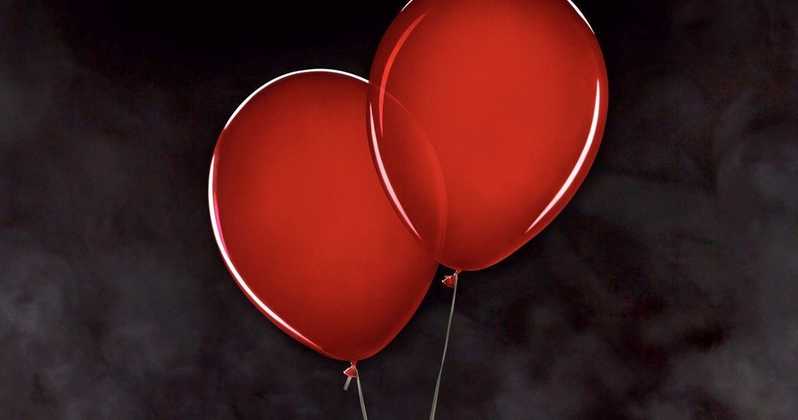
Two years ago, director Andy Muschietti and writer Gary Dauberman accomplished quite a magic act. They made the film It, not only improving upon Part 1 of the beloved 1990 TV miniseries, but cleaning up some of Stephen King’s most audacious, thrilling and sloppy work.
Their second outing together closes the book on Pennywise, the scariest of all scary clowns. But this sequel faces inherent obstacles that loom even larger because the second half of King’s novel and the ’90 adaptation are both worse than weak. They’re massive let downs, and it’s pretty tough to make a great film with poor source material.
How bad is the King ending? So bad that it’s actually a running gag in It Chapter Two, a tale that sees a bunch of losers returning to their hometown 27 years after they last battled town bullies, abusive fathers, low self-esteem and that psychotic, shape-shifting clown.
The outstanding young cast from chapter one returns for flashback sequences and sometimes awkward de-aging effects. Their adult counterparts are, to a one, impressive. Jessica Chastain is reliably solid, as is James McAvoy. Isaiah Mustafa (hey, it’s the Old Spice guy!) and James Ransone (Tangerine – see it!) make fine additions to the cast, but it’s Bill Hader who owns this movie. He’s funny, heartbreaking and more than actor enough to lead this ensemble.
But Muschietti runs into serious problems early and often. He’s at a disadvantage in the thrills department in that children in peril generate a far more palpable sense of terror than what you can get by threatening adults. We’re just not nearly as invested in the survival of the grown up Losers Club.
The filmmaker flashes some style with his scene transitions, but betrays a serious lack of inspiration when it comes to both CGI and practical effects. If the scare doesn’t come directly from Bill Skarsgård’s committed performance as Pennywise, it doesn’t come at all.
And even then, set piece after set piece seems constructed with only one aim: a clearly telegraphed jump scare. The slog of a second act is where the film is at its most undisciplined -and where the nearly three hour running time feels more than unnecessary.
When the Losers strike out alone to face their long repressed demons, the narrative loses its grip on any sustained, cohesive tension.
Then, like a conquering hero, act three arrives with guns blazing, blood spurting and the emotional weight to give this bloated clown show a proper send off.
It’s here – when things get most intensely horrific – that the psychological wounds Muschietti had been poking are the most raw and resonant. Nostalgic melodrama finally gives way to graceful metaphor, and we remember why we cared so much about these characters the first time.
Does Chapter Two improve the finales of the novel and TV version? Most definitely.
But can it successfully realize all the promise from the first chapter?
You think the price of gas will kill you! What about those creepy gas attendants?
Gas stations, for one reason or another, have become a staple in horror films – especially slashers and those backwoods thrillers. Jenny Raya of Dave’s Pop Culture Podcast joins us to count down the films that make the most of the spooky service station.
5. Tucker and Dale Versus Evil (2010)
Because Eli Craig’s comedic upending of the hillbilly horror sub-genre is nearly perfect, there had to be a pivotal scene set in a gas station.
Two backwoods buddies (an endearing Tyler Labine and Alan Tudyk) head to their mountain cabin for a weekend of fishing. En route they meet some college kids on their own camping adventure. A comedy of errors, misunderstandings and subsequent, escalating violence follows as the kids misinterpret every move Tucker and Dale make.
In the tradition of Shaun of the Dead, T&DVE lovingly sends up a familiar subgenre with insightful, self-referential humor, upending expectations by taking the point of view of the presumably villainous hicks. And it happens to be hilarious.
4. Splinter (2008)
Road kill, a carjacking, an abandoned gas station, some quills – it doesn’t take much for first time feature filmmaker and longtime visual effects master Toby Wilkins to get under your skin. One cute couple just kind of wants to camp in Oklahoma’s ancient forest (which can never be a good idea, really). Too bad a couple of ne’er-do-wells needs their car. Then a flat (what was that – a porcupine? No!!) sends them to that creepy gas station, and all hell breaks loose.
Contamination gymnastics call to mind the great John Carpenter flick The Thing, but Splinteris its own animal. Characters have depth and arcs, the danger is palpable, the kills pretty amazing, and the overall aesthetic of that old highway gives everything a desperately lonesome quality where you believe anything could happen and no rescue is in sight.
3. The Hills Have Eyes (1977)
Wes Craven’s original Hills – cheaply made and poorly acted – is a surprisingly memorable, and even more surprisingly alarming flick. Craven’s early career is marked by a contempt for both characters and audience, and his first two horror films ignored taboos, mistreating everyone on screen and in the theater. In the style of Deliverance meets Mad Max, Hills was an exercise in pushing the envelope, and it owes what lasting popularity it has to its shocking violence and Michael Berryman’s nightmarish mug.
The nightmare begins (and for a lot of people, ends) at Fred’s Oasis – the last gas station before hitting an unforgiving stretch of desert.
The Hills Have Eyes is not for the squeamish. People are raped, burned alive, eaten alive, eaten dead, and generally ill-treated. You can’t say Fred didn’t warn them.
2. Deliverance (1972)
Nine notes on a banjo have never sounded so creepy.
Deliverance follows four buddies staving off mid-life crises with a canoeing adventure in southern Georgia, where a man’s not afraid to admire another man’s mouth.
They stop off, as travelers must, at a service station. No one warns them, no one delivers ominous news, but come on, no one had to. One look at the locals spending their days at that gas station should have been enough to convince them to turn back.
James Dickey streamlined his own novel to its atmospheric best, and director John Boorman plays on urbanite fears like few have done since. Dickey and Boorman mean to tell you that progress has created a soft bellied breed of man unable to survive without the comforts of a modern age.
Jim Siedow’s under-appreciated performance as de facto patriarch begins at Last Chance Gas.
First is the classic “you don’t want to go there” warnings, a long tradition in backwoods and slasher horror. But Hooper has something fun up his sleeve with this one, introducing Siedow as a likable weirdo, a concerned older Southern gentleman.
So when Sally Hardesty makes it away from the carnage all the way back to the service station, the tension, betrayal and sadism that follows feels that much more awful and unseemly.
It’s appropriate that so much of the film Luce follows the titular character’s preparation for a debate. The film itself seems to beg for audience argument.
Luce is a bit of an American miracle. A boy soldier rescued
from Eritrea at 7 by a wealthy white couple, he’s reinvented himself by the
beginning of his senior year in high school, becoming the golden child: debate
team captain, cross country captain, speech team captain and eventual
valedictorian.
A sternly supportive history teacher (Octavia Spencer)
raises questions, her goal to help ensure Luce understands that he “cannot fuck
up.” It becomes the catalyst for a tense, borderline terrifying exploration of
identity, preconceptions, race, refined society and who gets to take credit for
what.
Kelvin Harrison Jr., so wounded and wonderful in It Comes at Night, holds all these puzzle pieces together as the enigma at the center of a mystery. His turn as the charismatic central figure in this highly polite and scholarly debate is fascinating, haunting and, in rare flashes, painfully vulnerable.
His manufactured persona, his carefully studied sincerity, emphasize an image that’s too good to be true. But Harrison Jr. brings so many additional layers—manifestations of survival techniques, an ability to read his environment and predict everyone’s behavior—that give his character needed complexity. Luce is not just a black student everyone can be proud of, or some wonderful example of how our system can work.
And that’s what makes him scary. So when he executes a history assignment too well—writing from the perspective of a historical figure who suggested violence as a moral response to colonialism—he freaks out a teacher (Spencer, wonderfully righteousness) who’d rather he embrace his favored status so she can bask in the glow.
Naomi Watts and Tim Roth play Luce’s socially conscious parents, and the pairing makes it tough to keep your mind from recalling Funny Games, Michael Haneke’s grim picture of affluent familial catastrophe. Whether intentional or not, the casting adds an underlying sense of urgent dread—as does Geoff Barrow and Ben Salisbury’s discordant score.
Watts is particularly strong, and the who-knows-what dance she does with Roth as their son plays one off the other adds a queasying rhythm to the mystery.
Julius Onah’s direction sometimes betrays the stagebound nature of the source material. (J.C. Lee adapts his own much lauded play.) Too much is revealed through lengthy monologues and there’s little smooth flow from scene to scene.
But his film teems with provocation and his cast more than meets that challenge. Harrison Jr. in particular is a revelation, an image of a thing that doesn’t exist but is so true you’ll never know if anything else is really there.
There is a moment in George Miller’s 2015 action masterpiece Mad Max: Fury Road. The empty bridal chamber is revealed quickly. Scrawled on the wall: Who killed the world?
It occurred to me partway through Jennifer Kent’s sophomore feature The Nightingale that Miller isn’t the only Aussie director with that question on the mind.
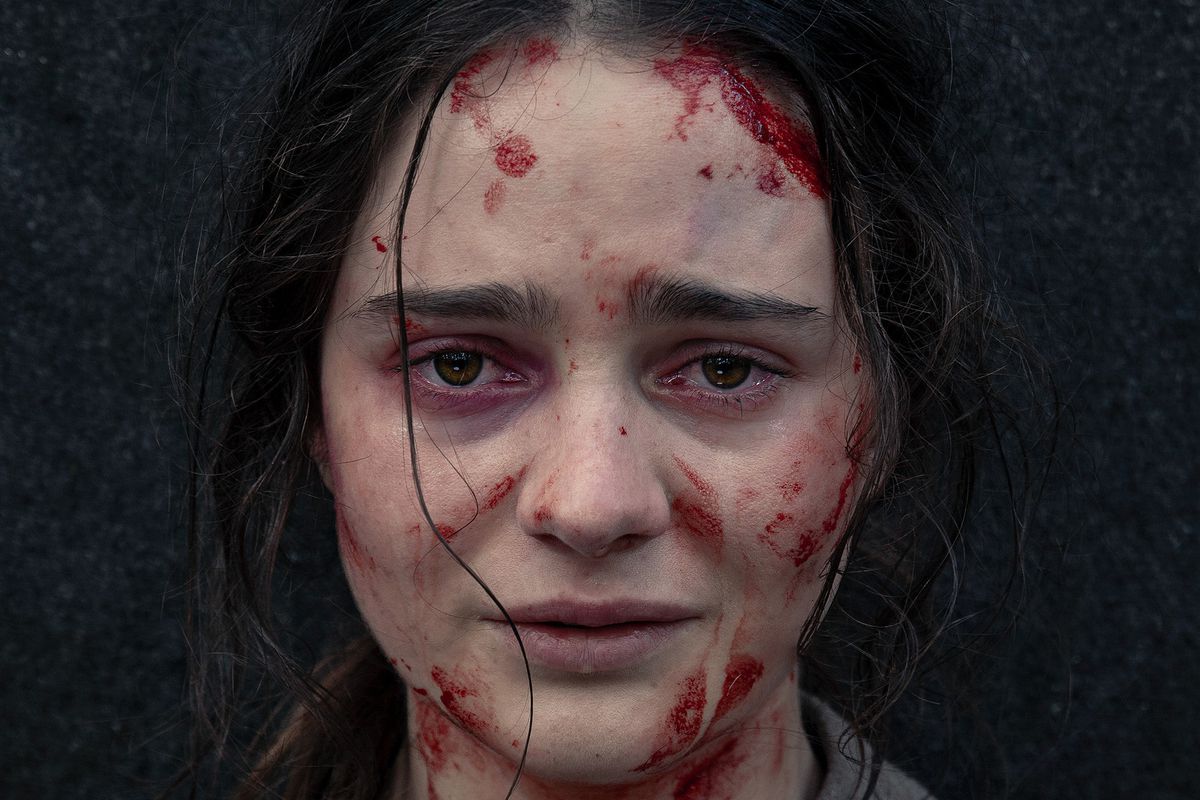
The Nightingale is as expansive and epic a film as Kent’s incandescent feature debut The Babadook was claustrophobic and internal. In it she follows Clare (Aisling Franciosi), an Irish convict sentenced to service in the UK’s territory in Tasmania.
What happens to Clare at the hands of Leftenant Hawkins (Sam Claflin), the British officer to whom she is in service, is as brutal and horrifying as anything you’re likely to see onscreen this year. It’s the catalyst for a revenge picture, but The Nightingale is far more than just that.
As Clare enlists the aid of Aboriginal tracker Billie (Baykali
Ganambarr, magnificent) to help her exact justice, Kent begins to broaden her
focus. Those of us in the audience can immediately understand Clare’s mission because
we witnessed her trauma in its horrifying detail. Kent needed us to recognize
what British military men were capable of.
What she wants us to see is that the same thing—the worst,
almost imaginable brutality—happened to an entire Australian population.
In the second act, Clare—on a higher social rung than her tracker, and just as condescending and racist as that position allows—and Billy begin to bond over shared experience. Franciosi’s fierce performance drives the film, but Ganambarr injects a peculiar humor and heart that makes The Nightingale even more devastating.
Kent’s fury fuels her film, but does not overtake it. She
never stoops to sentimentality or sloppy caricature. She doesn’t need to. Her
clear-eyed take on this especially ugly slice of history finds more power in
authenticity than in drama.
Her tale becomes far more than an indictment of colonization, white male privilege, domination and subjugation. It’s a harrowing and brilliant tale of horror. It’s also our history.
Wow, there are a lot of movies coming home this week. Some of them are so bad. Just really, extraordinarily bad. But hidden in there are a couple of decent horror flicks you might have missed.
There is something primally terrifying in the idea of missing persons – losing someone or being lost. Where are they and what is happening to them? No mater which side of that question you are on, the imagination conjures terrifying images.
Listen to the full podcast, including a special interview with Hounds of Love director Ben Young.
5. The Poughkeepsie Tapes (2007)
John Erick Dowdle’s film is a difficult one to watch. It contains enough elements of found footage to achieve realism, enough police procedural to provide structure, and enough grim imagination to give you nightmares.
Edward Carver (Ben Messmer) is a particularly theatrical serial killer, and the film, which takes you into the police academy classroom, asks you to watch his evolution from impetuous brute to unerring craftsman. This evolution we witness mainly through a library of videotapes he’s left behind—along with poor Cheryl Dempsey (Stacy Chbosky)—for the police to find.
Cheryl is Carver’s masterpiece, the one victim he did not kill but instead reformed as his protégé. It’s easily the most unsettling element in a film that manages to shake you without really showing you anything.
4. Berlin Syndrome (2017)
Aussie photographer Clare (Teresa Palmer, better than she’s ever been) is looking for some life experience. She backpacks across Europe, landing for a brief stay in Berlin where she hopes to make a human connection. Handsome Berliner Andi (Max Riemelt) offers exactly the kind of mysterious allure she wants and they fall into a night of passion.
What follows is an incredible combination of horror and emotional dysfunction, deftly maneuvered by both cast mates and director Cate Shortland. The mental and emotional olympics Palmer goes through from the beginning of the film to the end showcase her instincts for nuanced and unsentimental performance. Clare is smart, but emotionally open and free with her own vulnerability. The way Palmer inhabits these characteristics is as authentic as it is awkward.
Even more uncomfortable is the shifting relationship, the neediness and resilience, the dependency and independence. It’s honest in a way that is profoundly moving and endlessly uncomfortable. Riemelt matches Palmer’s vulnerability with his own insecurity and emotional about-faces. The two together are an unnerving onscreen pairing.
3. The Vanishing (Spoorloos) (1988)
Back in ’88, filmmaker George Sluizer and novelist Tim Krabbe adapted his novel about curiosity killing a cat. The result is a spare, grim mystery that works the nerves.
An unnervingly convincing Bernar-Pierre Donnadieu takes us through the steps, the embarrassing trial and error, of executing on his plan. His Raymond is a simple person, really, and one fully aware of who he is: a psychopath and a claustrophobe.
Three years ago, Raymond abducted Saskia (Johanna ter Steege) and her boyfriend Rex (Gene Bervoets) has gone a bit mad with the the mystery of what happened to her. So mad, in fact, that when Raymond offers to clue him in as long as he’s willing to suffer the same fate, Rex bites. Do not make the mistake of watching Sluizer’s neutered 1993 American remake.
https://www.youtube.com/watch?v=fcA10H-85×4&t=36s
2. The Blair Witch Project (1999)
Blair Witch may not date especially well, but it scared the hell out of a lot of people back in the day. This is the kind of forest adventure that I assume happens all the time: you go in, but no matter how you try to get out – follow a stream, use a map, follow the stars – you just keep crossing the same goddamn log.
One of several truly genius ideas behind Blair Witch is that filmmakers Daniel Myrick and Eduardo Sanchez made the audience believe that the film they were watching was nothing more than the unearthed footage left behind by three disappeared young people. Between that and the wise use of online marketing (then in its infancy) buoyed this minimalistic, naturalistic home movie about three bickering buddies who venture into the Maryland woods to document the urban legend of The Blair Witch. Twig dolls, late night noises, jumpy cameras, unknown actors and not much else blended into an honestly frightening flick that played upon primal fears.
1. Hounds of Love (2018)
Driven by a fiercely invested and touchingly deranged performance from Emma Booth, Hounds of Love makes a subtle shift from horrific torture tale to psychological character study. In 108 grueling minutes, writer/director Ben Young’s feature debut marks him as a filmmaker with confident vision and exciting potential.
It is the late 1980s in Perth, Australia, and at least one young girl has already gone missing when the grounded Vicki (Ashleigh Cummings) sneaks out her bedroom window to attend a party. This isn’t nearly as dumb a move as is accepting a ride from Evie White (Booth) and her husband John (Stephen Curry).
As the couple dance seductively and drink to celebrate, Young disturbingly conveys the weight of Vicki’s panicked realization that she is now their captive. It is just one in a series of moments where Young flexes impressive chops for visual storytelling, utilizing slo-motion, freeze frame, patient panning shots and carefully chosen soundtrack music to set the mood and advance the dreadful narrative without a spoken word.