Tag Archives: Madd at the Movies

Fright Club: Blond(e)s in Horror

We want to thank Cati Glidewell, also know as The Blonde in Front, for joining us to talk through some of the best blond(e)s in horror. There’s a lot of names here, but I think we may have proved that—with a few really bloody exceptions—blondes do seem to have more fun in these movies.

The Dudes

6. Francis Dollarhyde (Tom Noonan), Manhunter (1986)

Tom Noonan’s entire career is defined by a mixture of tenderness and menace. It begins with his unusual physical appearance, including his almost colorless locks, and ends with performances that realize everything broken and horrifying about a character—especially Francis Dollarhyde. The terrifying chemistry between Dollarhyde and a blind Joan Allen’s is heartbreaking perfection.

5. Mark Lewis (Carl Boehm), Peeping Tom (1960)

Like Norman Bates across the pond, England’s Mark Lewis (Carl Boehm) is an innocent. Boehm’s blank stare, his frightened mouse reflexes, his blond locks all contribute to a character so tender you can’t help but root for him—although it would be great if he’d stop murdering women.

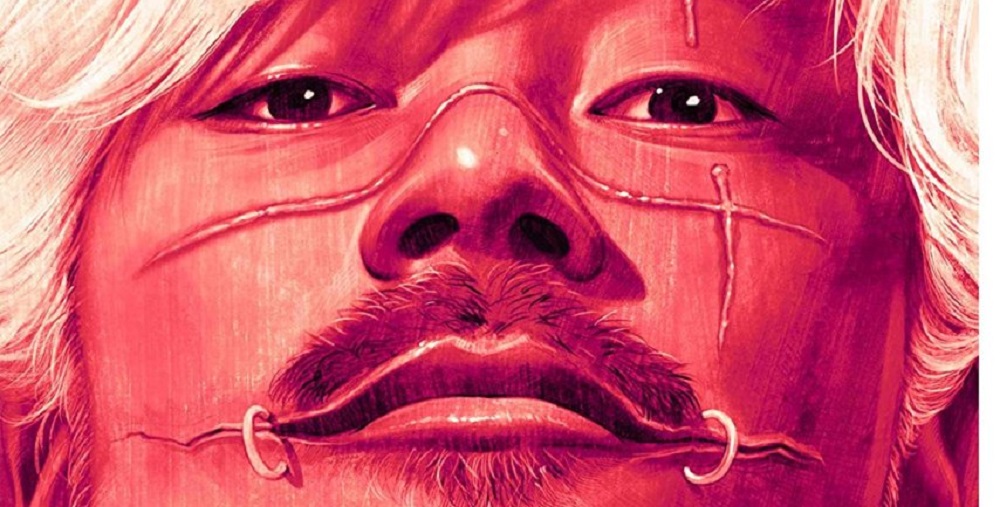
4. Kakihara (Tadanobu Asano), Ichi the Killer (2001)

A bleach blond in a Japanese film will automatically draw the eye, but Kakihara’s not just here to catch your attention. Genius filmmaker Takashi Miike and Tadanobu Asano created this badass to upend your expectations. He’s the baddie, right? And man-child Ichi is the innocent? Or is Miike toying with you?

3. Gage (Miko Hughs), Pet Sematary (1989)

Get the Kleenex ready because the ridiculously cute Mike Hughs has a date with a semi. A toddler when he filmed this movie, Hughs really turns in a remarkable performance, whether he’s tugging your heart strings or slicing through Fred Gwynne’s Achilles tendon.

2. David (Keiffer Sutherland), The Lost Boys (1987)

Hubba hubba. The rock star duds. The homoerotic relationship with Jason Patrick. The mullett! Keiffer Sutherland’s bad boy David was so cool you couldn’t help wanting to hang out with him. Eating maggots seems like a small price to pay, really. Nobody said the cool kids’ table would be tasty.

1. John Ryder (Rutger Hauer), The Hitcher (1986)

There are those with a thing for bad boys, and then there are those with a thing for Rutger Hauer. He’s not a bad boy—he’s not even in the same zip code. His John Ryder will make you feel all kinds of weird things because he’s not your garden variety dangerous character. What he will do to you, to that nice family in the station wagon, to your new girlfriend, is more awful than anything you can think of.

The Women

6. Chris Hargeson (Nancy Allen), Carrie (1976)

When De Palma launched the ultimate in mean girl cinema, Nancy Allen delivered the ultimate mean girl. Chris Hargeson’s bloodthirsty princess energy has to convey something horrifying if she is to properly offset what poor Carrie White has to content with at home. Luckily for us (not so much for Carrie), she does.

5. Tomasin (Anya Taylor Joy), The Witch (2015)

Watching The Witch, you realize that writer/director Robert Eggers chose everything: every sound, every image, every color. And while Tomasin’s family looked like gaunt, hard working, colorless cogs in God’s wilderness wheel, Thomasin did not. Even as we open on Anya Taylor Joy, confessing her sins and begging forgiveness, she is lit from within. A beacon. It’s just that her light has caught the wrong kind of attention.

4. Casey (Drew Barrymore), Scream (1996)

The genius Wes Craven and his producer Drew Barrymore pulled an incredible and soon-to-be endlessly copied sleight of hand with Casey—the spunky female played by the biggest star in the cast. With this character, Craven introduces the meta-movie-commentary that defines this film while simultaneously upending our own unconscious investment in those tropes by killing Casey off in Act 1.

3. Carol (Catherine Deneuve), Repulsion (1965)

We went back and forth. Would it be Deneuve as gorgeous seductress Miriam in Tony Scott’s 1983 vampire film The Hunger, or innocent driven to madness Carol in Polanski’s Repulsion? (He does know how to torture innocent young women, doesn’t he?) Deneuve’s performance in Repulsion is so compelling and difficult—playing primarily alone for about half the film—that it won out, but either way, she’s a blonde to be reckoned with.

2. Pamela Voorhees (Betsy Palmer), Friday the 13th (1980)

The OG Karen (to steal a phrase from this episode’s co-host The Blonde in Front), Pamela Voorhees has a plan and she’s sticking to it. This funny business among the camp counselors needs to be addressed, corrected. Enough is enough. Betsy Palmer’s performance is spot-on, so comforting and in control before it goes completely batshit. Jason may get all the love, but Mrs. Voorhees took care of business first.

1. Carrie White (Sissy Spacek), Carrie (1976)

Like his idol Hitchcock, Brian De Palma had a thing about blondes—what that fair hair represented, what it could mean. For De Palma, it might be the bombshell of Angie Dickson’s character in Dressed to Kill, or the innocence of Carrie White. Of course, Sissy Spacek’s Oscar nominated performance in the film was what really sold this sheltered, shell-shocked little lamb, but you can’t deny she had that look.


Senior Moments

Senior Love Triangle

by Hope Madden

Co-writer/director Kelly Blatz announces his presence with authority, creating a minor cinematic miracle with his feature debut, Senior Love Triangle.

Inspired by co-writer Isadora Kosofsky’s remarkable longterm photo essay of the same name, the film delivers a candid look into the intimate relationship among three elderly characters: William (Tom Bower), Adina (Anne Gee Byrd) and Jeanie (Marlyn Mason).

The film is equal parts charming, frustrating and heartbreaking. More importantly, it takes its characters seriously. In an era where veteran actors entertain us via “those crazy old people!” vehicles (watching Diane Keaton become a cheerleader in Poms sapped my will to live), Senior Love Triangle feels gloriously anarchic. The magic of Blatz’s film is that it offers a character study of the sort we simply never see.

Thanks to thoughtful writing and breathtaking performances—neither of which rely for a moment on shorthand—we get to know three unique individuals. William is an irascible, arrogant, 84-year-old charmer. His sophisticated lady love Adina indulges his ego, but when her son has him kicked out of Adina’s posh retirement high rise, William finds himself in a lower-quality establishment.

Not to worry! He’s just finishing a lucrative deal that will set him up so he can buy a mansion and get Adele away from those Nazis in her building. (That is to say, he’s being routinely scammed.) In the meantime, over at his new digs he meets exuberant flirt Jeanie. (Mason’s performance is a particular triumph.)  

Blatz, with an incredible assist from Kosofsky’s work, sees the characters’ humanity, their sexuality, their courage and weakness. He sees their loneliness, their vulnerability to outside forces and to each other, their need. These are complicated characters, vibrant and alive.

Senior Love Triangle offers an underseen perspective on aging (the perspective of the aged themselves) without romanticizing. Dangerous misconceptions about masculinity weigh as heavily on their safety and happiness as their own physical deterioration.

The film is a heartbreaker that just does what it wants to do. Just like William.

Zoom and Gloom

Host

by Hope Madden

It was bound to happen, and no doubt the inanely titled Host is the first in a succession of films to tap into quarantine and pandemic frustrations to fuel horror. The fact that co-writer/director Rob Savage employs found footage for his of-the-moment horror show seems even more obvious.

Sometimes, though, it’s the most obvious choices that work out. Savage taps into the real emotional gap between face-to-face and virtual relationships as a handful of mates jump on a Zoom meeting for a bit if fun.

Separated because of lockdown, the buddies decide to create an event: an online séance. Haley (Haley Bishop) is hoping her friends will be respectful of the medium Seylan (Seylan Baxter), but those hopes are dashed when Teddy (Edward Linard) convinces the group to do a shot every time Seylan says “astro plane.”

“It’s astral plane,” Haley sighs.

Naturally, their irreverence is repaid.

Savage treads the same aesthetic as The Den or Unfriended: Dark Web, but in many ways his effort is even more successful—perhaps because it speaks so articulately to our immediate condition. Host is incredibly simple and spooky in the way that it exploits our isolation and the vulnerability that comes with that.

And while the medium itself is hardly groundbreaking and is sometimes irritating, Savage takes advantage of the limitations of found footage horror. The likability of the characters help you suspend disbelief during the portions where they’d clearly have put down the damn computer, and because the film manages to keep your interest, you get to enjoy the spook house effects. A lot of these jump scares are old school fun.

Lean and mean, running a brisk 56 minutes, the film doesn’t busy itself too much with why or how or really even what. Instead it quickly upends our new normal with old fashioned scares.

Hillbilly Noir

The Big Ugly

by Hope Madden

When my son was young, we liked to watch Animal Face-Off, an educational program that proposed hypothetical battles between animals that wouldn’t normally fight. Sperm Whale v Colossal Squid, African Lion v Nile Crocodile, Walrus v Polar Bear.

Ohioan Scott Wiper delivers a similar culture clash movie: Brit gangster v hillbillies with money. The filmmaker drops us in the Appalachians along with London mob elite Harris (Malcolm McDowell), his muscle, Neelyn (Vinnie Jones), and Neelyn’s girl, Fiona (Lenora Crichlow).

After decades of hard, dirty work, these men are about to make a deal with an oilman who can’t get legal money to drill. They finance Preston (Ron Perlman) and his son Junior (Brandon Sklenar) now, and it pays off for the rest of their lives.

Bills are exchanged, drinks are drunk, but when the dust clears the next day, Fiona comes up missing.

Even at 55, Jones is still an intimidating presence. He’s looking a bit worse for the wear here, but the effect gives Neelyn a weariness that serves the character well. And while it’s always wonderful to see veterans McDowell and Perlman with real characters to dig into, it’s Sklenar who impresses most.

His entitled sociopath schtick slides fluidly from charming and hateful, and the fact that he and writer/director Wiper offer the character both intelligence and physical prowess makes this a villain who may just stand a chance.

It’s also to the filmmaker’s credit that the West Virginians are rarely the oversimplified hillbilly clichés we’ve come to expect.

Which isn’t to say the film is full of nuance. Though the tone is less laughable, The Big Ugly sometimes takes on a Roadhouse feel about it. Plot contrivances and obvious resolutions mark a film that’s clearly breaking no new ground.

The subplot about the heads of the families carries too little weight and too much screen time. It’s hard to complain about an honor-among-thieves conflict between two such beloved genre veterans as Perlman and McDowell, but Wiper tells of the bond more than he shows it, so the payoff feels unearned.

Still, for a B-movie, The Big Ugly delivers what it needs to. Our favorite Animal Face-Off was Hippopotamus v Bull Shark because we love it when the big, lumbering beast you’d bet against turns out to be the badass. Doesn’t everybody?

In Search of a Purpose

In Search of Darkness

by Hope Madden

The first thing you know about Shudder’s new original doc In Search of Darkness is that it’s an encyclopedic look at horror movies from the Eighties.

The second thing you need to know is that it’s 4 hours and 20 minutes long.

Right?!!

Why filmmaker David A. Weiner decided this had to be a standalone doc rather than a short series is beyond me. Certainly you can (and no doubt will) pause the film and come back to it, which is simple enough to do with Shudder. Still, having devoted about 1/3 of my waking day to a single documentary, I feel as if I should have learned more about Eighties horror than I did.

The bright spots: Tom Atkins is as delightful as you hope he is, as, of course, is Barbara Crampton. John Carpenter and Larry Cohen are as curmudgeonly; Keith David’s saucy baritone makes every anecdote extra fun; Alex Winter makes some interesting connections between films and society at large; and some of the industry insider talking heads seem knowledgeable.

There’s no real rhyme or reason to the specific titles discussed, but more problematic is the superficial treatment of the genre. In four and a half hours, I should have learned something, should have heard of a movie I’d never known about. In Search of Darkness refuses to connect any dots.

Some of the asides about VHS cover art, for instance, are briefly interesting, but other such tangents only emphasize the film’s overall weaknesses. The discussion of the final girl or of gratuitous nudity in 80s horror lacks any kind of insight, but when the piece on horror soundtracks did not mention Goblin, it dawned on me that in early 4 ½ hours, not a single foreign title is discussed.

No Argento, no Fulci, no Deodado – niente.

A ninety minute doc that contents itself with a nostalgic traipse down VHS store aisles would be fun. A doc series that contextualizes the phenomenal explosion in the popularity of horror in the Eighties, digging into sexism, feminism, foreign titles, changing music, the Reagan influence, the impact of VHS and MTV – that would be amazing. In Search of Darkness is neither.

Home Away from Home

The Rental

by Hope Madden

Dave Franco has made a movie. James Franco’s younger, less creepy brother has been a welcome, smiling face in films since his teens. Directing his first feature, he sidesteps the more obvious choice of a comedy – given his background – and instead delivers a tense horror about jealousy, deteriorating relationships, and the dangers of Airbnb.

Dan Stevens stars as Charlie, handsome and successful older brother of Josh (Jeremy Allen White). As if Josh doesn’t have enough to live up to, his beloved and brilliant girlfriend Mina (Sheila Vand) is Charlie’s work partner and the two just really click.

Together Mina and Charlie land a big deal. To celebrate, they and their significant others—Josh, plus Charlie’s wife Michelle (Alison Brie, Franco’s real life wife)—rent a gorgeous, off the grid place for a weekend getaway.

If you’re thinking this is an incredibly common premise jazzed up with a couple of impressive actors, you are correct. But there’s a lot to be said for a good cast.

All four convey a lived-in chemistry that gives the relationship conflicts more resonance. Brie and White, in particular, deliver believable warmth as big sister-in-law/little brother-in-law. Both are dealing with some jealousy, each lending support and guidance to the other. Secondary characters in indie horror are rarely given this kind of opportunity to breathe, but drawing the audience into these relationships benefits the tensions Franco is working to create.

Stevens and Vand work wonders as the morally conflicted central characters. Vand (exquisite in A Girl Walks Home Alone at Night—see it!) blends righteous indignation with guilty conscience. This helps her build believable motives for what could, in lesser hands, feel like conveniently poor decision making.

Liberal guilt, entitlement, questionable morality and selfishness rarely come packaged as sympathetically as Charlie, but Stevens is a solid character actor and here he creates a nicely complex character.

Rounding out the small ensemble, the always welcome Toby Huss also finds layers in a character that could easily have been one note.

So, performances are solid and Franco delivers a decent sleight of hand by Act 3. The film feels imbalanced by then, though, as if it wasn’t until  the 11th hour that Franco decided this was a horror movie. There’s enough suffering in the final reel to clarify The Rental’s genre, but that doesn’t mean it entirely works.

Living Deliciously

First Cow

by Hope Madden

Kelly Reichardt films tell a story, but not in the traditional Hollywood sense. She draws you into an alien environment, unveils universal humanity and shows you something about yourself, about us. There’s usually a story buried in there somewhere. In this case, it’s about two outsiders in 19th Century Oregon who find friendship.

And a cow.

Cookie (John Magaro) is a gentle soul, not properly built for the fur trade. (You saw The Revenant, right?) He’s a baker at heart, not that he gets to do much baking on a trapping expedition with hungry, volatile, hunt-weary men.

He holds no value for these men, and has nothing in common with them. But somehow he sees a kinship with the naked Chinese man he stumbles upon as he forages for mushrooms in the woods.

It’s sweet and sad the way Cookie and King-Lu (Orion Lee) fall into a relationship. King-Lu has ambitions. He opens Cookie’s eyes to opportunities he’d never had the courage to consider. Through these characters Reichardt demonstrates how fragile, lovely and heartbreaking hope can be.

Working again with regular collaborator Jonathan Raymond, whose novel the two adapted, Reichardt keeps you pulling for her heroes. The narrative lulls you with understated conversations and observations while the meticulously captured natural beauty onscreen beguiles. Within that, we see the potential of a young country through the eyes of Americans determining the dream.

Reichardt explores loneliness in all her films, the sense that we are each simply and inevitably alone, though we struggle against it regardless. This exploration isn’t hurried. It breathes. She emphasizes the longing for connection in every quiet moment with her characteristic use of lighting, the way she frames nature and the naturalistic performances she draws from Lee and Magaro.

William Tyler’s lonesome score offers something both mournful and tender, which is fitting. Although these men’s very existence in this place testifies to hardy ambition, Reichardt lingers on moments of gentle camaraderie.

When Kelly Reichardt tells a story, she breaks your heart. She does it slowly and quietly, but it’s broken nonetheless.

Tugging Hearts, Slashing Throats

The Old Guard

by Hope Madden

Let’s start with this piece of obviousness: Charlize Theron can do anything. From indie dramas to bawdy comedies to badass action, Theron commits and convinces.

In Netflix’s The Old Guard, she plays the leader of a small but immortal group of soldiers eluding capture while trying to train a new member. It’s Book One in a series, and that can be a dangerous spot for a film because that tends to mean a lot of exposition and not enough conflict.

Not here.

Greg Rucka adapts his own source material and director Gina Prince-Bythewood makes the most of his screenplay and her cast.

She flanks Theron (spectacular, obviously) with actors who are, first and foremost, talented actors. The fact that they make for believable mercenaries is a really excellent bonus.

The ever versatile Matthias Schoenaerts gives the film its aching heart while KiKi Layne proves herself to be as convincing here busting heads as she was at drawing tears in If Beale Street Could Talk. Though it’s unfortunate he couldn’t have stolen a little more screen time, the great Chiwetel Ejiofor is a welcome presence, as always.

So what Prince-Bythewood does is surround Theron with other talented actors whose versatility compliments hers. This brilliant move let the filmmaker take a somewhat by-the-numbers superhero tale and tell it with a restraint that takes advantage of her cast’s flexibility and talent.

In Prince-Bythewood’s hands, The Old Guard explores the same universal themes mined in most superhero films, but she tells the tale as a taut and tactical military experience. The understatement makes the action sequences stand out, the filmmaker requesting your close examination of each bout and each battle, whether hand-to-hand, bullet-to-brain or saber-to-throat.

It pays off, delivering a thrilling action movie that doesn’t disregard your brain. Even better, this is a movie that tugs at your emotions without the need for swelling strings or sentiment to convince you.

That’s what happens when one formidable women pulls together a group of similarly skilled badasses.