Tag Archives: independent film

Invasive Species

Snakehead

by Rachel Willis

In New York’s Chinatown, those who smuggle humans into the country are known as Snakeheads. One woman, smuggled into New York herself and in debt to Dai Mah (Jade Wu), finds herself trafficking humans in writer/director Evan Jackson Leong’s film, Snakehead.

Sister Tse (Shuya Chang) is willing to do anything to survive, even if it means working for Dai Mah and her family of black market criminals. Like any criminal family, Dai Mah’s crew runs a few legitimate operations, but out of the eye of the law, they smuggle men and women into the country.

Writer/director Evan Jackson Leong’s film has an eye on the many pieces of operating a human smuggling operation. It’s dangerous work, but most of those involved are true villains. Dai Mah’s son, Rambo (Sung Kang), has no regard for the people he brings into the country. They’re cargo. His legitimate business is an aquarium, and he treats the fish he sells better than the people who are forced to rely on him for safe passage into America.

Sister Tse watches most of this with an observant eye. She’s tough, but she hasn’t lost her empathy for those in situations similar to hers. Though Sister Tse is higher up in the slave chain under Dai Mah, she is still a slave.

Chang crackles with unspoken rage as she watches the operations around her. She sells the role as a fierce woman who ingratiates herself into Dai Mah’s inner circle, but never forgets what she truly is. Wu can’t match Chang’s ferocity on screen. Though we watch her commit a violent act, she never sells herself as someone truly dangerous — a necessity for a woman who runs a crime organization. Slightly more convincing as a villain is Sung Kang, but even his character has a soft spot that stretches believability. 

There are too many moments that require a hard suspension of disbelief. Though the immigrants’ predicament rings with truth, it’s the overarching operation that never lands as a believable enterprise.

Loosely based on real people and events, Snakehead is the kind of true-crime drama that tells a compelling story. The fictionalized element, though, tends to forget the victims who suffer as they seek a better life. Sister Tse is an attempt to remember, but as the more brutal elements of the film play out, it’s easy to be swept up in the action rather than rooted in the true horror of human trafficking.

Performing Without a Safety Net

Runt

by Christie Robb

It’s a truth universally acknowledged that high school students are dumb.

It’s not their fault. The part of the brain that supports decision-making isn’t fully developed until the mid-twenties. And that’s ideally why society surrounds the impulsive little beasties with grownups who can model positive behavior and counsel them about their choices.

Director William Coakley’s Runt shows a good kid, Cal, trying to navigate the tightrope of high school and arrive safely at art school. But he’s working entirely without a safety net.

His single-parent mom is either at work or asleep. His teachers are the kind of folks who will yell at him for being obvious when he breaks and lets the jocks cheat off him. His best friend is an increasingly self-destructive embarrassment. His manager at the supermarket is always on his butt. The only living being that has his back at all is his dog, Runt.

Right from the jump, you know this isn’t going to end well.

Over the course of the film, Cal’s relationship with the jock bullies becomes increasingly violent. The tea of toxic masculinity that they are all steeping in leaves no room for apologies. The cycle of violence feeds on the overall negative energy until, toward the end, it feels like you are watching the birth of a supervillain.

Cameron Boyce as Cal is fantastic. You can see all the nuances of the different emotions that play over his features. The mixture of pride, shock, and guilt that flash across his face after he impulsively does something that Cal never thought he would do is awe-inspiring. The entertainment industry truly lost a promising talent when Boyce died in 2019.

The film’s ending somewhat undercuts what seems to be the intended message. There’s a tinge of romanticism in the very final moments that gives Cal’s violence a more heroic feel than what the rest of the movie seems to be going for.

But as a portrait of what’ll make an art kid snap, it’s pretty good.

Scenes from Another Marriage

Bergman Island

by Hope Madden

A lot can go wrong when a filmmaker toys with meta-filmmaking. The movie can become cloyingly clever, it can lose the audience in its self-indulgence, it can become more of a trick than a film.

While Mia Hansen-Løve’s Bergman Island is arguably as self-indulgent a film as you will find, she risks all these trappings but falls to none.

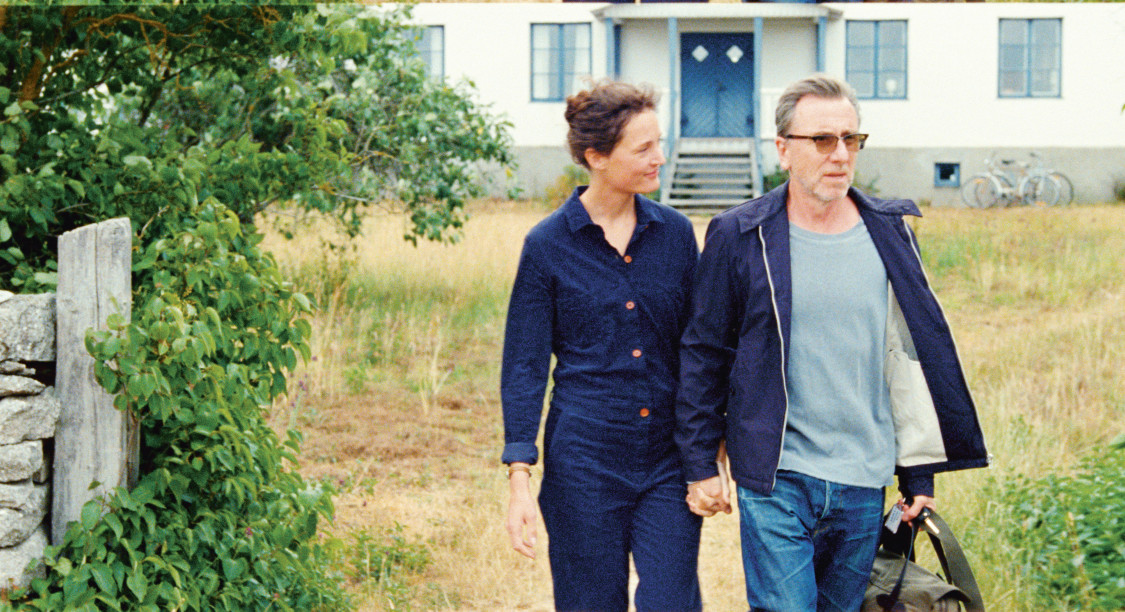
Her movie follows two filmmakers, Chris (Vicky Krieps) and Tony (Tim Roth), who leave their daughter with Chris’s mom so they can devote themselves to some solid writing time. They travel to Fårö island, where Ingmar Bergman lived, worked and shot some of his most famous films.

Bergman Island feels extremely personal in the way that it mirrors, to what degree it’s hard to know, Hansen-Løve’s real-life relationship with filmmaker Olivier Assayas and their devotion to the work of Bergman. There’s also a very intimate sense of the way one filmmaker’s inspiration from the same source can look so very different from another’s. And, of course, there is a kind of dreamy link between generations of filmmakers.

Most importantly, though, this is the story of a couple. Casting is one of Hansen-Løve’s greatest strengths here because, without the committed and vulnerable performances she draws from Krieps and Roth, the film could easily have folded in on itself. It does not, not for a moment.

Roth’s distance as a partner speaks not only to Tony’s ego and insecurity but to his support and understanding – Tony recognizes that this process will be prickly and leaves as much room as he thinks his partner may need to create.

This subtlety becomes a sly maneuver, as you begin to understand the story Chris works on.

The entire tale unfolds on the breathtaking island, where Chris’s stories — her real-life story with Tony, as well as the story within a story she writes — benefit from the windswept beauty of the island.

Bergman Island tells you a lot but leaves it to you to decide what it’s saying. Whatever tale you decipher, your time on the island is well spent.

Girls Are Better Off Dead

Mayday

by Cat McAlpine

Life’s hard for Ana, who is sleeping in her car and doing her best serving under her abusive boss. Although the time and place aren’t specified and don’t matter, the dark and dated dance hall she caters in suggests that Ana’s gloomy life is somewhere in Eastern Europe. But she won’t stay there for long.

An act of violence shakes Ana (Grace Van Patten) from her stupor and in a dreamy mashup of Alice in Wonderland, Sucker Punch, and a hint of Sylvia Plath, Ana escapes her life by crawling through a glowing oven. On the other side, she discovers a ragtag group of girls – brutal and intoxicating Marsha (Mia Goth), hearty Gert (Soko), and sweet Bea (Havana Rose Liu). The girls play at war, picking off men from any side of an unknown eternal conflict to torture and kill. Instead of a magic tree house, they live inside the hull of an old U-Boat. Like coastal sirens, they hop on the airwaves and cry “Mayday,” leading men into storms and uncertain territory.

Nervous at the thought of killing, Ana warns, “I’ve never been in a war.”

“You’ve been in a war your whole life, you just don’t know it,” replies Marsha.

Writer/Director Karen Cinorre creates a beautiful and increasingly dark dreamscape for Ana to explore her trauma, but the dialogue is heavy-handed while the plot stays meandering and loose. The result is a contemplative romp through female rage, painted like a grim fairytale that isn’t quite sure where it’s going.

Aesthetically, the film is fantastic, and it is anchored by strong performances. Van Patten is enjoyable to watch as Ana comes into her own. Goth is terrifying and power-hungry, a believable cult leader. But Cinorre’s fever dream burns on too long and gets too caught up in its own rules of make-believe, casting off metaphor and leaving it for dead. War is a childlike fantasy playscape for the girls who feel powerless otherwise. But are they all dead? Is this a shared hallucination? Some of the players are characters from Ana’s own life while others are strangers.

One scene implies that Ana has gunned down a whole camp of men, but it shows her doing a choreographed dance with them instead. Is this an illusion inside of an illusion? Mayday doesn’t stand up to questioning, which suits the fantastical film just fine most of the time.

Ana must discover what measure of hope and rage suits her. Marsha is all rage. Bea all hope. And Gert doesn’t want to talk about it. As soon as Ana takes to killing men, she starts seeing all the ones who were kind to her before. And though their fairytale island is littered with ill-suited husbands and would-be rapists, Ana still struggles to condemn the whole kingdom of men.

Ultimately, Mayday is a fine telling of how to find our rage and how to tend to our sadness without letting go of the good the world still has to offer.

An Unbroken Wheel

This Is Not a Burial, It’s a Resurrection

by Cat McAlpine

In the small village of Nazareth, in the tiny Kingdom of Lesotho, a man recounts the wisdom his father once gave to him. “My son, what they call progress…It is when men point their damning finger at nature and proclaim conquest over it.” It is that poisonous progress that the people of Nazareth are fighting against in This Is Not a Burial, It’s a Resurrection, and it is a losing battle.

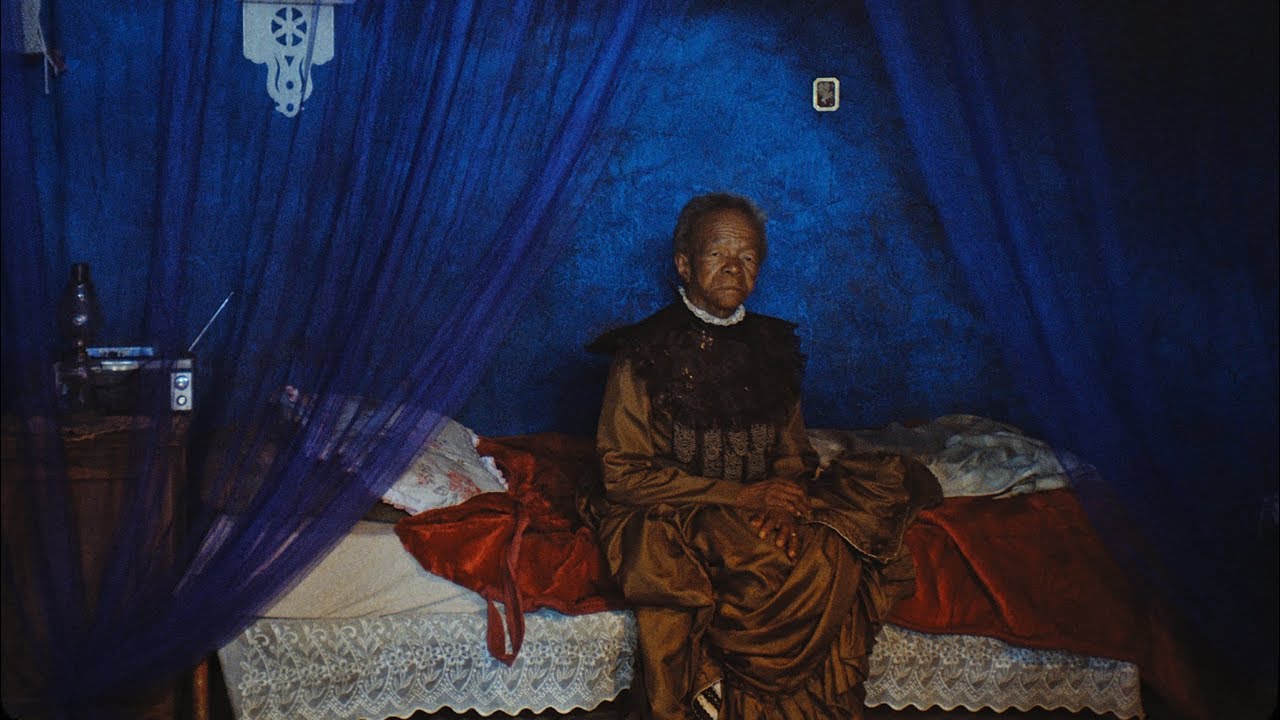
The film follows 80-year-old widow Mantoa. After the death of her last surviving child, she finds herself utterly alone and mired in grief. The story unfolds like a mythic, dark fairytale with beautiful vignettes and discordant music. Director Lemohang Jeremiah Mosese carries us from moment to moment as Mantoa repeatedly has to contemplate her grief. Though she resigns herself to simply wait to be buried alongside her family, a new challenge arrives with a blazer and a megaphone. The village will be relocated, a dam will be built, their fields will be flooded.

What of the dead? What of Mantoa? The elderly woman convinces the village to resist the spinning wheels of progress. Together they seek to find what is left for their community in the land where their dead are buried. Twice we are reminded that Nazareth is the name that new settlers gave the land. Before that, it was always known as the Plains of Weeping.

Jerry Mofokeng delivers a reverent and deeply sad narration of Mantoa’s struggles. Using the framework of a narrator, with a different voice and perspective than Mantoa, further perpetuates the storybook feel. But this is not a happy children’s tale. This is a story about capitalism’s infinite reach. This is a story about grief, culture, and perseverance. This is a story about the dead.

Mary Twala is phenomenal in her final role as Mantoa. Her emotion is palpable even when she sits in silence. Her rage and her pain don’t slow the narrative or taint it with bitterness. Instead, Twala propels Mantoa with the depths of her grief. She is an absolute powerhouse, and the film would not succeed as well as it does without her.

And the film does succeed. It is incredibly beautiful, rich with color, light, and shadow. Every scene is a haunting painting. The cast, mixed with actors and non-actors alike, brings you to witness the erasure of a real place and real people, and you mourn with them. When Mofokeng intones that the dead buried the dead, he reflects on a village that will soon be hidden under water.

Though the people of Nazareth still live, something about them will be lost forever. They are some of the last of their kind as new roads, and new buildings, and new dams continue to creep into the quiet places of the world. Progress fills up little villages with the walking dead as ways of life are washed away.

You’re Not Listening

What She Said

by Rachel Willis

Hidden away at a family cabin, Sam (Jenny Lester) has plans to work on her dissertation when she’s interrupted by her brother, Eli (Britt Michael Gordon), who shows up to check on her. It’s obvious from the beginning Sam is using her dissertation as an excuse to hide. In the midst of a rape trial, Sam mentions to Eli she might have dropped the charges against her rapist. Eli’s reaction is to call Sam’s group of friends to the cabin to stage an intervention disguised as a Friendsgiving celebration.

Written by Lester, and directed by Amy Northup, What She Said takes a hard look at the far-reaching devastation of rape.

Sam’s life is in chaos following her assault and the ongoing trial. When her friends, including sister (Paige Berkovitz) and sister-in-law (Juliana Jurenas), show up to help convince her to go through with the trail, Sam is angry and reluctant to accept their interference. Into the midst of this chaotic situation, friend Ruthy (Lucas Calzada) arrives, surprised to find the cabin full of people.

The friend relationships play the biggest role in the movie. Each character has their own way of dealing with what happened to Sam. Some of these characters are more fleshed out than others, but even the characters with more depth at times fall into stereotype. 

Because he’s an outsider to the group, Ruthy asks questions that help us understand the character dynamic within Sam’s group. These scenes provide heavy-handed context rather than letting the character interactions speak to the larger relationships.

Ruthy also advocates for Sam when her friends and family don’t, or can’t, understand her choices. This is where the character is best utilized, reminding those who want to help Sam that the best way they can to that is to let her make her own decisions. However, his quips at the end of arguments make you wonder why the others don’t throw him out.

What She Said is not a perfect film, but it tackles a serious issue in both unexpected and important ways. How a family reacts can often leave a woman feeling further disempowered (this is best exemplified in a scene with Sam’s mom), but it also highlights the importance of a support group free of judgment. Sam opens up to Ruthy because he provides that kind of support. It’s a lesson worth learning.      

Evil (Corporate) Empire

Behemoth

by Brandon Thomas

The intersection of corporate greed and evil incarnate feels like a match made in cinematic heaven (I know, I know). While the idea itself is teeming with possibilities, the execution in director Peter Szewcyck’s Behemoth leaves a lot to be desired.

Joshua Riverton (Josh Eisenberg) was once a top sales rep for a massive chemical company. When his daughter became mysteriously ill, Joshua believed his employer to be responsible and became an outspoken whistleblower. As his daughter gets sicker, Joshua’s need for answers intensifies into obsession. After a chaotic altercation with his former employer, Dr. Luis Woeland (Paul Statman), an injured Joshua is forced to hide out in a seedy motel with two friends and a captive Woeland. As the night progresses, Joshua begins to lose his grip on reality and question whether his horrific visions are in his head or caused by the malevolent Woeland.

First thing’s first: Behemoth is a mess. Szewcyck and co-writer Derrick Ligas’s script erratically bounces back and forth between corporate thriller and demonic sfx extravaganza at a moment’s notice. The problem is that the movie doesn’t do either sub-genre very well. The thriller side is preachy in a “college freshman discovering politics for the first time” kind of way, but lacks subtext surrounding corporate America. 

The horror elements aren’t any stronger. There’s a notable attempt to create interesting creatures throughout the film, but the dodgy effects work does more harm than good. The creatures have interesting designs and might have worked if made practically, but as they are, these digital counterparts look silly and don’t fit within the film’s more serious tone. 

As flimsy as the material itself is, the acting isn’t any better. The majority of the cast delivers the script’s clumsy dialogue with a mix of histrionics and forced exasperation. Chemistry is wholly absent between the main trio. Only Statman knows how to handle the material he’s working with. He walks an impressive line between corporate sleaze and evil minion with grace. 

Behemoth makes a noble attempt at infusing a standard-ish creature feature with timely real-world issues. However, the weak script and subpar acting never allow the film to live up to its aspirations. 

The Power of One

Barbara Lee: Speaking Truth to Power

by Brandon Thomas

Barbara Lee: Speaking Truth to Power is a rapturous celebration of the long-time Congresswoman from Oakland, California. Instead of being an issues-driven fluff piece, Speaking Truth to Power is a movie that seeks to understand how Lee’s history and circumstances led her to becoming the woman she is today. 

Barbara Lee hasn’t become a household name like Nancy Pelosi, Maxine Waters or Alexandria Ocasio-Cortez. Despite her minor anonymity on the national political stage, the film puts a spotlight on how Lee has managed to get meaningful legislation passed while holding onto her core beliefs. It’s part of what has made Lee so endearing to her constituents, other House members and senators, and to her own family.

So much of the early portion of Speaking Truth to Power focuses on Lee’s solitary post-9/11 vote against the Authorization for Use of Military Force Against Terrorists. By being the lone member of the House of Representatives to vote against the Act, Lee put a target on her back during a fraught time in American politics. Through leaning into this part of Lee’s life so early in the film, Director Abby Ginzberg sets the stage to show how the Congresswoman has always been that principled in her morals and convictions.   

Of course, the film is chock full of glowing testimonials from the creme de la creme of American political and activist life: John Lewis, Van Jones, Cory Booker and Danny Glover, just to name a few. These vignettes never threaten to overtake the film, but add flavorful bits to Lee’s ongoing story from childhood through her career in Washington.

The real meat and potatoes of the film comes from Lee herself. So much of her story is told from her point of view as the filmmakers follow her from Washington, D.C., to her district in California, and even back to El Paso, Texas, where she grew up in the shadow of Jim Crow. The personal side of Lee’s story isn’t given the same attention that her professional side is, and that feels almost by design. Lee isn’t shy about her struggles as a single mother, or the failings of past relationships. But she isn’t looking to let those past hardships define her either. 

By the end of Speaking Truth to Power, it’s apparent that Barbara Lee deserves to be included in the pantheon of those aforementioned household names. Not for her political shrewdness though. No, Barbara Lee should be remembered for her convictions. 

Memories of Murder

Finding Kendrick Johnson

by Rachel Willis

In 2013, in Valdosta, Georgia, a black teenager was found dead in his high school gym. The officials ruled his death a tragic accident. There were a few unsatisfied by that ruling – including director Jason Pollock. The result of his four-year, undercover investigation is the unflinching documentary, Finding Kendrick Johnson.

Drawing on interviews with Kendrick Johnson’s family, official investigators, as well as news footage, crime scene photos, and Valdosta’s brutal history, Pollock makes his own case for what happened to Kendrick.

We’re told early on this information is being presented in a way that will allow viewers “to make up their own minds.” This isn’t an issue when focusing on what happened to Kendrick. However, the film makes a hard accusation. This isn’t to say whether or not the accusations are unfounded, but in the age of internet vengeance, it doesn’t sit well.   

It’s not done without reason. The accusation allows the film to draw parallels. If the roles were reversed, if a white child was murdered and the accused was black, the case would be handled very differently. A black teenager would certainly not be allowed to live his life, nor would a white teenager’s murder be handled so carelessly (and with utter disregard) by local law enforcement.  

Narrators, even in documentaries, often deliver a hard sell. Many times, movies fare better without the voiceover giving you the details. But this film wants the viewer to be very clear about what it’s presenting. In case you missed a detail, Jenifer Lewis’s narration helps call your attention to the many contradictions in the case.

Numerous graphic and violent images haunt the screen. Crime scene and autopsy photos of Kendrick allow the viewer to see what happened to Kendrick in gory detail. It might be too much for some, particularly as the documentary draws comparisons to past lynchings, but it’s necessary to highlight the injustices against Black Americans. Too often, Black men, women, and children are murdered, and no one is held accountable.

In the past, these crimes would be known, celebrated, and ignored by the justice system. These days, the justice system tries to pass off a murder as an accident in hopes it will go away. This documentary, along with Johnson’s family, wants to ensure that doesn’t happen to Kendrick.  

Kendrick Johnson deserves justice. His family demands it. Maybe this documentary will help them get it.

A Boy and His Dingo

Buckley’s Chance

by Rachel Willis

A lighthearted adventure tale about a boy and his dog – I mean, dingo – struggling to survive alone in the Australian outback, Tim Brown’s latest film, Buckley’s Chance, should delight viewers of a certain age (the under 10 crowd).

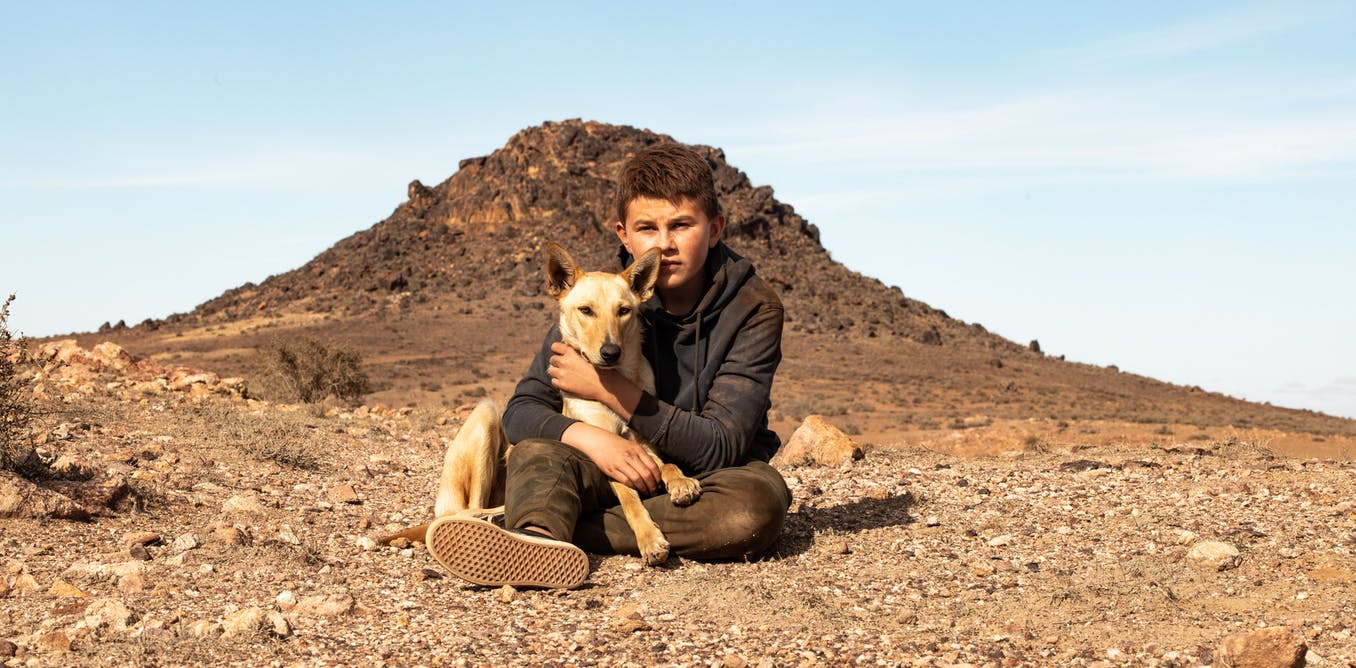
Tough kid Ridley (Milan Burch) finds his world upended when he and his mom, Gloria (Victoria Hill), move from New York City to live with his irascible grandfather (Bill Nighy) on a sheep farm in the rugged Outback.

There isn’t much explanation as to why Gloria and Ridley are moving around the world to live with a man neither of them has met. While this might not bother children, it is a bit of a head-scratcher. We get a bit more later to explain this sudden upheaval in Ridley’s life, but it’s only a tidbit of not entirely convincing information.

It takes decidedly too long to introduce the Adorable Dingo that befriends Ridley. But it’s worth the wait. From the moment the long-legged, golden-coated wild dog enters the story, he steals the show. Okay, not quite, but he does distract from the moments when Burch’s acting falters. The relationship between boy and dingo gives the movie its emotional center.

A children’s adventure film needs bumbling baddies, and this one adds a couple who have the right amount of menace and hilarity. A few laughs are hewn from these villainous hog farmers, and they’re easily the most entertaining part of the movie.

The film’s biggest weaknesses come when it forgets its target audience. There are a few scenes that center too much around the adults and their dramas. Without Ridley’s presence, these scenes are out of place. There isn’t much appeal for children in a woman and her father-in-law reminiscing. Throwing these moments into the film also leaves less time for the main adventure.

As the hardnosed grandfather, Nighy doesn’t bring his A-game. His Australian accent is bad, his performance a little wooden, but you can’t help but like him just the same. His exchanges with Burch provide some of the film’s finest moments (not including the dingo).

The Australian outback is one of the most distinctive locales on earth, and cinematographer Ben Nott knows how to draw both the beauty and the terror from it. It’s tough not to be impressed with the challenges Ridley faces against this uncompromising landscape with just his wits and a dingo.

If you need a movie to enjoy with your kids, this one is good enough for all ages.