Tag Archives: independent film

Sandusky Fabulous

Swan Song

by Hope Madden

Do you mean to say that Udo Kier and Jennifer Coolidge were in Sandusky, Ohio and nobody told me?

Yes! All thanks to the magic of Todd Stephens, a filmmaker born and raised in Sandusky who has neighborhood stories to tell that do not involve Cedar Point. Stephens wrote the film Swan Song as a fictional homage to his own hometown hero.

Kier plays that hero, retired hairdresser Pat Pitsenbarger. Though Pat never left Sandusky, he’s been closed up in a nursing home for so long that he doesn’t even recognize it. That changes when the dying wish of an old client—the richest and most glamorous woman in all of Sandusky (Linda Evans, no less!)—is for Pat to make her gorgeous.

Kier, a staple of independent film since 1970, effortlessly infuses any movie with a palpable sense of the weird and unseemly. Often pegged to play baddies (see his recent films The Painted Bird and Bacurau for proof), he is an absolute treasure here, full of joy, impishness and sass to burn.

If Pat is going to be able to pull off this miracle, he’ll have to confront nemesis Dee Dee Dale (Coolidge) — and thank God for it. While you might expect zany comedic antics, the truth is that both veterans display tenderness and heartbreak beneath their barbs. Their scenes together bring real depth to an ultimately bittersweet homecoming.

Not every ensemble player is quite as strong and Stephens’s deeply independent roots sometimes show. But whenever things begin to feel almost amateurish or scenes run on a little longer than necessary, Kier somehow salvages it with an eye roll, a sashay, or another affectionate murmuring of “Sandusky…I love you.”

Swan Song delivers a remarkable showcase for Kier’s particular and peculiar talent, but Stephens has more on his mind than a vanity project for a deserving actor. As Pat confronts a world he no longer recognizes, Swan Song laments the death of fabulousness. The film becomes a note about what you lose when you win.

And the glory of a darling pair of shoes.

Growing Pains

John and the Hole

by Hope Madden

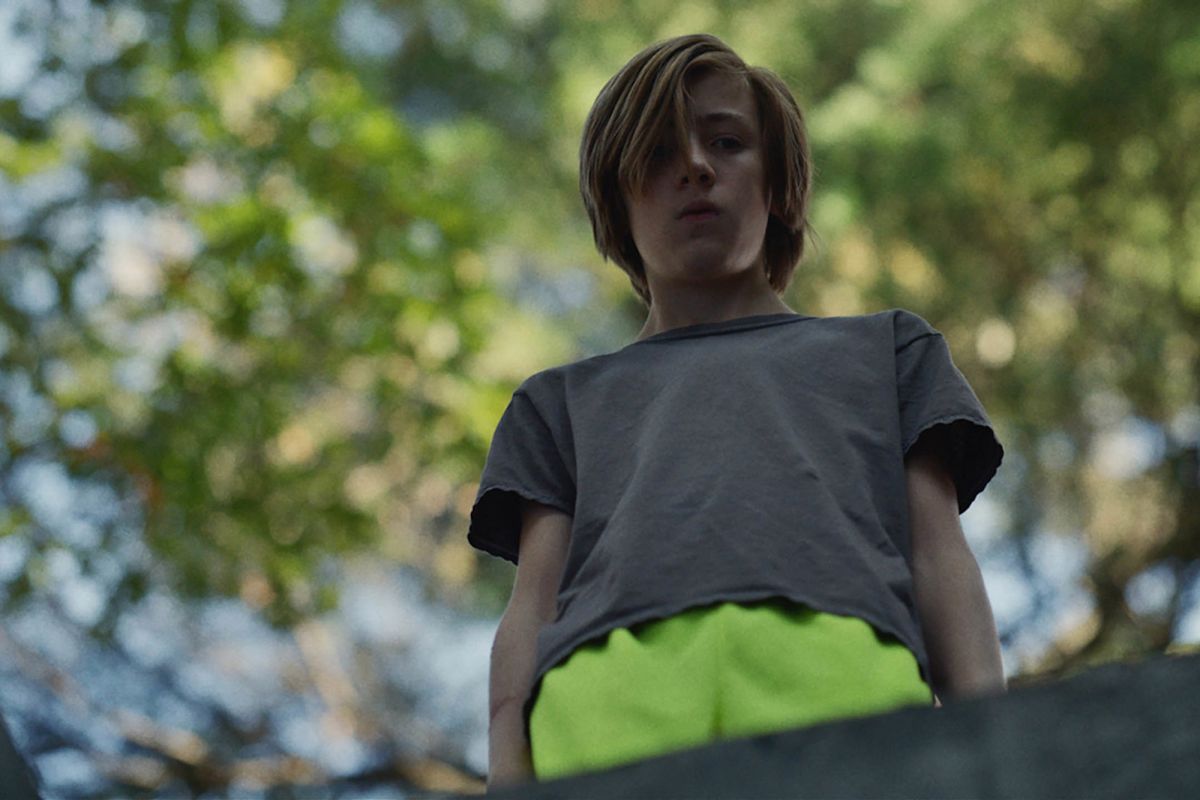
Adolescence can be tough. It’s a confusing time, and the fantasy of skipping those awkward years entirely and just being an adult can be heady stuff—especially to John (an unnerving Charlie Shotwell).

When the 13-year-old John stumbles across a deep, unfinished bunker in the woods not far from home, he drugs his family then deposits it, leaving him king of the castle, so to speak.

And leaving his family none the wiser in a hole.

Director and visual artist Pascual Sisto’s feature debut John and the Hole spends a week or so with John as he devises and executes this plan to be the grown-up for a while. Sisto’s working from a script by Nicolás Giacobone, a writer known for dreamlike beauty and cruelty (Birdman, The Revenant, Biutiful).

Dreamlike beauty and cruelty are absolutely in Sisto’s wheelhouse, and he adds Lanthimos-esque absurdism to the effort that makes the film almost funny as well as horrific.

Shotwell’s performance keeps you on edge, unsure of what young John might try next. The performance never veers into easy psychosis or villainy, although it’s undoubtedly the responses of his parents and sister that provoke the most intrigue.

Played with surprising empathy and compassion by Jennifer Ehle, Michael C. Hall and Taissa Farmiga, John’s mother, father and older sister (respectively) represent a very human, genuinely loving and protective unit.

Even in the hole.

It’s a fascinating dynamic, one that defies expectation and gives the film a fable quality that suits it. Some details will certainly frustrate viewers, but the overall impact of Sisto’s measured coming-of-age nightmare is chilling.

Sisto’s tale never tries to explain John’s behavior, and Shotwell’s performance certainly doesn’t shed much light. The film keeps the audience at arm’s length from the first shot through the dining room window to the last shot back at that dinner table.

There’s a chilly beauty to this ambiguity. Between that and an entire ensemble of spot-on performances, you can almost forgive the specificity and resonance the film gives up in favor of this vagueness.

John and the Hole is a head-scratcher and a fascinating addition to the troubled adolescent subgenre.

Mondon’t

Mondo Hollywoodland

by Christie Robb

Janek Ambros’s Mondo Hollywoodland is a play off a 1960s documentary called Mondo Hollywood by Robert Carl Cohen. The original aimed to depict the more extreme elements of life behind the scenes in Hollywood and included appearances by hippies, strippers, psychedelic pioneer and Tim Leary’s buddy Ram Dass, and both victims and perpetrators of the Manson Family killings.

Ambros’s Hollwoodland is part mockumentary part narrative story narrated by a dude from the 5th dimension who visits a magic mushroom dealer named Boyle to understand modern Hollywood and explore the concept of “Mondo.” (Which I guess, like pornography, is something you’ll know when you see.)

Boyle’s life intersects with three archetypes of Hollywood life: the Titans, the Weirdos, and the Dreamers. Each of the archetypes is personified by a few characters and gets its own section before they come together in a somewhat bewildering act four.

The Titans are represented by paranoid, cocaine-fueled, egomaniacal producers and starlets who are catered to by various fawning assistants. The Weirdos are a hodgepodge of political activists, New Age seekers, and untalented artists. The Dreamers are a group of folks who desire financial success or fame, but are unaware that they lack the business acumen or talent necessary to realize their vision.

There’s no nuance to these characterizations. They are the broadest sketches of common tropes. If Ambros was going for a Christopher Guest-style mocumentary or drug-addled comedy, he forgot to make it funny. If there was supposed to be a message to walk away with, it was lost along the way. There certainly wasn’t much new to learn about Hollywood. And if there was any Mondo contained therein, I didn’t see it.

The nods to the original Mondo documentary from the 60s (trippy music, colorful filter effects, swingy camera movements, and the title) seem derivative, if not downright exploitative of a cult classic. The groovy nostalgia vibe doesn’t reflect life in the 2020s and the focus on southern California stereotypes doesn’t add anything that Saturday Night Live couldn’t provide.

Baby Blues

Fully Realized Humans

by Brandon Thomas

I don’t have children, but that doesn’t mean I don’t understand the hardships that come with parenthood. You’re no longer living just for yourself. There’s now this little person who relies on you for their survival, and that has to be a daunting feeling. It gives me existential dread to even think about. Fully Realized Humans provides a charming, funny and honest look at the freakouts that come with being soon-to-be parents 

Jackie (Jess Wiexler, Teeth) and Elliot (Joshua Leonard, The Blair Witch Project) are weeks away from becoming first-time parents. After their baby shower nearly goes off the rails with mentions of crib death and vaginal ripping, the two are faced with the reality that their lives are about to get much more complex and scary. Insecurities and a lot of “What ifs…” bubble to the surface as the couple tries to navigate feelings of inadequacy before their child enters the world. 

The success or failure of Fully Realized Humans hinges on the relationship between Jackie and Elliot. If the chemistry between those two doesn’t work then the movie is toast. Luckily, Wiexler and Leonard have incredible chemistry, making them one of the most charming on-screen couples in recent memory. The two actors bounce off one another naturally. It’s the kind of work that helps the audience settle in and get comfortable with these people from the get-go.

A lot of the fun of Fully Realized Humans is how Jackie and Elliot’s insecurities lead them into some real out-of-left-field situations. There’s an extended sequence that begins with the couple experimenting in the bedroom, and ends with Elliot getting punched for the first time to “reclaim” his manhood. The natural progression of these comedic beats speaks to the cleverness of Leonard and Wiexler’s screenplay.

Leonard, who directed the film and co-wrote it with Wiexler, wisely leaves melodrama out of the equation. At its core, Fully Realized Humans is a silly comedy, yes, but that doesn’t mean it also can’t comment on serious topics and emotions. There’s a deftness to the tone management that lets the film successfully walk a tightrope.

There aren’t any major surprises in Fully Realized Humans, and to be honest, it’s a topic a lot of movies have already covered. However, what many of those other movies didn’t do was craft such enjoyable characters. Jackie and Elliot might not end up being the world’s perfect parents, but these are two characters I’d gladly spend another 90 minutes with.

Harold and Awed

For Madmen Only

by Matt Weiner

E. B. White warned us years ago against explaining a joke when he wrote that “Humor can be dissected, as a frog can, but the thing dies in the process and the innards are discouraging to any but the pure scientific mind.”

What then to make of For Madmen Only, a feature-length explanation of not just a joke but a unique art form created by a man who has to hold the title of greatest comedy legend that nobody has ever heard of?

Well, nobody outside of the comedy world. For Madmen Only seeks to correct this by documenting the story of Del Close, the improv comedy guru who brought form and structure to the genre and influenced decades of comedians, from Bill Murray and John Belushi to Tina Fey and Amy Poehler.

Director Heather Ross brings an ordered, mostly chronological approach to Close’s chaotic life, with a who’s who of talking heads to back up the thesis that Close forever changed the direction of modern comedy. Ross balances the interviews with a series of re-enactments, with James Urbaniak giving such an uncanny performance as Close that he deserves a feature-length companion.

For Madmen Only turns the history of a comedic form into a fully engaging suspense tale, that centers Close as a dogged Quixote trying to prove both the artistic and financial success of improv, even as his tumultuous lifestyle leads to setback after setback (and a few mental breakdowns for good measure).

The film also manages to walk the tightrope between hagiography and documentary. If improv performance attracts a special blend of weirdo – as the on-camera interviews persuasively argue – that might go double for audiences who regularly watch these risky performances and hold detailed opinions about their favorite UCB Harold teams.

Yet for a documentary on such a niche subject, Ross (along with co-writer Adam Samuel Goldman) hangs everything on a universal frame. Close is an artist first, and his medium just happened to be a new kind of sketch comedy. While a film dedicated to bringing Close to a wider audience is naturally in his camp, Ross sprinkles in enough counterpoints for anyone who thinks two hours of improvised comedy is too unstructured to be funny.

Where this treatment of Close does pull its punches is when it comes to any in-depth look at the very narrow type of diversity this comedy scene fostered, an issue the industry is still grappling with. But at least that gets a passing mention.

Completely absent is any look at the financial situation these theaters have created for participants. (A situation that has, not coincidentally, led to a comedy landscape where relatively privileged writers and actors can afford to pay large amounts of money to the theaters in big cities while paying their dues.) But these blind spots belong to the entire industry, not just Close.

In a fitting nod to improv, For Madmen Only is full of surprising detours and poignant observations. It would have been easy to reduce Close to tortured genius or entitled bully. It’s harder to embrace vulnerability and grapple with the answer: “Yes. And…”

Somebody’s Knocking

The Boy Behind the Door

by Hope Madden

Filmmakers David Charbonier and Justin Powell know how to do a lot with a little.

Earlier this year Shudder premiered their tightly packaged little horror story, The Djinn—very nearly a one-man, one-set show. Their latest to hit Shudder, The Boy Behind the Door, is slightly more expansive. A cast of about five knocks around one big, old farmhouse in the middle of an isolated, wooded area.

Two of those five are Bobby (Lonnie Chavis) and Kevin (Ezra Dewey, The Djinn), best friends who were kidnapped on their way to a little league game. Bobby wakes up in the trunk of a car without Kevin. He breaks free and makes his way clear of the house, but he can hear Kevin’s terrified cries and he circles back to try and save him.

The filmmakers leave it to Bobby’s sleuthing—and yours–to figure out what’s going on and how to end it. They make tremendous use of the hallways, floors and doors throughout their set, plus a well-placed wristwatch unnervingly ups the ante in a way the audience understands but Bobby does not.

There are times when the writing here hits too hard. I’m not sure the boys have to say they’ll always stick together quite so often; their actions speak to that. But the conundrums the filmmakers throw at Bobby as he tries to figure out what’s going on and how to get to his friend are believable.

More importantly, Chavis handles them with honest, childlike panic and courage. His performance would be enough to carry the film, but the adults around him offer supremely creepy turns.

Dewey’s less effective in this than he was in The Djinn, but it’s not enough to sink the film. The movie’s solid structure, paired with Charbonier and Powell’s gift for dropping clues and following up on threads make for a satisfying but never lurid horror show.

An Aesthetic Is Born

All the Streets Are Silent: The Convergence of Hip Hop and Skateboarding (1987-1997)

by Christie Robb

Jeremy Elkin and Dana Brown’s documentary explores the origins of what is now a mainstream aesthetic born from two distinct 90s New York City subcultures—graffiti artists/skateboarders and hip hop.

Tracing the ancestry, briefly, to NYC artists Andy Warhol and Jean-Michel Basquiat, the film credits the convergence of the movements to the prescience of the club management department at Club Mars, a multistory nightclub in the Meatpacking District.

In the early 90s, Mars had a weekly hip hop party that started in the basement and attracted a broad swath of NYC street culture. The bouncers let the skate kids in, even if they were all gross and sweaty and not dressed up. Their streetstyle was cool. And the cross-pollination began.

Out of this came:

  • Phat Farm, the first hip hop clothing line
  • Zoo York, the first skateboard brand out of New York
  • The Stretch Armstrong and Bobbito Show, an underground hip hop radio show that introduced Biggie Smalls, Jay Z, Busta Rhymes, and the Wu-Tang Clan (among many others)
  • The independent movie KIDS, featuring the debut performances of Leo Fitzpatrick, Chloe Sevigny, and Rosario Dawson
  • The Supreme skateboarding lifestyle brand
  • The Zoo Mixtape video, with a hip hop soundtrack

As the film reminds us, skateboarding is now an Olympic event and a $2 billion per year industry and hip hop surpassed rock recently as the dominant music genre.

Elkin and Brown stuff their documentary full of interviews from the people who were part of the scene in the 90s like Kid Capri, Stretch Armstrong, Bobbito Garcia, and Mike Carroll. Archival footage was supplied by Eli Morgan Gesner, who had the presence of mind to shoot video of the skateboarders doing tricks and the rappers trying out rhymes. This grounds the film in the visual aesthetic of the period while the original score by hip hop producer Large Professor provides the aural vibe.

It all comes to resemble video scrapbook of the baby years of what’s become a mainstream aesthetic. And, while I’d prefer more coverage of the gradual gentrification of the aesthetic from an outsider scene to a branded “lifestyle,” that’s not really the project here. As a nonfiction narrative looking back on all the individuals and circumstances who mixed together in 90s downtown NYC, All the Streets Are Silent is pretty fly.

Straddling Borders

I Carry You with Me

by Hope Madden

If the final act of I Carry You with Me has a documentary feel about it, that makes good sense. Director/co-writer Heidi Ewing—known primarily for docs including Jesus Camp and The Boys of Baraka—takes on her first narrative feature by spinning a love story based in fact.

Ewing’s subjects, Iván Garcia and Gerardo Zabaleta, are NYC restauranteurs who fell in love in Mexico in the 1990s. Though Ewing grounds her fable in their present day, the bulk of the film waxes youthful and romantic back in Mexico.

Young, closeted Iván (Armando Espitia) dreams of putting his culinary skills to use so he can provide for his young son, whose mother rarely allows him to visit. He meets Gerardo (Christian Vazquez) and they fall in love, but dreams of the success that evades him at home propel Iván north.

And though the film’s title aptly captures the longing between separated lovers, it carries with it a great deal more. Ewing conjures the phantom ache that follows Iván the rest of his life without his son, his family and the home he knew.

Yes, the film, co-written with Alan Page, leads inevitably to the couple’s modern-day dilemma. They’ve worked their way up from nothing, lived and achieved the American dream, but are essentially caged. Iván’s son has grown up without him. He will never be allowed to come here, and if Iván returns to Mexico to see him he risks losing Gerardo and his American dream forever.

I Carry You with Me never feels like a blunt instrument. In much the way Ewing did with her documentaries, she weaves true tales with humanity and honesty so they resonate. A documentary’s best chance of affecting change is by helping an audience see themselves in the lives on the screen. Ewing did that with her many docs. She does it again here.

Maine Event

Downeast

by Rachel Willis

Coastal Maine is beautiful country, but there is a seedy underbelly of drugs, gambling, and crime that’s explored in director Joe Raffa’s film, Downeast.

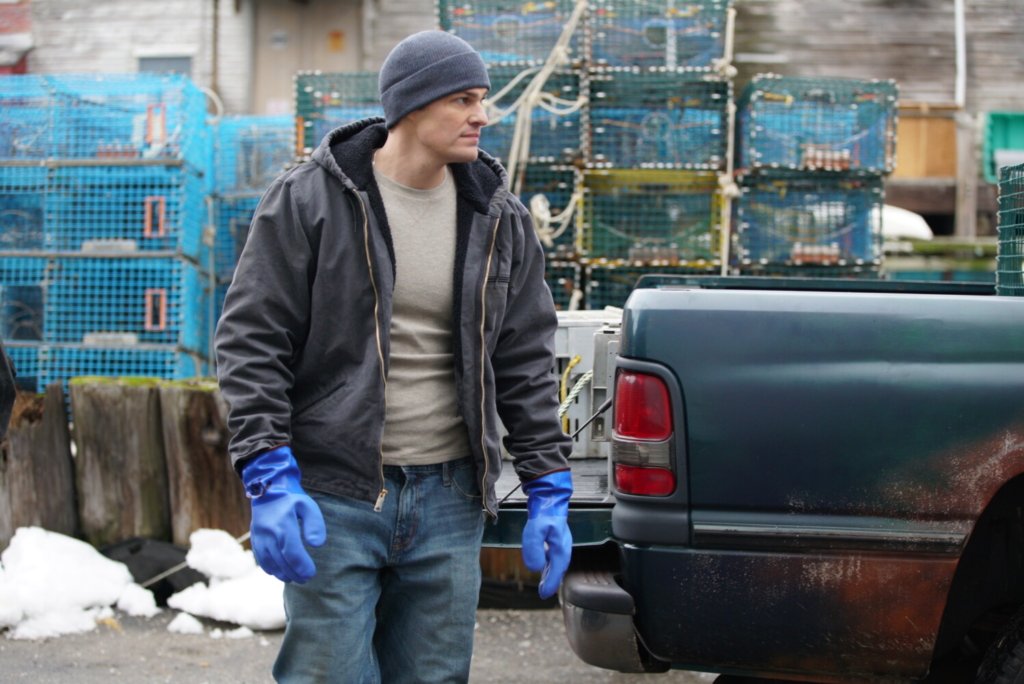
Refining a story written by native Maine resident Greg Finley, Raffa’s focus is on a lobsterman named Tommy (Finley). Following a life-changing incident in which he ran afoul of area mobsters, Tommy tries to live with his head down, following his own moral code. The return of his ex, Emma (Dylan Silver), reopens old wounds.

The ‘townies’ are wary of Emma, whose questions threaten the tenuous balance the mob holds over the residents. Even Tommy’s loyalty lies with the town over his budding relationship.

There aren’t many new stories to tell, and if this one sounds familiar, that’s because it is. However, the film boasts compelling characters and wonderful attention to detail that help keep us invested.

From a technical standpoint, this is a well-made movie. Edwin Pendleton Stevens’s cinematography juxtaposes the coastal vacation town against a gritty, cold world that feels lifeless when summer ends. The empty winter boardwalk seems sinister compared to scenes of a beach crowded with summer tourists.

The actors inhabit their roles so organically that often you feel like you’re sitting with them in the local watering hole. Finley is at home with his character, but the others alongside him are just as natural. The only one who stands out as different is Silver, but it works because Emma is an outsider to this world—she talks tough like the rest of them, but she isn’t one of them, and her world view doesn’t align with the townies.

The film’s biggest issue lies with the characters’ motivations. While things seem straightforward in the beginning, they take a turn toward the unusual. Characters’ decisions make zero sense given what we know of them. Even the background players behave strangely. Plotlines resolve in head-scratching ways. It all detracts from the strong chemistry the actors create as members of a close, if tenuous, community.

There is a lot crowded into the plot, so some characters are shallow compared to others. The mobsters are one-dimensional villains, and while a case could be made that’s the truth in real life, it doesn’t make for compelling storytelling.

Downeast shows how important a strong screenplay is because, without it, you’re left with a beautiful, forgettable film.

Playing God

The God Committee

by Rachel Willis

Based on the play by Mark St. Germain and adapted for the screen by writer/director Austin Stark, The God Committee seeks to provide insight into the fraught decisions behind who lives and who dies when it comes to organ transplants.

A new heart is recently available for the St. Augustine Hospital, a building in disrepair and under renovation, and the transplant committee convenes to decide who among three matches is the worthiest to receive the heart. The committee has a paltry 90 minutes to make their decision or else the heart will be useless.

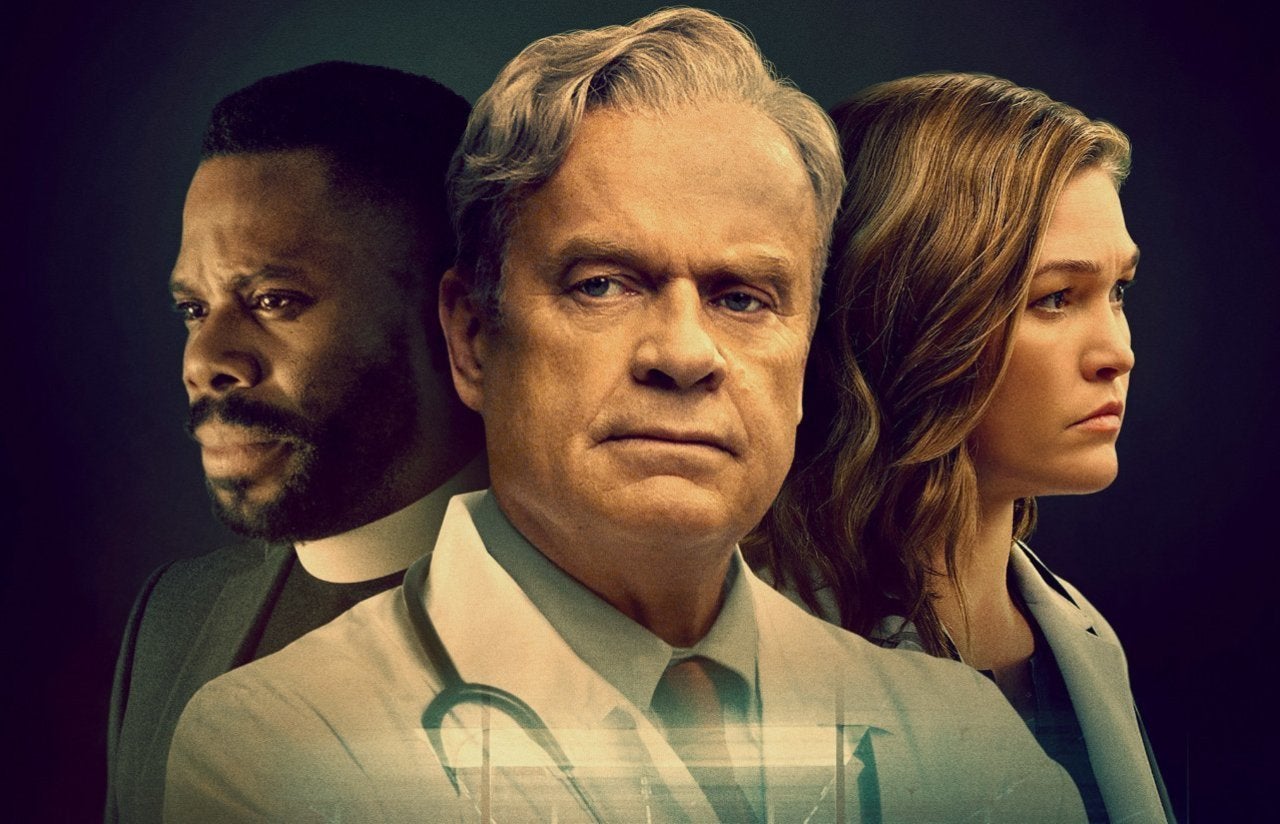
The initial set-up alone is worthy of an entire film, but the movie isn’t satisfied to stay within the confines of a sterile boardroom. The timeline jumps forward seven years to check-in on our committee, primarily Dr. Andre Boxer (Kelsey Grammer), and how the implications of their decision on that fateful day have affected them.

By moving back and forth between the past and present, the tension of those crucial 90 minutes is often interrupted. However, by weaving the present into the past, we get to know the people behind these decisions.  

Grammer excels on screen as the pragmatic Boxer, basing his judgments on the medical data rather than emotion. As his foil, Dr. Jordan Taylor (Julia Styles) relies on her heart to guide her decision-making. Unfortunately, Styles can’t quite match the passion of Grammer. The other members of the committee, which include Janeane Garofalo and Colman Domingo, aren’t given as much to work with and don’t resonate on screen in the same way.

The play lends itself well to film, and Stark handily adapts the source material. There are a few moments that remind us this is an adaption of a play – mainly, characters who talk to the screen. This might have worked better had it been transitioned from audience-directed monologue into character-driven dialogue, as it would have heightened the conflict inside the boardroom.

The film touches on numerous thematic issues: the ethics of deciding who is worthy of a transplant, the conjunction of corporatism and life-saving medical research, the inequity of medical care across racial and class lines, black market trade in organs, etc. Unfortunately, The God Committee never settles on any of them, careening across multiple threads without any direction.

If the movie had stuck to a theme and a timeline, it might have been more impactful.