Tag Archives: independent film

The Long F*cking Goodbye

Izzy Gets the F*ck Across Town

by Matt Weiner

For a character who’s supposed to have trouble holding down a steady job, Izzy is putting in some serious work: Izzy Gets the F*ck Across Town is a road trip movie that never leaves its first city, a shaggy dog celebration of Los Angeles with characters who could rival those in any LA noir. But more than anything it’s a sharp inversion of the manic pixie dream girl and the role she inhabits.

Written and directed by Christian Papierniak, Izzy GTFAT is disjointed by design. Mackenzie Davis (Tully) holds everything together as Izzy, a once-promising musician who is now too strung out to keep a catering job, let alone the man of her dreams. When she finds out that her ex-boyfriend Roger (Alex Russell) is getting engaged, she sets off across Los Angeles to make it to the big party and win him back.

At each stop in her journey, Izzy gets help from a standout supporting cast. Lakeith Stanfield, Haley Joel Osment, Alia Shawkat and Annie Potts run the gamut from wistful and strange to funny and strange to… well, strange and strange. These vignettes have the feel of early Richard Linklater, so while the structure of Izzy’s Odyssean journey gets repetitive midway through, the actors keep it interesting.

Papierniak gets the film back on track with Izzy’s major confrontations: first a bittersweet reunion with her sister (Carrie Coon), which hints at a lifetime of backstory in just a few tender minutes. And then finally with what has been teased all along: Roger’s engagement party.

Without giving too much away, the confrontation and aftermath go in a remarkable direction, serving up an altar of clichés only to mercilessly destroy them—a sacrifice to Izzy’s rebirth. She has spent the entire film careening from one manic pixie trope to the next in her desperate attempt to be the catalyst in somebody else’s story. So it’s pure delight to watch the way in which Izzy takes control after spending her adult life in thrall to her own fantasies, failures and dreams deferred.

There could easily be a version of this movie from Roger’s perspective. And ten years ago, we would all be expected to care about what happens to that bearded thumb and be happy for him. It’s probably the reality Izzy would have been happy with at that point in her life, too.

But times change. People change. Slowly, unevenly. And maybe not in ways we always hoped, but hopefully still, in some small way, for the better.



The Audacity and the Idiocy

American Animals

by Hope Madden

In 2012, director Bart Layton laid down one of the most compelling and nutty documentaries in recent history. His true crime doc The Imposter was one of those rare films that you could not predict nor could you turn away from. It was fascinating, and not just because the story was so wild, but because of Layton’s spry skills as a storyteller.

He’s again pulling from the world of true crime to tell a potent story with his latest, the narrative feature American Animals. The yarn he spins here: four perfectly reasonable, likable, comfortable college kids steal a set of pricey books from Transylvania University’s rare books collection, including Darwin’s original Origins of the Species and Audubon’s Birds of America.

The audacity of the plan itself is reason enough to pay attention. Buddies get the itch to do something big. Something life-changing. Consequences be damned. Or, more rightly, ignored.

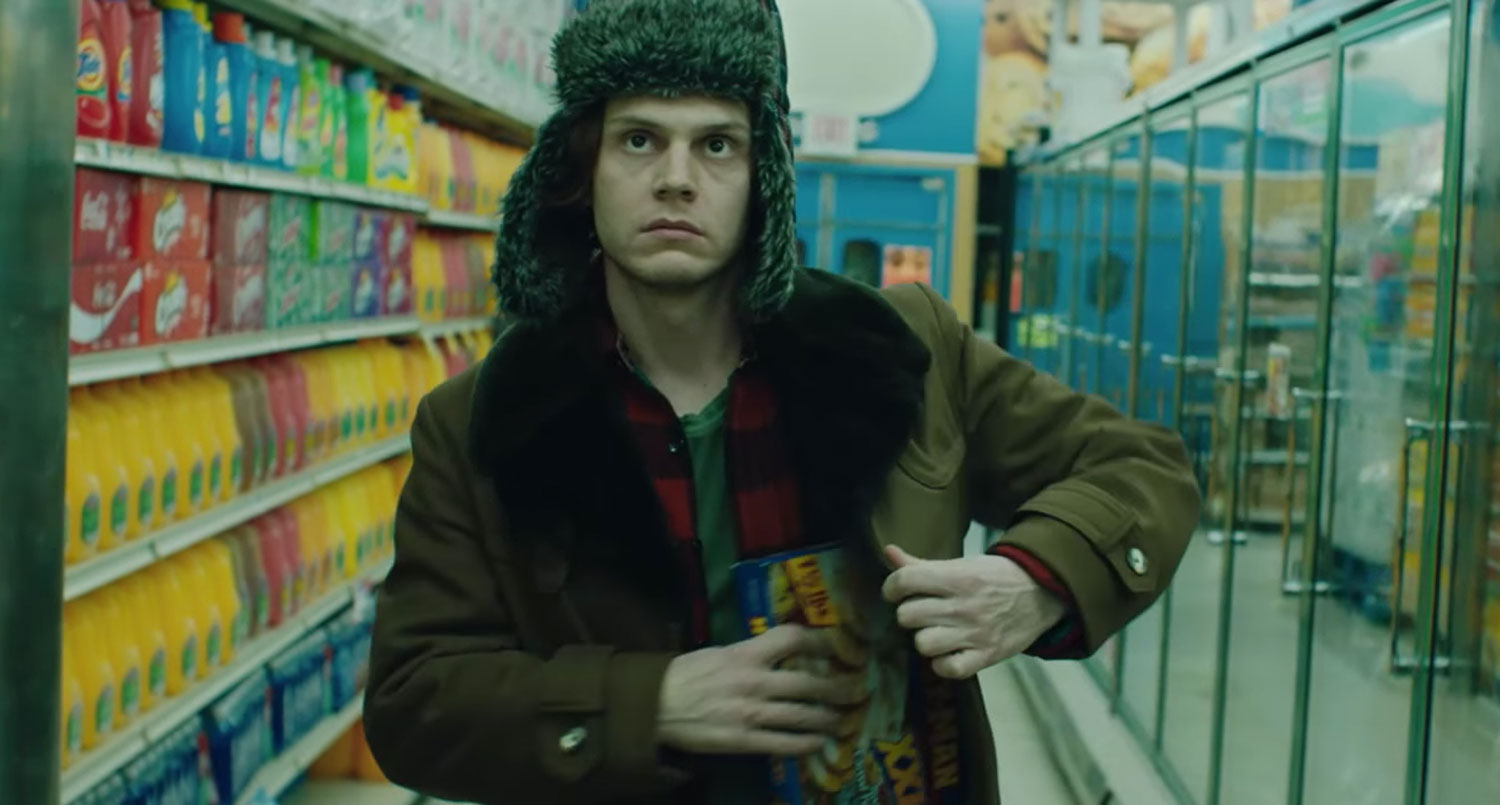
Build from there with a truly talented group of young actors: Evan Peters (X-Men’s Quicksilver), Barry Keoghan (Killing of a Sacred Deer, Dunkirk – the kid can do no wrong), Jared Abrahamson (Sweet Virginia, Detour) and Blake Jenner (Everybody Wants Some).

Layton opens with text on screen: This is not based on a true story. The words “not based on” disappear, leaving: This is a true story.

A bold statement to make, and American Animals is as interested in the effect individual perspective plays on true stories as Craig Gillespie’s I, Tonya or Sarah Polley’s near-perfect 2012 documentary, Stories We Tell.

Once again, Layton blends fiction and nonfiction devices to question the possibility of honesty in storytelling. As he weaves from actors recreating the heist to the actual participants telling their versions of events, Layton poses intriguing questions about perspective and truth.

They aren’t questions he answers, though, or even truly explores.

The film works best when it digs into the American preoccupation with unlimited potential, the individual’s specialness. The four young men who risk their futures unnecessarily suffer from that curse of the restlessly entitled.

As you watch the inevitable collapse of a reckless gang of kids’ movie-inspired heist, American Animals suggests depth and introspection but feels more like it’s grasping for a suitable ending, an appropriate way to cap all this madness with a bit of insight.

The problem with the film is the problem with the heist itself: it was fun while it lasted, but was there really a purpose?

Wait—Camping Is Dangerous?

Feral

by Hope Madden

Here’s the thing about Feral. It’s a decent movie: well-paced, competently directed, solidly performed. And there is not a single interesting, novel, surprising or inspired moment in it.

Maybe one, but it’s not reason enough to make this movie.

Three handsome couples head into the woods. They get a little lost, decide to pitch tents and find the lake in the morning.

They hear a noise.

One of them goes out to pee.

There’s something dangerous in the woods.

Duh.

Co-writer/director Mark Young follows up half a dozen low budget, middling-to-poor horror and action films with this adequate take on a monster-in-the-woods tale.

The sole reason the film stands out in any way is that Young’s hero, Alice (Scout Taylor-Compton) is a lesbian. Equally refreshing, males are as likely as females to fall prey to the hungry forest beast.

Bravo the nonchalance with which this is depicted, as the film does not strain to call attention to the novelty of this final girl and hero twist.

Yes, it’s about time. And yet, maybe Feral needed at least one other thing to set it apart? Because as it is, it’s simply a checklist of cabin-in-the-woods horror tropes, faithfully rendered, right up to the waning moments of its running time.

Taylor-Compton offers a perfectly serviceable performance, as do most of the actors around her. Olivia Luccardi, Renee Olstead and Landry Allbright all work to provide something close to a second dimension to underwritten, throwaway characters.

Lew Temple is an always welcome sight as the—wait for it—hermit whose assistance in this situation is suspect.

Together, cast and director generate scares by relying less on imagination and more on your familiarity with the genre itself. Therefore, assuming you have ever seen a horror movie in your life, you will not be scared.

You’ll just be reminded for the thousandth time that camping is an undeniably stupid thing to do. That’s what I got out of it, anyway.

All in the Family

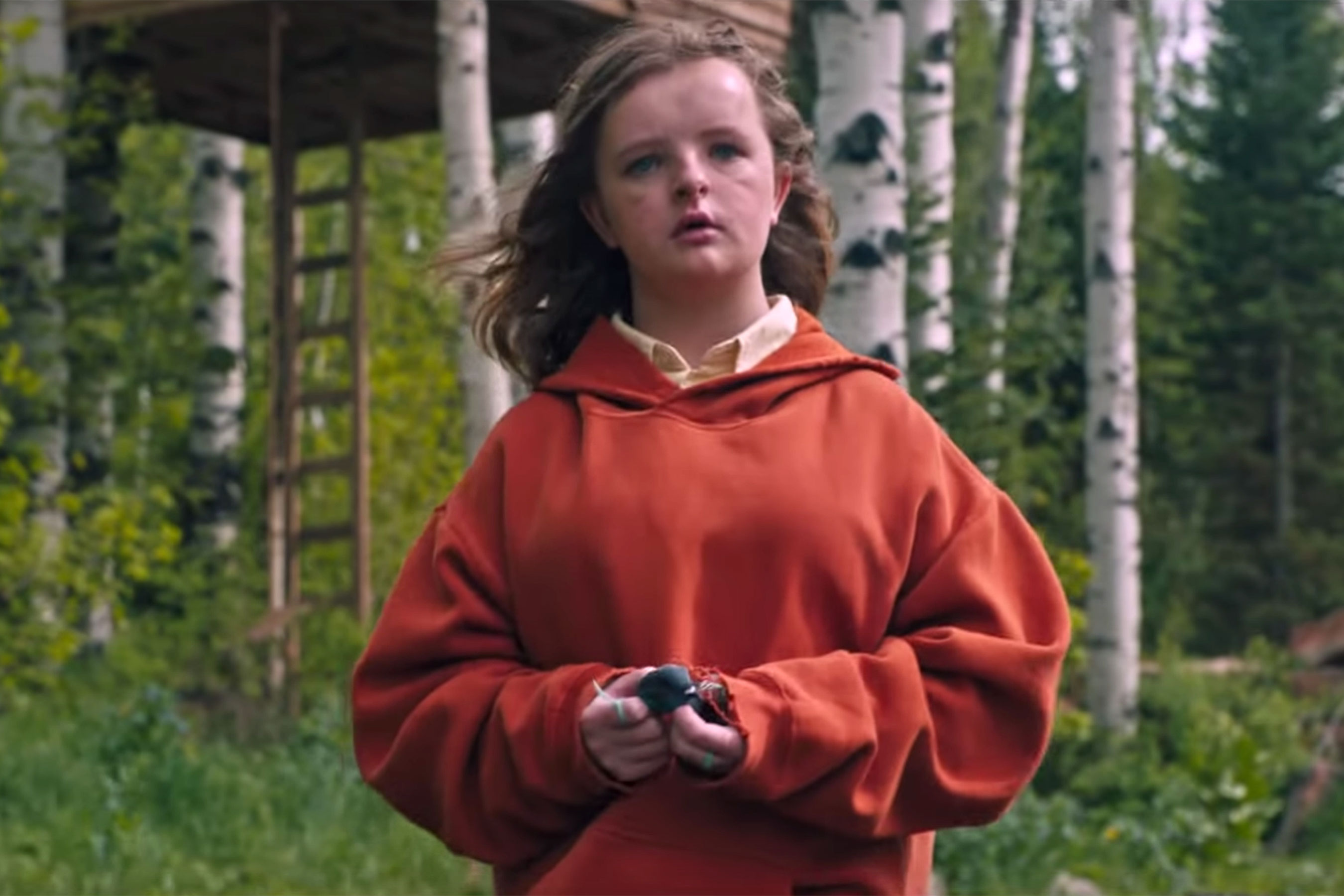
Hereditary

by Hope Madden and George Wolf

Grief and guilt color every somber, shadowy frame of writer/director Ari Aster’s unbelievably assured feature film debut, Hereditary.

The Graham family is maybe less grief-stricken over the loss of Grandma than you might expect. Daughter Annie (Toni Collette) delivers a eulogy that admits her mother was difficult, secretive. Her oldest son Peter (Alex Wolff) seems nonplussed by it all. He’s probably stoned, though.

Supportive but exhausted husband Steve (Gabriel Byrne) is almost relieved, but the loss does bother the Graham’s socially isolated younger daughter, Charlie (Millie Shapiro, in one of the more chilling performances this year).

With just a handful of mannerisms, one melodic clucking noise, and a few seemingly throwaway lines, Aster and his magnificent cast quickly establish what will become nuanced, layered human characters, all of them scarred and battered by family.

The eulogy caps a striking film opening, where serpentine camera movement intertwines the Graham family with the intricate miniatures Annie creates inside their grand, secluded house. What we see suggests a scaled-down world of its own, lifelike but lifeless.

Art and life imitate each other to macabre degrees while family members strain to behave in the manner that feels human, seems connected, or might be normal. What is said and what stays hidden, what’s festering in the attic and in the unspoken tensions within the family, it’s all part of a horrific atmosphere meticulously crafted to unnerve you.

If horror fare such as The VVitch or It Comes at Night is not your bag, then you probably don’t care for the slow, detailed burn that A24 studio regularly serves. For those that do, hooray! Here’s another “adult” horror film, one that invests more in character development than in jump scares (though there are a few, including one so jarring it awakens the potential of the device).

Aster takes advantage of a remarkably committed cast to explore family dysfunction of the most insidious type. Whether his supernatural twisting and turning amount to metaphor or fact hardly matters with performances this unnerving and visual storytelling this hypnotic.

Applause to cinematographer Pawel Pogorzelski for turning this intricately designed home into a foreboding character all its own. Like Rosemary’s Baby, The Shining, The Haunting, The Others and any number of brilliant genre hauntings, Hereditary uses its surroundings to create a space where the most mundane moments take on a diabolical chill.

The family dynamic at work here is gut-punch authentic. Collette anchors the film with a performance full of grief, insecurity, bitterness and terror. It’s another in a string of award-worthy turns, and the support she gets from the ensemble, including a game Ann Dowd, elevates the tension in every intricately detailed frame.

You will have been quietly unnerved, startled from your seat, and then unsettled by the time the supernatural elements overtake the story. The peppering of hardline genre tropes in act 3 may feel like a cop out, but Aster’s interplay with the differing family members is too careful for such an easy summation.

The web of mental states, understandable suspicions and direct bloodlines layer the brutally effective fable, and Aster wields these weapons with stealthy precision. His work here is so smartly embedded that Hereditary continually tempts potential non-believers to dismiss where it leads as something you’ve seen before.

Don’t. You haven’t.

Sea of Love

On Chesil Beach

by Hope Madden

Saoirse Ronan is a treasure. The fact that she follows up one raucous, very American coming of age film (Lady Bird) with a delicate, very British coming of age film (On Chesil Beach) without hitting a false note is hardly a surprise. She is maybe the most versatile talent of her generation.

On Chesil Beach reunites the performer with novelist Ian McEwan, whose Atonement garnered Ronan her first Oscar nomination back at the tender age of 13.

Adapting his own novella this time around, McEwan deliberates on the romantic struggle of two young lovers, Florence Ponting (Ronan) and Edward Mayhew (Billy Howle, who also co-stars with Ronan in an upcoming adaptation of Chekhov’s The Seagull).

Florence is a highly-strung classical musician from money. Edward comes from less, hopes to write history books and sometimes behaves rashly. Regardless of their differences, they are endearingly in love.

They are also identifiably at an age where a person may see this very moment in time as the only moment, the only way it will ever be, the only way they will ever feel. This terrifying, ignorant, innocent moment is something Howle, Ronan, McEwan and director Dominic Cooke capture effectively.

Elsewhere, they falter.

The film and its story revolve around one night on Chesil Beach where the two newlyweds contemplate their present and future while we’re given a glimpse of their past. For a number of different reasons (some explained, some just suggested) Florence has an abiding revulsion of sex.

Edward does not.

Expectations, yearnings and dread come to a boil on their wedding night, when a lack of wisdom and an abundance of insecurity convince the two (one of them quite rashly) to make a questionable decision.

Though Ronan’s performance perfectly captures both Florence’s love and her reticence, Howle struggles to convince as an impetuous, even volatile young lover. He seems nervous and sweet, and every sudden outburst feels out of place.

Director Dominic Cooke, known primarily for stage work, has trouble creating a welcoming atmosphere. Cooke keeps you at arm’s length from the lovers, less likely to empathize with them than to judge.

The gravity of one rash decision weighs heavily on both, and though McEwan’s beloved pages may make that felt, Dominic’s film does not, so when we revisit Edward years after that pivotal moment at the beach, it’s tough to buy his situation or feel much for him.

On Chesil Beach is a pretty film and a nice story, but never finds the depth to break your heart.

Captive

Beast

by Hope Madden

An outsider love story, a chilly whodunit, a psychological thriller—Beast is all and none of these.

This remarkably assured first feature from writer/director Mark Pearce keeps its focus on Moll (Jessie Buckley), the highly-scrutinized woman living with her parents in a small island community.

We open serenely enough on an angelic church choir rehearsing, a peace that’s harshly broken by the choir leader’s remark: I need more from you, Moll.

Geraldine James is haughty Hilary Huntington, the choirmaster; Moll is her grown daughter.

Soon a rugged stranger draws Moll out of her unhappy life, makes her feel awake and seen. She is destined to love this boy regardless of the string of missing girls in her village, regardless of his shady past, and in spite of the warnings of the smothering community.

Pearce’s skills keep you entranced, no matter the tropes he so easily picks up, throws off or reinvents. Sunlight, shadow, earth, sea—all these serve the visual storyteller’s purpose, while angles and frames keep you off kilter as you puzzle through the tale at hand.

You’re as invested, cautious and curious as Moll, but it’s actually Buckley’s performance—her depiction of Moll’s internal conflict—that is the most compelling and mysterious. As Moll changes demeanor, exploring her own identity becomes more important than determining her lover’s.

Johnny Flynn impresses as well as the local no-account presumed guilty, sharing a misfit chemistry with Moll that is both primal and tender. Tenderness is not what she’s used to from her severe mother, an epic James.

Together with the washed out colors of the characters’ bleak world, the film offers a harsh backdrop for Moll’s dizzying grasp on her own reality. The conflict, duality and self-discovery in Beast cannot help but draw you in, asking you about your own inner beast.

Without hitting a single false note, no matter the choir leader’s opinion, Buckley ushers us through a moral quagmire with a fire and authenticity that is gorgeous to behold.

Zen and the Art of Channel Changing

95 and 6 to Go

by Alex Edeburn

There is a silent poetry contained in Kimi Takesue’s fly-on-the-wall documentary focusing on the daily life of her aging grandfather, Tom. 95 and 6 to Go is the calm portrait of this widowed Japanese immigrant who carries on through his calisthenics, coupon clipping and channel surfing.

The film portrays these apparently mundane activities with a zen-like attitude through Takesue’s simple and elegant camera work. There is a hushed beauty in the director’s approach, which allows us as the audience to soak in and associate with Grandpa Tom’s life in his house.

There is one rather eye-catching shot of Tom flipping through TV channels. In the foreground of the shot, we see Grandpa’s tanned, leathery hands clutching the blockish television remote. It almost looks archaic compared to the sleek designs we are so used to with today’s 55-inch flat-screens. Grandpa presses down every half-second, unimpressed with whatever program he comes across. There is a layer of grain in this shot (and several others), a choice that adds a faded element to correspond with the nostalgic texture of the project.

Takesue explores a central theme of reinvention, as when she asks Grandpa Tom to revise a film script she has written. The more he discusses his own ideas on how the script should evolve, the more his eyes flicker with youthful vigor.

Tom is also reinventing himself as he copes with life as a widower. He does not seem like the man to wallow in despair following the death of Kimi’s grandmother, but rather he seeks action in those ostensibly ordinary tasks we notice early on. It all seems like a practical process to Tom, readying himself for whatever may happen in the following chapter of his life.

95 and 6 to Go is a reserved documentary focused on the small aspects of day-to-day living. The film captures something essential and human through its quiet observation of Grandpa Tom and his placid routine toward reinvention.

Digging in the Dirt

Flower

by Alex Edeburn

Max Winkler’s coming-of-age film, Flower, is one which is filled with a number of confusing and problematic plot turns.

Erica, played by Zoey Deutch, is a 17-year-old girl who is exploring her sexuality while also extorting several men in her community for the oral care she is so fond of providing to them. Erica seems to be as carefree as she is snarky, although we see she is emotionally-reliant on her single mother (Kathryn Hahn) while her father sits in a prison cell.

The plot of the film involves Erica and her friends implementing the old “fellatio-from-a-minor” blackmail scheme against a former teacher (Adam Scott) who was accused of sexually abusing Erica’s new step-brother, Luke (Joey Morgan).

The film becomes increasingly problematic with its blasé attitude toward sexual abuse and even levels of consent. Immediately after Luke suffers from a panic attack, Erica continues to pester her step-brother about letting her perform oral sex on him. It takes him yelling at her before she realizes she has crossed the line.

Later on, Erica and Co. hatch a plan to roofie Luke’s accused abuser and take photos with his unconscious body in order to blackmail him. One would hope a voice of reason would advise the children otherwise or perhaps Erica would come-of-age at this opportune moment and realize the extreme moral fallacy in this decision.

Flower likes to borrow from recent teen comedies as it attempts to mold Erica into a more unruly and vulgar Juno MacGuff. Instead of a quirky hamburger phone, Erica has a pet rat named Titty. Unlike Juno, this film’s main character is increasingly off-putting and irredeemable by story’s end.

She also has a penchant for filling a composition notebook with her illustrations of the male anatomy, a hobby she shares with Jonah Hill’s character from Superbad.

However, as morally-bankrupt as Erica seems in many circumstances, we cannot help but be drawn in by her cocksure attitude. We can thank Zoey Deutch for her ability to play Erica as someone who is endlessly frustrating, undeniably selfish, but also pretty damn endearing. Her entertaining performance is one reason to see Flower.

Nevertheless, the talent of its lead is not enough to save this movie from its bizarre plot-line and questionable treatment regarding sexual assault. It’s likely this movie meant to say much more than it actually does concerning a young woman and her body, consent and fractured families, but it’s hard to find much nuance even when you dig into the soil.

Get the Guests

The Party

by Matt Weiner

Sally Potter’s jet-black comedy The Party mostly succeeds as social satire examining the savagery churning just below the surface of the polite and prosperous. Where it definitely succeeds, in ways that must seem truly unfair to every single other actor alive today, is crowning Patricia Clarkson as a national treasure.

Not that the rest of the tight ensemble is full of slouches. Clarkson plays April, one of five guests attending a party for Janet (the almost equally superb Kristin Scott Thomas), who is celebrating a political promotion.

Janet’s guests fall into broadly recognizable personalities who are practically begging to have their worlds turned inside out: from the New Age life coach Gottfried (Bruno Ganz) to the supercilious professor Martha (Cherry Jones, also—and you might be sensing a theme here—outstanding).

Timothy Spall plays Bill, Janet’s husband and a literal odd man out: he is nearly catatonic when the guests arrive. When he finally reveals why, it sets off a series of violent delights, both verbal and physical.

The cast might actually be too good for the material (written by Potter). That’s an envious problem for a movie to have, but it’s still a real one. The repartee is shocking and funny in turn. Just about every single line delivery from Clarkson, Scott Thomas and Spall is perfectly measured—so much so that the barbs feel like they’re cutting a lot deeper than they really are.

And Emily Mortimer provides a welcome degree of grounding as Jinny, Martha’s partner and the only party guest who seems recognizably human rather than an outsized target ripe for mockery.

But for all the wicked pleasures to be had from watching this masterclass in verbal sparring, there’s a nagging superficiality to it all. The rapid-fire pace distracts from the reality that nobody besides maybe Jinny ends up discovering some deeper personal meaning about themselves other than rank hypocrisy. And a gimmicky twist at the end doesn’t help.

And yet. It’s easy to forgive The Party’s shortcomings after you’ve heard Clarkson tell someone “You are surpassing yourself” or “You could consider murder” in tones so deadpan that we really ought to invent a new adjective.

It’s a strange, perfectly flawed bunch Potter has thrown together. And I could have stayed with them for hours more.


Isn’t She Lovely?

A Fantastic Woman

by Hope Madden

Four years ago, Chilean filmmaker Sebastián Lelio graced us with the nearly flawless coming-of-middle-age character study Gloria, the magnificent observation of a particular woman’s battle to truly participate in life.

A similar approach and another utterly stunning lead performance guarantee that his latest, the Oscar-winning A Fantastic Woman, is also a triumph.

The grace that envelopes every moment of Daniela Vega’s turn as the fantastic woman in question is very nearly magical. This is aided by surrealistic, Almodovar-esque flourishes, but it’s mainly the result of Vega’s quietly fiery performance. Resolutely uncommunicative, her deeply interior character demands your attention, refusing to surrender her dignity even as forces pummel it from every direction.

The film opens as the sixtyish Orlando (Francisco Reyes) meanders through a day leading to an audience with Marina, a trans singer (Vega). Then it’s on to Marina’s birthday dinner and home, to the apartment they’ve just begun sharing. The evening is lovely in its run-of-the-mill newness, and though Lelio appears to be setting up the coming conflict in rather broad strokes, the truth is that every moment so far has been a type of misdirection.

When Orlando dies, the assault begins: at the hospital, where Marina’s treated with suspicion; with the family, whose contempt cannot be contained; with the police, whose baseless investigation is perhaps the most degrading moment of all.

There is an aching tenderness to the first act as we begin to understand the nature of Marina and Orlando’s relationship, and we grieve the loss of that tenderness along with Marina. In Vega’s lovely performance we see not only her strength and resilience but also the courage it must have taken Orlando to be himself.

There is a drawback to such a quiet performance, though. In detailing the harassment and abuse Marina suffers from all sides without offering a clearer look inside the character, Marina becomes a symbol rather than a character, an object of sympathy rather than empathy.

Even if Lelio and Vega don’t let you truly know Marina, you cannot help but respect her.