Tag Archives: independent film

Killer Style

Deerskin

by Hope Madden

What makes a good midlife crisis? What gives it swagger? Physicality? Style? Maybe a little fringe?

Deerskin.

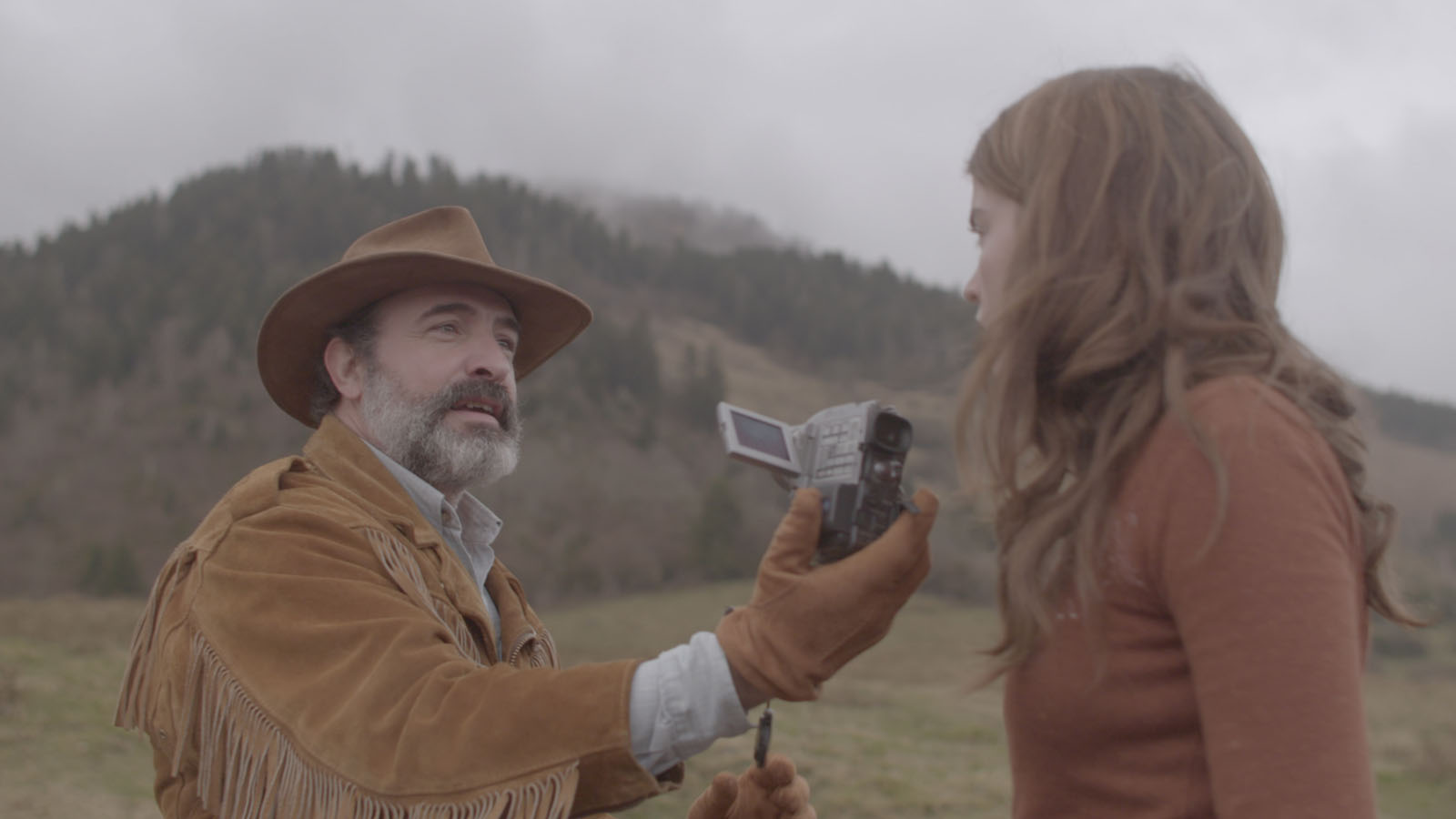
Oscar winner Jean Dujardin (The Artist) is Georges, a man willing to pay an awful lot for a jacket—so much that his wife locks him out of their account. No matter, Georges will just hole up in this little French town, learn how to use the digital camera that came with his purchase, and spend some quality time with his new jacket.

If that sounds absurd, it should. You’ve just stumbled into the one-paragraph synopsis of the latest bit of lunacy from filmmaker Quentin Dupieux. As he did with 2010’s Rubber (a sentient tire on a cross-country rampage), Dupieux sets up one feature-length joke.

It’s funny, though.

Again the filmmaker draws hysterically deadpan, even confused performances from the many nameless characters supporting his leads. Adèle Haenel (Portrait of a Lady on Fire), playing town barkeep and would-be filmmaker, offers a wily and enjoyable counterpoint to Dujardin’s earnestness.

Aside from a couple of utterly priceless Dupieux flourishes, it’s Dujardin that sells this film. He’s deeply committed to the wildly wrong-headed internal logic of the film and the character. There’s an underlying sadness to it, and the willful obliviousness required of a character so willing to commit to a plan as ludicrous as Georges’s. He’s wonderful.

Deerskin is also slyly autobiographical in a way Dupieux’s other films are not. An odd duck wants to follow his vision (in this case, the obsessive love of a deerskin jacket) and make a movie. Creative partnerships and collaboration, while possibly necessary, also soil the vision and make the filmmaker feel dumb.

No one understands him!

Or maybe they do and his ruse is up.

No matter. He still has killer style.

Bite Club

Bit

by Hope Madden

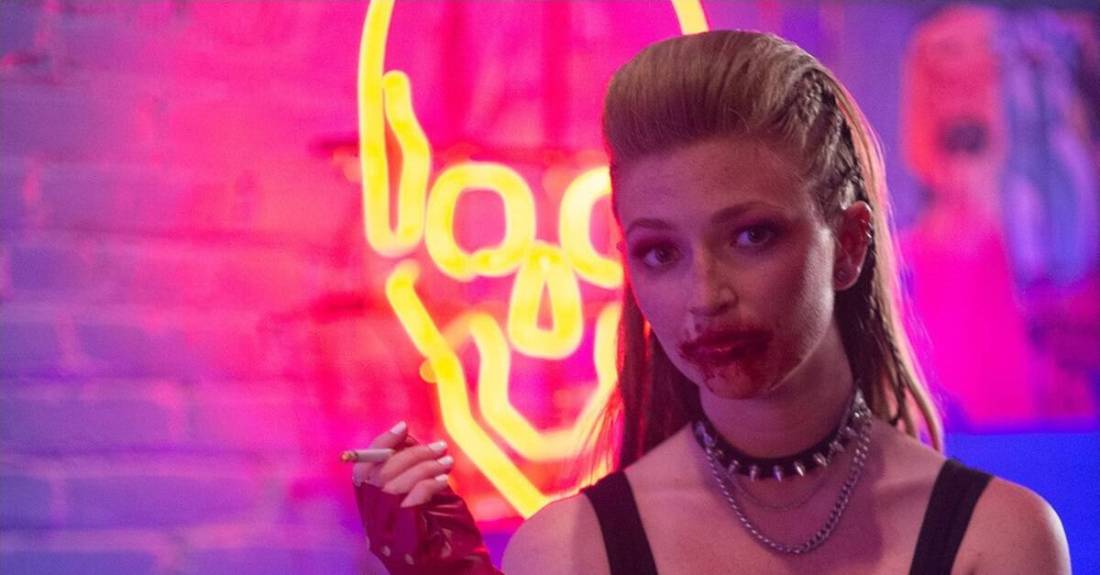
There is something appealing to the glam trainwreck that is Bit, Brad Michael Elmore’s anti-Twilight.

An angsty adolescent fresh from high school graduation voice overs: “You know those teen vampire movies that feel like the horny soap opera fever dreams of an 8th grade diary? Here’s how mine began.”

Like it. It’s self-aware, a little deadpan funny, a little whatever. Go on.

Laurel (Nicole Maines), the recent grad, packs up her Oregon-plated car and takes off to spend the summer with her brother in LA. On her very first night in town, she’s hit on by  the super hot girl Izzy (Zolee Griggs), brought to an after hours full of incredibly cool people, and immediately she feels as if she’s found acceptance, found home.

Naturally, Izzy and her also-hot friends are lesbian vampires who see Laurel’s specialness and invite her to Bite Club.

First rule of Bite Club: No. Fucking. Boys.

Maines is a transgender actress, a fact that elevates Laurel’s angsty “oh, high school was kind of a horror show” schtick because it probably was. Maines does not show an enormous amount of range, unfortunately, and Elmore’s script offers her few opportunities to shine.

She’s entirely convincing with her eyes at half mast, enduring the well-meaning but clueless affection of her family. But Elmore penned very few realistic reasons for Laurel’s behavior and Maines is left struggling to convince us, simply repeating the phrase “I’m fine” ad nauseam.

Diana Hopper, on the other hand, cuts an impressive figure as Bit’s Tyler Durden. Hopper elevates Elmore’s sometimes weak dialog (there are times when it works) with wearied badassedness.

It is fun and sometimes really witty the way Bit mocks boys, though, even if Elmore’s core theme is, “Some of us are OK!” Indeed, Bit undercuts its feminist intent as often as it offers genuine insight.

But maybe its main thesis is that kids are stupid, because Laurel’s philosophy for the future of the human race is…well, it’s stupid.

Still, there’s low-rent garbage fun to be had with this. Everything about it could have been better, but like most guilty pleasures, it appeals in a sugar high kind of way.

Rear Window

Butt Boy

by Matt Weiner

A killer fixated on jamming people, animals and any other object not nailed down into his rectum. The grieving detective haunted by loss and obsessed with hunting him down. Every now and then a movie comes along that seems to exist as much as an inside dare as it does to mock the complaint that there’s no original IP anymore.

If the title wasn’t ample enough warning, Butt Boy is that kind of movie. And just about every demented minute of it is a heady joy to watch. Add this to the list of sentences I wasn’t really expecting to write before going into the Butt Boy movie, but beneath the high-concept plot and anal absurdity you’ll find a pretty decent send-up of a “tortured detective” action film.

Detective Russel Fox (Tyler Rice) gets assigned the case of a missing child, his main suspect seems to have made his victim disappear into thin air in a public, crowded place. That’s because mild-mannered IT drone Chip Gutchell (Tyler Cornack, who also co-wrote and directed) does have a way of making his victims – also remote controls, beloved family pets, you name it ­– vanish without a trace. Up his butt.

In focusing on Russel and a cop noir send-up, Cornack’s script ends up being more satirical than disturbing. If anything, it would’ve been an interesting experiment to see the movie fully embrace the horror of its conceit rather than leavening it with self-referential absurdity.

Or maybe not – Butt Boy is likely a hard enough sell. The cast all do a fine job helping to sell it with deadpan line deliveries. And Cornack pulls out all the stops for a conclusion that trades on all the detective noir clichés while still managing to be truly shocking.

There’s a cosmic irony that it’s been quite a year for delirious, genre-bending movies, including Joe Begos’s VFW, and Richard Stanley’s Color Out of Space. Now, we’re all stuck home for yet another uninhibited midnight movie that begs to be seen with a crowd of stoned fellow travelers who know this was made with love for people like them.

The fact that life had a different kind of horror planned shouldn’t keep you from the giddy escapism of Butt Boy, no matter how much smaller that ass will now loom on the home screen.

Moonlight and Teeth

The Other Lamb

by Hope Madden

The first step toward freedom is telling your own story.

Writer C.S. McMullen and director Malgorzata Szumowska tell this one really well. Between McMullen’s outrage and the macabre lyricism of Szumowska’s camera, The Other Lamb offers a dark, angry and satisfying coming-of-age tale.

Selah (Raffey Cassidy, Killing of a Sacred Deer, Vox Lux) has never known any life except that of Eden, the commune where she lives with the sisters, the wives, and the Sheperd (Michiel Huisman, The Invitation).

Szumowska doesn’t tell as much as she unveils: Selah’s defiant streak, Sheperd’s unspoken rules, what puberty can mean if you’re a good follower. She strings together a dreamlike series of visions that horrify on a primal level, the imagery giving the film the feel of gruesome poetry more than narrative.

Selah’s first period and the group’s migration to a new and more isolated Eden offer the tale some structure. Like many a horror film, The Other Lamb occupies itself with burgeoning womanhood, the end of innocence. Unlike most others in the genre, Szumowska’s film depicts this as a time of finding your own power.

The Other Lamb does not simply suggest you question authority. It demands that you do far more than that, and do it for your own good.

Selah’s emotional arc plays itself across Cassidy’s face, at first all eyes, piercing blue and eager. But restlessness and defiance outline every expression. Soon Selah’s painterly beauty gives way to the hardness of anger—a transformation Szumowska celebrates.

Unwanted Guests

Under the Shadow

by Hope Madden

A few years back, Aussie filmmaker Jennifer Kent unleashed the brilliant and devastating single parent nightmare, The Babadook. As much subtext as text, the film vibrated with the anxiety of a parent torn between resentment and the powerful fear that something demonic might harm her only child.

Fast forward two years, and first-time feature filmmaker, Iranian Babak Anvari, treads familiar ground yet manages to shift focus entirely and create the profound and unsettling Under the Shadow.

Here the social commentary sits even closer to the surface. The tale is set in Tehran circa 1988, at the height of the Iran/Iraq war and just a few years into the “Cultural Revolution” that enforced fundamentalist ideologies.

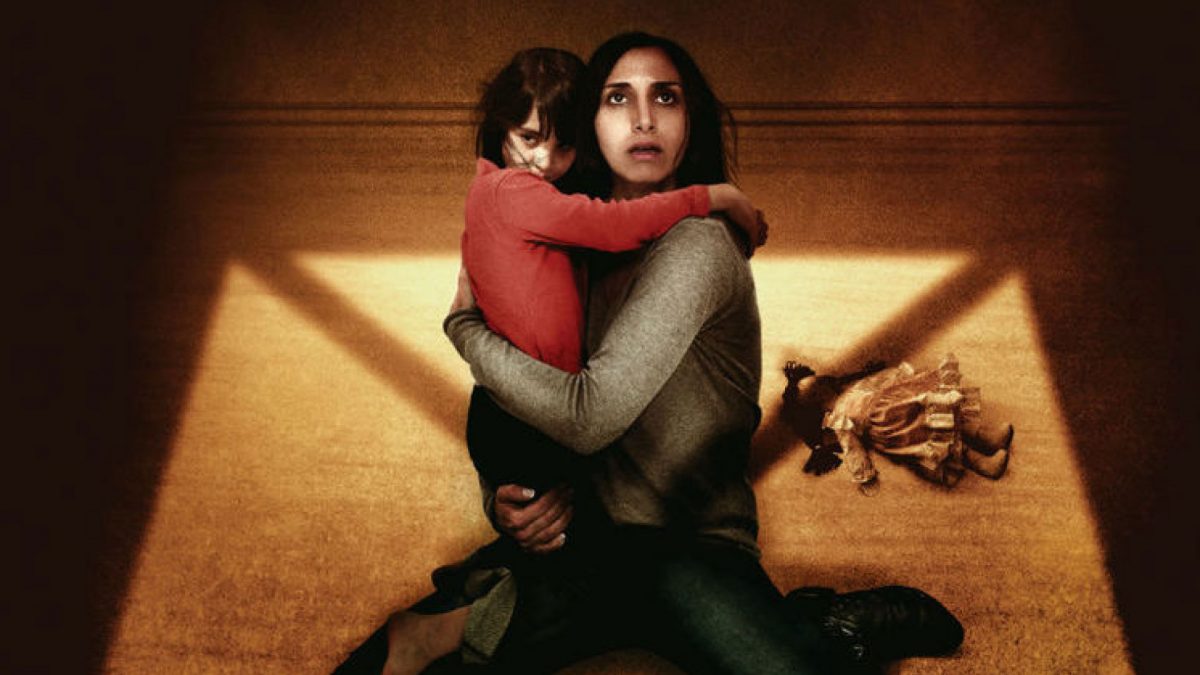
Shideh (a fearless Narges Rashidi) has been banned from returning to medical school because of her pre-war political leanings. Her husband, a practicing physician, is serving his yearly medical duty with the troops. This leaves Shideh and their young daughter Dorsa (Avin Manshadi) alone in their apartment as missiles rain on Tehran.

What begins as a domestic drama suitable for fellow Iranian filmmaker Asghar Farhadi (A Separation) turns slowly into something else entirely as Anvari dips into the horror trope toolbox to shake up our expectations with familiar devices.

When a dud missile plants itself in the roof of the building (shades of del Toro’s Devil’s Backbone), Dora starts talking to a secret friend. Maybe the friend would be a better mommy.

Frazzled, impatient, judged and constrained from all sides, Shideh’s nerve is hit with this threat. And as external and internal anxieties build, she’s no longer sure what she’s seeing, what she’s thinking, or what the hell to do about it.

The fact that this menacing presence – a djinn, or wind spirit – takes the shape of a flapping, floating burka is no random choice. Shideh’s failure in this moment will determine her daughter’s entire future.

Anvari casts the political climate meticulously, as forces beyond Shideh’s control – some supernatural, some cultural, all dangerous – surround her.

Though the strength of the cultural context sometimes undercuts the spookiness of the ghost story being told, Under the Shadow builds a strong case for itself as a horror film. Bursts of creepy imagery punctuate the increasingly tense atmosphere. It’s here that Anvari’s film is most effective, as you realize Shideh is better off dealing with ghouls than turning to neighbors or authorities for help.

Verdict-4-0-Stars


New Coat of Paint

Portrait of a Lady on Fire

by Hope Madden

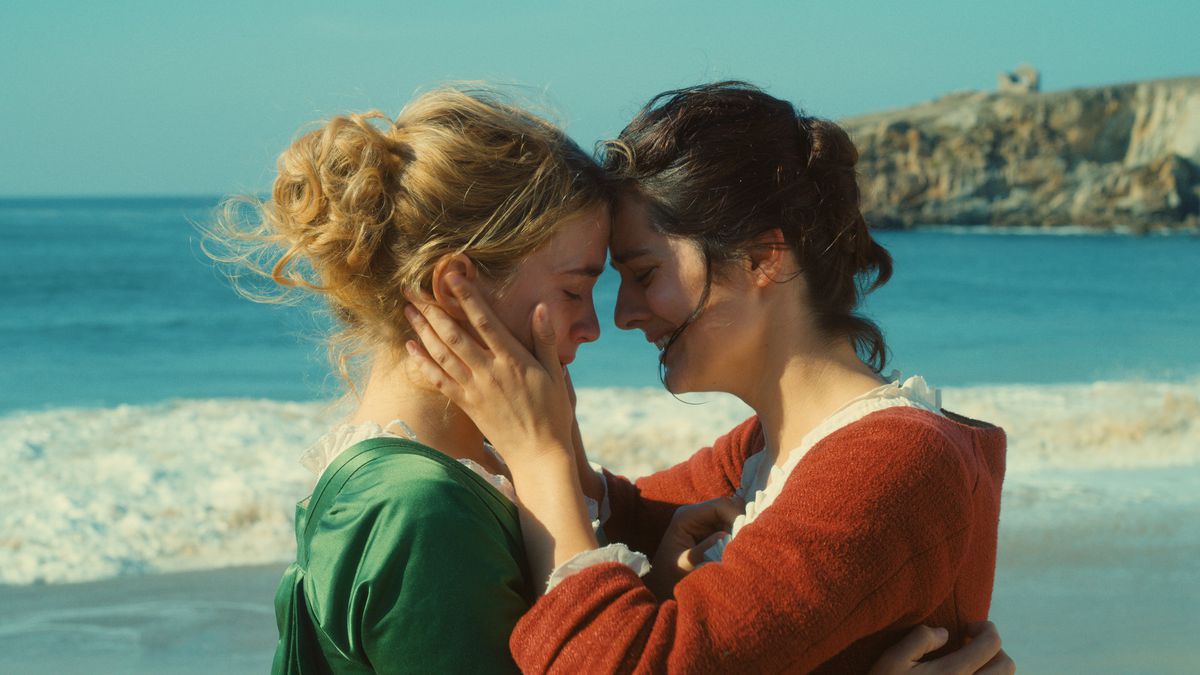
Celine Sciamma follows up the vitally of-the-moment indie Girlhood with this breathy, painterly period romance only to clarify that she is a filmmaker with no identifiable bounds. In the 1790s on a forbidding island in Brittany, Marianne (Noemie Merlant) arrives to paint the wedding portrait of Heloise (Adele Haenel), but since Heloise is not marrying voluntarily, she will not sit for a painter. So, a ruse is developed: Marianne pretends to be simply a companion as she steals glances then sketches from memory into the night.

What develops along with the startlingly beautiful intimacy between the women is a thoughtful rumination on memory and on art, on the melancholic but no less romantic notion that the memory, though lonesome, is permanent and perfect.

Portrait of a Lady on Fire is a tenderly romantic film of self-discovery that asks a lot of questions.

What would life be like with no men at all, the film seems to ask. Unseen, nameless men (because we see very few) may rule the world, and the existence of one casts a pall over the events of the film. But, at least until Mother (Valeria Golino) returns with news of the wedding, this is a community of women.

On the island, women gather at a bonfire, passing time, singing and seeking each other’s guidance. In the austere mansion, Heloise, Marianne and servant Sophie (Luana Bajrami) look after one another. In a more intimate chamber, two women become friends and then lovers and then, likely, the most important relationship the other will ever have.

Offering a master class in visual storytelling, Sciamma relies far less on words than images, ending conversations or omitting them entirely, able instead to deliver meaning with a glance, a gesture, a flame or an ocean wave.

And with art. What Sciamma is able to convey about love, struggle, empowerment and art by virtue of the changing canvas on which Marianna must commit Heloise’s portrait is truly extraordinary.

Sciamam’s film has a painterly quality, frame after frame worthy of museum wall space. And yet, Portrait lacks artifice. Thomas Grezaud’s set design, Dorothee Guiraud’s costumes and, in particular, Claire Mathon’s cinematography blend together to create a costume drama worthy of the historical and art period in question.

Portrait of a Lady on Fire is breathtakingly gorgeous. But, like Heloise’s portrait in the film, that’s not enough to make it a masterpiece. It’s the authenticity to the intimacy—perhaps partly born of the fact that Haenel and Sciamma are a real life couple—that’s inescapable, and it drives the piece.

Like Marianna’s final portrait, Sciamma’s film offers truth, and it’s astonishing.

The Dream I Dreamed

Les Miserables

by Hope Madden

“Remember this, my friends. There is no such thing as bad plants or bad men. There are only bad cultivators.”

Victor Hugo penned those words as he watched the suffering and oppression in the streets of Montfermeil.

Set in July 2018, when the World Cup victory made celebratory compatriots of everyone in France, at first blush, Ladj Ly’s film Les Miserables bears little resemblance to the saga of Jean Valjean and that tenacious Javert. But it doesn’t take long for the filmmaker to use the story of law enforcement and the population of modern day Montfermeil to show that little has changed since Hugo set quill to parchment 150 years ago.

Damien Bonnard (Staying Vertical) plays Stéphane. Ly taps Julien Poupard’s camera to follow Stephane on his first day in Paris as part of a three man unit tasked with keeping an eye on a mainly poor, primarily Muslim district.

Stéphane’s new partners, Chris (Alexis Manenti) and Gwada (Djibril Zonga), have been on the job long enough to have developed relationships and tensions in the neighborhood. Thanks to an almost absurd subplot involving a traveling circus—whose lion delivers an apt metaphor and a heartbreaking scene—Stephane’s first days on the force will be regrettable.

Ly was inspired to write the film by riots that broke out in his own apartment building and neighborhood in 2005. That authenticity lends the film both a visceral dread as well as a complicated compassion.

Like Hugo, Ly seems unwilling to abandon those in authority to the fate of villain any more than he’s willing to entirely forgive the actions of the oppressed. Rather, each side is implicated (one far more boldly than the other), but it’s the lack of tidy resolution that makes the fate of these characters compelling.

While every performance is impressive, young Issa Perica is the film’s beating heart, its undetermined destiny, and he’s more than up to the task. His lines are limited but his performance is heartbreaking, his character really the only one that matters.

A devastating social commentary masquerading quite convincingly as an intense cop drama, I’d say Les Miserables would do Hugo proud. The truth is, it would probably break his heart.

Have Mercy

Clemency

by Hope Madden

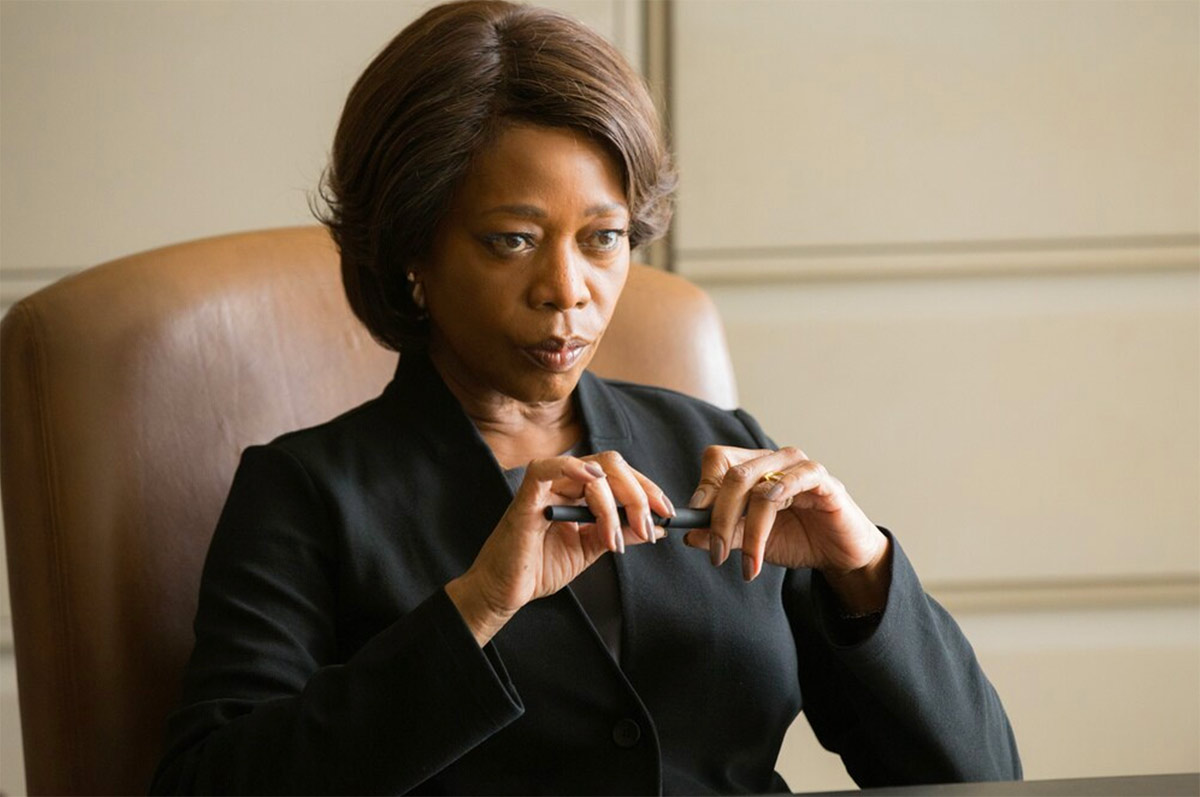
Alfre Woodard has primarily provided crucial supporting turns in film and television since 1978. With writer/director Chinonye Chukwu’s Clemency, Woodard delivers an astonishing lead turn as a prison warden dealing with inmates on death row.

Examining capital punishment from the eyes of a prison warden is certainly a novel approach. The warden has generally been relinquished on film to a cowboy hat wearing good ol’ boy with no qualms about flipping that switch. Chukwu and Woodard are disinterested in clichés. Instead they carve out something truly new in this genre.

The thing Chukwu gets most right in this film is an overwhelming sense of responsibility and grief, and it’s a tough line to toe. Warden Bernadine Williams understands that, while her own grief threatens to swallow her whole, it doesn’t compare with the pain she comes in contact with. For that reason, she never defends her position or betrays her sympathies when confronted by victims’ families, the families of the condemned or the condemned themselves.

Her own grief is so acutely individual that she refuses to seek sympathy and she outright rejects empathy, because who could put themselves in her place? She is in charge but has no control. She is responsible, yet she does not determine these men’s fates.

If Chukwu hits the right notes here, it’s Woodard who sings. This journeyman has played just about everything across her four decades in the business, and she brings a palpable sense of hard won wisdom to this role.

The film is essentially a character study, and one of a character determined not to discuss or betray her feelings. That’s a tough nut to crack because you have to let the audience know what’s going on without telling us anything at all. More than that, what Woodard has to convey is far beyond the scope of what anyone in the audience can really understand. And yet, she succeeds poignantly.

Aldis Hodge, playing death row inmate Anthony Woods, balances Woodard’s practiced stoicism with barely contained jolts of emotion. Clemency gives Hodge the opportunity to shine and he grabs it, conveying a tumult of raw feelings that will leave you heartbroken.

If Clemency is a miraculous package of performances, it doesn’t entirely work as a film. Bernadine’s story—her existential crisis—doesn’t have a beginning or an end, just an unhappy middle. But maybe that’s necessary for a film that breaks new ground while delivering the same message: we need criminal justice reform.

Sleepless in Mexico City

Midnight Family

by Hope Madden

For a population of 9 million, Mexico City keeps only 45 official ambulances. Private ambulances compete with each other to fill the need for additional resources. Midnight Family rides along with the Ochoas, one family making their living transporting the injured to government and private hospitals around the city.

Do they have training? The equipment they need to tend to a medical emergency?

Hell, they may not even have gas.

The nuance of the act of goodwill or commerce tightens the film’s emotional grip. As one member of the team worries over an infant while police question the father, clearly unable to pay for these services, it’s obvious that the Ochoa family takes its life saving mission seriously.

At the same time, every action is calculated: how to beat another ambulance to an accident, how to evaluate each situation to best secure payment, which hospital will be the most forthcoming with payment, which police are willing to alert them to accidents in return for a bribe.

It all sounds seedy until you realize what would happen to the injured without them.

And while you’re weighing the ghoulish balance between money and mercy, director Luke Lorentzen shows you just how a high speed chase should be filmed as 17-year-old Juan races and weaves his ambulance through traffic to beat another unit to the scene. (Honestly, you’d think a group of people this well-informed on the ills of Mexico City’s healthcare situation might be a little less daring!)

Juan is all business, a savvy worker with ambition and wisdom to share with his little brother Josue, who rides along at night instead of getting ready to go to school. In these moments, when family members cobble together enough cash for a dinner of tuna on saltines before going home to shower without hot water, the larger context and struggle takes shape.

An urgent portrait of a system in collapse, Midnight Family also uncovers one family’s raft of hope amid an ocean of desperation.

Going on a Trip

The Wave

by Brandon Thomas

For a split second there in the early 2000s, Justin Long seem primed for stardom: Jeepers Creepers, Dodgeball, Drag Me to Hell and Live Free or Die Hard. His nervous charm mixed with casual handsomeness made him instantly relatable. The Wave might not be a major studio movie like the aforementioned, but Long brings his classic charisma with him to this trippy sci-fi comedy. 

Long stars as Frank, an attorney for a large insurance company. He’s about to have the best day of his career after finding a way for the firm to avoid paying out a large policy. To celebrate, Frank and a co-worker (Scrubs’ Donald Faison) go out on the town where they eventually find their way to a house party. At this party, Frank is reluctantly introduced to a new drug that turns his world into a living hallucination. With his job, marriage and life on the line, Frank races around town attempting to undo the mess caused by the drug. 

The Wave walks a fine line between various genres. For most of its running time, the film resembles many mainstream comedies from the last two decades. Long plays the kind of lovable chump that wouldn’t feel out of place in the latest Judd Apatow flick. He’s a dirtbag, but a pretty harmless dirtbag. For a time, avoiding the wrath of his overbearing wife seems like Frank’s biggest obstacle. But only for a time.

The movie switches gears fairly seamlessly into a more sci-fi realm as the severity of Frank’s situation becomes more apparent. Visual effects play a large part, but director Gille Klabin also gets a lot of bang for his buck with simple in-camera effects. Frank’s jumps through time are more often than not sold through basic edits. Not only does this help keep the “weird” more grounded, but it also keeps the audience in Frank’s shoes as these strange things continue to happen to him.

The film threatens to stall when it begins to veer into a message about fate, the decisions that people make and where that leads them. The theme is muddled and never does more than distract from the fun core sci-fi elements. Primer this ain’t, and rightly so. 

The Wave has aspirations of telling a complex story about good people who make bad decisions. While that message never quite lands with much impact, the movie is still a moderately fun sci-fi romp.

h