Tag Archives: horror

Fright Club: Dark Ages Horror

Witches, starvation, ghouls, oppression, Church and governmental oppression—there’s a reason they call them the Dark Ages! Filmmaker George Popov (Hex, The Droving) joins us to discuss the best horror movies about the Dark Ages.

6. Black Death (2010)

What Christopher Smith (Severance) delivers with Black Death that few if any horror filmmakers tackling the same themes match is a clear eye as to the flaws and merits on both sides of the witch hunt.

Eddie Redmayne is an innocent and a believer; Sean Bean is no innocent, but he does believe. Both are part of a Christian army who get word of a village untouched by pestilence—a village where some say the dead have been raised.

What follows is a punishingly human drama about using religion to suit your own ends, about what evil we are and are not willing to accept, and about the end of innocence.

5. The Masque of the Red Death (1964)

The sixth of seven Roger Corman/Vincent Price Poe films—and maybe the best—sees Price in a role that delights in its own evil.

No Corman film has ever used color to such glorious extreme, a tactic absolutely in keeping with Poe’s text. The film works from a short story, padding with subplots (one from Poe, one from elsewhere) that work well within the story and generate a little emotional depth beneath the lurid color and debauchery.

Stay through to the end, whatever you do, but do give this one a chance.

4. Hex (2017)

Two soldiers separated from their companies during England’s Civil War chase each other into a deep forest. The rebel Thomas (William Young) is young, soft and open to the dark poetry and doom of witchcraft. He’s not long in the woods before he sees his true enemy is not the countryman behind him with his sword drawn.

Richard (Daniel Oldroyd) fights for King and Country, strident and single-minded, logic keeps him from believing until he has little choice.

There is more happening here than you realize, and it’s to the filmmakers’ credit that you only recognize the film’s purpose when they are ready for you to do so. The result is a satisfying tale with more power than just magic.

3. Army of Darkness (1992)

Easily the most fun you’ll have with a Dark Ages film, Army of Darkness is Sam Raimi’s third and silliest installment in his Evil Dead trilogy. In it, like a Connecticut Yankee, hero Ash (Bruce Campbell at his buffest) finds himself transported to dark times.

You know what he finds. Deadites.

Ash must woo the girl (and then maybe accidentally get her changed into a deadite, which will necessitate killing her), say the spell (which he may or may not entirely screw up, inadvertently raising an army of darkness), and save the day.

Endlessly quotable, utterly bananas, and just a thrill ride of Monty Python meets Three Stooges meets Ray Harryhausen fun, Army of Darkness is a treasure.

2. The Head Hunter (2018)

In a land of yore, the geography forbidding, a far off trumpet calls for the hardiest of warriors—those equipped to fight beasts.

Director Jordan Downey shows much and tells little in his nearly wordless medieval fantasy, The Head Hunter. The filmmaker parses out all the information you’ll need to follow this simple vengeance myth, but pay attention. Very little in this film is without meaning—no creepy image, no creak or slam.

In what is essentially a one man show, Christopher Rygh delivers a quiet, brooding performance for a quiet, brooding film. He cuts an impressive figure as the Vikingesque warrior at the center of this adventure and his work speaks of joyless endurance.

https://www.youtube.com/watch?v=5ZqtRbifT6Q

1.Hagazussa (2017)

Making a remarkably assured feature debut as director, Lukas Feigelfeld mesmerizes with his German Gothic poetry, Hagazussa: A Heathen’s Curse.

Settled somewhere in the 15th Century Alps, the film shadows lonely, ostracized women struggling against a period where plague, paranoia and superstition reigned.

It would be easy to mistake the story Feigelfeld (who also writes) develops as a take on horror’s common “is she crazy or is there malevolence afoot?” theme. But the filmmaker’s hallucinatory tone and Aleksandra Cwen’s grounded performance allow Hagazussa to straddle that line and perhaps introduce a third option—maybe both are true.

The film lends itself to a reading more lyrical than literal. Feigelfeld’s influences from Murnau to Lynch show themselves in his deliberate pacing and the sheer beauty of his delusional segments. He’s captured this moment in time, this draining and ugly paranoia that caused women such misery, with imagery that is perplexingly beautiful.


Imagine There’s No Heaven

Z

by Hope Madden

There is a moment that currently fascinates horror filmmakers. It is the moment when we forever lose the sweet little white boy destined to become a sociopath.

Director Brandon Christensen (writing with Colin Minnihan) examines parental involvement and even responsibility with the imaginary friend horror, Z.

Beth Parsons (Keegan Connor Tracy) and her husband Kevin (Minnihan regular Sean Rogerson) are at odds about how best to handle son Josh (Jett Klyne) and his new buddy.

This sounds familiar.

Mother is immediately creeped out. Dad is lenient. Boy begins to lash out, blaming imaginary friend. Mom wants to enlist expert help. Dad agrees within reason, but begins to pull away once Mom becomes convinced of a supernatural presence. Bodies begin to pile up.

Brightburn

The Boy

Brahms: The Boy II

Hole in the Ground

Prodigy  

That’s just in the last three years. This phenomenon means two things: filmmakers have hit upon a provocatively of-the-moment topic and it will be hard to find a unique perspective on that topic.

Though Z never seems fresh, there are moments that feel more authentic than they have any right to. Christensen’s direction lets conversations, in particular, breathe. Actors get the chance to give their characters a heartbeat. Adult family relationships have a lived-in quality that both reinforces themes and carves out layers for the story.

As is often the case in this subgenre, the film lives or dies on the role of the mother. Lucky, then, that Tracy gives such a powerful performance. Never showy, Tracy’s weary, passive, put-upon delivery creates a mysterious yet believable character. Beth’s actions feel both natural and unpredictable, which creates a lot of space for the filmmaker to build in surprises.

Too much convenience, too many unearned jump scares and too much predictability threaten to sink the effort, but a handful of narrative choices and a few truly solid performances (plus a cameo from the always welcome Stephen McHattie) elevate the film.

It’s no We Need to Talk about Kevin (the high water mark for the category), but what is? It is an unsettling way to worry about what we pass on to our kids.

The Nature of Sacrifice

The Droving

by Hope Madden

It’s been almost exactly one year since Martin’s little sister Meg disappeared. The Droving festival is upon us again, and Martin’s come back to town to do his own investigating.

In filmmaker George Popov’s sophomore effort, following his underseen 2017 gem Hex, the co-writer/director once again weaves elements of a psychological thriller with supernatural themes to create an effectively off- kilter sensibility.

Martin (Daniel Oldroyd, also of Hex) isn’t exactly what he appears to be. His own arc, much of it grounded in slowly-revealed backstory, is what drives the film.

Martin’s internal journey is more deceptively complicated than expected. It creates an underlying unease that nicely offsets Droving’s almost poetic visuals. Though Oldroyd understated grace holds all the film’s unusual elements together, he can’t quite convince when the moment comes to unveil Martin’s most dramatic levels of psychic damage.

The clues Martin pieces together feel too easily sleuthed. The Droving would have benefitted from some narrative complications, some untidiness. Still, the mystery itself—built on a handful of tense set pieces that deliver menace and weirdness in equal measure—is a good one.

Popov’s instinct for visual storytelling is again the most compelling argument for the film. Hex, made on next to nothing, delivered a spooky, medieval atmosphere thanks in large part to framing and cinematography.

For Droving, Popov works again with cinematographer Harry Young, whose shots are often beautifully lit, giving them a painterly quality. From early, eerily quiet pre-festival shots of Martin walking the streets of town to the more frenetic, dizzying festival footage, Popov sets a creepy stage for his thriller.

Saturday Screamer: The Mist

The Mist (2007)

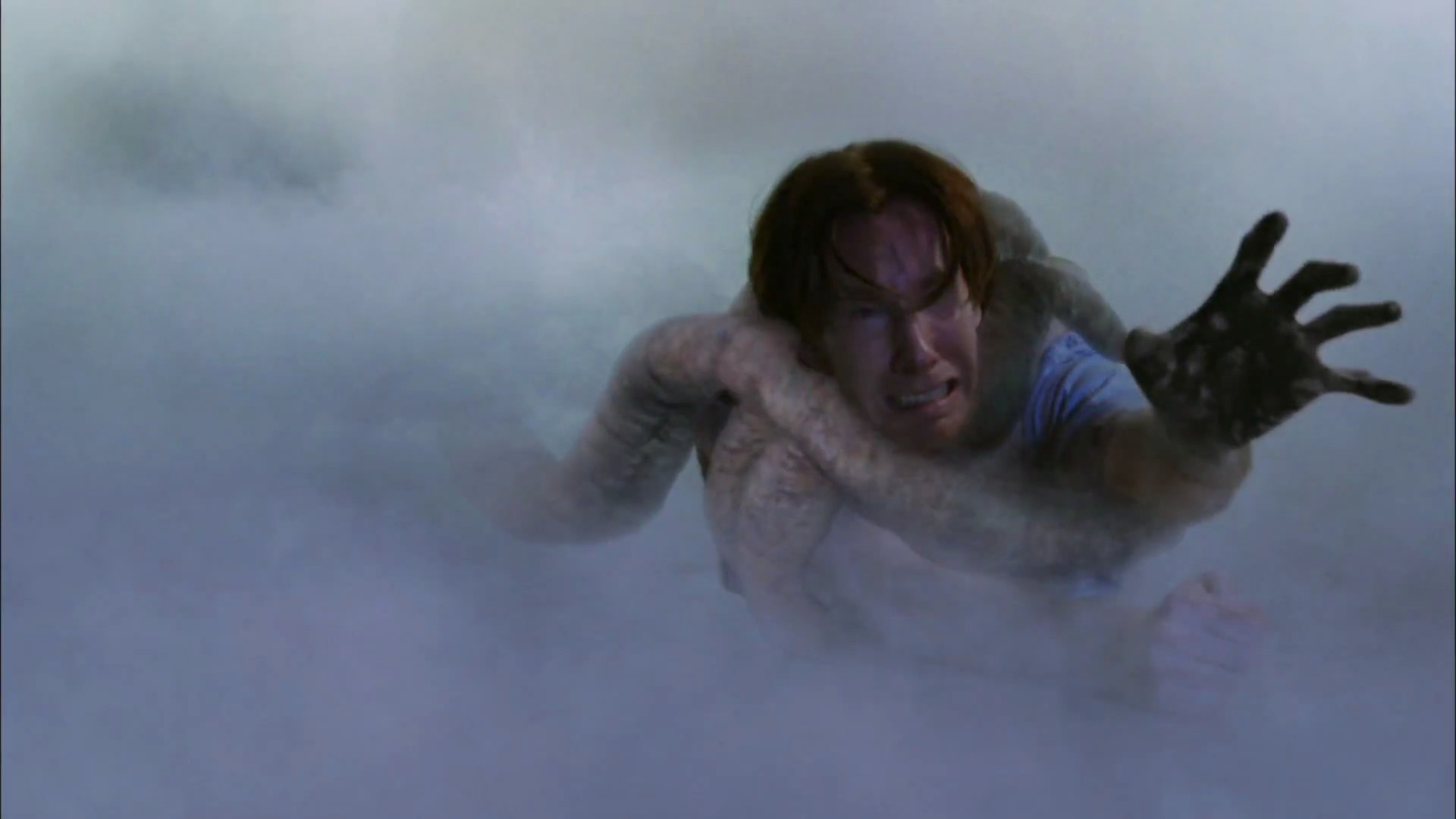
Frank Darabont really loves him some Stephen King, having adapted and directed the writer’s work almost exclusively for the duration of his career. While The Shawshank Redemption may be Darabont’s most fondly remembered effort, The Mist, an under-appreciated creature feature, is our vote for his best.

David Drayton (Thomas Jane) and his young son head to town for some groceries. Meanwhile, a tear in the space/time continuum (who’s to blame?!) opens a doorway to alien monsters. So Drayton, his boy, and a dozen or so other shoppers all find themselves trapped inside this glass-fronted store just waiting for rescue or death.

Marcia Gay Harden is characteristically brilliant. As the religious zealot who turns survival inside the store into something less likely than survival out with the monsters, she brings a little George Romero to this Stephen King.

In a Romero film, no matter how great the threat from the supernatural, the real monsters tend to be the rest of the humans. King does not generally go there, but he does so with The Mist and it’s what makes this one of his most effective films.

While Harden excels in a way that eclipses all other performances, the whole cast offers surprisingly restrained and emotional turns – Toby Jones is especially effective.

The FX look good, too, and let’s be honest, a full-on monster movie with weak FX is the lamest. The way Darabont frames the giants, in particular, gives the film a throw-back quality to the old matinee creature features. But he never gives into cheekiness or camp. The Mist is a genuinely scary film – best seen in the black and white version if you can find it.

Regardless, it’s the provocative ending that guarantees this one will sear itself into your memory. Though this is likely what kept The Mist from gaining an audience in theaters, it is a brilliant and utterly devastating scene that elevates the film from great creature feature to great film.


Shout at the Devil

We Summon the Darkness

by Hope Madden

The year was 1988, and as far as you know, metal bands shouted “hail Satan” and evangelicals took to the airwaves warning their flocks about cults driven to spill virtuous blood.

Marc Meyers (My Friend Dahmer) jumps in the way back machine to road trip with three besties headed to a rock show. Alexis (Alexandra Daddario), Val (Maddie Hasson) and Bev (Amy Forsyth) are rockin’ like Dokken with those bare midriff black tees and upside down cross dangles, but something’s amiss.

For one thing, their hair is not nearly obnoxious enough. No way they’re en route to a rock concert in ’88. No one’s hair even grazes the car ceiling.

Also, that trio of dudes they’re flirting with (at least one of them is mulleted, so there is a whiff of authenticity) is clearly beneath them. Plus, with this nationwide ritualistic Satanic killing spree going on…

Here’s the thing, though. I was actually alive in rural Ohio in the late Eighties, and there honestly were people—like, people in authority—who believed our corn fields were lousy with covens. They believed metal music transmitted the words of the dark lord to the eager ears of teens.

It wasn’t true. It’s just that all rock bands in 1988 sucked.

Nonetheless, Meyers creates a nearly believable atmosphere for his spare, occasionally comical dive into Ozzy-inspires Satanism.

Hasson charms as the hot friend with a weak bladder. While the banter never feels quite fresh enough to be improvisational, the dialog among the three girls is random, comfortable fun.

Daddario and Hasson share a silly chemistry that keeps scenes bright and engaging, even when the slight plot begins to wear through.

In its best moments, We Summon the Darkness conjures Kevin Smith’s Red State (an underseen and under-appreciated horror gem). Johnny Knoxville plays intriguingly against type as the Midwestern pastor warning youngsters about the lures of the devil, and Daddario has enough screen presence to anchor the movie.

There’s just not a lot to see here. Pretty girls. Terrible music. Worse clothes. Religious zealots. Backwards thinking. Friends who drive you crazy on a road trip because they have to stop every ten minutes to pee.

Yes, that does sound like 1988 to me, actually. It’s just too bad Meyers couldn’t deliver the kind of inspired, memorable scares born of high school relationships, weirdos and misfits he shared in My Friend Dahmer. Instead the camaraderie and atmosphere become entertaining distractions from a forgettable story.

Unwanted Guests

Under the Shadow

by Hope Madden

A few years back, Aussie filmmaker Jennifer Kent unleashed the brilliant and devastating single parent nightmare, The Babadook. As much subtext as text, the film vibrated with the anxiety of a parent torn between resentment and the powerful fear that something demonic might harm her only child.

Fast forward two years, and first-time feature filmmaker, Iranian Babak Anvari, treads familiar ground yet manages to shift focus entirely and create the profound and unsettling Under the Shadow.

Here the social commentary sits even closer to the surface. The tale is set in Tehran circa 1988, at the height of the Iran/Iraq war and just a few years into the “Cultural Revolution” that enforced fundamentalist ideologies.

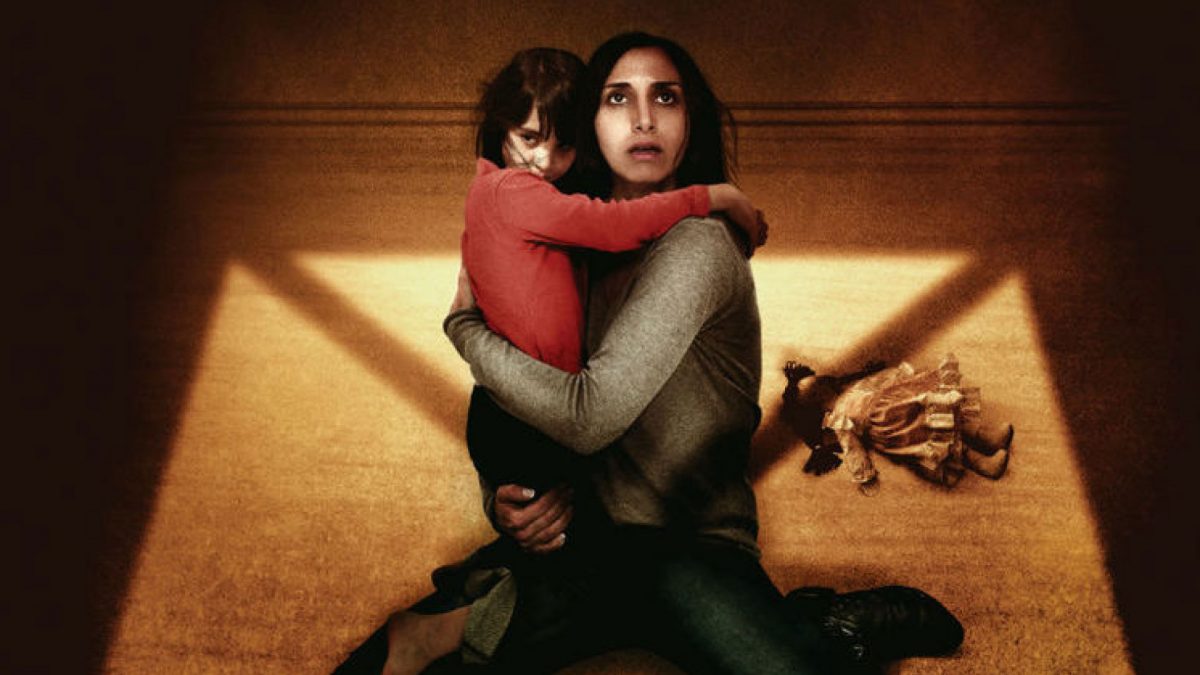
Shideh (a fearless Narges Rashidi) has been banned from returning to medical school because of her pre-war political leanings. Her husband, a practicing physician, is serving his yearly medical duty with the troops. This leaves Shideh and their young daughter Dorsa (Avin Manshadi) alone in their apartment as missiles rain on Tehran.

What begins as a domestic drama suitable for fellow Iranian filmmaker Asghar Farhadi (A Separation) turns slowly into something else entirely as Anvari dips into the horror trope toolbox to shake up our expectations with familiar devices.

When a dud missile plants itself in the roof of the building (shades of del Toro’s Devil’s Backbone), Dora starts talking to a secret friend. Maybe the friend would be a better mommy.

Frazzled, impatient, judged and constrained from all sides, Shideh’s nerve is hit with this threat. And as external and internal anxieties build, she’s no longer sure what she’s seeing, what she’s thinking, or what the hell to do about it.

The fact that this menacing presence – a djinn, or wind spirit – takes the shape of a flapping, floating burka is no random choice. Shideh’s failure in this moment will determine her daughter’s entire future.

Anvari casts the political climate meticulously, as forces beyond Shideh’s control – some supernatural, some cultural, all dangerous – surround her.

Though the strength of the cultural context sometimes undercuts the spookiness of the ghost story being told, Under the Shadow builds a strong case for itself as a horror film. Bursts of creepy imagery punctuate the increasingly tense atmosphere. It’s here that Anvari’s film is most effective, as you realize Shideh is better off dealing with ghouls than turning to neighbors or authorities for help.

Verdict-4-0-Stars


Zombie Eat World

The Night Eats the World

by Hope Madden

People like to make lists. For some people, it’s a bucket list. Some like to keep track of the celebrities they are allowed to sleep with if the opportunity arises. Not me.

Years ago I put together my zombie survival team. And though I know plenty of people with varied and worthy skills, making my team mainly came down to two things. Are you smart? Are you quiet? Because it is the introverts of the world who will survive the zombie apocalypse.

Director Dominique Rocher’s unusually titled The Night Eats the World understands this.

Sam (Anders Danielsen Lie) reluctantly stops by his ex’s party to collect his things. It is a loud, raucous event and Sam is in no mood. He stands moping alone until finally he wanders into a quiet back office, locks the door to the partygoers and waits.

By morning, Sam may be the only living human left in Paris.

The majority of the film quietly follows Sam through the apartment building as he fortifies his position, spends his time, survives. It’s a pleasantly pragmatic approach to the zombie film, although it asks many of the same questions Romero asked in Dawn of the Dead.

In fact, TNETW sometimes bears an amazing resemblance to the underseen German zombie flick Rammbock: Berlin Undead. (It’s great. You should see it.)

There’s a lot going on here that’s fresh, though. Rarely is a zombie film this introspective or a horror hero this thoughtful. More than that, though, Rocher’s horror is a meditation on loneliness.

Not only is that an unusual topic for horror, it’s delivered with the kind of touching restraint that’s almost inconceivable in this genre.

Danielsen Lie, in what nearly amounts to a one-man-show, never lets you down and never feels showy. Sam is a man who is maybe too at home with the situation in a film that quietly asks, just what has to happen before a true introvert longs for human companionship?

That’s why they’ll outlast us. It’ll just be a few dozen socially uncomfortable loners skilled at closing themselves off from the chaos around them. Plus Keith Richards.

Food for Thought

Swallow

by Hope Madden

Like Todd Haynes’s 1995 film Safe, Swallow shadows a lovely homemaker with little of merit to occupy her time who eventually falls prey to an unusual malady.

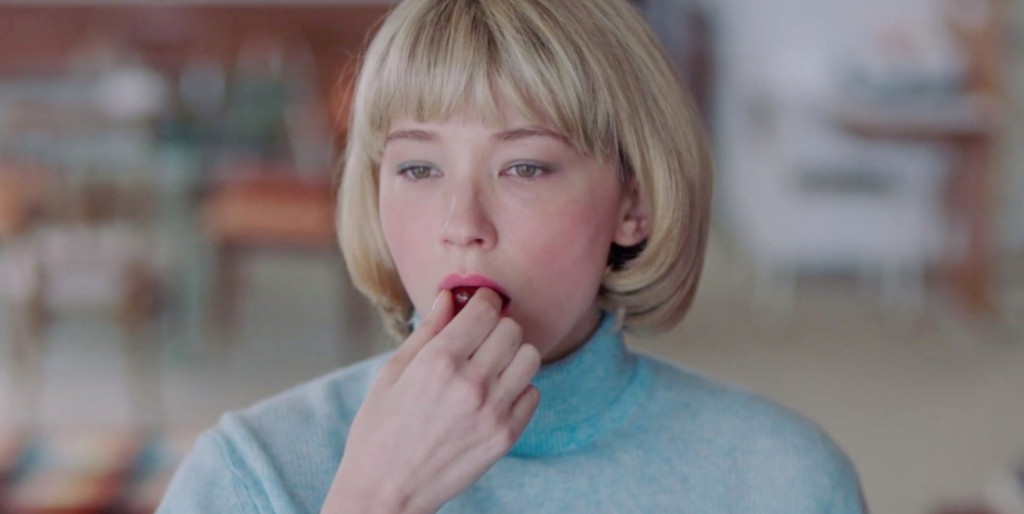
Dressed like something out of a 1950s pantyhose ad, Hunter (a transfixing Haley Bennett) fluffs pillows, prepares dinner, and waits for her husband Richie (Austin Stowell) to come home from work. She’s so grateful. Just really thankful, she nods in a hushed, respectful, humble tone.

You might think that pregnancy would give Hunter something meaningful to do with her time: prepare the nursery, read up on parenting, that sort of thing. But the only thing she really wants to do now is to swallow things she shouldn’t.

Putting a relevant twist on the classic “horrific mother” trope, writer/director Carlo Mirabella-Davis uses the rare eating disorder pica to anchor his exploration of gender dynamics and, in particular, control.

At times almost Hitchcockian in its suspense, anxiety and balance of gender hysterics, Swallow feels urgently present but simultaneously old-fashioned. The costume choices, the vacant expression Hunter wears like a mask, the way she smooths and tucks her hair—all of it rings with the tone of the dementedly June Cleaver-esque.  

Where Mirabella-Davis’s talent for building tension and framing scenes drive the narrative, it’s Bennett’s performance that elevates the film. Serving as executive producer as well as star, Bennett transforms over the course of the film.

The path Swallow takes is eerily, sometimes frustratingly similar to Haynes’s Safe. Both films cover similar themes, both take on a meticulously crafted visual aesthetic, and both boast incandescent lead performances. Indeed, Bennett here is every ounce as believable and touching and transfixing as the great Julianne Moore as Haynes’s brittle heroine.

But where Haynes played things a little too ambiguously to satisfy an audience, Mirabella-Davis embraces clarity—although first he flirts and then dances with it before the full bear hug. The first half of this film is almost sleight of hand, the filmmaker telegraphing imagery too meticulous and obvious.

When things finally burst, though, director and star shake off the traditional storytelling, the Yellow Wallpaper or Awakening or even Safe. The filmmaker’s vision and imagery come full circle with a bold conclusion worthy of Bennett’s performance.

Sister’s Grimm

Gretel & Hansel

by Hope Madden

It’s still early, but 2020 has not been great in terms of horror.

First came Nicolas Pesce’s pointless reboot of The Grudge.

Yikes. And I do not mean that in a good way.

And then last week we had Floria Sigismondi’s boldly wrong-headed reimagining, The Turning.

In keeping with a trend, this week Oz Perkins revisits an existing story. Gretel & Hansel pick on the bones of that old fairly-tale—the one that actually did scare the shit out of me as a kid. Two kids are turned out into the woods because their parents can’t feed them. Things go from bad to worse once they’re left to fend for themselves and soon cannibalism comes into play, as I assume it always does when you get lost in the woods.

Perkins, working from a script by Rob Hayes (East Meets Barry West), abandons much of the original bits (fewer breadcrumbs). His spookier imagination is more interested in Gretel’s burgeoning womanhood.

Sophia Lillis (IT) narrates and stars as Gretel, the center of this coming of age story—reasonable, given the change of billing suggested by the film’s title. The witch may still have a tasty meal on her mind, but this is less a cautionary tale than it is a metaphor for agency over obligation.

Alice Krige and her cheekbones strike the perfect mixture of menace and mentorship, while Sammy Leakey’s little Hansel manages to be both adorable and tiresome, as is required for the story to work.

Perkins continues to impress with his talent for visual storytelling and Galo Olivares’s cinematography heightens the film’s folkloric atmosphere.

It’s unfortunate, though, that Perkins doesn’t also write. The two films he both writes and directs, I Am the Pretty Thing that Lives in the House and, in particular, The Blackcoat’s Daughter, sidestepped predictability while mining primal anxieties to produce excellent, memorable horror.

The writing here doesn’t quite reach the heights of the storyline told through imagery. Gretel & Hansel loses itself too often in a dreamscape horror without rectifying or clarifying, which leaves the metaphor foggy and the horror muted.

But there’s no escaping this spell. The whole affair feels like an intriguing dream.

Dead Lands, Episode 3

The Kingdom at the Edge of the World

by Rachel Willis

After a tense, fast-paced second episode, the third episode of The Dead Lands is a bit of a come down.

It’s not surprising that the show runners would choose to follow an action-paced episode with a slower focus on world-building. However, The Kingdom at the Edge of the World comes off more like a placeholder than an opportunity to further the series arc.

Searching for more information about how to right the wrongs in Aotearoa, Mehe and Waka seek out three sister witches. When they find two of the three, we learn more about what’s happening to the world, but not enough to justify devoting two-thirds of the episode to these characters. Much of the dialogue feels like riddles designed to confuse rather than enlighten, and it becomes tedious trying to keep track of what is important information and what’s merely filler.

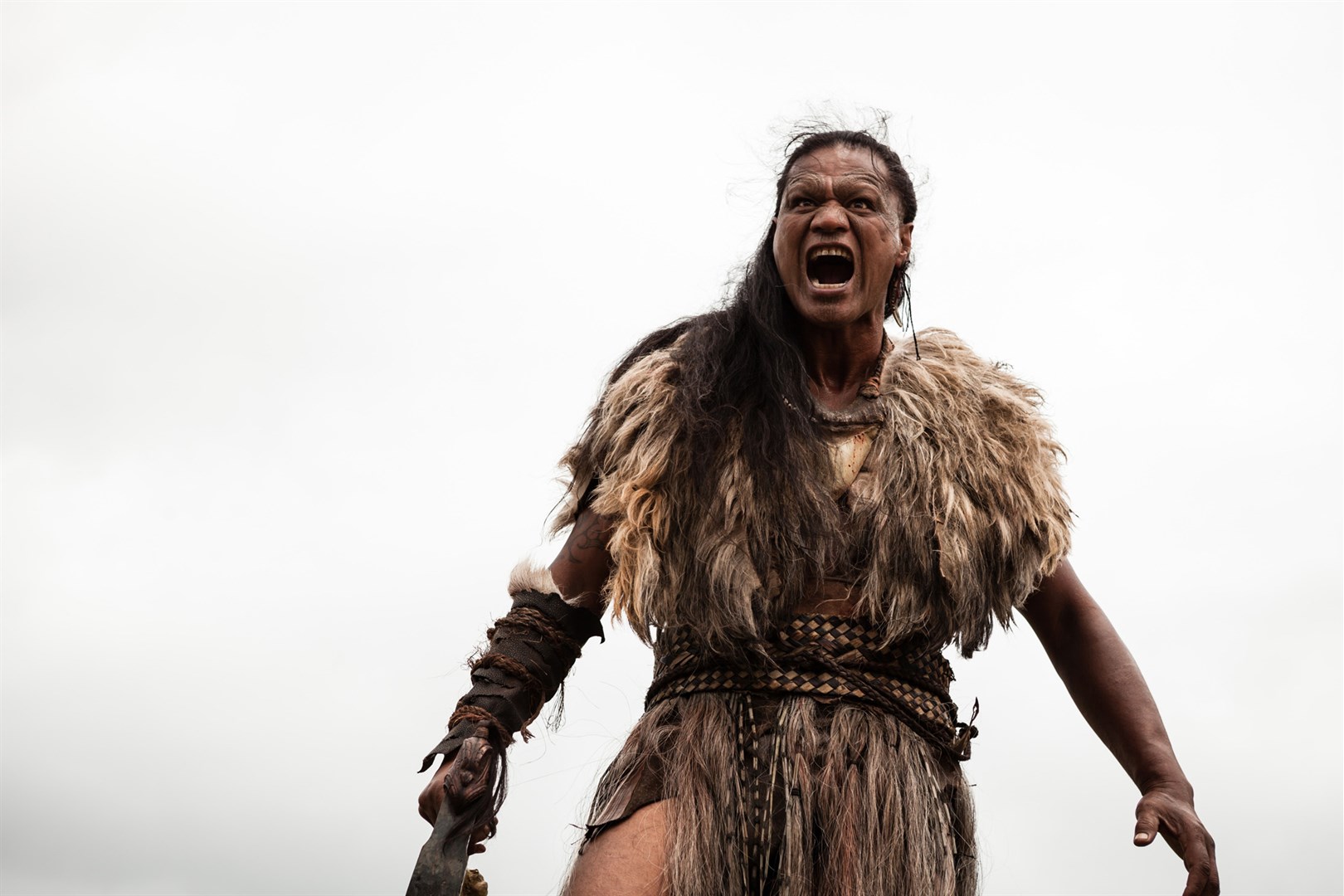
Though we’re treated to more of the Maori style martial arts, Mau Rākau, there is a scene between Waka and one of the witches that comes off a bit silly. Their choreographed moves are beautiful, but the interaction never feels real. 

It’s only during the last third of the episode that the pace picks up and a few truly tense moments occur, reminding us why this show is worth watching.

Even though the pacing falters, the character development is some of the series’ best yet, with a strong focus on trust. Many times, Mehe is advised not to trust Waka by both by her friends and by those who sense his dangerous nature. Waka is similarly advised to keep his guard up around Mehe, that she will use him to suit her needs and then betray him. This is the first time Waka truly feels like a danger, and to Mehe in particular. 

Despite the obvious threat Waka might pose to her, it is clear Mehe trusts him – she even says as much while they’re training. However, Waka seems to punish her for that trust. It begs the question: will his deadly, distrustful nature threaten their developing bond?

When he gives her a test, she passes it – in the audience’s eyes. Waka, on the other hand, seems to make a decision that reveals his true feelings. However, we’re left hanging as to how Waka will act as the show progresses. The end of The Kingdom at the Edge of the World promises greater conflict to come.