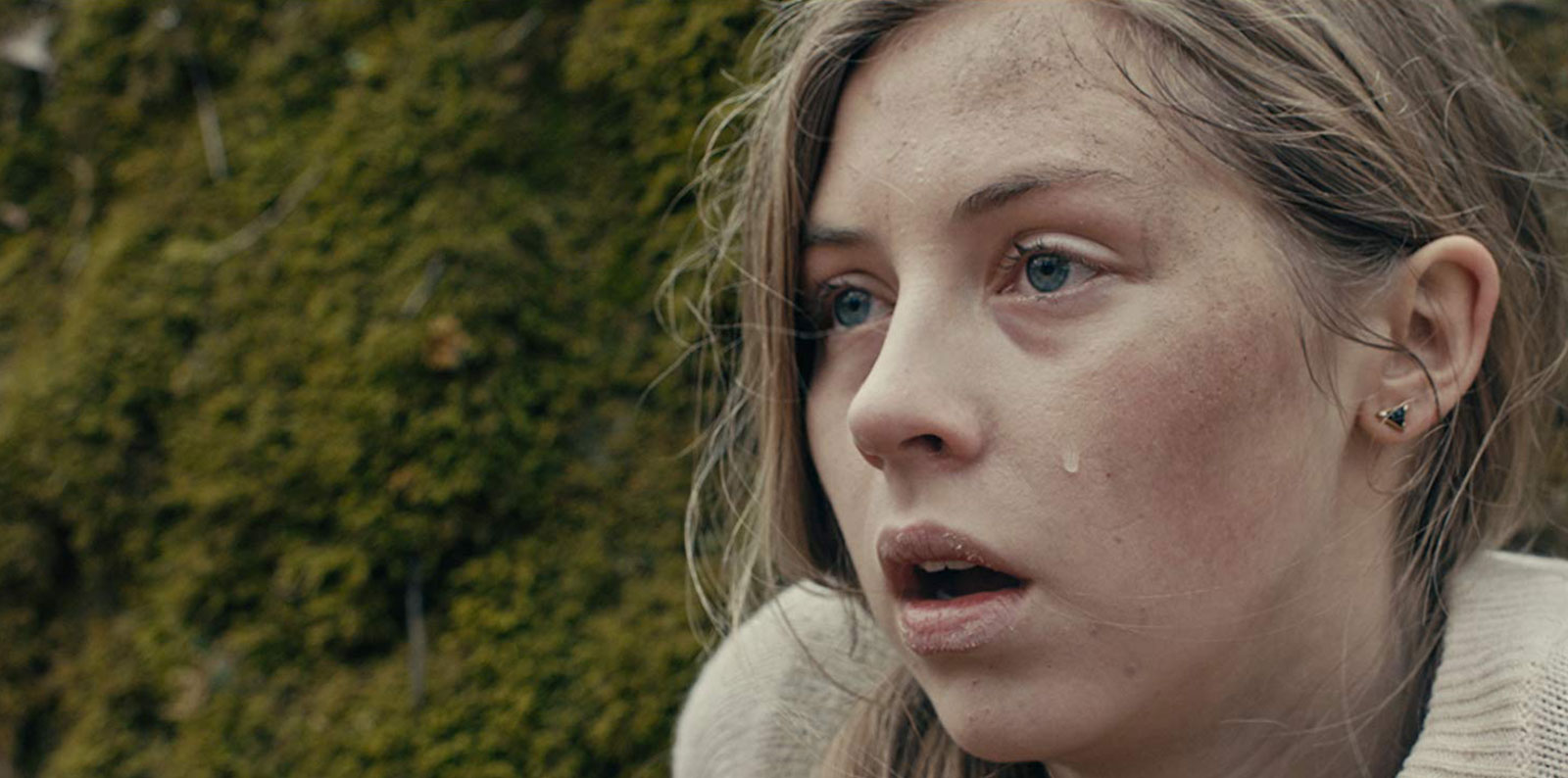
College co-ed (Hermione Corfield) follows her GPS into the backwoods of Kentucky, and hits a dead end before bumping into some less-than-helpful locals: tussle, injury, escape into the woods.
I don’t know how many times you’ve seen that very film, but I have probably seen it twice already this week. (It’s a problem, I know.)
This woman-in-peril pairing with the “city folk lost in the backcountry” formula equals one very tired experience.
The fact that filmmaker Jen McGowan, working from a script by Julie Lipson, offers us a victim/heroine who fights and thinks is not quite enough to save Rust Creek from drowning. But McGowan’s tricky, and she has more surprises packed in her double-wide than you might think.
The film, on its surface, asks us to rethink the victim in a hillbilly thriller. But Rust Creek cuts deeper when it requires that we—and the heroine, for that matter—rethink the hillbilly.
Michelle Lawler’s cinematography sets a potent mood, enveloping the proceedings in an environment that is in turns peaceful and gorgeous or treacherous and brutal, and she does it with natural, almost poetic movement.
This imagery allows the Kentucky woods to become the most vibrant character in the film, although those tree-covered hills are peopled by a few locals worthy of notice—not all, but a few.
Jay Paulson—best known to normal people for his brief stint on Mad Men, best known to my people as the porn-obsessed psychopath in Robert Nathan’s Lucky Bastard—cuts an intriguing, lanky figure as Lowell.
Slyly fascinating from the moment he takes the screen, Paulson shares an uncommon onscreen chemistry with Corfield. The smart, human relationship they build as they bide their time and cook some meth may be reason enough to see Rust Creek.
McGowan doesn’t burst as many clichés as she embraces, unfortunately. Still, the biggest obstacle facing her as she maneuvers her tropes to serve a (hopefully) unexpected purpose is that her protagonist is the least interesting character in the movie. This is not necessarily Corfield’s fault. She does what she can with limited resources. Sawyer is just the fuzziest character, and the one with the least articulated arc.
That means the resolution packs less of a wallop than it should, but certain moments and characters will linger.
Man, I really liked Escape Room back in 1997 when it was called Cube.
Director Adam Robitel, who managed to do something fresh and upsetting with his 2014 feature directorial debut The Taking of Deborah Logan, here contents himself with borrowing … lifting…no, this is downright larceny.
In Vincenzo Natali’s underfunded but groundbreaking Canadian horror, Cube, six strangers—each with unique skills and backgrounds—find themselves trapped in a building and must unravel each room’s puzzle only to escape to the next room/deathtrap.
I don’t know if you’ve seen the trailer for Escape Room, but Robitel and screenwriters Maria Melnik and Bragi F. Schut have certainly seen Cube.
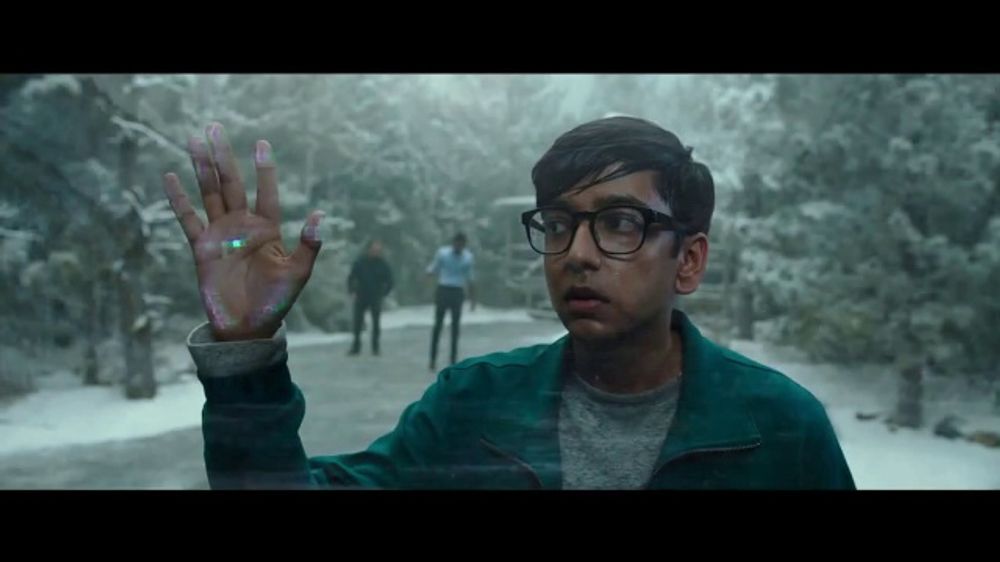
Cripplingly shy brainiac Zoey (Taylor Russell) is one of a handful of random strangers to receive a puzzle box in the shape of a cube. Let’s just assume that’s a nod toward the film’s source material and not a different, terrible rip off of Hellraiser.
By solving the puzzle, Zoey—and, sprinkled all over town, others—win the opportunity to attempt the most elaborate escape room ever constructed.
Actually, the architecture is weirdly familiar.
If you can get past the plagiarism and lazy theft–please add Final Destination and Saw to the list of the aggrieved—you will note that Russell and the entire cast performs quite well. Deborah Ann Woll (True Blood) impresses as a bit of a badass, while Nik Dodani endears in a small role and Tyler (Tucker and Dale vs Evil) Labine is adorable, as is almost always the case.
Many of the set pieces are pretty cool, too. One upside-down billiards room bit, in particular, holds your attention. But the game cast and sometimes fun sequences can only overcome the film’s weaknesses for so long.
Even if all these antics are new to you, the film’s predictable climax and disappointing waning moments are bound to leave you feeling that this movie could have been better.
Was 2018 the lamentable year in horror that some dumbasses suggest? No! There was a wild and impressive range in independent horror and blockbuster stuff, gore and comedy, psychological scares and slashers. It was a really fun year to look back on, as we do today to rank the best in horror the year had to offer. Join us, won’t you?
10. The Ritual
David Bruckner has entertained us with some of the best shorts in horror today, including work from V/H/S, Southbound, and one of our favorites, The Signal. Directing his feature debut in The Ritual, Bruckner takes what feels familiar, roots it in genuine human emotion, takes a wild left turn and delivers the scares.
Five friends decide to mourn a tragedy with a trip together into the woods. Grief is a tricky, personal, often ugly process and as they work through their feelings, their frustration quickly turns to fear as they lose themselves in a foreign forest where danger lurks.
The film works for a number of reasons, but its greatest triumph is in making the woods scary again. That environment has become such a profound cliché in horror that it is almost impossible to make it feel fresh, but there is an authenticity to the performances, the interaction among the characters, and the frustration and fear that grounds the horror. And then there is horror—intriguing, startling, genuinely frightening horror. Yay!
9. Unsane
Sawyer Valentini (Claire Foy—brittle, unlikeable and amazing) is living your worst nightmare. After moving 400 miles to escape her stalker, she begins seeing him everywhere. She visits an insurance-approved therapist in a nearby clinic and quickly finds herself being held involuntarily for 24 hours.
After punching an orderly she mistakes for her stalker, that 24 hours turns into one week. And now she’s convinced that the new orderly George is, in fact, her stalker David (Joshua Leonard—cloying, terrifying perfection).
After laying bare some terrifying facts about our privatized mental health industry, Steven Soderbergh structures this critique with a somewhat traditional is-she-or-isn’t-she-crazy storyline. Anyone who watches much horror will recognize that uneasy line: you may be here against your will, but that doesn’t mean you shouldn’t be here.
And the seasoned director of misdirection knows how to toy with that notion, how to employ Sawyer’s very real damage, touch on her raw nerve of struggling to remain in control of her own life only to have another’s will forced upon her.
He relies on familiar tropes to say something relevant and in doing so creates a tidy, satisfying thriller.
8. Mom and Dad
I brought you into this world, I can take you out of it.
It’s a joke, of course, an idle threat. Right?
Maybe so, but deep down, it does speak to the unspeakable tumult of emotions and desires that come with parenting. Wisely, a humorous tumult is exactly the approach writer/director Brian Taylor brings to his horror comedy Mom and Dad.
Why do you want to see it? Because of the unhinged Nicolas Cage. Not just any Nic Cage—the kind who can convincingly sing the Hokey Pokey while demolishing furniture with a sledge hammer.
7. Overlord
Perhaps you don’t know this, but Nazi zombies have a horror genre unto themselves: Shock Waves, Zombie Lake, Dead Snow, Dead Snow 2, Blood Creek. Well, there’s a new Nazi Zombie Sheriff in town, and he is effing glorious.
Overlord drops us into enemy territory on D-Day. One rag tag group of American soldiers needs to disable the radio tower the Nazis have set up on top of a rural French church, disabling Nazi communications and allowing our guys to land safely.
What’s on the church tower is not so much the problem. It’s what’s in the basement.
A satisfying Good V Evil film that benefits from layers, Overlord reminds us repeatedly that it is possible to retain your humanity, even in the face of inhuman evil.
Plus, Nazi zombies, which is never not awesome!
6. Revenge
The rape-revenge film is a tough one to pull off. Even in the cases where the victim rips bloody vengeance through the bodies of her betrayers, the films are too often titillating. Almost exclusively written and directed by men for a primarily male audience, the comeuppance angle can be so bent by the male gaze that the film feels more like an additional violation.
Well, friends, writer/director Coralie Fargeat changes all that with Revenge, a breathless, visually fascinating, bloody-as-hell vengeance flick that repays the viewer for her endurance. (His, too.)
Fargeat’s grasp of male entitlement and the elements of a rape culture are as sharp as her instincts for visual storytelling. Wildly off-kilter close-ups sandwich gorgeous vistas to create a dreamlike frame for the utterly brutal mess of a film unfolding.
Symbol-heavy but never pretentious or preachy, the film follows a traditional path—she is betrayed, she is underestimated, she repays her assailants for their toxic masculinity. But between Fargeat’s wild aesthetic, four very solid performances, and thoughtful yet visceral storytelling, the film feels break-neck, terrifying and entirely satisfying.
5. Halloween
David Gordon Green’s direct sequel is, above all things, a mash note to the original. Visual odes continually call back to Carpenter, often in ways that allude to an intriguing about-face the film is leading to.
Kills—more numerous and grisly than the first go round—are often handled offscreen, just the wet thud or slice of the deed to enlighten us until the corpse gets a quick showcase. The result is a jumpy, fun, “don’t go in there!” experience reminiscent of the best of the genre.
The film takes it up a notch in its final reel, as tables turn, panic rooms open and cop heads become Jack-o-lanterns. The result is a respectful, fun and creepy experience meant to be shared with a crowd.
4. A Quiet Place
Damn. John Krasinski. That big, tall guy, kind of doughy-faced? Married to Emily Blunt? Dude can direct the shit out of a horror movie.
Krasinski plays the patriarch of a close-knit family trying to survive the post-alien-invasion apocalypse by staying really, really quiet. The beasts use sound to hunt, but the family is prepared. The cast, anchored by Krasinski’s on-and-off-screen wife Emily Blunt is amazing. That you may expect.
What you may not expect is Krasinski’s masterful direction: where and when the camera lingers or cuts away, how often and how much he shows the monsters, when he decides the silence will generate the most dread and when he chooses to let Marco Beltrami’s ominous score do that work for him.
It’s smart in the way it’s written, sly in its direction and spot-on in its ability to pile on the mayhem in the final reel without feeling gimmicky or silly.
3. Mandy
Writer/director Panos Cosmatos’s hallucinogenic fever dream of social, political and pop-culture subtexts layered with good old, blood-soaked revenge, Mandy throws enough visionary strangeness on the screen to dwarf even Nicolas Cage in full freakout mode.
Like Cosmatos’s 2010 debut Beyond the Black Rainbow, Mandy is both formally daring and wildly borrowed. While Black Rainbow, also set in 1983, shines with the antiseptic aesthetic of Cronenberg or Kubrick, Mandy feels more like something snatched from a Dio album cover.
Cosmatos blends ingredients from decades-spanning indie horror into a stew that tastes like nothing else.
Surrender to it.
2. Suspiria
Luca Guadagnino continues to be a master film craftsman. Much as he draped Call Me by Your Name in waves of dreamy romance, here he establishes a consistent mood of nightmarish goth. Macabre visions dart in and out like a video that will kill you in 7 days while sudden, extreme zooms, precise sound design and a vivid score from Thom Yorke help cement the homage to another era.
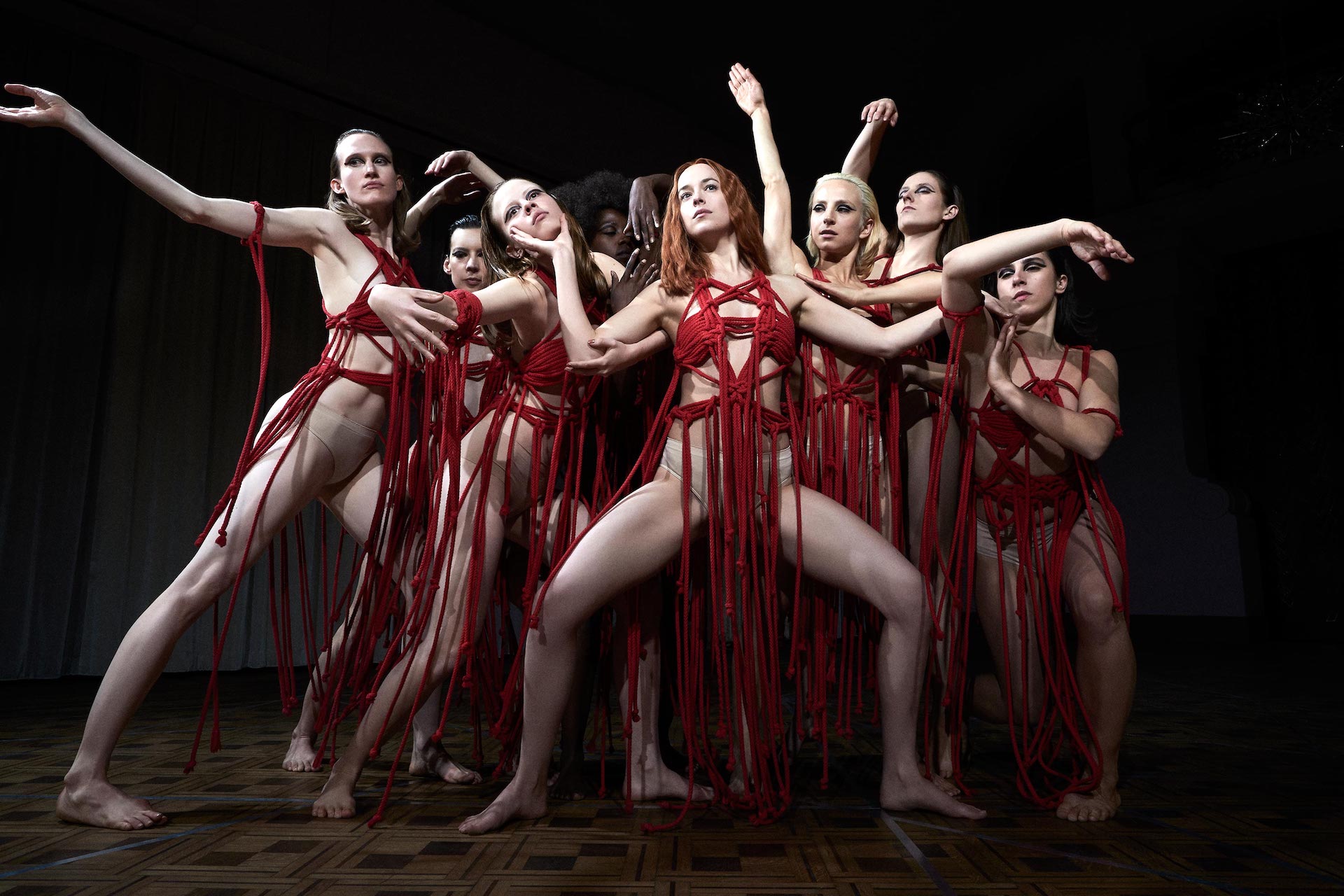
But even when this new Suspiria—a “cover version” of Dario Argento’s 1974 gaillo classic—is tipping its hat, Guadagnino leaves no doubt he is making his own confident statement. The color scheme is intentionally muted, and you’ll find no men in this dance troupe, serving immediate notice that superficialities are not the endgame here.
1. Hereditary
Grief and guilt color every somber, shadowy frame of writer/director Ari Aster’s unbelievably assured feature film debut, Hereditary.
With just a handful of mannerisms, one melodic clucking noise, and a few seemingly throwaway lines, Aster and his magnificent cast quickly establish what will become nuanced, layered human characters, all of them scarred and battered by family.
Art and life imitate each other to macabre degrees while family members strain to behave in the manner that feels human, seems connected, or might be normal. What is said and what stays hidden, what’s festering in the attic and in the unspoken tensions within the family, it’s all part of a horrific atmosphere meticulously crafted to unnerve you.
Aster takes advantage of a remarkably committed cast to explore family dysfunction of the most insidious type. Whether his supernatural twisting and turning amount to metaphor or fact hardly matters with performances this unnerving and visual storytelling this hypnotic.
You can’t predict what’s going on in the mind of a crazy person. Because, you know, they’re crazy. Logic and reason are not necessarily the pillars they’re using to construct their own reality. So why not just let them tell us? We don’t recommend this as an in-person exercise, but as a movie, it really works out. Here are the 5 best movies from the mind of a madman.
5. Be My Cat: A Film for Anne (2015)
Adrian is a Romanian filmmaker who likes girls and cats. He does not like dogs or boys. His favorite thing? Anne Hathaway as Cat Woman.
He was so inspired by her performance that he knew he had to make a film with her. To convince her, he’s lured three actresses to shoot a film with him. That film is really just to convince Anne, his beloved, that she should star in the real movie.
I really don’t think she will want to.
This movie works on the sheer, weird charisma of writer/director/star Adrian Tofei. He is pathetic and charming and terrifying as he documents his direction as a kind of “behind the scenes” for Anne, so she can understand how truly perfect she is for his film and he is for her artistic future. The result is unsettling, unique and wildly entertaining.
4. The Cabinet of Dr. Caligari (1920)
Director Robert Weine’s inarguable classic remains a cinematic landmark because of its look and its political storytelling. It’s a genre breakthrough for those reasons, as well as one twist that would still be a go-to for the genre nearly a century later.
The film is a story spun by a young man on a park bench. He’s visiting his sweetheart in an insane asylum, and he tells us of their woes. It’s a captivating story, one that speak to writers Carl Mayer and Hans Janowitz’s building worries over authoritarianism in Post WWI Germany, and in the hands of Weine, the imagery takes on a nightmarish aesthetic many would try to imitate.
Alas, as the film ends, we find that our narrator is, indeed, just another patient in this sanitarium and the story has simply come from his own diseased mind.
3. The Last Horror Movie (2003)
A clever concept handled very craftily, The Last Horror Movie is found footage in that we, the audience, have found it recorded over the VHS tape we are apparently watching. What serial killer Max (a top notch Kevin Howarth) has done, you see, is made a documentary of his ghastly habits and shared them with an audience that’s shown, by virtue of the movie it intended to rent just now, its predeliction for someting grisly.
There’s a lot of “yes, I’m a bad person, but aren’t you, too” posturing going on, and while it is an idea to chew on, it nearly outlives its welcome by the time Max applies his theory to concrete action. It’s an idea explored masterfully by Michael Haneke in 1997 (and again, ten years later) with Funny Games, and by comparison, The Last Horror Movie feels a bit superficial. (Not a huge criticism – few could withstand a comparison to Michael Haneke.)
But director Julian Richards deserves immense credit for subverting expectations throughout the film. Just when we assume we’re seeing a predator anticipating the pounce – just when we’re perhaps feeling eager to see someone victimized – the film makes a hard right turn. In doing this, Richards not only manages to keep the entire film feeling fresh and unpredictable, but he enlightens us to the ugliness of our own horror movie fascinations.
2. Man Bites Dog (1992)
In a bit of meta-filmmaking, Man Bites Dog is a pseudo-documentary made on a shoestring budget by struggling, young filmmakers. It is about a documentary being made on a shoestring budget by struggling, young filmmakers. The subject of the fictional documentary is the charismatic Ben – serial killer, narcissist, poet, racist, architecture enthusiast, misogynist, bird lover.
There’s more than what appears on the surface of this cynical, black comedy. The film crew starts out as dispassionate observers of Ben’s crimes. They’re just documenting, just telling the truth. No doubt this is a morally questionable practice to begin with. But they are not villains – they are serving their higher purpose: film.
The film examines social responsibility as much as it does journalistic objectivity, and what Man Bites Dog has to say about both is biting. It’s never preachy, though.
Theirs is a bitter view of their chosen industry, and – much like The Last Horror Movie – a bit of a condemnation of the viewer as well. The fact that much of the decidedly grisly content is played for laughter makes it that much more unsettling.
1. American Psycho (2000)
Director Mary Harron trimmed Bret Easton Ellis’s novel, giving it unerring focus. More importantly, the film soars due to Christian Bale’s utterly astonishing performance as narcissist, psychopath, and Huey Lewis fan Patrick Bateman.
Bateman narrates for us his strategies for keeping up the ruse of humanity for all who’s looking. He feels the pressure and believes an end to the charade is imminent.
As solid as this cast is, and top to bottom it is perfect, every performance is eclipsed by the lunatic genius of Bale’s work. Volatile, soulless, misogynistic and insane, yet somehow he also draws some empathy. It is wild, brilliant work that marked a talent preparing for big things.
What does a serial killer have in common with an indie filmmaker? Quite a lot, or so suggests indie filmmaker Lars von Trier.
We’ll say this with all sincerity: The House that Jack Built—a 2+ hour peek into the mind and methods of a murderer—is von Trier’s most lighthearted picture to date.
It’s also as tedious and self-indulgent as Nymphomaniac: Vol. II.
LvT’s artistry lies in his ability to make the viewer uncomfortable. His films are punishing, which is why his first foray into horror, the brilliant and wildly unnerving 2009 film Antichrist, was such a perfect fit. He returns to the genre with Jack, here allowing a sadistic murderer the opportunity to shed light on the filmmaker’s own discomforting artistry.
Which can work—Julian Richards’s The Last Horror Movie and Remy Balvaux’s Man Bites Dog both offer blistering achievements on the theme. But Jack falters, and von Trier falters, in two important ways.
The film does deliver sadistic glory, yet in terms of violence or depravity, it feels oddly safe. Not safe for all viewers, mind you, but horror fans and von Trier fans have seen far more envelope-pushing than what Jack depicts. There is one sequence—the picnic sequence—that is among the most perfect horror movie episodes ever filmed. Beyond that, much of this movie is competently made but ultimately tired.
We follow Jack (Matt Dillon, making the most of a surprising casting choice) through various instances of homicidal mania. As voiceover conversations with the mysterious Verge (Bruno Ganz) pay homage to Dante’s Divine Comedy, Jack’s bloody exploits become less darkly comedic and more brazenly sadistic, testing his claim that “the soul belongs to heaven and the body to hell.”
Just as the Nymphomaniac films traded provocative ideas for fist-shaking admonishments from filmmaker to critics, Jack devolves into an instrument wielded even less bluntly. Again, von Trier channels his tale through two voices: the protagonist and a straw man. Verge serves up the proselytizations on art and morality so Jack can knock ’em down, with snippets of von Trier’s previous films peppered in for anyone who still isn’t getting it.
Not that LvT’s ideas on this topic aren’t interesting – far from it- but the line between personal and self-indulgent is the same one that separates uncomfortable questions that resonate (as in von Trier’s own Dogville) from spoon-fed answers that do not. One side makes for an engaging film experience while the other falls short, no matter how impressive the visual set pieces (which Jack does indeed provide).
Von Trier has unapologetically wallowed in depravity his entire career, and those themes have served the narrative in amazing ways. Now he seems more interested in narratives that serve grandiose debates of his own artistic value.
Let’s hope that road has reached an end. While von Trier remains an artist worthy of attention, The House That Jack Built stands as another missed opportunity.
Do you ever watch a movie and wonder how it got that elusive green light? I just did.
The Possession of Hannah Grace is not a terrible movie. It’s not a provocative movie, not a scary movie, not a gory movie, not an interesting movie. It’s just not a movie you’ll be able to keep straight a few weeks after you see it. You’ll be combining what few moments you recall with other movies.
You’ll be wondering, was that Hannah Grace, or was it The Last Exorcism? Did that happen in Hannah Grace or in The Corpse of Anna Fritz? Or maybe in The Autopsy of Jane Doe? And then you’ll just forget this movie entirely. It’s been 20 minutes for me and I’m already struggling to recall the bland details.
In a nutshell, Dutch filmmaker Diederik Van Rooijen’s first English language film follows troubled ex-cop Megan (Shay Mitchell) on her first days in her new routine: nighttime morgue attendant followed by an early morning AA meeting with sponsor, Lisa (Stana Katic).
But on Night #2, things go funny as the corpse of a mutilated, burned and inexplicably naked young woman is brought in. Hannah Grace (Kirby Johnson) is not your garden variety naked, contorted, burned corpse, though.
How do you cast this, exactly? “Hey, how would you like to play the title role in my new movie? You will be nude for 90 minutes and you have exactly no lines. You in?”
The jump scare morgue marathon amounts to a long and very tortured metaphor about addiction. Kudos to Van Rooijen and writer Brian Sieve for setting you up for one of two clichéd endings, and then sidestepping both. Too bad they sidestep clichéd endings in favor of nothing at all.
That’s about what you can expect from Hannah: 85 minutes of not too much—not much point, very little action, not a lot of scares and even fewer answers. But it is indeed a horror film that could be completed with three total locations and a cast of about 10, so, you know, why not go ahead and make it?
There are a lot of ways to approach a zombie film, few of them fresh. Zombie flick as YA (young adult) melodrama isn’t even a new idea anymore—2015 saw a surprisingly nuanced Arnold Schwarzenegger nurse his reanimated teen (Abigail Breslin) in Maggie, the best of the batch until now.
Still, writer/director Justin P. Lange has something on his mind with his debut feature The Dark, and he has found a compelling way to tell not-just-another zombie story.
We open on a twist to a familiar scene. A man in a rush, likely a fugitive of some kind, grabs some supplies at an out-of-the way gas station. He opens a map. The lone, wizened clerk points him toward an assumed destination: Devil’s Den.
As familiar as even the twist feels, the truth is that Lange gets more mileage from that old warhorse than you immediately realize. And he will continue to wield our assumptions and biases against us to better direct his story.
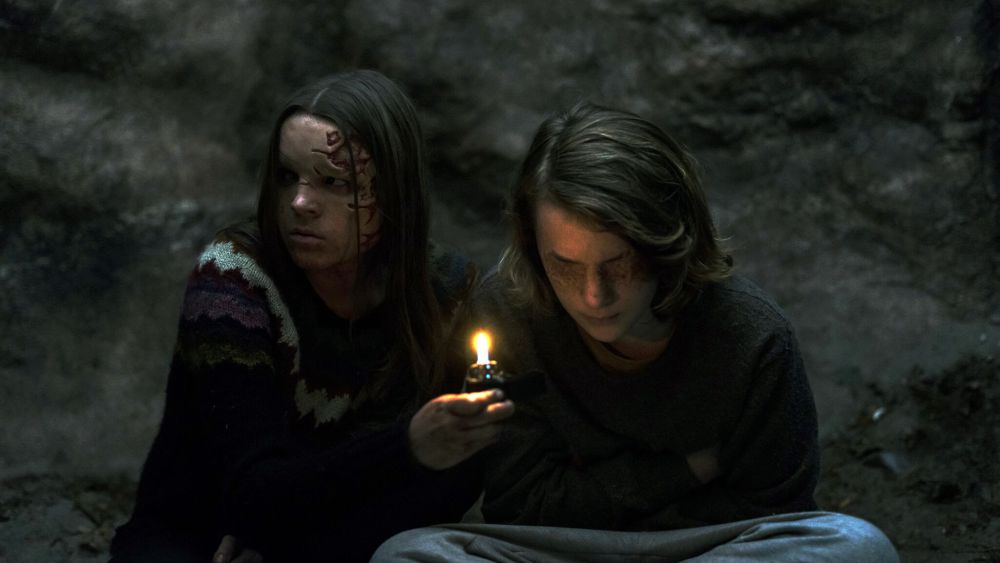
The blandly titled The Dark is, at its heart, a guide to overcoming trauma. Nadia Alexander is Mina, the creature that haunts Devil’s Den—a merciless, relentless, thoughtless killer. Until, that is, she comes across Alex, a blind young man (Toby Nichols) who reminds her of what she once was and what could have saved her.
Lange makes a series of clever narrative choices besides simply using our preconceived notions to surprise us. The Dark is, in part, a vengeance fable far less preoccupied by punishing those who do damage than those who should have been there for protection.
Alexander impresses as the beast unhappily and involuntarily rediscovering her humanity. Her silences, particularly in later scenes, are haunting.
As her mirror image and polar opposite, Nichols embodies vulnerability and resilience. There’s an optimism alongside a brokenness in his performance that is both necessary and heartbreaking.
The Dark occasionally skirts mawkishness, but what YA film doesn’t? In truth, Lange doesn’t run from the baggage associated with his chosen genres. He embraces it, forgives it, makes something powerful out of it.
It would not surprise us if we saw a new wave of ecological horror in which our own mistreatment of the environment and our irresponsible handling of pharmaceutical progress creates flesh hungry critters, pissed off two-headed bears, opioid addicted tapeworms, whatever. Let’s prepare by looking over history’s forewarnings, shall we?
Here are our favorite mutant animal films—cautionary tales about big pharma, careless planet keeping and sex.
5. Shivers (They Came from Within) (1975)
In an upscale Montreal high rise, an epidemic is breaking out. A scientist has created an aphrodisiac in the form of a big, nasty slug. That slug, though, spreads wantonness throughout the high rise and threatens to overrun the city with its lusty ways.
Not Cronenberg’s best film, but this is his first feature length horror and it announces not only his arrival on the genre scene, but it predicts so many of the films to come. The film obsesses over human sexuality, social mores, the physical form, physical violation and infestation, medical science, conspiracy, and free will. He’d revisit all of these preoccupations throughout his career, most obviously in his very next feature film, 1978’s Rabid, which is weirdly similar in every way.
Shivers takes a zombie concept and uses it to pervert expectations. (See what we did there?) They’re not here to eat your brains, after all. It’s the first film where Cronenberg marries ideas of the repugnant with the pleasurable, medical monstrosity with human body. It would be several years before his skill with performances (or maybe casting) matched his other directorial talents, but Shivers is still a worthwhile, utterly bizarre pleasure.
https://www.youtube.com/watch?v=eK9Wal9Dvic
4. Isolation (2005)
In 2016, writer/director/Irishman Billy O’Brien made an effective and lovely – yes, lovely – creature feature called I Am Not a Serial Killer. But about a decade earlier, he started down that path along a muddy, ruddy Irish roadside that wound ‘round to an out-of-the-way farm.
It’s the kind of a depressing, run-down spot that would catch nobody’s eye – which is exactly why it drew the attention of runaway lovers Jamie (Sean Harris) and Mary (a young Ruth Negga – wonderful as always). The solitude and remoteness also got noticed by a bio-genetics firm.
Down-on-his-luck Farmer Dan (John Lynch, melancholy perfection) has little choice but to allow some experimentation on his cows. He doesn’t really mind the required visits by veterinarian Orla (Essie Davis – hooray!).
But when one cow needs help delivering – genetic mutations, fetuses inside fetuses and teeth where no teeth belong. Nasty.
O’Brien and his truly outstanding cast create an oppressive, creepy, squeamish nightmare worth seeking out.
3. Black Sheep (2006)
Graphic and gory horror comedy seems to be the Kiwi trademark, no doubt a product of the popularity of native Lord of the Gastro-Intestinal-Splatter-Fest-Laugh-Riot, Peter Jackson.
First-time writer/director Jonathan King uses the isolation of a New Zealand sheep farm and the greedy evil of pharmaceutical research to create horror. He does it with a lot of humor and buckets full of blood. It works pretty well.
Evil brother Angus (Peter Feeney) has bred some genetically superior sheep while smart but sheep-phobic brother Harry (Nathan Meister) has been away. But the new sheep bite (a recurring problem with bio-genetically altered farm animals). Victims turn into, well, were-sheep. Of course they do.
The result is an endearing, often genuinely funny film. Cleverly written with performances strong enough to elevate it further, Black Sheep offers an enjoyable way to watch a would-be lamb chop get its revenge.
2. The Host (2006)
Visionary director Joon-ho Bong’s film opens in a military lab hospital in 2000. A clearly insane American doctor, repulsed by the dust coating formaldehyde bottles, orders a Korean subordinate to empty it all into the sink. Soon the contents of hundreds of bottles of formaldehyde find its way through the Korean sewer system and into the Han River. This event – allegedly based on fact – eventually leads, not surprisingly, to some pretty gamey drinking water. And also a 25 foot cross between Alien and a giant squid.
Said monster – let’s call him Steve Buscemi (the beast’s actual on-set nickname) – exits the river one bright afternoon in 2006 to run amuck in a very impressive outdoor-chaos-and-bloodshed scene. A dimwitted foodstand clerk witnesses his daughter’s abduction by the beast, and the stage is set.
What follows, rather than a military attack on a marauding Steve Buscemi, is actually one small, unhappy, bickering family’s quest to find and save the little girl. Their journey takes them to poorly organized quarantines, botched security check points, misguided military/Red Cross posts, and through Seoul’s sewer system, all leading to a climactic battle even more impressive than the earlier scene of afternoon chaos.
1. The Fly (1986)
After a couple of interesting, if un-medical films, the great David Cronenberg made a triumphant return to the laboratory of the mad scientist in his most popular film to date.
But it’s not just Cronenberg’s disturbed genius for images and ideas that makes The Fly fly; it’s the performance he draws from Jeff Goldblum.
Goldblum is an absolute gift to this film, so endearing in his pre-Brundlefly nerdiness. He’s the picture’s heartbeat, and it’s more than the fact that we like his character so much. The actor also performs heroically under all those prosthetics.
He and Geena Davis make the perfect pair, with their matching height and mullets, and their onscreen chemistry does give the film a level of human drama traditionally lacking from the Cronenberg canon. Atop that, there’s the transformation scene in the bathroom – the fingernails, the pustules – all classic Cronenberg grotesquerie, and still difficult to watch.
Perhaps you don’t know this, but Nazi zombies have a horror genre unto themselves: Shock Waves, Zombie Lake, Dead Snow, Dead Snow 2, Blood Creek. Well, there’s a new Nazi Zombie Sheriff in town, and he is effing glorious.
Overlord drops us into enemy territory on D-Day. One rag tag group of American soldiers needs to disable the radio tower the Nazis have set up on top of a rural French church, disabling Nazi communications and allowing our guys to land safely.
What’s on the church tower is not so much the problem. It’s what’s in the basement.
Director Julius Avery stays true to the war film vibe. Though clearly Overlord lacks the scope of something like Saving Private Ryan, visceral scenes of war set the stage for a film about the monstrosity lurking inside man.
He’s aided immeasurably by two writers with a knack for tales of endurance. Billy Ray’s career is littered with tense political thrillers, and his co-scribe Mark L. Smith wrote The Revenant, for Lord’s sake. He knows how to put a man through some shit.
The fellas find cover in the home of a sympathetic French woman (Mathilde Olivier) and plot their next move. Too bad it’s in that church basement.
Pilou Asbaek offers another excellent performance, this time as the Nazi commander. He drips sinister and looks enough like a handsome Michael Shannon to terrify even when he’s not speaking.
All the performances are strong, and character arcs feel fresh even though you know—if you have ever seen a war movie—how they will progress. Because this is a war movie, but war is hell and hell is horror.
Avery creates the same kind of desperate tension you’d expect from a suicide mission, and when the tables turn and we’re suddenly inside some kind of filthy mad scientist horror, the film doesn’t lose a step.
Suddenly, through Avery’s eyes and the horrified reactions of our heroes, we see how easily not only war movies but Marvel comic book films can cross the line to blood chilling horror.
A satisfying Good V Evil film that benefits from layers, Overlord reminds us repeatedly that it is possible to retain your humanity, even in the face of inhuman evil.
Just weeks after David Gordon Green gave 1978’s Halloween the sequel it deserved, director Luca Guadagnino re-imagines 1977’s giallo classic Suspiria as a gorgeous rumination on the horror of being haunted by echoes of your past.
Wait, wasn’t the original about witches?
It still is, more than ever. Guadagnino and screenwriter David Kajganich (True Story, A Bigger Splash, the upcoming Pet Sematary remake) remove the guesswork about the dance academy coven in favor of a narrative much more layered, meaningful and bloody.
The building blocks remain the same. It is 1977 in “a divided Berlin,” when American Susie Bannion (Dakota Johnson, nicely moving the character from naivete to complexity) arrives for an audition with a world-renowned dance company run by Madame Blanc (Tilda Swinton, mesmerizing). Susie impresses immediately, and is soon given the lead in the company’s next production.
This “cover version” (The Tilda’s phrase, and valid) of Argento’s original lifts the veil on the academy elders early, via the diaries of Patricia (Chloe Moretz), a dancer who has fled the troupe in fear. While whispers paint Patricia as a radical member of the anti-fascist Red Army Faction, she tells psychotherapist Dr. Josef Kiemperer (also The Tilda, under impressive makeup) wild tales of witches and their shocking plans.
Guadagnino continues to be a master film craftsman. Much as he draped Call Me by Your Name in waves of dreamy romance, here he establishes a consistent mood of nightmarish goth. Macabre visions dart in and out like a video that will kill you in 7 days while sudden, extreme zooms, precise sound design and a vivid score from Thom Yorke help cement the homage to another era.
But even when this new Suspiria is tipping its hat, Guadagnino leaves no doubt he is making his own confident statement. The color scheme is intentionally muted, and you’ll find no men in this dance troupe, serving immediate notice that superficialities are not the endgame here.
Guadagnino’s stated goal of “de-victimizing” women in this film shows early and often. They move in strong solidarity both onstage and off, dancing with a hypnotic power capable of deadly results. In fact, most of the male characters here are mere playthings under the spell of powerful women, which takes a deliciously ironic swipe at witch lore as it creates a compelling bookend to what’s going on away from the dance academy.
Dr. Kiemperer, still searching for his wife missing since the end of WWII, becomes a personal illustration of Germany’s struggle with its Nazi legacy. When paired with Patricia’s rumored involvement in the “German Autumn” uprising of ’77, we get two important pillars of an epilogue that, admittedly, some may find a head-scratching overreach.
But after the finale that precedes that epilogue, the bigger problem may be breath-catching. A glorious celebration of the grotesque, it explodes into a cathartic mix of Ken Russell’s The Devils and GOT‘s Red Wedding that more than affirms the film’s intense, obsessive build. Guadagnino has thrown so much at us, he knows we deserve a payoff and damn, he delivers one.
It cements a vision of Suspiria that’s as ambitious and it is uncompromising, one that explores different definitions of horror while ultimately delivering more outright shocks and shivers than Argento ever attempted. Who knew a silly witch story could support so much mind-fuckery?