Tag Archives: horror movie podcast

Fright Club: Fractured Fairy Tales

Nothing scared me as a child the way the story of Hansel and Gretel did. Do you know why? Because it’s fucking scary. But that’s the thing about fairy tales, isn’t it? There was always something—a big, bad wolf or a witch or a wicked stepmother—intended to frighten children. No wonder fairy tales make such rich fodder for horror movies.

Here are our picks for the best fractured fairy tale horror—either those films that reimagine an old fairy tale or those that are clearly inspired by them—recorded live at the Gateway Film Center.

5. Hansel & Gretel (2007)

This is a straightforward reimagining of a classic fairy tale. We’d compare it to Snow White: A Tale of Terror (1997), Deadtime Stories (1986), The Red Shoes (2005) and Tale of Tales (2015).

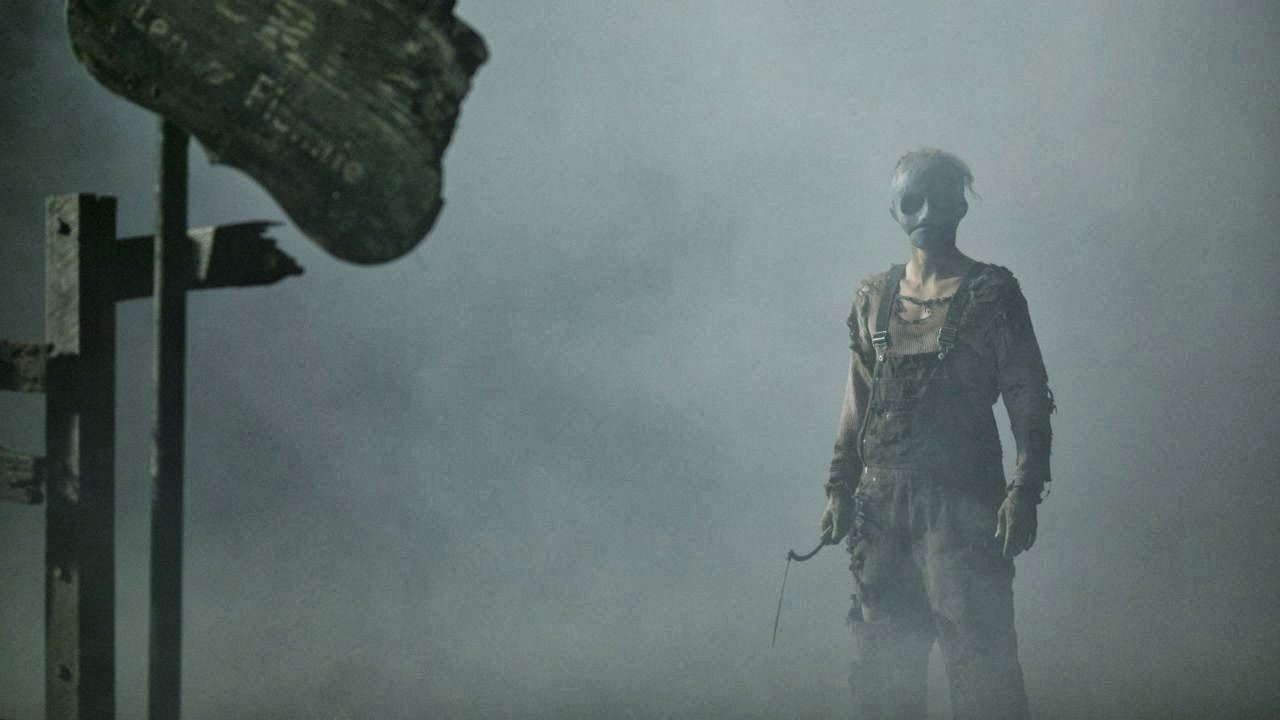
Director Pil-sung Yim’s reimagining of Grimm’s classic “into the woods” horror upends expectations by putting adults in the vulnerable position and giving children the power.

A young man facing impending fatherhood gets into a car accident next to a deep, dark and mysterious woods. He loses himself and is rescued by a lone little girl with a lantern.

From here, Yim’s sumptuous visuals and eerily joyful tone create the unshakable sensation of a dream—one that looks good but feels awful.

As our protagonist unravels the surreal mystery that’s swallowed him, Yim offers a parable—as fairy tales often do—about the value of children. But don’t let that dissuade you from this seriously weird, visually indulgent gem.

4. Black Swan (2010)

Based on the ballet Swan Lake, which itself is inspired by German folktales The White Duck and The Stolen Veil, Black Swan takes a dark turn.

The potent female counterpoint to Darren Aronofsky’s 2008 gem The Wrestler, Black Swan dances on masochism and self-destruction in pursuit of a masculine ideal.

Natalie Portman won the Oscar for a haunting performance—haunting as much for the physical toll the film appeared to take on the sinewy, hallowed out body as for the mind-bending horror.

Every performance shrieks with the nagging echo of the damage done by this quest to fulfill the unreasonable demands of the male gaze: Barbara Hershey’s plastic and needy mother; Winona Ryder’s picture of self-destruction; Mila Kunis’s dangerous manipulator; Vincent Cassel’s other dangerous manipulator.

The mind-bending descent into madness and death may be the most honest look at ballet we’ve ever seen at the movies.

3. The Lure (2015)

Here’s a great Eastern European take on reimagined Eastern European fairy tales, like Norway’s Thale (2012) and Czech Republic’s Little Otik (2000).

Gold (Michalina Olszanska) and Silver (Marta Mazurek) are not your typical movie mermaids, and director Agnieszka Smoczynska’s feature debut The Lure is not your typical – well, anything.

The musical fable offers a vivid mix of fairy tale, socio-political commentary, whimsy and throat tearing. But it’s not as ill-fitting a combination as you might think.

The Little Mermaid is actually a heartbreaking story. Not Disney’s crustacean song-stravaganza, but Hans Christian Andersen’s bleak meditation on the catastrophic consequences of sacrificing who you are for someone undeserving. It’s a cautionary tale for young girls, really, and Lure writer Robert Bolesto remains true to that theme.

The biggest differences between Bolesto’s story and Andersen’s: 80s synth pop, striptease and teeth. At its heart, The Lure is a story about Poland – its self-determination and identity in the Eighties. That’s where Andersen’s work is so poignantly fitting.

https://www.youtube.com/watch?v=vxhi_3hDUPE

2. Der Samurai (2014)

This film is influenced heavily by fairy tales, especially the concept of the big, bad wolf, as are The Company of Wolves (1984), Big Bad Wolves (2013), and Freeway (1996).

Writer/director Till Kleinert’s atmospheric Der Samurai blends Grimm Brother ideas with Samurai legend to tell a story that borders on the familiar but manages always to surprise.

Jakob, a meek police officer in a remote German berg, has been charged with eliminating the wolf that’s frightening villagers. Moved by compassion or longing, Jakob can’t quite make himself accomplish his. But a chance encounter with a wild-eyed stranger wearing a dress and carrying a samurai sword clarifies that the wolf is probably not the villagers’ – or Jakob’s – biggest problem.

Pit Bukowski cuts a peculiar but creepy figure as the Samurai – kind of a cross between Iggy Pop and Ted Levine. As the cat and mouse game gains momentum, it appears the Samurai is here to upend all of Jakob’s inhibitions by eliminating anyone keeping him from embracing to his primal urges.

Kleinert’s sneaky camera builds tension in every scene, and the film’s magnificent sound design echoes with Jakob’s isolation as well as that of the village itself. And though much of the imagery is connected in a way to familiar fairy tales or horror movies, the understated approach gives it all a naturalism that is unsettling.

1. Pan’s Labyrinth (2006)

Guillermo del Toro’s masterpiece is Influenced visually and logically by fairy tales. It takes us to a fairy tale land but is not set on any existing fairy tale, not unlike Argento’s greatest work, Suspiria (1977), and Jee-woon Kim’s brilliant Tale of Two Sisters (2003).

But honestly, there is nothing on earth quite like Pan’s Labyrinth. A mythical cousin to del Toro’s beautiful 2002 ghost story The Devil’s Backbone, Pan’s Labyrinth follows a terrified, displaced little girl who may be the reincarnation of Princess Moanna, daughter of the King of the Underworld. She must complete three tasks to rejoin her father in her magical realm.

A heartbreaking fantasy about the costs of war, the film boasts amazing performances. Few people play villains—in any language—as well as Sergi Lopez, and Doug Jones inspires terror and wonder in two different roles. But the real star here is del Toro’s imagination, which has never had such a beautiful outlet.
Fright Club: Hooray for Hollywood!

The Harvey Weinstein story is a horror film all its own, but there are echoes of it across the genre. When you are desperate to accomplish something and there are those with power who can manipulate your success, victimization is the likely result in horror. We salute the best films that see Hollywood ambition as death and corruption in the making.

5. The Neon Demon (2016)

“Beauty isn’t everything, it’s the only thing.”

So says an uncredited Alessandro Nivola, a fashion designer waxing philosophic in Nicolas Winding Refn’s (Bronson, Drive) nightmarish The Neon Demon.

Jesse (Elle Fanning) is an underaged modeling hopeful recently relocated to a sketchy motel in Pasadena. Will she be swallowed whole by the darker, more monstrous elements of Hollywood?

Hollywood is a soulless machine that crushes people. The world objectifies women, a toxic reality that poisons everyone it touches. Small town girl gets in trouble following her dreams in Tinseltown. There’s nothing new here. To manufacture something, it’s as though Refn replaces fresh ideas with bizarre imagery.

The film is not without its charms. Like Only God Forgives, the longer you wander through this nightmarish landscape, the more outlandish the dream becomes.

And you know what? Keanu Reeves isn’t bad. Huh!

4. Starry Eyes (2014)

Sarah (Alex Essoe) is an aspiring actress in LA and a bit of a delicate flower. She lives in a complex full of other aspiring actors, but she doesn’t hang out with them or participate in their low budget indie circle – they believe she thinks she’s too good for them. Then she auditions for a part, does some things on camera for the audition she regrets, behaves weirdly in the bathroom, and is invited to meet The Producer.

On the one hand, Starry Eyes offers an obvious plot about selling your soul for success, dressed in a cautionary tale about Hollywood. But the writing/directing team of Kevin Kolsch and Dennis Widmyer are much more sly than that. Yes, the insights they provide about the backbiting lowest rungs of the Hollywood ladder abound, but they are far more compassionate than what you routinely see.

Also fascinating is the clever use of the protagonist Sarah – she begins as our empathetic heroine, our vehicle through the daily degradation of trying to “make it.” But the filmmakers have more in store for her than this, and Essoe uncomfortably peels layer after layer of a character that is never fully what we expect.

Look for outstanding, witchy appearances by genre veteran Maria Olsen, as well as a spot-on Louis Dezseran. They will make you uncomfortable.

3. What Ever Happened to Baby Jane? (1962)

Bette Davis and Joan Crawford? Yes, please!

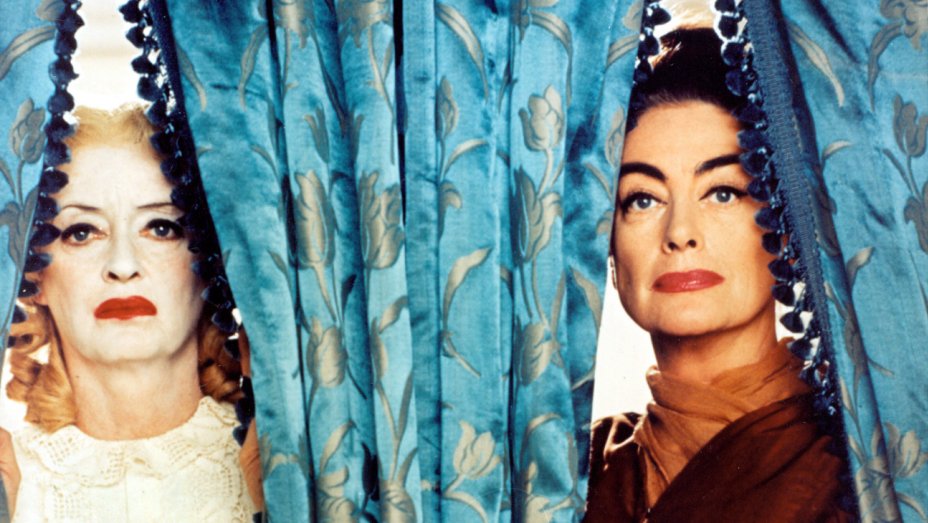
The two then-aging (just barely, if we’re honest) starlets played aging starlets who were sisters. One (Davis’s Jane) had been a child star darling. The other (Crawford’s Blanche) didn’t steal the limelight from her sister until both were older, then Blanche was admired for her skill as an adult actress. Meanwhile, Jane descended into alcoholism and madness. She also seemed a bit lax on hygiene.

Blanche winds up wheelchair bound (How? Why? Is Jane to blame?!) and Jane’s envy and insanity get the better of her while they’re alone in their house.

Famously, the two celebrities did not get along on set or off. Whether true or rumor, the performances suggest a deep, authentic and frightening hatred borne of envy that fuels the escalating tension.

Davis is at her unhinged best in a performance that earned her an Oscar nomination. Crawford pales by comparison (as the part requires), but between the hateful chemistry and the story’s sometimes surprising turns, this is a movie that ages well, even if its characters did not.

2. Shadow of the Vampire (2000)

Not Hollywood – Germany. But actors are putting their fate in the wrong hands for the sake of stardom nonetheless.

E. Elias Merhige revisits F. W. Murnau’s masterpiece Nosferatu with smashing results in Shadow of the Vampire. Wickedly funny and just a little catty, ‘Shadow’ entertains with every frame.

This is the fictional tale of the filming of Nosferatu. Egomaniacal artists and vain actors come together to create Murnau’s groundbreaking achievement in nightmarish authenticity. As they make the movie, they discover the obvious: the actor playing Count Orlok, Max Schreck is, in fact, a vampire.

The film is ingenious in the way it’s developed: murder among a pack of paranoid, insecure backstabbers; the mad artistic genius Murnau directing all the while. And it would have been only clever were it not for Willem Dafoe’s perversely brilliant performance as Schreck. There is a goofiness about his Schreck that gives the otherwise deeply horrible character an oddly endearing quality.

Eddie Izzard doesn’t get the credit he deserves, reenacting the wildly upbeat performance of Gustav von Wagenheim so well. The always welcome weirdness of Udo Kier balances the egomaniacal zeal John Malkovich brings to the Murnau character, and together they tease both the idea of method acting and the dangerous choice of completely trusting a director.

https://www.youtube.com/watch?v=uAn5uLNMmjk&t=10s

1. Rosemary’s Baby (1968)

Again, not Hollywood, New York. But how genius is this movie?

Rosemary’s Baby remains a disturbing, elegant, and fascinating tale, and Mia Farrow’s embodiment of defenselessness joins forces with William Fraker’s skillful camerawork to cast a spell.

Working from Ira Levin’s novel, Roman Polanski spins a tale of mid-run actor Guy Woodhouse (John Cassavetes) who sells his wife’s womb for success. Dude!

Like so many of these films, Rosemary’s Baby sees the Faustian dilemma not in terms of carnal or intellectual pursuits, but the desperate drive for stardom. The fact that Guy doesn’t even have to sacrifice anything himself actually makes the evil that much more frustrating and horrifying.

Of course, Mia Farrow’s embodiment of helplessness and Ruth Gordon’s Oscar-winning turn as rouged busybody Minnie Castavet only give the film more and surprising layers. It’s a masterpiece of atmosphere and storytelling.

Fright Club: Tortured Romance

A lot of horror romances don’t work out. Whether it’s the demon/internet connection hoping to impregnate you, the stalker/voyeur/vampire obsessed with you, or that dreamy girl who turns into a hungry panther every time she’s aroused – finding Mr. or Ms. Right in a horror movie can prove dangerous.

Let’s not even talk about prom dates.

Here are five of our favorite examples of the dire, bloody, terrifying reason that following your heart is not always your best bet.

5. Scream (1996)

Oh, poor Sidney Prescot (Neve Campbell). Her boyfriend Billy (Skeet Ulrich) is practically Johnny Depp levels of hot, but ever since that thing with her mom, Sid can’t get intimate. Plus, Billy Loomis might be the town’s serial killer.

No, love doesn’t turn out great for Sid and Billy. Or for Tatum (Rose McGowan) and Stu (Matthew Lillard). Or for Mr. and Mrs. Prescott. In fact, the only romance that seems to flourish at all ends up giving one guy a terrible limp.

4. It Follows (2014)

Moments after a sexual encounter with a new boyfriend, Jay (Maika Monroe) discovers that she is cursed. He has passed on some kind of entity – a demonic menace that will follow her until it either kills her or she passes it on to someone else the same way she got it.

Writer/director David Robert Mitchell has captured that fleeting yet dragging moment between childhood and adulthood and given the lurking dread of that time of life a powerful image. There is something that lies just beyond the innocence of youth. You feel it in every frame and begin to look out for it, walking toward you at a consistent pace, long before the characters have begun to check the periphery themselves.

Mitchell’s provocatively murky subtext is rich with symbolism but never overwhelmed by it. His capacity to draw an audience into this environment, this horror, is impeccable, and the result is a lingering sense of unease that will have you checking the perimeter for a while to come.

3. Trouble Every Day (2001)

Backed by a plaintive, spooky soundtrack by Tindersticks, Clair Denis’s metaphorical erotic horror examines gender roles, sex and hunger. Denis is one of France’s more awarded and appreciated auteurs, so a one-time voyage into horror should not be dismissed.

A newlywed American couple head to Paris, ostensibly to honeymoon, but Shane (Vincent Gallo) is really there to re-establish connection with old colleagues Coré (Béatrice Dalle) and her husband, Léo (Alex Descas). The three scientists once participated in an experiment, and Shane needs to find them.

The film is a startling work of biologic-horror, but its existential riffs on intimacy, dominance and violence—common fare in the genre—are clearer-headed and more disturbing here than in anything else that swims the same murky waters.

https://www.youtube.com/watch?v=oz5VlZc8tC4

2. Get Out (2017)

Writer/director Jordan Peele crafts an impeccable horror based in social anxiety, articulating something more relevant and powerful than anything horror had undertaken in decades. His is a brilliant take on modern racism, cultural appropriation and horror.

On a less metaphorical level, it’s also a look at a really, really bad romance. Poor Chris (Daniel Kaluuya) agrees to spend the weekend with his girl Rose (Allison Williams) and her parents, meeting the family and participating in a big, rich-white-people party.

But Rose’s relationships don’t turn out so rosy. Just ask Georgina and Walter.

1. Audition (1999)

The prolific director Takashi Miike made more than 70 movies in his first 20 or so years in film. Among the best is Audition, a phenomenally creepy May/December romance gone very, very wrong.

Audition tells the story of a widower convinced by his TV producer friend to hold mock television auditions as a way of finding a suitable new mate. He is repaid for his deception.

Nearly unwatchable and yet too compelling to turn away from, Audition is a remarkable piece of genre filmmaking. The slow moving picture builds anticipation, then dread, then full-on horror.

By the time Audition hits its ghastly conclusion, Miike and his exquisitely terrifying antagonist (Eihi Shina) have wrung the audience dry. She will not be the ideal stepmother.

Fright Club: Prostitutes in Horror

Jack the Ripper carved up prostitutes in real life and in about a million cinematic representations. But Jack’s not the only marauder who recognizes a helpless population when he sees it. Sometimes, though, the prostitute gets the last laugh.

5. The Poughkeepsie Tapes (2007)

John Erick Dowdle’s film is a difficult one to watch. It contains enough elements of found footage to achieve realism, enough police procedural to provide structure, and enough grim imagination to give you nightmares.

Edward Carver (Ben Messmer) is a particularly theatrical serial killer, and the film, which takes you into the police academy classroom, asks you to watch his evolution from impetuous brute to unerring craftsman. This evolution we witness mainly through a library of videotapes he’s left behind for the police to find, along with poor Cheryl Dempsey, (Stacy Chbosky).

While Cheryl’s plight is the most morbidly fascinating, a tricky side plot involving the murders of prostitutes not only clarifies the murderer’s game, but offers some of the most troubling scenes in the film, toying not just with horror but with weird personal anxieties: like the popping of a balloon.

4. Frankenhooker (1990)

Wanna date?

Director/co-writer Frank Henenlotter took the Frankenstein concept in strange, unseemly new ways with this one. Out-of-work loser with a knack for science Jeffrey (James Lorinz) mourns the really messy loss of his beloved Elizabeth (Patty Mullen) in his own way. Grief is like that—personal. And when you’re really grieving, a project can help you get past that. It focuses the mind.

Jeffrey rebuilds Elizabeth with the help of a lot of body parts made available to him via NYC prostitutes. They’re not volunteered, and Jeffrey is really conflicted about that, but this isn’t what makes him a bad person. It’s the fact that he never really accepted Elizabeth for who she was, or he’d be a lot less picky about these parts.

Jeffrey learns his lesson—kind of—in a film that is unusually sweet given the topic. It’s funny, gross, wrong-headed and more than a little stupid as well.

3. We Are What We Are (2010)

Jorge Michel Grau’s horror about the disposable population of Mexico City centers on a family with a ritual to fulfill. Too bad the patriarch’s death leaves no one but novices to put dinner on the table.
The fact that this family is a cannibal clan is a brilliant avenue into the sociopolitical theme of a society feeding off the poor, but Grau’s perspective offers a little bit of optimism in its own, bloody way. The cops are useless, the system is ridiculous, but those very people who have been disregarded by society are not as helpless as you might thing.

The family underestimates a society it deems beneath them, a group of people so low they are not even fit to kill. What Grau does with this circle of prostitutes is like a Pat Benatar video done right.

https://www.youtube.com/watch?v=xFO_qYqvnZo

2. American Psycho (2000)

Mary Harron’s near-perfect horror comedy send-up of the Reagan era benefits from a number of things, including maybe the best casting in cinema history. This cast and Harron hit every note perfectly, offering a film that is as bloody and alarming as it can be, with every re-watch an opportunity to see more and more of its comic genius.

And of the many memorable moments in the film, the line most likely to be quoted is this: Don’t just stare at it. Eat it.

There is a lot of soullessness afoot in American Psycho, and in that line, but not in Cara Seymour’s performance. As Christie—Patrick Bateman’s favorite prostitute, God help her—she gives this film its first truly empathetic character. She is the one character you root for, the one whose death you don’t want to see happen. When Christie is lured back to Patrick’s apartment for a second round, for the first time in the film, you find yourself feeling sad for someone, finding the empathy Patrick so utterly lacks.

1. Peeping Tom (1960)

Director Michael Powell’s film broke a lot of ground and nearly ended his film career. People tend to react badly to horror movies that unnerve them, which is really odd given that this is the entire point of the genre. Peeping Tom pissed everybody off, maybe because—like Michael Haneke’s films Funny Games—Peeping Tom implicates you in the horror.

Mark (Karlheinz Bohm) had a difficult childhood, developing a bit of a voyeuristic hobby to help him cope. He starts off with prostitutes, filming them, capturing their terror as he kills them. He’s a voyeur, but who can throw stones? Didn’t every one of us who’s ever watched this film— or any other horror movie, for that matter—sign up to do exactly what Mark was doing?

Bohm’s great success is in making Mark unsettlingly sympathetic. Powell’s is in using the audience’s instincts against us. Bohm makes us feel bad for the villain, Powell makes us relate to the villain. No wonder people were pissed.

Fright Club: Murderous Mentors

Everybody needs a hand now and then, a little guidance. Everybody, even cold-blooded killers, because murder can be really difficult to pull off. You can’t just google a how-to. I mean, you probably can, but where’s the personal connection? The relationship? The trust.

It’s all here, in our list of the best films focusing on murderous mentors.

5. Addiction (1995)

Like most of director Abel Ferrara’s work, the film is an overtly stylish, rhythmically urban tale of brutal violence, sin and redemption (maybe). Expect drug use, weighty speeches and blood in this tale of a doctoral candidate in philosophy (Lili Taylor) over-thinking her transformation from student to predator.

Taylor cuts an interesting figure as Kathleen, a very grunge-era vampire in her jeans, Doc Martens and oversized, thrift store blazer. She’s joined by an altogether awesome cast—Annabella Sciorra, Edie Falco and Christopher Walken among them.

Ferrara parallels Kathleen’s need for blood to drug addiction, but uses her philosophy jibberish to plumb humanity’s historical bloodlust. In monologues and voiceovers, Taylor waxes philosophic as she comes to terms with her own evil nature, and here is where the film nearly implodes. It begins to feel like Ferrara’s real warning is that philosophical pretentiousness spreads like a disease. But just when you are tempted to give up on the pomposity, Walken appears as Kathleen’s vampiric mentor. Thank you.

He injects the film with random violence and nuttiness, as is his way, and Ferrara pays you for your patience and thoughtfulness with viscera aplenty before settling on the uneasy answer that there is no excusing your own bad behavior.

4. The Poughkeepsie Tapes (2007)

John Erick Dowdle’s film is a difficult one to watch. It contains enough elements of found footage to achieve realism, enough police procedural to provide structure, and enough grim imagination to give you nightmares.

Edward Carver (Ben Messmer) is a particularly theatrical serial killer, and the film, which takes you into the police academy classroom, asks you to watch his evolution from impetuous brute to unerring craftsman. This evolution we witness mainly through a library of videotapes he’s left behind—along with poor Cheryl Dempsey (Stacy Chbosky)—for the police to find.

Cheryl is Carver’s masterpiece, the one victim he did not kill but instead reformed as his protégé. It’s easily the most unsettling element in a film that manages to shake you without really showing you anything.

3. The Last Horror Movie (2003)

A clever concept handled very craftily, The Last Horror Movie is found footage in that we, the audience, have found this surprising bit of footage recorded over the VHS tape we are apparently watching. What serial killer Max (a top-notch Kevin Howarth) has done, you see, is made a documentary of his ghastly habits and shared them with an audience that has shown, by virtue of the movie it intended to rent just now, its predilection for something grisly.

Like Edward in The Poughkeepsie Tapes, Max wants to pass on his expertise to a protégé. (There’s a reason the audience isn’t quite enough.) He hires an assistant (Mark Stevenson), who helps with the documentary Max is making. The assistant shoots the footage. Max tells the camera, step by step, what he’s doing, why he’s doing it, how he came to the decision. It’s a how-to, really, and the assistant is supposed to be paying attention.

But when push comes to shove, will the assistant have the stomach for it?

2. Behind the Mask: The Rise of Leslie Vernon (2006)

Writer/director Scott Glosserman’s film takes us to Glen Echo, Maryland. It’s a small town, exactly the kind of town that would be perfect for a slasher, and Leslie Vernon is just the villain Glen Echo doesn’t know it’s aching for.

This is a mockumentary and an affectionate ode to slashers. It pulls the concept of a documentary crew participating in the crime (a la Man Bites Dog), builds on the expected steps of every slasher film (Scream), and yet somehow feels fresh and fun.

One reason is Nathan Baesel as Leslie. He’s a charming, self-deprecating joy.

The second reason is the whole “training” concept. By way of the documentary being filmed, we’re invited into the hard-core training that goes into becoming the next immortal slasher villain. Not just cardio—although Leslie is very clear on the need for cardio—but all the little skills you can’t just pick up on your own. That’s why Leslie is blessed to have the help of a committed community who wants to see him succeed, including Eugene (Scott Wilson), a retired slasher himself.

Clever, funny and surprisingly adorable, this one’s a keeper.

1. Henry: Portrait of a Serial Killer (1986)

Henry offers an unforgivingly realistic portrayal of evil. Michael Rooker is brilliant as serial killer Henry (based on real-life murderer Henry Lee Lucas). We follow him through his humdrum days of stalking and then dispatching his prey, until he finds his own unwholesome kind of family in the form of buddy Otis and his sister, Becky.

“You mean to tell me you’ve never killed anybody before?” a disdainful Henry asks Otis, and the mentoring relationship is born. Otis really takes to it, too.

What’s diabolically fascinating is the workaday, white trash camaraderie of the psychopath relationship in this film, and the grey areas where one crazy killer feels the other has crossed some line of decency.

Rooker’s performance unsettles to the bone, flashing glimpses of an almost sympathetic beast now and again, but there’s never a question that he will do the worst things every time, more out of boredom than anything.

It’s a uniquely awful, absolutely compelling piece of filmmaking.

https://www.youtube.com/watch?v=IU3P6WXzvXU

Fright Club: Best Horror of the First Half of 2018

What a killer year 2018 has in horror been already! One mega-blockbuster, another big indie hit, loads of fun stuff big and small. Whether you think the great Annihilation and The Endless are horror, whether you believe unhinged Mom and Dad-style Nic Cage is the best kind of Nic Cage, and no matter where you stand on The Strangers: Prey at Night, we’re here to has it out.

It’s time we count down the best of the best so far this year, and we are thrilled to have Senior Filmmaker Correspondent Jason Tostevin join us, as is tradition, to argue over what is and is not horror, what is and is not great. Plus, we sing!

5. The Ritual

David Bruckner has entertained us with some of the best shorts in horror today, including work from V/H/S, Southbound, and one of our favorites, The Signal. Directing his feature debut in The Ritual, Bruckner takes what feels familiar, roots it in genuine human emotion, takes a wild left turn and delivers the scares.

Five friends decide to mourn a tragedy with a trip together into the woods. Grief is a tricky, personal, often ugly process and as they work through their feelings, their frustration quickly turns to fear as they lose themselves in a foreign forest where danger lurks.

The film works for a number of reasons, but its greatest triumph is in making the woods scary again. That environment has become such a profound cliché in horror that it is almost impossible to make it feel fresh, but there is an authenticity to the performances, the interaction among the characters, and the frustration and fear that grounds the horror. And then there is horror—intriguing, startling, genuinely frightening horror. Yay!

4. Unsane

Sawyer Valentini (Claire Foy—brittle, unlikeable and amazing) is living your worst nightmare. After moving 400 miles to escape her stalker, she begins seeing him everywhere. She visits an insurance-approved therapist in a nearby clinic and quickly finds herself being held involuntarily for 24 hours.

After punching an orderly she mistakes for her stalker, that 24 hours turns into one week. And now she’s convinced that the new orderly George is, in fact, her stalker David (Joshua Leonard—cloying, terrifying perfection).

After laying bare some terrifying facts about our privatized mental health industry, Steven Soderbergh structures this critique with a somewhat traditional is-she-or-isn’t-she-crazy storyline. Anyone who watches much horror will recognize that uneasy line: you may be here against your will, but that doesn’t mean you shouldn’t be here.

And the seasoned director of misdirection knows how to toy with that notion, how to employ Sawyer’s very real damage, touch on her raw nerve of struggling to remain in control of her own life only to have another’s will forced upon her.

He relies on familiar tropes to say something relevant and in doing so creates a tidy, satisfying thriller.

3. Revenge

The rape-revenge film is a tough one to pull off. Even in the cases where the victim rips bloody vengeance through the bodies of her betrayers, the films are too often titillating. Almost exclusively written and directed by men for a primarily male audience, the comeuppance angle can be so bent by the male gaze that the film feels more like an additional violation.

Well, friends, writer/director Coralie Fargeat changes all that with Revenge, a breathless, visually fascinating, bloody-as-hell vengeance flick that repays the viewer for her endurance. (His, too.)

Fargeat’s grasp of male entitlement and the elements of a rape culture are as sharp as her instincts for visual storytelling. Wildly off-kilter close-ups sandwich gorgeous vistas to create a dreamlike frame for the utterly brutal mess of a film unfolding.

Symbol-heavy but never pretentious or preachy, the film follows a traditional path—she is betrayed, she is underestimated, she repays her assailants for their toxic masculinity. But between Fargeat’s wild aesthetic, four very solid performances, and thoughtful yet visceral storytelling, the film feels break-neck, terrifying and entirely satisfying.

2. A Quiet Place

Damn. John Krasinski. That big, tall guy, kind of doughy-faced? Married to Emily Blunt? Dude can direct the shit out of a horror movie.

Krasinski plays the patriarch of a close-knit family trying to survive the post-alien-invasion apocalypse by staying really, really quiet. The beasts use sound to hunt, but the family is prepared. The cast, anchored by Krasinski’s on-and-off-screen wife Emily Blunt is amazing. That you may expect.

What you may not expect is Krasinski’s masterful direction: where and when the camera lingers or cuts away, how often and how much he shows the monsters, when he decides the silence will generate the most dread and when he chooses to let Marco Beltrami’s ominous score do that work for him.

It’s smart in the way it’s written, sly in its direction and spot-on in its ability to pile on the mayhem in the final reel without feeling gimmicky or silly.

1. Hereditary

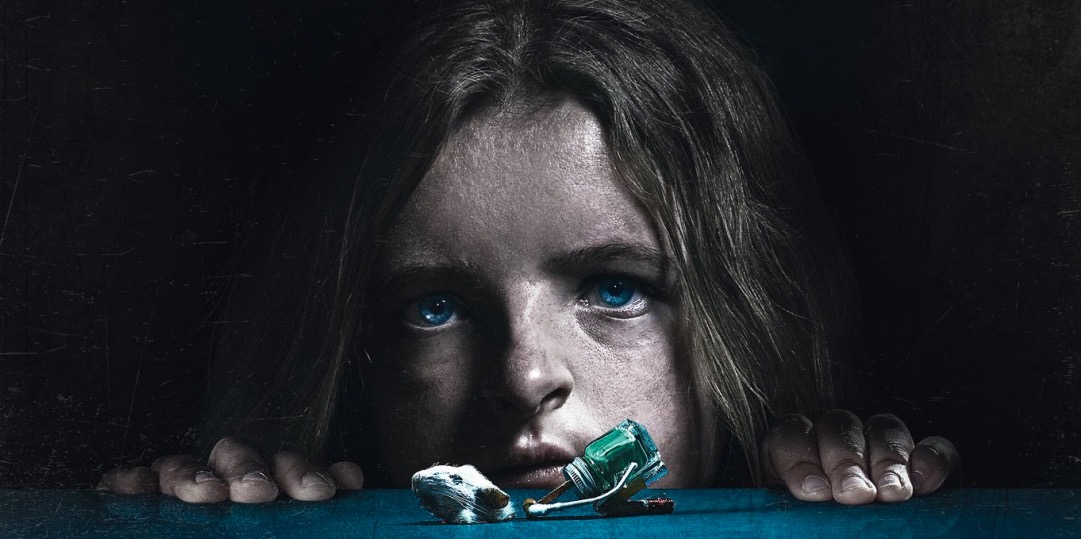
Grief and guilt color every somber, shadowy frame of writer/director Ari Aster’s unbelievably assured feature film debut, Hereditary.

With just a handful of mannerisms, one melodic clucking noise, and a few seemingly throwaway lines, Aster and his magnificent cast quickly establish what will become nuanced, layered human characters, all of them scarred and battered by family.

Art and life imitate each other to macabre degrees while family members strain to behave in the manner that feels human, seems connected, or might be normal. What is said and what stays hidden, what’s festering in the attic and in the unspoken tensions within the family, it’s all part of a horrific atmosphere meticulously crafted to unnerve you.

Aster takes advantage of a remarkably committed cast to explore family dysfunction of the most insidious type. Whether his supernatural twisting and turning amount to metaphor or fact hardly matters with performances this unnerving and visual storytelling this hypnotic.

Fright Club: Realism in Horror

Part of the fun of horror is to be able to separate yourself from the images onscreen. The old “this could never really happen” thing helps us sleep at night. But there are some films that rob you of that safety net, burrowing under your skin and into your subconscious specifically because you are convinced that it could definitely happen—maybe it already has.

Today we salute realism in horror with five films to give you nightmares.

5. Nothing Bad Can Happen (2001)

This film is tough to watch, and the fact that it is based on a true story only makes the feat of endurance that much harder. But writer-director Katrin Gebbe mines this horrific tale for a peculiar point of view that suits it brilliantly and ensures that it is never simply a gratuitous wallowing in someone else’s suffering.

Tore (Julius Feldmeier) is an awkward teen in Germany. His best friend is Jesus. He means it. In fact, he’s so genuine and pure that when he lays his hands on stranded motorist Benno’s (Sascha Alexander Gersak) car, the engine starts.

Thus begins a relationship that devolves into a sociological exploration of button-pushing evil and submission to your own beliefs. Feldmeier is wondrous—so tender and vulnerable you will ache for him. Gersak is his equal in a role of burgeoning cruelty. The whole film has a, “you’re making me do this,” mentality that is hard to shake. It examines one peculiar nature of evil and does it so authentically as to leave you truly shaken.

4. Open Water (2003)

Jaws wasn’t cinema’s only powerful shark horror. In 2003, young filmmaker Chris Kentis’s first foray into terror is unerringly realistic and, therefore, deeply disturbing.

From the true events that inspired it to one unreasonably recognizable married couple, from superbly accurate dialog to actual sharks, Open Water’s greatest strength is its unsettling authenticity. Every element benefits from Chris Kentis’s control of the project. Writer, director, cinematographer and editor, Kentis clarifies his conception for this relentless film, and it is devastating.

A couple on vacation (Blanchard Ryan and Daniel Travis) books a trip on a crowded, touristy scuba boat. Once in the water, they swim off on their own – they’re really a little too accomplished to hang with the tourists. And then, when they emerge from the depths, they realize the boat is gone. It’s just empty water in every direction.

Now, sharks aren’t an immediate threat, right? I mean, tourist scuba boats don’t just drop you off in shark-infested waters. But the longer you drift, the later it gets, who knows what will happen?

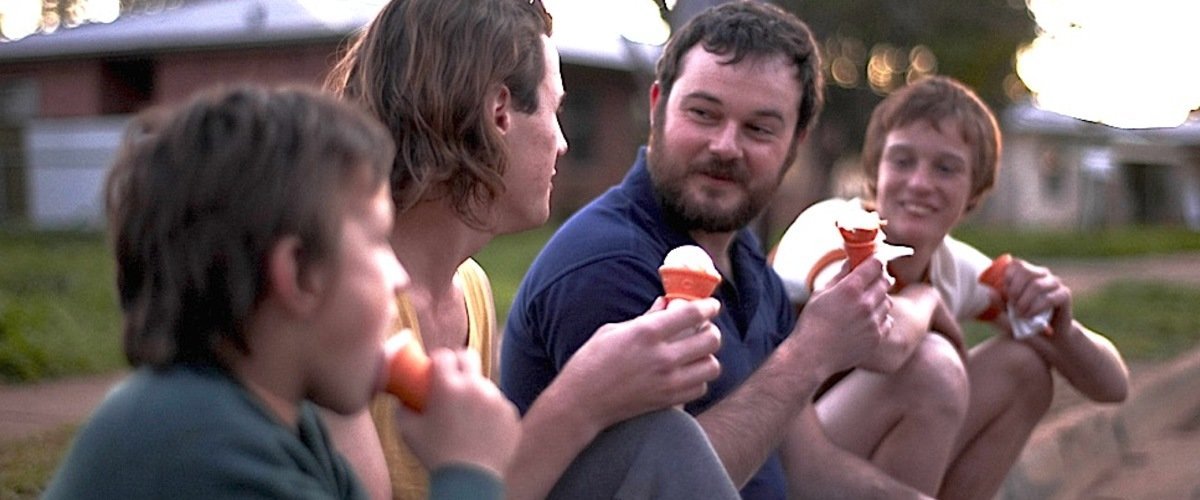
3. The Snowtown Murders (2011)

John Bunting tortured and killed eleven people during his spree in South Australia in the Nineties. We only watch it happen once on film, but that’s more than enough.

Director Justin Kurzel seems less interested in the lurid details of Bunting’s brutal violence than he is in the complicated and alarming nature of complicity. Ironically, this less-is-more approach may be why the movie leaves you so shaken.

An unflinching examination of a predator swimming among prey, Snowtown succeeds where many true crime films fail because of its understatement, its casual observational style, and its unsettling authenticity. More than anything, though, the film excels due to one astounding performance.

Daniel Henshall (also in Babadook) cuts an unimpressive figure on screen – a round faced, smiling schlub. But he brings Bunting an amiability and confrontational fearlessness that provides insight into what draws people to a sadistic madman.

https://www.youtube.com/watch?v=qcoCTA2IZ7c

2. Hounds of Love (2016)

Driven by a fiercely invested and touchingly deranged performance from Emma Booth, Hounds of Love makes a subtle shift from horrific torture tale to psychological character study. In 108 grueling minutes, writer/director Ben Young’s feature debut marks him as a filmmaker with confident vision and exciting potential.

It is the late 1980s in Perth, Australia, and at least one young girl has already gone missing when the grounded Vicki (Ashleigh Cummings) sneaks out her bedroom window to attend a party. This isn’t nearly as dumb a move as is accepting a ride from Evie White (Booth) and her husband John (Stephen Curry).

As the couple dance seductively and drink to celebrate, Young disturbingly conveys the weight of Vicki’s panicked realization that she is now their captive. It is just one in a series of moments where Young flexes impressive chops for visual storytelling, utilizing slo-motion, freeze frame, patient panning shots and carefully chosen soundtrack music to set the mood and advance the dreadful narrative without a spoken word.

And then, just when you might suspect his film to wallow in the grisly nature of the Whites’ plan for Vicki, Young turns to dialog sharp enough to upend your expectations, and three vivid characters are crafted in the suffocating dread of the White’s neighborhood home.

No doubt, events get brutal, but never without reminders that Young is a craftsman. Subtle additions, such as airplanes flying freely overhead to contrast with Vicki’s captivity, give Hounds of Love a steady dose of smarts, even as it’s shaking your core.

https://www.youtube.com/watch?v=UNEurXzvHqE

1. Texas Chainsaw Massacre (1974)

Not everyone considers The Texas Chainsaw Massacre a classic. Those people are wrong. Perhaps even stupid.

Tobe Hooper’s camera work, so home-movie like, worked with the “based on a true story” tag line like nothing before it, and the result seriously disturbed the folks of 1974. It has been ripped off and copied dozens of times since its release, but in the context of its time, it was so absolutely original it was terrifying.

Hooper sidestepped all the horror gimmicks audiences had grown accustomed to – a spooky score that let you know when to grow tense, shadowy interiors that predicted oncoming scares – and instead shot guerilla-style in broad daylight, outdoors, with no score at all. You just couldn’t predict what was coming.

He dashes your expectations, making you uncomfortable, as if you have no idea what you could be in for. As if, in watching this film, you yourself are in more danger than you’d predicted.

But not more danger than Franklin is in, because Franklin is not in for a good time.

So, poor, unlikeable Franklin Hardesty, his pretty sister Sally, and a few other friends head out to Grampa Hardesty’s final resting place after hearing the news of some Texas cemeteries being grave-robbed. They just want to make sure Grampy’s still resting in peace – an adventure which eventually leads to most of them making a second trip to a cemetery. Well, what’s left of them.

http://www.youtube.com/watch?v=eY4ldz615FA

Fright Club: Best Horror Endings, Part 2

Thanks to S.A. Bradley of Hellbent for Horror for joining us to finish out our look at the best endings in horror movie history. A tough list to finalize, for sure, this one hits on some of the most brutal and memorable parting shots on film.

5. Kill List (2011)

Ben Wheatley’s diabolical 2011 indie slides from grim Brit crime thriller into something far more sinister.

Hitman Jay (a volcanic Neil Maskell) is wary to take another job after the botched Kiev assignment, but his bank account is empty and his wife Shel (an also eruptive MyAnna Buring) has become vocally impatient about carrying the financial load. But this new gig proves to be seriously weird.

The final act offers something simultaneously fitting and surprising. Wheatley’s climax recalls a couple of other horror films, but what he does with the elements is utterly and bewilderingly his own.

4. The Mist (2007)

If there’s one thing a successful Stephen King adaptation needs, it’s a writer/director who knows how to end a story. For all of King’s many strengths, ending his tale is no a strong suit.

Frank Darabont has certainly proven to have a knack for King’s source material, having helmed among the most successful and beloved films based on King’s books. But with The Mist, he outdid himself.

Thomas Jane plays a writer who, along with his young son, finds himself trapped in a grocery store when an opening in the space/time continuum allows giant, bloodthirsty creatures into New England. What begins as a wonderful creature feature turns into a terrifying Lord of the Flies before setting us up with a gut punch of utter, devastating perfection in a horror film ending.

https://www.youtube.com/watch?v=ktqNNsVJhUE

3. Carrie (1976)

Another excellent King adaptation, Brian De Palma’s Carrie streamlines King’s sprawling ending to focus our attention where it will do the most damage.

And yes, the entirety of Act 3 is magnificent, but De Palma started something with those final, lingering images. He goes back to the cheese-cloth fuzziness of the earliest moments of the film as Sue Snell (this is really all your fault, Sue Snell!) glows with goodness and self-sacrifice. Only she truly loved poor, misunderstood Carrie.

Sue carries white flowers to the unholy ground where Carrie White lies.

And BLAM! De Palma has invented a new and forever mimicked horror movie ending.

2. Martyrs (2008)

Holy shit. This film is a brilliant and brutal test of endurance.

Writer/director Pascal Laugier’s mystifying sense of misdirection shares the aching, dysfunctional love of two best friends as one descends into madness. But that is not the point.

A couple of abrupt story turns later and we learn the point of the film and the film’s title. That’s about the time we meet Mademoiselle (Cahterine Begin, perfect).

And after ninety minutes of dread and terror, the climax Pascal and Mademoiselle have in store for you may not be satisfying, but it is perfect.

1. Night of the Living Dead (1968)

From the brightly lit opening cemetery sequence to the paranoid power struggle in the house to the devastating closing montage, Night of the Living Dead teems with the racial, sexual and political tensions of its time. An unsettlingly relevant George A. Romero knew how to push societal panic buttons.

As the first film of its kind, the lasting impact of this picture on horror cinema is hard to overstate. His inventive imagination created the genre and the monster from the ground up.

Still, the shrill sense of confinement, the danger of one inmate turning on another, and the unthinkable transformation going on in the cellar build to a startling climax – one that utterly upends expectations – followed by the kind of absolutely genius ending that guarantees the film’s eternal position in the annals of horror cinema.

https://www.youtube.com/watch?v=X6IDNqHuHmE

Fright Club: Workplace Horror

You think your job sucks? Dude, this list of movies will make you thank the lord above for your crappy gig.

5. Vampire’s Kiss (1988)

Sure, Nicolas Cage is a whore, a has-been, and his wigs embarrass us all. But back before The Rock (the film that turned him), Cage was always willing to behave in a strangely effeminate manner, and perhaps even eat a bug. He made some great movies that way.

Peter Lowe (pronounced with such relish by Cage) believes he’s been bitten by a vampire (Jennifer Beals) during a one night stand. It turns out, he’s actually just insane. The bite becomes his excuse to indulge his self-obsessed, soulless, predatory nature for the balance of the running time.

Cage gives a masterful comic performance in Vampire’s Kiss as a narcissistic literary editor who descends into madness. The actor is hilarious, demented, his physical performance outstanding. The way he uses his gangly mess of limbs and hulking shoulders inspires darkly, campy comic awe. And the plastic teeth are awesome.

Peter may believe he abuses his wholesome editorial assistant Alva (Maria Conchita Alonso) with sinister panache because he’s slowly turning into a demon, but we know better.

4. Mayhem (2017)

You know that nice lady at work who gets bronchitis every time she flies, then she coughs and hacks and spews DNA all over the office?

Let’s say you have issues with that kind of office contamination. And with office politics. And with your boss, her boss, and the way you’ve basically given up everything that makes you feel alive and happy for this stupid job you hate where germs are everywhere…

Wouldn’t it be cathartic to explode, right there, in the middle of everything, righteously and with no repercussions?

The film is an exercise in workplace catharsis, and a pretty fun one. It’s far superior to other recent attempts at office-bound carnage The Belko Experiment and Bloodsucking Bastards, partly because Lynch has a crisp sense of pace and knack for comedy.

Mayhem, the new film from director Joe Lynch, is just that emotional release. It’s fun. Especially if you’ve ever wanted to kill your boss.

https://www.youtube.com/watch?v=bhTDq2t6UpM

3. Severance (2006)

Genuinely funny and exhaustingly brutal, Christopher Smith’s British import Severance offers a mischievous team-building exercise in horror. A handful of would-be execs for global weapons manufacturer Palisade Defense are misled and slaughtered in what they believe to be a mandatory weekend excursion in Hungary to build corporate camaraderie.

Smith and co-writer James Moran’s wickedly insightful script mocks corporate culture as Smith’s direction pays homage to the weirdest assortment of films. The result is an uproarious but no less frightening visit to an area of the world that apparently scares the shit out of us: Eastern Europe. (Think Hostel, The Human Centipede, Borat.)

An epically watchable flick, Severance boasts solid performances, well-placed bear traps and landmines, a flamethrower and an excellent balance of black humor and true horror. To say more would be to give too much away, but rest assured that with every scene Smith and crew generate palpable tension. It erupts with equally entertaining measure in either a good, solid laugh or in a horrible, disfiguring dose of horror. How awesome is that?!

https://www.youtube.com/watch?v=OQ4e1558QY0

2. Compliance (2012)

Compliance is an unsettling, frustrating and upsetting film about misdirected and misused obedience. It’s also one of the most impeccably made and provocative films of 2012 – a cautionary tale that’s so unnerving it’s easier just to disbelieve. But don’t.

Writer/director Craig Zobel – who began his career as co-creator of the brilliant comic website Homestar Runner (so good!) – takes a decidedly dark turn with this “based-on-true-events” tale. It’s a busy Friday night at a fast food joint and they’re short staffed. Then the police call and say a cashier has stolen some money from a customer’s purse.

A Milgram’s experiment come to life, the film spirals into nightmare as the alleged thief’s colleagues agree to commit increasingly horrific deeds in the name of complying with authority.

Zobel remains unapologetically but respectfully truthful in his self-assured telling. He doesn’t just replay a tragic story, he expertly crafts a tense and terrifying movie. With the help of an anxious score, confident camera work, and a superb cast, Zobel masterfully recreates a scene that’s not as hard to believe as it is to accept.

1. American Psycho (2000)

A giddy hatchet to the head of the abiding culture of the Eighties, American Psycho represents the sleekest, most confident black comedy – perhaps ever. Director Mary Harron trimmed Bret Easton Ellis’s novel, giving it unerring focus. More importantly, the film soars due to Christian Bale’s utterly astonishing performance as narcissist, psychopath, and Huey Lewis fan Patrick Bateman.

There’s an elegant exaggeration to the satire afoot. Bateman is a slick, sleek Wall Street toady, pompous one minute because of his smart business cards and quick entrance into posh NYC eateries, cowed the next when a colleague whips out better cards and shorter wait times. For all his quest for status and perfection, he is a cog indistinguishable from everyone who surrounds him. The more glamour and flash on the outside, the more pronounced the abyss on the inside. What else can he do but turn to bloody, merciless slaughter? It’s a cry for help, really.

Harron’s send-up of the soulless Reagan era is breathtakingly handled, from the set decoration to the soundtrack, but the film works as well as a horror picture as it does a comedy. Whether it’s Chloe Sevigny’s tenderness as Bateman’s smitten secretary or Cara Seymour’s world-wearied vulnerability, the cast draws a real sense of empathy and dread that complicate the levity. We do not want to see these people harmed, and as hammy as it seems, you may almost call out to them: Look behind you!

As solid as this cast is, and top to bottom it is perfect, every performance is eclipsed by the lunatic genius of Bale’s work. Volatile, soulless, misogynistic and insane, yet somehow he also draws some empathy. It is wild, brilliant work that marked a talent preparing for big things.

Fright Club: Mothers and Daughters in Horror

The relationship between mothers and daughters informs an awful lot of great horror films from The Exorcist to Black Swan. Frightmare suggests that becoming your mother is inescapable. The Woman tells us that if we can’t raise our daughters right, a more alpha mom might show up and do it for us. The Ring and Mom and Dad remind us that moms aren’t perfect. They have bad days. Sometimes they may want to drop you down a well.

We focus on five horror films where that relationship between mother and daughter informs and impacts the storyline in a substantial way.

5. The Bad Seed (1956)

The minute delicate Christine’s (Nancy Kelly) husband leaves for his 4-week assignment in DC, their way-too-perfect daughter begins to betray some scary behavior. The creepy handyman Leroy (Henry Jones) has her figured out – he knows she’s not as perfect as she pretends.

You may be tempted to abandon the film in its first reel, feeling as if you know where it’s going. You’ll be right, but there are two big reasons to stick it out. One is that Bad Seed did it first, and did it well, considering the conservative cinematic limitations of the Fifties.

Second, because director Mervyn LeRoy’s approach – not a single vile act appears onscreen – gives the picture an air of restraint and dignity while employing the perversity of individual imaginations to ramp up the creepiness.

Enough can’t be said about Patty McCormack. There’s surprising nuance in her manipulations, and the Oscar-nominated 9-year-old handles the role with both grace and menace.

4. Hounds of Love (2016)

It is the late 1980s in Perth, Australia, and at least one young girl has already gone missing when the grounded Vicki (Ashleigh Cummings) sneaks out her bedroom window to attend a party. She doesn’t like staying with her mom, who left her dad and ruined the family and her life.

So she sneaks out, which isn’t nearly as dumb a move as is accepting a ride from Evie White (Emma Booth) and her husband, John (Stephen Curry).

Writer/director Ben Young’s amazing feature debut works on so many levels and showcases a master visual storyteller almost as brilliantly as it shines the light on three phenomenal performances.

What is it that may finally undo the evil the Whites have planned? One mother’s relentless devotion to her daughter and another mother’s sudden, stabbing empathy.

https://www.youtube.com/watch?v=UNEurXzvHqE

3. Eyes of My Mother (2016)

Francisca’s mother had been an eye surgeon back in Portugal.

“We used to do dissections together. She always hoped I’d be a surgeon one day.”

Though Mom appears only in Act 1 of writer/director Nicolas Pesce’s modern horror masterpiece Eyes of My Mother, her presence echoes throughout the lonely farmhouse Francesca rarely leaves.

Yes, the skills her mother imparted coupled with the trauma Francesca faced bleeds together to create a character whose splintered psyche keeps her from seeing that she’s taking some extreme measures to cure her lonliness.

This is one of the most beautifully filmed horror movies ever made, and as impeccable as the cinematography, the sound is even more important and magnificent. Together with restrained performances and jarring images, Eyes of My Mother is a film that sticks around even after it’s gone. Like a mom.

2. The Witch (2015)

There is a lot going wrong for poor Thomasin (Anya Taylor-Joy). But it all starts when the baby goes missing on her watch. Her mother (Kate Dickie) never forgives her for it and soon Mother is finding faults with Thomasin, making accusations that even Father, who knows better, won’t defend.

For The Witch to work, for us to tentatively hope that Black Philip talks back, Thomasin has to basically lose everything, and it all starts with her mother’s love and respect. Soon her mother’s bitterness turns to competition for the affection of the menfolk, accusations of all sorts of wrongoing, all of which spirals out of control until Thomasin has no one left, no one who will love her and look after her, except that goat.

Robert Egger’s unerringly authentic deep dive into radicalization, gender inequality and isolation is all sparked with one act that irrevocably ruptures one relationship.

1. Carrie (1976)

There is nobody quite like Margaret White. Oscar nominee Piper Laurie saw the zealot for all her potential and created the greatest overbearing mother film has ever seen. (We never did see Mrs. Bates, did we?)

Sissy Spacek (also Oscar nominated for her performance) is the perfect balance of freckle-faced vulnerability and awed vengeance. Her simpleton characterization would have been overdone were it not for Laurie’s glorious, evil zeal. It’s easy to believe this particular mother could have successfully smothered a daughter into Carrie’s stupor.

De Palma and screenwriter Lawrence D. Cohen streamline King’s meandering finale. Wise, because once the dance drama is done, we just want to find out what happens at home, and Mrs. White doesn’t disappoint.