Tag Archives: Hope Madden

Plumbing Psyches, Having Tea

The Ghoul

by Hope Madden

The Ghoul opens on a crime scene. One detective leads another through the facts of the crime, which appear simple enough until you work in the bit about the victims walking toward the perpetrator even after being repeatedly shot.

Are we watching a cop drama, supernatural thriller or meditation on mental illness? Actor turned writer/director Gareth Tunley keeps you guessing.

As Chris (Tom Meeten), working with criminal profiler Kathleen (Alice Lowe), goes undercover to investigate a therapist who may be hiding a lead, Tunley’s story takes a series of mysterious turns.

In his feature debut behind the camera, Tunley’s instincts for leading and misleading pay off. His film moves quite slowly, wandering into fascinating territory now and again as it forever turns itself inside and out.

To say much more about the plot would rob it of its curious power, but the writing, in particular, deserves attention for accomplishing something few scripts manage.

An agile, believable lead performance helps.

Meeten’s quiet, often heartbreaking turn grounds the film, while Rufus Jones and Geoffrey McGivern, as patient and psychologist, respectively, offset the quiet with bright bursts of energy.

Tunley offers two equally viable interpretations for his film, echoing events and phrases to create a structure that mirrors the mystery unfolding. Reminiscent at times of memorable (if underseen) indies Tony, Locke and They Look Like People, The Ghoul still manages to tell its own peculiar and poignant story.

Verdict-3-0-Stars

Throwing Stones

The Glass Castle

by Hope Madden

I was excited about the screen adaptation of Jeannette Walls’s memoir The Glass Castle. Hers is a well-told, often jaw-dropping story of a most unusual family. Her telling is neither sentimental nor leading; she is both clear-eyed and forgiving of an upbringing that is eccentric at best, criminally negligent at worst.

Clearly destined for big screen treatment, the adaptation appeared to fall into the right hands considering the director – Destin Daniel Cretton, of the underseen gem Short Term 12 – and the cast.

Oscar winner and fellow Short Term 12 alum Brie Larson takes lead responsibilities as the adult Walls, while her parents are played by the always wonderful Woody Harrelson and Naomi Watts.

That’s a pedigree right there. So what went wrong?

A lot – and the release date was the first clue.

August tends to be a dumping ground. If it didn’t have “summer blockbuster” written on it and it’s not likely to bait Oscar voters, it comes out now.

Presumably, Glass Castle was originally conceived as Oscar bait, and the performances are wonderful, to be sure. It’s really Cretton, along with Andrew Lanham, who adapted Walls’s text, who fell down on this one.

With Cretton, Lanham co-wrote the 2017 screen adaptation of The Shack, an inspirational drama in which a grieving man receives a letter, and then a visit, from God. And that may be all you need to know.

Between Lanham’s refocusing of the story, Cretton’s manipulative use of slow-mo and the emotionally leading score, Walls’s remarkably balanced portrait of wanderlust, addiction and damage is utterly lost.

In its place, you’ll find cheap sentimentality.

The volatile and life-shaping relationship between Walls and her mother is discarded almost outright and Watts is left basically sidelined while a more cinema-friendly arc is developed between father and daughter.

Harrelson has far more to work with, but the root of his troubling quest for freedom is pushed aside in favor of wise-yet-innocent monologues and general zaniness.

Do yourself a favor and grab the book instead.

Verdict-2-5-Stars

Hello, Dolly

Annabelle: Creation

by Hope Madden

There are a lot of things James Wan’s 2013 hit The Conjuring got right. Leaning toward practical effects over CGI, casting high-quality talent, and digging into an allegedly true story – all good choices that, matched with his eye for framing and skill with mounting dread, led to a chilling and memorable flick.

There’s also a creepy doll, the element that seems to be driving this unexpected franchise and the only item from the original film that made the leap to Annabelle: Creation.

You remember her – she terrorized a young family, and later a pair of nursing students before being locked in a glass case in that creepy room at Ed and Lorraine Warren’s house.

But did you ever wonder what kind of demonic hijinks created her in the first place? Or do you just find yourself in the mood to watch orphans being persecuted? Either way, may I introduce you to Annabelle: Creation?

Director David F. Sandberg (Lights Out) does what he does best, relying on good, old-fashioned jump scares. If that’s your bag – and you don’t get side tracked with nit-picky things like how utterly ignorant writer Gary Dauberman is of actual Catholicism (so maybe he shouldn’t have chosen a Catholic orphanage!) – then this film may be for you.

Years after a doll maker and his wife lose their precious daughter, they accidentally conjure up a demon to live in the single ugliest doll any toy maker has ever seen fit to make.

Bad choice.

Worse choice? Inviting those orphans to move in.

Welp, empty-headed horror it is. And there is something to be said for that in a mid-August slump. This is the sequel to a weak film, itself a sequel of sorts to the kind of movie that felt like a one-off.

It seems unlikely a franchise was the expectation back when Conjuring hit screens in ’13. Since then, filmmakers have scrambled to cobble together a universe of supernatural spookiness to spin off and connect. (Look closely at the picture from Sister Charlotte’s convent – any of those nuns look familiar?)

Sandberg offers little in the way of originality. (He’s clearly a pretty big fan of Wan’s Insidious.) But there are jumps aplenty and a couple of very freaky images in the third act.

Because if you can’t have a creepy nun, may as well make due with a disfigured mother and a scarecrow.

Verdict-3-0-Stars

Camping in Australia – Just, No

Killing Ground

by Hope Madden

Australian campers find trouble in what amounts to Eden Lake meets Wolf Creek.

If you missed either of those two deeply troubling horror classics, you should watch them now. Right now, seriously.

Great, right? Terrifying, eh? Makes you kind of want to see what writer/director Damien Power has in store with his feature film debut, Killing Ground.

He starts off predictably enough: Sam (Harriet Dyer) and her boyfriend Ian (Ian Meadows) are headed to an out-of-the-way campsite Ian remembers from his childhood. They stop for directions, are warned off by a creepy Aussie with a barking pit bull, go anyway.

Right.

They arrive and are disappointed to see that they’ll be sharing the site with another group – based on the parked SUV and the pitched tent. But where are these other campers?

Though Power doesn’t explore a lot of new ground with this campsite horror flick, his approach is so authentic and spare that it breaks free of cinematic hyperbole and leaves you seriously wondering why in the hell anybody camps – anywhere, but especially in Australia.

His narrative builds tension by cross-cutting between the tale of the camping couple and the story of the family whose vacant tent begins to really worry Sam and Ian come nightfall.

From The Babadook to Wyrmwood to The Loved Ones, Australia’s horror output has been outstanding in recent years. Earlier this year, newcomer Ben Young rocked cinemas with his low-budget Aussie horror Hounds of Love.

Killing Ground isn’t quite ready to join those ranks, mainly because, at its core, it’s an unremarkable story – although a few clever twists and choices keep it fresh enough.

The tale is well told and beautifully performed. Aaron Pendersen and Aaron Glenane, in particular, craft believable, dimensional, terrifying characters.

A satisfying power struggle and the provocative use of ambiguities that refuse to offer a tidy ending help the film hang around after credits role.

Seriously, though, why do people camp?

Verdict-3-0-Stars

I Don’t Want to Go Out: Week of August 7

Summer bombs worm their way into the home entertainment market, but so do a couple of intriguing indies. Choose wisely.

Click the title for a full review. And as always, please use this information for good, not evil.

The Transfiguration

The Transfiguration

Verdict-3-5-Stars

The Dinner

Verdict-3-0-Stars

Snatched

Verdict-2-5-Stars

King Arthur: Legend of the Sword

Verdict-2-0-Stars

Fright Club: Best Tobe Hooper Movies

The film community lost another of its greats, and we want to celebrate the wonderful and the weirdly watchable of Tobe Hooper.

Hooper’s ability to pervert social expectations, his unsurpassed gift for creating terrifying atmospheres among America’s backwoodsfolk, and his nonchalantly visceral presentation made every film an experience worth attempting. Not every one paid off, but those that did left a nasty mark.

5. Eaten Alive (1976)

We open on a backwoods Florida whore house. A bewigged young pro loudly protests the request of her new customer, Robert Englund, who plays a hillbilly who prefers backdoor action. She’s cast out of the cathouse with nowhere to go and nothing to do with that ridiculous wig, until kindly maid Ruby (Betty Cole, wardrobed in a traditional maid’s uniform because hookers are such sticklers about the way their help looks) offers her a stack of cash so she can afford a room at the nearby motel.

Unfortunately, the guy who runs that motel is a sadistic pervert who feeds his problematic borders to the gator out back.

Hooper’s follow up to The Texas Chainsaw Massacre is a lurid affair once again focused on delicious interlopers who misunderstand the customs of the locals.

Eaten Alive tries more openly at humor, mostly failing to find laughs (other than the ironic sort) but succeeding in creating an unsettling atmosphere for the carnage. It’s a B-movie, the kind that screams for a drive-in theater and a tub of greasy popcorn, but there is a time and a place for those movies, too.

https://www.youtube.com/watch?v=MSRpivA1mgo

4. Lifeforce (1985)

A naked alien vampire woman sucks seemingly willing men dry on her first trip to London.

Nope, Lifeforce is not a porno. It’s a silly horror film, especially if you come in expecting the kind of visceral gut punch Tobe Hooper tends to deliver. But as a SciFi guilty pleasure (and mash note to Hammer’s Quatermass and the Pit), it’s a bit of fun.

Mathilda May sure is naked. She plays one of three aliens saved from an otherwise decimated space ship found hiding in the tail of Halley’s Comet by European astronauts. Mysteriously, that European ship meets its own disaster before safely dropping off the three aliens on earth.

But wait! Don’t open her case!!

Of course they open her case, and she and her two henchmen begin sucking the life force from all they can find, creating their own kind of Brit zombipocalypse in one of the film’s nuttiest and greatest scenes.

The movie is a mess that lacks any hint of the characteristic Tobe Hooper vision, but it is more than peculiar enough to be compelling.

3. The Funhouse (1981)

Hooper creates a creepy atmosphere on the Midway with this periodically tense freak show. Double dating teens hit the carnival and decide to spend the night inside the park’s funhouse. What could go wrong?

Well, as would become the norm in every carnival-themed horror film to come, the ride is the secret hideaway of a carny’s deformed and bloodthirsty offspring. He hides his misfortune beneath a Frankenstein mask, but he can’t contain his violent rage when teased. (Not that it’s ever wise to pick on a premature ejaculator, particularly in a horror film.)

Sure, The Funhouse follows all the protocol of a slasher set inside an amusement park, and is, for that reason, somewhat predictable. Still, Hooper delivers pretty well. He develops a genre-appropriate seediness among the carnies, as well as an unwholesome atmosphere. He also pays open homage to the genre throughout the picture. (As a way of paying him back, the genre would rip off this film for years to come – most blatantly in 2006’s Dark Ride.)

It’s hard not to find Hooper’s post-Texas Chainsaw Massacre films lacking. This one’s no masterpiece, but it is a tidy, garish, claustrophobic and unsettling piece of indie filmmaking.

https://www.youtube.com/watch?v=BMoQQ7OsX5M

2. Poltergeist (1982)

This aggressive take on the haunted house tale wraps Hooper’s potent horrors inside producer Steven Spielberg’s brightly lit suburbia. In both of Spielberg’s ’82 films, the charade of suburban peace is disrupted by a supernatural presence. In E.T., though, there’s less face tearing.

Part of Poltergeist’s success emerged from pairing universal childhood fears – clowns, thunderstorms, that creepy tree – with the adult terror of helplessness in the face of your own child’s peril. JoBeth Williams’s performance of vulnerable optimism gives the film a heartbeat, and the unreasonably adorable Heather O’Rourke creeps us out while tugging our heartstrings.

Splashy effects, excellent casting, Spielberg’s heart and Hooper’s gut combine to create a flick that holds up. Solid performances and the pacing of a blockbuster provide the film a respectable thrill, but Hooper’s disturbing imagination guarantees some lingering jitters.

1. The Texas Chainsaw Massacre (1974)

Not everyone considers The Texas Chainsaw Massacre a classic. Those people are wrong. Perhaps even stupid.

Tobe Hooper’s camera work, so home-movie like, worked with the “based on a true story” tag line like nothing before it, and the result seriously disturbed the folks of 1974. It has been ripped off and copied dozens of times since its release, but in the context of its time, it was so absolutely original it was terrifying.

Hooper sidestepped all the horror gimmicks audiences had grown accustomed to – a spooky score that let you know when to grow tense, shadowy interiors that predicted oncoming scares – and instead shot guerilla-style in broad daylight, outdoors, with no score at all. You just couldn’t predict what was coming.

He dashes your expectations, making you uncomfortable, as if you have no idea what you could be in for. As if, in watching this film, you yourself are in more danger than you’d predicted.

But not more danger than Franklin is in, because Franklin is not in for a good time.

So, poor, unlikeable Franklin Hardesty, his pretty sister Sally, and a few other friends head out to Grampa Hardesty’s final resting place after hearing the news of some Texas cemeteries being grave-robbed. They just want to make sure Grampy’s still resting in peace – an adventure which eventually leads to most of them making a second trip to a cemetery. Well, what’s left of them.

http://www.youtube.com/watch?v=eY4ldz615FA

Tenacious M

Kidnap

by Hope Madden

Let me admit this from the start – I may have liked Kidnap better than I should have. Why? Well, I saw it immediately after The Dark Tower, and it is Citizen Kane compared to that festering pile.

In this film, Haley Berry plays Liam Neeson. It’s her second time in the role, actually.

Back in ’08, Neeson – with help from the pen of Luc Besson – revolutionized film with the (wildly over-appreciated) genre flick Taken. Mid-budget “I have a particular set of skills” thrillers have littered the cinematic landscape since, wreaking righteous vengeance and prolonging the careers of middle aged actors everywhere.

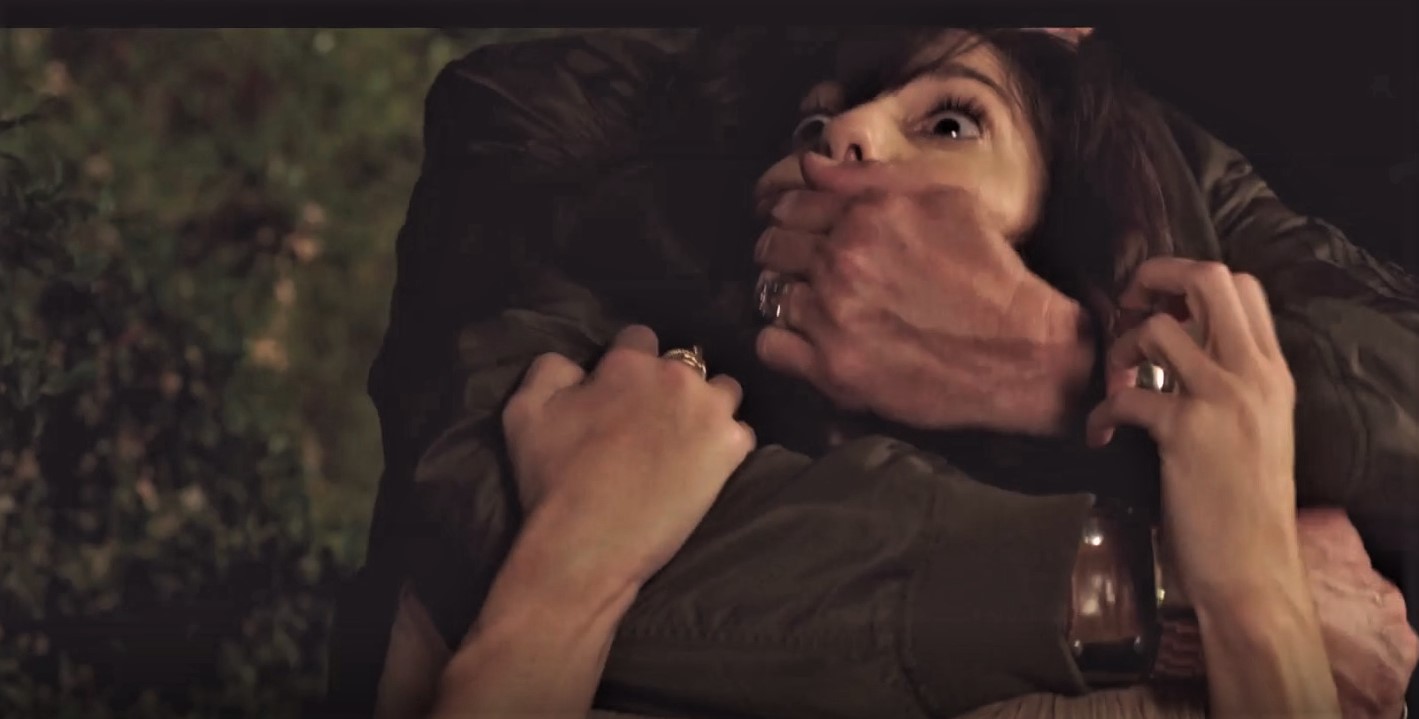
In 2013, Berry made The Call, which was not a bad B-movie thriller and her first turn as Liam Neeson. Kidnap sees the Oscar winner playing a loving mother whose 6-year-old (a very sweet Sage Correa) is nabbed from a busy park. Mom sees the napper shoving her son into a car, she jumps in her minivan and the pursuit begins.

The film amounts to a 90-minute car chase with one unreasonably attractive mom behind the wheel. Several of the action sequences are interesting and flashy (for a film with this level of budget – do not go into this hoping for Fast and the Furious: Minivans).

Writer Knate Lee can’t really justify the lack of cell phone or police presence, but he does what he can. Meanwhile, director Luis Prieto ably assembles car chases and panicked driver close ups, then competently shifts tone for a final act that toes the line between thriller and horror.

There’s nothing exceptional about Kidnap. Not one thing. You’ll forget it existed as quickly as you forgot The Call was ever made. But for a getting-the-phone-bill-paid flick, it’s not too bad.

Verdict-2-5-Stars

https://www.youtube.com/watch?v=R-Ht8VRPRvU