Trainwreck, the 2015 big-screen break out for comic Amy Schumer (and LeBron James and John Cena) offered a wise about-face for the rom-com.
Written by Schumer, the film simultaneously embraced and subverted tradition by basically casting a female in the traditionally male role of eternal adolescent who accidentally finds love and, therefore, adulthood.
She returns to the romantic comedy with I Feel Pretty, film that is neither romantic nor comedic, unfortunately.
Schumer plays Renee Bennett, a perfectly attractive woman.
So there’s your first problem.
I will give writers/directors Abby Kohn and Marc Silverstein credit for one thing. When Bennett hits her head at a spinning class and wakes up believing she’s traffic-stopping gorgeous, at least the film does not stoop to showing us the flawless physical image Renee sees in the mirror. Thanks for that.
So, it’s only after a traumatic brain injury that Amy Schumer can consider herself attractive.
Now she has all the confidence she needs to go after that receptionist gig at the big cosmetics firm. (Wait! A romantic comedy where a receptionist can afford a small but cool NYC apartment? Yes, that checks out.)
Things take a turn for the better whenever CEO Avery LeClair (Michelle Williams) appears onscreen. Her weirdly spot-on performance as the baby-voiced heiress is a riot—and the only unpredictable moments in the film belong to her.
Schumer does what she can with this superficial, blandly rote script. She has excellent chemistry with her co-stars (Busy Phillips, Aidy Bryant, Rory Scovel), regardless of their underwritten roles. But when you have a comic talent like Schumer on the bill and you still cannot think of anything funnier than seeing a pretty woman fall down, your writing is weak.
Let’s not even address the fact that all Renee wants in life is to work for a cosmetics company and maybe, if we all dream big enough, she might be the new face of a cosmetics line!
Jesus.
In summation, I Feel Pretty is Big meets Shallow Hal, if those films suggested that all Tom Hanks needed was confidence enough to believe he should be objectified, then all would be well.
Can Amy Schumer just write the next Amy Schumer movie? Please?
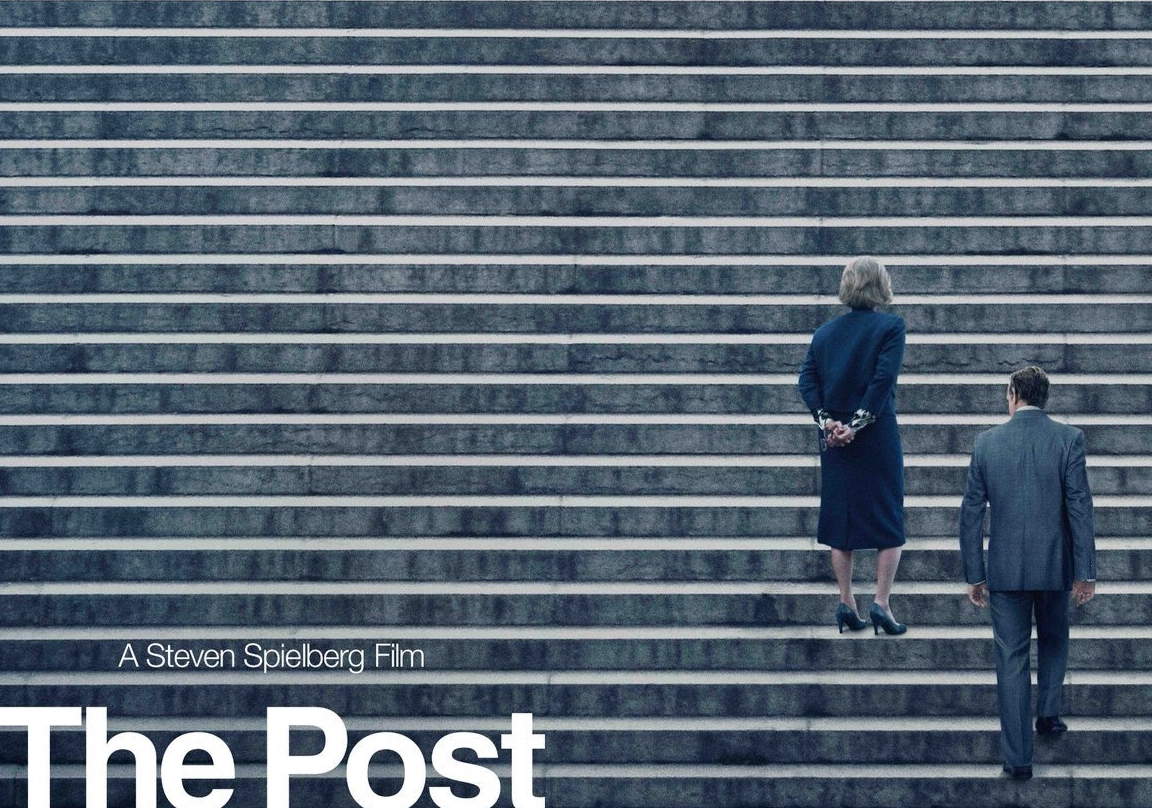
Two-word titles available for home viewing this week. Do you want to watch a slick, important movie about that reminds you just how far America has fallen? Spielberg for you. Rather watch that same Liam Neeson movie you’ve grown to need somehow in your life? That’s here, too.
Some big and bad—and some small and good—covered in this week’s Screening Room Podcast. We talk through Rampage, Truth or Dare, Where is Kyra? as well as what’s new and amazing in home entertainment.
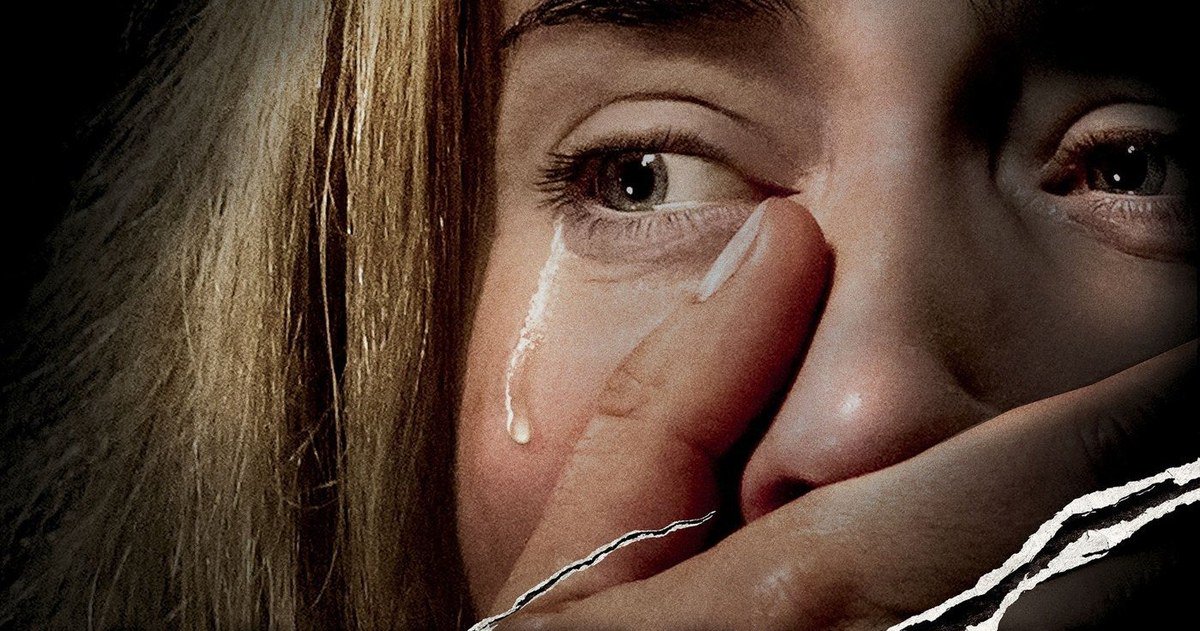
Sssshhhhh! We get too excited to keep our voices down, talking about A Quiet Place, Blockers, Isle of Dogs and the less exciting The Leisure Seeker, plus everything worth checking on in home entertainment.
Do people over the age of 8 still honestly play Truth or Dare? This idea surprises me. Aren’t there video games kids can be wasting time with?
I suppose the real surprise is that it took four years for a film to rip off It Follows. The new PG-13 horror from Blumhouse, Truth or Dare, takes a stab at it.
No, it’s not sex. But it is a curse that you pass on to other people to save yourself. A super lame curse that blends the clever concept of It Follows with the by-the-numbers structure of one of the later Final Destinations and wraps it all up in a faux-contemporary cautionary tale about the digital age.
Yawn!
I’d point out that co-writer/director Jeff Wadlow was primarily lifting from his own 2005 film Cry Wolf, but I decided to go with movies you might have seen—movies that merit imitation.
So. Goody two-shoes Olivia (Lucy Hale) plans to spend her final spring break as a college student building houses with Habitat for Humanity, but her trampy bestie Markie (Violett Beane) and their binge-drinking roomie Penelope (Sophia Ali) have other plans. They guilt Olivia into spending the time with them, their boyfriends and an ethnic minority/gay sixth wheel in Mexico.
Hooray! Six slasher stereotypes—I mean, six best friends!—head south to flirt with alcohol poisoning and make bad decisions. Like playing grade school sleepover games and going to that decaying old mission.
Truth is, there are moments when one performance or a single intriguing notion or a clever call-back threatens to save a scene, by the final reveal you realize how heavy-handed the film really is.
Performances are bland, kills lack inspiration, there aren’t even enough of the prerequisite jump scares to keep the target PG-13 audience interested.
If you are of-age, hopefully you bought some beer with that ID because you’ll need the lubrication to help you glide past the lapses in logic, sometimes comical dialog and one laugh-out-loud moment at the vending machine.
Brad (Hayden Szeto, who deserves better) hears the ominous sound of an otherworldly voice calling out his name.
Except that it sounds exactly like some stoned guy hiding on the other side of the candy machine trying out his spooky voice and stage-whispering, “Braaaaaaaaadddddd!”
My entire row laughed.
So, there you go. There is some enjoyment to be had.
The relationship between mothers and daughters informs an awful lot of great horror films from The Exorcist to Black Swan. Frightmare suggests that becoming your mother is inescapable. The Woman tells us that if we can’t raise our daughters right, a more alpha mom might show up and do it for us. The Ring and Mom and Dad remind us that moms aren’t perfect. They have bad days. Sometimes they may want to drop you down a well.
We focus on five horror films where that relationship between mother and daughter informs and impacts the storyline in a substantial way.
5. The Bad Seed (1956)
The minute delicate Christine’s (Nancy Kelly) husband leaves for his 4-week assignment in DC, their way-too-perfect daughter begins to betray some scary behavior. The creepy handyman Leroy (Henry Jones) has her figured out – he knows she’s not as perfect as she pretends.
You may be tempted to abandon the film in its first reel, feeling as if you know where it’s going. You’ll be right, but there are two big reasons to stick it out. One is that Bad Seed did it first, and did it well, considering the conservative cinematic limitations of the Fifties.
Second, because director Mervyn LeRoy’s approach – not a single vile act appears onscreen – gives the picture an air of restraint and dignity while employing the perversity of individual imaginations to ramp up the creepiness.
Enough can’t be said about Patty McCormack. There’s surprising nuance in her manipulations, and the Oscar-nominated 9-year-old handles the role with both grace and menace.
4. Hounds of Love (2016)
It is the late 1980s in Perth, Australia, and at least one young girl has already gone missing when the grounded Vicki (Ashleigh Cummings) sneaks out her bedroom window to attend a party. She doesn’t like staying with her mom, who left her dad and ruined the family and her life.
So she sneaks out, which isn’t nearly as dumb a move as is accepting a ride from Evie White (Emma Booth) and her husband, John (Stephen Curry).
Writer/director Ben Young’s amazing feature debut works on so many levels and showcases a master visual storyteller almost as brilliantly as it shines the light on three phenomenal performances.
What is it that may finally undo the evil the Whites have planned? One mother’s relentless devotion to her daughter and another mother’s sudden, stabbing empathy.
https://www.youtube.com/watch?v=UNEurXzvHqE
3. Eyes of My Mother (2016)
Francisca’s mother had been an eye surgeon back in Portugal.
“We used to do dissections together. She always hoped I’d be a surgeon one day.”
Though Mom appears only in Act 1 of writer/director Nicolas Pesce’s modern horror masterpiece Eyes of My Mother, her presence echoes throughout the lonely farmhouse Francesca rarely leaves.
Yes, the skills her mother imparted coupled with the trauma Francesca faced bleeds together to create a character whose splintered psyche keeps her from seeing that she’s taking some extreme measures to cure her lonliness.
This is one of the most beautifully filmed horror movies ever made, and as impeccable as the cinematography, the sound is even more important and magnificent. Together with restrained performances and jarring images, Eyes of My Mother is a film that sticks around even after it’s gone. Like a mom.
2. The Witch (2015)
There is a lot going wrong for poor Thomasin (Anya Taylor-Joy). But it all starts when the baby goes missing on her watch. Her mother (Kate Dickie) never forgives her for it and soon Mother is finding faults with Thomasin, making accusations that even Father, who knows better, won’t defend.
For The Witch to work, for us to tentatively hope that Black Philip talks back, Thomasin has to basically lose everything, and it all starts with her mother’s love and respect. Soon her mother’s bitterness turns to competition for the affection of the menfolk, accusations of all sorts of wrongoing, all of which spirals out of control until Thomasin has no one left, no one who will love her and look after her, except that goat.
Robert Egger’s unerringly authentic deep dive into radicalization, gender inequality and isolation is all sparked with one act that irrevocably ruptures one relationship.
1. Carrie (1976)
There is nobody quite like Margaret White. Oscar nominee Piper Laurie saw the zealot for all her potential and created the greatest overbearing mother film has ever seen. (We never did see Mrs. Bates, did we?)
Sissy Spacek (also Oscar nominated for her performance) is the perfect balance of freckle-faced vulnerability and awed vengeance. Her simpleton characterization would have been overdone were it not for Laurie’s glorious, evil zeal. It’s easy to believe this particular mother could have successfully smothered a daughter into Carrie’s stupor.
De Palma and screenwriter Lawrence D. Cohen streamline King’s meandering finale. Wise, because once the dance drama is done, we just want to find out what happens at home, and Mrs. White doesn’t disappoint.
Good looking week this week for those of us too damn lazy to get off the couch. Oscar nominees, great directors, brilliant actors, songs, dances…hard to go wrong.
So, John Krasinski. That big, tall guy, kind of doughy faced? Married to Emily Blunt? Dude can direct the shit out of a horror movie.
Krasinski co-writes, directs and stars in the smart, nerve-wracking gut-punch of a monster flick, A Quiet Place.
Krasinski plays the patriarch of a close-knit family trying to survive the post-alien-invasion apocalypse by staying really, really quiet. The beasts use sound to hunt, but the family is prepared. They already know sign language because their oldest, played by Millicent Simmonds (Wondertruck) is deaf.
A blessing and a curse, that, since she can’t tell if she makes noise, nor can she tell if a creature comes calling.
Simmonds is wonderful as the conflicted adolescent, her authenticity matched by the tender, terrified performance given by Noah Jupe (Wonder) playing her younger brother.
As their expecting mother, Emily Blunt is magnificent, as is her way. Simultaneously fierce and vulnerable, she’s the family’s center of gravity and the heart of husband (onscreen and off) Krasinski’s film.
But you expect that from Emily Blunt. She’s amazing.
What you may not expect is Krasinski’s masterful direction: where and when the camera lingers or cuts away, how often and how much he shows the monsters, when he decides the silence will generate the most dread and when he chooses to let Marco Beltrami’s ominous score do that work for him.
The script, penned by Krasinski with horror veterans Bryan Woods and Scott Beck, stays one step ahead of your complaints. Just as you think, “Why haven’t they done this?” a clear explanation floats across the screen, either as translated sign language, a prop on a table or a headline in Dad’s gadget-laden basement bunker.
It’s smart in the way it’s written, sly in its direction and spot-on in its ability to pile on the mayhem in the final reel without feeling gimmicky or silly.
And the monsters are kick ass. That’s a big deal.
At its heart lies a sweet sentiment about family, but sentiment does not get in the way of scares. A Quiet Place works your nerves like few films can.
First note in my Isle of Dogs screening notebook: God damn it, I want a dog.
Second note: Wait, Scarlett Johansson and Tilda Swinton are in another film that appropriates Asian culture? Come on!
And that about sums up the conflicting emotions Wes Anderson generates with his latest stop-motion wonder.
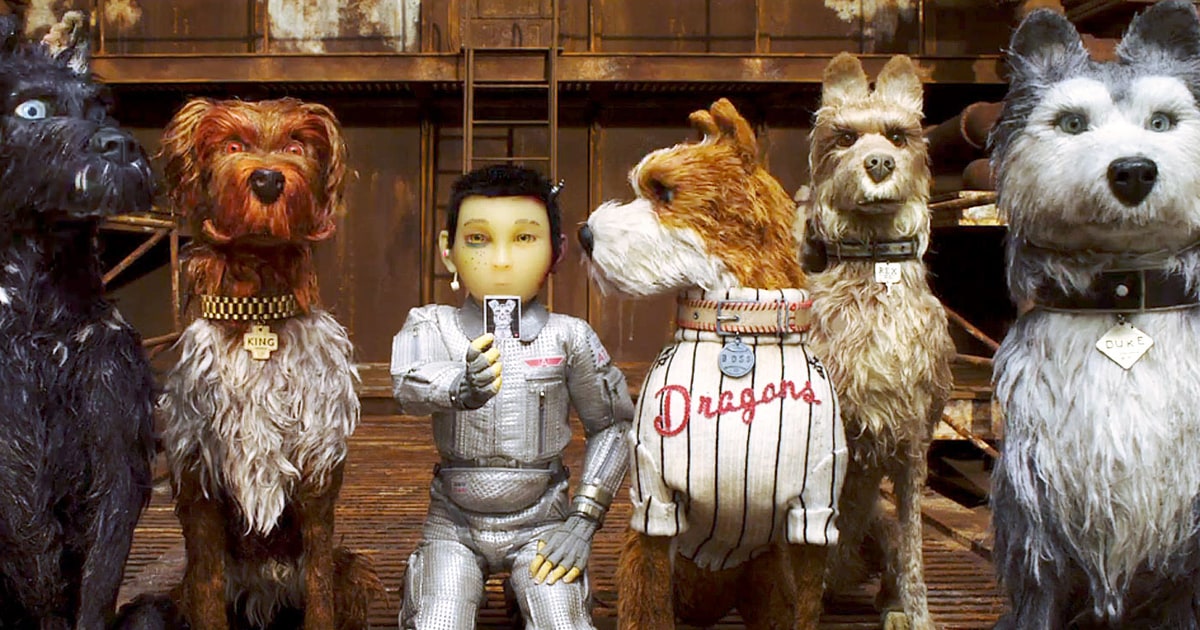
Isle of Dogs is Anderson’s second animated effort, coming nearly a decade after another tactile amazement, 2009’s Fantastic Mr. Fox. A millennia-long feud between the Kobayashis of Megasaki and dogs comes to a head when corrupt Mayor Kobayashi uses a dog flu outbreak to whip up anti-canine sentiment and banish all dogs to Trash Island.
But his orphaned ward Atari (Koyu Rankin) steals a miniature prop plane and crash lands on Trash Island looking for his beloved Spots (Liev Schreiber).
The little pilot is aided in his quest by a scruffy pack including Rex (Edward Norton), Boss (Bill Murray), gossipy Duke (Jeff Goldblum, a riot), King (Bob Balaban), and reluctant helper/lifelong stray, Chief (Bryan Cranston).
Other voice talent as concerned canines: Johansson, Swinton, F. Murray Abraham and Harvey Keitel.
Explained via onscreen script in typically Anderson fashion, dog barks have been translated into English and Japanese remains Japanese unless there’s an electronic, professional or exchange student translator handy. The choice shifts the film’s focus to the dogs (in much the way Peanuts shows remained focused on children by having adults speak in squawks). It also means that moviegoers who speak Japanese are afforded an enviably richer experience.
But for a large number of American audiences, it means that Japanese characters are sidelined and the only human we can understand is the white foreign exchange student, Tracy (Greta Gerwig). From Ohio, no less.
Between an affectionate if uncomfortably disrespectful representation of Japanese culture and Gerwig’s white savior role, Anderson’s privilege is tough to look past here, even with the scruffy and lovable cast.
The animation is beyond spectacular, with deep backdrops and meticulously crafted characters. Atari’s little teeth killed me. The voice talent is impeccable and the story itself a joy, toying with our dictatorial nature, the need to rebel and to submit, and how entirely awesome dogs are.
Set to an affecting taiko drum score with odes to anime, Ishiro Honda, Akira Kurosawa and every other Japanese movie Anderson watched as a kid, the film is clearly an homage to so much of what he loves. His skill remains uniquely his own and nearly unparalleled in modern film.
And Isle of Dogs is a touching, flawlessly crafted animated dream. That probably should have been set in America.