Tag Archives: Hope Madden

Windflower

Anemone

by Hope Madden

As a young filmmaker, would having arguably the most revered actor of his generation—perhaps of all time—as a father be a blessing or a curse? For Ronan Day-Lewis, directing his first feature with co-writer and lead actor (and dad) Daniel Day-Lewis, it seems to be working out.

Anemone is a tale of fathers and sons, of one generation of men inflicting damage upon the next, and the tenderness that either dies, finds an outlet, or runs to madness.

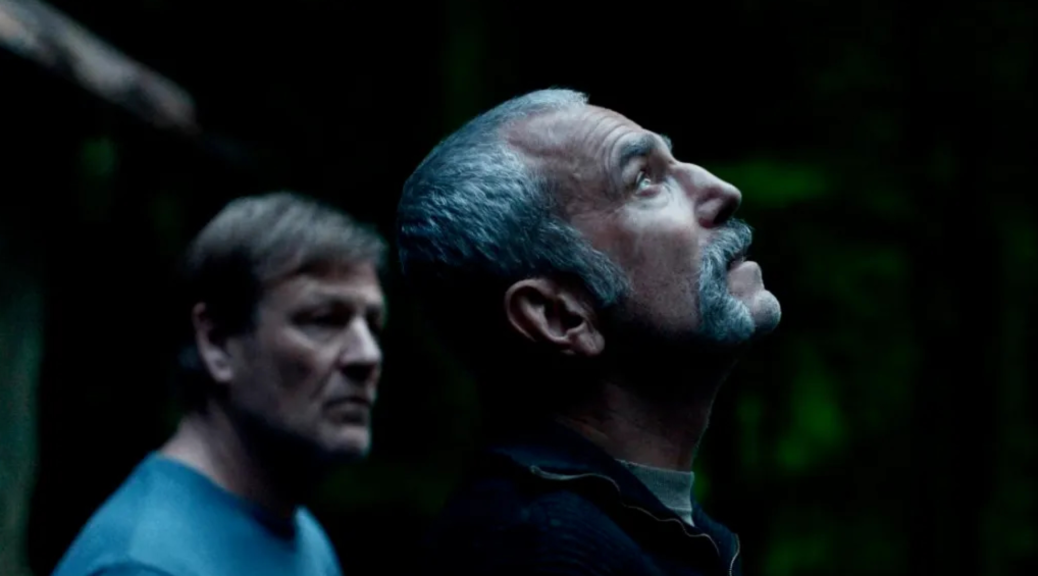
Sean Bean a is Jem, a good man who strikes out from his dodgy neighborhood in Northern England to the woods, led by the navigational coordinates on the back of a page that reads: Anemone: In Case of Emergency, Break Glass.

The coordinates lead him to his brother, Ray (DDL), a hermit since his time fighting against the IRA. Ray is wanted at home.

Like many of Day-Lewis’s greatest performances, his work here impresses with lengthy stretches of silence punctuated by a couple of brilliantly executed monologues. His lean and scrappy physicality belie the character’s vulnerability in ways that expertly match Ray’s reticent then vulgar speech.

Ray’s a man off the rails, while Bean deftly crafts a character who’s found comfort and strength in structure. Neither actor overplays the brothers’ differences, rather falling into a tenuous if lived-in familiarity.

The great Samantha Morton and an impressive Samuel Bottomley round out the cast, but as usual, all eyes are on Day-Lewis.

RDL knows it, not only providing memorable lines, but crafting an atmosphere that evokes Ray’s troubling inner landscape. Bobby Krlic’s (Eddington, Beau Is Afraid, Midsommar) score conjures an angry melancholy while moments of painterly surrealism deliver flashes of beautiful, hopeful madness. Even when lensing the natural elegance of Ray’s isolated world, RDL and cinematographer Ben Fordesman (Love Lies Bleeding, Saint Maud) evoke a magical splendor.

Anemone feels uncertain of how to resolve itself, to bridge the two worlds it creates. Structure failed Ray, and it nearly fails Anemone. But the film offers more than enough reason to believe in filmmaker Ronan Day-Lewis. And if you needed another reason to believe in actor Daniel Day-Lewis, well, here you go.

Tall Tales and Fiction

Killing Faith

by Hope Madden

A raucous opening sequence eventually settles into a classic old Western vibe that keeps you guessing in Ned Crowley’s latest, Killing Faith.

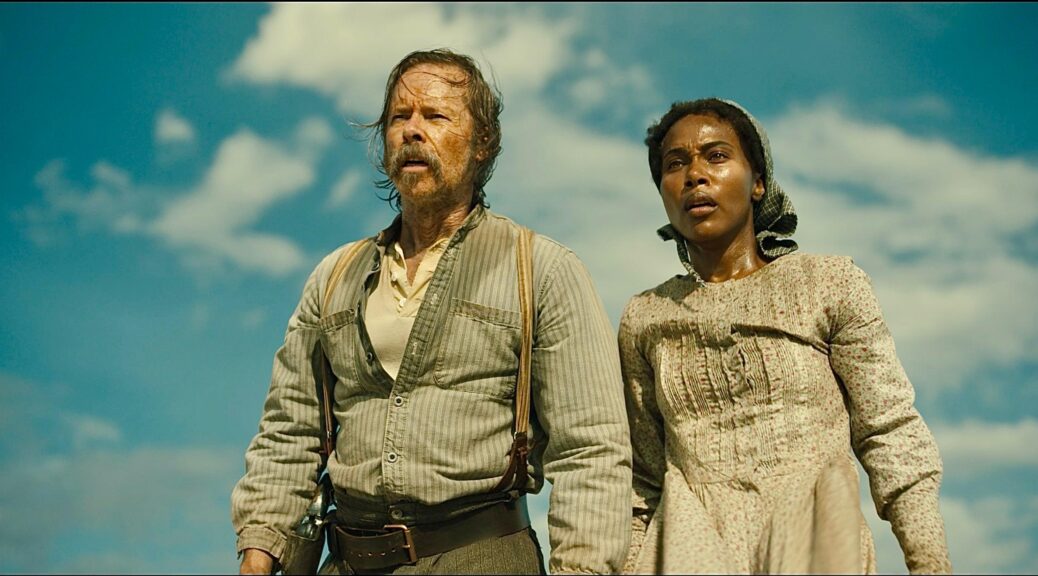
Like Mary Bee Cuddy in The Homesman and Joanna in News of the World, Sarah (DeWanda Wise) is in need of a traveling companion. Her daughter (Emily Ford) needs help that the town doctor (Guy Pearce) can’t offer. Not that the ether-sniffing doc has been much help to his patients of late.

Dr. Steelbender is an ether addict on account of a plague of sorts. Voiceover tells us of a sickness ravaging the countryside almost as savagely as a notorious group of bounty hunters. But Sarah is determined to take her daughter to see Dr. Ross (Bill Pullman) because he deals not just in medicine, but in holy healing.

Crowley’s shot making, particularly in the opening act, is equal parts stunning and unnerving. At his best, he tells the tale like a picture book, images sharing as much of the story as dialog. There’s a grim poetry to the shots that creates an beautifully brutal atmosphere as it delivers information.

Pearce has made a lot of movies, many of them horrible, most mediocre, but he does have a pretty good track record with Westerns. John Hillcoat’s The Proposition is one of the most affecting Westerns of the 21st century. Killing Faith doesn’t nearly reach that high water mark, but it has its moments.

I like the more contemporary Westerns, where no one’s to be trusted and everyone’s a weirdo. Killing Faith is at its most compelling when our little band of travelers finds themselves among unexplained carnage or unexplainable fellow wayfarers. Joanna Cassidy is especially delightful in a macabre way.

But a couple of obvious turns and the general simplicity of the story keep Killing Faith from reaching classic status.

The film loses steam whenever it clings too tightly to its main themes, its hero’s journey. But Crowley elevates that well-worn road with ideas of being haunted by the sight of innocence corrupted, something that connects the Western with dystopian tales, like John Hillcoat’s other Pearce-starring fable, The Road.

All Westerns are about redemption. The best Westerns, new or old, are about hope. Can you allow yourself a flicker of hope? The answer is often what differentiates the classic Western from the contemporary one. Killing Faith toys with those mighty big struggles, sometimes provocatively. The solutions aren’t as interesting as the journey, though.

We Rate Dogs

Good Boy

by Hope Madden

I have a theory that the best way to make a horror film terrifying is to put children in peril. How better to ensure viewers are compelled, hearts in their throats, desperate for the heroes to prevail?

Co-writer/director Ben Leonberg may have discovered a more sure-fire way.

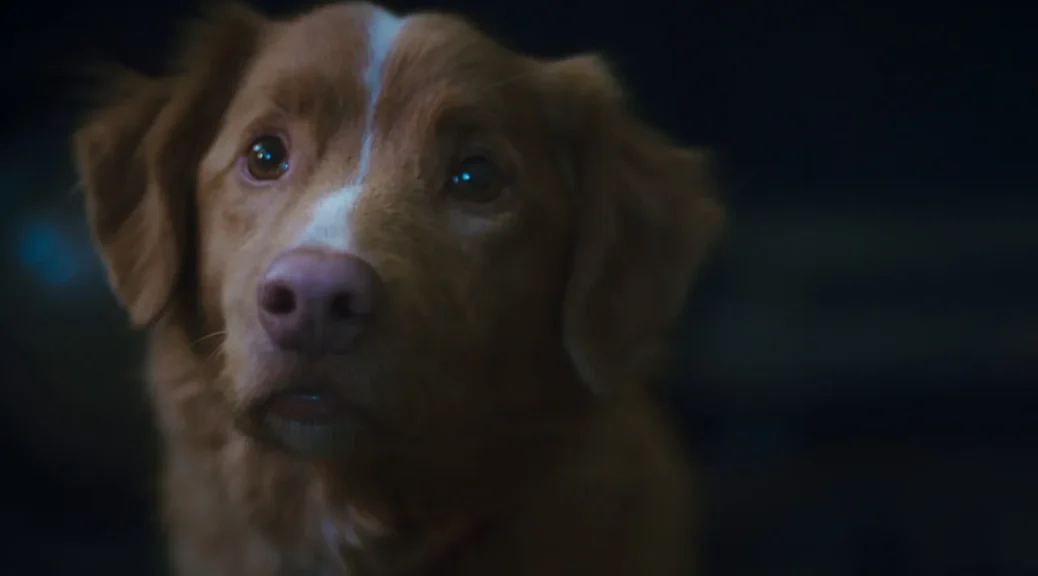
Meet Indy, a Nova Scotia Duck Trolling Retriever and an undeniably Good Boy. The dog is played by Leonberg’s own pet, also named Indy. I am not one to talk to the screen, but there were several times during Good Boy’s mere 72-minute running time that I heard myself saying, “No, no, no, no. Don’t do that, buddy.”

Because Indy and his dude, Todd (Shane Jensen), have just moved into Grandpa’s (Larry Fessenden) old place out in the woods. Todd’s in bad shape, physically. And even though folks say the old place is haunted, and even though Grandpa died here and his dogs all ran away or disappeared, Todd and Indy should be fine. Right?

The film works as well as it does because of Leonberg’s great gimmick. The story is told from Indy’s point of view. We know what he knows, which allows metaphor and supernatural to fold together seamlessly since no real exposition can be given. It also means that we never take our eyes off this beautiful dog, so we never stop worrying about his wellbeing, if he’s sad, is he cold out in the rain, is he scared?

Yes, Leonberg is out to break your heart, and his gorgeous retriever does just that.

There’s something unsettling in real life when your pet stares deeply at nothing and whines. Leonberg contemplates those shadows, the silence, the movement just outside the frame, along with Indy. The atmosphere he creates is deeply creepy and tinged with unendurable tenderness.

But a metaphorical supernatural horror story is tough to resolve satisfactorily when all we have to work with is the communicative abilities of a dog. No matter how darling that dog is.

Good Boy feels longer than its 72 minutes, and the metaphor at the heart of the story leeches away the true fear. It leaves you with heartbreak, which isn’t quite enough. But Leonberg’s film is an audacious feature debut and a worthy experiment.

Slim, Sick and Sorry Looking

Coyotes

by Hope Madden

Colin Minihan’s a fun filmmaker. Not everything hits, but nothing ever entirely misses. His latest, the horror comedy with heart Coyotes, is one of his more pleasant, less memorable efforts.

Justin Long is a comic book writing dad living in the Hollywood Hills. His wife (real life wife Kate Bosworth), daughter (Mila Harris), and schnauzer Charlie life comfortably enough but they think they hear rats in their walls.

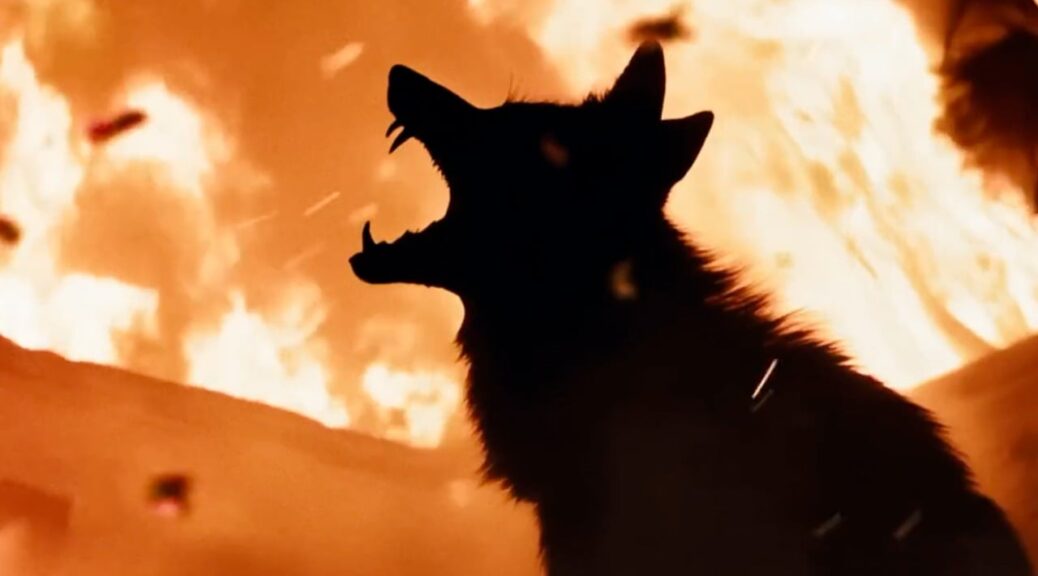
Rats won’t be their biggest problem once a pack of bloodthirsty coyotes stands between Long’s family and escape from the raging wildfire the neighbor inadvertently set after coyotes gnawed through his carcass.

Trip (Norbert Leo Butz), the neighbor, and his girlfriend-for-hire (Brittany Allen, frequent Minihan collaborator) balance the neighbor family’s earnestness with bawdy, slapstick humor. Allen’s comic sensibility is especially strong, her presence creating a consistent sense of random humor that elevates everything.

Allen’s wrongheadedness bounces beautifully off Long’s likeable dufus, leaving Bosworth the somewhat thankless straight man role. But she carries it with the right balance of dignity and impatience to give the character flavor.

The chemistry among the actors goes a long way to strengthen a slight script. The character motivations we’re told about don’t match the footage we see, and coyotes come and go with little rational explanation.

As for horror, nearly every death, even nearly every attack, is off screen. Reaction shots fill in for carnage, each intended more for a laugh than a scare. But there just aren’t that many outright laughs.

Still, it’s hard not to root for Justin Long to survive a horror movie. Here, he’s at his most likeable and goofy, plus he’s rightfully preoccupied with keeping Charlie from coyote clutches. Because screw the neighbors, protect that dog!

Coyotes is not one of Minihan’s strongest, and it certainly doesn’t measure up to Long’s better genre titles. The writing can’t measure up in logic, fun, humor or horror to what the cast deserves. But it’s a pleasant enough waste of time for horror fans.

Bite Size Frights

V/H/S/Halloween

Screens Sunday, October 19 at noon

by Hope Madden

“Hey, aren’t you a little old for trick or treating?”

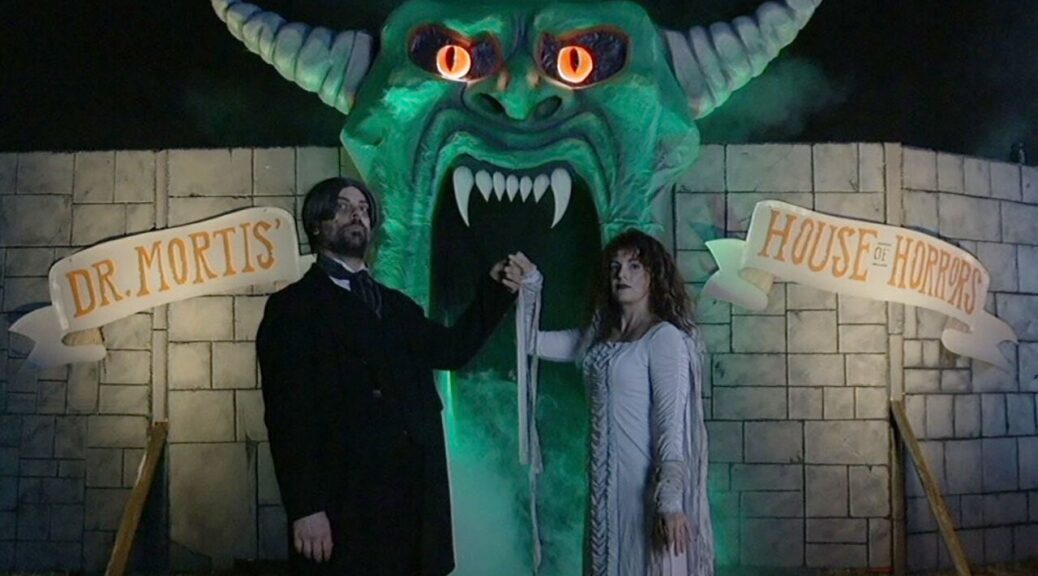
If you’re looking for bite sized horror to match your fun size Butterfinger, the long running found footage franchise delivers a grab bag of options with V/H/S/Halloween. The anthology of shorts focuses on tales of Halloween. Expect costumes, pranks, chocolate, and a surprisingly high amount of child carnage.

Director Bryan M. Ferguson’s wraparound tale Diet Phantasma may mean more to me than it will to you. It would be hard for me to articulate how much I love horror movies or diet pop. In both cases, it’s an alarming amount of love. So, a tale of haunted diet soda and, beginning the theme, child slaughter?

Yes.

David Haydn is a particular riot as the exec who really needs to get this beverage on the shelf by Halloween.

Paco Plaza’s Ut Sup Sic Infra (As Above, So Below) follows a traumatized young man and a host of cops to a crime scene. This is an efficient little gem with a mystery to solve. Performances are solid all around, and the climax packs a frightening surprise.

Anna Zlokovic’s Coochic Coochic Coo and Alex Ross Perry’s Kidprint are the weaker episodes in the group. Zlokovic’s film follows two high school seniors who make consistently ridiculous choices leading to a nonsensical finale. Kidprint is a nasty short without the clever writing needed to elevate it.

Casper Kelly’s Fun Size gets off to a rough start—full grown adults who decide to be zany and trick or treat. But as soon as that “take one” bowl makes its presence known, things get weird. The balance between brightly colored confection and human dismemberment is impressive. This one’s wrong-headed in the best way.

Likewise, Micheline Pitt-Norman & R.H. Norman’s Home Haunt is a lot of fun. There’s a wholesome charm to this short that could draw your attention to the, again, sheer number of children being murdered. But the concept is sort of darling, and the performances are equally dear. The Normans strike a comedic tone that’s hard to manage, and the result is equal parts nostalgia, cringe, and terror.

You can’t get a Twix every time you dig into that bulk candy assortment bag. But V/H/S/Halloween’s ratio of choice treats to forgettable-but-edible is strong enough to leave you with a little sugar high.

She’s Investigatin’…Darn Tootin!

Dead of Winter

by Hope Madden

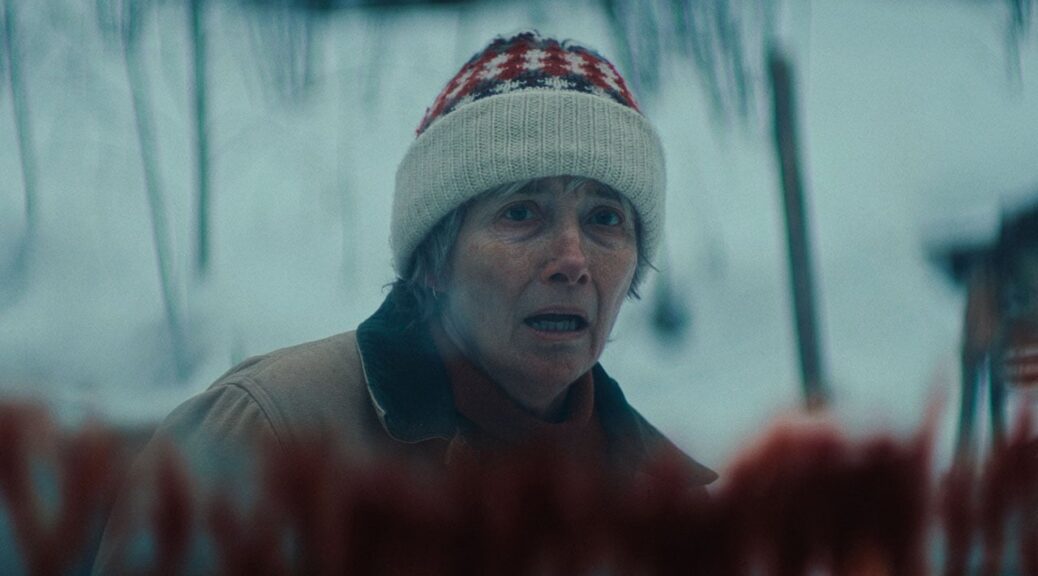
Emma Thompson and Judy Greer go head-to-head in a kidnaping thriller set in a forsaken Northern Minnesota snowstorm? Dude, I am so in!

With Dead of Winter, Brian Kirk relies on nuanced character work, gorgeously isolating cinematography, and the desperation of human nature to keep you guessing. Thompson, who executive produces, is Barb. Barb with that Minnesota “r”. She’s hearty for a mature gal. And despite the weather forecast, she puts on the ol’ snowsuit, warms up the even older pick up, and heads to faraway Lake Hilda to do some ice fishing. And maybe something else.

But she gets a little turned around and hears chopping in the distance, so she goes to ask directions. Nobody else for miles around, what else is she to do? Barb finds a bearded man in camo (Marc Menchaca, excellent), who—very startled by the sight of her—directs her to the lake. But blood on the snow has Barb a little troubled, and soon enough, she sniffs out a kidnapping. Is she hearty enough to save that poor girl in the wood chopper’s basement?

In some ways, Dead of Winter—written by first time screenwriters Nicholas Jacobson-Larson and Dalton Leeb—feels like little more than a welcome update to a well-worn plot. A handful of flashbacks to Barb’s youth, which flesh out the film’s B-story and deepen Barb’s character, are just this side of Hallmark Channel. But Thompson, from her first determined sigh, is so utterly convincing that you’re hooked.

And that’s all before the glorious Greer makes her entrance. It’s hard to justify saying that the most versatile and employable character actor of a generation is playing against type, since Greer has played every imaginable type of character. But the blind desperation behind her unnamed (she and Barb never really get on chummy terms) character’s cruelty is so precisely wielded by this actor that you would believe this film no matter how farfetched it became.

There’s a simplicity to the storytelling that matches Kirk’s determined avoidance of cynicism. Like Barb, this movie marches on, not necessarily seeing the worst in this world even when it wouldn’t be too hard. Hard with that Minnesota “r”. But he never loses track of his chosen genre. Dead of Winter sidesteps cliché, delivers thrills, and finds new ways to showcase two tremendous talents.

Living Deliciously

Him

by Hope Madden

The goat is an apt image to anchor a sports film. The Greatest Of All Time. Every athlete’s dream. If you’ve ever watched horror, goats are also excellent avatars for evil. In the case of Him, co-writer/director Justin Tipping’s feature from Jordan Peele’s Monkey Paw Productions, it’s a bit of both.

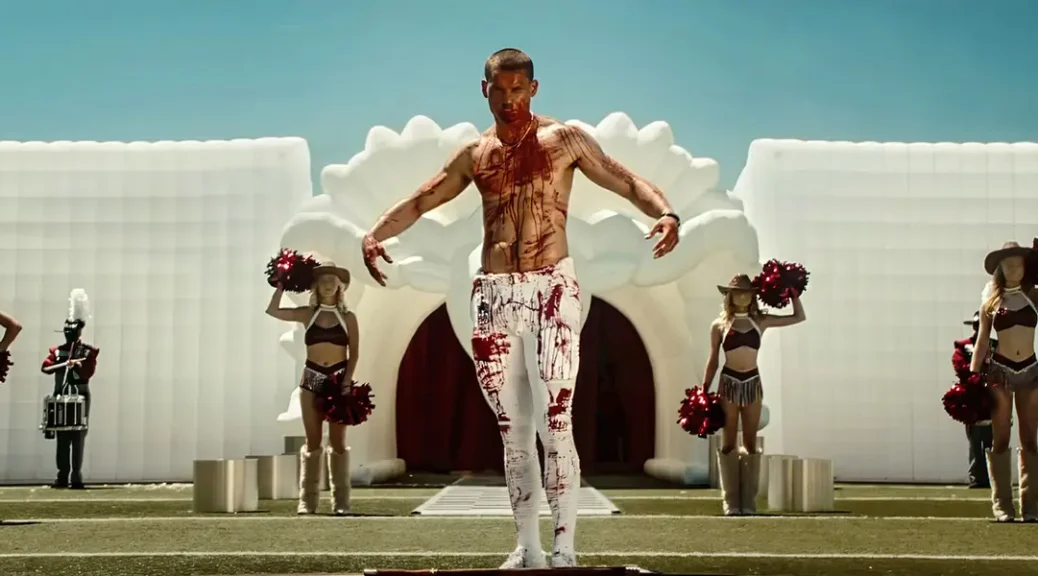
Isaiah White (Marlon Wayans) lives deliciously. Is Cameron Cade (Tyriq Withers) ready for that? Cade is the up-and-comer, the college QB who may be the one man to dethrone legendary Saviors quarterback, White. The 8-time champion came back even after the bone-protruding leg injury Cam’s late father made him watch again and again as a child.

Why would a father make a child watch something like that? To learn what it means to be a man, naturally.

Him is dense with themes and imagery, beginning with the very real frights of traumatic brain injury and its effect on football players. But the larger horror is rooted in performative masculinity, of proving your physical superiority by overpowering an opponent, drawing first blood, drawing last blood, and calling it power when it’s simply entertainment for puny white men with money.

Tipping equates the mechanics of sizing up an athlete with preparation for an auction block in one of the film’s most quietly unnerving sequences. Later references to gladiators obediently entering the pit at the behest of their trainers serve as additional, hardly subtle, illustrations of the power dynamic afoot.

Withers’s overwhelmed acolyte feels more dopey than wide-eyed, but Wayans is slippery, diabolical fun as the primary antagonist. Naomie Grossman steals scenes as White’s biggest fan, and Tim Heidecker’s disingenuous smarm fits perfectly as Cade’s agent.

There’s an intriguing half to this film. It’s the half making points about the way those with a financial stake in the game proselytize brutal sacrifice in search of greatness. The delicious living half, though, feels like a cheat.

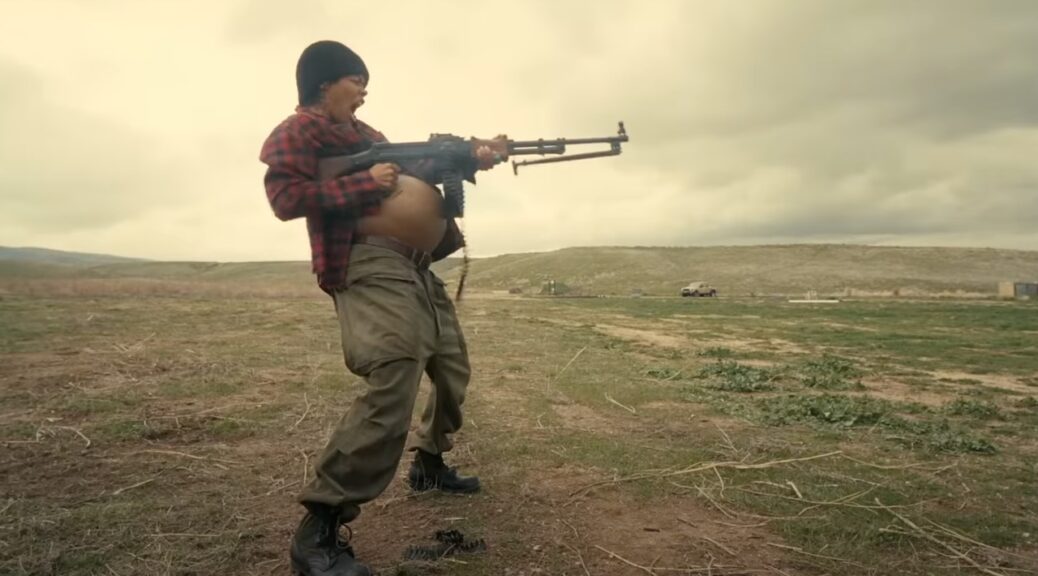
The supernatural elements in Him give way to a foggy mythology full of fever dream smash cuts and jump scares. At times—as on a shooting range—details are left delightfully, grotesquely vague. Elsewhere the ambiguity feels like narrative weakness.

Worse still, the supernatural side of the film, to a degree, lets capitalism and white supremacy off the hook, no matter how satisfying the final bloodletting may feel. The set design is evocative and cinematography impresses, but the film can’t quite live up to expectations.   

Fright Club: Feminist High School Horror

High school can be a tough time. What the youth of today need are role models. Soul eaters. Werewolves. Witches. Girls who know their way around a power drill. There’s so much the teens in these films can teach us!

5. Slumber Party Massacre (1982)

There is a wild juxtaposition at work beneath what could be mistaken as a trope-riddled slasher. Director/co-writer Amy Holden Jones, writing with Rita Mae Brown, deliver over-the-top cliche (teens in a sleepover undressing in full view of a window, one wearing a negligee, etc.), laughably phallic imagery (that power drill!), and the very traditional hack ’em up stuff.

But the behavior of these high school girls at the sleepover, and the one across the street pining to be part of the group, is so wildly masculine it’s hilarious. One hides a Play Girl magazine (the one with Stallone on the cover!) under her pillow, while those undressing together discuss the play of then-Cleveland Browns quarterback Brian Sipe.

The combination of elements subvert expectations even as they wallow in cliche. It’s such a great B-movie that even Tarantino lifted one scene wholesale for his masterpiece, Pulp Fiction.

4. The Craft (1996)

Three Catholic high school outcasts find solace in each other, a coven they create for safety, escape, harmony, and camaraderie. Fairuza Balk is perfection as Nancy, the loose cannon leader of the group. And even though dreamboat asshole Chris (Skeet Ulrich) prefers new girl Sarah (Robin Tunney), Nancy and the coven (Neve Campbell and Rachel True) embrace her.

And that’s what they needed to find real power. With their fourth they learn that power sometimes only amplifies problems. But it’s great while it lasts, and Nancy turns into one of the best badasses in 90s horror.

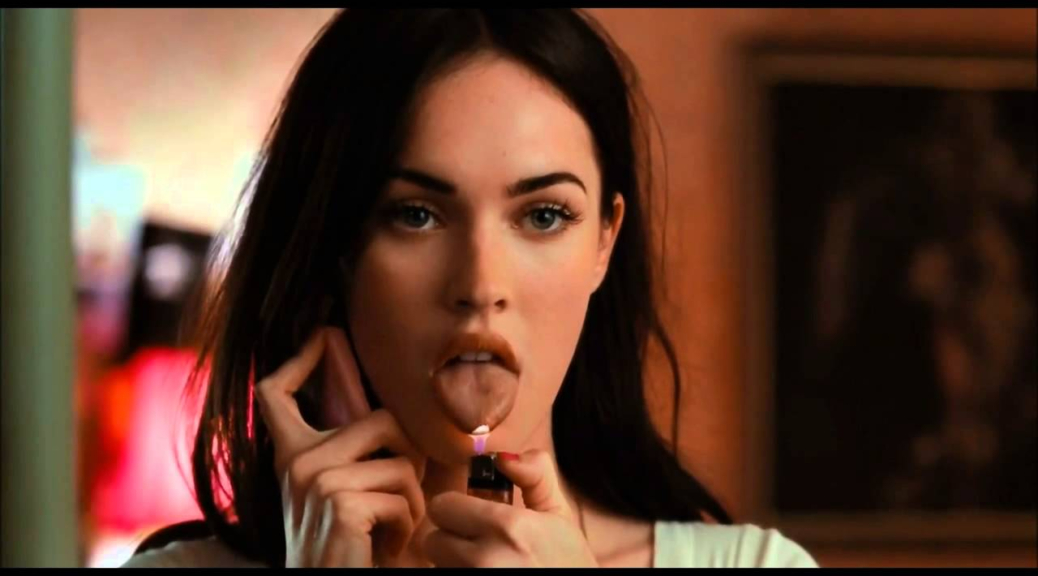
3. Jennifer’s Body (2009)

If Ginger Snaps owes a lot to Carrie (and it does), then Jennifer’s Body finds itself even more indebted to Ginger Snaps.

The central premise: Boys are stupid, throw rocks at them. Better still, lure them to an isolated area and eat them, leaving their carcasses for the crows. This is the surprisingly catchy idea behind this coal-black horror comedy.

In for another surprise? Megan Fox’s performance is spot-on as the high school hottie turned demon. Director Karyn Kusama’s film showcases the actress’s most famous assets, but also mines for comic timing and talent other directors apparently overlooked.

Amanda Seyfried’s performance as the best friend, replete with homely girl glasses and Jan Brady hairstyle, balances Fox’s smolder, and both performers animate Diablo Cody’s screenplay with authority. They take the Snaps conceit and expand it – adolescence sucks for all girls, not just the outcasts.

2. Knives and Skin (2019)

Falling somewhere between David Lynch and Anna Biller in the under-charted area where the boldly surreal meets the colorfully feminist, writer/director Jennifer Reeder’s Knives and Skin offers a hypnotic look at Midwestern high school life.

Knives and Skin’s pulpy noir package lets Reeder explore what it means to navigate the world as a female. As tempting as it is to pigeonhole the film as Lynchian, Reeder’s metaphors, while fluid and eccentric, are far more pointed than anything you’ll find in Twin Peaks.

And everyone sings impossibly appropriate Eighties alt hits acapella. Even the dead.

1. Ginger Snaps (2000)

Sisters Ginger and Bridget, outcasts in the wasteland of Canadian suburbia, cling to each other, and reject/loathe high school (a feeling that high school in general returns).

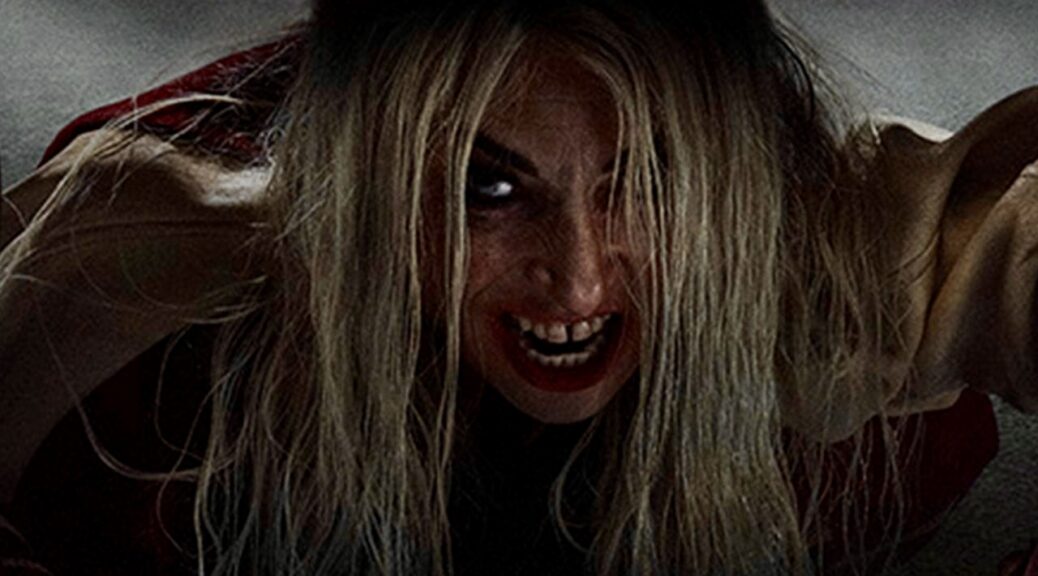
On the evening of Ginger’s first period, she’s bitten by a werewolf. Writer Karen Walton cares not for subtlety: the curse, get it? It turns out, lycanthropy makes for a pretty vivid metaphor for puberty. This turn of events proves especially provocative and appropriate for a film that upends many mainstay female cliches.

Walton’s wickedly humorous script stays in your face with the metaphors, successfully building an entire film on clever turns of phrase, puns and analogies, stirring up the kind of hysteria that surrounds puberty, sex, reputations, body hair and one’s own helplessness to these very elements. It’s as insightful a high school horror film as you’ll find, peppered equally with dark humor and gore.