Tag Archives: Samantha Morton

Trip of a Lifetime

The Odyssey

by Hope Madden & George Wolf

Christopher Nolan likes a big room.

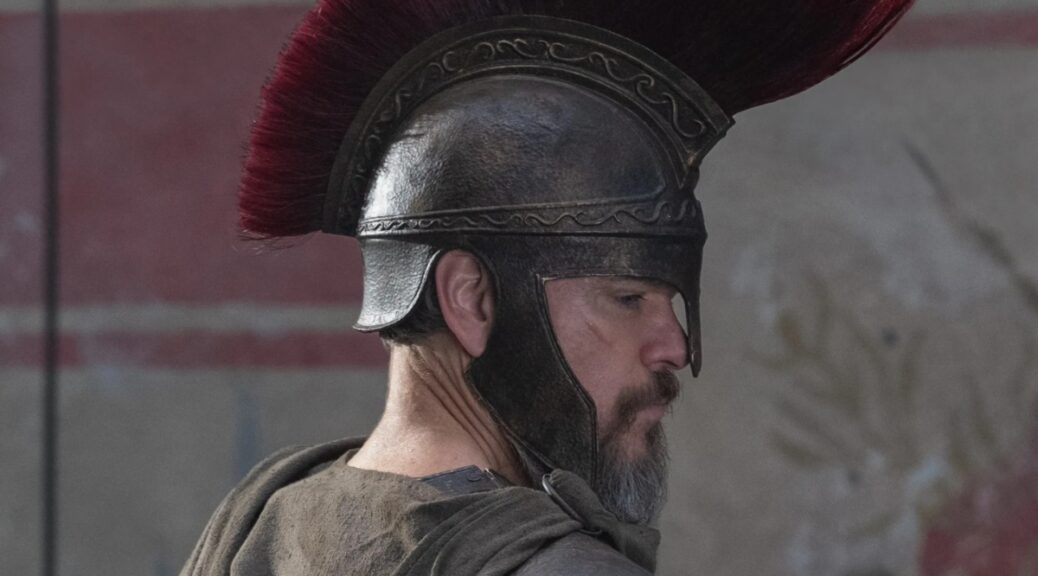
A massive cast, incredible set designs, far flung locations, 70mm IMAX cameras, The Odyssey has it all. And why not? Homer’s story is among history’s first ever epics.

And it’s quite a tale, trailing Odysseus (Matt Damon) as he struggles to return home to Ithaca after his savvy strategy leading to the defeat of Troy. Nolan, who adapts the 2700-year-old tome, finds echoes of Oppenheimer in Odysseus’s struggle. It’s a haunting narrative choice that gives the ancient proceedings a relevance that transcends time.

Damon is magnificent, wily and honorable, humble and arrogant, and Nolan surrounds him with a jaw-dropping ensemble. Anne Hathaway is bracingly wonderful as Penelope, the wife pushing off suitors circling the throne Odysseus left empty nearly two decades ago. Tom Holland, John Leguizamo, Mia Goth, Corey Hawkins, and Robert Pattinson join Penelope in the castle, and while the entire cast is solid, Pattinson again carves out unforgettable screentime.

Out in the wild world, Charlize Theron offers a beautiful dash of melancholy as Calypso, who prods Odysseus to search his memories and tell the tale. Himesh Patel is also exceptional as Eurylochus, Odysseus’s second in command. Elliot Page delivers a heartbreaking turn as Sinon, a youngster who follows Odysseus into battle, Jon Bernthal crafts a perfectly hardened King of Sparta while Samantha Morton finds remarkable depths as the witch Circe, given her limited time on screen. With even less screentime, Lupita Nyong’o and Zendaya leave an emotional mark.

And that’s not even the full cast, each of them bringing vulnerability to scenes of remarkable staging. The Trojan horse, the ship at sea, scenes of war, of mutiny,  scenes confined to a banquet hall or strewn across the black embers of hell—this is Nolan at not just his most imaginative, but his most insightful as he finds relatable humanity inside even the grandest of moments.

He also mines new relevance from this ancient text, increasing the narrative weight with each spectacular step on the journey. Set in “a time of apparent magic,” Nolan doesn’t let us forget that the sacred bonds between people are still very fragile indeed, and breaking them can still have haunting, tragic repercussions.

The Odyssey casts such a mesmerizing spell that its three-hour runtime seems inconsequential, and the occasional lapses into more contemporary types of dialog and phrasing are rendered mere curiosities. Even those who may not be quite scholarly in Greek mythology will find a rich, rewarding story to get lost in, one that is anchored in storytelling itself as a reminder of what power the ancient art can hold.

Expect witchcraft and monsters (maybe a horror film next, Mr. Nolan?), war, brutality, political skullduggery, love and longing, revenge and regret, sacrifice, cowardice, honor and visual wonder.

The magic here is more than apparent, so don’t cheat yourself by waiting for the streaming date. The Odyssey is a true cinema experience, and a reason to seek out IMAX, 70mm, the whole fantastic shebang. This trip of a lifetime deserves nothing less.

Windflower

Anemone

by Hope Madden

As a young filmmaker, would having arguably the most revered actor of his generation—perhaps of all time—as a father be a blessing or a curse? For Ronan Day-Lewis, directing his first feature with co-writer and lead actor (and dad) Daniel Day-Lewis, it seems to be working out.

Anemone is a tale of fathers and sons, of one generation of men inflicting damage upon the next, and the tenderness that either dies, finds an outlet, or runs to madness.

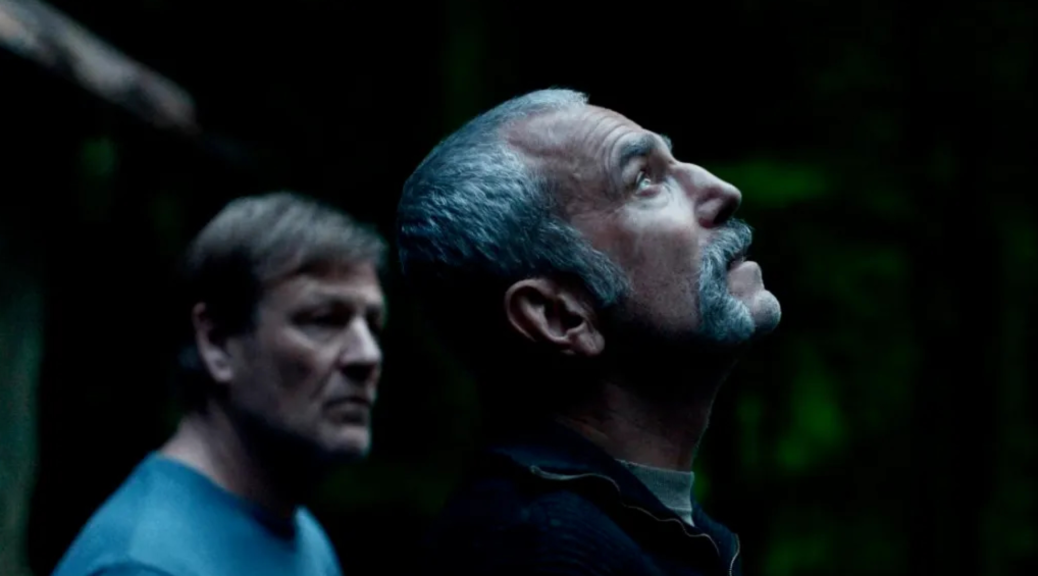
Sean Bean a is Jem, a good man who strikes out from his dodgy neighborhood in Northern England to the woods, led by the navigational coordinates on the back of a page that reads: Anemone: In Case of Emergency, Break Glass.

The coordinates lead him to his brother, Ray (DDL), a hermit since his time fighting against the IRA. Ray is wanted at home.

Like many of Day-Lewis’s greatest performances, his work here impresses with lengthy stretches of silence punctuated by a couple of brilliantly executed monologues. His lean and scrappy physicality belie the character’s vulnerability in ways that expertly match Ray’s reticent then vulgar speech.

Ray’s a man off the rails, while Bean deftly crafts a character who’s found comfort and strength in structure. Neither actor overplays the brothers’ differences, rather falling into a tenuous if lived-in familiarity.

The great Samantha Morton and an impressive Samuel Bottomley round out the cast, but as usual, all eyes are on Day-Lewis.

RDL knows it, not only providing memorable lines, but crafting an atmosphere that evokes Ray’s troubling inner landscape. Bobby Krlic’s (Eddington, Beau Is Afraid, Midsommar) score conjures an angry melancholy while moments of painterly surrealism deliver flashes of beautiful, hopeful madness. Even when lensing the natural elegance of Ray’s isolated world, RDL and cinematographer Ben Fordesman (Love Lies Bleeding, Saint Maud) evoke a magical splendor.

Anemone feels uncertain of how to resolve itself, to bridge the two worlds it creates. Structure failed Ray, and it nearly fails Anemone. But the film offers more than enough reason to believe in filmmaker Ronan Day-Lewis. And if you needed another reason to believe in actor Daniel Day-Lewis, well, here you go.

Carry That Weight

The Whale

by George Wolf

By now you’ve probably heard plenty of accolades about Brendan Fraser’s “comeback” performance in Darren Aronofsky’s The Whale. It’s all true.

And that emotional standing O at Cannes? He deserved it.

It’s a stupendous performance, in a movie that’s always struggling to keep up with him.

Fraser, under some pretty impressive prosthetics and makeup, is Charlie, who pretends his laptop camera is broken so his online writing students won’t glimpse his obesity.

Charlie spends almost every moment of the day in his Idaho apartment, resisting face-to-face contact with anyone except his caring nurse Liz (Hong Chau, Oscar-worthy herself). Liz and Charlie share a connection to the traumatic event that sent Charlie down the path of eating himself to death, and Liz’s frustrated admonishments about Charlie’s habits seem to have little effect.

What does stir Charlie from his destructive routine are two surprise visits. One is from Thomas (Ty Simpkins), a missionary from New Life Ministries. The other is from Ellie (Sadie Sink from Stranger Things and Fear Street), Charlie’s angry, spiteful and estranged teenage daughter.

Screenwriter Samuel D. Hunter adapts his own play, and while Aronofsky offsets the chamber piece roots with sufficient cinematic vision, not all of Hunter’s themes make an equally successful transition.

The Moby Dick metaphor is frequent and obvious, but woven as it is through the lens of a composition teacher, settles in as an organic and relatable device. Similarly, Hunter’s points about the often judgmental and unforgiving nature of religious groups aren’t exactly profound, but their character-driven delivery is welcome.

But the heavily dramatic relationship between Charlie and Ellie – and later, Ellie’s mother (Samantha Morton) – suffers from the stage-to-screen edit. Emotions often escalate from two to ten in an instant, straining authenticity and pushing the manipulative wave that threatens to consume the film.

It doesn’t help that Aronofsky’s camera flirts with fetishizing Charlie’s shame, though Fraser’s tenderness is always the film’s saving grace. His every expression is etched with a soul-deep pain that’s finally being pierced by a last hope for redemption. Far from the maudlin exercise this character could have been, Fraser’s is an endlessly compassionate performance that will not let you give up on Charlie, or the film.

And you may very well see the resolution coming by the second act, but regardless, don’t forget to have the tissues handy for the third. Every time The Whale needs saving, fear not, Fraser will keep it afloat.
