If you missed the exceptional Queen & Slim during its theatrical run, now is your opportunity to rectify that situation. And that’s not the only solid choice you have facing you and your comfy couch time. We are here to guide you.
Good intentions are very mortal and perishable things.
So are people.
Leigh Tiller lets good intentions muck up what should have
been an easy crime to get away with. No one would have known. No one would have
suspected. Not that there wouldn’t be complications, but she’d deal with those
later.
While co-writer/director Matthew Pope doesn’t reinvent the
wheel with his Rust Belt noir Blood on Her Name, it is actually the
refreshing simplicity of the storytelling that compels you to pay attention.
That and Bethany Anne Lind’s performance.
As Tiller, Lind weaves a dotted line between upstanding and
sketchy. Her compass doesn’t always point due North, or maybe it does, or at
least maybe it could. Right? It could. It’s this struggle, most of it internal,
that Lind characterizes with subtle anguish to give the film an aching,
remorseful tenderness, a longing for what should be but what is always just out
of reach.
Pope populates his low rent neighborhoods with an intriguing
mix of characters, none of whom are rendered with broad strokes. Dani Wilson is
especially strong as a fading white trash hottie, while Will Patton finds dimension
as an old man who believes he deserves a second chance but probably does not.
Blood on Her Name is a film that should feel bleak
but it rebels against its own grim fate. This is a film that knows Leigh Tiller
deserved better choices, stronger options. It’s a film that doesn’t want to
give up on small town, low rent, hard work. But it’s also a film that’s
bracingly clear-eyed about the reality that balances that optimism.
A seedy motel, a low-rent Sigfreid & Roy, the sketchy
side of a tourist town during low season—Albert Shin’s Disappearance at
Clifton Hill is a neo-noir told mainly in nostalgic colors, smoke and
mirrors.
The setting for the mystery is the Rainbow Inn Motel, a dump just off the Niagara River gorge that’s seen better days, though it’s tough to imagine when those days might have been.
Abby (Tuppence Middleton – British much?) is home to complicate the fulfillment of her mother’s will, because that will involves selling the old Rainbow Inn to the town mogul who looks to raze Abby’s memories in favor of day-glo paint ball.
What is it she remembers, exactly? A fishing trip down in
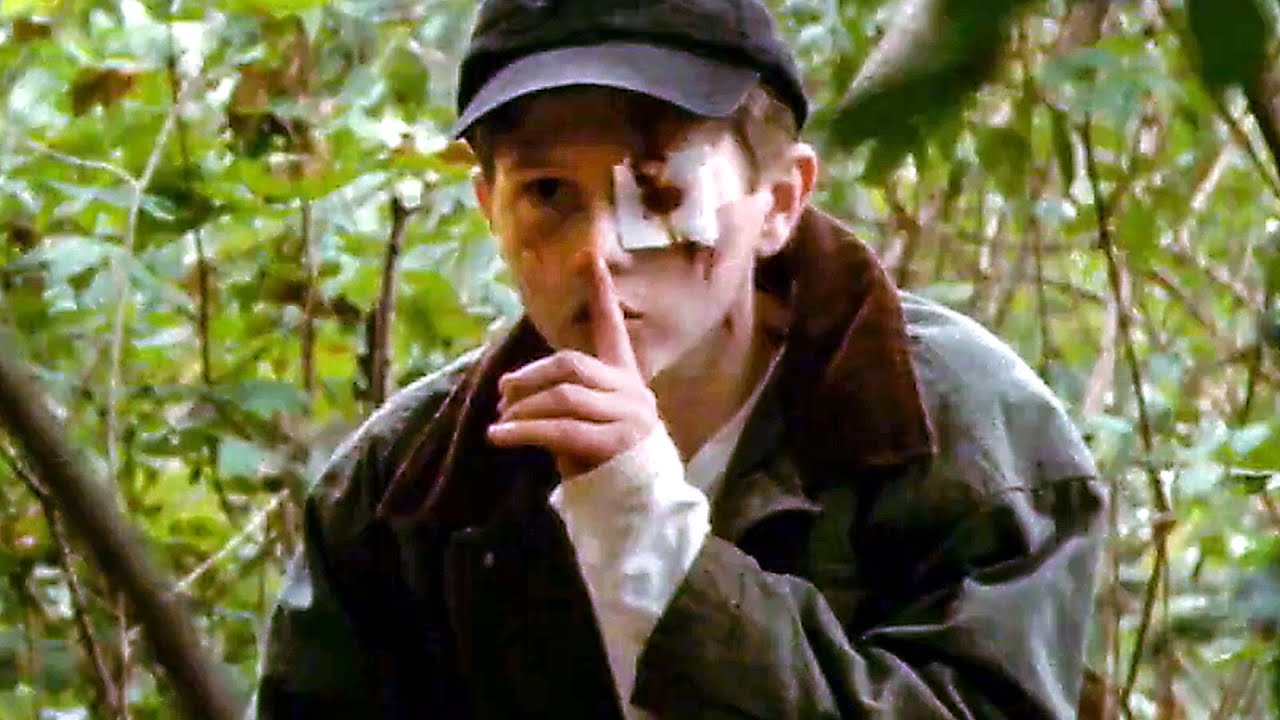
that gorge. A one-eyed boy. A kidnapping.
Shin mines all those wistful ideas about going home again as
Abby begins sifting through sordid secrets, wealthy families, and the decay of
the once wondrous world of her youth. Where will her sleuthing lead?
Aah, the untapped resources of your local public library. Is
that a microfiche machine?!
Shin excels at nailing atmospherics. Tourist trap towns do feel seedier off-season, their sparsely populated amusements somehow sad. In Shin’s hands, the town, its near vacant fun house and caged tigers all conjure the notion of childhood perverted.
Magician’s trickery. Sleight of hand.
The delightfully dodgy Abby is the epitome of an unreliable narrator, although to Shin’s endless credit, we’re not asked to believe something she’s telling us. We are with her, step by step, as she convinces herself of something, which allows us—like Abby herself—to really hope she might actually be on to something.
There’s a fluidity to the way Shin and co-writer James Schultz
unveil Abby’s own sketchiness, beginning with a barroom conversation/seduction.
This is also where he begins to introduce a delicious stew of supporting
characters, each one a little quirkier than the last.
Hannah Gross particularly impresses as Abby’s far more
grounded sister Laure, but I was probably most excited about Walter.
When you think of David Cronenberg—and I think of him
often—you don’t always consider his acting. But he does add a little something
something to films. Here he charms as Walter, area historian and podcaster: “Remember,
rate and review.”
Disappearance at Clifton Hill is not a flawless film, but it is deceptively competent. It’s fun and clever. Middleton’s clear eyed yet delusional Nancy Drew never ceases to be appealing.
And just when you think Shin and company have tidied up a little too quickly…smoke and mirrors, my friend.
Two years ago the Saw and Insidious writer found his footing as a director with the unreasonably entertaining Upgrade. In what amounted to Knight Rider as imagined by David Cronenberg, the film gave the old yin/yang concept a robotics feel thanks to the work of an evil genius.
The evil genius concept is back for Whannell’s reimagining
of The Invisible Man. But the most interesting thing about this version
of the old H.G. Wells tale is that the man—invisible or not—plays second
fiddle.
Instead of the existential ponderings that generally
underscore cinematic Invisible Man retellings, Whannell uses this story
to examine sexual politics, abuse, control and agency.
It’s a laudable aim, but the reason it works is casting.
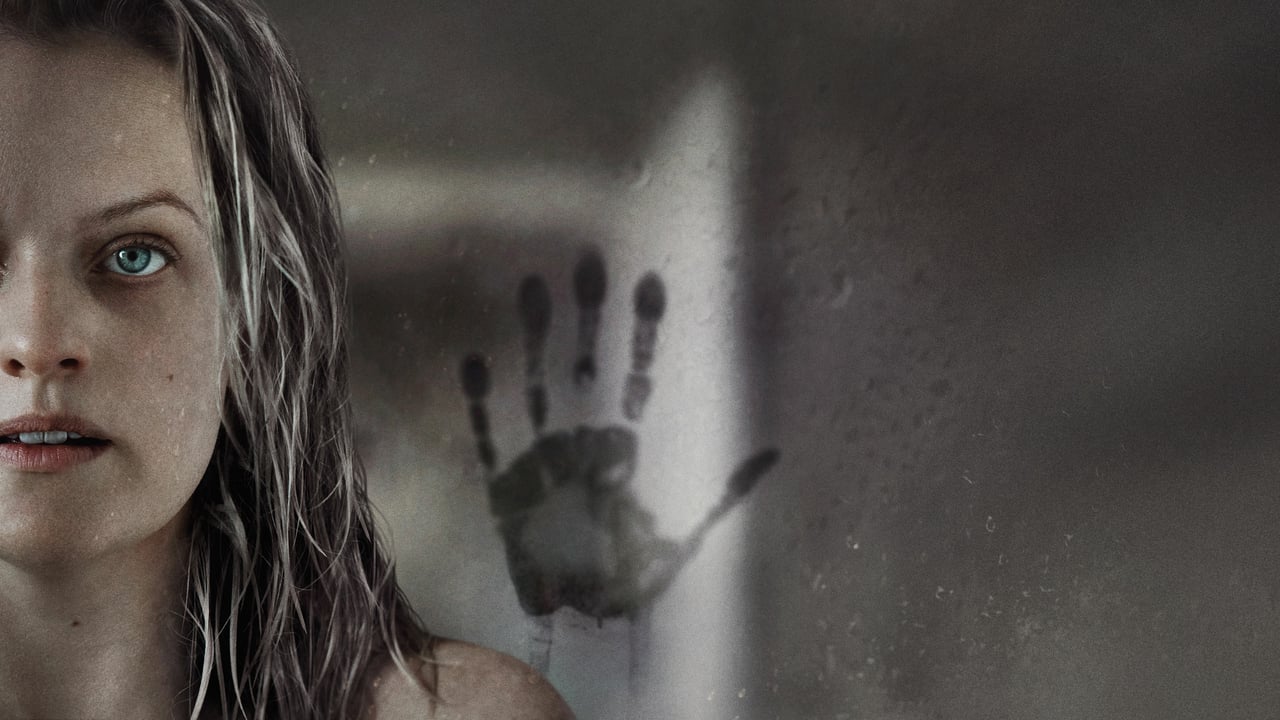
How fucking great is Elisabeth Moss?
Not just in this film—but make no mistake, she’s fantastic. Whether
it’s her TV work, small bits in indies like The
Square or The
Kitchen, or leading film roles, she’s been brilliant in everything she’s
ever done. (Last year’s Her
Smell is making its cable TV rounds – watch it!)
Whannell’s script is smart, with much needed upgrades to the invisibility formula as well as the havoc wrought. There are a handful of unrealistic moments, mostly in terms of character development, but a game cast (including Aldis Hodge, Storm Reid, Harriet Dyer and Michael Dorman) consistently elevates the material.
There is also an irritatingly convenient employment of
security footage: there when it suits the film, but weirdly unmentioned when it
would derail the plot.
The fight choreography, on the other hand, is evenly fantastic,
and these one-sided battles had to be hard to execute.
But the success of The Invisible Man is almost entirely shouldered by Moss, who nails every moment of oppressed Cecilia Kass’s arc. And early on, Moss has to sell it – pardon the pun- sight unseen. We’re only told Cecelia is abused, but Moss makes sure we never doubt that it is so.
Cecelia’s desperation, her fear, her logic, self-doubt as well as belief—all of it rings absolutely true. When you’re building a fantasy film in which one character is invisible and most actors are responding to an empty room, authenticity is key (and often very hard to come by). Moss makes it look easy.
But beyond the sci-fi and horror elements, Whannell’s success at weaving this tale through a #metoo lens comes from our total investment in Cecelia as a person first, personification of a systemic problem second. Without that, the gaslighting is less resonant and the eventual payoff less earned.
The two-hour running time does come to feel a tad bloated, but this new monster vision boasts plenty of creepy atmospherics, controlled tension and – wonder of wonders – well developed jump scares.
At its core, The Invisible Man is an entertaining B-movie horror propped up by contrivance. Whannell’s aim is to give the story new relevance, and thanks to Moss, his aim is true.
Any film centering on a character on the Autism spectrum is
risking a lot. It’s far too easy to simplify this character to a handful of
tics that lend themselves to a narrative device: Mercury Rising, Extremely
Loud and Incredibly Close, Forest Gump. (That’s right. I said it.)
But if it’s done well, if the character is a character and
not a narrative device, the film can benefit immeasurably.
The Night Clerk falls somewhere in between these two
options.
Writer/director Michael Cristofer leans on a committed cast,
including the always wonderful Tye Sheridan in the lead, to pull you into a
mystery thriller that may be too simple for its own good.
Sheridan is Bart. He works nights at a hotel near his home and
in his off hours he practices. He rehearses human interaction, small talk. He
and his mother (Helen Hunt, a touching mixture of brittle and tender) live day
to day in what has clearly become well-worn patterns. Most nights at work are
probably uneventful, but on this particular night, Bart discovers a murder.
The detective on the case (John Leguizamo) suspects Bart, but
Bart is distracted by a kind hearted and lovely new guest (a convincing Ana de
Armas).
Without Sheridan’s committed performance, the film would
fall apart. At no point does Sheridan, Cristofer or this film condescend to
Bart. The audience isn’t one step ahead of the character; we are piecing
through the mystery along with him. We aren’t asked by the film to pity Bart
but to be frustrated along with him, and Sheridan is up to the task of keeping
this character from tipping into martyrdom.
The problem with this film is not the characterization of a
young man with Asperger syndrome. The issue is the writing.
Cristofer may nail the characters—and for the most part, with
the help of talented performers, he does. But the lapses in logic when it comes
to the policework, not to mention the basic simplicity of the plot itself,
keeps the film from really engaging or staying with you.
The plot feels almost too uncomplicated to be a TV drama let
alone a feature film. Tensions over the outcome never rise above a flutter, and
regardless of how strong the performances—de Armas, Hunt and Sheridan, in
particular—this is a thriller that rarely manages to generate any real tension.
As a character study it’s intriguing, sometimes comical and certainly respectful. It’s a showcase for solid acting, but not much else.
Shudder’s latest premiere, the French film Jessica
Forever, offers a scifi antidote to war films. This is a quietly absorbing genre
piece concerned with the lives left to those who know nothing more than
fighting for survival, those who must endure not only what battle has done to
them, but what battle has encouraged them to do.
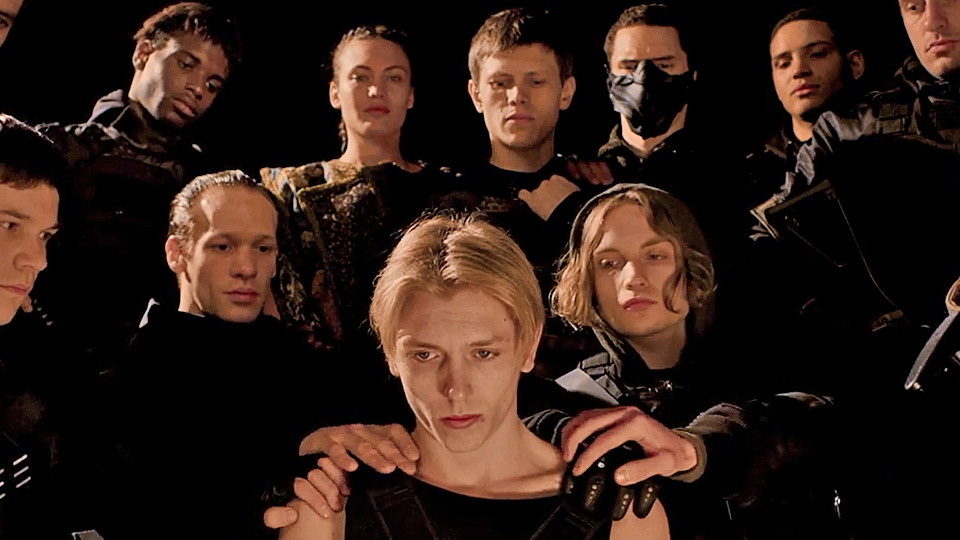
In an unnamed future, Jessica (Aomi Muyock, Love),
collects and rehabilitates “orphans” — feral young men with nothing and no one.
Left entirely on their own, they wreak bloody havoc on society and are hunted
by government-controlled drones.
We open on one such young man, Kevin (Eddy Suiveng). He’s thrown himself through a pane of glass in what looks to be a recently abandoned home. As a heavily armed tactical unit descends on the premises, only to softly embrace the combatant, writers/directors Caroline Poggi and Jonathan Vinel introduce the visual and tonal fluidity the film will emphasize throughout its running time.
The dystopian cinematic landscape is highly populated, but Jessica
Forever manages to carve out a unique space.
Muyock’s enigmatic central figure, so quietly effecting,
provides the film its compelling center of gravity. Around her orbits a loose family
of young men, and as Poggi and Vinel weave in and out of their day-to-day, we’re
tuned into the filmmakers’ primary interest.
Unlike so very many movies out there, it is not the glamour
or danger of war that attracts these filmmakers. Instead, Jessica Forever
focuses on the mental and emotional wreckage these young men carry around with
them as they cling to each other and their varying ideas of family, home and
normalcy.
Everything about the design of this low budget scifi poem is
astonishing. Working with cinematographer Marine Atlan, who shot the pair’s short
After School Knife Fight, Poggi and Vinel create and sustain a hypnotic
mood.
An absurd beauty to some of the shots helps the filmmakers offset its deliberate pacing. The entire crew, sound design in particular, pulls their weight as well, and the cumulative effect moves this lightly plotted ensemble piece in daring directions.
It’s Christmas, and regardless of a profound, almost
insurmountable family tragedy, one irredeemably oblivious father (Richard
Armitage) decides his kids (Jaeden Martell and Lia McHugh) should get to know
the woman (Riley Keough) he left their mother for. A week in an isolated mountain
cabin during a blizzard should do it.
Dad stays just long enough to make things really
uncomfortable, then heads back to town for a few days to work. Surely everybody
will be caroling and toasting marshmallows by the time he returns.
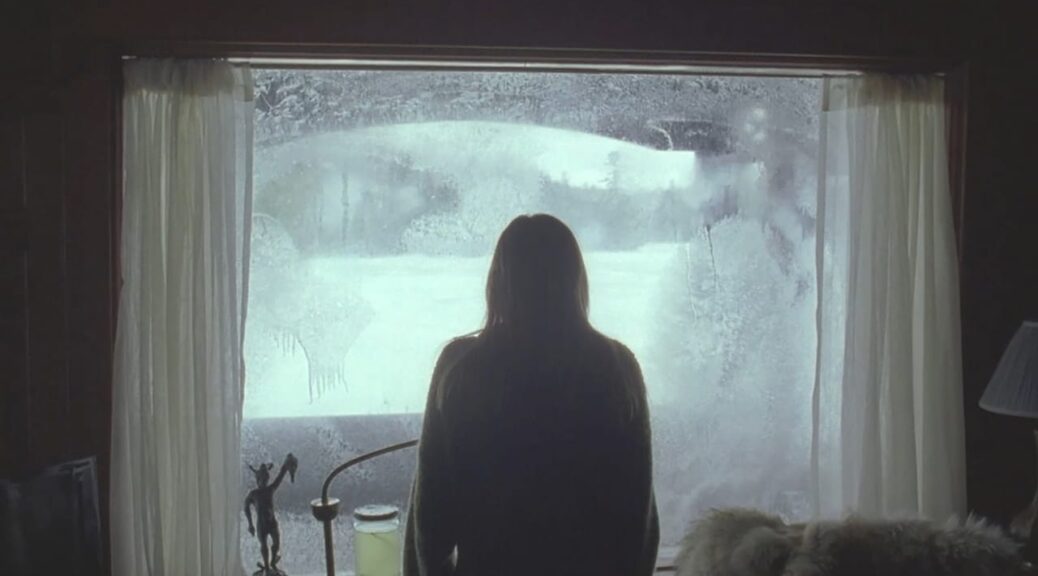
Though everything about The Lodge brings to mind A24 horror—for a number of reasons, Hereditary in particular—the film is actually a Hammer effort. No longer the corset-and-bloodletting studio, Hammer’s millennial output has been sparse but often quite good.
Choosing to back filmmakers Severin Fiala and Veronika Franz making their follow up to the supremely creepy Goodnight Mommy should be a solid risk to take. Here the pair does not shy away from the body of “white death” horror that came before The Lodge, with eerie and sometimes humorous nods to The Thing and The Shining, among others, haunting the piece.
The film also brings to mind A24’s It Comes at Night, another quiet film that saw Riley Keough trapped in an isolated abode with unsettling family dynamics. Keough is riding an impressive run of performances and her work here is slippery and wonderful. As the unwanted new member in the family, she’s sympathetic but also brittle.
Jaeden Martell, a kid who has yet to deliver a less than impressive turn, is the human heartbeat at the center of the mystery in the cabin. His tenderness gives the film a quiet, pleading tragedy. Whether he’s comforting his grieving little sister or begging Grace (Keough) to come in from the snow, his performance aches and you ache with him.
A healthy ability to suspend disbelief will aid in the experience The Lodge has to offer, but there’s no denying the mounting dread the filmmakers create, and the three central performances are uniquely effective. Thanks to the actors’ commitment and the filmmakers’ skill in atmospheric horror, the movie grips you, makes you cold and uncomfortable, and ends with a memorable slap.