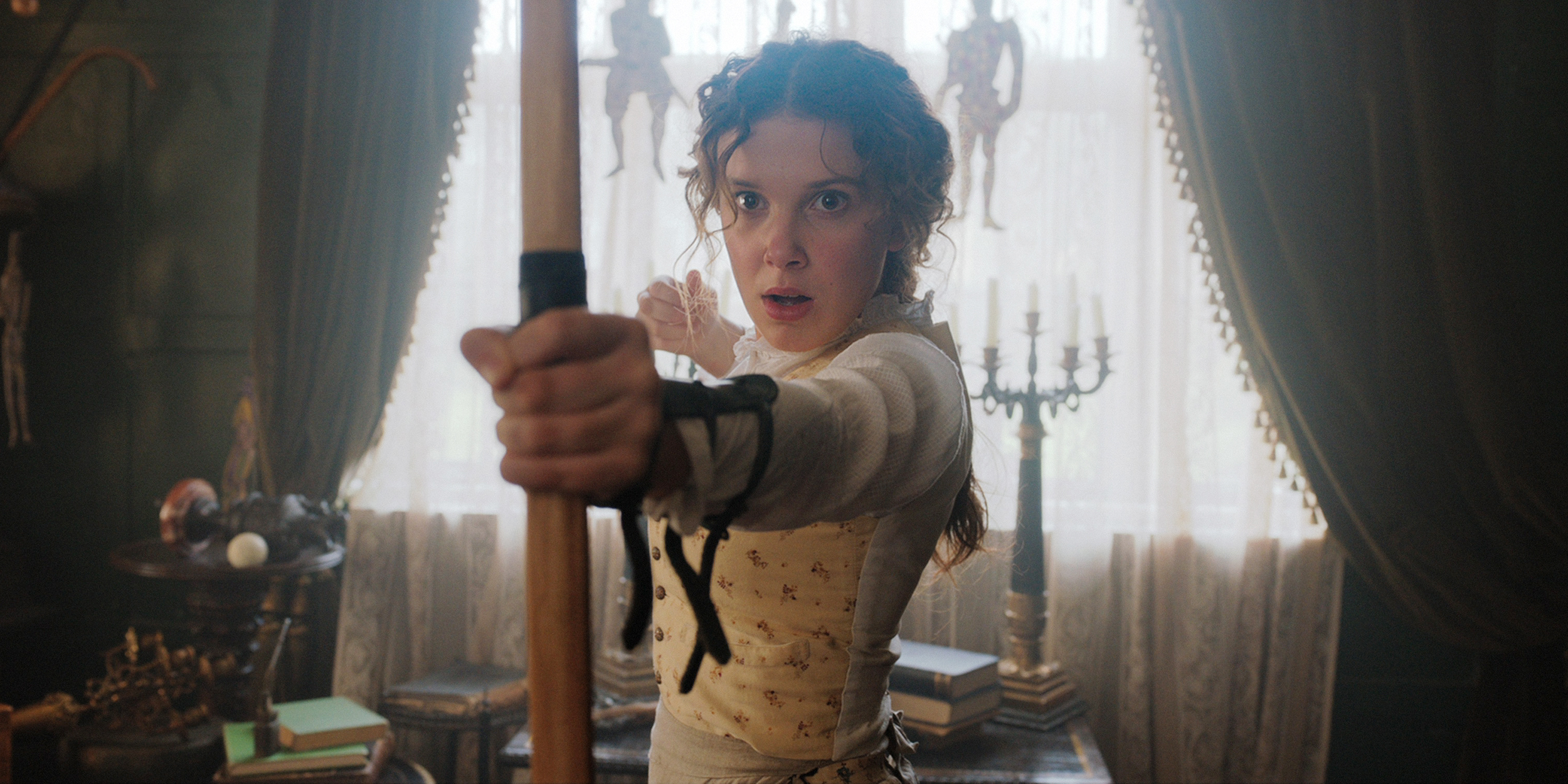
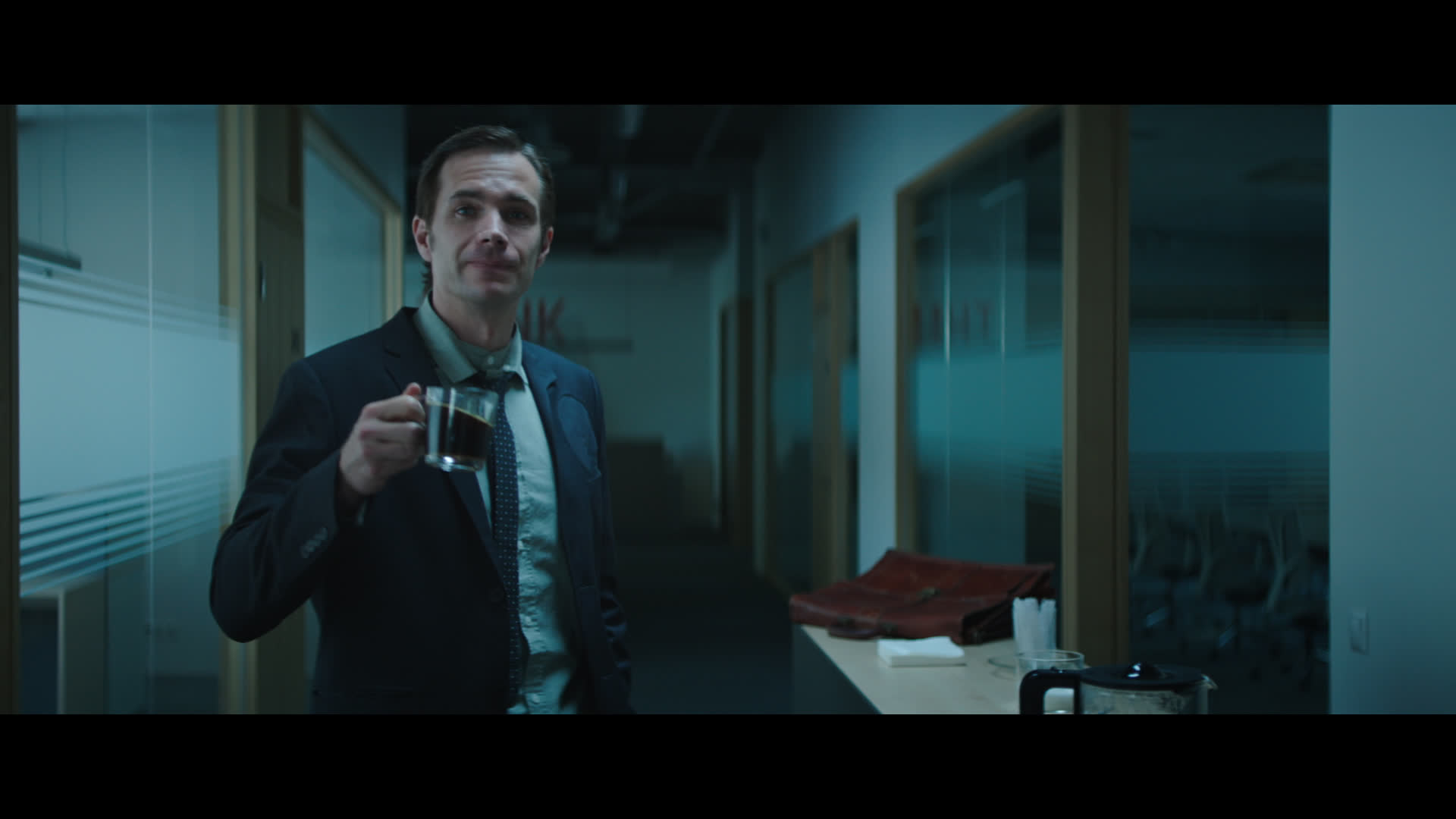
Actor and filmmaker Craig Roberts has pointed to a family member beset by mental illness as the inspiration for Eternal Beauty. You can feel the care Roberts takes in trading stigmas for “superpowers,” as well as the trust he puts in his stellar ensemble to mine the subtle humanity in his script.
Roberts played Sally Hawkins’s son in the sublime Submarine ten years ago, and arranging a working reunion sits right at the top of the smart choices made for his second feature as writer/director.
The Oscar-nominated Hawkins plays Jane, a woman managing to live independently with paranoid schizophrenia, constant medication and bouts of depression. She still has scars from being left at the altar years before, and receives precious little affection or encouragement from her mother (the always welcome Penelope Wilton) or sisters (Alice Lowe, Billie Piper).
Jane’s choice to take a break from her meds brings concerns (like the giant spider hallucinations) but also some welcome clarity amid her constant fog. After first rebuffing the interest of Mike (David Thewlis), an aspiring musician with similar mental issues, Jane accepts his advances, and the two begin a relationship bearing all the awkwardness and free-spirited fun of first love.
Hawkins, again, is a wonderful vessel of expression. Jane may stumble through her days wearing oversized clothes and offering hushed sentences, but she’s always observing and dissecting. She can notice the red flags of her brother-in-law’s wandering eye, and sensibly concoct a darkly hilarious plan to improve her family’s choice in Christmas gifts. Through it all, Hawkins’s vision of Jane is never less than human, and always deeply affecting.
Roberts often films with disjointed angles and changing colors to reflect Jane’s worldview, which sounds more cloying than it actually is, much like the tonal shifts that Roberts softens through a wise commitment to understatement.
More than once in the film we hear a doctor advise: “Don’t fight depression, make friends with it.” By treating Jane’s joy and heartbreak less like a clinical study and more as parts of a greater familial whole, Eternal Beauty finds a way to make those orders seem doable.
Do we really need another documentary showcasing greed as one of America’s most identifiable traits, “rigged” as our favorite path to winning, and Donald Trump as one of our biggest mistakes?
Check the calendar. Yes, we do.
Director David Byars, whose 2017 debut documentary No Man’s Land profiled the fight over Oregon’s Malheur National Wildlife refuge, returns to environmental concerns with Public Trust, a deep dive into an ongoing battle for ground.
That ground is a swath of some 640 million acres of public land, currently held in trust by the federal government and “owned” by every American citizen. Cut to the chase: conservatives have been trying to privatize these National Parks, forests, grasslands and refuges for decades (since Reagan – shocker!), and the lunatic now in office makes something as unthinkable as selling off the Grand Canyon seem like it might be on the table.
As good documentarians do, Byars humanizes the issue through people invested in the subject. From a journalist in the trenches to a climate change warrior to a Native American tribe fighting for their livelihood, we feel how these lands are tied to identity and common good on one side, and industry profits on the other.
With Robert Redford on board as executive producer, the lack of narrative flash here comes as little surprise. But while Public Trust‘s case building is workmanlike, the rallying cry is no less urgent.
Because in the near future world of LX 2048, the only way you can venture out in the daylight is by going full hazmat. In fact, the sun has become so lethal that clone technology is needed to meet the demand for augmented dayworkers.
Once the clones arrive, the unintended consequences are sure to follow. And Adam Bird is getting an up close look at some of them.
Things are not going well for Adam (James D’Arcy). His tech company is on shaky ground, and he hasn’t been taking his LX “mood stabilizers” which could help with the really bad news: his heart is failing and he doesn’t have long to live. Though his relationship with wife Reena (Anna Brewster) and the kids was already on the rocks, Adam is worried about securing their future.
Then, through frequent flashbacks, writer/director/producer/editor Guy Moshe fills in the backstory. Though virtual reality has taken over by 2048, “the chip” is the next big thing. There’s been a massive decline in population. And the Premium 3 insurance plan allows you to “tailor” your spousal replacement clone in the event of death.
What luck for Reena! The Birds are Premium 3 plan holders.
Moshe’s overly cheesy opening credits lower the expectations of what’s to come, but there are engaging visuals and some solid sci-fi ideas here, albeit ones fighting to overcome stilted dialog and tonal swings.
Adam’s conversations with unseen VR avatars are overly explanatory only for our benefit, sometimes bringing a wince-worthy phoniness to D’Arcy’s performance. And yet, when Moshe suddenly introduces moments of absurdist humor, you wonder if either tract was intended.
Delroy Lindo’s cameo as cloning tech legend Donald Stein instantly raises the stakes. Lindo’s natural gravitas make Stein’s musings about what it means to be human and the wages of playing God land a tick higher on the scale of standard sci-fi existential crises.
This is a film that often feels adrift and in need of an anchor. It’s neither as smart as it wants to be, nor as dumb as you fear early on. Much like its main character, LX 2048 has heart, but you’re never sure how long it can hold out.
If you saw the quietly unnerving Martha Marcy May Marlene nine years ago and have had the name Sean Durkin filed away since then, you’re not alone. Good news for both of us then, as Durkin finally returns as writer and director with The Nest, another precisely crafted examination of family dynamics.
This time, though, it’s a nuclear family, one that’s slowly imploding before our eyes.
It is the late 80s, and hotshot commodities trader Rory O’Hara (Jude Law) has news for his wife Alison (Carrie Coon): they need to move. Business in New York is drying up, but his native London is “booming.” Alison isn’t loving the idea of uprooting their two kids – and her horse training business – for the fourth time in ten years, but can’t help but be impressed by the 15th century manor Rory has secured in the English countryside.
The place is legendary (“Led Zeppelin stayed here!”), and huge. And from the moment the O’Haras move in, the spaces between them only grow larger.
Though it lacks the sinister edge of MMMM, Durkin’s storytelling here still carries a chill, assembling precise details with a subtlety that often betrays a focused narrative. With a microscope trained on the minutiae of finding a work/life balance, Durkin gives his stellar leads plenty of room to dig indelible, often heartbreaking layers.
Law shows all the easy charm that makes Rory an office favorite, while slowing revealing the cracks in his entitled, high roller facade. Pretending can be harder to sustain than success, and Rory is wearing down.
And Alison – thanks to a wonderful performance from Coon – becomes the weary embodiment of a last nerve exposed. She’s facing the reality of who her husband really is – and grasping for the best way to react. Fortunately, not giving a fuck is one of the options, and Coon makes all of Alison’s frayed edges irresistible.
Still, even as this family breaks down before us like some sort of clinical exercise, Durkin brings a darkly humorous undercurrent to the O’Haras’ way forward that feels like a first step toward honesty.
A house isn’t always a home. The Nest may rarely be comfortable, but it’s strangely inviting, and once you’re inside, plenty hard to look away.
Toward the end the nearly 20 vignettes that make up I’ve Got Issues, a mournful woman proclaims, “The world is absurd. I’ve lost all my humor. But I must continue.”
That’s when you realize how deeply the lede has been buried.
Because that’s exactly what writer/director Steve Collins serves up: a host of absurdity that soldiers on, no matter how few laughs are generated.
Featuring occasional narration from Jim Gaffigan, bare bones production values and an ensemble of actors in ever-changing roles, the film wallows in the lowest of keys and the shaggiest of dogs. From a KKK recycling program to a self-help guru who’s of very little help, from a woman caught on a tilt-a-whirl to a singer sending out a demo tape addressed only to “Hollywood,” this film strings together segments on absurd futility that begin to make the title feel more like a cry for help.
Those with a very particular sense of humor may enjoy this film very much. God bless them.
That Faulkner quote gets a lot of action in writers/directors Gerard Bush and Christopher Renz’s social nightmare Antebellum.
The titular term describes the period in American history just prior to the Civil War. That’s where this thriller finds its horror, and where a prominent, present day African American sociologist/activist/author wakes up to find herself trapped.
Janelle Monáe crafts an impressive lead as Veronica, a PhD beaten, branded and forced to accept a slave name in a film that plays out like a disturbingly relevant Twilight Zone episode.
Enslaved on a reformer plantation, “Eden” works to stay alive long enough to plan an escape and outsmart two Confederate officers (Eric Lange, Jack Huston) and the mysterious mansion mistress (Jena Malone).
The hideous rise of white nationalism is the true nightmare here – fertile and bloody ground for horror. From Godzilla to Get Out, horror has always brimmed with social commentary and anxiety, so it should come as no surprise that a genre film tackles America’s racist shame this directly.
And while this approach certainly grabs your attention with its boldness, Bush and Renz can get too caught up in obviousness and speech-making. The second act suffers most from these heavy hands. The modern day shenanigans with Veronica and two friends (Gabourey Sidibe, Lily Cowles) push too hard, last too long and say very little.
But as much as Spike Lee has recently connected the past and present of racism with layered nuance, Bush and Renz go right upside our heads. Pulpy exploitation? It goes there. It’s a horror movie.
Horror movies exist so we can look at the nightmare, examine it from a distance, and come out the other side, unscathed ourselves. Antebellum is acknowledgment and catharsis, and not only because all those Black people being terrorized on the screen are fictional, instead of real victims in another cell phone crime scene. The film’s true catharsis – a highly charged and emotional payoff – lies in Act 3: comeuppance.
And it is glorious.
There are stumbles getting to the fireworks, but for sheer heroic tit for tat, Antebellum delivers the goods.
Anyone who saw the original The Girl With the Dragon Tattoo knows if you get on the wrong side of a score with Noomi Rapace, she’ll have no problem settling it.
As Maja in The Secrets We Keep, Rapace has a similar mindset. Settled into post-war Suburbia in an unnamed town, Maja and her physician husband Lewis (Chris Messina) run the local medical clinic while raising their young son, Patrick.
On one fateful afternoon, the Romanian-born Maja is shaken to her core by the sight of a man (Joel Kinnaman) she believes committed heinous war crimes against her and her family years before. After setting a successful trap, Maja kidnaps the man and holds him captive in her basement, finally detailing to Lewis the horrifying ordeal she has never spoken of.
Director and co-writer Yuval Adler sets an effective hook despite some forced visual cues (a literal bubble bursting, North by Northwest on a theater marquee). Rapace delivers the right mix of confused trauma, making Maja’s indecision between murder and interrogation ring true (much more so than the petite Rapace’s ability to maneuver the dead weight of Kinnaman).
Is the suburban hostage a Swiss immigrant named Thomas, as he claims, or is he the former Nazi Karl, whose war crimes haunt Maja’s dreams?
Adler seems to sense the need to distance the film from Death and the Maiden (and, to a lesser extent, Big Bad Wolves), but as events move further from the basement, an air of B-movie pulp emerges.
A visit from the neighborhood cop seems to exist only for contrived tension, while Maja’s burgeoning friendship with her captive’s wife (Amy Seimetz) and daughter can never quite move the shadow of secrets over the entirety of picket-fence Americana the way Adler intends.
And despite a terrific performance from Messina, Lewis lands as a frustrating and sometimes distracting presence. While Lewis’s struggle to believe Maja – even without a confession – is one of the film’s most resonant strengths, the bigger struggle concerns the film’s commitment to defining Maja on her own terms.
When it does commit, The Secrets We Keep rewards the investment. But when it cops out, there’s little here we haven’t already been told.
We haven’t been able to leave home in months, which means that home has kind of turned into its own horror show. For us, that’s Ohio, so we figured, why not celebrate?! In honor of our own home grown horror show, we dug into the best horror movies set right here in OH-IO!
5. Scream 2 (1997): Windsor College, OH
Updating his celebratory meta-analysis of genre clichés, Craven checked back in on Sydney Prescott (Neve Campell) and crew a couple years later, as the surviving members of the Woodsboro murders settled into a new semester in the little Ohio liberal arts school of Windsor College. The movie Stab, based on the horrors Sydney and posse survived (well, some didn’t survive) just two years ago is already out and screening on campus, but has it inspired copycat killers?
Craven, working again from a screenplay by Kevin Williamson, goes even more meta, using the film-within-a-film technique while simultaneously poking fun at horror sequel clichés in his own horror sequel.
And in the same way Scream subverted horror tropes while employing them to joyous results, the sequel – funny, tense, scary, smart, and fun – manages to find freshness by digging through what should be stale.
https://www.youtube.com/watch?v=WG0oUO4mK4A&t=29s
4. Tragedy Girls (2017): Rosedale, OH
Heathers meets Scream in the savvy horror comedy that mines social media culture to truly entertaining effect.
Sadie (Brianna Hildebrand) and McKayla (Alexandra Shipp) are looking for more followers to improve their brand, and they have been doing a lot of research to make their content more compelling. The Tragedy Girls plumb their small Ohio town’s surprising death toll with more insight than the local police seem to have. Where do they get their knowledge?
Provocative.
Hildebrand and Shipp (both X-Men; Hildebrand was the moody Negasonic in Deadpool while Shipp plays young Storm in the franchise proper) nail their characters’ natural narcissism. Is it just the expectedly shallow, self-centeredness of the teenage years, or are they sociopaths? Who can tell these days?
3. The Faculty (1998): Herrington, OH
The film exaggerates (one hopes) the social order of a typical
Ohio high school to propose that it wouldn’t be so terrible if all the teachers
and most of the students died violently, or at least underwent such a horrific
trauma that a revision of the social order became appealing.
Indeed, in this film, conformity equals a communicable disease.
Adults aren’t to be trusted; high school is a sadistic machine grinding us into
sausage; outcasts are the only true individuals and, therefore, the only people
worth saving. Director Robert Rodriguez pulls the thing off with panache, all
the while exploring the terrifying truth that we subject our children to a very
real and reinforced helplessness every school day.
Interestingly, the infected teachers and students don’t turn into
superficial, Stepford-style versions of themselves. For the most part, they
indeed become better, stronger, more self-actualized (ironically enough)
versions, which is interestingly creepy. It’s as if humanity – at least the
version of it we find in a typical American high school – really isn’t worth
saving.
2. Trick ‘r Treat (2007): Warren Valley, OH
Columbus, Ohio native Michael Dougherty outdid himself as writer/director of this anthology of interconnected Halloween shorts. Every brief tale set in sleepy Warren Valley, Ohio compels attention with sinister storytelling, the occasional wicked bit of humor and great performances, but it’s the look of the film that sets it far above the others of its ilk.
Dougherty takes the “scary” comic approach to the film—the kind you find in Creepshow and other Tales from the Crypt types—but nothing looks as macabrely gorgeous as this movie. The lighting, the color, the costumes and the way live action bleeds into the perfectly placed and articulated moments of graphic artwork—all of it creates a giddy holiday mood that benefits the film immeasurably.
Dylan Baker (returning to the uptight and evil bastard he perfected for his fearless performance in Happiness) leads a whip-smart cast that includes impressive turns from Brian Cox, Anna Pacquin, Leslie Bibb and Brett Kelly (Thurman Merman, everybody!).
And it’s all connected with that adorable menace, Sam. Perfect.
1. A Nightmare on Elm Street (1984): Springwood, OH
Teens in suburban Ohio share nightmares, and one by one, these teens are not waking up. Not that their disbelieving parents care. When Tina woke one night, her nightgown shredded by Freddie’s razor fingers, her super-classy mother admonished, “Tina, hon, you gotta cut your fingernails or you gotta stop that kind of dreamin’. One or the other.”
Depositing a boogieman in your dreams to create nightmares that will truly kill you was a genius concept by writer/director/Clevelander Craven because you can only stay awake for so long. It took everyone’s fear of nightmares to a more concrete level.
The film was sequeled to death, it suffers slightly from a low budget and even more from weak FX that date it, but it’s still an effective shocker. That face that stretches through the wall is cool, the stretched out arms behind Tina are still scary. The nightmare images are apt, and the hopscotch chant and the vision of Freddie himself were not only refreshingly original but wildly creepy.