Tag Archives: Fright Club

Fright Club: Horror’s Best Weirdos

Horror loves it some weirdos – and so do we! Be honest, Carrie would not have done nearly so much damage had she fit in somehow, right?

Oh, Carrie – how we love you and your nutcase of a mom. And the White women are hardly alone. Freaks and misfits litter the horror cinema landscape – and thank God for it! Whether Edwin Neal – the hitchhiker and harbinger of what’s to come in West Texas – or an unseemly Pit Bukowski, white gown and katana bedecked in Der Samurai.

You want to get really weird? How about anybody from Calvaire? Possession’s swinging Heinrich? Let’s not forget our favorite prom non-goer, The Loved Ones’ Lola (Robin McLeavy).

And these aren’t even the best. Who are the five best weirdos in horror cinema?

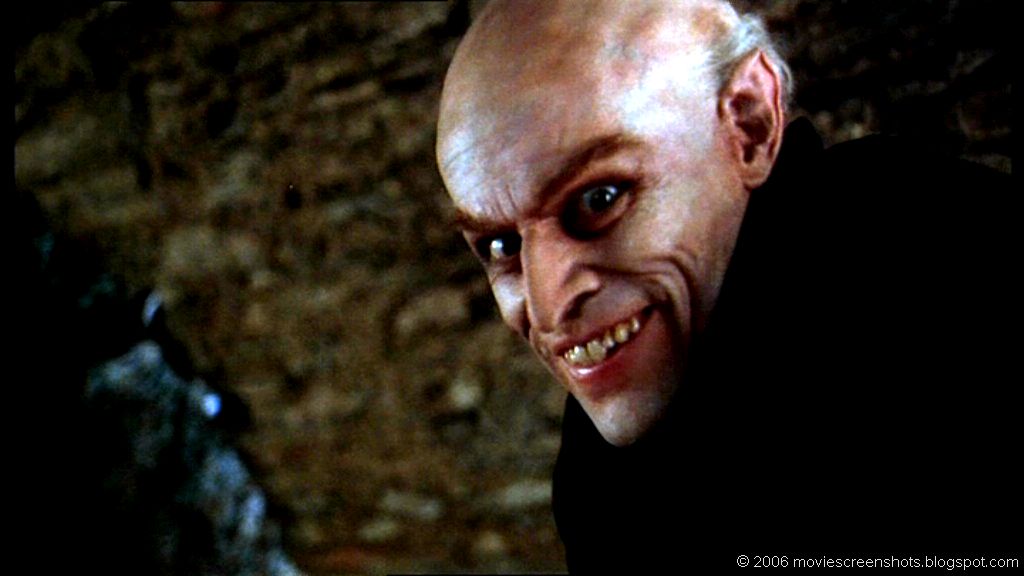
5. Orlok (Willem Dafoe) Shadow of the Vampire (2000)

Veteran actor/effortless weirdo Willem Dafoe picked up an Oscar nomination playing Max Schreck, the “actor” who portrayed vampire Count Orlock in FW Murnau’s groundbreaking 1922 film Nosferatu.

Shadow film pokes good natured but pointed fun at the industry, but it’s based on the rumor at the time that Schreck’s performance was so authentic because he was, indeed, a vampire.

Dafoe is odd as they come, and also heartbreaking, goofy, lovable, wounded and terrifying.

4. Ichi (Nao Ohmori) Ichi the Killer (2001)

Clearly someone from a Takashi Miike film was bound to make this list. Indeed, just about every character in this film would have been in contention. But no one out-weirds Ichi.

A man-child who’s equal parts sympathetic and repellant, Ichi does the bidding of those who care for him. Their moral compass does not always point North, though they try to do the right thing by letting Ichi unleash his very, very wrong behavior in a kind of, sort of heroic way.

Which is why some of his actions are so profoundly, scarringly surprising. Because Ichi does some seriously fucked up shit. And he’s not even the one who skins a guy alive.

3. May (Angela Bettis) May (2002)

Oh, Angela Bettis. No one – not even Sissy Spacek – captured the crushing awkwardness of trying to fit in when you are, deep down, cripplingly odd as well as Bettis.

Her May aches for a friend. She has some heartbreaking trouble finding that in Adam (Jeremy Sisto) and Polly (Anna Faris – brilliant). But if you can’t find a friend, you might just have to make one.

Her performance is all awkward pauses, embarrassing gestures and longing. It’s beautiful, tender, sweet and – eventually – forgivingly bloody. We love May.

2. Bubby (Nicholas Hope) Bad Boy Bubby (1993)

Christ, kid, you’re a weirdo.

Writer/director Rolf de Heer explores something amazing in his Aussie arthouse horror Bad Boy Bubby. Bubby has spent his entire 30 years in a single, windowless room with Mam. She leaves now and again, affixing a gas mask and warning the boy that he’ll die if he sets foot outside.

No, things aren’t that great for Bubby. They’re even worse for Cat. When Bubby eventually has to meander out into the open, his adventure is so authentically pieced together. He assimilates information and behaviors with the perfect sense of childishness.

Nicholas Hope’s performance is a minor miracle in a film that is wild, disturbing and pretty amazing.

1. Big Ronnie (Michael St. Michaels ) Greasy Strangler (2016)

Honestly, just about anybody from this film might have made the list. Big Brayden (Sky Elobar) was an obvious possibility. Those glasses! And he’s shit scared!

But it’s Big Ronnie (or is it Private Eye Jodie?!) who earns the accolade. Yes, he may be a bullshit artist, but that smile, the disco suit, the “big rat,” – let’s not even get started on his diet or hygiene. We’d never have thought of using a carwash quite that way, and yet we will never be able to think of it otherwise again.

Big Ronnie is the Weirdo All Star. Celebrate with some potato chips?
Fright Club: Single Parent Horror

All the single ladies, all the single ladies – unfortunately, life does not always turn out as well for us as it does for Beyonce. Today we celebrate and fear the horror that can befall the single parent. Your kids may be monsters. Monsters may be after your kids. You may be the monster. Maybe it’s all three at once. Whatever the case, horror filmmakers have found a way to hit some very effective buttons when exploring the horror potential in a single parent home.

5. The Ring (2002)

Let’s be honest, Rachel (Naomi Watts) is not much of a mother. Were it not for her sloppy parenting, her precocious son Aidan (adorable and creepy David Dorfman) might not even be in this mess. But she left her VHS tape laying around, paid no attention to what he was up to, and now Samara is coming for him.

Gore Verbinski one-upped Hideo Nakata’s 1998 Japanese original Ringu with this deeply creepy, well-executed nightmare, much of it centering on questionable parenting. Both Watts and Dorfman are excellent, each creating a character that is somehow rigid and distant, but you long for tenderness between them. Dorfman’s wise-beyond-his-years performance feels both chilly and vulnerable, and the relationship here creates an off-kilter foundation for the horrific mystery unfolding.

Everything about this film is done well – the images on the video tape, the looks on the faces of the victims, that horse bit on the boat, Brian Cox in the bathtub, Samara climbing out of the well! Verbinski strings together one nightmare image after another, but the tension of whether or not Rachel has the wherewithal to save the son she hasn’t paid enough attention to in the first place is what holds these together.

https://www.youtube.com/watch?v=_PkgRhzq_BQ

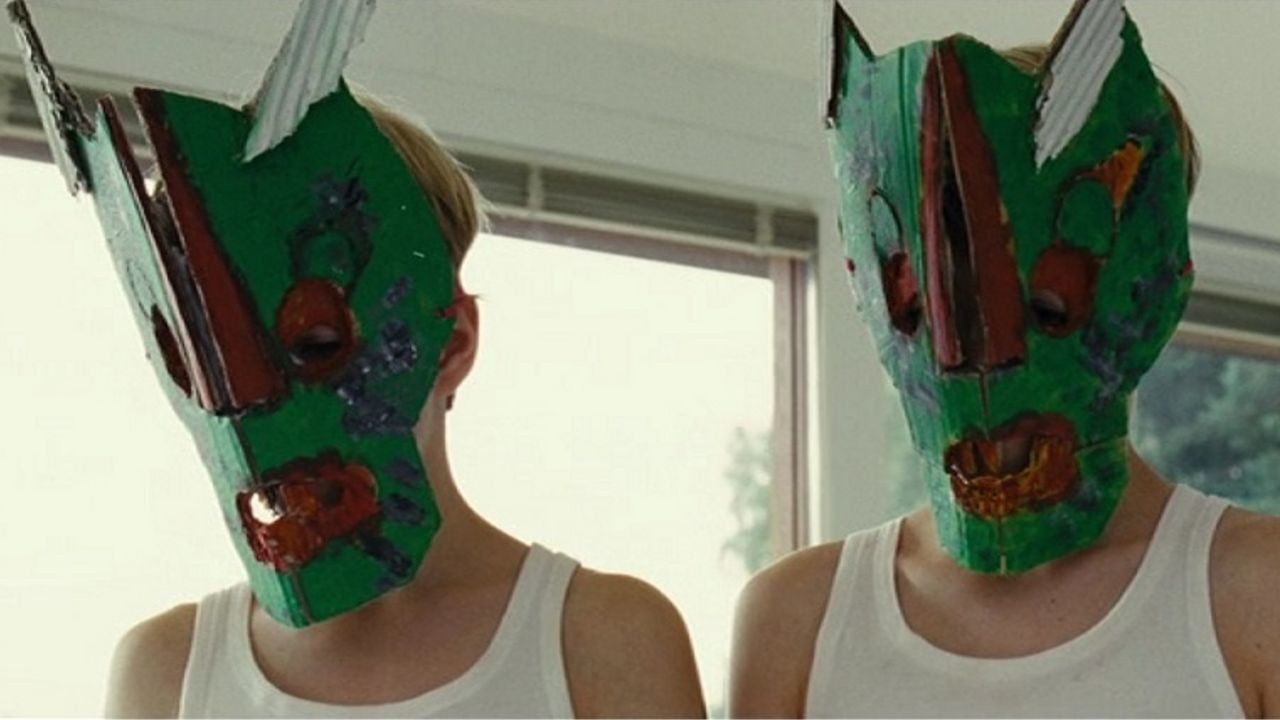
4. Goodnight Mommy (2014)

There is something eerily beautiful about Severin Fiala and Veronika Franz’s rural Austrian horror Goodnight Mommy (Ich seh, Ich seh).

During one languid summer, twin brothers Lukas and Elias await their mother’s return from the hospital. But when their mom comes home, bandaged from the cosmetic surgery she underwent, the brothers fear more has changed than just her face.

Inside this elegantly filmed environment, where sun dappled fields lead to leafy forests, the filmmakers mine a kind of primal childhood fear. There’s a subtle lack of compassion that works the nerves beautifully, because it’s hard to feel too badly for the boys or for their mother. You don’t wish harm on any of them, but at the same time, their flaws make all three a bit terrifying.

Performances by young brothers Lukas and Elias Schwarz compel interest, while Susanne Wuest’s cagey turn as the boys’ mother propels the mystery. It’s a hypnotic, bucolic adventure as visually arresting as it is utterly creepy.

3. Under the Shadow (2016)

The tale is set in Tehran circa 1988, at the height of the Iran/Iraq war and just a few years into the “Cultural Revolution” that enforced fundamentalist ideologies.

Shideh (a fearless Narges Rashidi) has been banned from returning to medical school because of her pre-war political leanings. Her husband, a practicing physician, is serving his yearly medical duty with the troops. This leaves Shideh and their young daughter Dorsa (Avin Manshadi) alone in their apartment as missiles rain on Tehran.

When a dud missile plants itself in the roof of the building (shades of del Toro’s Devil’s Backbone), Dora starts talking to a secret friend. Maybe the friend would be a better mommy.

Frazzled, impatient, judged and constrained from all sides, Shideh’s nerve is hit with this threat. And as external and internal anxieties build, she’s no longer sure what she’s seeing, what she’s thinking, or what the hell to do about it.

The fact that this menacing presence – a djinn, or wind spirit – takes the shape of a flapping, floating burka is no random choice. Shideh’s failure in this moment will determine her daughter’s entire future.

https://www.youtube.com/watch?v=4fhejr94P14

2. Psycho (1960)

Was Norman Bates psychotic from the start? Or was he smothered into madness by his mother?

Hard to say – Mrs. Bates can’t speak for herself, can she? Although Norman’s mother is not a character in Hitchcock’s classic, her presence is everywhere. But to be fair, we don’t get to see her as she was, we only get to see her as Norman sees her.

Whatever the case, Norman has an unhealthy attachment to his late mother, a single parent whose relationship with her son may have driven him to some very bad deeds. Part of Hitchcock’s skill in this film is to play with our expectations of the characters.

The heroine has done some questionable things. The villain is the most sympathetic character onscreen. The most relevant character in the story isn’t even in the film. Was Mrs. Bates really a bad mom, or does she just seem like that to us because we see her through Norman’s eyes, and he’s a psycho?

1. Babadook (2014)

You’re exhausted – just bone-deep tired – and for the umpteenth night in a row your son refuses to sleep. You let him choose a book to read, and he hands you a pop-up you don’t recognize: The Babadook. Pretty soon, your son isn’t the only one afraid of what’s in the shadows.

Filmmaker Jennifer Kent’s film is expertly written and beautifully acted, boasting unnerving performances from not only a stellar lead in Essie Davis, but also the alarmingly spot-on young Noah Wiseman. Davis’s lovely, loving Amelia is so recognizably wearied by her only child’s erratic, sometimes violent behavior that you cannot help but pity her, and sometimes fear for her, and other times fear her.

Likewise, Wiseman delivers as a tender, confused, dear little boy you sometimes just want to throttle. Their naturalistic performances genuinely showcase the baggage that can exist between a parent and a child.

Much of what catapults The Babadook beyond similar “presence in my house” flicks is the allegorical nature of the story. There’s an almost subversive relevance to the familial tensions because of their naked honesty, and the fight with the shadowy monster as well as the film’s unusual resolution heighten tensions.

The film’s subtext sits so close to the surface that it threatens to burst through. Though that does at times weaken the fantasy, it gives the film a terrifying urgency. In the subtext there is a primal horror, a taboo rarely visited in film and certainly never examined with such sympathy. Indeed, the compassion in the film may be the element that makes it so very unsettling.

Fright Club: When Animals Attack

How is it we haven’t done this one yet? So many to choose from – most of them bad. Grizzly? Or Grizzly 2: The Concert? You know how we feel about Monkey Shines.

But, an animal attack has to be the human’s most primal fear, and it is sometimes mined for real terror when the story is in the right hands. Though there are a handful that fell just off the list – Burning Bright, Black Water, Lake Placid, The Shallows – these made the most lasting impression. They left bite marks.

5. Cujo (1983)

A New England couple, struggling to stay afloat as a family, has some car trouble. This naturally leads to a rabid St. Bernard adventure.

But before we get into all that, we’re privy to the infidelities that undermine the marriage of Donna (Dee Wallace) and Vic (Daniel Hugh Kelly). Remarkably, it’s Donna who’s boning elsewhere. You might expect such behavior from her perennially shirtless husband, but no. Apparently dressing like Ma Engle is a real draw for New England boys.

This film is easy to write off. It dates terribly, from the heavy handed set up to the weak exposition to the inescapably Eighties score to Daniel Hugh Kelly’s ridiculous hair. Let’s not even get into this big, friendly St. Bernard covered in Caro Syrup pretending to be a menace, or the hillbilly family running the garage. (Stephen King will be damned if the South gets to corner the market on scary rural folk!)

Still, with all its many, many faults, once Donna and her asthmatic son (pre-Who’s the Boss Danny Pintauro) find themselves trapped in their broken down Pinto (What? Those seem like such reliable cars!) with a rabid dog (bigger than the car) attacking, the film ratchets up the tensions and rewards you for your patience.

Profoundly claustrophobic and surprisingly tense, benefitting immeasurably by Wallace’s full commitment to the role, the third of the film where we’re trapped in the heat inside that Pinto just about makes up for the entire rest of the picture.

4. Rogue (2007)

In 2007, Wolf Creek writer/director Greg McLean returned, again with the intention of scaring tourists out of Australia.

Australia – if I remember my Crocodile Hunter program, you know, before the deadly beasts of Australia finally killed him – is home to more man eating sharks, poisonous snakes, poisonous spiders, crocodiles and alligators than anywhere else on earth. It’s also the spot right under the hole in the ozone. I swear. The thing that seems to fuel McLean’s work is a bone-deep puzzlement over Australia’s tourism draw.

He’s not all anti-Oz, though. The aerial shots of his native nation’s North Territory inspire awe, and much of the film makes the rugged landscape a major character as riverboat tour guide Kate (Radha Mitchell) veers her group off course to answer another craft’s distress signal. Her boat’s quickly grounded when something bumps it, and she and her crew of tourists find themselves banked on a tiny mud island as daylight diminishes. Eventually they realize that inside that murky river is one mammoth crocodile.

One reason this film works as well as it does is that the croc looks cool. Another is that the performances are rock solid – Mitchell and Wolf Creek co-star John Jarratt, in particular, but look out for Sam Worthington in a small role. But the real star is McLean, who can ratchet up tension like nobody’s business. You know what’s coming, and yet still you jump. Every time.

3. Open Water (2003)

Jaws wasn’t cinema’s only powerful shark horror. In 2003, young filmmaker Chris Kentis’s first foray into terror is unerringly realistic and, therefore, deeply disturbing.

From the true events that inspired it to one unreasonably recognizable married couple, from superbly accurate dialog to actual sharks, Open Water’s greatest strength is its unsettling authenticity. Every element benefits from Chris Kentis’s control of the project. Writer, director, cinematographer and editor, Kentis clarifies his conception for this relentless film, and it is devastating.

A couple on vacation (Blanchard Ryan and Daniel Travis) books a trip on a crowded, touristy scuba boat. Once in the water, they swim off on their own – they’re really a little too accomplished to hang with the tourists. And then, when they emerge from the depths, they realize the boat is gone. It’s just empty water in every direction.

Now, sharks aren’t an immediate threat, right? I mean, tourist scuba boats don’t just drop you off in shark infested waters. But the longer you drift, the later it gets, who knows what will happen?

2. The Birds (1963)

As The Birds opens, wealthy socialite Melanie Daniels (Tippi Hedren) has followed hottie bachelor lawyer Mitch (Rod Taylor) to little Bodega Bay, his hometown, to play a flirtatious practical joke of cat and mouse. But you know what will eat both cats and mice? Birds.

Hitchcock introduces a number of provocative characters, including Hedren’s not-that-likeable heroine. Suzanne Pleshette’s lovelorn schoolteacher’s a favorite. But whatever the character, the dread is building, so they need to work together to outwit these goddamn birds.

The film is basically an intelligent zombie film, although it predates our traditional zombie by a good many years, so maybe, like every other dark film genre, the zombie film owes its history to Hitchcock. The reason the birds behave so badly is never explained, they grow in number, and they wait en masse for you to come outside. No one’s off limits – a fact Hitch announces at the children’s party. Nice!

Though the FX were astonishing for 1963, the whole episode feels a bit campy today. But if you’re in the mood for a nostalgic, clean cut and yet somehow subversive foray into fairly bloodless horror, or if, like one of us, you’re just afraid of birds, this one’s a classic.

https://www.youtube.com/watch?v=LrN_U830_Gc

1. Jaws (1975)

What else – honestly?

Twentysomething Steven Spielberg’s game-changer boasts many things, among them one of the greatest threesomes in cinematic history. The interplay among the grizzled and possibly insane sea captain Quint (Robert Shaw), the wealthy young upstart marine biologist Hooper (Richard Dreyfuss) and the decent lawman/endearing everyman Brody (Roy Scheider) helps the film transcend horror to become simply a great movie.

Perhaps the first summer blockbuster, Jaws inspired the desire to be scared silly. And in doing so it outgrossed all other movies of its time. You couldn’t deny you were seeing something amazing – no clichés, all adventure and thrills and shocking confidence from a young director announcing himself as a presence.

Spielberg achieved one of those rare cinematic feats: he bettered the source material. Though Peter Benchley’s nautical novel attracted droves of fans, Spielberg streamlined the text and surpassed its climax to craft a sleek terror tale.

It’s John Williams’s iconic score; it’s Bill Butler’s camera, capturing all the majesty and the terror, but never too much of the shark; it’s Spielberg’s cinematic eye. The film’s second pivotal threesome works, together with very fine performances, to mine for a primal terror of the unknown, of the natural order of predator and prey.

Jaws is the high water mark for animal terror. Likely it always will be.

Halloween Countdown, Day 29: Nosferatu

Nosferatu (1922)

Best vampire ever. Not the seductive, European aristocrat, cloaked and mysterious, oh no. With Count Orlock, filmmaker F. W. Murnau explores something more repellant, casting an actor who resembles an albino naked mole rat.

Given that Murnau equates the film’s vampire-related deaths with the plague, this vermin-like image fits well. But more than that, thanks to a peculiarly perfect performance by Max Schreck, Murnau mines the carnality of the vampire myth for revulsion and fear rather than eroticism.

Famously, the film was meant to be the first Dracula movie, but Murnau could not work out an agreement with Bram Stoker’s estate (who later sued, and all copies of the film were nearly lost). He changed a handful of things in an attempt to avoid the eventual lawsuit and filmed anyway. Names are changed (Harker is now Hutter, Dracula is Orlock, etc.), and details are altered, but the story remains largely – well, criminally – the same.

The genius move is the spindly, bald hunchback for a vampire – why, he’s almost a European Monty Burns! Murnau’s mastery behind the camera – particularly his ability to capture the vampire’s shadow – made the film a breathtaking horror show at the time. But don’t discount this as dusty history.

Sure, the silent film style of acting appears nothing short of quaint today, and the Dracula tale has been told too, too often at this point. But Max Schreck is a freak, and in his bony, clawlike hands, Count Orlock remains the greatest vampire ever undone by a sinless maiden.

Listen weekly to MaddWolf’s horror podcast FRIGHT CLUB. Do it!

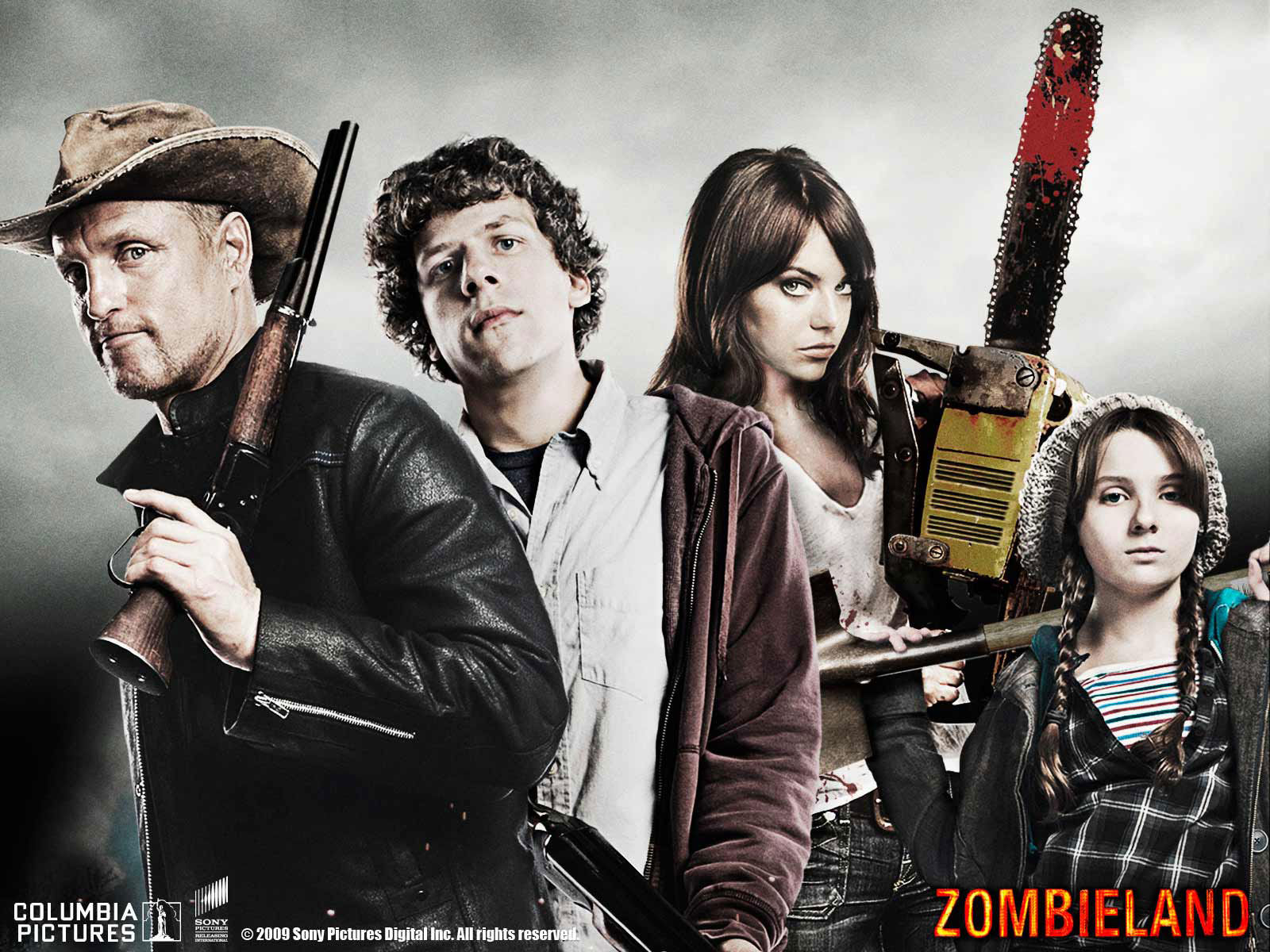
Halloween Countdown, Day 28: Zombieland

Zombieland (2009)

Zombieland is quite possibly the perfect movie. Just when Shaun of the Dead convinced me that those Limey Brits had create the best-ever zombie romantic comedy, it turns out they’d only created the most British zombie romantic comedy. The Yank counterpart is even better, and with this amount of artillery, it’s certainly a more American vision.

Let’s start with the effervescently clever writing. Rhett Reese and Paul Wernick take the tried-and-true zombiepocalypse premise and sprint with it in totally new and awesome directions.

And the cameo. I cannot imagine a better one. I mean that. I’m not sure a walk on by Jesus himself could have brought me more joy.

That’s not true. Plus, in zombie movie?! How awesome would that have been?!

The performances kick ass, also. Thank you Rubin Fleischer for respecting each character enough to allow them a good balance of stupid mistakes, solid decisions and laughs.

Jesse Eisenberg anchors the film with an inspired narration and an endearing dork characterization. Yes, we’ve seen him dork before. One dork nearly won him an Oscar. Still, this is one of his finer dorks.

But Woody Harrelson owns this film. His gun toting, Twinkie loving, Willie Nelson singing, Dale Earnhart number wearing redneck ranks among the greatest horror heroes ever.

I give you, a trip to a loud and well-lit amusement park is not a recommendation Max Brooks would make during the zombiepocalypse. Still, you’ve got to admit it’s a gloriously filmed piece of action horror cinema.

Listen weekly to MaddWolf’s horror podcast FRIGHT CLUB. Do it!

Der Samurai

Der Samurai (2014)

Writer/director Till Kleinert’s atmospheric Der Samurai blends Grimm Brother ideas with Samurai legend to tell a story that borders on the familiar but manages always to surprise.

Jakob, an entirely unintimidating police officer in a remote German berg, has been charged with eliminating the wolf that’s frightening villagers. Moved by compassion or longing, Jakob can’t quite make himself accomplish his task – a fact that villagers and his commanding officer find predictably soft. But a chance encounter with a wild-eyed stranger wearing a dress and carrying a samurai sword clarifies that the wolf is probably not the villagers’ – or Jakob’s – biggest problem.

Pit Bukowski cuts a peculiar but creepy figure as the Samurai – kind of a cross between Iggy Pop and Ted Levine (The Silence of the Lambs’s Buffalo Bill). His raw sexuality offers the perfect counterpoint to the repressed Jakob (Michel Diercks). As their cat and mouse game gains momentum, it appears the Samurai is here to upend all of Jakob’s inhibitions by eliminating anyone keeping him from embracing to his primal urges – getting “rid of the blockage once and for all.”

That’s what the sword is for.

Kleinert’s sneaky camera builds tension in every scene, and the film’s magnificent sound design echoes with Jakob’s isolation as well as that of the village itself. And though much of the imagery is connected in a way to familiar fairy tales or horror movies, the understated approach gives it all a naturalism that is unsettling.

Not that Kleinert’s content to take a naturalistic path all the way through. His tale has roots in old Germanic folklore, so the director peppers the film with enough magical realism to evoke that dreamy – in this case, nightmarish – childhood logic.

It’s a beautiful film about embracing or forever suppressing your inner monster, but this is no ordinary Jekyll and Hyde retread. Kleinert’s vision is steeped in sexuality and sexual identity, giving it a fascinating relevance often missing in this style of horror film.

The film pulls you along with a “Will he or won’t he? Is he or isn’t he?” kind of tension, and at times you’ll fear that you’ve figured out a plot twist in advance, but Kleinert is never that obvious. Though the resolution is not as surefooted as the rest of his film, the overall effort is a uniquely memorable affair.

Listen to MaddWolf’s horror podcast FRIGHT CLUB. Do it!

Halloween Countdown, Day 24: Possession

Possession (1981)

Speaking of sex and monsters – wait, were we? – have you seen Possession? WTF is going on there?

Andrzej Zulawski – writer/director/Czech – created this wild ride with doppelgangers, private investigators, ominous government (or are they?) agencies, and curious sexual appetites. It’s more precisely fantasy than horror, but it strikes me as David Cronenberg meets David Lynch, which is a pairing I can get behind.

Sam Neill plays Mark. Mark has just left his job – a mysterious position with some kind of lab. He’s being offered a lot of money to stay, but he needs to go home. We don’t know why.

Back at home, he greets his genuinely adorable son Bob (Michael Hogben). I love that his name is Bob. Bob – it’s so normal, and yet feels so unusual for a small child. Mark’s wife Anna (Isabelle Adjani) is also at home with Bob. There’s nothing normal about Anna.

Mark and Anna’s relationship boasts an intentional artificiality- a queasying sexuality- that makes it hard to root for either of them as their marriage deteriorates. Anna, it seems, is in love with someone else. Is it the sexually open – really, really open – Heinrich? Is it a bloody, mollusk-like monster? Is Mark boning Anna’s mean friend with a cast on her leg? Does Bob’s kindergarten teacher bear an unreasonable resemblance to Anna? Is anyone caring properly for Bob?

These questions and more go basically unanswered in a deviant, summary-defying, fantastical bit of filmmaking that mocks the idiocy, even insanity of obsession and boasts a handful of weirdly excellent performances. And sex with a bloody mollusk-like monster.

Listen weekly to MaddWolf’s horror podcast FRIGHT CLUB. Do it!

Halloween Countdown, Day 23: Only Lovers Left Alive

Only Lovers Left Alive (2013)

Vampires again! Can’t we just give it a rest already?

I hear ya, but before you write them off completely, let Only Lovers Left Alive renew your faith in the genre’s possibilities.

Leave it to visionary writer/director Jim Jarmusch to concoct the perfect antidote to the pop culture onslaught of romantic teenage blood drinkers. OLLA is a delicious black comedy, oozing with sharp wit and hipster attitude.

Great lead performances don’t hurt, either, and Jarmusch gets them from Tom Hilddleston and Tilda Swinton as Adam and Eve (perfect!), a vampire couple rekindling their centuries-old romance against the picturesque backdrop of…Detroit.

I’m not going to lie, they had me at Swinton/Hiddleston/Jarmusch/vampires, but it’s such a treat to find the end result only exceeds expectations.

Not since the David Bowie/Catherine Deneuve pairing in The Hunger has there been such perfectly vampiric casting. Swinton and Hiddleston, already two of the most consistently excellent actors around, deliver cooly detached, underplayed performances, wearing the world- weariness of their characters in uniquely contrasting ways.

The less you know about the lifestyles of Adam and Eve, the better, and the plot consists mainly of consequences from a surprise visit by Eve’s sister Ava (Mia Wasikowska). But Jarmusch, as he often does, creates a setting that is totally engrossing, full of fluid beauty and wicked humor.

His camera lingers in dark corners and high ceilings, swimming in waves of sublime production design, evocative music and mood lighting that is subtle perfection. This is a master class in style and atmosphere, conjuring up a dark world you’re just geeked to spend time in.

There is substance to accent all the style. The film moseys toward its perfect finale, casually waxing Goth philosophic about soul mates and finding your joy.

Ironically, Jarmusch treats the possibility of nightwalkers among us more realistically than any vampire flick in recent memory. And in the process, has some wry fun with how the whole thing went south.

Talk about finding our joy.

Listen weekly to MaddWolf’s horror podcast FRIGHT CLUB. Do it!

Halloween Countdown: Day 19: Exorcist

The Exorcist (1973)

For evocative, nerve jangling, demonic horror, you will not find better than The Exorcist.

Slow-moving, richly textured, gorgeously and thoughtfully framed, The Exorcist follows a very black and white, good versus evil conflict: Father Merrin V Satan for the soul of an innocent child.

But thanks to an intricate and nuanced screenplay adapted by William Peter Blatty from his own novel, the film boasts any number of flawed characters struggling to find faith and to do what’s right in this situation. And thanks to director William Friedkin’s immaculate filming, we are entranced by early wide shots of a golden Middle East, then brought closer to watch people running here and there on the Georgetown campus or on the streets of NYC.

Then we pull in a bit more: interiors of Chris MacNeil’s (Ellen Burstyn) place on location, the hospital where Fr. Karras’s mother is surrounded by forgotten souls, the labs and conference rooms where an impotent medical community fails to cure poor Regan (Linda Blair).

Then even closer, in the bedroom, where you can see Regan’s breath in the chilly air, and examine the flesh rotting off her young face. Here, in the intimacy, there’s no escaping that voice, toying with everyone with such vulgarity.

The voice belongs to Mercedes McCambridge, and she may have been the casting director’s greatest triumph. Of course, Jason Miller as poor, wounded Fr. Damien Karras could not have been better. Indeed, he, Burstyn, and young Linda Blair were all nominated for Oscars.

So was Friedkin, the director who balanced every scene to expose its divinity and warts, and to quietly build tension. When he was good and ready, he let that tension burst into explosions of terrifying mayhem that became a blueprint for dozens of films throughout the Seventies and marked a lasting icon for the genre.

Remember the stories of moviegoers fleeing the theatre, or fainting in the aisles midway through this film? It seemed like hype then, but watch it today, experience the power the film still has, and you can only imagine how little the poor folks of the early 1970s were prepared.

Even after all this time, The Exorcist is a flat-out masterpiece.

Listen weekly to MaddWolf’s horror podcast FRIGHT CLUB. Do it!

Halloween Countdown, Day 17: They Look Like People

They Look Like People (2015)

A lot of horror films introduce characters with a kind of cinematic shorthand: disheveled, bearded, worn white tee shirt = sketchy but sympathetic. Skinny jeans, self-empowerment in the headphones, checks his flex in the gym mirror = douchebag.

Generally it happens so the film can devote less time to character development and jump right into the carnage, but They Look Like People writer/director Perry Blackshear has other aims in mind.

Christian (Evan Dumouchel) is killing it. He’s benching 250 now, looks mussed but handsome as he excels at work, and he’s even gotten up the nerve to ask out his smokin’ hot boss. On his way home from work to change for that date he runs into his best friend from childhood, Wyatt (MacLeod Andrews), who’s looking a little worse for wear. Christian doesn’t care. With just a second’s reluctance, Christian invites him in – to his apartment, his date, and his life.

But there is something seriously wrong with Wyatt.

Blackshear’s film nimbly treads the same ground as the wonderful Frailty and the damn near perfect Take Shelter in that he uses sympathetic characters and realistic situations to blur the line between mental illness and the supernatural.

Wyatt believes there is a coming demonic war and he’s gone to rescue his one true friend. Andrews is sweetly convincing as the shell shocked young man unsure as to whether his head is full of bad wiring, or whether his ex-fiance has demon fever.

The real star here, though, is Dumouchel, whose character arc shames you for your immediate assessment. Blackshear examines love – true, lifelong friendship – in a way that has maybe never been explored as authentically in a horror film before. It’s this genuineness, this abiding tenderness Christian and Wyatt have for each other, that makes the film so moving and, simultaneously, so deeply scary.

They Look Like People can only barely be considered a horror film. It lacks the mean-spiritedness generally associated with the genre and replaces it with something both beautiful and terrifying. Whatever the genre, though, Blackshear’s film is a resounding success.

Listen weekly to MaddWolf’s horror podcast FRIGHT CLUB. Do it!