Tag Archives: film reviews

In His Name

Son

by Hope Madden

Back in 2014, Irish filmmaker Ivan Kavanagh wondered what to do about a dad who may be his son’s only salvation, or may be his one true danger. Canal had a lot going for it—it looked creepy, performances were solid, and it wasn’t afraid to bang up its cast.

It just couldn’t quite make the leap from good to great.

Same goes for the filmmaker’s latest, Son.

We open on a filthy, barefoot, rain-soaked young pregnant woman (Andi Matichak, Halloween) hoping to warm up with a coffee in a roadside diner. Two men walk in, she exits in a hurry.

Cut to eight years later. Same woman, clean and wholesome now, buckles in precocious little David (Luke David Blumm) to drop him off at school. They’re adorable. They’re happy, hard-working, loving, and about to face some ugly stuff once Kavanagh establishes the paradise to be lost.

An awful lot of movies want to know how far a mother is willing to go to protect the son who may or may not be the real villain. This has been especially true in the last five years. (See The Hole, The Prodigy, Brahms: The Boy 2, Z, Brightburn it’s a long list.) Does anything set Son apart?

Kavanaugh roots the story in hysteria and conspiracy, sketchy memories of a cult versus police reports of sex trafficking. All of it feels mildly of-the-moment, but the real purpose is to throw skepticism toward the seemingly lucid mother and her claims.

Which is another common horror trope (is she crazy or is she right?), especially in the subgenre where a mother is trying to figure something out that may or may not be supernatural.

So, no, Kavanaugh does not bring much that’s new to the table.

Son does boast solid performances, and the filmmaker once again flexes his strong instincts for unsettling locations and atmospheres. The writing, pacing, and imagery all work together as they should to generate anxiety and dread. Son gets gory now and again, too.

It just doesn’t do anything you don’t expect it to do.

Without Explanation

Tom Clancy’s Without Remorse

by Hope Madden

Michael B. Jordan is a bona fide movie star, a butts-in-seats celebrity ready to front his own spy thriller franchise. He’s ready to Harrison Ford.

He definitely is ready, there’s no doubt he has the talent, charisma, looks and mass appeal to bring a Tom Clancy story to the big screen. But should he do it?

Jordan’s John Kelly finds himself in an unexpected operation in Aleppo. He loses a friend and nearly loses his commanding officer (Queen & Slim’s Jodie Turner-Smith, wasted), much thanks to a cagey CIA operative (Jamie Bell) who’s hiding something from the team. Something Russian.

Well, those Russian secrets keep resurfacing, and they rack up a heavy body count. Next thing you know, Jordan has to take off his shirt and splash water on his bare chest because…I don’t know. It might honestly just be a contractual thing now.

I’m not saying I’m sorry it happened.

Stefano Sollima directs this espionage thriller, and he has even less luck than he did with his last feature, Sicario: Day of the Soldado. The problem this time around is not that his film suffers terribly by comparison. (Man, that was the problem last time.) The problem is that writers Will Staples and Taylor Sheridan just don’t seem to be trying very hard.

And Sheridan can be one of the finest writers working in film (Sicario, Hell or High Water). But you would not know that here.

The thrills are mediocre, the shootouts and fights are middling, and the only thing more obvious than the plot points are the performances. Worse still, the writing is sloppy and convenient. There’s an unmanned, unlocked, running vehicle right when John Kelly needs one, and don’t even ask how he gets unconscious villains from point A to point B. I guess that’s confidential.

It’s not that Tom Clancy’s Without Remorse is a terrible movie. It isn’t. But there’s no excuse for it to be utterly mediocre, which it is. The director’s proven to be competent and the co-writer has proven to be genius. Plus there’s a bona fide movie star at the height of his wattage leading the effort.

I blame Putin.

The Kids Are Not Alright

Here Are the Young Men

by Christie Robb

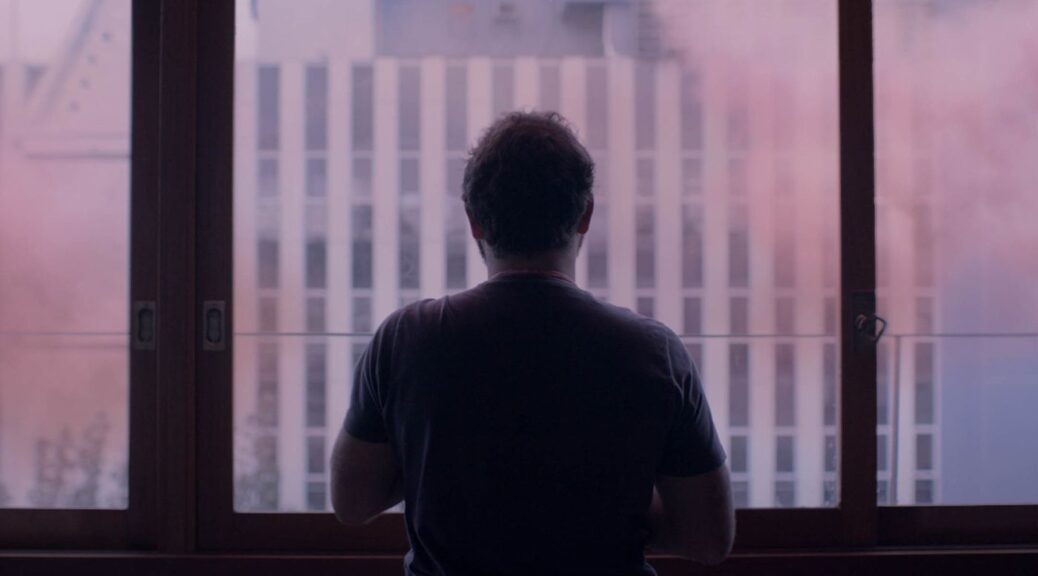
Based on Rob Doyle’s 2014 novel of the same name, Eoin Macken’s Here Are the Young Men is a bleak look at the emotional lives of three boys poised between school, with a somewhat sheltered boyhood, and real life, with its associated responsibility.

The boys witness the death of a little girl and their individual reactions send them down different paths. Rez (Ferdia Walsh-Peelo, Vikings) sinks into depression and nihilism, more or less disappearing from the movie.

Matthew (Dean-Charles Chapman, 1917/Game of Thrones) desires the stabilization of a proper job and a romantic relationship. Kearney (an unsettling Finn Cole, Peaky Blinders) is awakened, inspired by the immediacy of death, and gives himself permission to satisfy his dark impulses.

The boys’ days and nights are awash in a staggering amount and variety of drugs, downed with beer or vodka. Much of the movie is shot out of focus or uses staccato editing to reinforce the sense that the boys are more or less skating over the surface of their lives, ignoring the emotional depths beneath.

Despite their purported friendship and shared traumatic experience, there’s no solace for the boys in their relationships with each other. The few adults that occasionally appear are either menacing, distracted, or bearers of tired bromides. The young men are isolated and left to stumble along, making choices that aren’t informed by reason. The choices are a creature’s response to an applied stimulus.

Matthew and Kearney’s inner lives are somewhat illustrated by shots of their television screens, which show a kind of cartoonish representation of their subconscious or inner lives. Sometimes the TV shows what is happening to a character separated from the others by distance. I imagine this is an attempt to compensate for the lack of the novel’s inner monologues. And it’s ok, but is kind of jarring, given the spare emotional tone of the rest of the film, and inconsistently applied.

You might ask where the young women are. Well, there is one, Jen (Anya Taylor-Joy, The Queen’s Gambit), Matthew’s sometime girlfriend. Taylor-Joy is magnetic and draws the eye in every scene. There’s just not much for her to do except to express disappointment and defend her virginity. With another actress, this character would be all but forgettable. In the real world, Jen would hang out with other people.

Ultimately, the film serves as a reminder of similar, but more memorable entries in the genre like A Clockwork Orange or Trainspotting. Here Are the Young Men fails to differentiate this generation’s young men from the generations proceeding them. Just more sludge in the puddle of toxic masculinity.

The Not-So-Friendly Skies

Embryo

by Brandon Thomas

Good old alien horror doesn’t come around as much as I’d like. Outside of the occasional Alien or Predator sequel, this subgenre is pretty much stagnant or banished to the realm of mico-budget dreck. Embryo might skirt the line of microbudget, but this eerie alien tale is anything but dreck. 

The bulk of Embryo follows campers Kevin (Domingo Guzman) and Evelyn (Romina Perazzo) as they venture into the woods of southern Chile. Their camping getaway turns into a nightmare after Evelyn is abducted by extraterrestrials, leaving her in a state of shock. As the effects of her alien abductors take hold, Evelyn becomes increasingly more bloodthirsty, leaving a trail of bodies in her wake.

Director Patricio Valladares approaches alien abduction as a blend between Fire in the Sky’s creeping dread and Cronenberg body horror. Evelyn’s descent into other-worldly terror reveals itself in visceral, extreme violence. We’re talking lots of blood and guts here. However, the explanation of her metamorphosis is kept an enigma. The guessing game surrounding the aliens themselves is left to the deepest levels of the audience’s subconsciousness. It’s an act of omission probably born out of budgetary concerns, yet it ends up aiding the film more than the filmmakers could have foreseen. 

Valladares throws a curveball when constructing the film’s narrative. There’s an occasional break in Kevin and Evelyn’s story where Embryo attempts to open up the world a bit more. This allows the filmmakers to weave together other tales of close encounters in this small Chilean town. Not only are the stories different, but so is the style of filmmaking. By switching to found footage, Valladares is able to emphasize suspense and dread over the fantastical gore that oozes through the main segment.

Despite telling three individual tales, Embryo clocks in at a scant 72 minutes. Even with the different stories, the film threatens to run out of steam on multiple occasions. There’s a repetitiveness to the Kevin and Evelyn segment especially that starts to detract from its overall effectiveness. I can’t believe I’m saying this, but there are only so many times Kevin can lose Evelyn only to find her feasting on a biker, doctor, or other camper. 

Embryo doesn’t quite cross the finish line at full speed, but through deft tone management and a willingness to get gross, the film leaves an overall positive impression.

It’s People!!!

Roe V Wade

by Christie Robb

Cathy Allyn and Nick Loeb’s film Roe v. Wade is an unnuanced slog through the events leading up to the landmark 1973 Supreme Court decision.

The directors (who share writing credit with Ken Kushner) frame the court case with the conversion narrative of Dr. Bernard Nathanson (Loeb). According to the film, Nathanson, “the Abortion King” aka “the Scraper,” claims to have been swept up in the wave of 70s women’s liberation and performed seventy thousand abortions until he was confronted with fetal development by way of the advent of ultrasound technology. This results in a breakdown that is unmistakably similar to Charlton Heston’s in Soylent Green—“It’s a person! God forgive me! What have I done?!”

The choice to cast Loeb, whose dialogue delivery bears an eerie similarity to an unsure elementary school student asked to read a passage aloud, in such a pivotal role is but one example of the missteps taken in the film.

The hammy acting is a trait shared among many of the cast members. Jamie Kennedy (Scream), for example, as Larry Lader (co-founder of NARAL Pro-Choice America) all but twirls an imaginary handlebar mustache as he explains how liberals seed the uncritical news media with statistics conjured from thin air. Stacey Dash (Clueless) as Dr. Mildred Jefferson (president of the National Right to Life Committee) fairly vibrates with indignation when her eyes aren’t filled with tears at the equating of abortion to slavery or in polite reference to her own infertility issues.

Even if the acting was better, all the emotion would seem misplaced given how much time is devoted to characters debating constitutional law. There is not enough room in a two hour movie to detail the establishment of the Pro-Life and Pro-Choice movements plus the evolution of the Roe court case and still deliver the kind of emotional character development that Allyn and Loeb are shooting for.

The political arguments are underdeveloped, the nuances of the court proceedings are difficult to follow, and there are too many characters to keep track of. Joey Lawrence’s (Blossom) character could have easily been cut as his purpose in the film seems to be delivering supporting quotes by founding fathers.

The film’s stated goal is to tell the true story of Roe vs. Wade. However, this is something it cannot really achieve. Missing is any coverage of the personal, economic, social, or medical reasons why a woman might seek an abortion in the first place. It’s a pro-life persuasive essay masquerading as a soap opera/civics lecture and it’s not particularly good at being any of those things.

There’s Music and There’s People and They’re Young and Alive

Shoplifters of the World

by Matt Weiner

Never meet your heroes. That goes double for present-day Morrissey, frontman for the Smiths. But Shoplifters of the World looks back at a more innocent era in 1987, the day the band broke up, and conjures up a time when the Manchester rock band was the Beatles for disaffected teens who traded in mop tops for asymmetrical haircuts.

And Denver, Colorado—if you believe the urban legend that inspired the film—was ground zero for overenthusiastic Smiths fans. Director Stephen Kijak reimagines the night that distraught fan Dean (Ellar Coltrane, Boyhood) held a radio station hostage, forcing the DJ to play nonstop Smiths songs.

While Dean remains holed up at the radio station with the DJ, Full Metal Mickey (Joe Manganiello, perfection as a heavy metal himbo), Dean’s friends grieve and celebrate one last big night together before figuring out their lives post-high school.

That includes college, the Army, and for Cleo (Helena Howard), a general sort of Linklater malaise that seems to befall suburban teens on the eve of life’s next big adventure.

The film sets Cleo and the gang’s exploits to Smiths songs, along with contemporary interviews with band members that serve as a reminder of how much the Smiths meant for music, especially pop and indie rock, in an age of big hair and even bigger power chords.

Even though the film is a love letter to the Smiths, it’s as much about the insular obsession of finding meaning through art. Even diehard metalhead Mickey comes to appreciate the way all these young fans have experienced an era-defining shock in their young lives.

Still, it’s hard to shake the sense that the entire night’s events come down to a group of surly teens gatecrashing a bunch of parties to force everyone to listen to their music instead of having a good time… and yet everyone is still exceedingly polite to all the assholes in eyeliner.

This is also a painfully recognizable part of both obsessive fandoms and a good coming of age story. The mix of low stakes self-discovery and winsome leads helps keep their night out more charming than cringeworthy. Shoplifters is content to go big on soundtrack and mood, and it’s a choice that works.

There isn’t a ton of depth to the ensemble friends—the film is often too busy setting up just the right music cue. But when you have the music rights to take those cues from the likes of Morrissey and Johnny Marr, a little bit of charm goes a long way.

Gone Girl

Antigone

by Hope Madden

Any deep dive into the day-to-day realities of asylum seekers and the racism they face can end in horror (His House) or tragedy. Sophie Deraspe’s Antigone takes the second path, obviously.

Though the story is thoroughly updated, Deraspe keeps the ancient Greek names for her Algerian family living in Quebec. Antigone (Nahéma Ricco) also retains the strength and rebellious nature of the heroine created more than 2500 years back.

In the original story, two brothers died in battle. One died a hero because he fought on the side that won, so he receives a hero’s burial. Because the other brother fought with the rebels, his body is left to rot in the sun.

His sister doesn’t care what her brothers have done, her responsibility to them as family requires that she risk her own future to do what she believes is right.

An imaginative reworking of the Sophocles play, Deraspe’s drama still sees one sister challenging institutions to do what’s right by her family.

Ricco astounds in the title role. Her fiery grace impresses, especially as her physical performance flows effortlessly from wide-eyed searching to crumbling vulnerability to straight-spined resolve. She develops a timeless quality for the heroine, a conscience rooted in some primal virtue.

The cast around her matches her step for step, and as Deraspe subverts tropes and expectations, her performers rise to the challenge. Rawad El-Zein is especially powerful in the role of frustrating brother Polynice, and both Antoine DesRochers and Paul Doucet excel as the filmmaker finds new directions to take very old characters.

Deraspe’s film explores institutional hatred, justice versus family loyalty, and the nature of heroism. It’s a powerful look at generational, religious and cultural fractures. It’s a beautifully written and executed reworking of an all-time classic.

More than anything, it is a singular performance that demands attention and respect.

Shipping Up to Sligo

Pixie

by Matt Weiner

There was a time in the late 90s when you couldn’t go six months without a quippy crime comedy that was obviously pitched as “Pulp Fiction, but this time you get to be the studio making a boatload of money.” Some of these, like Doug Liman’s Go, were quite good. Others, like The Boondock Saints, belong in the Hague. Most of them, though, were simply reliable—reliably watchable, and equally forgettable.

Thankfully, the new action comedy Pixie takes as many cues from its distinct local sensibilities as it does from forebears like Tarantino and especially Guy Ritchie, the capo di tutti capi of British gangster cinema.

It all starts, naturally, with a drug deal gone bad—and things just get worse from there. Pixie has all the convenient plot twists and beyond belief interconnectedness you’d expect in this sort of crime thriller. But it also has heart, anchored by Olivia Cooke (Ready Player One) as the title moll.

A nonstop series of crosses, double crosses and double-double crosses take Pixie and her inept partners in crime on a scenic if slightly murderous tour through the West of Ireland as they attempt to make their big score without getting snared by misfit hitmen, killer priests and country gangsters hot on their heels. This includes Pixie’s own family (with the great Colm Meaney as patriarch, who seems to be thoroughly enjoying this “teddy bear who might also kill you” stage of his career).

For all the contrivances of the genre, director Barnaby Thompson, working off a script by his son Preston Thompson, imbues the film with an archness that keeps the action entertaining even at its most improbable. So much of this falls to Cooke, who switches effortlessly from femme fatale to agent of pure chaos, a beguiling anti-heroine who has figured out how to entice others to clean up the carnage she leaves in her wake.

And if the bawdy jokes, nun-related gunplay and jaw-dropping vistas still aren’t enough, perhaps Alec Baldwin chewing through his scenes and an Irish accent with equal aplomb will seal the deal.

Eye Spy

Keep an Eye Out

by Hope Madden

If there is one filmmaker whose movies resist summarization, it’s Quentin Dupieux. I have tried (Deerskin, Wrong).

His latest, Keep an Eye Out, takes us on a murder mystery in the most charmingly monotonous of ways. In fact, as Chief Commissioner Buron (Benoît Poelvoorde, Man Bites Dog) questions suspect Fugain (Grégoire Ludig), the officer complains that this is the most boring interrogation he’s ever done.

It’s not just the questioning (Fugain bought bug spray, then ate some potato chips, then accidentally knocked over a planter and broke it…) that’s mind numbing, though. Dupieux situates this aggressively dull conversation in a French police station leeched of color—everything in the room an unflattering shade of putty, except for the bizarre abundance of overhead lights.

It’s often tempting to seek symbolism in Dupieux’s absurd situations. Many of us are still wrestling with the message in his 2010 breakout, Rubber, about a discarded car tire on a nationwide killing spree.

Perhaps there’s no hidden meaning. In Keep an Eye Out, in particular, the filmmaker seems simply to be setting up jokes. As soon as Philippe (Marc Fraize) arrives on the scene—one eye on the accused, the other missing and grown over with skin—things take an almost Monty Python level of lunacy. It’s uncomfortably silly, stupid even.

There’s a freedom to the absurdism of a Dupieux film, although Keep an Eye Out feels far more superficial even than Deerskin (a film released prior to but filmed after Keep an Eye Out). Even his most focused work lacks the cynicism or bite of Yorgos Lanthimos, maybe the most consistent absurdist working in film today.

Which is not to say a Dupieux film can’t be as enjoyable. In many ways, they’re easier to enjoy than a Lanthimos film because they’re less likely to fill you with existential terror.

They’re weird. They’re delightfully unpredictable. They’d grow tiresome, but they’re all so short. (Keep an Eye Out runs barely longer than an hour.)

My Sister’s Keeper

Dementer

by Hope Madden

Authenticity is certainly the main differentiator between Chad Crawford Kinkle’s latest horror and others of the genre.

It’s been eight years since the filmmaker released his underseen backwoods gem Jug Face. He once again pits a tenacious female against the unrelenting pressure of an unholy presence, but Kinkle has a more personal kind of dread in store with Dementer.

Katie (Katie Groshong), looking for a fresh start, applies for a job at a skills training facility that works with adults who have special needs. She’s hired, working with clients two days a week in the facility, then spending two nights in a group home with three of them.

Katie is especially concerned with Stephanie (Stephanie Kinkle, the filmmaker’s sister).

Kinkle’s sister is an adult with Down Syndrome, which not only elevates the reality of the situation but also the tenderness and anxiety around the character’s safety. You can almost feel the filmmaker’s own personal dread over his sister’s vulnerability in an untrustworthy world.

Aside from Larry Fessenden, who appears briefly, Groshong is the only professional actor in the film. Kinkle, working with a skeleton crew, films in an actual skill center. The majority of the staff and clients represented in the film are, indeed, staff and clients.

The approach gives the film a verité style often seen in horror films, rarely if ever seen in a horror film with a main character who has special needs. Dementer lacks any of the sheen or noble heroism you often find in films centered around a character with a disability. The realism adds a level of discomfort, a sense that vulnerable adults who need care could easily find themselves in a precarious situation.

Dementer also offers an uncomfortably realistic look at working poverty.

Kinkle mines these anxieties as Groshong begins to see and hear signs that suggest Stephanie may be in real danger. As she races against the clock to save her, Kinkle slyly upends plenty of horror tropes.

It’s an often fascinating deconstruction of a particular subgenre of horror, an approach that usually benefits from the verité style. But too much of the loose narrative feels like filler. We watch Katie buckle her seat belt no fewer than five times.

Unanswered questions can strengthen a film, but Dementer feels underwritten. Still, you get the sense that Kinkle made the best of what he had on hand and told a deeply personal story in the most authentic way he could.