
Tag Archives: family films

Do You Want to Pet a Snowman?

Abominable

by Rachel Willis

Writer/director Jill Culton has crafted a sweet, magical children’s tale with Abominable.

The film opens with a man-sized yeti escaping from a laboratory at the sinister Burnish Industries. While being hunted through the streets of a big city in China, the yeti is injured. He hides on the roof of a building and seems to be safe – for the time being.

The opening scene is dark and a little scary, which explains the film’s PG-rating. This is fare for older children, which isn’t a knock on the film, but it isn’t the cute romp one might expect for the 3 – 6-year-old crowd. The opening hints at more terrifying moments to come as Burnish Industries is not willing to let its latest discovery go without a fight.

The film switches gears, and we’re introduced to Yi (voiced by Chloe Bennet), a teenage girl who rushes through life doing odd jobs to make money. She’s estranged from her mother and grandmother, who don’t understand her attitude. As we follow Yi through a typical day, we are given small pieces of information to help us understand who she is. Not only is she distant from her family, she is mocked by her peers, and her only friend is a younger boy named Peng (Albert Tsai).

On the roof of her apartment complex, Yi has a hideaway where she stows a map of China, an old violin, and a dream of visiting several places across the country. It’s here that she discovers the hidden yeti.

Reminiscent of How to Train Your Dragon (another DreamWorks production), Yi slowly forms a bond with the beast she names Everest. While the development of the bond between Toothless and Hiccup in HTTYD is a slow process, the connection between Yi and Everest feels rushed. And like Toothless, Everest has behaviors similar to a cat or dog as he navigates this new world.    

The few minor similarities aside, Culton manages to craft a film of her own that explores the value of friendships, family, and the beauty of the natural world. It’s a lot to explore in a children’s film and while some of it is handled well—particularly the friendships between Yi, Everest, and her friends—other aspects are neglected.  

The film drags a bit during the second act. As Yi, Peng, and Peng’s cousin, Jin (Tenzing Norgay Trainor) try to keep Everest out of the clutches of Burnish Industries, there are a few montage moments that slow the film’s pace and will have even the most devoted viewer twiddling their thumbs waiting for the action to resume.

However, Abominable is a film that, while predictable, has a few good laughs and plenty of heart.

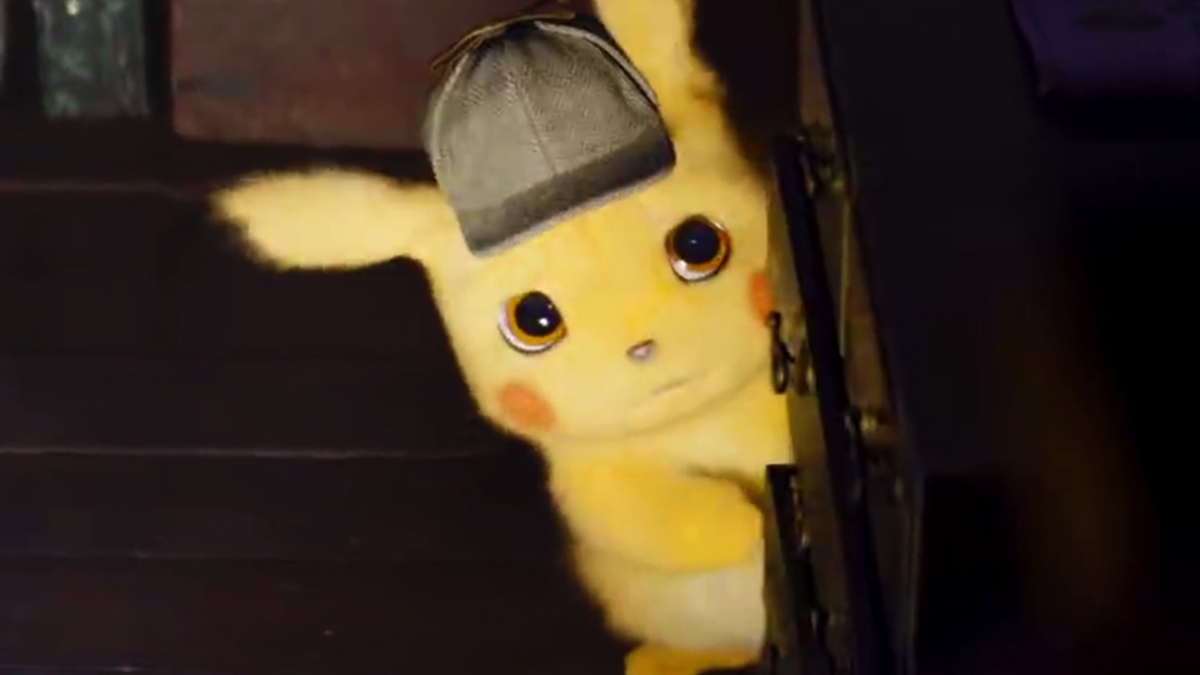
Pika Pika

Pokémon Detective Pikachu

by Hope Madden

When my son was small and we played pretend, I made believe I was Snorlax so I could lay on the couch and do nothing. Does that make me a bad parent? Well, a lazy one, anyway, but the point is, I logged countless hours on that couch watching all manner of pocket monster.

I was dragged unwillingly into the world of Pokémon. No, I am not exactly the target audience for Pokémon Detective Pikachu (read: I am in no way the target audience for this movie). But, when Pikachu (voiced by Ryan Reynolds at his Ryan Reynoldsiest) says, “Mr. Mime is the worst,” I know enough to understand that shit’s the truth.

So, there is a plot. It involves loads upon loads of daddy issues, primarily (but not exclusively) those that hang over Tim Goodman (Justice Smith). In looking for his father he falls into a mystery involving a Pikachu who is not only adorable (he admits as much himself at least twice), but is also connected to Tim. Tim can understand him.

For the uninitiated, Pokémon just repeat their own names over and over and over again in a manner that makes you want to take your own life, and yet you tolerate it because you really do love your son.

But not this Pikachu! Sure, others can only hear his cute “pika pika,” but Tim can hear actual words, and those words are telling Tim, in a humorously snarky way, that he needs to unravel this mystery and work on his interpersonal skills.

Bill Nighy shows up as an entrepreneur/philanthropist/genius. Meanwhile, Ken Watanabe languishes with bafflingly limited screen time as a detective who is, let’s be honest, not very good at his job.

Kathryn Newton is a plucky would-be investigative journalist, her trusty Psyduck in tow. (Note: Psyduck is also the worst.)

Part of the entertainment value here is the genuine fondness for the content director Rob Letterman and his army of screenwriters bring to the table. Good looking CGI, committed performances and a solidly comedic but not too ironic tone also help.

The film doesn’t shoot over the heads of the youngest fans, does embed scads of references and homages for those there for nostalgia, and throws around enough kid-friendly Reynoldsisms to entertain parents who mercifully missed out on Pokémon Gen 1 and 2.

Is it a colossal waste of Ken Watanabe’s talent? Oh God, yes. Terrible.

But honestly, otherwise I don’t have a lot of complaints.

Dragon Ball 3

How to Train Your Dragon: The Hidden World

by George Wolf

I usually like to steer clear of spoilers, but I really need to warn you…this film contains gratuitous dragon flirting.

And full-on nuzzling.

It’s cute, but The Hidden World offers so much more than just cute, and more than enough substance to solidify the entire Dragon saga as a top tier film trilogy.

Writer/director Dean DeBlois is back to finish what he started in 2010, and continued in 2014. He picks up the tale one year after the close of HTTYD 2, when our hero Hiccup (voiced by Jay Baruchel) finds that his pal Toothless isn’t the only Night Fury dragon, after all.

This new one is a Light Fury, she’s a charmer, and Toothless is in love.

But all of Hiccup’s dragon friends are in danger, none more than Toothless, thanks to the bloodthirsty Grimmel (F. Murray Abraham) and his batallion of dragon hunters. To continue living in peace, Hiccup and his entire village must find mythical dragon birthplace The Hidden World before Grimmel does.

This franchise has delivered true visual wonder since the original film’s opening frame, and part 3, taking natural advantage of enhanced technology, ups the ante. The aerial gymnastics and high seas swashbuckling are propelled by animation that is deep and rich, while new details in the dragons’ faces bring wonderful nuance and expression.

There is real tension here, along with warm humor, thrilling action pieces and resonant themes backed by genuine emotion.

As you realize Hiccup is leading a group of wartime refugees, the bittersweet coming-of-age tale moves to the forefront. We’ve watched Hiccup move from losing his father (Gerard Buter) to finding his mother (Cate Blanchett) to becoming a father figure for the orphaned Toothless. Now, he may have to let his best friend go and remember that “with love comes loss, it’s part of the deal.”

These themes may not be new, but DeBlois handles them with an understated poignancy that hits the feels, leading to a breathless emotional high point reminiscent of Toy Story 3‘s classic “holding hands” throat-lumper.

Packed with excitement, sincerity and visual amazeballs, The Hidden World ties a can’t-miss ribbon on a wonderful trilogy.


Puppy Love

A Dog’s Way Home

by George Wolf

After the sledgehammer schmaltz of A Dog’s Purpose last January, director Charles Martin Smith takes over for the latest adaptation of a W. Bruce Cameron canine tale and chooses wisely by making a straight up kid’s movie.

Martin has the two Dolphin Tale films on his resume, so he knows his way around a family film, and I’m guessing he knew the only chance this one had was to aim it squarely at the youngest in the house.

Just think of it as Bryce Dallas Howard reading a big screen picture book to your kids for 90 minutes, as cute puppy Bella (voiced by Howard) over-explains all the goings on from the moment we meet her as a stray.

She’s adopted by Lucas (Jonah Hauer-King) and his mom Terri (Ashley Judd), and things are great until Bella runs afoul of the overly strict dog laws in Denver (who knew?). She’s taken in by friends in New Mexico until Lucas can sort it out, but homesickness leads to a backyard jailbreak, and Bella sets off on the long journey back to Colorado.

Bella gets into plenty of adventures along the way as her path crosses friendly people, mean people, CGI animal friends, predators and an amusing picnic-basket stealing or two.

Like A Dog’s Purpose, everything is painted with the broadest brush available. It is Martin’s altered viewpoint that makes this one much less painful to endure, even providing subtle teachable moments concerning diversity, veterans, homelessness and even same-sex couples.

Pretty good dog.

And, really, Denver, what gives with those outdated laws?


Practically Perfect

Mary Poppins Returns

by Christie Robb

Recreating the magic of a classic film like Mary Poppins seems like it should be impossible. Thankfully, with the sequel Disney proves that truly everything is possible, even the impossible.

Set 20 years after the original, Jane and Michael Banks are grown and eking out a living during the “Great Slump” (the term for the Great Depression in the United Kingdom). Michael (Ben Wishaw) has been recently widowed and is struggling to raise his three children alone when the bank sends some agents to inform him that his family home on Cherry Tree Lane is in foreclosure. He’s got until Friday at midnight to cough up the cash.

Enter Mary Poppins (Emily Blunt), who returns to take care of the Banks children. This time the stakes are clearly a bit higher. Instead of the children and nanny dealing with neglectful and boring parents, they have to negotiate grief over their dead mother, probable homelessness, and some light animated kidnapping. It’s a more Lemony Snicket approach that keeps the plot moving at a good pace, but may be intense for the more sensitive kiddos.

The drama is balanced with some exhilarating song and dance numbers that mirror, but update, those in the original film. Remember Uncle Albert? Now we have a song with Cousin Topsy (Meryl Streep). The live action/animated number occurs inside the pattern of a Royal Doulton china bowl instead of a chalk drawing. And instead of chimney sweeps elevating the kids to the London rooftops for a jig, lamplighters led by Mary’s friend Jack (Lin-Manuel Miranda) wind the kids through the sewers and engage in some stunt biking and parkour.

Throughout, director Rob Marshall is faithful to the tone of the original film. There’s a continuity established from the opening credit sequence that continues through the choices in musical score, sets and costuming. However, Marshall’s experience directing movie musicals (for example, Into the Woods and Chicago) makes for more dynamic camera work and the occasional vaudevillian set piece.

This charming bit of nostalgia makes for an excellent holiday movie that celebrates the joys of childhood, imagination and family.

https://www.youtube.com/watch?v=-3jsfXDZLIY


Exile in Whyville

The Grinch

by George Wolf

Before we get to the Whos, let’s consider the Whys.

Is it too much of a GOML (Get Off My Lawn) moment to ask why, beyond the obvious cash grab, The Grinch has to be redone? The original, How the Grinch Stole Christmas, is 25 minutes of perfection, an animated TV classic that was already the subject of a charmless live action update for the big screens of nearly 20 years ago.

Now we’re back to animation, and facing the same quandary.

How do you add an hour of narrative that is more than just filler, substantial enough to not dilute what made the original work so simply joyous, so universally touching?

In 2009, Spike Jonze showed it can be done, delivering a wondrous and emotional take on Where the Wild Things Are.

But in this latest re-imagining of The Grinch, what writer Michael LeSieur and Tommy Swerdlow giveth only ends up taking away.

We’re still told the heart of Mr. Grinch (voiced by Benedict Cumberbatch) is two sizes too small, yet we’re given a new backstory for additional explanation as to why he hates Christmas so much.

His heart is two sizes too small, didn’t you hear? That’s the reason! Well, it should be, but then we see the Grinch do little acts of kindness for his dog Max and some other creatures, meaning the whole idea of Mr. Grinch being such an unpleasant misanthrope (and thus the impact of the story’s entire resolution) is compromised early.

The narration (courtesy of Pharrell Williams) includes some of the delightful Dr. Suess wordplay from 1966, plus some fresh attempts to imitate it that, as you might guess, stand out like a ten dollar Rolex. Mr. Grinch’s ultimate change of holiday heart doesn’t fare much better, as he and Cindy Lou Who (The Greatest Showman‘s Cameron Seely) spend ample time hammering home a message that, while still welcome, shouldn’t require that much force.

Directors Yarrow Cheney and Scott Mosier craft a few giddy sequences set among the snowy terrain of Whoville, and SNL’s Kenan Thompson squeezes as much humor as he can from his role as the Mean One’s erstwhile “best friend,” but for anyone hoping to recapture the magic of a holiday standard, The Grinch is nearly as empty as Cindy Lou’s living room on Christmas morn.


Mythbuster

Smallfoot

by George Wolf

So, while we’re down here debating the existence of Sasquatch/Yeti/Bigfoot, an entire community of them lives above the clouds, wondering the same about us shorter, wee-footed folk.

That’s a cute and clever conceit for a family tale that might look a lot like Pixar’s Monsters, Inc., which makes it even more surprising when WB’s Smallfoot instead flirts with becoming the most ballsy, subversive animated film since Zootopia. It’s a film with big ideas, some generic and some risky, but just too many to juggle into a truly memorable takeaway.

Channing Tatum leads the voice cast as Migo, an affable Yeti who has always bought in to everything his village’s “Stonekeeper” (Common) was selling, including the fact that the legendary Smallfoot wasn’t real. But then Migo sees one, which raises some questions, and questions themselves are a problem.

Migo, like all the Yeti, has been taught to suppress any questions he may have about the stones the Stonekeeper is keeping. Those stones guide the beliefs of the Yeti through the various statements written on each. You might even call them…commandments.

Woah.

Smallfoot raises eyebrows early, but once Migo manages to bring smallfooted Percy (James Corden) back to his village, it settles into a pleasantly entertaining mix of messages, music, and Looney Tunes-worthy pratfalls.

Tatum gives our hero a fine voice (though his singing is a bit thin), Corden is always fun and the support cast (including Zendaya, Danny DeVito, Gina Rodriguez and LeBron James) is capably unique, but co-directors Karey Kirkpatrick and Jason Reisig chase too many snowtrails.

Some moments, like the Stonekeeper telling Migo about the ease of deception, find their mark, while others such as Percy’s struggles with reality TV become overly familiar distractions.

The driving theme here is truth, and how very hard it can be to find. Question, be brave, explore science as well as faith. Maybe sing a song. Though Smallfoot doesn’t deliver on its radical beginnings, it finds a comfort zone less likely to spark partisan rancor in the aisle.


Clock Management

The House with a Clock In Its Walls

by Hope Madden

Eli Roth made a family film. That’s weird. Although there is certainly something juvenile about the filmmaker’s work in general.

Yes, the Hostel director (and Cabin Fever, The Green Inferno and any number of other hard-R flicks) indulges a sillier side with his big screen adaptation of John Bellairs’s 1973 novel, The House with a Clock in Its Walls.

Set in a mid-Fifties slice of Americana (New Zebedee, Michigan), the film lazily crosses Spielberg with Tim Burton by way of Nickelodeon.

Orphaned Lewis (Owen Vacarro) finds himself in the charge of weird Uncle Jonathan (Jack Black), who is a warlock. The two items most likely to be found in Uncle Jonathan’s big, weird house are his next door neighbor/best friend/fellow witch Mrs. Zimmerman (the always formidable Cate Blanchett), and clocks. Loads of clocks.

Why so many? Jonathan likes the ruckus they create—keeps his mind off that one ticking sound he can’t quite locate…that ominous harbinger of something terrible.

The house also boasts a number of bewitched items, none of which are given much point or presence as Lewis struggles with the loss of his parents, unpopularity at school, and the sudden realization that he might have just triggered the end of days.

Roth and screenwriter Eric Kripke streamline Bellairs’s charming prose. Some updates are sensible, although neutering the novel’s image of powerful women is not one of the more courageous or welcome choices the filmmakers made.

They entirely miss the novel’s tone, amplified with intermittent illustrations by the great Edward Gorey: subdued, wondrous yet melancholy. These are not adjectives used in conjunction with the work of Eli Roth.

What he substitutes instead is colorful, artificial, sloppy fun.

Black—more or less revisiting his role from 2015’s Goosebumps—charms exactly as he always does. Watching the incandescent Blanchett slyly deliver lines and easily steal scenes from Black—and anybody else who happens to be present—is a joy.

Vacarro isn’t given much opportunity. His is a story about grief and loneliness. Or maybe it’s about embracing your inner weirdo. Roth can’t seem to decide, and he’s far too sidetracked by the demonic jack-o-lanterns, topiary Griffin and inexplicable roomful of carnival freakshow dummies to pay attention to the story.

There is utterly forgettable fun here, mainly thanks to Black and Blanchett, but the intended audience is a little tough to gauge. Things are likely a bit too slow-moving and eventually too wicked for the very young, while teens and adults may be bored by the lack of logic or what passes for humor. Still, if you have a 10-year-old who wants a seasonal scare that’s not too scary, here you go.


Splash

Lu Over the Wall

by Rachel Willis

To give away too much of the plot of Lu Over the Wall would be to steal the joy of experiencing this unique, quirky film. Director Masaaki Yuasa has crafted a sweet fantasy that explores the moving friendship between a boy and a mermaid.

The first half of the film offers an unpredictable journey that follows Kai as he gets to know the buoyant Lu. Along for the ride are Kai’s friends, Yuho and Kunio.

Before Lu, Kai is sullen and morose, having recently moved from Tokyo to a small fishing village with his dad following his parents’ divorce. Yuho and Kunio try their best to engage Kai, even talking him into joining their band. But it isn’t until Lu appears, drawn by Kai’s music, that he begins to open up to the world around him.

Though the first half of the film is unusual, and, at times, downright weird, the second half falls into a more predictable pattern. However, the shift into a more traditional story doesn’t detract from the film. And though the second section is more certain, the quirks and oddities of the story are maintained through the animation. Lu and Kai, along with Yuho and Kunio, face challenges as old prejudices and new curiosities are aroused by the arrival of Lu.

At times, the animation is reminiscent of Hayao Miyazaki’s work, but it also occasionally has the slapstick style of Tex Avery’s old Bugs Bunny cartoons. The blending of styles, along with the film’s own specific elements, merge together to serve the unconventional story well. From the monstrous creatures to the everyday people to the village’s shops and streets, the visuals are the most memorable part of the film.

Music also plays an important role, but the soundtrack is a little stale when paired with the rich animation. Too often, the score and soundtrack fade forgettably into the background when the movie would be better served by sound that enhanced the animation onscreen.

Though often strange and unusual, Lu Over the Wall is a touching tale.


Soccer Buddies

Early Man

by Hope Madden

There is something adorably British about Nick Parks’s latest plasticine adventure, Early Man.

No I am not being condescending. It’s animated. It’s supposed to be adorable.

This Aardman export—the Brit animation studio responsible for the Wallace & Gromit classics, among others—pits dunder-headed but lovable cave dwellers against greedy Bronze Age Euro-trash as it spoofs sports flicks.

We open at the dawn of time, when dinosaurs and cave men and giant, toothy mallards roamed the earth outside Manchester, England. Around lunchtime.

It’s silly. And sweet. And basically a 90-minute mash note to Manchester United.

When those posh bullies from the Bronze Age (led by Tom Hiddleston’s Lord Nooth) push Dug (Eddie Redmayne) and his nincompoopy cavemen friends out of their fertile valley, Dug devises a challenge to regain his beloved home.

Like all great sports films, Early Man pushes the underdog narrative to epitomize more than simple foot-to-ball competition. Plus, you really do want these earnest faces, overbites and all, to learn to believe in themselves.

And why can’t a pig play soccer?

Dug’s quick trip into town square offers opportunities for the Aardman Easter eggs—be sure to scan the vendor booths for hilarious names. With voice talent to spare (Timothy Spall and Rob Brydon are among those with smaller roles), you’re assured the intentionally silly jokes are delivered expertly.

The problem is that Early Man would have made for a really hilarious short.

The story doesn’t benefit from a 90-minute stretch. The setting—mainly an imposing landscape littered with enormous rib bones—doesn’t offer enough opportunity for visual distraction and the characters are not memorable enough to keep your attention for the full run time.

Expect much of the familiar: googly eyes, enormous teeth, simple characters and kind-hearted laughter. CGI mixes with the stop-action to rob the film of some character, but Early Man has charm to spare.

