Tag Archives: entertainment

Mothers and Son

20th Century Women

by Hope Madden

Has it been six years since Mike Mills explored father/son relationships and the coming of middle age with Beginners? Insightful, emotionally complex and kind, the film marked Mills as not only a director of substance, but a writer with integrity and wit.

Not that it could have predicted 20th Century Women.

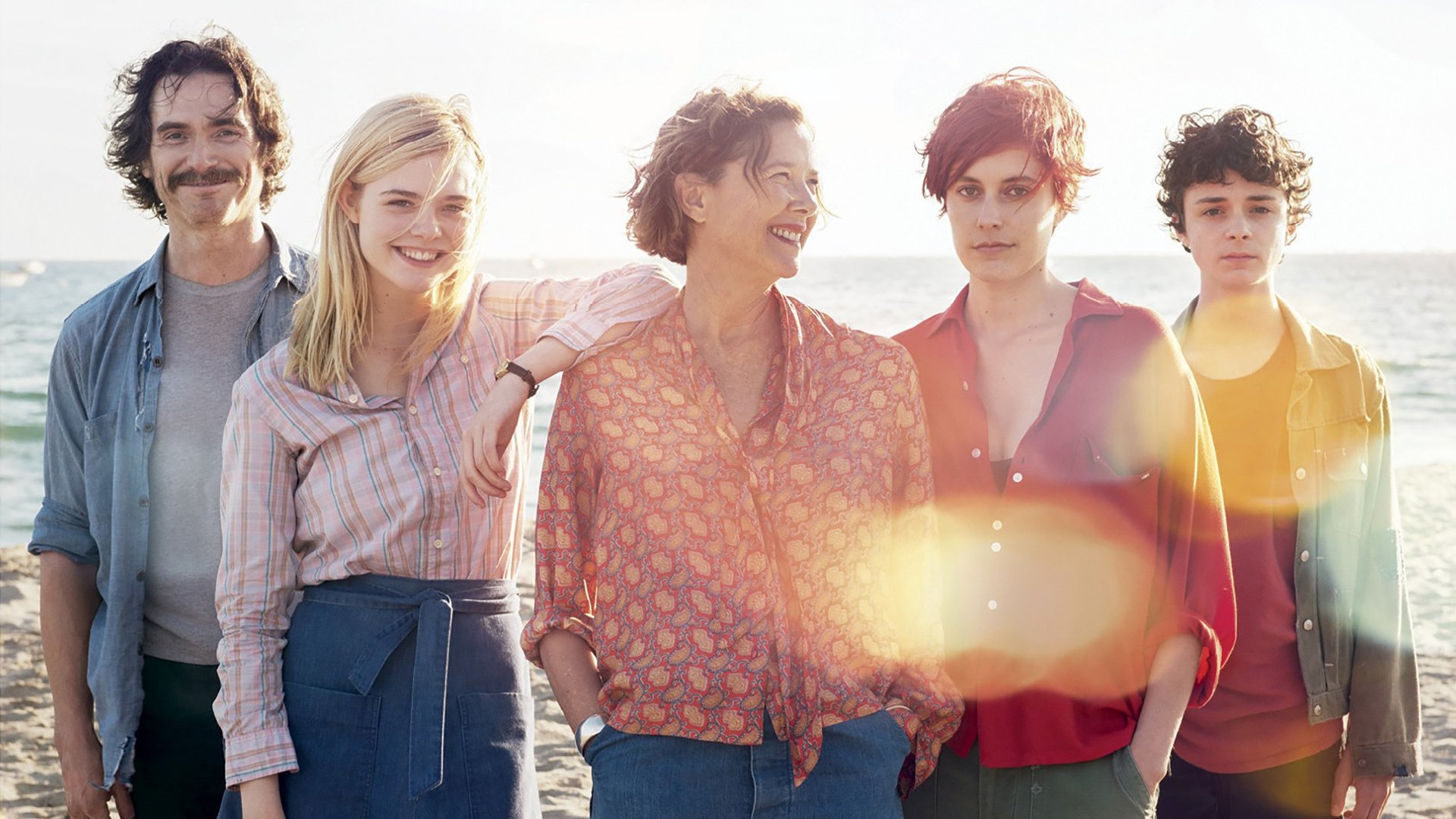
What a joyous conundrum this film is. Set in 1979, the film looks on as Jamie (Lucas Jade Zumann) maneuvers the troubles of adolescence, societal sea change and his loving if enigmatic mother, Dorothea (Annette Bening).

Too practical and pragmatic for the women of 1979, too independent and wise for her own generation, Dorothea is a woman without a timestamp. It gives her a gravitational pull, drawing the fierce and the unusual to her like satellites.

Those in her orbit – besides her pubescent son – are punk artist Abbie (Greta Gerwig), troubled teen Julie (Elle Fanning), and misplaced hippie William (Billy Crudup).

The cast is uniformly terrific, but Bening is a spectacle. A collector of friends, she’s still a solitary figure, one who looks on the relationships and complications in her life with a strange remove – almost like an anthropologist.

Dorothea is, from her son’s point of view, unknowable. Bening more than manages to embody that frustrating reality of a parent whose behavior seems entirely natural and yet almost alien. And she does it with such charm and humor.

Perhaps the biggest surprise in 20th Century Women is the humor – the film, like life, is peppered with laugh out loud moments that help make even the barely endurable pain of adolescence enjoyable.

Mills falls back at times on a punk rock undercurrent that creates a wonderful energy as well as a thoughtful theme for the time in history and in Jamie’s life. As Abbie puts it, the chaos of punk is comforting because it’s about, “When your passion is bigger than the tools you have to deal with it.”

It’s a line that’s almost too perfect, as this cast is almost too perfect. This seems to be the quiet wonder of Mike Mills: he puts his own complicated, insightful and emotionally generous writing into the hands of genuine talent.

Good call.

Verdict-4-0-Stars

The Wheels on the Bus

Paterson

by Hope Madden

Simplicity, tempo, pattern – to some, this alone constitutes poetry.

To Jim Jarmusch, perhaps.

Jarmusch’s second film in a year – after his wonderful Stooges documentary Gimme Danger – is a quieter effort. Paterson marks the days of a New Jersey bus driver, a man named Paterson (Adam Driver) driving in the town of Paterson.

He lives a life of routine: up around 6 to work on a poem while he eats his Cheerios, then a walk to work where he scribbles a bit more before starting his route, then a break for lunch where he returns to his poem, then home for dinner with his wife Laura (Golshifteh Farahani). After dinner he walks his dog to a corner bar where he stops for a beer, then to bed and back at it around 6 the next morning.

Paterson’s wife is more of an explosion of creativity that counters his disciplined artistry.

Paterson loves his wife, finds comfort and beauty in his routine. Above all, he observes, often finding grace in moments so quiet they might be overlooked by someone less still.

Jarmusch’s film is as measured, as calm and composed as its hero.

A languid pace tends to be an earmark of the auteur’s work, but with Paterson Jarnusch has left behind much of his iconic quirkiness in favor of clear-eyed if lyrical normalcy. Ordinariness is celebrated – elevated, even.

Through the character’s eyes we get to notice patterns and repetitions, seeing them as something more than coincidence or design, but a mystery deserving our interest.

Driver delivers a near perfect performance with a tough character. Paterson reveals nearly nothing of himself, preferring to direct attention back at his surroundings. Only through his poems – often scribbled across the screen and read in voiceover – do we get a sense of his inner self. But Driver’s expressions convey an enormous amount of information – about his meals, his relationship with his dog, his joy, fear and heartache.

Through Paterson, Jarmusch seems to memorialize an unplugged life – the kind that allows the mental quietness required for this type of meditative art.

There are elements of the film that feel appropriately unexplained, and others that simply come off as undercooked. And there are always those audience members who will itch for more – more drama, more action, more something. Those people may not be Paterson’s intended audience. Poetry often requires more patience to fully appreciate.

Verdict-3-5-Stars

Cinema Killed the Video Star

Assassin’s Creed

by Hope Madden

What does it take to make a worthwhile movie based on a video game? Because it isn’t just talent – Assassin’s Creed proves that.

Like Warcraft, Creed pits a genuinely gifted director against all that terrible cinematic history – from 1992’s Super Mario Brothers through the Resident Evil series to this year’s Angry Birds Movie – and comes up lacking.

Australian director Justin Kurzel quietly proved his mettle with an astonishing true crime horror film in 2011 called Snowtown. Last year, he teamed up with Michael Fassbender and Marion Cotillard – authentic talents if ever there were – for an imaginative and bloody take on Shakespeare’s Macbeth.

And now the three re-team, along with time-tested craftsmen Jeremy Irons, Brendan Gleeson and Charlotte Rampling, to adapt the popular time traveling video game.

Fassbender is Cal, a death row convict secretly saved by the Abstergo science lab. There, Dr. Sofia Rikkin (Cotillard) will use him to channel his ancestor Aguilar (also Fassbender) – member of a shadowy team battling the Knights Templar for the freedom of humanity.

So, we bounce back and forth in time between a modern day SciFi story and a dusty Inquisition-era adventure. Cal struggles against his newfound captivity and the after-effects of the experiments; Aguilar parkours his way through ancient Spain, trying to keep the Templar from the apple that started all our troubles back in Eden.

If the problem here is not talent, what, then?

As usual, it begins with the writing. Kurzel works with his Macbeth collaborator Michael Lesslie, as well as ne’er do wells Adam Cooper and Bill Collage (Allegiant, Exodus: Gods and Kings). They put together a story that’s as convoluted and bloated as it is superficial.

The cast gets little opportunity to do anything other than deliver dour lines with stone faces, each one developing less of a sense of character than what you would have actually found in the video game itself.

Kurzel’s no help, his mirthless presentation undermining thrills at every turn. When he isn’t bombarding the action with murky visual effects, he’s pulling the audience from the midst of a climactic battle and back into the lab to watch Cotillar and/or Irons look on with clinical interest.

Yawn.

Maybe it’s impossible to capture the visceral thrill of gaming within the comparatively passive experience of cinema. Maybe the rich backstories of modern video games are only rich if you’re used to video game narratives. Hopefully the movies will get it right at some point, or at least they’ll stop wasting such incredible talent on such forgettable nonsense.

Verdict-2-0-Stars

Post By Post

Fences

by Hope Madden

Denzel Washington is an Oscar contender in about one of every three films he makes – Fences is clearly one of those special performances.

As a director, he’s chosen to focus on the African American experience – August Wilson’s Pulitzer and Tony-winning stage play being the strongest effort yet.

Troy Maxson – a 1950s garbage man with a lot to say – is a character that feels custom-made for Washington. Larger than life, full of conflict and bullshit, bravado and stubbornness, Troy is a big presence. He fills up the screen, he fills up a room, but it is Viola Davis as his wife Rose who offers an emotional and gravitational center to the story.

It doesn’t take much effort to pitch Viola Davis a ball she can hit out of the park. Denzel does just that.

As Rose – the force that keeps the family functioning smoothly – Davis quietly astonishes. She delivers every scene – from silly reminiscences to life-altering decisions – with the easy grace of a profound talent.

Together she and Washington boast such chemistry, their glances, smiles and gestures articulating a well-worn, bone-deep love. Their time together on screen – which is a great chunk of the film – is an opportunity to watch two masters riff of each other for the benefit of character and audience alike. The result is in turns heart-warming and devastating.

The two leads benefit from the remarkable support of the ensemble – longtime character actor Stephen Henderson and Russell Hornsby, in particular.

True to the source material, Washington’s direction feels very stage-bound and theatrical. But in most respects, Washington’s delivery – faithful as it is to the idea of the stage from which it leapt – retains what is needed about the sense of confinement allowed by the few sets and locations.

This is a respectful and powerful tribute to the late Wilson, the playwright whose on-stage Fences saw its 2010 revival starring both Washington and Davis. There is no doubting this play’s bonafides, and Washington honors its intimacy and universal themes.

Verdict-4-0-Stars

Lost In Space

Passengers

by Hope Madden and George Wolf

If there’s one thing we’ve learned from romantic comedies, it’s this: as long as two people are attractive enough and have no entanglements – no jobs, no family, no social obligations to speak of – then only the most ludicrously contrived and easily surmountable of obstacles can keep them apart.

What if we applied this concept to SciFi? Well, if you can cast the two most bankable actors in Hollywood, you might be onto something.

That something is Passengers.

Jennifer Lawrence and Chris Pratt are the pair of stupidly good looking actors playing Aurora and Jim, two of the 5,000 some odd hibernating passengers on a flight to Homestead II – a colony planet about 120 years from Earth. One convenience leads to another and they both wake up a lifetime too early.

To writer Jon Spaihts’s credit, his screenplay opens up many a moral conundrum. Between his existential questions and the film’s needed action sequences, Passengers feels like a good fit for director Morten Tyldum (Headhunters, The Imitation Game).

And yet, there is no easy out these two won’t take.

Big fans of Kubrick (clearly), Tyldum and Spaihts borrow not only from the obvious source of 2001, but even more liberally from The Shining – as well as one certain foreign film that will go unnamed for fear of spoiling the early plot twist.

Intriguing? Not for long.

Passengers also nabs bits and pieces from Gravity, Titanic and Alien (none of the good parts from Alien – although since Spaihts wrote Prometheus, maybe some of this should have been expected).

So it looks good. And the characters are likeable – troublingly likeable, which ends up becoming the anchor this film can’t escape. Potentially fascinating questions are raised, then abandoned, as if it’s too dangerous to risk upsetting some focus group who came to see love at light speed.

Pratt has no problem with likability, but he again finds it hard to veer from his comfort zone of Chris Pratt. This is even more evident next to Lawrence, who can always find small ways to craft a new character, even when hamstrung by a less than challenging script such as this.

You’ll get some how-do-you-do’s to sustainability and corporate greed, but by then the course for Passengers has long been set.

Look at these two! Don’t you like them together?

Verdict-2-5-Stars

https://www.youtube.com/watch?v=0968aYSHUXE

Apologize

Incarnate

by Hope Madden

Aaron Eckhart is a conundrum, isn’t he? He’s talented enough to land any indie gem, granite-jawed and handsome enough to elevate it to mass market appeal. Think Thank You for Smoking.

And yet, for every Rabbit Hole there’s an I, Frankenstein; for every In the Company of Men, an Incarnate.

His latest – his fourth of this calendar year – sees Eckhart as the wheelchair-bound, unshaven, grimacing Dr. Seth Ember. He’s damaged, damn it!

Don’t call him an exorcist. He doesn’t exorcise demons; he evicts supernatural parasites. He has an ability. You see, when he was young, he realized, “When I was asleep I could go into the minds of the possessed.”

How did he figure this out? How often did he get drowsy in the proximity of a possessed person?

No matter – can’t you see he’s damaged?!

When a liaison to the Vatican (Catalina Sandino Moreno) – don’t even get Dr. Seth started on the church! – lures him to a case of a possessed 11-year-old, it isn’t to save the boy. Oh no.

No?

No. It must have something to do with his damage. I’ll bet director Brad Peyton (that genius behind San Andreas) will soap-opera direct some weirdly stilted, flat and extreme-close-up-laden bit of ponderousness explaining the whole thing, but you will have lost the will to live before it’s all clarified.

There is one moment – not a scene, but a single moment – in this film where I believed Peyton might, maybe, possibly do something interesting.

Nope.

Worst thing about Incarnate? It’s not the made-for-SyFy-CGI. Not the superficial storyline, not the flatly uninspired direction. (Honestly, if Peyton had directed from inside a coma the film couldn’t have looked or felt more lifeless.)

It’s not the tedious ensemble performances, not the wildly predictable series of twists. It’s Eckhart. It’s as if he’s angry at us that he took this dog.

We didn’t make you do it, Aaron. We only sat through this festering corpse of a movie because you were in it.

I believe we’re owed an apology.

Verdict-1-0-Star

https://www.youtube.com/watch?v=LUVwbhc0j18

When They Go Low, We Fly High

The Eagle Huntress

by Cat McAlpine

The documentary opens on a man standing on a snowy ridge. With him are three animals: a horse, a goat, and an eagle. The man sacrifices the goat, sets the eagle free, and then slowly trots into the distance on the back of his horse. Cut to a school classroom, where we find 13 year old Aisholpan in braids.

Director Otto Bell deftly handles his Mongolian setting with equal care to the rich history, steeped in tradition and the modern life that the people now lead. He never patronizes the culture – a nasty habit of film makers delving into a new setting. Nomads, how quaint! Traditional regalia, how mystic! Instead, Bell simply shows life as it is today, a culmination of everything that came before.

Aisholpan is a young girl who boards at school during the week, and goes home on the weekends. She likes giggling with her friends, helping her dad with the family livestock, and wants to be an eagle hunter. A woman has never been an eagle hunter before, let alone a girl, but this doesn’t seem to phase Aisholpan.

There are, however, many old men who have quite a few grievances with a woman becoming an eagle hunter. “Who would make the tea?” “Women are too weak,” and “She’ll have to get married eventually.”

It’s a great use of the “talking heads” trope of documentaries. A series of men sitting in a tent, talking about how women can’t and shouldn’t hunt. Meanwhile, Aisholpan is doing just that.

Bell produces a film with a clear narrative and story arc, but the tale never stops feeling organic. The style of the film seems to shift seemlessly with need. Distant contemplative shots are evenly mixed with tight close-ups. Sometimes an eagle’s eye view shows off the vast landscapes. Sometimes the camera is literally strapped to an eagle. This ever-changing style, fluid to capture each moment at its best, suits the world Aisholpan lives in.

One of the best shots of the film is not a beautiful snowy mountain or a dramatic slow motion shot of an eagle in flight. It’s Aisholpan herself, having just fed her eaglet bloody, raw meat, now painting her sister’s nails a shade of purple. The eaglet sits beside them, on a stump, while the two girls chatter away. Aisholpan’s world is not just about dualities, but multitudes. Her desire to become an eagle huntress is not just an affront to the men who uphold the noble sport today, but all the generations that came before them.

Aisholpan never seems too threatened by the grumblings of old men, though. In fact she hardly raises the matter. She simply wants to be an eagle hunter like her father, and her father’s father. Because her father and grandfather support her, she imagines few other obstacles. The most inspiring bit is, becoming an eagle hunter is not Aisholpan’s highest aspiration, it’s just what she wants to do right now. When she grows up, she wants to be a doctor.

And I’m sure she’ll be a great one.

Verdict-4-0-Stars

Halloween Countdown, Day 30: Hellraiser

Hellraiser (1987)

“The box…you opened it. We came.”

Man, those cenobites were scary cool, weren’t they?

Hellraiser, Clive Barker’s feature directing debut, worked not only as a grisly splatterfest, but also as a welcome shift from the rash of teen slasher movies that followed the success of Halloween. Barker was exploring more adult, decidedly kinkier fare, and Hellraiser is steeped in themes of S&M and the relationship between pleasure and pain.

Hedonist Frank Cotton solves an ancient puzzle box, which summons the fearsome Cenobites, who literally tear Frank apart and leave his remains rotting in the floorboards of an old house. Years later, Frank’s brother Larry moves into that house with his teenage daughter Kirsty and his new wife Julia (who, oh yeah, also happens to be Frank’s ex-lover).

A gash on Larry’s leg spills blood on the floor, which awakens the remains of Frank, who then requires more blood to complete his escape from the underworld. Julia, both repulsed and aroused by her old flame’s half-alive form, agrees to make sure more blood is soon spilled.

Meanwhile, young Kirsty accidentally opens the puzzle box, and when the Cenobites come for her, she offers a deal:  let me go, and I’ll lead you to Uncle Frank.

What? A teenager in a horror flick doing some cool headed problem solving?

It was another way that Hellraiser rose above some weak production elements to stand out, and hail the arrival of Clive Barker as an important new name in horror.

Listen weekly to MaddWolf’s horror podcast FRIGHT CLUB. Do it!

Bringing Your Work Home

Ouija: Origin of Evil

by Hope Madden

It’s a rare thing for a sequel to better its predecessor. It helps when the bar is not particularly high in the first place.

Such is the case for Ouija: Origin of Evil. A prequel to the 2014 by-the-numbers spook flick Ouija, the new iteration takes us back to a stylish 1965 where a struggling widow (Elizabeth Reaser) tries to eek out a living as a fortune teller.

Though her goal is noble – she just wants to bring peace to the grieving – her gig is a scam. Worse still, she enlists the help of her 9 and 16-year-old daughters. But when she brings a Ouija board home to liven up the act, her youngest turns out to be the real medium.

This is not a great film. It is, however, not half bad.

Director Mike Flanagan (Absentia, Hush), who co-wrote with Jeff Howard, has proven that he can mine even familiar territory for chills. His casting certainly doesn’t hurt.

Rather than relying on fresh faced teens to carry a supernatural slasher, he turns to seasoned actors – Reaser and Henry Thomas (that’s right – Elliot!) – to ground the fantastical elements with understated but believable performances.

The important roles, though, are the kids. Annalise Basso – so strong in Flanagan’s middling Oculus – again nails a performance as a normal kid living through extraordinary circumstances.

Lulu Wilson plays the wee spiritualist Doris, and though she occasionally slips into something too cloying, for the most part she handles her part with a nice balance of innocence and eeriness.

Flanagan wisely picks up enough from the previous film for this origins story to make it a proper standalone effort. He does get a bit heavy handed with the tiresome FX (is anyone still undone by a crab walking pre-adolescent at this point?), but for 2/3 of the film his approach is more measured. He lets the appealing performances and family dynamic do most of the heavy lifting.

Elements that weaker filmmakers would have hit hard Flanagan allows to linger, to become intriguing rather than damning.

As has been the case throughout his career, he can’t quite close the deal. Though never terrifying and rarely fresh, Origin of Evil still brings enough era-specific nods and spook house moments to be a fun seasonal escape – but never more than that.

Verdict-2-5-Stars

Valley Dogs

In A Valley of Violence

by Cat McAlpine

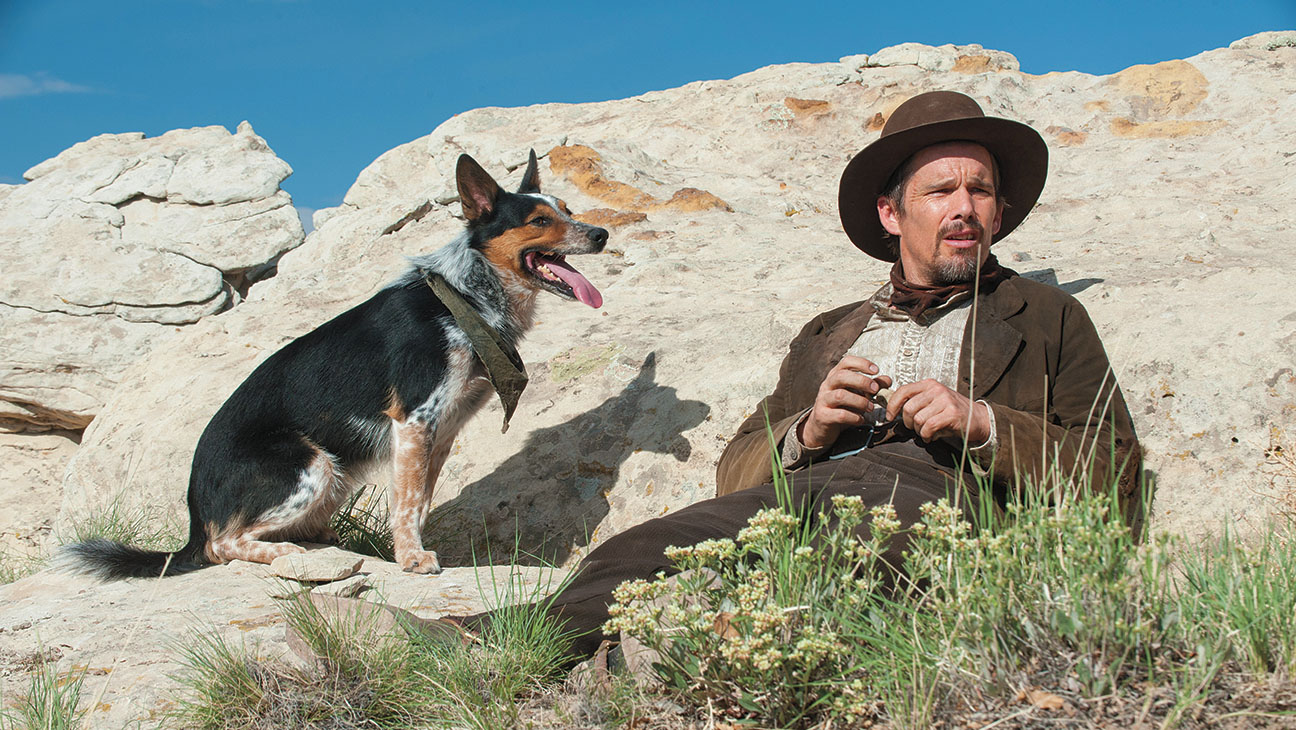
Paul (Ethan Hawke) just wants to make it to Mexico, and freedom. Unfortunately, a random and heart-wrenching act of violence detours him down a bloody path to revenge. Writer/director Ti West brings his experience in the horror genre to the Wild West, with surprising but refreshing reserve.

In a Valley of Violence benefits from West’s time in horror. The build is steady and slow. Paul transforms from quiet stranger to calculating killer, but all the blood is earned. The shootouts aren’t elaborate but they are grisly and realistic.

The first note I wrote down was “color”. (The second note I wrote down was “His dog wears a bandana.”) West has colorized an homage to old westerns, bright and yellow. At the turning point, though, his roots show.

The camera work changes with Paul. A flashback is handled with a shaky cam and a flashlight. It feels like found footage, and though it’s a jarring stylistic change, it’s not unwelcome.

Another scene is shot from a single vantage point that makes the view feel like a security camera. The small room almost gets that fisheye quality, as Paul sneaks up behind an unsuspecting bather. These touches gently meld the horror and western genres, using cues from both to shape the viewers’ journey.

The performances are as realistic as West’s measured use of bullets and blood. Hawke is brooding and dangerous, but soft, too. His dog is an excellent device to extrapolate the way PTSD can function. Paul confidently banters with his dog, makes her promises, plots with her… but when he’s faced with people he keeps his mouth shut and his eyes low.

As the sheriff, John Travolta plays with equal restraint and mastery. He’s quiet but commanding, a good match to Hawke. As he devolves into panic, Travolta becomes funnier and more terrifying.

These performances from the two veterans balance out a younger cast of characters who are spoiling for adventure.

Karen Gillan shines with absurdity and humor, and she’s hard not to watch, even sprinting across the back of a shot. Taissa Farmiga is all wide-eyed wonder, but carries enough grit to make her character arc as compelling as Paul’s.

Most of the absurdity comes from a truly excellent Burn Gorman, as the priest. His drunken ramblings about sinners are bizarre, and showcase some of the best writing in the film. The priest’s appearances divide the film into three distinct parts, highlighted by Paul’s changing interaction with him each time. He serves as a beautiful device and a welcome, though momentary, release of pressure.

In a Valley of Violence is an homage to the traditional western with updates from the horror genre, not with blood, but with tension. Paired with a fantastic score from Jeff Grace and a cast that delivers, West has avoided the trappings of the modern shoot-em-ups and rejoined the classics with some fresh perspective.

Verdict-4-0-Stars

https://www.youtube.com/watch?v=ek8cjysuvJ4