Screening Room: Halloween Ends, Stars at Noon, Piggy, Rosaline & More
by Daniel Baldwin
Pablo (Juan Cano) is a struggling actor who makes his money working as a training actor for a medical program where personnel get to practice their bedside manner in a classroom setting. He had been making ends meet, but now that his roommate has bounced – still owing him a couple of months’ rent – Pablo needs to find a replacement roommate fast. In addition to this, he’s still dealing with his feelings for his ex-boyfriend, contending with a ghost(!) in his apartment, and worrying about his downstairs neighbor’s abusive relationship with her partner.
If you haven’t guessed it already, Phantom Project is a quirky slice-of-life dramedy about a 20-something living in the city who is just trying to get by while chasing his dreams of becoming a movie star. Ghost aside (we’ll get to that in a moment), this is very much your typical “walk in a young person’s troubled shoes” indie comedic drama. Even with it being a Chilean spin on the subgenre, this is pretty standard stuff. Thankfully the core performances are all charming enough to help smooth over the samey-ness of the plot.
Samey except for the ghost, that is.
There are two big bright spots in this film: Susan and the ghost. Who is Susan? She’s Pablo’s adorable dog, who knows what’s up with the haunting and seems perpetually annoyed not only by said spirit, but also by how long it takes Pablo to catch on to what is happening. The ghost itself is delivered in an intriguing way. Instead of modern FX work, we have what is an ever-morphing (even in terms of gender) hand-drawn apparition that is often up to hijinks, but occasionally wants to get frisky as well. Alas, said spirit is but one of many subplots. It would have made a better focal point, instead of an intriguing, but also jarring side story.
Phantom Project is a well-crafted slice of indie dramedy cinema that has a good cast, a great animal performer (you deserve better, Susan!), and a really cool-looking ghost in it, after all! What ultimately holds it back is an over-reliance on slice-of-life tropes and too broad a focus, along with an uneven tone. There’s an imaginative spark at its core, however. One that points toward writer/director Roberto Doveris as someone to keep your eye on going forward.

by Daniel Baldwin
When What We Leave Behind opens, we witness star Julian Moreno making a trip he has made countless times. For 15 years, he has taken a bus from his home in Mexico to visit his family in the United States. Every single month. He only stays for a few days at a time, but he’s been there like clockwork for a decade and a half. Now that he’s 89, however, he’s making his final trip, as he no longer has the stamina for it.
With his monthly visits ending, he instead turns his attention toward building a new house on a plot of land that he has purchased beside his current abode. This new home is not meant for him, but instead for whatever family member will want it once it’s finished. Iliana Sosa’s What We Leave Behind might be showcasing a family separated by a border, but it doesn’t have macro socio-political issues on its mind. What worries the film is simply what worries the aging Julian: Will his family be all right once he is gone? Will they remain close and get along?
This is all Julian wants. He brings up his age and mortality often, but never in a negative light. He’s not searching for sympathy or wishing for more time but is instead deeply pragmatic about it all. His time on this world is shortening and he wishes to spend it building a place where his family can live and congregate together long after he passes away.
We follow Julian from the moment the foundation is being laid up until his death, when all that’s left to accomplish are some finishing touches on the inside of the completed home. We also get to know his family along the way, spending many a quiet moment with them, in addition to quite a few long conversations. If you’re in the mood for drone shots and sweeping looks at the countryside, you’ll find none of that here. This is a deeply personal documentary about an aging family; one that focuses on small and intimate moments, as well as day-to-day struggles and events.
It’s an achingly beautiful piece of work that will hit home for anyone who has watched their older loved ones near their end, as well as worried about what might happen to their younger loved ones when they themselves pass on. What do we leave behind? The people that we love, be they friends or family. Julian Moreno would have told you they are what’s best in life and he’s right.

by Daniel Baldwin
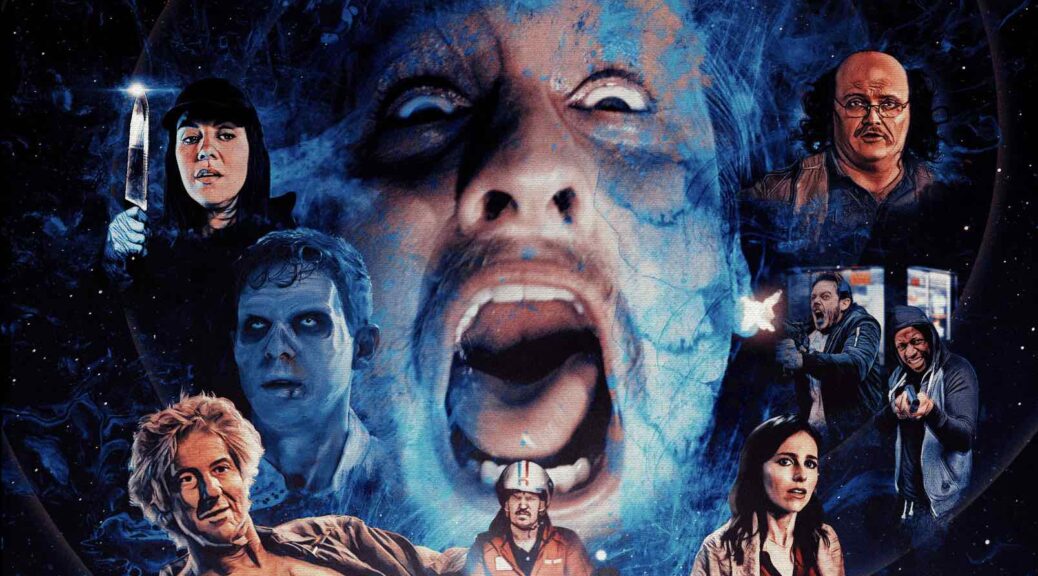
Colloquialisms being taken to their absolute extremes. A woman struggling to find happiness in solitude. A pleasure-deprived man seeking help from his friends. Body horror ending not in goo and grue, but in dad jokes?!? Tiny Cinema is a comedic genre anthology film that wants to make you laugh and gasp in equal measure with the outrageous storytelling that it contains within. Does it succeed? Mostly.
Tiny Cinema is the latest cinematic endeavor of director/writer/actor extraordinaire Tyler Cornack and his motley crew of performers. If you’ve seen their previous effort, Butt Boy, you’re going to spot a lot of familiar faces across all six segments here. This film largely lacks that one’s Henenlotter-esque weirdness, however. It instead opts for a modern Twilight Zone vibe; offering up situations where ordinary people find their lives turned upside down by strange occurrences that are either tied to everyday problems (i.e. loneliness, sexual dysfunction, dating) or become twisted takes on everyday sayings (i.e. “That’s what she said!” and “Yo momma!”).
The results are mixed. On the positive side of things, there is a great host in the form of the quirky and deeply charismatic Paul Ford. The first three segments are also really entertaining (particularly “Bust!”). Furthermore, what really helps Tiny Cinema along is its cast. The troupe that Cornack has pooled together are all beyond game for whatever delirious nonsense he asks of them and that helps smooth over even the segments that don’t really work. They help to drive his best ideas home and make his films worth seeking out.
It’s in the back half where things begin to wobble, as the other three segments aren’t nearly as strong. Almost all anthology films have weak spots. Unevenness is par for the course with episodic storytelling. The weaker segments here are the slighter ones that just aim for shock value. Unfortunately, with them all filling out the second half of the feature, it means that it starts with a bang and ends with a bit of a whimper.
Tiny Cinema might be a step down from Butt Boy, but it’s a solid indie slice of portmanteau moviemaking. If you’re game for some weird fun, this might just be up your alley.