Gods and Monsters

X-Men: Apocalypse

by George Wolf

This year’s superheroes have been wrestling with big questions and God complexes, and X-Men: Apocalypse wants us to know it can be super serious, too. It can also be pretentious, occasionally thrilling and surprisingly dull.

Ten years after the D.C. showdown in Days of Future Past made mutants the fresh faces of 1973, things are relatively quiet. Charles (James McAvoy) is busy with his school for the gifted, while Raven/Mystique (Jennifer Lawrence) and Erik/Magneto (Michael Fassbender) have gone into hiding.

A very old face draws them out.

Heavy doses of plodding exposition outline the history of the first mutant (Oscar Isaac) falling victim to an ancient ruler’s quest for power and then, being buried for centuries. Unearthed in ’83, this God/mutant hybrid called Apocalypse begins recruiting a powerful team bent on “cleansing” this world to herald another. Villains assemble!

Director Bryan Singer is back for his fourth X installment, and while some set pieces are visually striking, others are curiously flat. Scenes from the “Apollo” episode of Star Trek appearing on young Storm’s TV may be meant to reinforce a “God among men” storyline, but when immediately followed by the evil X’s in full pose-off on a less than authentic stage, only Shatner-esque cheese comes to mind.

Similarly, frequent flashbacks to previous films in the series only reinforce former successes this episode can’t match.

The real bringdown is Simon Kinberg’s bloated script. It’s overstuffed with characters who talk loud and say nothing in a mishmash narrative weighed down by ambitions with little substance. Kinberg has big ideas about false gods and the ethics of power, but they can’t get any more nuanced than Magneto screaming, “Is this what you want of me?” amid scenes of rampant destruction.

Quicksilver (Evan Peters) easily steals this show, as nearly every scene he’s in brings the stylized fun the film needs to offset the futile attempts at making Jean Grey interesting and the contrived explanation for Professor X’s sudden hair loss.

But hey, there’s a Wolverine appearance, a post-credits scene and it’s summer, so if X is your thing, get it on.

Verdict-2-5-Stars


Baby Mama Drama

The Ones Below

by Cat McAlpine

Having a child is an amazing and joyous event. It is also terrifying. Alien knew it. That whole Season 8 arc of the XFiles knew it. We’ve even dedicated a Fright Club to Pregnancy Horror. But The Ones Below favors less bursting out of chests and more psychological slow burn.

Enter a small house containing two flats, one upstairs, and one downstairs. Upstairs is home to longtime residents Justin (Stephen Campbell Moore) and Kate (Clémence Poésy), who is pregnant with her first child after years of denying motherhood. New neighbors have moved in downstairs, and Kate finally catches a glimpse of equally pregnant Theresa (Laura Birn).

Theresa and husband Jon (David Morrissey) come upstairs for dinner one evening, and express how desperate they’ve been for a child over some very stilted small talk. Thus tears the rift between the two couples, which only grows after a tragic accident leaves everyone scurrying to dodge guilt and blame.

First time feature director David Farr chases a touch of timelessness in his arrangement and almost pulls it off. There’s a neither here nor there quality to the set and costuming. Milk is delivered daily in glass bottles on the doorstep, smart phones fill hands but pictures are taken with digital cameras, young couples work in open floor plan offices. The upstairs couple dresses as modern young professionals, comfortably. The downstairs pair is more pressed, more clean, and further off trend. A perfectly manicured garden gives off an eerie, Stepford feel.

The editing and design seem to struggle with Farr’s intention a bit. Cool tones downplay some of the raw emotional quality of the scenes, making more intimate moments feel a bit detached. This could be intentional, or I could be trying to cover up for the lack of chemistry between couples.

The most intriguing performance by far is Birn’s Theresa, who is fascinating to watch with equal measures of conniving and innocent. Poésy and Moore are both down-to-earth and relatable, but Poésy ultimately just doesn’t have much to work with. Moore, as the straight man character to everyone else’s crazy, gives a solid performance and becomes the beating heart of the film.

The dialogue mostly consists of bickering, which lends both realism and additional tension, but doesn’t seem to otherwise motivate the characters. There are vague references to strained relationships, which, while underdeveloped, provide breadcrumbs leading to both false and unbelievable-but-true conclusions.

The film ends, deliciously, with a few sharp twists. The thriller connoisseur will see these tricks coming, but the payoff to Farr’s mounting tensions is welcome either way. The Ones Below is a middling to good directorial debut for David Farr that promises, with a few more turns around the block, he will be serving up a style undeniably his.

Verdict-3-5-Stars

Whit & Venom

Love & Friendship

by Hope Madden

Love & Friendship may be the film most likely to satisfy both the truest Jane Austen fan and the passerby who finds her material little more than finely written rom/coms.

This is partly due to writer/director Whit Stillman’s uncanny flair for Austen’s dialog, but more because of his power to mine her prose for more than simple romance and righteous indignation.

The widowed Lady Susan Vernon (Kate Beckinsale – never better) must rely upon the generosity of her social circle since her husband’s passing. Because of a minor indiscretion at handsome Lord Manwaring’s residence, she finds herself obliged to visit her late husband’s brother and his wife for a time.

Not that any of this suggests a terrible inconvenience for the charming Lady Susan, who’s machinations and maneuvers are a constantly moving chess match with those around her – both the unsuspecting (men, generally) and the aware (women) – serving as her pawns.

It’s a criss-crossing, matchmaking plot of the most delightfully acidic sort. Stillman’s purpose, like Austen’s, is to point out the social barriers and tethers that make true freedom nearly impossible for women of the age. But instead of bucking the system quietly but proudly like Pride and Prejudice’s Jane Bennet, for instance, the film celebrates a heroine who has so mastered the intricate societal rules that she wields them to her benefit.

Lady Vernon is a mercenary, unfeeling charmer – a truly amazing character done proper justice by Beckinsale’s lilting performance. And while watching her bend, cajole and shepherd her pawns to her will is endlessly fascinating, it’s the intimacy shared only with her one true friend Lady Johnson (Chloe Sevigny) that gives the film it’s most wonderfully venomous bite.

As an added bonus, Whitman has stocked his supporting cast with some of Britain’s finest comic talents. A scene-stealing Tom Bennett, in particular, is a laugh riot as lovestruck dolt Sir James Martin.

Since his breakout 1990 film debut Metropolitan, a Jane Austen adaptation seemed somehow inevitable for Stillman. Where most revisions of the author’s texts have accepted her earnest rebellion and longing at face value, though, Stillman finds a wicked wit that suits both the author and his film.

Verdict-4-0-Stars

https://www.youtube.com/watch?v=KhvyupqNhL8

It’s No Tea Party

Alice Through the Looking Glass

by Hope Madden

One billion dollars. That’s global money, keep in mind, but still, who’d have thought Tim Burton’s utterly banal and forgettable 2010 acid trip Alice in Wonderland had made so very much money? Too much – and not just because the film had no genuine merit, but because that kind of sum necessitates a sequel, however wildly and wholly unnecessary – even unwanted – that kind of muchness must be.

And so, back to Underland we go, accompanying an adult(ish) Alice who returns from a stint as sea captain to find Victorian England just as restrictive as it had been when she was a child escaping into her imagination. And so, to her imagination she returns.

Director James Bobin (The Muppets) has the unenviable task of following Burton into the rabbit hole – not unenviable because he may suffer by comparison, but because his options are somewhat limited based on the film’s predecessor. Expect garishly overdone visuals that offset weekly drawn characters.

Familial tensions are at the heart of the tale, penned by Linda Woolverton and based on some of Lewis Carroll’s most dreamlike and incongruous storytelling. Too bad Woolverton and Disney insisted on hemming Carroll’s wild imagination inside such a tediously structured framework.

The Hatter is depressed to the point of death and Alice has to go back in time to save him. Basically. But you can’t change the past – a lesson she’d allegedly learned in her first fantastic voyage, but I guess it didn’t stick. So, let’s learn it again, with the help of Time himself, as played by Sacha Baron Cohen with a Schwarzenegger-esque accent.

Aside from that new face, the same forgettably wacky group returns to the future/past. The talented Mia Wasikowska struggles to find life inside the bland Alice while Helena Bonham Carter pointlessly chews scenery.

An underused Anne Hathaway brightens certain scenes, and Johnny Depp – reliable as ever inside a fright wig and exaggerated make up – does bring a wistful humanity to the otherworldly events.

But imagination and tiresome capitalism butt heads from the opening sequence, and without the foundation of compelling characters or the requirement of engaging storytelling, Through the Looking Glass proves to be a pointless, though colorful, bore.

Verdict-1-5-Stars

A Beautiful Trainwreck

A Bigger Splash

by Christie Robb

Remember that infamous high school math problem about the trains? You know, the one where two trains leave different cities heading toward each other and you are tasked with discovering when and where they collide?

A Bigger Splash is a lot like that, only instead of trains we are dealing with ex-lovers and the location of the collision is a gorgeous volcanic island off the coast of Italy.

Rock star Marianne Lane (Tilda Swinton) is on vacation, recovering from throat surgery with her studly younger partner Paul De Smedt (Matthias Schoenaerts), when they are interrupted by unexpected houseguests: her ex-lover and producer, Harry (Ralph Fiennes), and his recently-discovered, lascivious daughter Penelope (Dakota Johnson). It’s clear that Harry still carries a torch for Marianne. It’s also apparent that he is more than willing to use the close quarters to fan those flames into obsession.

A catastrophe is inevitable. It’s just a matter of time — which, in this film, can tend to drag a little bit. This is not just a movie about nostalgic characters. With its long takes and dramatic score, director Luca Guadagnino’s film itself demonstrates a palpable longing for an earlier cinematic age. But with the stellar cast, breathtaking setting, and stylish costumes, the extra length, like a spare tire on an old flame, is easy to forgive. There is something beautiful in nearly every shot.

Schoenaerts and Johnson deliver solid performances in their somewhat underwritten characters (disdainful melancholic and crafted nymphet, respectively). Fiennes and Swinton, however, are delightful contrasts. Fiennes very nearly steals the show with his frenetic outbursts of verbal diarrhea — and in the scene where he dances to the Rolling Stones, he does. However, in the end this is Swinton’s movie. The layers of emotion she manages to convey with minimal dialogue is what truly makes the biggest splash.

Verdict-4-0-Stars

Fright Club: Coming of Age Horror

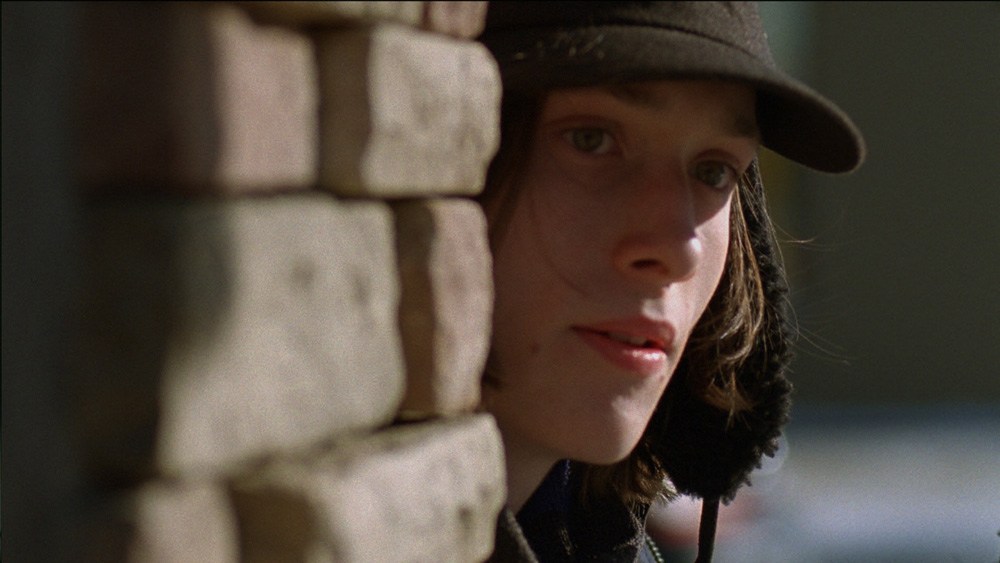
For many – perhaps most – coming of age is a horror in and of itself, full of confusion, embarrassment, personality change, even blood. Which is why it is ripe fodder for horror, a genre that has plumbed the depths of adolescent despair for any number of monster movies, slashers, camping horrors, and nasty prom dates. Today we celebrate the unmitigated horror of burgeoning adulthood with our list of the five best Coming of Age horror films, with the help of Get It Together podcasters Pete Stroup and David Huff.


5. Ginger Snaps

Sisters Ginger and Bridget, outcasts in the wasteland of Canadian suburbia, cling to each other, and reject/loathe high school (a feeling that high school in general returns).

On the evening of Ginger’s first period, she’s bitten by a werewolf. Writer Karen Walton cares not for subtlety: the curse, get it? It turns out, lycanthropy makes for a pretty vivid metaphor for puberty. This turn of events proves especially provocative and appropriate for a film that upends many mainstay female cliches.

Walton’s wickedly humorous script stays in your face with the metaphors, successfully building an entire film on clever turns of phrase, puns, and analogies, stirring up the kind of hysteria that surrounds puberty, sex, reputations, body hair, and one’s own helplessness to these very elements. It’s as insightful a high school horror film as you’ll find, peppered equally with dark humor and gore.


https://www.youtube.com/watch?v=Zoa1A987A_k


4. Let the Right One In

In 2008, Sweden’s Let the Right One In emerged as an original, stylish thriller – and the best vampire flicks in years. A spooky coming of age tale populated by outcasts in the bleakest, coldest imaginable environment, the film breaks hearts and bleeds victims in equal measure.

Kare Hedebrant‘s Oskar with a blond Prince Valiant cut falls innocently for the odd new girl (an outstanding Lina Leandersson) in his shabby apartment complex. Reluctantly, she returns his admiration, and a sweet and bloody romance buds.

This is a coming of age film full of life lessons and adult choices, told with a tremendous atmosphere of melancholy, tainted innocence, and isolation. Plus the best swimming pool carnage scene ever.

The unsettling scene is so uniquely handled, not just for horrifying effect (which it certainly achieves), but to reinforce the two main characters, their bond, and their roles. It’s beautiful, like the strangely lovely film itself.


3. Carrie

The seminal film about teen angst and high school carnage has to be Brian De Palma’s 1976 landmark adaptation of Stephen King’s first full length novel, the tale of an unpopular teenager who marks the arrival of her period by suddenly embracing her psychic powers.

Sure the film opens like a ‘70s soft core porno, with images created by a director who has clearly never been in a girls’ locker room and therefore chose to depict the one in his dirty, dirty mind. But as soon as the bloody stream punctures the dreamlike shower sequence, we witness the definitive moment in Mean Girl Cinema. The “plug it up” refrain, coupled with Sissy Spacek’s authentic, even animalistic portrayal of panic, sets a tone for the film. Whatever Carrie may do, we (the voyeurs, no doubt more like the normal kids than like Carrie) are to blame.

This film exposes a panic about the onslaught of womanhood. The same panic informs <em>The Exorcist</em> and dozens of others, but De Palma’s version offers more sympathy than most. Spacek is the perfect balance of freckle-faced vulnerability and awed vengeance.


2. It Follows

It Follows is a coming of age tale that mines a primal terror.  Yes, it’s the STD or horror movies, but don’t let that dissuade you. Writer/director David Robert Mitchell understands the anxiety of adolescence and he has not simply crafted yet another cautionary tale about premarital sex.

Mitchell has captured that fleeting yet dragging moment between childhood and adulthood and given the lurking dread of that time of life a powerful image. There is something that lies just beyond the innocence of youth. You feel it in every frame and begin to look out for it, walking toward you at a consistent pace, long before the characters have begun to check the periphery themselves.

Mitchell borrows from a number of coming of age horror shows, but his film is confident enough to pull it off without feeling derivative in any way. The writer/director takes familiar tropes and uses them with skill to lull you with familiarity, and then terrify you with it.


1. The Witch

Ideas of gender inequality, sexual awakening, slavish devotion to dogma, and isolationism roil beneath the surface of this film, yet the tale itself is deceptively simple. One family, fresh off the boat from England in 1630 and expelled from their puritanical village, sets up house and farm in a clearing near a wood.

There William (Ralph Ineson) and Katherine (Kate Dickie) will raise their five children: the infant Samuel, young twins Mercy (Ellie Grainger) and Jonas (Lucas Dawson), nearly adolescent Caleb (Harvey Scrimshaw), and the eldest, Tomasin (Anya Taylor-Joy), nearly a woman now.

As a series of grim catastrophes befalls the family, members turn on members with ever-heightening hysteria. The Witch creates an atmosphere of the most intimate and unpleasant tension, a sense of anxiety that builds relentlessly and traps you along with this helpless, miserable family.

As frenzy and paranoia feed on ignorance and helplessness, tensions balloon to bursting. You are trapped as they are trapped in this inescapable mess, where man’s overanxious attempt to purge himself absolutely of his capacity for sin only opens him up to the true evil lurking, as it always is, in the woods.


Nice Nice Baby

The Nice Guys

by Hope Madden

Tell me you’ve seen any of the countless trailers for Shane Black’s new action comedy The Nice Guys. Funny! I haven’t had such high expectations for a new film yet this year.

Ever since Black announced his presence with authority, penning ‘87’s iconic buddy cop action flick Lethal Weapon, he’s been one to watch. Kiss Kiss Bang Bang, his directorial debut, suggested he might even be keeping his best stuff for himself. But after a while, his tics and tendencies grow tiresome.

The Long Kiss Goodnight, anyone?

And though his newest effort absolutely revisits most of the filmmaker’s by-now obvious predilections, his craftsmanship and casting have never been better.

Hey girl, guess what – Ryan Gosling is a hoot! No, no, I didn’t say he’s hot (as that goes without saying). He’s a hoot. And if you found his scene-stealing performance in last year’s gem The Big Short a refreshing and joyous change of pace for the award-bedecked actor, you will surely enjoy this masterpiece of comic timing and physicality.

Gosling plays Holland March, an alcoholic PI with questionable parenting skills who reluctantly teams up with muscle-for-hire Jackson Healy (Russell Crowe). What begins as a low-rent missing persons case snowballs into an enormous conspiracy involving porn, the government, and the all-powerful auto industry. (It is 1977, after all.)

Aah, 1977 – when everybody smoked, ogled women, and found alcoholism a laugh riot. Black puts this time machine quality to excellent use in a film that would have felt stale and rote during his Eighties heyday, but today it serves as an endlessly entertaining riff on all that was so wrong and so right about the Seventies.

A brightly lit (if smog-choked) Southern California noir-turned-buddy-action comedy, The Nice Guys does a surprisingly good job at finding its tone. All the lurid, twisty plot fodder could easily weigh the film down in gritty drama, but Shane’s heart is in the budding, unsanitized bromance.

Gosling’s impeccable hilarity is custom-made for Black’s machine gun fire dialog, but Crowe also manages to get comfortable in the script, allowing both the conversation and action to breathe and take shape. The pair’s chemistry is a joy to watch, and is aided immeasurably by Angourie Rice’s flinty, intelligent turn as March’s disappointed daughter, Holly.


Fight for Your Right

Neighbors 2: Sorority Rising

by George Wolf

So, sororities aren’t permitted to have parties in their houses? Is that a real thing?

Obviously, I didn’t go Greek in college, but what kind of bullshit is that?

Neighbors 2: Sorority Rising not only finds it a teachable moment, but the perfect springboard for a funny, and dare I say, socially conscious sequel.

College freshmen Shelby (Chloe Grace Moretz) and her new friends Beth (Kiersey Clemons) and Nora (Beanie Feldstein – younger sister of Jonah Hill) don’t appreciate the “super-rapey” nature of frat bashes, so they decide to start Kappa Nu, an independent sorority dedicated to the high life. Guess where they find a perfect home base?

It’s the old Delta Psi house from four years earlier, right next door to the home Mac and Kelly Radner (Seth Rogen, Rose Byrne) have just put in escrow. The buyers have 30 days to think it over, so the desperate Radners turn to an old frenemy, former Delta Psi president Teddy Sanders, (Zac Efron), to help them drive the Nu neighbors out before their ragers tank the sale.

Director Nicholas Stoller and the writing team led by Rogen and frequent partner Evan Goldberg are all back, so expect more of what made the first film such a down and dirty treat. Byrne’s return is also integral, and not just because she’s proven to be a true comic talent.

Kelly’s spirited participation in the sex, drugs and body fluid-based gags made part one a refreshingly equal offender, and Neighbors 2 spreads similar wealth throughout the ladies of Kappa Nu. There’s a clear feminist undercurrent here, even if it is presented with the occasional awkwardness you might expect from a team of male filmmakers.

Moretz is a worthy new adversary for “the old people,” as she seems to relish the chance at digging in to comic edges we haven’t yet seen. Efron is even better, rising above another beefcake role to add sympathetic layers to Teddy’s struggle with life as an aging bro.

Though not quite as riotous as the original, Neighbors 2 still lands as one of the better comedy sequels. The laughs are familiar but they are steady, finding a comfort zone where raunchy charm and admirable conscience co-exist just fine thank you.

Verdict-3-0-Stars


Dance with the Devil

Belladonna of Sadness

by Hope Madden

Who’s looking for a psychosexual acid trip? Well, it’s your lucky day because Belladonna of Sadness – Eiichi Yamamoto’s 1973 animated cult flick – gets new theatrical life thanks to a 4K restoration.

Based on Satanism and Witchcraft – a 19th Century text by Jules Michelet about seduction, witchcraft, and female empowerment – the film tells the story of a newly married couple and their troubles in feudal Europe.

Jean and Jeanne attempt to sidestep the law of the land allowing a baron to deflower a bride, but their pleas fall on sadistic ears. Yamamoto’s vivid depiction of the gang rape that follows is not only a sudden visual eruption in the dreamy watercolor style that precedes the scene, but a hint at the unsettling imagery that will punctuate the entire balance of the film.

The story pits feminine power against the systemic misogyny of the time as an allegory of modern feminism – well, modern in 1973. Jeanne slowly comes to the realization that embracing Satan to break from the repressive nature of bureaucratized Christianity may be her only road to personal power.

On one hand, this particular theme of revolution is older than Michelet’s work and as contemporary as Robert Eggers’s modern genre masterpiece The Witch. And yet, it’s a startling revelation, subversive in many ways, most of which are depicted in this film with wild abandon. As genitalia morphs into lion mouths and giraffe heads during extended, orgiastic sequences, Yamamoto equates sexual liberation with personal empowerment.

And yet, this is a Nineteenth Century text penned by a man, which has been reimagined and rendered – animated, written, directed, and scored – by men. It may be less than surprising to find that Satan (the empowerer) is depicted as a small but growing anthropomorphic penis.

Though Belladonna of Sadness finds tragedy in the repression and objectification of women, the film seems at a loss as to how to express its themes without objectifying Jeanne.

The film certainly can’t be dismissed entirely because of its somewhat conflicted sense of female empowerment, though. Yamamoto’s hypnotic yet jarring visual style, rupturing panoramic still drawings with bursts of movement and color, looks like nothing else onscreen. The aesthetic meshes with Masahiko Sato’s psychedelic score to create the trippiest film to open on national screens since the Age of Aquarius.

It’s a fascinating, disturbing, imaginative piece of animation that looks and feels like nothing else.

Verdict-3-5-Stars


Anger Mismanagement

The Angry Birds Movie

by Rachel Willis

There have been a number of movies based on video games. From 1993’s Super Mario Brothers to the upcoming Tomb Raider movie, Hollywood has not shied away from mining video games as source material for film.

One of the latest in the video game to movie genre is The Angry Birds Movie, a film that seeks to explain why those birds who love to launch themselves at green pigs with enormous slingshots are so angry.

The focal character of the movie is Red, voiced by Jason Sudekis, an already angry bird living in a community of happy birds. Red’s anger gets him in trouble and he finds himself placed in anger management where he meets Bomb, Chuck, and Terence.

The arrival of a large number of green pigs to the birds’ island sets off warning bells for Red, but the other birds are happy to welcome the newcomers and chastise Red for his quickness to antagonism.

The major problem with Angry Birds is the lack of story. At 97 minutes, the movie has a lot of time to fill, and in the first half, the audience has to sit through quite a few montage sequences that are boring even for the youngest viewer. It isn’t until the second half of the movie, when the pigs reveal their true motives for landing on the birds’ island, that the movie starts to pick up. Where the first 45 minutes of the movie drag, the second 45 minutes make up for it with the action we know and love from the video game. The plot comes together, and children and their parents can both find something to enjoy.

The voice actors are myriad and lend their talents well to the film. Danny McBride as Bomb, and Peter Dinklage as Mighty Eagle, both stand out in their roles, providing much needed humor throughout. Jason Sudekis manages to carry a lot on his shoulders as the leading angry bird, but far too often the jokes he’s given to work with fall flat.

It’s unfortunate that the film isn’t 20 minutes shorter, as it might have been more appealing to both young and old had the screenwriters recognized the limitations of their source material.

Verdict-2-5-Stars


Hope Madden and George Wolf … get it?