Teenage Mutant Ninja Turtles 2: Out of the Shadows
by Hope Madden
Let’s say your 8-year-old child (or thirty-ish husband) really wants to see Teenage Mutant Ninja Turtles 2: Out of the Shadows. Maybe they love the cartoon. Maybe they had a TMNT digital watch back in ’91. And socks. And a skateboard. What’s the harm in indulging?
It’s been a year since Shredder tried to annihilate NYC, but because the green brothers threw credit to their cameraman helper Vern (Will Arnett), they remain unknown to the town they love and saved while Vern soaks up all the glory.
But wait! What if a mad scientist wants to use a teleportation device to break Shredder out of jail? And what if that teleportation device sends the supervillain through time and space to meet with an even bigger, badder villain? And what if the two evildoers hatch a plan to enslave Earth and eliminate the turtles by creating sloppy, fat mutant animals of their own?
So, it’s a rock solid plot that only required about ten minutes of excruciating exposition, but the point is, turtles hate bullies!
How do they feel about objectification and exploitation? I’m going to guess they’re OK with it.
Yes, Megan Fox returns as the foursome’s ogle-friendly reporter/BFF. She has two costume changes within her first full 3 minutes onscreen, but they’re vitally important as they allow her to flirt her way close to the information she needs to sleuth out Shredder’s plan.
How else could she possibly do it!?
I could almost give the film’s banal screenplay a pass as simple, mindless kids’ fun if Fox’s presence matched that child-friendly stupidity in any way. Here’s the real tragedy, though: the great Laura Linney is in this dumpster fire of a film.
The sequel is directed by Dave Green (Earth to Echo) with no flair whatsoever for using CGI to move a story along, or even sensibly portray action. Muddy and confused, the set pieces are rarely if ever compelling enough to keep your attention away from the mind-deadening laziness of the screeplay.
By 92 minutes in, I’d lost the will to live, and there was still another twenty minutes to endure.
You love your kids and your husband, but be good to yourself. Skip this one. Dial up some old episodes on YouTube instead.
A textbook tear jerker/romance that somehow manages to miss both of those targets, Me Before You is a pretty, brightly lit, well-meaning effort that lacks courage.
Adapting her own best-selling novel, Jojo Moyes offers director Thea Sherrock’s feature debut a warm story lacking chemistry and hard edges. Lou (Emilia Clarke) – a working girl from a small British town – takes a job as companion to recent quadriplegic Will Traynor (Sam Claflin). Once a wealthy, live-life-on-the-edge playboy, Will now haunts a wing of his parents’ castle. For real. They live in the castle that looms in the background of Lou’s small town.
Not that unemployed waitress Lou is intimidated! Not with all that pluck and salt-of-the-earthiness! And it turns out, all it takes to melt Will Traynor’s cold, cold heart is a wildly mismatched yet huggably bold outfit and some dimples.
Once Lou realizes that Will intends to end his life in a Swiss “death with dignity” clinic in six months, she determines to make his last hours on earth amazing and, thereby, change his mind.
Good for Moyes and Sherrock for addressing a difficult issue. Too bad they treat the end of life question the same way they treat Will’s suffering, his medical needs, and every other messy element in the film – which is to say, they keep it offscreen.
Clarke is an effortless charmer, so it’s unfortunate she keeps her beguiling wackiness dialed up to 11. Attractive and easy to watch as they are, she and Claflin have next to no onscreen chemistry. That particular problem is symptomatic of a film that feels inauthentic – though likeable – throughout.
Blandly inoffensive and colorful are not the kind of adjectives you use to describe a tear jerking romance that stays with you. Me Before You warms an icy heart before succumbing to terminal adorableness.
Imagining how Charlie Kaufman might direct a mashup of 1984 and Logan’s Run would get you in the area code, but still couldn’t quite capture director Yorgos Lanthimos’s darkly comic trip to a future where it’s a crime to be single.
Shopping alone at the mall? Think again, or be ready to prove your couplehood to authorities.
Singles are sent to The Hotel, where they have 45 days to find a partner or be turned into the animal of their choosing, thus giving them a second chance to find a companion. But even then, they are taught to choose wisely because, “a wolf and a penguin could never be together, that would be absurd.”
These are the big decisions weighing on David (Colin Farrell). After his wife leaves him for another man, David checks in, declares a lobster as his preference for a possible second life, and begins the search for a new mate.
Eventually, it leads him to the woods surrounding The Hotel, where he meets a group of fugitives led by Loner Leader (Lea Seydoux), who explains their equally strict, yet polar opposite social guidelines. (“We dance alone, that’s why we only play electronic music.”) David and Short Sighted Woman (Rachel Weisz) rebel and grow closer, then struggle to exist in one society until they feel safe to enter another.
Lanthimos, who also co-wrote the screenplay, crafts a film which ends up feeling like a minor miracle. The Lobster builds on themes we’ve seen before (most recently in Kaufman’s Anomalisa) but bursts with originality, while every setting, from The Hotel to the woods to the city, looks at once familiar and yet like nothing we’ve ever known.
The ensemble cast (also including John C. Reilly and Ben Whishaw) is uniformly terrific, each actor finding subtle but important variations in delivering the script’s wonderfully intelligent takedown of societal expectations.
It’s a captivating experience full of humor, tenderness, and longing, even before Lanthimos starts to bring a subversive beauty into soft focus. The Lobster pokes wicked fun at the rules of attraction, but finds its lasting power in asking disquieting questions about the very nature of our motives when following them.
The destinies of two undersized twin wrestlers and a pair of aging prostitutes braid in Arturo Ripstein’s grimly surreal Bleak Street (La Calle de la Amargura).
The veteran Mexican filmmaker works again with his regular collaborator and life partner, writer Paz Alicia Garciadiego. The two enlist the aid of cinematographer Alejandro Cantu to conjure an atmosphere that is simultaneously desolate and dreamy.
Filmed in stylized black and white and set in a maze of back alleys in Mexico City, Bleak Street begins with off-kilter vignettes that provide glimpses into the dreary lives of the film’s four primary figures before pulling the strands together to depict the true crime that inspired the effort.
Juan Francisco Longoria and Guillermo Lopez play the twin brothers, costumed dwarf wrestlers who “shadow” full size grappling counterparts and never remove their masks.
Patricia Reyes Spindola and Nora Velasquez portray prostitutes facing the realities of their shelf lives as they watch younger women take over their corners and customers.
The two pairs have workplace struggles and disrespect in common, though this hardly binds them. While Ripstein never misses a chance to showcase the humanity of each of his characters, transcending their destiny is not his aim, nor theirs.
Ripstein adds to the hypnotic quality of his picture with a score consisting only of the nearly imperceptible sound of water as scenes fade to black.
Cantu’s lengthy, prowling shots underscore the voyeuristic feel of the film. His sparkling black and white fills the screen with brightly lit surfaces and shadowy backdrops, the landscape taking on a beautiful but nightmarish quality that suits the wild assortment of characters.
Regardless of their actions, these are not characters Ripstein judges. This is both refreshing and off-putting, because the film never feels like the tragedy it is.
Respectful but absolutely never preachy, Bleak Street holds itself and its audience at a distance from the characters onscreen. While that disconnect feels intentional, Ripstein missed an opportunity for lasting relevance because he doesn’t generate any kind of emotional connection with the tragic, true events unfolding.
Bleak Street screens this weekend only at the Wexner Center for the Arts.
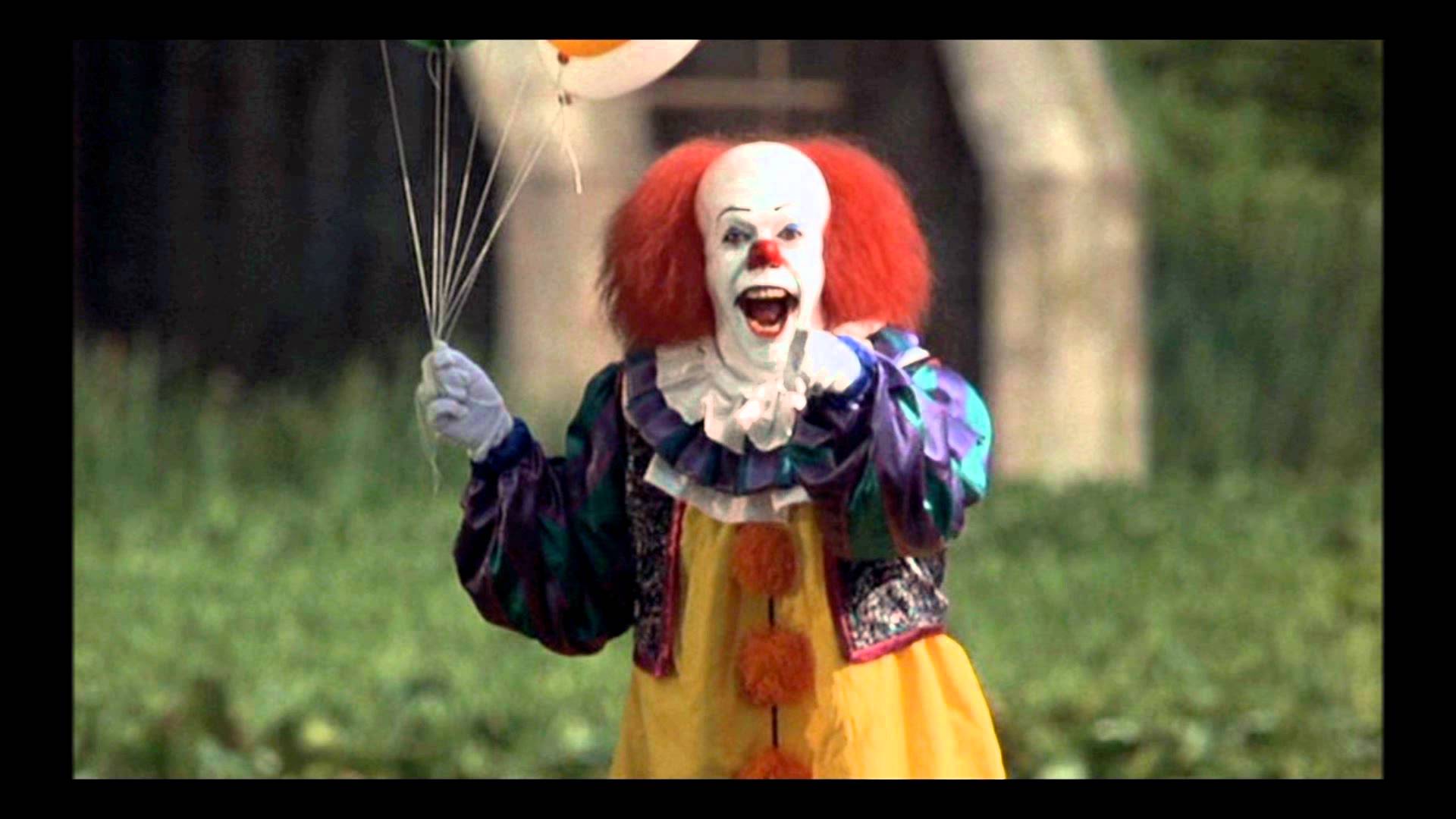
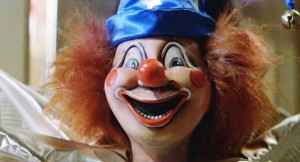
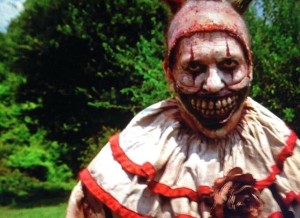
Clowns! You hate ’em, we hate ’em. There may be nothing as universally terrifying as the clown, and yet, a proper clown horror film is a tough nut to crack.
So, before we launch into the 5 best clown films, let’s first pay tribute to the 5 scariest clowns to ever grace the screen:
5. Zombieland Clown (Derek Graf)
4. Captain Spalding (House of 1000 Corpses/Devil’s Rejects) (Sid Haig)
On to the main event! Here are the five clowniest horror movies!
5. Clownhouse (1989)
There are several fascinating pieces of information concerning the derivative yet uniquely weird Clownhouse. These range from odd to awful.
1) The Sundance Film Festival somehow found this film – this one, Clownhouse, the movie about 3 escaped mental patients who dress as clowns, break into a house where three brothers are home alone on Halloween night, and commence to terrify and slaughter them – worthy of a nomination for Best Drama. If you haven’t seen this film, you might not quite recognize how profoundly insane that is.
2) The great and underappreciated Sam Rockwell made his feature debut as the dickhead oldest brother in this movie. The clowns themselves – Cheezo, Bippo, and Dippo – are genuinely scary and garishly fascinating, but outside of them, only Rockwell can act. At all.
3) Writer/director Victor Salva would go on to create the Jeepers Creepers franchise. But first he would serve 15 months of a 3-year state prison sentence for molesting the 12-year-old lead actor in this film, Nathan Forrest Winters.
Basically, there are four really solid clown horror movies in the world and about 200 truly bad ones. Clownhouse does set itself above the rest of the muck with these disturbing points of interest.
https://www.youtube.com/watch?v=xi0ci-GjLx4
4. Clown (2014)
Sympathetic, surprising, and often very uncomfortable, Jon Watt’s 2014 horror flick, though far from perfect, does an excellent job of morphing that lovable party favorite into the red-nosed freak from your nightmares.
Kent (a pitiful Andy Powers) stumbles across a vintage clown outfit in an estate property he’s fitting for resale. Perfect timing – his son’s birthday party is in an hour. What a surprise this will be, unless the suit is cursed in some way and will slowly turn Kent into a child-eating demon.
It does! Hooray!!!
A weird-as-ever supporting turn from Peter Stormare helps the film overcome other acting weaknesses, but Watts gets credit for taking the horror places you might not expect, and for squeezing as much sympathy as possible before that last swing of the ax.
3. The Man Who Laughs (1928)
The German Expressionist director Paul Leni (Waxworks, The Cat and the Canary) worked with J. Grubb Alexander’s adaptation of Victor Hugo’s novel to cast a macabre spell with this film – one of our very favorites.
A nobleman offends the king, who kills the nobleman (iron maiden!) and has his son, Gwynplaine, disfigured by a surgeon so he can spend his life laughing at his fool of a father. The boy is tossed out, wandering in the snow. He finds a blind baby girl, and the two are saved by a traveling carny.
As is Hugo’s way, goodness is found in the tormented and hideous while the gorgeous society show themselves to be the true beasts. The film looks gloomily gorgeous, and in the hands of silent film star Conrad Veidt, Gwynplaine becomes Hugo’s most sympathetic and heartbreaking monster.
2. Stitches (2012)
There are a lot of scary clowns in films, but not that many can carry an entire film. Stitches can.
This Irish import sees a half-assed clown accidentally offed at a 6-year-old’s birthday party, only to return to finish his act when the lad turns 16.
Yes, it is a familiar slasher set up: something happened ten years ago – an accident! It was nobody’s fault! They were only children!! And then, ten years later, a return from the grave timed perfectly with a big bash that lets the grisly menace pick teens off one by one. But co-writer/director Connor McMahon does not simply tread that well-worn path. He makes glorious use of the main difference: his menace is a sketchy, ill-tempered clown.
Dark yet bawdy humor and game performances elevate this one way above teen slasher. Gory, gross, funny and well-acted – it brings to mind some of Peter Jackson’s early work. It’s worth a look.
1. The Last Circus (2010)
Who’s in the mood for something weird?
Unhinged Spanish filmmaker Alex de la Iglesia returns to form with The Last Circus, a breathtakingly bizarre look at a Big Top love triangle set in Franco’s Spain.
Describing the story in much detail would risk giving away too many of the astonishing images. A boy loses his performer father to conscription in Spain’s civil war, and decades later, with Franco’s reign’s end in sight, he follows in pop’s clown-sized footsteps and joins the circus. There he falls for another clown’s woman, and stuff gets nutty.
Like Tarantino, Igelsia pulls together ideas and images from across cinema and blends them into something uniquely his own, crafting a film that’s somewhat familiar, but never, ever predictable.
The Last Circus boasts more than brilliantly wrong-minded direction and stunningly macabre imagery – though of these things it certainly boasts. Within that bloody and perverse chaos are some of the more touching performances to be found onscreen.
This year’s superheroes have been wrestling with big questions and God complexes, and X-Men:Apocalypse wants us to know it can be super serious, too. It can also be pretentious, occasionally thrilling and surprisingly dull.
Ten years after the D.C. showdown in Days of Future Past made mutants the fresh faces of 1973, things are relatively quiet. Charles (James McAvoy) is busy with his school for the gifted, while Raven/Mystique (Jennifer Lawrence) and Erik/Magneto (Michael Fassbender) have gone into hiding.
A very old face draws them out.
Heavy doses of plodding exposition outline the history of the first mutant (Oscar Isaac) falling victim to an ancient ruler’s quest for power and then, being buried for centuries. Unearthed in ’83, this God/mutant hybrid called Apocalypse begins recruiting a powerful team bent on “cleansing” this world to herald another. Villains assemble!
Director Bryan Singer is back for his fourth X installment, and while some set pieces are visually striking, others are curiously flat. Scenes from the “Apollo” episode of Star Trek appearing on young Storm’s TV may be meant to reinforce a “God among men” storyline, but when immediately followed by the evil X’s in full pose-off on a less than authentic stage, only Shatner-esque cheese comes to mind.
Similarly, frequent flashbacks to previous films in the series only reinforce former successes this episode can’t match.
The real bringdown is Simon Kinberg’s bloated script. It’s overstuffed with characters who talk loud and say nothing in a mishmash narrative weighed down by ambitions with little substance. Kinberg has big ideas about false gods and the ethics of power, but they can’t get any more nuanced than Magneto screaming, “Is this what you want of me?” amid scenes of rampant destruction.
Quicksilver (Evan Peters) easily steals this show, as nearly every scene he’s in brings the stylized fun the film needs to offset the futile attempts at making Jean Grey interesting and the contrived explanation for Professor X’s sudden hair loss.
But hey, there’s a Wolverine appearance, a post-credits scene and it’s summer, so if X is your thing, get it on.
Having a child is an amazing and joyous event. It is also terrifying. Alien knew it. That whole Season 8 arc of the XFiles knew it. We’ve even dedicated a Fright Club to Pregnancy Horror. But The Ones Below favors less bursting out of chests and more psychological slow burn.
Enter a small house containing two flats, one upstairs, and one downstairs. Upstairs is home to longtime residents Justin (Stephen Campbell Moore) and Kate (Clémence Poésy), who is pregnant with her first child after years of denying motherhood. New neighbors have moved in downstairs, and Kate finally catches a glimpse of equally pregnant Theresa (Laura Birn).
Theresa and husband Jon (David Morrissey) come upstairs for dinner one evening, and express how desperate they’ve been for a child over some very stilted small talk. Thus tears the rift between the two couples, which only grows after a tragic accident leaves everyone scurrying to dodge guilt and blame.
First time feature director David Farr chases a touch of timelessness in his arrangement and almost pulls it off. There’s a neither here nor there quality to the set and costuming. Milk is delivered daily in glass bottles on the doorstep, smart phones fill hands but pictures are taken with digital cameras, young couples work in open floor plan offices. The upstairs couple dresses as modern young professionals, comfortably. The downstairs pair is more pressed, more clean, and further off trend. A perfectly manicured garden gives off an eerie, Stepford feel.
The editing and design seem to struggle with Farr’s intention a bit. Cool tones downplay some of the raw emotional quality of the scenes, making more intimate moments feel a bit detached. This could be intentional, or I could be trying to cover up for the lack of chemistry between couples.
The most intriguing performance by far is Birn’s Theresa, who is fascinating to watch with equal measures of conniving and innocent. Poésy and Moore are both down-to-earth and relatable, but Poésy ultimately just doesn’t have much to work with. Moore, as the straight man character to everyone else’s crazy, gives a solid performance and becomes the beating heart of the film.
The dialogue mostly consists of bickering, which lends both realism and additional tension, but doesn’t seem to otherwise motivate the characters. There are vague references to strained relationships, which, while underdeveloped, provide breadcrumbs leading to both false and unbelievable-but-true conclusions.
The film ends, deliciously, with a few sharp twists. The thriller connoisseur will see these tricks coming, but the payoff to Farr’s mounting tensions is welcome either way. The Ones Below is a middling to good directorial debut for David Farr that promises, with a few more turns around the block, he will be serving up a style undeniably his.
Love & Friendship may be the film most likely to satisfy both the truest Jane Austen fan and the passerby who finds her material little more than finely written rom/coms.
This is partly due to writer/director Whit Stillman’s uncanny flair for Austen’s dialog, but more because of his power to mine her prose for more than simple romance and righteous indignation.
The widowed Lady Susan Vernon (Kate Beckinsale – never better) must rely upon the generosity of her social circle since her husband’s passing. Because of a minor indiscretion at handsome Lord Manwaring’s residence, she finds herself obliged to visit her late husband’s brother and his wife for a time.
Not that any of this suggests a terrible inconvenience for the charming Lady Susan, who’s machinations and maneuvers are a constantly moving chess match with those around her – both the unsuspecting (men, generally) and the aware (women) – serving as her pawns.
It’s a criss-crossing, matchmaking plot of the most delightfully acidic sort. Stillman’s purpose, like Austen’s, is to point out the social barriers and tethers that make true freedom nearly impossible for women of the age. But instead of bucking the system quietly but proudly like Pride and Prejudice’s Jane Bennet, for instance, the film celebrates a heroine who has so mastered the intricate societal rules that she wields them to her benefit.
Lady Vernon is a mercenary, unfeeling charmer – a truly amazing character done proper justice by Beckinsale’s lilting performance. And while watching her bend, cajole and shepherd her pawns to her will is endlessly fascinating, it’s the intimacy shared only with her one true friend Lady Johnson (Chloe Sevigny) that gives the film it’s most wonderfully venomous bite.
As an added bonus, Whitman has stocked his supporting cast with some of Britain’s finest comic talents. A scene-stealing Tom Bennett, in particular, is a laugh riot as lovestruck dolt Sir James Martin.
Since his breakout 1990 film debut Metropolitan, a Jane Austen adaptation seemed somehow inevitable for Stillman. Where most revisions of the author’s texts have accepted her earnest rebellion and longing at face value, though, Stillman finds a wicked wit that suits both the author and his film.
One billion dollars. That’s global money, keep in mind, but still, who’d have thought Tim Burton’s utterly banal and forgettable 2010 acid trip Alice in Wonderland had made so very much money? Too much – and not just because the film had no genuine merit, but because that kind of sum necessitates a sequel, however wildly and wholly unnecessary – even unwanted – that kind of muchness must be.
And so, back to Underland we go, accompanying an adult(ish) Alice who returns from a stint as sea captain to find Victorian England just as restrictive as it had been when she was a child escaping into her imagination. And so, to her imagination she returns.
Director James Bobin (The Muppets) has the unenviable task of following Burton into the rabbit hole – not unenviable because he may suffer by comparison, but because his options are somewhat limited based on the film’s predecessor. Expect garishly overdone visuals that offset weekly drawn characters.
Familial tensions are at the heart of the tale, penned by Linda Woolverton and based on some of Lewis Carroll’s most dreamlike and incongruous storytelling. Too bad Woolverton and Disney insisted on hemming Carroll’s wild imagination inside such a tediously structured framework.
The Hatter is depressed to the point of death and Alice has to go back in time to save him. Basically. But you can’t change the past – a lesson she’d allegedly learned in her first fantastic voyage, but I guess it didn’t stick. So, let’s learn it again, with the help of Time himself, as played by Sacha Baron Cohen with a Schwarzenegger-esque accent.
Aside from that new face, the same forgettably wacky group returns to the future/past. The talented Mia Wasikowska struggles to find life inside the bland Alice while Helena Bonham Carter pointlessly chews scenery.
An underused Anne Hathaway brightens certain scenes, and Johnny Depp – reliable as ever inside a fright wig and exaggerated make up – does bring a wistful humanity to the otherworldly events.
But imagination and tiresome capitalism butt heads from the opening sequence, and without the foundation of compelling characters or the requirement of engaging storytelling, Through the Looking Glass proves to be a pointless, though colorful, bore.
Remember that infamous high school math problem about the trains? You know, the one where two trains leave different cities heading toward each other and you are tasked with discovering when and where they collide?
A Bigger Splash is a lot like that, only instead of trains we are dealing with ex-lovers and the location of the collision is a gorgeous volcanic island off the coast of Italy.
Rock star Marianne Lane (Tilda Swinton) is on vacation, recovering from throat surgery with her studly younger partner Paul De Smedt (Matthias Schoenaerts), when they are interrupted by unexpected houseguests: her ex-lover and producer, Harry (Ralph Fiennes), and his recently-discovered, lascivious daughter Penelope (Dakota Johnson). It’s clear that Harry still carries a torch for Marianne. It’s also apparent that he is more than willing to use the close quarters to fan those flames into obsession.
A catastrophe is inevitable. It’s just a matter of time — which, in this film, can tend to drag a little bit. This is not just a movie about nostalgic characters. With its long takes and dramatic score, director Luca Guadagnino’s film itself demonstrates a palpable longing for an earlier cinematic age. But with the stellar cast, breathtaking setting, and stylish costumes, the extra length, like a spare tire on an old flame, is easy to forgive. There is something beautiful in nearly every shot.
Schoenaerts and Johnson deliver solid performances in their somewhat underwritten characters (disdainful melancholic and crafted nymphet, respectively). Fiennes and Swinton, however, are delightful contrasts. Fiennes very nearly steals the show with his frenetic outbursts of verbal diarrhea — and in the scene where he dances to the Rolling Stones, he does. However, in the end this is Swinton’s movie. The layers of emotion she manages to convey with minimal dialogue is what truly makes the biggest splash.